Anxiety Linked to More Deep Sleep and Less Slow-Wave Dissipation
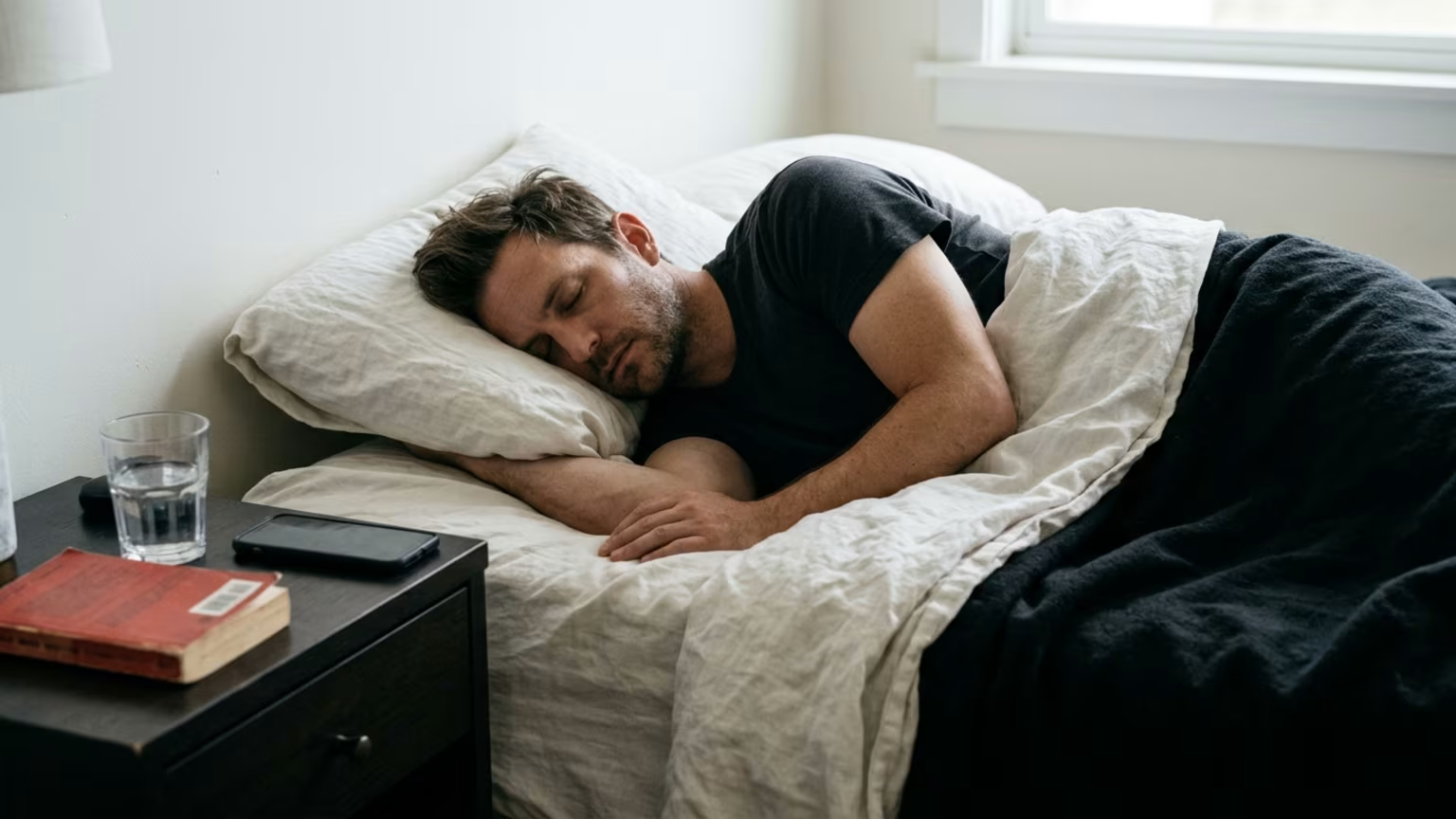
On October 14, 2026, the journal Sleep published an original study linking anxiety symptoms with a greater proportion of N3 sleep and a smaller overnight decline in slow-wave activity.
Inside the study
The researchers studied 70 healthy conscripts undergoing compulsory military service. The group included 67 men aged 18 to 24. Participants underwent overnight polysomnography so the researchers could examine their sleep physiology alongside questionnaire scores.
The observation period described in the abstract was overnight sleep monitoring. The researchers compared activity during the first and third NREM sleep episodes. This gave them a way to assess how slow-wave activity changed across the night rather than looking only at the amount of time spent in a sleep stage.
The team assessed symptoms using these questionnaires:
- Overall Anxiety Severity and Impairment Scale: used to assess anxiety symptoms.
- Beck’s Depression Inventory: used to assess depressive symptoms.
- Epworth Sleepiness Scale: used to assess sleepiness.
Assessing anxiety and depression separately mattered to the analysis. The researchers examined sleep findings in participants with anxiety symptoms alone and in those with both anxiety and depressive symptoms. They also compared these patterns with participants who did not have those symptoms.
Two different measures
N3 sleep and slow-wave activity dissipation were related but separate parts of the study. The proportion of N3 sleep described how much of the recorded sleep fell into that stage. Dissipation described the decline in slow-wave activity between the sleep episodes being compared.
To assess dissipation, the researchers compared normalized delta EEG power during the first and third NREM episodes. In plain English, they examined how a measure of slow-wave brain activity differed between an earlier and a later part of the night.
That distinction is central to reading the results. A greater share of N3 sleep is an amount. A smaller decline in slow-wave activity is a pattern over time. The study examined both rather than treating deep sleep as a single measure.
The sleep findings
The authors reported that 24% of participants had higher anxiety symptoms. Their analysis identified several physiological differences associated with anxiety:
- More N3 sleep: The higher-anxiety group spent a greater proportion of sleep in N3. Across the sample, anxiety symptoms were positively correlated with the proportion of N3 sleep.
- Less slow-wave dissipation: The higher-anxiety group showed a smaller overnight decline in slow-wave activity. Anxiety symptoms were negatively correlated with that decline.
- A different REM pattern: Participants with higher anxiety but without higher depressive symptoms had less REM sleep than those with both anxiety and depression. They also had less REM sleep than participants without symptoms.
- Higher REM alpha power: Participants with higher anxiety showed higher alpha power during REM sleep. The authors suggested that this might reflect cortical hyperarousal, meaning greater arousal in the brain.
The authors interpreted the combination of more N3 sleep and less slow-wave dissipation as being associated with anxiety rather than depression in this sample.
The REM result adds another distinction. Anxiety alone and anxiety accompanied by depressive symptoms did not have the same reported pattern. Combining all participants with emotional symptoms into a single category would lose that part of the finding.
The central result was therefore more specific than a link between anxiety and sleep duration. It involved the share of sleep spent in N3 and the way slow-wave activity changed overnight. Those measures moved together in a pattern associated with anxiety symptoms.
Where evidence stops
The age and setting limit its reach. These were young conscripts in compulsory military service. They were not men in midlife or later life. The sample therefore does not directly establish how anxiety and slow-wave activity relate in men after 45 or in people living under different circumstances.
The findings do not establish cause. The study reported associations. It did not determine whether anxiety altered sleep physiology or sleep physiology influenced anxiety. Another factor could also have contributed to both. The direction of the relationship remains unresolved.
The size of the associations is unclear from the abstract. It does not provide correlation coefficients or effect sizes. It also leaves out confidence intervals, p-values and exact anxiety-group counts. That prevents a numerical judgment of how large or precise the reported relationships were.
The proposed mechanisms remain hypotheses. The authors suggested that reduced slow-wave dissipation might contribute to preserving negative emotional memories during sleep. They also offered another explanation: hyperarousal might increase the need for recovery sleep. These are possible accounts of the pattern rather than demonstrated pathways or evidence of better or worse everyday memory.
No consumer intervention was tested. The study did not assess a sleep product, supplement or behavioral program. It provides no basis for choosing a device or pursuing more N3 sleep as an anxiety treatment. It also did not demonstrate benefits for memory protection, strength or healthy aging.
These limits place the paper in the category of research into possible mechanisms. Its contribution is a more detailed description of sleep physiology associated with anxiety symptoms. It is not a diagnostic test or a treatment result.
The practical meaning
For men after 45, a useful distinction is between an interesting research measure and a personal health decision. A difference in overnight brain activity deserves scientific attention. Decisions about persistent sleep concerns or anxiety belong with qualified care that can assess the person rather than a study average.
NIH’s healthy-sleep guidance provides relevant background. It says there is no evidence that older people can get by with less sleep than younger people. It also notes that the body’s rhythms and timing decline with age.
That guidance addresses aging more directly than the conscript study does. Keeping those evidence sources separate helps prevent a common reading error: treating every new sleep finding as an update to how much sleep an older adult needs.
For a conversation with a qualified health professional, the practical starting point is the concern itself. That might be poor sleep or anxiety symptoms. The goal is an assessment of that concern rather than trying to reproduce a particular brain-wave pattern from a research paper.
Readers interested in the memory question can also read about sleep-related memory research after 45. The wider aging question sits alongside research on sleep duration and biological aging. These are related topics, but each needs to be judged by its own participants and measured outcomes.
The useful reading habit is to keep those outcomes distinct. Time in a sleep stage is not the same outcome as memory performance. A physiological association is not the same result as symptom relief. Reading the measurement before drawing a practical conclusion keeps the finding in proportion.
What this changes: the research adds detail to the anxiety-sleep connection but does not change current best practices for men after 45.
How Everfitguys helps
Judging whether a sleep finding belongs in a personal health decision takes careful interpretation, and Everfitguys handles the editorial work of explaining the evidence. For men facing poor sleep, stress or slower recovery, its plain-English reporting helps separate measured outcomes from proposed explanations while keeping everyday capability in view.
Sources
Stay sharp
Get stories
The best writing on craft and life, delivered once a week. No noise, just the good stuff.