Is Dick Van Dyke’s Inversion Table Routine Safe for Men Over 45?
Is hanging upside down the secret to physical longevity?
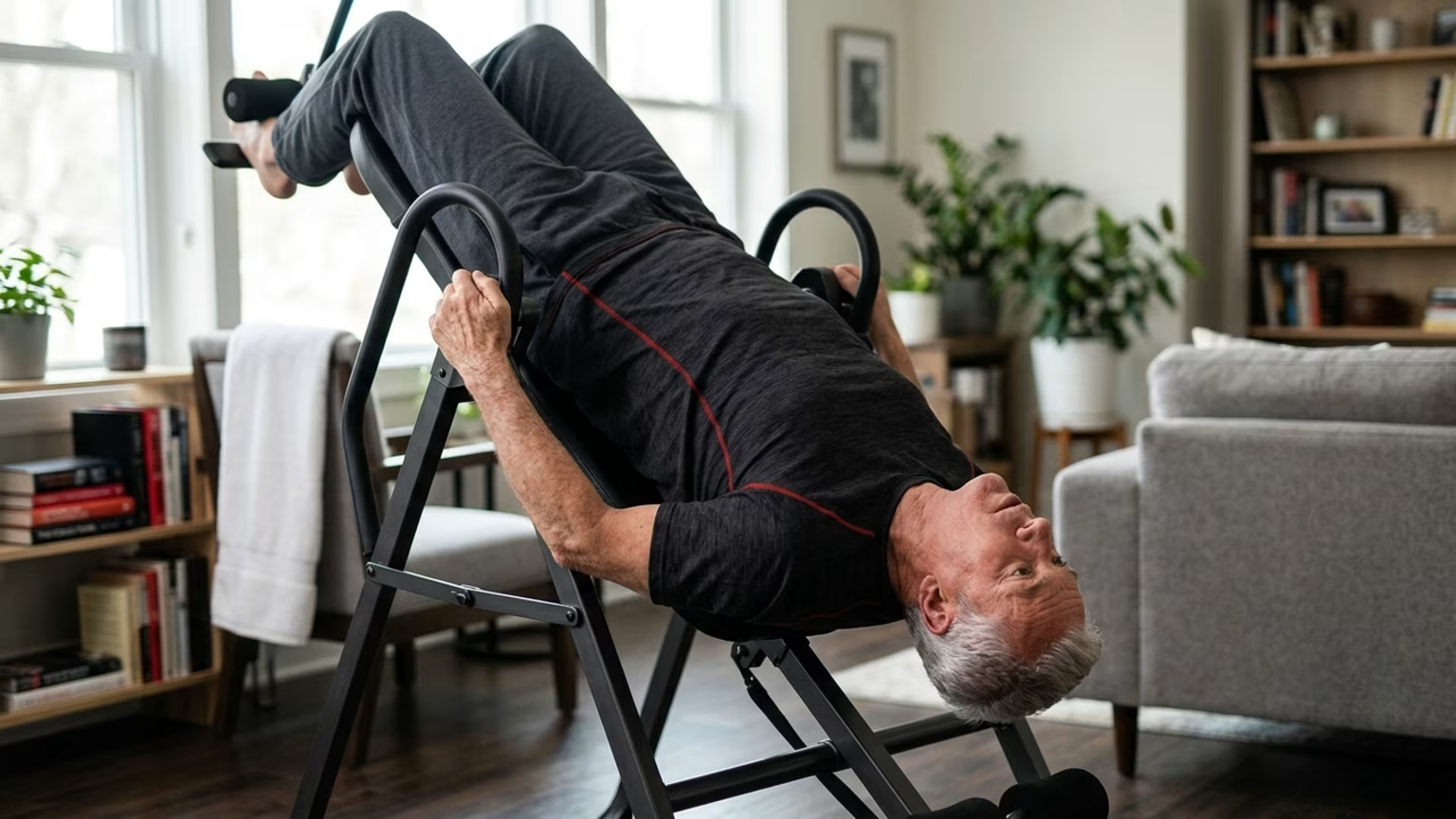
The sight of Dick Van Dyke using an inversion table at age 100 leads many people to believe that hanging upside down is the secret to lasting mobility and a healthy spine. The objective truth is that inversion offers only temporary symptom relief for some users, and it does not reverse aging or heal structural spinal conditions. Coverage shows Dick Van Dyke, 100, using an inversion table in his workout routine. The equipment secures the user by the ankles and tilts the body backward or upside down. Many men over 45 experience stiffness, joint pain and reduced mobility that limits daily activity. When traditional fitness advice feels stale, an inversion table can seem like an attractive shortcut.
The Indian Express report presents inversion as a possible tool for temporary symptom relief, not a cure for back problems. The outlet says evidence for lasting benefit is limited. Lt Pratima Pandey, director of sports at Noida International University, told The Indian Express that inversion may provide temporary relief but lacks sufficient evidence for long-term relief. Pandey also said inversion does not reverse aging or heal spinal stenosis, arthritis, degenerative discs or other structural changes. Temporary relief should never be confused with actual structural healing.
AARP’s coverage similarly described possible temporary decompression of the lower back nerves and additional room for the spinal disks. The publication noted that research on inversion table benefits is mixed. Inversion is not necessarily useless. The available reporting allows that it may provide temporary decompression or symptom relief for some people. You cannot use inversion to postpone the evaluation of neurological symptoms, worsening pain or a suspected structural condition. Readers with back pain need professional assessment rather than temporary decompression.
Why do unusual routines dominate healthy aging headlines?
Celebrity exercise content frequently presents unusual equipment as an example of exceptional aging. People see a famous centenarian perform a complex physical task and assume the novelty device caused his longevity. A routine performed successfully by a fit, experienced centenarian is not a controlled trial. Such a routine cannot establish causation between inversion and longevity. Reputable coverage responds to these viral moments by adding medical caveats rather than treating the routine as a universal prescription. This specific context rarely makes it into the initial headline.
The Indian Express said a medically cleared 100-year-old with good control and prior experience using the equipment might incorporate gentle inversion under appropriate supervision. Van Dyke’s ability to perform the routine should not be presented as evidence that the device is safe or effective for every older man. The available coverage supports a cautious interpretation that values context over copycat behavior. The relevant question is whether you can control the equipment and safely get on and off it. Age alone is not the only relevant variable.
The available coverage does not establish a specific ideal angle, duration, frequency or progression for inversion table use. Those details should not be invented or presented as an evidence-based protocol for men over 45. Evidence described as mixed or limited does not prove that inversion never helps. It simply means the evidence does not justify broad claims of effectiveness or safety for the general public.
What does current research actually say about physical reserve?
The strongest expert consensus in the coverage is that inversion should be treated as an optional symptom management tool. The key distinction is between short-term comfort and long-term function. The available reporting does not establish durable structural repair or broad disease-modifying effects from inversion therapy. A broader model of fitness is more relevant to independence and everyday function than a single novelty modality. Maintaining several kinds of capacity at once is the proven path for Healthy Aging.
A summary of CDC guidance cited by recent older adult fitness coverage recommends at least 150 minutes of moderate aerobic activity weekly for adults 65 and older. The guidance suggests pairing this with muscle-strengthening work on at least two days and balance activity. A recent expert consensus on exercise for older adults recommends low to moderate intensity aerobic activity, resistance training and balance training. These experts recommend aerobic exercise three to five days per week and resistance training two to three days per week. This approach addresses walking capacity, force production and stability rather than only temporary spinal unloading.
Men over 45 should build durable capability through walking, resistance training, mobility work and balance practice. Brisk walking is identified as moderate intensity activity and fits the broader weekly aerobic target. You can preserve your physical capacity with resistance training that challenges the major muscle groups. Use loads and movements appropriate to your training history and medical status. Include balance work rather than assuming that Strength & Muscle alone covers every demand of daily life. The CDC guidance uses 150 minutes of moderate activity as a weekly benchmark to build physical reserve.
Use mobility work to maintain comfortable movement, but do not treat stretching or inversion as a cure for degenerative changes. A sensible editorial message for mature men is capability over novelty. Build the capacity to walk, lift, hinge, climb, turn and recover. You can consider specialized tools only when they fit your health profile and goals. Walking, strength and balance work are practical components of healthy aging. Persistent or serious symptoms still warrant professional medical assessment.
How does inversion physically affect an older body?
Understanding the underlying physiological mechanism explains why inversion requires strict medical caution. The physical action of turning the body upside down creates an immediate headward shift of blood and pressure. This headward shift of blood and pressure is a central concern for people with cardiovascular, blood pressure or eye problems. A medical explainer from Acibadem International lists several possible physical concerns. These include increased pressure in the head and upper body, dizziness and headache.
Users might also experience blurred vision, reflux symptoms, facial pressure and worsening back or leg pain. Acibadem also cautions people with glaucoma, retinal problems or uncontrolled high blood pressure. Patients with significant heart disease or a history of stroke should avoid inversion unless a doctor specifically approves it. The Times of India reported that inversion can increase pressure in the head. The publication stated it is not recommended for people with blood-pressure problems, heart disease, glaucoma or certain brain conditions.
The cited experts and medical guidance identify balance, bone, cardiovascular, blood pressure and eye health concerns that warrant caution or medical clearance. These physical risks make inversion unsuitable as a universal recommendation for Mobility & Recovery. The safety issue is not simply the time spent inverted. The transition onto and off the table matters heavily because poor balance, dizziness or difficulty controlling the equipment can increase injury risk. Dr Vajalla, quoted by The Indian Express, warned that an older adult must be able to get into and out of the inverted position safely.
For older adults, difficulty mounting or dismounting the device may create fall or ankle strain risks. The physical demand of returning to an upright position requires baseline strength and stability. Medical history, blood pressure control, eye health, bone health, balance and familiarity with the equipment dictate whether inversion is safe. Obtain clinician guidance before trying inversion if you have cardiovascular disease, uncontrolled blood pressure, glaucoma or osteoporosis. Poor balance or a history of stroke are clear reasons to avoid inversion tables without strict medical oversight. You must secure medical clearance if you carry any of these risk factors.
What is the practical reality for your daily routine?
Bottom line: Men over 45 should build physical capability through consistent walking, strength training and balance practice, treating inversion tables as an optional symptom management tool rather than a cure for aging.
How Everfitguys helps
Relying on unusual equipment seen in viral celebrity routines rarely builds functional capability, and Everfitguys provides the clinical context needed to balance these novelties against foundational training. Confusion about hormonal changes and testosterone claims often drives men toward quick fixes, so we translate medical research to help you maintain physical capability safely. Read the research
Sources
Stay sharp
Get stories
The best writing on craft and life, delivered once a week. No noise, just the good stuff.