Regular Nightly Sleep Protects Executive Function and Physical Recovery for Midlife Men
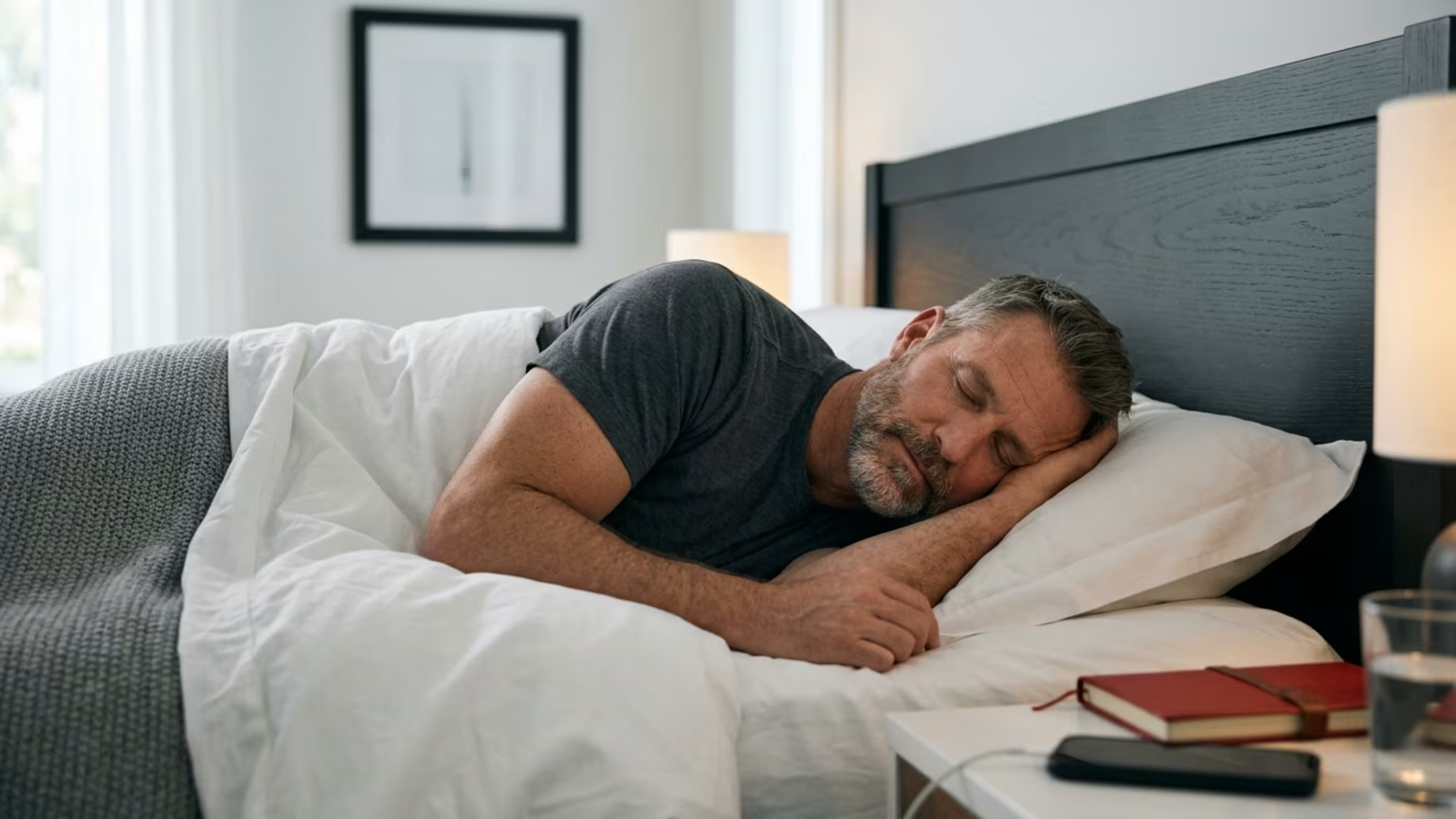
Defining Multidimensional Sleep Health
Multidimensional sleep health is the combined measurement of sleep duration, sleep quality and sleep regularity over time. The sleep and focus connection refers to how these physiological variables interact to dictate daily cognitive function. Experimental sleep loss degrades vigilant attention, reduces sensory discrimination and slows reaction time. This connection means poor rest affects physical responsiveness and mental sharpness equally.
The Relevance to Midlife Capability
Maintaining strong cognitive performance becomes a visible priority for men moving through midlife. Men in their 40s and 50s often juggle demanding professional roles alongside intense physical training goals. The American Academy of Sleep Medicine recommends that adults obtain at least seven hours of sleep per night on a regular basis. Consistently failing to meet this standard affects daily executive performance and long term healthspan.
A recent review states that poor sleep has been associated with lower cognitive functioning across multiple domains. This includes reduced quality and unusually short or long sleep patterns. This association extends to general cognitive decline in later adulthood. Poor sleep is not merely a transient source of daytime fatigue.
Physical capability and recovery from training rely heavily on this biological process. Insufficient rest can impair next day physical performance and blunt the expected adaptation from heavy lifting. A recent exercise and sleep paper describes sleep as the most important recovery modality following exercise. Without adequate rest, men working to preserve strength and muscle face a steep physiological disadvantage.
Treating rest as a core part of recovery programming is mandatory for long term progress. If physical balance, mood, focus and recovery all deteriorate together, increasing training volume is the wrong first move. Prioritizing rest provides a foundation for repairing damaged muscle tissue and restoring nervous system function. Proper recovery dictates how well the body responds to future training stress.
Mood and emotional processing are likewise vulnerable to ongoing degradation. Persistent insomnia has been associated with cognitive impairment in older adults with cerebral small vessel disease. Treating persistent insomnia is a medical necessity rather than an optional lifestyle adjustment. Feeling irritable or unmotivated is often a symptom of poor recovery rather than an unavoidable feature of aging.
What the Evidence Shows
The relationship between nighttime recovery and daytime sharpness is well documented in current clinical literature. A study of adults in mid to late life found that higher multidimensional sleep health was associated with better digital and traditional neuropsychological performance more than a decade later. This longitudinal evidence highlights the lasting value of consistent rest. The consensus points to a combination of lifestyle factors that dictate sleep success.
Duration and Regularity
Consistency appears just as critical as total time spent in bed. A study reported that greater variability in nighttime sleep was associated with steeper cognitive decline. Large swings between weekday and weekend schedules create biological confusion. Protecting a regular wake time provides a reliable anchor for the daily circadian rhythm.
Memory retention relies heavily on these stable patterns. A 2026 PNAS study reported that exercise and naps both preserved episodic memory after sleep loss. The researchers noted an average memory performance 22% higher than in the control condition. This demonstrates that memory encoding and retention suffer directly after a poor night.
Caffeine Intake and Timing
Many mature men rely on caffeine to push through morning fatigue or afternoon meetings. A 2023 meta analysis of 24 studies reported an average reduction of 45 minutes in total sleep after caffeine exposure. The same analysis found a nine minute increase in time needed to fall asleep and an 11.4 minute reduction in deep sleep.
Another systematic review estimated that caffeine reduced sleep efficiency by 7%. This review noted an increase in sleep onset latency by nine minutes and an increase in wakefulness after sleep onset by 12 minutes. Timing matters heavily for men using pre workout supplements. One analysis calculated that a 217.5 milligram pre workout supplement may require a window of at least 13.2 hours before bedtime. A standard coffee containing 107 milligrams of caffeine may need to be consumed at least 8.8 hours before sleep.
Treating caffeine as a highly individual training variable is a sensible strategy. Tracking daily intake of coffee, energy drinks and pre workout formulas provides a clear picture of total consumption. Men noticing a drop in next day concentration should document their afternoon caffeine use to identify potential interference. Modifying this intake is a practical first step before assuming cognitive decline.
Alcohol Consumption
Alcohol is often misused as a relaxation tool at the end of a stressful day. A 2025 systematic review and meta analysis of 27 studies in healthy adults found that alcohol delayed REM sleep and reduced its duration. The drinker might feel drowsy initially. The actual biological architecture of their rest becomes highly fragmented and far less restorative.
Evening Exercise and Screen Exposure
Late workouts are frequently blamed for ruined sleep. A systematic review found that evening exercise did not consistently worsen sleep quality. Vigorous exercise ending within one hour of bedtime was associated with more difficulty falling asleep and lower sleep efficiency. High intensity exercise finishing two to four hours before bed did not significantly alter sleep duration or architecture in healthy adults.
Keeping late training individualized allows for better schedule management. Moderate evening exercise may be completely compatible with good sleep for many individuals. Men who experience consistent delays in falling asleep should evaluate the intensity of their sessions. Moving highly vigorous workouts earlier in the day is a logical adjustment if they consistently damage evening recovery.
Screen exposure creates a different set of challenges. Devices can delay bedtime, increase mental arousal and expose the user to alerting light. Identifying whether a smartphone is provoking emotionally stimulating content is more practical than treating all screen exposure as identical. Managing notifications in the final hour before bed helps protect the transition to sleep.
Identifying Treatable Breathing Disorders
Many men write off loud snoring as a harmless habit. Habitual loud snoring should prompt consideration of obstructive sleep apnea. This is especially true when accompanied by witnessed breathing pauses, gasping, daytime sleepiness or resistant hypertension. Many individuals are completely unaware that their breathing repeatedly stops and restarts during the night.
Questionnaires can estimate risk but cannot replace objective testing when clinical suspicion is meaningful. A clinician typically confirms suspected apnea with an in laboratory sleep study or an appropriate home test. Positive airway pressure is a common first line treatment for confirmed obstructive sleep apnea. Oral appliance therapy may be appropriate for selected patients.
Physical activity, weight loss and side sleeping can help reduce symptom severity. These lifestyle adjustments should never be presented as substitutes for a clinical diagnosis. Recognizing these warning signs allows men to seek evaluation rather than simply consuming more caffeine. Tracking daily concentration and energy levels provides valuable context for a physician.
Acknowledging the Limitations
Current literature provides strong associations but stops short of definitive causal promises. In older adults, better overall sleep health was associated with lower odds of prevalent mild cognitive impairment. Each one point increase in a composite sleep health score was associated with an odds ratio of 0.692. This featured a 95% confidence interval of 0.553 to 0.867.
This specific odds ratio is an observational association. It is not proof that improving sleep alone prevents cognitive impairment or dementia. Observational findings cannot establish that irregular schedules directly cause cognitive decline. Bidirectional relationships often exist where underlying health conditions simultaneously degrade rest and damage brain function.
The seven hour guideline is a population level recommendation rather than a guaranteed personal optimum. Individual sensitivity to caffeine and alcohol varies widely among adults. Averages extracted from a meta analysis provide a starting point for personal experimentation rather than a strict biological law. Consumer wearables cannot replace objective medical testing when a true breathing disorder is suspected.
The Next Phase of Study
Future research is increasingly focusing on whether personalized circadian interventions and precise nutritional timing can actively reverse early signs of cognitive decline in aging populations.
How Everfitguys helps
Managing poor sleep, stress and slower recovery often falls on the individual trying to balance work and fitness, but the approach changes when Everfitguys provides the objective context needed to navigate these issues safely. We translate clinical findings about cognitive performance and sleep health, empowering mature men to protect their attention and memory without relying on restrictive lifestyle rules. Read the research
Sources
- Subjective sleep traits and cognition across mid- to late ...
- Recharge, reboot, rewire: sleep optimizes information processing in neural circuits
- Coffee, caffeine, and sleep: A systematic review of epidemiological ...
- The effect of caffeine on subsequent sleep: A systematic review and ...
- The effect of evening swimming exercise on sleep parameters ...
Stay sharp
Get stories
The best writing on craft and life, delivered once a week. No noise, just the good stuff.