Stretching vs Full-Range Strength Training After 45: Building Range You Can Keep
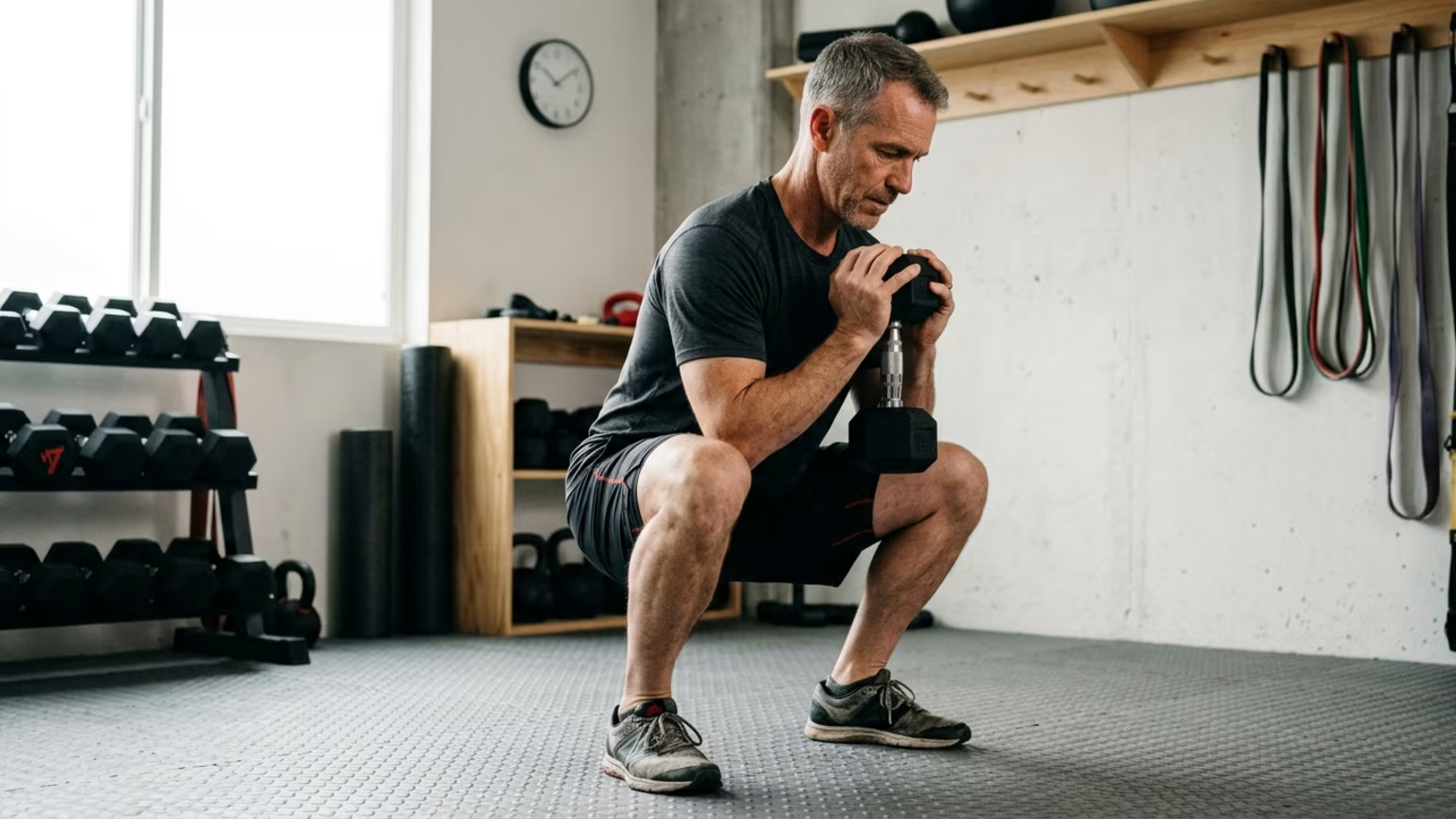
Deciding between dedicated stretching routines and full-range strength training determines whether older lifters maintain usable mobility or simply waste energy before moving heavy weights.
Dedicated Stretching and Dynamic Preparation
Dedicated stretching encompasses dynamic movement preparation and static holding exercises. Dynamic warm-ups raise activity gradually and rehearse specific lifting positions. This approach prepares the relevant joints and tissues without using up energy needed for working sets. Men over 45 can use bodyweight squats, hip hinges, and unloaded presses to prepare for heavy lifting.
Static stretching involves holding a lengthened muscle position to improve long-term flexibility. This method helps the nervous system tolerate tension at the end of an available joint range. However, prolonged static stretching immediately before explosive work can temporarily reduce performance. Evidence summarized in a review reported that static holds of at least 60 seconds per muscle group were more likely to produce a larger short-term performance reduction.
The same review noted the performance reduction becomes less clear when dynamic activity follows the static stretch. Still, brief dynamic movements are often more suitable immediately before demanding physical work. For older lifters, brief stretches are unlikely to cause meaningful impairment on average. The priority is matching the warm-up to the task rather than attempting to force a lasting flexibility change right before a heavy session.
American College of Sports Medicine guidance recommends regular flexibility work for older adults. The organization suggests gentle stretching at least two days per week. They advise holding stretches for 30 to 60 seconds to the point of feeling tightness. This supports placing longer static stretches after a strength session or on a completely separate recovery day.
The Role of Dynamic Warm-Ups Before Lifting
Dynamic warm-ups are best understood as specific physical preparation for the session that follows. They raise tissue temperature gradually while rehearsing the exact positions and coordination needed for the workout. This active preparation method does not attempt to create a large flexibility change immediately before heavy lifting. Instead, it temporarily opens the required range of motion for safe exercise execution.
The most effective warm-ups utilize low-intensity movements that closely resemble the primary training task. A lifter preparing for heavy back squats might perform several sets of deep, unweighted bodyweight squats. Similarly, practicing controlled hip hinges prepares the hamstrings and lower back for heavier deadlifts later in the session. This targeted rehearsal primes the nervous system and lubricates the relevant joints efficiently.
ACSM recommends a gentle warm-up and gradual progression for older adults preparing to exercise. Their example resistance-training progression begins with light effort and 10 to 15 repetitions before increasing intensity. Older lifters can use progressively heavier rehearsal sets as the main bridge to their working weight. This progressive loading strategy secures the necessary joint mobility without wasting energy on excessive cardiovascular conditioning.
Attempting to force new ranges of motion through aggressive holds before lifting is counterproductive. The focus should remain entirely on achieving a comfortable, safe starting position for the primary lift. By keeping the warm-up brief and specific, older men reserve their physical capacity for actual strength development. A short sequence of cycling, joint circles, and targeted movement is usually sufficient.
Full-Range Strength Training Mechanics
Full-range strength training applies external resistance to muscles as they stretch and contract. This method is often called loaded mobility when performed deliberately at the edge of an available range. A controlled split squat or a slow calf raise forces the body to stabilize a lengthened muscle. The tension created during these eccentric movements drives both tissue strength and neurological control.
Resistance exercise remains the clearest driver of muscle capability as men age. A 2026 meta-analysis of 41 randomized controlled trials found that resistance exercise improved muscle-specific strength in older adults. The systematic review included 3,141 participants and reported a standardized mean difference of 0.61. The authors noted that results were heterogeneous across the various studies.
A targeted approach to loaded mobility can also address specific age-related declines. A 2026 meta-analysis of 19 randomized controlled trials evaluated older adults with sarcopenia. This review of 1,267 participants found moderate-intensity resistance training produced the clearest improvement in handgrip strength. The researchers reported a mean difference of 2.37 and a 95% confidence interval of 0.76 to 3.98.
The authors of the sarcopenia review cautioned that no single exercise method was best for every outcome. However, treating full-range lifting as mobility training allows men to secure major functional benefits efficiently. A lifter performing a deep press or squat practices mobility while stimulating muscle growth. The load and tempo must simply remain appropriate to the individual to avoid unnecessary joint stress.
Controlling the Edge of Available Range
Loaded mobility refers to using light to moderate resistance while actively controlling a joint through its full range. This specialized form of strength training forces the nervous system to stabilize the body in deep positions. Examples include a light Romanian deadlift that gradually exposes the hamstrings to tension or a controlled overhead press. These deliberate exercises require the lifter to manage external loads without relying on momentum or compensation.
Older lifters can add light loaded mobility when attempting to solve a specific physical restriction. Controlled ankle work can improve squat depth, while light end-range movements can restore overhead shoulder control. It is important to keep the primary objective of the training day clearly in mind. If the day is designed to build raw strength, mobility work should only support the primary heavy sets.
Lifters should never turn every single set into a maximal stretch or compromise their lifting technique. A safe approach involves using a range of motion that can be controlled without shifting or bouncing. Pushing into painful ranges under heavy loads dramatically increases joint stress and limits actual muscle recruitment. The load, range, and tempo must remain appropriate to the individual lifter and their current physical capacity.
Older adults with a history of joint replacement, unexplained weakness, or recent injury require individualized planning. ACSM guidance repeatedly emphasizes adapting all physical activity to an individual's current functional ability. Mature men should reduce or modify their training when persistent pain, unusual fatigue, or a loss of coordination occurs. Working intelligently within a comfortable range secures consistent progress and protects long-term joint health.
The Evidence on Mobility Outcomes
Many older lifters assume they must choose between heavy resistance training and dedicated flexibility routines. Clinical research demonstrates that these two physical goals do not actually compete. A systematic review and meta-analysis of 11 randomized controlled trials compared strength training with stretching for range of motion. The review included 452 participants and evaluated how each approach affected joint flexibility.
The researchers found no statistically significant difference between the two approaches for ROM improvements. The analysis reported an effect size of -0.22, a 95% confidence interval of -0.55 to 0.12, and p=0.206. This finding confirms that strength exercises performed through a controlled range can directly contribute to joint mobility. Resistance training effectively stretches the tissue under load, producing comparable flexibility improvements.
While these outcomes are comparable, a multi-component approach offers the strongest protection against physical decline. A large LIFE trial summary reported on 1,635 sedentary adults aged 70 to 89 with functional limitations. Participants were randomized to structured walking, resistance, and flexibility training or health education. The intervention tested whether combining these methods could prevent major mobility disability over time.
Over a mean 2.6 years, major mobility disability occurred in 30.1% of the exercise group and 35.5% of the education group. This resulted in a hazard ratio of 0.82 and a 95% confidence interval of 0.69 to 0.98. This evidence supports the broader value of combining aerobic activity, resistance exercises, and flexibility work for later life. A varied routine prepares the body for the unpredictable demands of daily living.
Balancing Activity on Recovery Days
Recovery days provide an opportunity to address physical limitations without adding fatigue from heavy lifting. The American College of Sports Medicine recommends older adults build toward 150 minutes of moderate activity weekly. They also suggest an option of 75 minutes of vigorous activity alongside resistance training on at least two days per week. This guidance encourages regular moderate movement across the entire week rather than complete rest.
Total inactivity is rarely the optimal choice for joint health or systemic recovery. A proper recovery day can include easy walking, gentle cycling, or comfortable range-of-motion work. The primary rule is that the chosen activity must not become another demanding training session. Easy movement helps lubricate joints and clear localized stiffness without depleting energy stores.
Men over 45 should separate their resistance sessions with appropriate recovery time. ACSM guidance advises starting gradually, warming up gently, cooling down easily, and taking individual ability into account. If unusual fatigue or declining performance persists, older lifters should modify their training volume. The research supports an individualized approach rather than a rigid prescription for all aging men.
Using off days for gentle stretching helps the body maintain tolerance to different positions. ACSM recommends stretching to the point of feeling tightness on at least two days per week. By shifting static holds to non-lifting days, men protect their power output for primary workouts. This organized separation allows older athletes to improve flexibility without compromising their main strength stimulus.
Contextual Verdict
If the primary goal is improving passive flexibility and maintaining tissue tolerance on rest days, dedicated static stretching is preferable. Men focusing on recovery can safely use 30 to 60-second holds without compromising immediate power. If the goal is building functional capability and managing time efficiently, full-range strength training is superior. Resistance training builds usable strength and maintains joint range simultaneously. The most capable men integrate both methods effectively across their weekly schedule. They use brief dynamic movements before lifting, perform strength exercises through a full range, and save static holds for later.
How Everfitguys helps
Deciding how to balance heavy lifting with necessary flexibility work requires a clear understanding of what actually improves joint function. Relying on aggressive static stretching before training often accelerates losing muscle, strength and physical capability with age, so Everfitguys translates clinical evidence to help you integrate functional range work safely. Read the research
Sources
- Effects of different exercise types and intensities in older adults with ...
- Strength Training versus Stretching for Improving Range of Motion
- Effects of exercise and nutritional interventions on muscle ...
- Static Stretching vs Loaded Stretching - Motive Training
- Flexibility Training Pilates: Lasting Mobility Guide
Stay sharp
Get stories
The best writing on craft and life, delivered once a week. No noise, just the good stuff.