Comprehensive Exercise Guidelines Combining Cardio, Strength, and Balance for Older Adults
- A 2026 meta-analysis of 41 randomized controlled trials involving 3,141 participants found that resistance exercise significantly improved muscle-specific strength.
- Public health guidance recommends building toward 150 minutes of moderate activity or 75 minutes of vigorous activity each week.
- One systematic review of perturbation-based balance training reported a 23% reduction in fall rates and a 24% reduction in injurious falls.
- Resistance training guidelines suggest starting with 10 to 15 repetitions for each major muscle group and progressing to 8 to 12 challenging repetitions.
- Balance practice requires holding challenged positions for roughly 15 to 30 seconds as your physical ability improves.
- Joint mobility drills should be performed for approximately 10 repetitions, moving carefully to the point of tightness rather than pain.
What the Research Tells Us About Returning to Activity
The strongest public health guidance supports a multicomponent approach to healthy aging. The American College of Sports Medicine states that older adults should perform a mix of aerobic activity, muscle strengthening, balance work, and flexibility training. A single focus on cardio is no longer considered adequate for men looking to maintain their physical capability.
For aerobic fitness, the guidance advises building toward 150 minutes of moderate intensity activity per week. Or, men can aim for 75 minutes of vigorous activity or a combination of both intensities. When restarting after a long period of inactivity, you should begin with light to medium effort. You can slowly build this activity toward 30 to 60 minutes over the day.
Strength training metrics are equally specific in the scientific literature. ACSM material recommends muscle strengthening exercise on at least two days per week. You should take a rest day between these sessions when possible. The suggested starting range for resistance exercise is 10 to 15 repetitions for each major muscle group.
From there, men should progress toward 8 to 12 challenging repetitions for one to three sets. The effectiveness of resistance exercise is well documented. A 2026 meta-analysis of 41 randomized controlled trials involving 3,141 participants measured these exact outcomes. It found that resistance exercise significantly improved muscle-specific strength with a standardized mean difference of 0.61 and a 95% confidence interval of 0.27 to 0.94.
Balance and mobility training provide the final pieces of the physical activity puzzle. ACSM guidance outlines balance drills such as narrowing the base of support, line walking, and heel-to-toe walking. These physical positions should be held for roughly 15 to 30 seconds as ability improves.
One systematic review of perturbation-based balance training quantified potential benefits. It reported a 23% reduction in fall rates and a 24% reduction in injurious falls compared with control groups. For mobility, gently moving joints through their available range of motion is advised. ACSM gives examples such as knee slides and wrist and shoulder circles performed for approximately 10 repetitions.
Where the Data Shows Uncertainty
These statistical targets are highly useful, but they carry important scientific limitations. The 2026 strength meta-analysis reported substantial heterogeneity among its included studies. It returned an I² value of 81%, meaning the underlying trials differed considerably in their methods or results. The studies also focused on older adults as a broader group rather than solely on men over 45.
The findings prove a clear overall benefit for building strength. However, they do not guarantee exactly the same level of improvement for every man. The fall prevention statistics require a similar degree of cautious interpretation. The reported 23% and 24% reductions in falls apply specifically to perturbation-based training.
The authors of that systematic review rated the certainty of the fall rate evidence as low. They also noted that this training primarily improved reactive balance. Its effect on other fall risk factors, including gait, was found to be much more limited. Standard static balance drills might not produce the exact same numerical risk reduction in a real world setting.
Furthermore, the public health targets represent long term goals rather than immediate mandates. The current evidence does not establish one universally correct starting distance for a return to walking. It also lacks a validated fixed week-by-week timeline that guarantees perfectly safe progression. The guidance to exercise two days a week is practical, but individual results will vary widely based on prior medical conditions.
How to Rebuild Capability Safely
Translating this clinical data into daily life requires a progressive, capability-based approach. The first phase of returning to exercise should be treated as a capacity building block rather than a test of physical toughness. The Move Your Way activity planner highlights the need for personalized activity planning. Activity should be adapted to the individual rather than prescribed solely by age.
Pacing Your Aerobic Foundations
Walking is a practical entry point because intensity, duration, and terrain are easily adjusted. Start with short, easy walks that leave you capable of repeating the session safely. Add minutes before you try to add speed, hills, or harder terrain. If a continuous session is not comfortable, you can break the activity into shorter bouts.
ACSM specifically notes building activity toward 30 to 60 minutes over the day. Use your next day joint response as a simple feedback tool. If a session causes a clear worsening of joint symptoms, simply reduce the dose. Measuring your capacity by next day recovery keeps your progress completely sustainable. It prevents setbacks while you rebuild your baseline endurance.
Sensible Strength Progressions
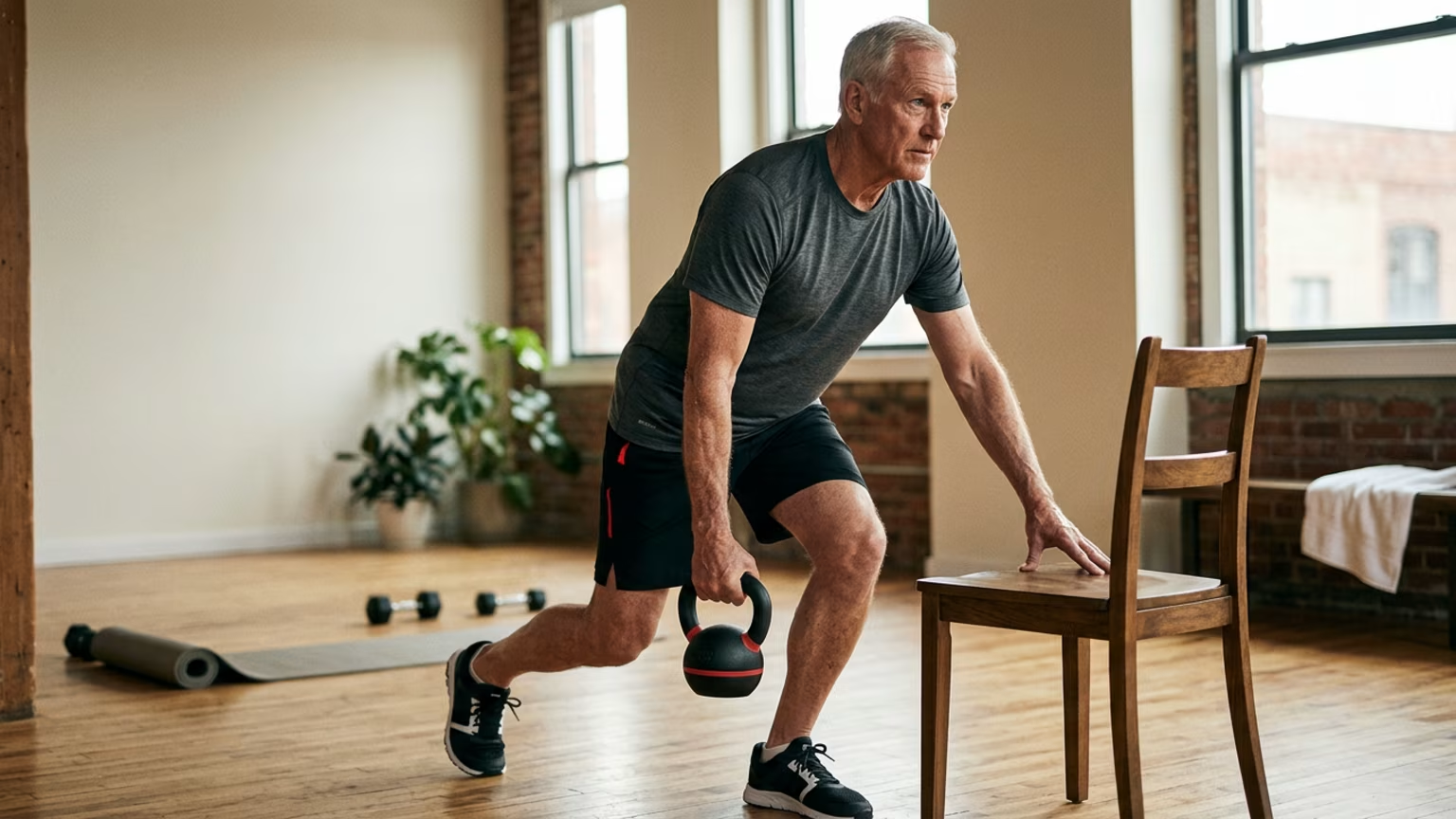
Keep strength sessions simple and make certain they cover the major movement patterns. Functional movements include a sit-to-stand pattern, a hip hinge, a push and a pull. Calf raises are also excellent choices. Loaded carries are highly useful when walking mechanics and physical balance are adequate.
Focus on establishing functional movement quality before adding heavy external loads. Start with a reduced range of motion, body weight, or a light band. Once you tolerate the initial dose, gradually progress toward those 8 to 12 challenging repetitions. Take a full rest day between sessions to let your muscles recover fully.
Balance and Joint Mobility Practice
Balance can be trained safely through supported positions and progressively reduced assistance. Start by holding a stable support lightly. You can then narrow your stance, move to a staggered stance, and eventually try line walking. Reduce your hand support only when your physical control is completely reliable.
Practicing mobility and recovery means moving joints to the point of tightness rather than sharp pain. Smooth, controlled motion is vital for long term physical success. There is never a need to force a joint into an extreme or painful position during your warm up. Range of motion can simply be used as a readiness marker for your strength work.
The Long Term View on Physical Independence
The broader scientific message is that physical capability responds exceptionally well to a multicomponent training approach. Treating fitness as a blend of strength, balance, and aerobic work builds a highly resilient physical foundation for healthy aging. It rightly shifts the training focus away from arbitrary age limits. Instead, you measure your progress through highly useful functional milestones.
Walking longer without a deterioration in gait, rising from a chair easily, and carrying groceries without losing posture are all clear markers of success. Staying active delivers profound systemic benefits that support long term independence. The CDC explicitly says that moderate to vigorous physical activity can help slow the loss of bone density. The same agency notes that activity can reduce arthritis pain and lower the risk of hip fracture.
These specific benefits make a profound difference in maintaining an active lifestyle well into your seventies and eighties. Consistency in building strength keeps you physically prepared for the demands of daily life. Reclaiming your fitness after 45 requires sensible progression and steady patience. Building up gradually helps you stay capable, fully mobile, and physically ready for whatever your active lifestyle requires.
How Everfitguys helps
Stiffness, joint pain and reduced mobility that limits activity often frustrate men trying to rebuild their fitness. Everfitguys researches the clinical evidence to help you safely restore movement and build strength without forcing painful positions. By interpreting current physical activity guidelines and resistance training data, Everfitguys helps you design a sensible routine that preserves your independence for the years ahead. Read the research
Sources
Stay sharp
Get stories
The best writing on craft and life, delivered once a week. No noise, just the good stuff.