University of Arizona Studies Add Nuance to Everyday Memory

On October 11, 2026, Digital Journal reported that two University of Arizona studies used smartphones to examine personal memories outside the laboratory.
How to study remembering in daily life
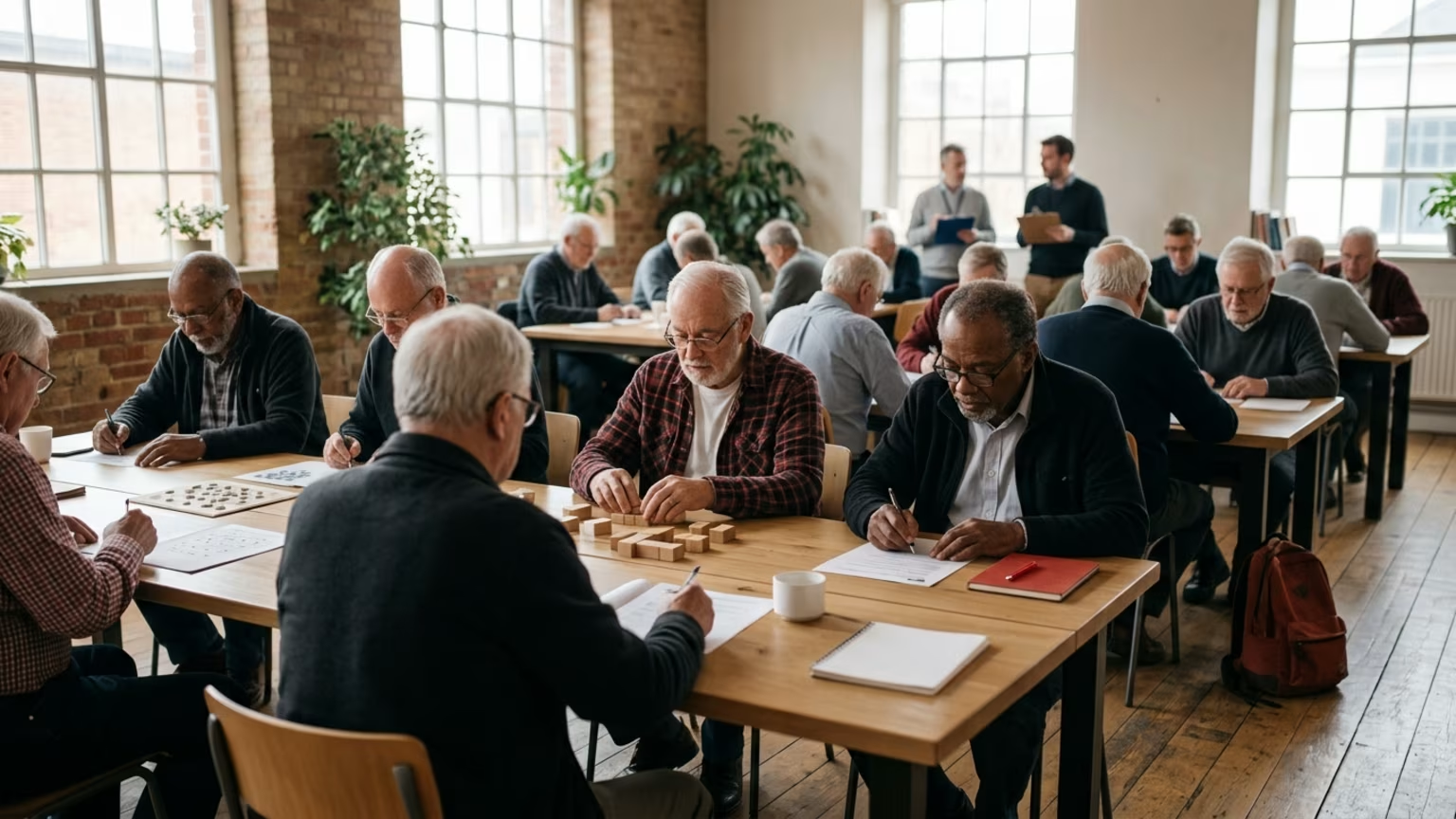
According to the report, both studies focused on autobiographical memory, meaning recollections from a person's own life. Rather than asking only for a memory in a laboratory interview, the researchers sampled thoughts or conversations during ordinary days.
Mind Window sampled thoughts as they happened
The first analysis used an app called Mind Window and included nearly 5,000 adults ages 18 to 89. The app prompted participants at random times to report what they were thinking about. It asked whether a memory was on their mind and how vivid or specific that memory felt.
These prompts addressed separate questions: whether a personal memory came to mind and what the experience of recalling it was like. That distinction matters for interpreting the results. A count of memory-related thoughts and a rating of recalled detail describe different features of remembering.
EAR sampled memories shared in conversation
The second study used the Electronically Activated Recorder (EAR). Digital Journal describes it as a smartphone app that records snippets of everyday conversation. Researchers looked for occasions when participants spontaneously shared memories of their lives.
Participants were ages 18 to 81. The report does not provide a sample count for this study. Here the material was spoken recollection rather than responses to a thought prompt. That offers a different view of when remembering appears in everyday life.
These were observational sampling studies, not intervention trials. The coverage does not state how long either study ran or how long each participant was observed.
Sampling the setting along with the memory
A 2026 methods article in the Journal of Cognitive Neuroscience describes smartphone sampling as a way to gather experience and context in real-world settings. It also discusses design and analysis considerations. The value of this approach is its access to the setting in which an experience occurs.
The two approaches in the Arizona report captured different forms of expression. Mind Window asked people to describe an experience when prompted. EAR sampled memories that people shared without a researcher asking for a recollection at that moment. This is a difference in research design, not a ranking of which kind of memory matters more.
Why recall frequency and recalled detail tell different stories
The Digital Journal account describes several outcomes. They concern thoughts and reported memory qualities rather than physiological changes or clinical treatment results.
- Fewer memory-related thoughts: Older adults reported fewer thoughts about personal memories than younger adults.
- Less spontaneous reflection: Older adults were described as reflecting on the past less often.
- Greater reported vividness and specificity: In Mind Window, older participants described the memories they recalled as more vivid and specific.
- More detail in everyday conversation: The EAR findings suggested older adults shared more detailed memories during ordinary conversations than during laboratory interviews.
The last comparison needs careful reading. It compares the detail in older adults' everyday conversations with the detail in their laboratory interviews. It is not the same comparison as older participants versus younger participants in the app-based analysis.
Taken together, the reported patterns challenge a single description of age-related memory change. Frequency answers the question of how often a memory appears. Vividness asks how clear the recollection feels. Specificity asks about the particulars being described.
The results can point in different directions because these are different outcomes. Fewer spontaneous recollections and richer recalled memories can both appear in the same account. There is no need to turn them into one score or declare an overall winner between age groups.
That is the useful part of the report for a reader over 45: it replaces a broad label with more precise questions. Instead of asking whether memory is simply weaker or stronger, ask which feature was measured and in what setting.
How to weigh the evidence before changing expectations
The findings reach readers through secondary reporting. Digital Journal does not name the researchers or either study paper, and it provides no direct links to the papers. That prevents checking the reported age patterns against the original methods and statistical results.
The account also leaves several points unresolved:
- No effect sizes quantify the differences in frequency, vividness, specificity or conversational detail.
- No confidence intervals show how precise the reported findings were.
- Detailed sample demographics are absent, including information needed to judge how well the results apply to men over 45.
Accuracy is a separate issue. The report says the studies did not test whether remembered details were factually correct. A vivid memory should therefore be read as a reported experience, not proof that each part of the event happened exactly as recalled.
Neither news account establishes effects on independence, athletic performance or dementia risk. Nor do they establish findings unique to men. The available evidence supports no specific exercise, supplement or lifestyle prescription for preserving memory.
A different task produced a different pattern
A separate report on a 74-person study described research published in Psychology and Aging. Older adults rated memories of one-time events as more vivid and emotional, yet supplied fewer specifics.
That pattern is useful context rather than a clean confirmation of the Arizona findings. It shows why vividness and specificity should not be treated as the same measure. The reports point toward a role for how memories are prompted and assessed.
The Journal of Cognitive Neuroscience methods article is separate from the Arizona studies too. Its abstract describes healthy adults with a mean age of 24.4. It supports discussion of smartphone research methods, not independent confirmation of the reported aging patterns.
How to read the findings with a practical purpose
For men who care about staying mentally sharp, the practical value is a more precise way to read memory claims. Use the reported measures as categories for understanding the evidence, not as a new self-test.
Start with the outcome named in a report:
- Frequency: Is the question how often personal memories come to mind?
- Experience: Is the result about vividness or emotion?
- Specificity: Is the study counting or describing details?
- Context: Was recall sampled in daily life or requested in an interview?
A claim about one category should stay in that category. This keeps a report on personal recollections from becoming a statement about every aspect of mental performance.
Readers who want a broader starting point can use Everfitguys's everyday memory resource. For a related topic, see the publication's coverage of memory networks with age.
Personal decisions about cognitive health belong in a conversation with qualified care. The evidence here serves that discussion by making the subject more precise.
What this changes: The reported findings add nuance to how everyday memory is studied and discussed, but they do not justify changes to current care or training practices.
How Everfitguys helps
Putting these memory findings in context is one step toward understanding later-life capability, the wider subject of Everfitguys's research led coverage. For men concerned about losing muscle and strength with age, the publication explains current research with a practical focus on remaining strong, mobile and mentally sharp.
Sources
Stay sharp
Get stories
The best writing on craft and life, delivered once a week. No noise, just the good stuff.