Physiological reserve is the gap between the maximum output your body can produce and the energy required to get through a normal day. It is not an abstract wellness concept, and it is not a promise of eternal youth. Reserve is the buffer that protects your independence when life presents sudden physical, medical, or environmental demands.
Many men mistake daily function for true resilience. You might walk comfortably, manage your work, and handle routine chores without difficulty. That baseline performance shows what you can do under calm conditions, but it does not measure what happens when an infection, a sudden fall, an unexpected surgery, or weeks of forced rest challenge your system.
Building capacity before you need it changes your trajectory across midlife and later life. This guide examines the clinical science behind physical reserve, outlines the physiological systems that build it, and provides a structured strategy to help you stay capable, strong, and self-reliant after 45.
What Does the Clinical Research Show About Physiological Reserve?
Clinical research views physiological reserve as a multisystem buffer that preserves functional independence under stress. When a stressor occurs, your body draws upon its stored physical and metabolic capacity to maintain equilibrium. If your reserve is high, you absorb the disruption, recover, and return to your daily routine. If your reserve is low, even a minor illness or injury can push you past a threshold into functional decline.
Researchers often evaluate this reserve by studying the opposite end of the spectrum: the clinical frailty syndrome. The widely studied Fried frailty phenotype identifies five specific physical markers. These markers are unintentional weight loss, self-reported exhaustion, low grip strength, slow walking speed, and low physical activity. In long-term studies following community-dwelling older adults over seven years, having three or more of these markers strongly predicted mobility loss, falls, hospital admissions, and earlier mortality.
Muscle strength serves as a foundational pillar in this research. The European Working Group on Sarcopenia in Older People, in their EWGSOP2 consensus update, established low muscle strength as the primary indicator of sarcopenia. Muscle mass matters, but muscle strength and physical performance are the strongest indicators of real-world capability and survival. Clinical screening tools frequently use clear functional thresholds, such as a handgrip strength below 27 kilograms for men or taking longer than 15 seconds to complete five unassisted chair stands.
Cardiorespiratory fitness shows a similar protective relationship across extensive clinical cohorts. Long-term studies using formal exercise treadmill testing demonstrate an inverse relationship between aerobic fitness and all-cause mortality. In large cohort analyses, individuals in low-fitness groups had mortality rates around 80 deaths per 10,000 person-years, while individuals in high-fitness groups experienced roughly 50 deaths per 10,000 person-years. Remaining physically active provides measurable survival benefits across all age groups, including older adults who maintain their training over time.
Exercise interventions also directly influence fall risk, which represents one of the greatest threats to physical independence. Systematic reviews of clinical trials show that structured exercise programs reduce the rate of falls by approximately 23 percent among older adults. Programs that include balance and functional exercises for more than three hours each week achieve an estimated 42 percent reduction in fall rates. Physical capacity is not a static genetic trait; it responds directly to targeted training.
Metabolic health forms the final piece of the clinical foundation. Meta-analyses of randomized controlled trials demonstrate that progressive resistance training helps regulate blood sugar by improving tissue sensitivity and increasing active muscle mass. These trials show meaningful reductions in resting fasting blood glucose and hemoglobin A1c. Muscle functions as a primary engine for glucose disposal, making muscular strength a central component of metabolic resilience.
Why Does Functional Capacity Change After Age 45?
The physical changes that occur after age 45 are normal biological adaptations, not a sudden disease state. As the decades progress, subtle shifts in your neuromuscular system, connective tissues, cardiovascular structure, and hormonal environment combine to reduce baseline capacity. Understanding these mechanisms allows you to target your training toward the specific biological systems that need support.
The neuromuscular system experiences an ongoing loss of motor units. Fast-twitch muscle fibers, which generate rapid power and high force, experience greater atrophy than slow-twitch endurance fibers. When you do not challenge these fast motor units with resistance training or rapid movements, the brain becomes slower at recruiting them. This reduces your ability to produce rapid force during unexpected events, such as stumbling over an obstacle.
Connective tissues also change in their water content and collagen organization. Tendons and ligaments become stiffer, while articular cartilage loses some of its natural shock absorption. This structural shift can reduce joint range of motion and alter how force travels through your hips, knees, and ankles. Without regular movement through complete ranges of motion, joints adapt to limited daily postures, which makes spontaneous movements feel restricted or uncomfortable.
Cardiovascular and pulmonary efficiency declines through structural changes in the heart and blood vessels. Arterial walls gradually stiffen, which increases resting vascular resistance and raises blood pressure during exertion. Maximal heart rate drops predictably with age, and the heart fills slightly less efficiently during diastole. These changes reduce maximal oxygen uptake, meaning that an ordinary physical task requires a higher percentage of your total available aerobic capacity.
Metabolic efficiency changes as muscle quality shifts. Muscle tissue can accumulate microscopic lipid deposits between fibers, which reduces muscle contractility and alters insulin signaling. When combined with a more sedentary daily routine, total daily energy expenditure drops, and blood glucose regulation becomes less efficient. Preserving healthy energy and metabolism requires deliberate resistance training to stimulate muscle protein synthesis and maintain glucose uptake pathways.
Hormonal production shifts gradually across midlife. Circulating testosterone, growth hormone, and insulin-like growth factors decline in a steady, modest manner rather than an abrupt drop. These endocrine changes slow the rate of tissue repair and muscle protein synthesis after hard exertion. Slower recovery does not mean you cannot build muscle or strength; it simply means your training program must balance mechanical stress with adequate sleep and recovery time.
What Does Having Low Reserve Mean in Real Life?
In ordinary life, low physiological reserve changes your margin for error. When your maximum capacity is only slightly higher than the demands of your daily routine, you operate near your physical limit without realizing it. A sudden disruption can exceed your available strength or stamina, leading to injury, severe fatigue, or prolonged loss of function.
Consider the physical demands of unexpected illness or minor surgery. A healthy individual with high physiological reserve might spend five days resting in bed, lose a small amount of muscle, and return to normal activity within two weeks. A person with low reserve who undergoes the same bed rest may lose the critical leg strength required to stand from a chair without assistance. The illness itself may pass, but the loss of physical capacity leaves them dependent on others for basic daily tasks.
Stair climbing illustrates how reserve impacts daily movement. Climbing a flight of stairs while carrying groceries requires significant lower-body strength, single-leg balance, and brief cardiovascular output. If your maximum aerobic capacity is low, climbing two flights pushes your heart rate close to its maximum, leaving you winded and unsteady at the top. When you possess ample reserve, that same climb uses only 40 percent of your capacity, leaving you stable, alert, and capable of handling an unexpected stumble.
Floor transfers represent another critical real-world test. Getting up from the ground requires coordinated hip mobility, knee extension strength, core stability, and upper-body pushing force. Many men over 50 lose the ability to get up from the floor simply because their daily lives never require them to drop below chair height. If you trip in an unfamiliar location, being unable to get off the floor turns a minor incident into a prolonged physical crisis.
Travel and recreation also expose differences in physical reserve. Navigating an airport with heavy luggage, walking across uneven cobblestones, or hiking on a steep trail requires dynamic balance and multi-directional strength. Men with adequate reserve enjoy these activities with confidence and stamina. Men with low reserve find their activities shrinking over time as they quietly avoid walking on uneven surfaces, climbing hills, or carrying heavy bags.
Long-term independence requires building physical buffers before you experience a crisis. Investing in structured longevity science and optimization helps ensure that normal daily activities consume only a modest portion of your total strength, leaving ample room to absorb whatever challenges arise.
What Are the Core Domains of a Complete Reserve Portfolio?
Building true physical resilience requires a balanced portfolio of physical capacities rather than focusing on a single fitness metric. A man may have exceptional cardiovascular endurance from cycling but lack the upper-body pulling strength to climb over an obstacle. Another may lift heavy weights in a straight line but lack the balance to navigate a rocky trail. A complete reserve portfolio covers six interconnected domains.
1. Strength and Muscle Quality
Muscular strength is the foundational anchor of the entire reserve system. Strength allows you to lift heavy objects, push open heavy doors, carry supplies, and maintain proper posture under load. Muscle tissue also acts as an amino acid reservoir that your body can draw upon during acute medical recovery.
A complete strength program targets several primary movement patterns:
- Lower-body knee-dominant force through squats and lunges.
- Lower-body hip-dominant force through deadlifts and hip hinges.
- Upper-body pressing through overhead presses and push-ups.
- Upper-body pulling through rows and pull-downs.
- Loaded carries that challenge grip strength and core bracing.
Focusing on comprehensive strength and muscle development protects your joints from excessive shear forces while preserving functional independence.
2. Muscle Power and Movement Speed
Power is the ability to generate force quickly. While strength involves moving a load with maximum effort regardless of time, power determines how fast your muscles can fire when needed. Power declines faster with age than absolute strength, making it a critical focus for men over 45.
Power allows you to step rapidly to catch yourself when your foot catches an uneven sidewalk. It helps you stand up from a low chair with a smooth, decisive motion rather than rocking forward several times. Training power involves performing familiar movements with high intent and controlled velocity, such as explosive chair stands, light medicine ball throws, or rapid step-ups onto a stable platform.
3. Aerobic Capacity and Stamina
Cardiorespiratory fitness determines how effectively your heart, lungs, and blood vessels deliver oxygen to working muscles during sustained effort. A well-conditioned aerobic system improves your daily energy levels, speeds up recovery between sets of physical work, and lowers your resting cardiovascular strain.
Aerobic reserve includes both low-intensity base conditioning and higher-intensity capacity:
- Low-intensity steady movement that builds capillary density and mitochondrial volume.
- Moderate-intensity continuous work that trains sustainable cardiovascular output.
- Occasional higher-intensity intervals that challenge maximal oxygen delivery.
Maintaining a broad aerobic base ensures that prolonged physical exertion, such as a long day of travel or yard work, does not leave you exhausted for several days afterward.
4. Balance and Postural Control
Balance is an active, complex neurological skill rather than a static physical trait. It requires your brain to integrate visual data, inner-ear vestibular feedback, and proprioceptive signals from your feet and ankles. When any of these sensory systems experience age-related changes, your movement system must adapt quickly to maintain stability.
Real-world balance requires dynamic control under shifting conditions. You must be able to maintain your balance while turning your head, stepping over objects, walking in dim lighting, or carrying an uneven load. Effective balance practice includes tandem walking, single-leg balancing near a wall, multi-directional stepping drills, and walking across varied outdoor surfaces.
5. Joint Mobility and Functional Range
Mobility is the usable, active range of motion available around your joints. It differs from passive flexibility, which simply measures how far a muscle can stretch when pulled by an external force. Mobility requires both the flexibility to reach a position and the muscular strength to control that position safely.
Preserving healthy mobility and recovery allows you to squat deeply, reach overhead without arching your lower back, rotate through your thoracic spine, and move your ankles freely. Joint mobility ensures that force distributes evenly across your musculoskeletal system rather than concentrating in your lower back or knees.
6. Metabolic Flexibility
Metabolic reserve reflects your body's ability to transition smoothly between burning carbohydrates and fats for fuel while keeping blood sugar within a stable range. A resilient metabolic system prevents sharp energy crashes, supports stable cognitive focus, and minimizes visceral fat accumulation around vital organs.
Regular resistance exercise and consistent aerobic movement enhance insulin sensitivity by increasing glucose transporter proteins in your muscle cells. This allows your body to clear glucose from the bloodstream efficiently, supporting stable daily energy and long-term vascular health.
How Can You Build Physical Reserve Step by Step?
Building physical reserve requires a systematic progression rather than random, exhausting workouts. Pushing too hard too fast often leads to joint inflammation or tendon injury, which disrupts training consistency. A five-phase framework creates a sustainable path toward lasting physical capability.
Phase 1: Establish Your Baseline
Before adding intense physical training, evaluate your current movement baseline under controlled conditions. This assessment identifies your weakest functional domains so you can address them directly.
Track simple, repeatable physical measures:
- Your comfortable and brisk walking speeds over a measured distance.
- The time required to complete five unassisted chair stands.
- Your ability to balance on each leg for 20 seconds near a stable support.
- Your resting blood pressure and morning resting heart rate.
- Your comfort level when getting down to and rising up from the floor.
Record these numbers in a simple notebook. Trends over several months provide valuable feedback on your physical trajectory.
Phase 2: Build a Consistent Movement Base
The goal of the second phase is establishing reliable movement habits without causing excessive fatigue. Focus on accumulating daily movement volume and developing clean exercise technique.
Aim to walk every day, aiming for steady, brisk walking that elevates your breathing rate slightly while still allowing you to speak in complete sentences. Break up long periods of sitting by standing up, stretching, or performing brief mobility drills every hour. Introduce two weekly resistance sessions that focus on basic movement patterns using bodyweight, resistance bands, or light free weights.
Consistency matters far more than intensity during this phase. Creating a predictable weekly routine establishes the physiological foundation needed for progressive overload.
Phase 3: Apply Progressive Overload
Once your movement base is established, begin challenging your muscles and cardiovascular system with gradual increases in demand. Your body adapts to stress by building stronger muscle fibers, denser bones, and more robust connective tissues.
Progress your training by changing only one variable at a time:
- Add one or two repetitions to an exercise set while keeping the weight the same.
- Increase the load slightly once you can complete your target repetitions with clean form.
- Increase the total distance or duration of your aerobic sessions by 5 to 10 percent per week.
- Increase the complexity of your balance drills by narrowing your stance or practicing on uneven grass.
Avoid changing weight, volume, and speed in the same week. Controlled progression allows your tendons and ligaments sufficient time to adapt to new mechanical forces.
Phase 4: Train the Edges of Daily Capability
After building baseline strength and endurance, expand your training to include the irregular, demanding movements that occur during unexpected physical events. This phase prepares your body for real-world unpredictability.
Incorporate dynamic and functional exercises into your routine:
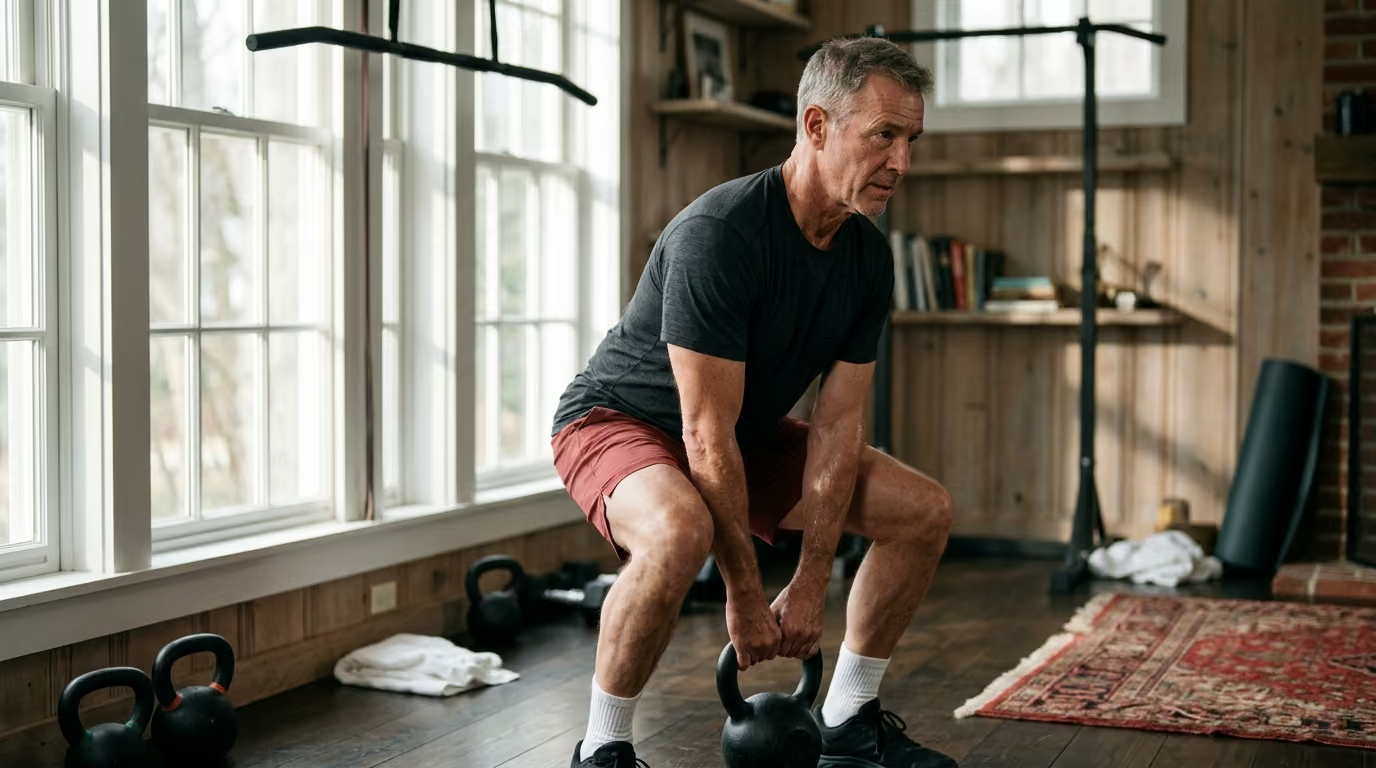
- Practice carrying uneven weights, such as a heavy kettlebell in one hand, to train core stabilization.
- Climb stairs or hill inclines while wearing a weighted backpack.
- Practice controlled floor transfers, testing different ways to lower yourself down and stand back up safely.
- Introduce intentional power movements, such as jumping rope, throwing a light medicine ball, or performing rapid box step-ups.
- Perform dual-task walking drills, such as reciting numbers backward while navigating an obstacle course.
These drills challenge your nervous system, improving coordination, balance, and spatial awareness under changing conditions.
Phase 5: Maintain Capacity During Life Disruptions
Life inevitably brings disruptions, such as travel, busy work periods, minor illnesses, or family responsibilities. The final phase involves knowing how to preserve your physical reserve using a minimum effective dose of exercise.
When you cannot complete a full workout, focus on maintaining basic movement patterns:
- Perform five minutes of bodyweight squats, push-ups, and doorframe rows in your living room or hotel.
- Take short, brisk walks throughout the day rather than one long workout.
- Practice single-leg balance and ankle mobility while brushing your teeth or waiting for coffee.
- Maintain adequate dietary protein and hydration to support muscle preservation during periods of reduced training.
Doing 20 percent of your normal routine preserves most of your physical gains, making it easy to resume full training when your schedule clears.
What Are the Most Common Misunderstandings About Aging and Fitness?
Misunderstandings about physical capability after 45 often cause men to choose ineffective training routines or stop exercising altogether. Examining these common myths helps you make informed choices based on clinical evidence.
Misconception 1: Daily Walking Covers All Your Physical Needs
Walking is an outstanding baseline activity for cardiovascular health, mental clarity, and metabolic function. Public health guidelines rightly encourage walking as a primary tool to reduce sedentary time.
Walking alone does not build or maintain all components of physiological reserve. It does not provide sufficient mechanical tension to prevent upper-body muscle loss, nor does it challenge your bones with multi-directional loading. Walking does not train high-velocity power production or dynamic floor-to-standing transfers. A complete reserve strategy uses walking as a foundation while adding targeted strength, power, and balance work.
Misconception 2: Chronological Age Dictates Your Physical Limits
Many men assume that crossing age 50 or 60 automatically sets hard limits on what their bodies can achieve. They attribute stiff joints, lower energy, and reduced muscle mass entirely to the calendar.
Chronological age is a marker of time, not an absolute measure of biological capacity. Two 65-year-old men can have drastically different physiological profiles depending on their training history, nutrition, and daily movement habits. Clinical trials show that older adults into their eighties and nineties can build significant muscle mass, gain strength, and improve balance when provided with progressive resistance training.
Misconception 3: Muscle Size Is the Only Measure of Strength Training Success
Bodybuilding culture often equates successful resistance training solely with muscle hypertrophy. Men over 45 sometimes abandon strength training because their muscle size does not increase as rapidly as it did in their twenties.
Muscle quality, neurological recruitment, and functional force matter far more for resilient aging than muscle measurements. The EWGSOP2 consensus identifies muscle strength as the primary characteristic of sarcopenia assessment, with muscle mass serving as a secondary confirming marker. Improving how quickly and efficiently your nervous system activates your existing muscle fibers produces major gains in physical capability, even if your physical measurements change slowly.
Misconception 4: Heavy Lifting Is Inherently Dangerous for Aging Joints
A common belief is that lifting weights wears out joints and causes arthritis in older adults. This fear often leads men to avoid resistance training in favor of gentle, low-load exercises that fail to stimulate adaptation.
Properly supervised, progressive resistance training actually strengthens the connective tissues, tendons, and muscles that stabilize your joints. Articular cartilage relies on mechanical loading and unloading to circulate synovial fluid and receive nutrients. While reckless form and excessive loads increase injury risk, controlled resistance training through comfortable ranges of motion remains one of the most effective ways to reduce chronic joint discomfort.
Where Is the Evidence on Longevity and Reserve Still Limited?
While the broader benefits of physical activity and strength are well established, certain areas of longevity research contain notable gaps, mixed findings, and methodological limitations. Maintaining an objective, evidence-based mindset requires recognizing where scientific certainty ends.
Much of the data linking high cardiorespiratory fitness to lower mortality comes from large observational cohort studies. These studies provide compelling correlations, but they cannot prove direct causation. Healthy individuals may naturally exercise more because they are free from underlying, undiagnosed conditions, a factor known as reverse causation. While researchers adjust for confounding variables like smoking and preexisting disease, observational studies cannot guarantee that increasing your VO₂max by a specific percentage will extend your lifespan by an exact number of years.
Standardized definitions for physiological reserve also remain an active area of debate among geriatricians. While clinicians have validated specific tools like the Fried frailty phenotype and the Short Physical Performance Battery, there is no single, universally accepted biomarker score that defines an individual's overall reserve. Most clinical protocols measure individual physical components, such as grip strength, gait speed, and chair-rise times, rather than a unified reserve index.
Evidence regarding specific longevity supplements and aggressive recovery modalities is often weak or preliminary. Many compounds that show promising results in rodent models or small laboratory trials fail to deliver measurable functional improvements in human clinical trials. Similarly, commercial claims regarding extreme cold exposure, infrared saunas, and specialized biohacking devices often outpace the underlying scientific data. These modalities cannot replace the proven benefits of progressive resistance training, aerobic conditioning, sound nutrition, and restorative sleep.
Research is also limited regarding the optimal training volume for older adults managing multiple chronic conditions. Most large-scale randomized trials exclude individuals with complex medical profiles, meaning that exercise guidelines often need individualized clinical adaptation for men managing advanced cardiovascular disease, severe neuropathy, or severe joint degeneration.
How Can You Adapt Your Reserve Training for Specific Health Concerns?
Building physiological reserve requires intelligent adaptation when dealing with preexisting health conditions or injuries. Modifying your exercises allows you to build capacity safely without aggravating sensitive tissues.
How Should You Train If You Have Joint Pain or Osteoarthritis?
Joint discomfort should change your exercise selection, not stop your training altogether. Focus on low-impact movements that build muscular strength around the affected joint without subjecting it to high peak impacts.
For knee or hip discomfort, try exercises that allow you to control the movement speed and range, such as box squats, step-ups onto a low platform, or stationary cycling. Isometrics, where you hold a muscle contraction without moving the joint, can build significant strength and reduce pain signals. Warm up thoroughly with gentle, unweighted movements to promote synovial fluid flow before adding resistance.
How Can You Safely Build Reserve After Age 65 If You Are Starting from Scratch?
Starting a reserve-building program later in life requires a patient approach centered on balance and foundational strength. Begin with simple bodyweight exercises performed near a sturdy support, such as a countertop or heavy chair.
Focus on the five-times sit-to-stand exercise, wall push-ups, and gentle heel-to-toe balance standing. Walk at a comfortable pace for 10 to 15 minutes each day, gradually increasing your time as your stamina improves. Working with a qualified physical therapist or certified strength professional can help you learn proper form and build confidence.
What Is the Best Approach When You Are Recovering from Illness or Bed Rest?
Returning to exercise after a significant illness or period of bed rest requires a gradual reintroduction to movement. Jumping immediately back into your prior workout routine can cause extreme fatigue or relapse.
Begin with frequent, short movement sessions throughout the day. Take three five-minute walks rather than one long 15-minute walk. Perform gentle seated leg extensions, ankle circles, and light posture work in a chair. Focus on staying hydrated and eating sufficient protein to support muscle repair, and wait until your energy levels stabilize before adding heavier resistance or higher aerobic intensity.
How Should You Balance Strength Work with Balance Training If Time Is Limited?
If you have limited time, integrate balance and strength into combined, multi-component exercises rather than treating them as separate workouts. Many functional strength movements naturally challenge your balance and postural control.
Split squats, reverse lunges, and single-leg Romanian deadlifts build lower-body strength while requiring significant balance and ankle stability. Performing upper-body cable presses or resistance band rows from a staggered stance forces your core and hips to maintain balance against rotational forces. You can also finish a standard strength session with two minutes of tandem walking or single-leg balancing.
The Core Takeaway
Physiological reserve is the physical buffer that protects your strength, mobility, and independence against life's unexpected disruptions. Building that surplus capacity across midlife through progressive resistance training, aerobic conditioning, and balance practice ensures you stay strong and capable for the decades ahead.
Sources
- Sarcopenia: revised European consensus on definition and ...
- Using the Updated EWGSOP2 Definition in Diagnosing ... - PMC
- The efficacy of resistance exercise training on metabolic ...
- Report of the European Working Group on Sarcopenia in ...
- Table 1.
- Prognostic Significance of Potential Frailty Criteria
- Review Resistance training enhances metabolic and muscular health and reduces systemic inflammation in middle-aged and older adults with type 2 diabetes: a meta-analysis
Stay sharp
Get the word
Join our newsletter for the best writing advice and stories from the field.