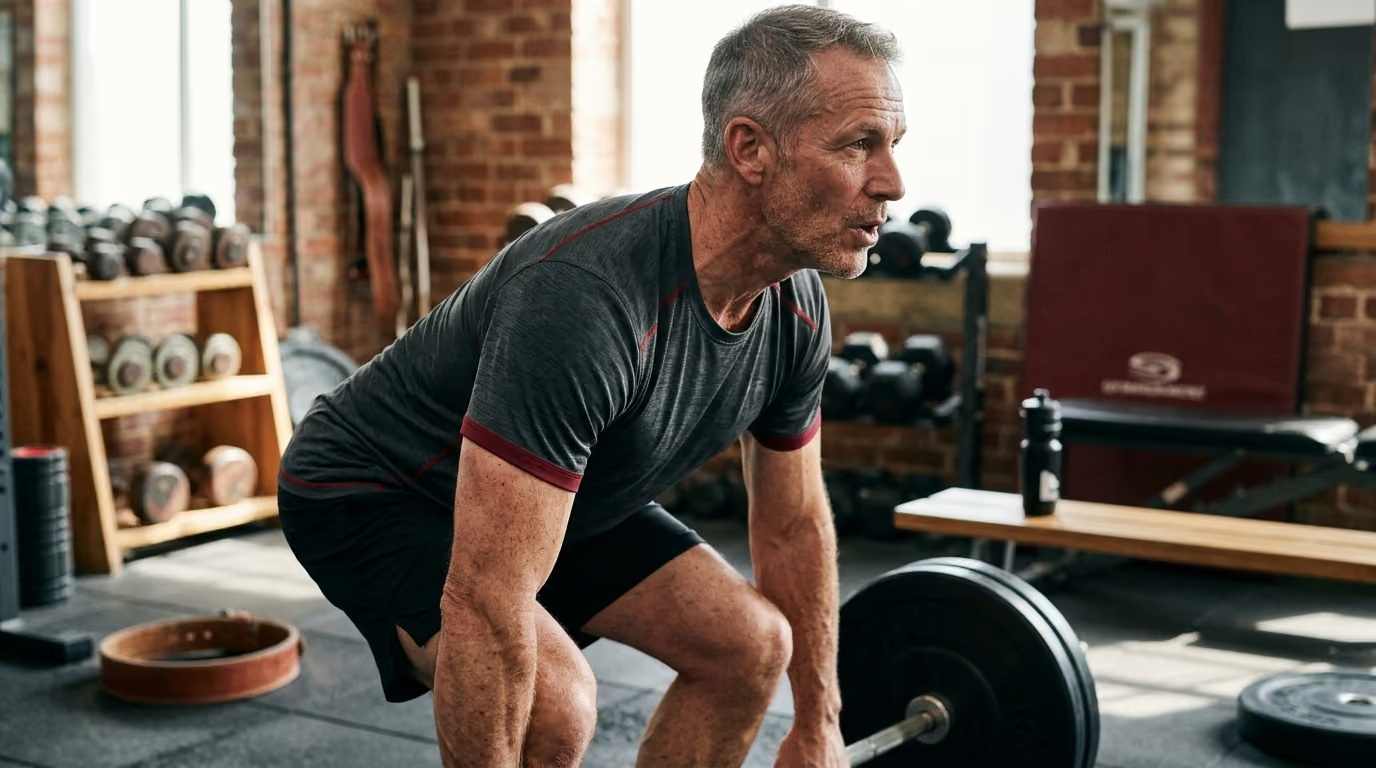
A 52-year-old man steps into the gym after a ten-year break. He has read online that lifting heavy weights will send his testosterone soaring. He expects higher hormone numbers to rebuild his energy, strip away belly fat, and restore the physical ease of his thirties.
Six months later, he feels considerably stronger. He carries groceries easily, walks upstairs without knee discomfort, and can press heavier dumbbells than when he started. Yet, when his doctor runs a standard morning blood panel, his resting total testosterone sits at the exact same number as before.
This scenario plays out constantly for men in midlife. It creates needless frustration because popular fitness culture misrepresents how hormones and physical training interact.
Understanding the relationship between exercise and male hormones requires separating short-term chemical spikes from lasting physical capability. When you look past marketing claims, the scientific research shows a clear path forward for staying strong, active, and capable throughout midlife and later life.
What the research shows about exercise and testosterone
The scientific evidence on exercise and testosterone in men over 45 points to a fundamental reality. Physical training produces clear improvements in muscular strength, power, cardiovascular capacity, and body composition. However, it does not reliably produce large, permanent increases in resting testosterone levels.
Researchers make a strict distinction between an acute hormonal reaction and a baseline resting adaptation. When a man completes a challenging workout, his body experiences a short-lived shift in circulating hormone levels. This temporary response can last anywhere from a few minutes to an hour after the session ends.
A meta-analysis examining 22 exercise studies in men aged 60 and older evaluated how different training styles affect resting morning testosterone. The researchers found that resistance training had an overall effect size of negative 0.003 standard deviation units on resting basal testosterone. This result is statistically indistinguishable from zero.
Another meta-analysis looked at 11 randomized controlled trials involving 421 inactive men between the ages of 19 and 75. The investigators found a standardized mean effect of zero on resting total testosterone across the entire group. Age, baseline body weight, and training style did not alter this neutral outcome.
- TRAINING TYPE AVERAGE EFFECT ON BASAL TESTOSTERONE
- Resistance Training No significant change (effect size near 0.00)
- Endurance Training Small positive increase (pooled SMD 0.398)
- Sprint Interval Work Small positive increase in limited trials (0.283)
The evidence for cardiovascular exercise shows a slightly different pattern. In the meta-analysis of older men, continuous aerobic training produced a small but statistically significant increase in resting basal testosterone, with a pooled standardized mean difference of 0.398.
High-intensity interval training also demonstrated a small positive increase, with a pooled standardized mean difference of 0.283. However, this interval evidence comes from a very small number of studies conducted by a single research team.
The most important takeaway from current literature is that physical progress does not depend on a rise in circulating hormones. Men over 45 routinely experience substantial gains in muscle mass, bone density, and functional independence while their resting hormone levels remain completely stable.
If you want to understand the broader context of endocrine health, our comprehensive guide on male hormones and vitality breaks down how daily habits influence long-term function.
How testosterone physiology changes after 45
Testosterone levels in men decrease gradually with advancing age. This change represents a normal biological pattern rather than an automatic medical disorder.
Total testosterone declines at an average rate of roughly 1% per year after age 30. Reference ranges illustrate this gradual shift. Standard clinical reference bands range from roughly 10.4 to 32.6 nmol/L for 30-year-old men, 9.3 to 31.3 nmol/L for 50-year-old men, and 8.6 to 30.7 nmol/L for 70-year-old men.
Because these population ranges overlap so broadly, a healthy 65-year-old man can easily have higher natural testosterone than a sedentary 35-year-old man. Chronological age alone never tells the whole story.
Several distinct physiological mechanisms explain why circulating hormone levels shift during midlife:
Total versus free testosterone
Most testosterone in the bloodstream is bound tightly to sex hormone-binding globulin, known as SHBG, or bound loosely to albumin. Only a tiny fraction, usually 1% to 2%, circulates as unbound, free testosterone.
As men age, circulating concentrations of SHBG tend to rise. Higher SHBG levels bind more hormone, which means that free testosterone often drops faster than total testosterone over time.
Testicular production capacity
The specialized Leydig cells inside the testes gradually become less sensitive to signaling from the brain. Research shows that older men demonstrate lower testosterone production responses when stimulated with gonadotropin compared to younger men.
Urinary excretion of testosterone metabolites also decreases in older groups. This confirms a modest reduction in total daily steroid production inside the body.
Hormone clearance rates
Hormone levels in the blood represent a balance between how fast the body produces a compound and how quickly the liver and kidneys clear it. In one resistance-training study, post-exercise increases in circulating testosterone were driven partly by reduced hormone clearance rather than a massive surge in new production.
When blood flow redirects toward working muscles during intense physical exertion, hepatic clearance drops temporarily. This causes circulating hormone concentrations to measure higher for a brief window.
Laboratory measurement variations
Evaluating testosterone levels is further complicated by testing methods. A review of clinical diagnostics identified 17 different reference cutoffs across 25 commercial laboratories, representing a 350% difference between the lowest and highest thresholds.
Morning testing times, sleep quality, recent viral illnesses, and nutritional status can cause day-to-day blood values to fluctuate by 20% or more in the exact same individual.
- FACTOR PHYSIOLOGICAL IMPACT ON TESTOSTERONE
- Rising SHBG Reduces the percentage of circulating free hormone
- Leydig Cell Changes Decreases maximal testicular steroid production
- Reduced Clearance Temporarily elevates measured serum levels
- Daily Sleep Quality Influences morning pulsatile hormone release
How training impacts strength, muscle, and performance in real life
When men past 45 realize that lifting weights will not radically change their blood panel, some ask whether training is still worth the effort. The clinical evidence shows that exercise provides massive, undeniable physical benefits that occur completely independently of resting testosterone shifts.
Building physical capacity in midlife relies on a wide network of physiological adaptations. Working muscles do not require high hormone spikes to respond to consistent mechanical loading.
Neural adaptations and motor control
Strength gains during the first several months of training stem primarily from changes in the nervous system. The brain learns to recruit higher-threshold motor units more rapidly.
Coordination between agonistic and antagonistic muscle groups improves significantly. These neural adaptations allow men over 45 to lift heavier loads, move with greater stability, and generate explosive force without requiring any change in hormone production.
Local muscle tissue adaptations
Resistance exercise triggers intracellular signaling pathways directly within muscle fibers. Mechanical tension on muscle tissue activates protein synthesis, increases cellular nutrient uptake, and stimulates local growth factors.
A systematic review of 41 trials involving 1,955 older adults demonstrated a strength improvement effect size of 0.68. A Cochrane review of 73 trials involving 3,059 older adults found an even larger effect size of 0.84.
Meta-analyses show that structured lifting produces average strength increases of 24% to 29% across major movements like leg presses, chest presses, and knee extensions. Another review of 49 trials found that adults over 50 gained an average of 1.1 kilograms of lean muscle mass over 20 weeks of training.
Men interested in structuring their workouts can look into our guides on building strength and muscle to understand effective exercise selection.
Exercise compared to medical testosterone therapy
Clinical trials directly comparing exercise against medical hormone therapy reveal surprising findings about physical capability.
Medical testosterone administration increases lean body mass reliably. Across clinical trials, physiological-dose testosterone therapy produces an average lean mass increase of roughly 2.2 kilograms.
However, adding muscle mass through hormone therapy does not automatically make a man functionally stronger. A meta-analysis of 29 randomized controlled trials in men aged 50 to 78 found only a weak effect on grip strength and leg strength from testosterone therapy alone, with an effect size of just 0.3.
In the 12-week TEX randomized trial, structured exercise produced significant improvements across every single measured strength test. Testosterone administration alone failed to improve strength outcomes.
Furthermore, adding testosterone to an exercise program provided zero additional strength advantage over exercise alone.
- OUTCOME MEASURE RESISTANCE EXERCISE TESTOSTERONE THERAPY
- Muscle Mass Gain Moderate ( 1.1 to 1.3kg) Moderate ( 2.2 kg)
- Muscular Strength High (Effect size 0.84) Low (Effect size 0.30)
- Aerobic Fitness High ( 10% to 32%) Negligible effect
- Physical Mobility Significant improvement Inconsistent impact
When evaluating cardiovascular fitness, the difference is even starker. Regular conditioning raises peak oxygen uptake by 10% to 32% in middle-aged and older men.
In the TEX trial, exercise alone boosted peak aerobic capacity by 13%, while combining exercise with testosterone therapy produced a 10% gain. Testosterone therapy added nothing to cardiovascular capacity.
Physical independence, walking speed, stair-climbing power, and balance are driven by neuromuscular coordination and tissue quality, not by serum androgen numbers.
How different training styles affect hormonal responses
Different types of physical activity place distinct demands on the body. Understanding how various exercise modes operate helps men design balanced routines that build strength and preserve stamina.
Resistance training
Resistance training forms the foundation of physical resilience after 45. Clinical protocols studied in older populations vary widely, utilizing loads ranging from 30% to 90% of a one-repetition maximum across two to four sessions per week.
Key resistance principles include:
- Multi-joint movements: Exercises like squats, presses, rows, and deadlifts recruit large amounts of muscle mass and challenge balance.
- Controlled loading: Moderate loads between 60% and 80% of maximum allow for safe progressive overload without placing excessive strain on connective tissues.
- Session volume: Performing two to four challenging sets per muscle group twice per week provides an optimal growth stimulus for mature muscle fibers.
- Movement execution: Moving loads through complete, pain-free ranges of motion stimulates joint health and tendon remodeling.
Lifting weights generates a temporary post-exercise rise in circulating hormones in some men, but this acute spike is not what builds muscle. Long-term muscle growth comes from progressive mechanical overload, regular protein intake, and consistent physical recovery.
Continuous endurance training
Aerobic exercise supports mitochondrial density, capillary growth, and cardiovascular health. It also improves insulin sensitivity and reduces visceral fat storage, which indirectly supports natural endocrine function.
Key endurance principles include:
- Steady aerobic work: Brisk walking, cycling, rowing, or swimming performed at 65% to 75% of maximum heart rate builds a strong aerobic base.
- Total weekly volume: Accumulating 150 to 200 minutes of low-impact, conversational aerobic activity supports metabolic health without generating excessive systemic fatigue.
- Modality rotation: Cycling through low-impact cross-training options protects aging knees, hips, and ankles from repetitive impact stress.
In research trials, previously sedentary men who completed steady-state aerobic programs showed modest increases in resting basal testosterone. These improvements likely reflect enhanced metabolic health, reduced arterial stiffness, and lower systemic inflammation rather than direct testicular stimulation.
To learn more about how physical activity preserves cellular energy systems, explore our resources on metabolic health and energy.
High-intensity interval training
Interval training has received considerable attention as a potential method for boosting male hormones. While the protocol offers valuable time-efficiency for cardiovascular conditioning, the evidence regarding its hormonal impact requires careful interpretation.
In one study on lifelong sedentary men averaging 62 years of age, a six-week aerobic preconditioning phase followed by six weeks of sprint interval training increased total testosterone by 17%.
However, most of that hormonal increase happened during the initial easy aerobic preconditioning phase before the intense sprint work even started. The subsequent interval training merely maintained the higher level while allowing for a reduced weekly training volume.
In another study involving competitive masters athletes averaging 60 years of age, six weeks of sprint interval work produced a modest increase in free testosterone from 7.0 to 7.5 ng/dL. Total testosterone changed from 15.2 to 16.4 nmol/L, which was not statistically significant. The athletes also achieved notable gains in peak mechanical power output.
- INTERVAL PROTOCOL (STUDIED IN OLDER MEN)
- Sprint Repetitions Six 30-second efforts
- Target Intensity Approximately 40% of peak power output
- Rest Between Sprints Three full minutes of passive recovery
- Weekly Frequency One single session every five days
The protocols used in these successful trials were remarkably conservative. The athletes performed only six 30-second sprints at moderate resistance, took three full minutes of rest between efforts, and performed the workout only once every five days.
This research does not justify performing punishing daily interval workouts. In mature adults, aggressive high-intensity intervals without adequate recovery can rapidly lead to joint irritation, poor sleep, and chronic nervous system fatigue.
Practical training and recovery factors for men over 45
Achieving long-term physical capability after 45 requires managing recovery just as carefully as training stress. When training volume outpaces recovery capacity, systemic fatigue accumulates, joint pain flares up, and hormonal output can become functionally suppressed.
Men should structure their weekly lifestyle around sustainable, evidence-based habits rather than chasing extreme workout routines.
Managing training volume and frequency
Mature tendons and ligaments have lower water content and reduced blood supply compared to younger connective tissues. They require longer periods to adapt to heavy loading.
Practical programming strategies include:
- Spacing lifting sessions: Leaving at least 48 to 72 hours between intense resistance workouts targeting the same muscle groups.
- Limiting failure sets: Stopping most lifting sets one or two repetitions shy of absolute muscular failure to reduce joint wear and systemic nervous fatigue.
- Incorporating regular deloads: Reducing training intensity and volume by roughly 30% to 50% every fourth to sixth week to permit full systemic restoration.
Our detailed section on recovery and mobility strategies outlines practical methods to maintain joint comfort and manage systemic fatigue across a busy schedule.
Tracking recovery signals
Monitoring daily physical readiness through simple lifestyle metrics provides far more actionable guidance than ordering frequent commercial hormone tests.
Key daily indicators to evaluate include:
- Morning energy and resting motivation to train.
- Consistent sleep quality and uninterrupted sleep duration.
- Chronic joint or tendon stiffness that lingers longer than 48 hours.
- Stable resting appetite and stable body composition.
- Ability to complete scheduled workout volume without unexpected drops in strength.
If a man notices his performance falling across consecutive sessions alongside poor sleep and persistent lethargy, his training volume is likely exceeding his recovery reserves.
Nutrition and energy availability
Chronic undereating or aggressive caloric restriction can suppress the hypothalamic-pituitary-gonadal axis in exercising men. The body interprets severe calorie deficits combined with intense physical exertion as an evolutionary stress signal, leading to a temporary reduction in reproductive hormone output.
Nutritional priorities should focus on:
- Adequate protein intake: Consuming 1.2 to 1.6 grams of protein per kilogram of body weight daily to support muscle protein synthesis and tissue repair.
- Balanced carbohydrate consumption: Fueling intense workouts with unrefined carbohydrates to maintain glycogen stores and keep baseline cortisol levels in check.
- Dietary fats: Eating adequate dietary fats from whole food sources like olive oil, nuts, avocados, and eggs to provide the essential cholesterol precursors for steroid synthesis.
- Energy balance: Avoiding prolonged, severe caloric deficits while attempting to build strength or maintain demanding workout schedules.
Sleep and circadian rhythm
The majority of daily testosterone release in men occurs during deep, uninterrupted sleep cycles. Fragmented sleep, late-night screen exposure, and chronic sleep deprivation significantly blunt morning hormone concentrations.
Men over 45 should prioritize seven to eight hours of sound sleep in a cool, dark room. Maintaining consistent sleep and wake times reinforces natural circadian rhythms, improving recovery capacity and mental clarity.
For a broader perspective on maintaining physical capacity throughout later life, read our research overview on longevity science for older men.
Common misconceptions about testosterone and workouts
Misleading marketing in the health and fitness industry creates widespread confusion about how male hormones operate. The scientific literature refutes several persistent myths.
Misconception 1: A post-workout testosterone spike is what causes muscles to grow
Fitness influencers often claim that specific lifting routines are superior because they trigger an acute surge of testosterone in the blood.
Clinical research shows that these brief post-exercise hormone elevations bear almost no correlation to long-term muscle hypertrophy or strength gains. Muscle growth occurs primarily through mechanical tension, intracellular signaling, satellite cell activity, and muscle protein synthesis over days and weeks.
A workout that causes zero acute hormone spike can build just as much muscle as one that causes a brief temporary rise.
Misconception 2: Heavy lifting reliably raises your baseline resting testosterone
Many men believe that deadlifting and squatting will permanently elevate their baseline morning blood testosterone levels.
Comprehensive meta-analyses demonstrate that resistance training produces a near-zero change in resting basal testosterone in mature men.
Lifting weights builds powerful muscles, increases bone mineral density, and sharpens physical coordination, but it does not act as a permanent hormonal catalyst.
Misconception 3: High-intensity intervals are a universal hormone solution
Popular fitness blogs frequently label sprint intervals as the ultimate workout for boosting male vitality.
The clinical evidence supporting interval training in older men is derived from only a few small studies using very low workout frequencies.
Sprint interval work is an effective, time-efficient tool for conditioning and power development. However, it is not an automatic cure for age-related hormone declines.
Excessive interval work without adequate recovery can rapidly lead to overtraining, orthopedic pain, and endocrine suppression.
- COMMON CLAIM SCIENTIFIC REALITY
- Workouts must cause T-spikes Local muscle tension drives growth
- to build muscle mass. not transient serum hormone spikes.
- Resistance training permanently Pooled clinical trials show a neutral
- elevates resting testosterone. effect (effect size 0.00) on basal T.
- Testosterone therapy is the Exercise is far more effective for
- fastest route to strength. building strength and physical balance.
Misconception 4: Testosterone therapy eliminates the need to train
Some men view medical hormone therapy as a replacement for physical effort.
While medical testosterone can increase lean tissue mass, clinical trials demonstrate that it provides minimal improvement in muscular strength, aerobic power, walking speed, or functional independence on its own.
Physical performance requires structural remodeling of tendons, neuromuscular recruitment, and mitochondrial development. These adaptations occur exclusively in response to physical work.
Where the evidence remains limited
While current exercise research provides valuable insights, several critical areas of male hormone physiology remain incomplete or inconclusive.
Small sample sizes in interval research
The positive findings regarding high-intensity interval training and testosterone in older men come from a limited number of trials with small sample sizes.
These studies tested specific sprint cycling protocols performed once every five days. Scientists do not yet know how other interval formats, running protocols, or higher weekly frequencies impact hormone levels in broader populations.
Variations in laboratory assays
Studies evaluating exercise and hormones utilize vastly different laboratory testing techniques. Some investigations measure total testosterone using basic immunoassays, while others employ advanced liquid chromatography tandem mass spectrometry.
Free testosterone is often calculated using mathematical formulas based on albumin and SHBG rather than measured directly via equilibrium dialysis. These methodological discrepancies make it difficult to compare findings across different published studies.
- RESEARCH LIMITATION PRACTICAL IMPACT FOR MEN OVER 45
- Limited HIIT Trials Optimal weekly interval dosage remains unclear
- Diverse Lab Methods Cross-study comparisons have inherent errors
- Lack of Dietary Data Caloric thresholds for hormone drops are unmapped
- Short Study Timelines Multi-year training effects are rarely tracked
Unmapped nutritional and energy thresholds
Most published exercise trials do not rigorously track total caloric intake or daily energy availability.
Researchers understand that severe energy deprivation impairs endocrine function in young athletic populations. However, the precise caloric thresholds that trigger hormonal suppression in exercising men over 45 have not been established in clinical settings.
Short study durations
The vast majority of exercise-hormone trials last between six weeks and six months. Long-term studies evaluating how decades of consistent training influence hormone patterns across midlife and later life remain largely observational.
Practical takeaways for staying strong after 45
Physical training after 45 should focus on building real-world capability, muscular strength, joint mobility, and cardiovascular resilience rather than chasing blood test numbers. Consistent resistance exercise and smart conditioning will transform your physical performance, body composition, and daily energy, even when your resting testosterone levels remain unchanged.
When to revisit this resource
Review these training principles whenever you feel tempted to overhaul your routine based on internet hormone claims, when you receive a routine blood test result that confuses you, or when planning a new training block.
Focus on progressive overload, eat balanced whole foods, prioritize deep sleep, and judge your physical progress by your real-world capability.
Sources
- Short-Term Exercise Training Inconsistently Influences Basal ...
- Effects of Exercise Training on Anabolic and Catabolic Hormones with Advanced Age: A Systematic Review
- Various Factors May Modulate the Effect of Exercise on ... - PMC - NIH
- Comparing the Impacts of Testosterone and Exercise on Lean ...
- Effects of Exercise Training on Resting Testosterone ...
- Effects of resistance training on testosterone metabolism in ...
- Effects of resistance training on testosterone metabolism in ...
- HIIT produces increases in muscle power and free testosterone in male masters athletes
- Exercise training improves free testosterone in lifelong sedentary aging men
Stay sharp
Get the word
Join our newsletter for the best writing advice and stories from the field.