Many men over 45 look up whether sitting in a dry sauna or stepping into an ice bath can extend their lifespan. The internet presents these habits as mandatory longevity routines. The real scientific record paints a much more measured picture.
Controlled thermal stress affects circulation, heart rate, blood pressure, and autonomic balance. The critical question is whether these short-term shifts translate into lower mortality, reduced disease risk, and better function as you get older.
This guide looks at human trial data, observational cohort studies, and safety considerations. It separates marketing hype from proven physiological outcomes.
Clinical Research on Thermal Stress and Human Health
The scientific case for passive heat exposure comes largely from observational studies in Finland. A landmark prospective cohort study tracked 2,315 middle-aged Finnish men over a median follow-up of 20.7 years. The researchers documented 190 sudden cardiac deaths, 281 fatal coronary heart disease events, 407 fatal cardiovascular disease events, and 929 deaths from all causes.
When comparing men based on how often they used a sauna, the researchers observed striking associations:
- Men using a sauna two to three times per week showed a 22 percent lower risk of sudden cardiac death, a 23 percent lower risk of fatal coronary heart disease, a 27 percent lower risk of fatal cardiovascular disease, and a 24 percent lower risk of all-cause mortality compared to those using it once per week.
- Men using a sauna four to seven times per week showed a 63 percent lower risk of sudden cardiac death, a 48 percent lower risk of fatal coronary heart disease, a 50 percent lower risk of fatal cardiovascular disease, and a 40 percent lower risk of all-cause mortality compared to once-weekly users.
- A separate Finnish analysis confirmed this gradient. Cardiovascular mortality rates were 10.1 per 1,000 person-years for once-weekly users, 7.6 for two to three sessions per week, and 2.7 for four to seven sessions per week.
These numbers are substantial, but observational associations do not establish direct cause and effect. Men who use a sauna four to seven times per week often share other traits. They may have higher socioeconomic stability, better work-life balance, stronger social connections, or higher baseline fitness. Published scientific critiques explicitly point out that these mortality associations may be noncausal.
Randomized clinical trials provide a more modest picture. A 2025 systematic review and meta-analysis examined randomized controlled trials of passive heating interventions. The analysis found no significant pooled improvements across flow-mediated dilation, pulse-wave velocity, resting heart rate, heart-rate variability, fasting glucose, HbA1c, blood lipids, triglycerides, or C-reactive protein.
The meta-analysis did find minor blood pressure shifts:
- An overall systolic blood pressure reduction averaging 2.46 mmHg, with a confidence interval spanning from negative 5.02 to positive 0.10 mmHg.
- A statistically significant systolic reduction of 4.11 mmHg in trials using whole-body heating protocols.
- A statistically significant systolic reduction of 2.52 mmHg among participants with established coronary risk or cardiovascular disease.
Direct trials in clinical populations show clear boundaries. In adults with stable coronary artery disease, completing four sauna sessions weekly for eight weeks failed to improve arterial stiffness, endothelial function, microvascular function, or resting blood pressure.
Cold exposure has an even smaller clinical evidence base. Human cold-water immersion triggers a sharp sympathetic stress response. It raises heart rate, blood pressure, respiratory rate, cortisol, and norepinephrine.
A 2024 meta-analysis found that cold exposure can produce brief shifts in autonomic markers. These include temporary increases in heart-rate variability and slight elevations in resting blood pressure lasting up to 15 minutes post-exposure. A 2025 systematic review noted potential short-term effects on perceived soreness, subjective stress, and sleep quality.
The review also noted that the cold exposure literature relies heavily on small sample sizes, brief intervention windows, and young, athletic cohorts. There are currently no randomized trials or prospective cohort studies showing that deliberate cold exposure lowers cardiovascular events, prevents chronic disease, or extends human lifespan.
Thermoregulatory Changes and Cardiovascular Response After 45
Thermoregulation refers to the physiological systems that maintain your core internal temperature when your environment shifts. When exposed to heat, your body dilates blood vessels in the skin and activates sweat glands to release heat. In cold environments, the body constricts peripheral blood vessels to trap heat in the core, while activating shivering or non-shivering thermogenesis to produce warmth.
As men move through midlife and beyond, these thermoregulatory reflexes change. Cutaneous vasodilation becomes less efficient, reducing the rate at which heat moves from the core to the skin surface. Sweat gland output decreases, making evaporative cooling slower. The cardiovascular system also responds with lower peak cardiac output during heat stress, which limits rapid blood redistribution.
These changes explain why an older man handles thermal stress differently than a twenty-year-old athlete. Older adults gain environmental heat more rapidly during passive heat exposure and clear that heat more slowly. Decreased thermal sensitivity also blunts the conscious perception of rising core temperature, increasing the risk of overexposure.
Cold stress poses distinct circulatory demands after 45. Peripheral vasoconstriction narrows blood vessels in the limbs and skin, directing blood toward the internal organs. This process increases systemic vascular resistance, making the heart work harder against higher pressure.
In men with mild hypertension or subclinical vascular stiffness, this cold-induced vasoconstriction can cause sharp, unexpected spikes in blood pressure. The aging heart must manage this sudden workload while dealing with reduced arterial compliance.
These mechanisms show that hormesis, the idea that a mild physical stressor triggers healthy adaptation, is not a one-size-fits-all rule. The exact stress dose that stimulates positive adaptation in a healthy young man can strain the cardiovascular system of a 55-year-old with early vascular changes.
Daily Capability, Physical Performance, and Recovery Realities
Looking past theoretical longevity claims, heat and cold exposure affect weekly training routines and recovery in specific ways.
Passive Heat as a Training Partner
Sauna bathing creates an acute cardiovascular response that mimics low-intensity aerobic activity. Heart rate rises, stroke volume adjusts, and skin blood flow increases. Passive heat does not provide muscular tension, joint loading, or motor unit recruitment. It cannot replace strength training, walking, or cardiovascular conditioning.
Research shows that passive heat works best as an addition to regular exercise. In a randomized clinical trial, participants who completed structured exercise alongside sauna sessions saw greater improvements than those who exercised alone. The combined group gained an extra 2.7 mL/kg/min in cardiorespiratory fitness and reduced systolic blood pressure by an additional 8.0 mmHg.
For men focused on energy and metabolism, combining heat with regular training offers measurable physical support.
Cold Exposure and Exercise Recovery
Cold-water immersion alters short-term recovery, but its value depends entirely on your training goals. Cold water numbs pain receptors and narrows local blood vessels, which can reduce perceived muscle soreness after demanding workouts. This makes cold immersion useful for multi-day athletic events, tournaments, or back-to-back physical demands where temporary relief is the priority.
Deliberate cold exposure comes with trade-offs for men building strength and muscle. Hypertrophy and strength adaptations depend on the body's natural post-exercise inflammatory cascade. Immersing muscles in cold water immediately after lifting suppresses these local biochemical signals, which may blunt long-term muscle growth.
Men prioritizing muscle retention and functional strength should avoid routine cold immersion right after resistance workouts. Using cold on non-lifting days or separating it from strength sessions helps protect training adaptations.
Mental Sharpness and Autonomic Control
Many men use thermal protocols to build mental resilience and improve daily alertness. Stepping into cold water forces controlled breathing under acute sympathetic stress, which can leave you feeling sharp and alert. Heat exposure promotes systemic vascular relaxation and parasympathetic tone once the session ends, which can assist evening wind-down.
These practices support lifestyle routines covered in our longevity science and optimization guide, as long as they do not replace foundational sleep and recovery habits.
Modality Comparisons and Practical Parameters
Not all heat and cold methods place the same demands on the body. Selecting the right approach requires an understanding of how each method affects the cardiovascular system.
Dry Finnish Sauna
- Environment: High ambient temperature, usually between 80 and 100 degrees Celsius, with low relative humidity between 10 and 20 percent.
- Physical Impact: Produces high sweat evaporation rates, progressive increases in heart rate, and strong peripheral blood vessel dilation.
- Best Use: Ideal for cardiovascular conditioning adjuncts and general relaxation. Sessions typically run 10 to 20 minutes.
Steam Bath and High Humidity Rooms
- Environment: Moderate temperatures, usually 40 to 50 degrees Celsius, with near 100 percent relative humidity.
- Physical Impact: High humidity prevents sweat from evaporating, which speeds up core temperature increases even at lower air temperatures.
- Best Use: Suitable for men who dislike dry air, but exposures must remain shorter because heat accumulates quickly.
Warm Water Immersion
- Environment: Water temperatures between 38 and 40 degrees Celsius in a hot tub or deep bath.
- Physical Impact: Water transfers thermal energy much faster than air, while water pressure shifts peripheral blood toward the central chest cavity.
- Best Use: Helpful for joint mobility and post-workout muscular relaxation, provided sessions stay under 15 minutes.
Cold Showers
- Environment: Tap water temperatures ranging from 10 to 18 degrees Celsius applied to the skin surface.
- Physical Impact: Stimulates cutaneous cold receptors, triggering a mild sympathetic response without significant drops in core body temperature.
- Best Use: A safe starting point for men building cold tolerance without the risks of open water or deep immersion.
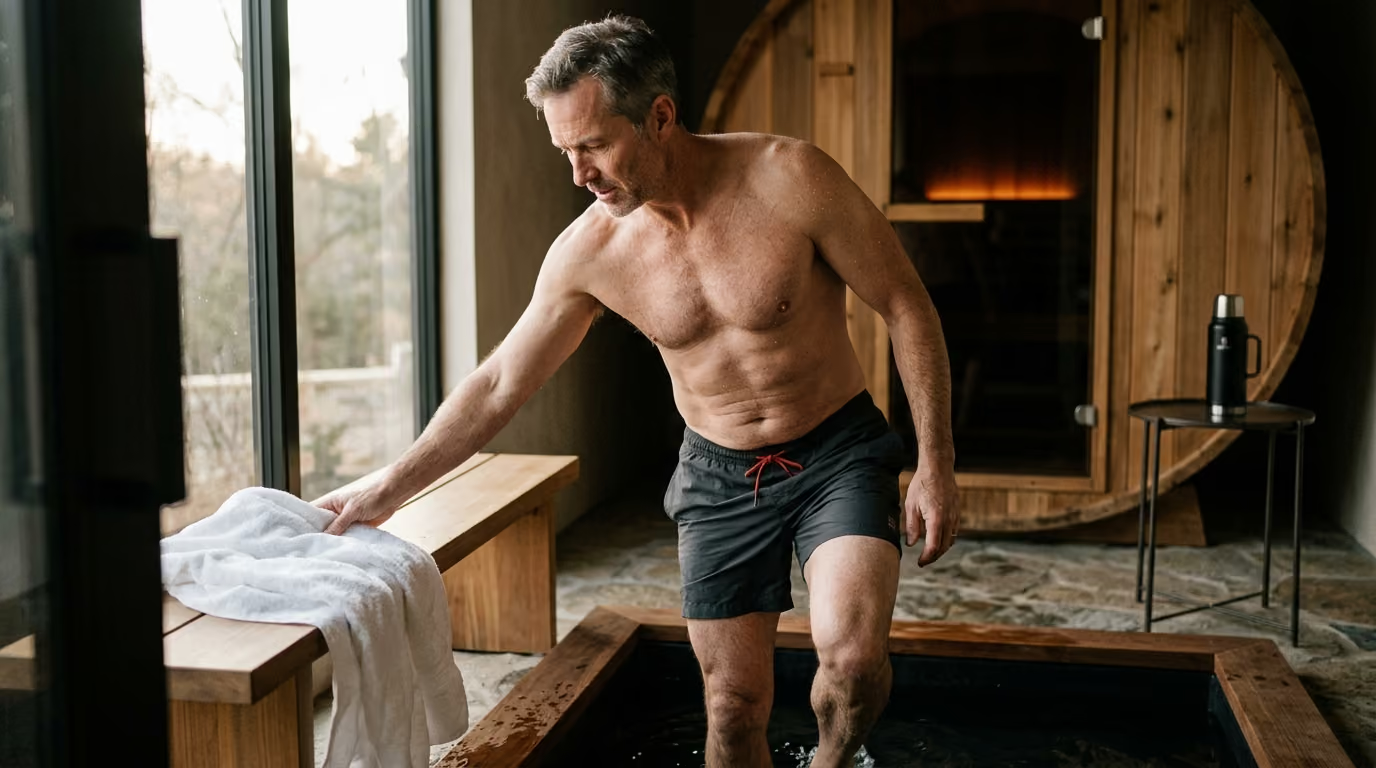
Cold-Water Immersion Tubs
- Environment: Still or circulating water maintained between 8 and 15 degrees Celsius.
- Physical Impact: Causes rapid heat extraction, peripheral vasoconstriction, elevated central blood pressure, and a powerful initial breathing reflex.
- Best Use: Useful for reducing acute muscle soreness or boosting morning alertness. Sessions should remain brief, between 1 and 3 minutes.
Whole-Body Cryotherapy Chambers
- Environment: Enclosed chambers cooled with liquid nitrogen or electric refrigeration to temperatures between negative 110 and negative 140 degrees Celsius.
- Physical Impact: Rapidly cools the outer skin layer via cold dry air without extracting core heat as quickly as water.
- Best Use: An alternative for men seeking subjective recovery who want to avoid cold water immersion.
Safety Boundaries and Risk Management
Thermal stress changes heart function and blood pressure within seconds. Men over 45 need to recognize contraindications and know when to stop a session.
Cardiovascular Conditions Requiring Medical Guidance
Consult a physician before using saunas, steam rooms, or cold plunges if you manage any of the following:
- Recent myocardial infarction or unstable coronary disease.
- Uncontrolled or poorly managed hypertension.
- Diagnosed cardiac arrhythmias.
- Severe aortic valve stenosis or structural heart defects.
- Decompensated heart failure.
- Recurrent fainting episodes or severe orthostatic hypotension.
- Advanced chronic kidney disease affecting fluid balance.
Understanding Cold Shock and Drowning Risks
The most dangerous phase of cold-water immersion occurs within the first 30 to 90 seconds, well before hypothermia sets in. This initial reaction, known as the cold-shock response, triggers an involuntary gasp followed by rapid hyperventilation.
If your head goes underwater during this reflex, you can easily inhale water, leading to immediate drowning. The surge in sympathetic activity also causes abrupt spikes in blood pressure and myocardial workload.
To manage cold shock safely:
- Keep your head, face, and airway completely above the surface when entering cold water.
- Never practice intentional hyperventilation or hold your breath before or during cold exposure.
- Use a designated tub or structured facility with stable footing rather than isolated open water.
- Keep early cold water sessions under two minutes to avoid peripheral muscle cooling and loss of coordination.
Heat Exposure Safety and Burn Prevention
Sauna safety depends on careful hydration, sensible session lengths, and avoiding extreme protocols:
- Hydrate with plain water before and after sessions to replace fluids lost through sweat.
- Never consume alcohol before or during heat sessions, as it worsens vasodilation and impairs your natural heat defenses.
- Sit on a lower bench or step out immediately if you notice dizziness, lightheadedness, nausea, or chest tightness.
- Take your time standing up and exiting the room to prevent postural blood pressure drops.
- Stay clear of heating elements, exposed hot rocks, and overheated metal hardware. Hospital burn unit data show that roughly one quarter of thermal burn admissions in Finland stem from sauna-related accidents.
Explore our mobility and recovery resources for broader methods to protect your joints and tissues safely.
Common Claims Unsupported by Clinical Evidence
Widespread claims online often present thermal exposure as a cure-all. Scientific testing consistently disproves several of these narratives.
Claim 1: Sauna Sessions Can Stand In for Cardiovascular Workouts
Passive heat elevates your pulse and shifts blood flow, leading some to claim that relaxing in a sauna provides the same benefits as a run or row. This comparison ignores fundamental exercise physiology. Passive heat provides no muscle contractions, bone loading, connective tissue stress, or coordinated motor recruitment.
Sauna use can support an active lifestyle, but it cannot build aerobic stamina, muscular strength, or physical balance.
Claim 2: Cold Water Immersion Dramatically Strengthens Immune Defenses
Proponents often argue that cold plunges ward off viral infections and supercharge the immune system. While cold water raises white blood cell counts and alters circulating cytokines briefly, these reactions simply reflect an acute stress response.
Clinical trials have not shown that deliberate cold exposure reduces the frequency, length, or severity of common respiratory infections in everyday life.
Claim 3: Extreme Heat or Freezing Cold Melts Body Fat
Marketing for infrared saunas and cryotherapy chambers frequently promises effortless fat loss through sweat or shivering. Sweating in a hot room yields immediate, temporary scale weight loss strictly from water depletion, which returns as soon as you rehydrate.
While shivering burns a minor number of extra calories, it does not produce meaningful changes in body composition without a sustained dietary calorie deficit.
Claim 4: Alternating Heat and Cold Eliminates Cellular Waste
Contrast therapy routines that alternate between hot saunas and ice tubs are often marketed as natural pumps that flush toxins from your organs. The body manages waste elimination through the liver, kidneys, and gastrointestinal tract, not by alternating vascular dilation and constriction.
While contrast therapy can feel invigorating and alter subjective muscle tightness, clinical evidence does not show that it clears cellular waste or accelerates detoxification.
Gaps and Limitations in the Research
Understanding the limits of current scientific literature helps keep longevity claims in perspective:
- Observational Sauna Data Relies on Homogeneous Groups: The largest long-term mortality studies come almost entirely from Finnish cohorts. These groups share specific cultural routines, high baseline sauna access, and unique lifestyle habits that may not translate to other populations.
- Randomized Trials Feature Small Sample Sizes: Most clinical trials on passive heating involve brief protocols lasting 4 to 12 weeks with small participant groups. They are not built to measure hard longevity outcomes like heart attacks, stroke rates, or overall lifespan.
- Animal Findings Do Not Directly Apply to Human Aging: Many popular longevity hypotheses, such as heat-shock protein activation, autophagy, and brown fat conversion, rely heavily on rodent studies. Rodents have vastly different surface-area-to-mass ratios and distinct metabolic rates compared to humans.
- Commercial Bias Influences the Wellness Market: A large portion of non-academic literature promoting infrared saunas and cold immersion tubs comes directly from equipment manufacturers, often using small pilot trials lacking proper control groups.
The Takeaway
Sauna bathing and cold exposure are useful tools for subjective recovery, mild blood pressure support, and general alertness. They do not replace strength training, aerobic conditioning, quality sleep, or standard medical care for healthy aging after 45.
Action Checklist for the Week Ahead
Use this simple, five-step framework to add safe thermal exposure to your weekly routine without displacing the habits that matter most:
- Step 1: Protect your training priorities first. Make sure you hit your weekly resistance training and cardiovascular exercise targets before adding passive thermal sessions.
- Step 2: Begin heat exposure with modest exposures. If you are cleared for sauna use, complete one or two 10 to 15 minute sessions at 75 to 80 degrees Celsius, sitting on a middle bench and rehydrating afterward.
- Step 3: Introduce cold exposure gradually through simple cold showers. End your regular warm shower with 30 to 60 seconds of cool water on your torso and limbs while practicing slow, deliberate nasal breathing.
- Step 4: Keep cold tubs away from your muscle-building sessions. If you use a cold tub, schedule it on rest days or at least four to six hours after lifting to preserve your body's natural muscle-building signals.
- Step 5: Stop any session immediately if warning signs appear. Step out of the heat or cold right away if you notice lightheadedness, chest tightness, irregular heartbeats, or persistent shivering.
Sources
- Heat Tolerance in Older Adults: A Systematic Review of ... - PMC
- Human temperature regulation under heat stress in health ...
- Physiology of Cold Exposure - NCBI - NIH
- Cardiovascular challenges of aging in a hotter environment
- Non-acute effects of passive heating interventions on cardiometabolic risk and vascular health: systematic review and meta-analysis of randomized controlled trials - PubMed
- Heat exposure and cardiovascular health outcomes
Stay sharp
Get the word
Join our newsletter for the best writing advice and stories from the field.