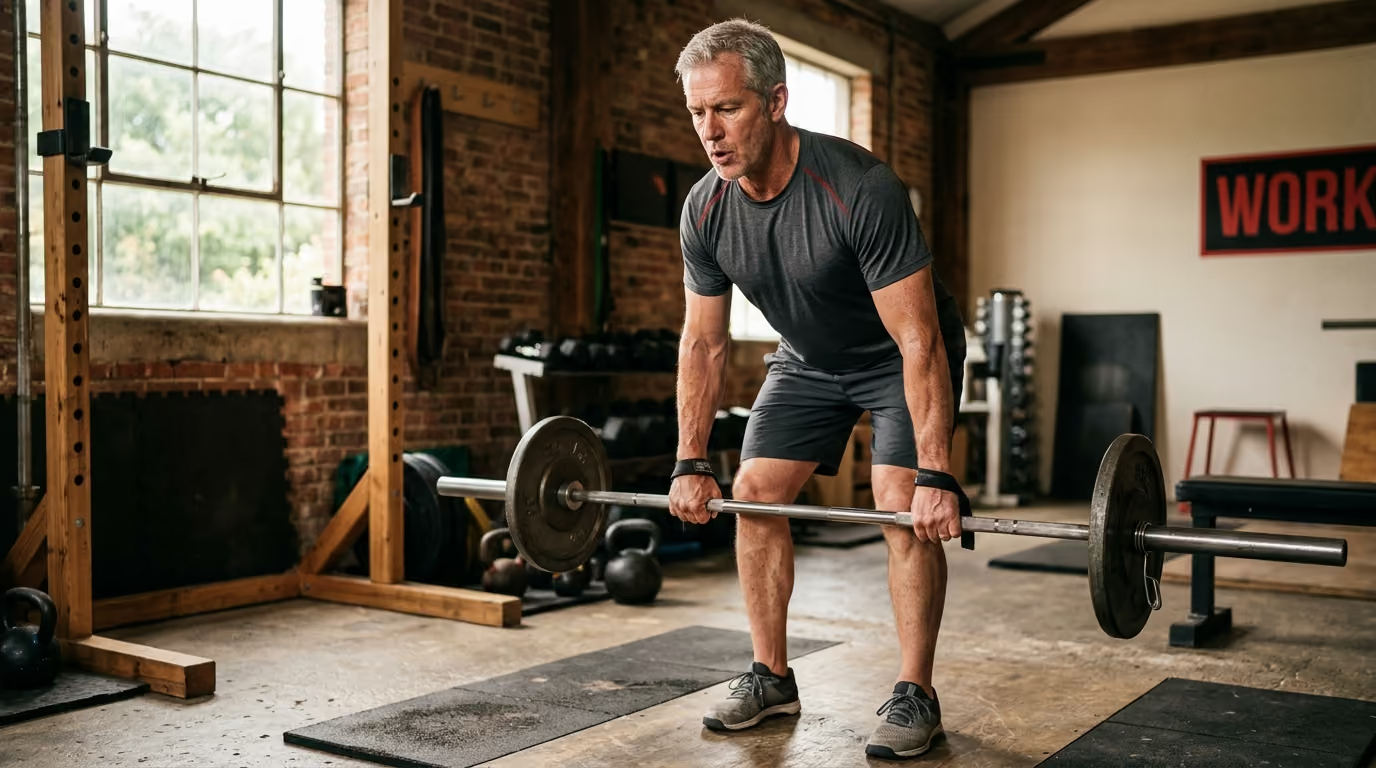
Physical reserve is not the same thing as athletic vanity or bodybuilding. It is the buffer of usable physical capacity that sits between what your daily routine requires and the absolute limit of what your body can produce. It is not defined by the size of your biceps or your ability to perform a single heavy lift in a gym. Physical reserve represents the combined capacity of your muscle mass, maximal strength, movement speed, balance, and recovery systems.
When you maintain high physical reserve, your body can absorb sudden physical stressors without losing functional independence. These stressors include common events such as a severe respiratory infection, a slip on an icy sidewalk, a period of forced bed rest, or sudden surgery. When reserve is low, even a minor illness can push your physical capacity below the minimum threshold required to get out of a chair or walk upstairs unassisted.
Understanding this dynamic requires looking beyond simple aesthetic goals. In midlife and later life, training is an investment in functional durability. This guide breaks down the clinical science of muscle mass, force production, rate of force development, and whole-body resilience. It provides a practical framework for building a deep reservoir of physical capability that protects your independence as you age.
What Does the Science Actually Say About Muscle Mass and Survival?
Long-term epidemiological studies have examined the connection between skeletal muscle and mortality for decades. The evidence shows a clear relationship between low muscle reserves and increased health risks. However, the data also reveals that muscle mass alone tells only part of the story.
Research analyzing appendicular skeletal muscle mass index shows that individuals who die earlier often have lower average muscle mass than long-term survivors. A major meta-analysis found that lower muscle mass index values were present in deceased participants compared to survivors, with a standardized mean difference of negative 0.18. While this difference is statistically significant, the magnitude of the separation is modest. Having large muscles does not automatically grant immunity from disease or guarantee a longer life.
Clinical sarcopenia involves more than low tissue volume. Comprehensive meta-analyses examining tens of thousands of participants show that confirmed sarcopenia increases all-cause mortality risk by roughly 79 percent. When muscle loss is severe enough to compromise physical function, the risk of functional decline rises by 90 percent.
The European Working Group on Sarcopenia in Older People revised its clinical diagnostic guidelines to reflect this reality. The updated consensus framework, known as EWGSOP2, no longer places muscle size at the top of the diagnostic tree. Low muscle strength is now recognized as the primary indicator of probable sarcopenia. Low muscle mass confirms the condition, and poor whole-body physical performance identifies severe cases.
This diagnostic shift matters for anyone evaluating their own health after 45. A person can have a normal body weight and reasonable muscle size while experiencing a silent decline in mechanical function. Muscle mass provides the biological raw material for movement, but mass alone does not tell you how well that tissue operates under load.
Why Is Muscle Strength a Better Predictor of Health Than Muscle Size?
Muscle strength reflects the maximum force your neuromuscular system can generate against resistance. Decades of clinical testing show that strength measures predict survival and hospitalization far more reliably than tissue size alone.
A meta-analysis evaluating approximately two million men and women found that higher upper-body and lower-body strength was associated with a reduced risk of mortality. This survival advantage remained consistent across different age groups and varied follow-up periods. When researchers measure handgrip strength, each significant increase in force production correlates with an 18 percent drop in all-cause mortality risk.
The reason strength outperforms muscle mass as a prognostic metric lies in how the body generates force. Strength is not merely a reflection of muscle fiber thickness. It depends on central nervous system drive, motor unit recruitment, firing frequency, tendon stiffness, and the absence of joint pain. You can review detailed longevity science research to see how neuromuscular integrity influences systemic health markers.
The medical term for age-related loss of muscle strength that occurs independently of mass loss is dynapenia. Longitudinal tracking reveals that skeletal muscle strength can decline two to five times faster than muscle mass. By age 75, men frequently lose between three and four percent of their muscular strength per year, while muscle mass declines at a much slower rate.
This separation explains why relying on a bathroom scale or a standard body composition scan can create false confidence. A man may maintain stable scale weight and stable lean tissue over a five-year period while losing substantial force capacity. When muscle quality degrades, intramuscular fat increases, connective tissue stiffens, and neural recruitment slows down. Tracking strength output over time provides an early warning system for functional decline long before tissue loss becomes obvious.
Why Does Muscular Power Decline So Fast After Age 45?
Muscular power is the product of force and movement velocity. In everyday life, power determines how rapidly you can produce force to accomplish a task. While strength allows you to lift a heavy object slowly, power allows you to move your body quickly when time is limited.
Power is the physical quality that allows you to catch your foot after tripping on a curb. It enables you to jump out of the way of a moving bicycle, rise swiftly from a low couch, or accelerate up a flight of stairs. A comprehensive systematic review of 44 studies concluded that muscular power is a better predictor of functional performance in daily tasks than maximal strength alone.
Power declines at an even faster rate than maximal strength as the decades advance. Longitudinal studies tracking healthy adults show that muscular power can drop by approximately six percent per year in later life. This decline often precedes measurable drops in slow-speed strength.
The rapid loss of power is driven by specific biological changes in aging muscle tissue:
Selective Type II Muscle Fiber Atrophy
Skeletal muscle consists of slow-twitch Type I fibers and fast-twitch Type II fibers. Fast-twitch fibers generate high amounts of force in short timeframes, making them responsible for explosive power. With advancing age and lower physical demands, Type II fibers shrink at a much higher rate than Type I fibers.
Slower Motor Unit Discharge Rates
The central nervous system coordinates muscle contractions by sending electrical signals to motor units. As neural pathways change over time, the maximal firing rate of these motor units slows down. This creates a delay in the rate of force development, reducing your ability to react instantly to unexpected mechanical perturbations.
Changes in Tendon Compliance
Tendons transmit force from contracting muscles directly to the skeleton. As connective tissues lose water content and change their collagen architecture, the mechanical efficiency of energy storage and return diminishes. This reduction in elastic recoil makes rapid, spring-like movements more demanding on the muscular system.
How Does the Physical Reserve Framework Protect You During Stress and Illness?
To understand why physical capacity protects long-term health, it helps to use a simple engineering formula. Physical reserve equals total capacity minus the demand of a specific task.
When your maximal capacity is high, ordinary daily tasks consume only a small fraction of your available energy and force. Walking up a standard flight of stairs might require 25 percent of your peak leg power. If an acute illness reduces your total physical capacity by 30 percent, you still possess enough spare power to climb those stairs safely.
When your baseline capacity is low, that same flight of stairs may require 85 percent of your total leg power. If you experience an infection, a joint injury, or a week of bed rest, your total capacity drops below the 85 percent threshold. You suddenly find yourself unable to ascend the stairs without personal assistance.
Physical reserve can be structured into five interacting layers:
Layer 1: Tissue Reserve
This layer comprises skeletal muscle volume, bone mineral density, joint cartilage, and tendon thickness. Tissue reserve provides structural durability and stores amino acids that the immune system draws upon during severe systemic illness.
Layer 2: Strength Reserve
This represents your peak force capacity across primary movement patterns such as squatting, hinging, pushing, pulling, and carrying. It ensures that lifting heavy household objects or moving furniture does not approach your absolute mechanical limit.
Layer 3: Power Reserve
This is your rate of force development. It gives you the dynamic speed needed to correct your center of gravity during a stumble, step rapidly over obstacles, and navigate unstable ground.
Layer 4: Performance Reserve
This layer integrates strength, balance, cardiovascular endurance, and coordination into whole-body tasks. Common measures include brisk walking speed, floor-to-stand transitions, loaded carries, and stair navigation.
Layer 5: Recovery Reserve
This is your systemic capacity to return to baseline function following physical exertion, illness, or psychological stress. It relies on metabolic health, sleep quality, microvascular density, and balanced nutrition.
Understanding these five layers helps you avoid narrow fitness routines. Building true physical reserve requires supporting every layer of the system rather than focusing on a single gym metric.
How Should Men Over 45 Train to Build Functional Reserve Rather Than Just Size?
Building physical reserve after 45 requires an organized, multi-component strategy. Research from the World Health Organization recommends that older adults engage in muscle-strengthening activities involving all major muscle groups at least two days per week. The guidelines also advise participating in varied physical activity that emphasizes balance and functional strength on three or more days per week.
A well-structured program combines progressive resistance, intentional velocity, cardiovascular conditioning, and movement practice. You can review practical approaches for training for strength and physical performance to structure your weekly routine effectively.
Primary Strength Movements
Resistance training provides the mechanical stimulus required to preserve bone density, stimulate muscle protein synthesis, and maintain neural drive. Focus on compound movement patterns that recruit multiple joints simultaneously:
- Squat variations: Goblet squats, box squats, or barbell front squats to preserve knee and hip extensor strength.
- Hinge movements: Romanian deadlifts, trap-bar deadlifts, or kettlebell swings to build the posterior chain.
- Upper-body pushing: Overhead dumbbell presses, push-ups, or incline bench presses for shoulder and chest integrity.
- Upper-body pulling: Chest-supported rows, pull-downs, or chin-up variations to support posture and upper-back stability.
- Loaded carries: Farmer carries or suitcase carries to develop grip strength, core stiffness, and gait stability.
Perform these movements using challenging loads that leave one to three repetitions in reserve. Use progressive overload by gradually adding weight, improving movement control, or increasing repetitions over time.
Intentional Velocity and Power Training
Because power declines faster than strength, your weekly training should include movements performed with deliberate speed. Power training does not require risky, uncontrolled plyometrics. It requires moving a light to moderate resistance as quickly and cleanly as possible during the concentric phase.
- Rapid chair rises: Stand up from a bench as quickly as possible, pause briefly at the top, and lower down under control.
- Dynamic step-ups: Step up onto a stable box with speed, focusing on explosive hip extension.
- Light medicine-ball passes: Perform chest passes or rotational throws against a solid wall.
- Accelerated concentric lifts: Use moderate resistance on machines or free weights, lifting the weight with high intent and lowering it slowly.
Balance and Coordination Drills
Balance is an active neuromuscular skill that deteriorates without regular challenge. Incorporate exercises that challenge your base of support and spatial awareness:
- Single-leg balance stands while performing gentle upper-body reaches.
- Tandem stance walking along a straight line.
- Lateral stepping drills and multi-directional lunges.
- Walking on varying surfaces such as grass, gravel, or trail terrain.
Aerobic Conditioning and Recovery Capacity
Cardiovascular fitness supports muscular recovery by improving capillary density and mitochondrial function within muscle fibers. High aerobic fitness allows you to clear metabolic byproducts quickly and repeat physical efforts without excessive fatigue.
Combine low-intensity steady-state cardiovascular work, such as brisk walking, rowing, or cycling, with occasional higher-intensity intervals. Maintaining joint function throughout this training is critical. You can explore structured methods for improving joint mobility and recovery to keep your movement pain-free.
Nutritional Support for Muscle Preservation
Resistance exercise provides the mechanical signal for muscle maintenance, but nutrition supplies the building blocks. A systematic review examining protein supplementation combined with resistance training in older adults found significant improvements in lean mass and strength.
Distribute high-quality protein evenly across your daily meals. Aim to consume adequate total energy so your body does not break down existing muscle tissue for fuel. High protein intake cannot compensate for physical inactivity, just as hard training cannot overcome severe caloric or micronutrient deficiencies.
What Are the Most Common Misunderstandings About Muscle and Aging?
A great deal of popular advice regarding physical development in midlife misinterprets the underlying science. Relying on these flawed assumptions can misdirect your training efforts and leave critical vulnerabilities unaddressed.
Misconception 1: Body Composition Scans Tell the Entire Story
Many men assume that a favorable reading on a bioelectrical impedance scale or DXA scan means their physical reserve is secure. These tools estimate lean tissue mass, but they cannot measure the contractile force, neural recruitment, or movement quality of that tissue.
A body scan cannot detect intramuscular fat accumulation or assess whether your nervous system can fire motor units rapidly during a sudden slip. Stable lean mass readings can coexist with meaningful declines in physical performance.
Misconception 2: Grip Strength Means You Can Skip Leg Training
Because handgrip dynamometer scores correlate strongly with all-cause mortality, some men treat grip training as a complete proxy for physical fitness. Handgrip strength is an accessible research tool used to estimate overall systemic vitality across large populations.
Crushing a hand gripper at your desk does not build the leg power, hip stability, or balance required to navigate stairs or prevent a fall. Grip strength is a marker of whole-body muscular health, not a replacement for lower-body compound training.
Misconception 3: Controlled, Slow Lifting Is All You Need for Longevity
Slow, deliberate resistance training is effective for building muscle mass and protecting connective tissue. However, moving weight slowly at all times fails to stimulate the high-threshold motor units responsible for rapid force production.
If you never train your neuromuscular system to produce force quickly, your rate of force development will steadily deteriorate. A balanced program must combine controlled heavy lifting with light, velocity-focused movements.
Misconception 4: High Body Weight Automatically Means High Functional Reserve
A large body frame can create the illusion of strength, but absolute size is not the same as relative capability. When excess body fat accompanies low relative muscle strength, the condition is known clinically as sarcopenic obesity.
Carrying excess weight places continuous mechanical demand on joints while reducing relative power output. Evaluating your physical reserve requires assessing how easily you can move your own body weight through space, get up from the floor, and sustain physical effort.
Where Is the Longevity Evidence on Muscle Still Incomplete?
Scientific integrity requires stating clearly where the research remains limited or open to interpretation. While the broad link between strength and health outcomes is solid, several specific areas warrant caution.
Observational Limitations and Reverse Causation
The vast majority of studies linking muscle mass, grip strength, and mortality are observational cohort studies. These studies demonstrate clear associations, but they cannot prove direct causation.
Weak muscle strength is often an early symptom of underlying chronic diseases, elevated systemic inflammation, neurological changes, or poor nutritional status. A high strength score may simply indicate that an individual is free from debilitating chronic illness. Raising your grip strength by a specific number of kilograms will not automatically guarantee a predictable increase in lifespan.
Single Cutoff Numbers Are Arbitrary
Clinical guidelines such as EWGSOP2 provide specific diagnostic cutoffs, such as a grip strength below 27 kilograms for men or a walking speed below 0.8 meters per second. These numbers are valuable for identifying clinical impairment in medical settings.
However, prospective studies tracking adults across dozens of countries indicate that the relationship between strength and survival is gradual and continuous. There is no single magic threshold where a person suddenly transitions from safe to vulnerable. Tracking your personal trajectory over several years is far more informative than comparing yourself to a static population average.
Small Sample Sizes in Long-Term Intervention Trials
While short-term randomized controlled trials consistently show that resistance training improves strength and muscle mass, long-term multi-decade exercise trials are difficult to execute. Most intervention studies last between eight and twenty-four weeks.
Evidence regarding how specific training variables alter lifetime mortality risk is extrapolated from observational data rather than lifelong controlled experiments. You can consult evidence-based strategies for healthy aging to understand how to apply this research conservatively.
What Real-Life Patterns Show How Reserve Works in Daily Living?
Examining real-world physiological patterns illustrates how physical reserve operates across different individuals. The following illustrative models show how variations in mass, strength, and power affect daily life.
The Large but Underpowered Profile
Consider an illustrative model of a 52-year-old man who has lifted weights consistently for decades and maintains visible muscle bulk. Despite his size, he has trained exclusively with slow, heavy gym machines and neglected cardiovascular fitness and movement speed.
When walking on uneven hiking trails or carrying luggage through an airport, he experiences early fatigue, stiffness, and sluggish balance reactions. His tissue reserve is adequate, but his power reserve and functional mobility are limited. To improve his physical reserve, he needs to introduce multi-directional movement, deliberate velocity work, and balance challenges rather than pursuing extra muscle mass.
The Light but Highly Functional Profile
Consider another model of a 60-year-old man with a slender build and modest total muscle mass. He regularly walks briskly, performs bodyweight calisthenics, works in his garden, and navigates stairs daily.
He demonstrates excellent grip strength relative to his size, transitions from the floor to standing without using his hands, and maintains a high walking speed. Although a body scan might flag his muscle mass as low, his high neuromuscular efficiency, joint mobility, and aerobic base provide exceptional functional reserve.
The Post-Illness Deconditioning Model
Consider a 70-year-old man who functioned independently at home before contracting a severe bout of pneumonia. The illness required seven days of bed rest in a hospital room, resulting in rapid muscle protein breakdown and neural deconditioning.
Because his baseline physical capacity was only slightly higher than the demand of daily activities, the temporary loss of strength dropped him below the independence threshold. Upon discharge, he could no longer stand up from a low toilet seat without help. Rebuilding his capacity requires a gradual, multi-stage recovery process focusing on basic movement volume, nutrition, balance, and progressive strength.
What Should You Track to Monitor Your Physical Reserve?
Building and preserving physical reserve requires objective feedback. You do not need expensive laboratory equipment to monitor your physical trajectory. Establishing a quarterly testing routine using simple, repeatable benchmarks allows you to identify negative trends early.
1. Five-Times Sit-to-Stand Test
Place a standard, armless chair against a sturdy wall. Sit with your feet flat on the floor and cross your arms over your chest. Stand up fully and sit back down five times as quickly as possible.
Record the total time required to complete all five repetitions. An increasing completion time over successive years points to declining lower-body power and strength.
2. Handgrip Dynamometry
Use a calibrated digital handgrip dynamometer to measure peak isometric grip force in both hands. Perform three maximal squeezes per hand with a brief rest between attempts, recording your highest score.
Ensure you use identical hand positioning, arm posture, and time of day for future tests. A sustained downward trend over multiple check-ins signals a loss of overall neuromuscular drive.
3. Comfortable and Fast Gait Speed
Mark a straight ten-meter distance on a flat, unobstructed floor. Measure the time it takes to walk the distance at your normal, comfortable pace, and then measure it again walking as fast as safely possible.
Calculate your speed in meters per second. A noticeable drop in your habitual walking speed often reflects declining cardiovascular fitness, joint discomfort, or balance hesitation.
4. Floor-to-Stand Transition
Test your ability to lower yourself to the floor into a seated or lying position and return to standing. Pay attention to how many points of contact you require, such as using your hands, knees, or furniture for support.
Maintaining the ability to get up from the ground with minimal support preserves autonomy and reduces the fear of falling during daily activities.
5. Loaded Carry Distance
Select a pair of dumbbells or kettlebells equal to a safe, challenging percentage of your body weight. Carry the weights with an upright posture over a measured distance without letting the weights rest against your legs.
Track either the total distance covered before grip fatigue sets in or the time you can sustain clean posture. This test assesses whole-body stability, grip endurance, and postural control under load.
Frequently Asked Questions About Strength and Longevity
Is grip strength alone enough to monitor physical reserve?
Handgrip strength is an outstanding screening marker for overall vitality, but it does not provide a complete assessment of your physical capacity. It measures isometric upper-limb force and central neural drive, but it fails to evaluate lower-body power, balance, or cardiovascular conditioning. Pair grip measurements with lower-body tests such as chair-rise speed, gait velocity, and floor transitions for an accurate picture of your physical reserve.
How can older adults safely train for power without injuring their joints?
Muscular power training does not require high-impact jumping or uncontrolled ballistic lifting. You can develop power safely by using light to moderate resistance and focusing on moving rapidly during the lifting phase of an exercise. Performing fast chair rises, dynamic step-ups on a low platform, medicine ball passes, or rapid resistance-band pulls develops rate of force development without subjecting joints to high impact.
Can high protein intake replace resistance training if joint pain prevents lifting?
Protein consumption supplies the essential amino acids required for muscle tissue repair, but dietary protein cannot replace the mechanical stimulus of resistance exercise. Without mechanical loading, the body does not initiate the signaling pathways needed to maintain muscle size and neural recruitment. If joint pain limits traditional lifting, adapt your training using isometric holds, pool-based resistance, specialized machines, or limited ranges of motion to provide mechanical tension safely.
How does physical reserve help if you manage a chronic health condition?
Chronic health conditions such as cardiovascular disease, metabolic syndrome, or osteoarthritis increase the daily physiological load placed on your body. Having a high level of physical reserve lowers the relative strain of routine activities, leaving you with more daily energy and higher functional independence. Maintaining muscle strength and metabolic fitness also helps regulate blood glucose, support joint alignment, and shorten recovery times following medical procedures.
The Takeaway
Physical reserve after 45 is your personal buffer against disability, illness, and unexpected physical trauma. Focus your long-term training on building usable strength, dynamic power, mobility, and recovery capacity rather than chasing muscle size alone.
Sources
- The effectiveness of protein supplementation combined ...
- Effects of resistance training on muscle mass, strength ... - PMC
- Norm Values of Muscular Strength Across the Life Span in a Healthy Swiss Population: The COmPLETE Study - Eric Lichtenstein, Jonathan Wagner, Raphael Knaier, Denis Infanger, Ralf Roth, Timo Hinrichs, Arno Schmidt-Trucksaess, Oliver Faude, 2023
- Improving sarcopenia in older adults: a systematic review ...
- Effectiveness of power training compared to strength ... - PMC - NIH
- Effects of resistance training in healthy older people with ...
- Effect of Protein or Essential Amino Acid Supplementation During Prolonged Resistance Exercise Training in Older Adults on Body Composition, Muscle Strength, and Physical Performance Parameters: A Systematic Review - Josephine Gade, Rie Johanne Pedersen, Anne Marie Beck, 2018
- The loss of skeletal muscle strength, mass, and quality in older adults: t…
- Is moderate resistance training adequate for older adults with ...
Stay sharp
Get the word
Join our newsletter for the best writing advice and stories from the field.