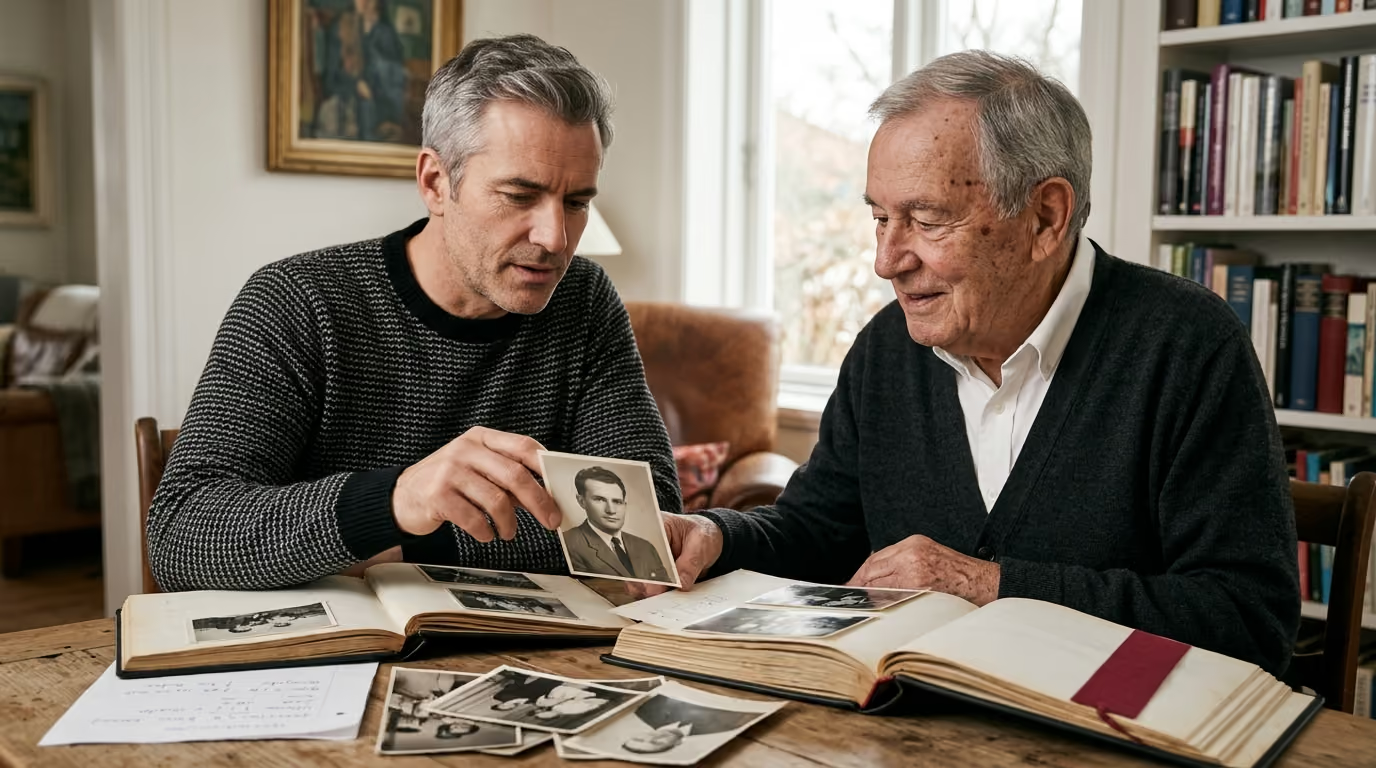
Men over 45 often search for ways to protect their health that go beyond diet and gym routines. You might find yourself typing queries about cardiovascular longevity, joint health, or cognitive decline into a search engine late at night.
What the algorithms frequently miss is the impact of your daily social environment. Research confirms that how you connect with others, maintain purpose, and build community forms a primary pillar of long-term survival and vitality.
This guide outlines the hard science behind social connection and lifespan. It provides a practical, grounded roadmap to construct a resilient life structure that keeps you capable, sharp, and connected for decades ahead.
The Epidemiology of Social Connection and Mortality Risk
Large-scale epidemiological research consistently links strong social integration to reduced mortality risk. The data shows that the social environment operates on biological health with an effect size comparable to well-known physical risk factors.
A landmark meta-analysis pooled 148 prospective studies involving 308,849 participants. The researchers found that individuals with stronger social relationships had a 50 percent greater likelihood of survival over study follow-up periods compared to those with weaker social ties. This association remained consistent across age groups, biological sex, initial health status, and causes of death.
The researchers noted that complex measures of social integration showed the strongest correlation with survival, registering an odds ratio of 1.91. Simple binary metrics, such as whether someone lived alone, showed a far weaker association with an odds ratio of 1.19.
Subsequent meta-analytic reviews separated different dimensions of social disconnection. When researchers controlled for existing health variables and demographics, social isolation showed an association with a 29 percent increase in mortality risk. Subjective loneliness showed an association with a 26 percent increase, and living alone was linked to a 32 percent increase.
Data from the World Health Organization Commission on Social Connection estimates that loneliness affects roughly one in six people worldwide. The Commission links social disconnection to more than 871,000 deaths every year across the globe. These findings position social connection as a fundamental matter of public health rather than a mere lifestyle preference.
Psychological purpose displays a similarly strong statistical link to survival. A 2016 meta-analysis analyzed 10 prospective studies encompassing 136,265 participants. Individuals reporting higher purpose in life had a lower risk of all-cause mortality, with a pooled relative risk of 0.83. They also demonstrated a lower risk of cardiovascular events, matching the same relative risk of 0.83.
An updated meta-analysis on purpose confirmed these associations, identifying a pooled hazard ratio of 0.76. This reflects an approximate 30 percent lower mortality risk among purposeful individuals.
Volunteering programs demonstrate a related pattern in older cohorts. A meta-analysis of organizational volunteering among older adults identified an unadjusted 47 percent lower mortality risk among active volunteers.
When researchers adjusted the data for baseline physical health, socioeconomic status, and preexisting social ties, the association remained substantial. Regular volunteering remained linked to an average 24 percent reduction in mortality risk.
Partnership data reflects comparable trends across the lifespan. A systematic review and meta-analysis of 53 cohorts involving more than 250,000 older adults analyzed the survival patterns of married versus unmarried individuals. The researchers identified a relative risk of 0.88 for married adults compared to unmarried peers.
Widowed participants faced an elevated relative risk of 1.11 compared to married individuals. Divorced or separated individuals faced a relative risk of 1.16, and individuals who never married showed a relative risk of 1.11.
While these statistics describe wide populations, they demonstrate that social integration, purpose, and structured participation correlate heavily with human longevity. You can read more about evidence-based health strategies in our guide to longevity science and optimization.
Structural Shifts in Midlife and Later-Life Social Networks
The social world of a man over 45 experiences predictable structural shifts. These changes are not symptoms of a medical disorder. They represent shifts in daily routines, family structures, professional demands, and physical capability.
Sociologists describe human relationships through the social convoy model. This model pictures an individual moving through life surrounded by concentric circles of support:
- The inner circle contains intimate, emotionally secure bonds, such as a spouse, long-term partner, or lifelong friend.
- The middle circle contains friends, colleagues, and family members who provide companionship and mutual assistance.
- The outer circle contains acquaintances, neighbors, service providers, and shared community members.
As men move through midlife, this social convoy naturally changes. Children grow up and leave home, altering daily household interaction.
Career shifts, promotions, retirement, or business exits remove the built-in daily interactions of the workplace. Relocation separates men from neighborhood networks built over decades.
At the same time, rates of bereavement begin to rise. Men lose aging parents, mentors, and peers to illness.
Physical changes can subtly accelerate this network contraction. Age-related changes in joint comfort or stamina can reduce participation in recreational sports leagues.
Sensory changes also play a major role. Gradual hearing loss makes crowded restaurants, busy pubs, and loud gatherings tiring, which leads many men to decline invitations.
It is critical to distinguish between objective social isolation and subjective loneliness during these transitions. Social isolation describes an absence of contacts, roles, or group memberships. Loneliness is the subjective pain felt when the quality or quantity of your relationships fails to meet your emotional needs.
A man living alone on acreage may have low contact frequency yet feel completely satisfied and purposeful. Another man may sit in a busy corporate office or share a family dinner table while feeling isolated and misunderstood. Understanding these distinctions helps you maintain healthy aging habits that fit your life.
Biological, Behavioral, and Cognitive Pathways
The link between social integration and longevity operates through identifiable biological, behavioral, and neurological pathways. These systems interact continuously to influence how your body handles physical stress and disease.
Behavioral Pathways
Social ties provide behavioral structure and accountability. A person embedded in a reliable network is more likely to maintain consistent daily habits:
- Attending routine preventive medical screenings and dental visits.
- Adhering to prescribed medications or physical therapy programs.
- Preparing balanced meals at consistent times.
- Engaging in regular daily physical movement.
- Seeking prompt medical attention when novel symptoms arise.
When a person lives in total isolation, there is no one nearby to notice early signs of illness, cognitive shifts, or mobility issues. A fall or sudden health complication can go unnoticed for days without a local contact.
Stress-Buffering Pathways
Supportive relationships act as a biological buffer against environmental stress. When facing a demanding life event, the ability to discuss problems with a trusted peer dampens prolonged nervous system arousal.
Sharing concerns reduces psychological uncertainty and helps you organize a constructive response. Chronic social isolation leaves the nervous system in a state of sustained vigilance.
The World Health Organization notes that chronic loneliness correlates with higher rates of depression, anxiety, cardiovascular conditions, type 2 diabetes, and cognitive decline. Chronic stress activation promotes systemic inflammatory processes, alters metabolic function, and disrupts restorative sleep architecture.
Cognitive and Neurological Pathways
Engaging with other people is cognitively demanding. Conversation requires working memory, rapid auditory processing, emotional regulation, and perspective-taking.
Collaborating on a project, learning a new trade, or resolving a disagreement requires complex executive function. This cognitive engagement supports cognitive reserve, which helps the brain maintain performance despite underlying aging processes.
A 2024 classification review categorized social participation into distinct levels of interaction. The review noted that structured group participation associates with better cognitive scores, lower rates of depressive symptoms, and reduced pain interference.
Logistical and Resource Pathways
Networks provide direct access to tangible resources during times of physical vulnerability. A broad social convoy offers practical advantages:
- Reliable transportation to medical facilities following surgery or injury.
- Help with home maintenance and heavy physical tasks.
- Shared guidance when navigating complex healthcare decisions.
- Meal assistance during acute recovery periods.
These practical resources prevent minor physical setbacks from escalating into severe disability. For men seeking to preserve mental sharpness, exploring our research on mind and cognitive focus provides valuable complementary strategies.
The Multi-Anchor Architecture for Daily Capability
Relying on a single person or single role for your entire social world creates severe structural vulnerability. If your partner is your sole confidant, or if your job is your only source of purpose, any disruption can leave you isolated.
A resilient life structure uses multiple anchors across different domains. This spreads your social and emotional investments across a broader foundation.
The Close Relationship Anchor
This anchor consists of one to three individuals who know your personal history and current challenges. These relationships provide deep emotional safety and honest feedback.
They require regular maintenance through open communication and dependable reciprocity. This anchor is where you speak candidly without posturing.
The Community Anchor
This anchor connects you to a recurring group or institution where you are recognized by name. Examples include a neighborhood association, an athletic club, a maker workshop, a faith congregation, or a local service club.
You do not need to share deep emotional secrets with every member of this group. The value lies in regular attendance, shared interests, and familiar faces.
The Contribution Anchor
Healthy aging requires feeling useful to others. The contribution anchor provides a clear channel to direct your skills, experience, and energy outward.
This might take the form of formal volunteering, trade mentorship, youth coaching, or caring for family members. Contribution shifts your attention away from internal rumination toward tangible problem-solving.
The Learning Anchor
Continuing education combines mental challenge with social contact. This anchor involves skill acquisition through classes, music instruction, foreign language study, or technical training.
A 2025 systematic scoping review on later-life learning found consistent associations between structured adult learning and improved well-being, cognitive health, and physical functioning. Learning environments introduce you to people outside your normal professional circles.
The Activity Anchor
Physical movement built into a social context supports joint health, muscle maintenance, and social connection simultaneously. This includes weekly group walks, masters swimming clubs, cycling groups, or strength training groups.
Group exercise provides natural accountability and shared milestones. It prevents physical training from feeling like an isolated chore.
The Meaning Anchor
This anchor organizes your values, worldview, and long-term goals. It can be grounded in philosophical study, spiritual traditions, creative production, or conservation work.
A clear meaning anchor provides personal stability during periods of grief, retirement, or unexpected health challenges. It answers the basic question of what you stand for.
The Safety Anchor
The safety anchor covers practical emergency plans. It includes having reliable contacts with house keys, knowing who can drive you home from an outpatient procedure, and keeping accessible financial records.
Building a safety anchor removes background anxiety about handling unforeseen medical emergencies. You can access more practical frameworks through our library of men's health research guides.
Partnership, Widowhood, and Social Redundancy
Long-term marriage and romantic partnerships show clear statistical associations with longevity in public health literature. However, understanding the exact nature of this protection is vital for realistic life planning.
The protective elements of a strong partnership stem from shared daily logistics, financial cooperation, mutual health monitoring, and consistent companionship. A partner often notices subtle health changes, such as new breathing patterns, suspicious skin marks, or cognitive slips, long before a physician does.
Partnership is not an automatic shield against health decline. A relationship characterized by constant hostility, control, or instability creates chronic physiological strain. High-conflict environments elevate blood pressure, disrupt immune regulation, and worsen sleep quality.
The health benefit of a relationship depends on the presence of mutual trust, respect, and emotional safety. Marriage status serves as an imperfect proxy for relationship quality.
The vulnerability of relying solely on a spouse becomes apparent during bereavement. Widowhood brings sudden logistical, emotional, and social upheaval.
The surviving partner must manage household responsibilities, personal grief, and altered daily routines at the same time. Research shows that mortality risk rises sharply following the loss of a spouse.
A 10-year prospective study on older adults demonstrated that network size plays a decisive role in moderating this risk. Widowed individuals with fewer than four to six close relationships faced elevated mortality rates compared to married peers.
Widowed individuals who maintained a broader circle of close ties did not experience the same spike in mortality risk. This finding underscores the necessity of building social redundancy throughout your 40s, 50s, and 60s.
Building social redundancy requires deliberate habits:
- Maintain independent friendships outside your primary domestic partnership.
- Keep in regular contact with siblings, adult children, and extended family.
- Learn all essential household, administrative, and financial management tasks.
- Establish independent community ties through personal hobbies and volunteer roles.
- Develop reliable relationships with neighbors for day-to-day practical support.
Investing in these relationships does not diminish your commitment to a partner. It ensures that both partners remain supported, capable, and resilient throughout later life.
Lifelong Learning and Structured Contribution Models
Maintaining personal purpose after 45 requires active engagement with skill development and community service. Structured learning and volunteering provide practical platforms to build both capability and community.
A systematic scoping review published in 2025 examined the broad health impacts of adult learning. The researchers found that participating in educational activities during midlife and later life correlated with gains across multiple health domains:
- Enhanced psychological well-being and life satisfaction.
- Improved cognitive performance, working memory, and executive function.
- Better adherence to positive lifestyle behaviors and exercise routines.
- Increased social network diversity and reduced feelings of isolation.
- Maintained functional independence and physical mobility.
Effective learning programs combine intellectual difficulty with a social environment. A self-directed online course completed in total isolation provides intellectual input, but it lacks the interpersonal exchange of a live workshop or seminar.
Enrolling in an in-person language class, woodworking course, or master gardener program creates opportunities for peer interaction, shared problem-solving, and mutual encouragement.
Volunteering provides a similar dual benefit by combining structured social participation with meaningful responsibility. Data confirms that volunteering is associated with a 24 percent lower mortality risk after controlling for baseline health.
The value of volunteer service comes from the responsibilities it creates:
- A predictable weekly schedule that requires you to get dressed and leave the house.
- An opportunity to apply professional competencies or learn new hands-on skills.
- Interaction with people across different age groups and backgrounds.
- The psychological reward of meeting a real community need.
To keep volunteering sustainable, choose roles with clear boundaries and manageable time commitments. Overextending yourself can lead to chronic fatigue and burnout, causing you to withdraw from service entirely.
Select positions that match your current stamina, offer reliable transportation options, and provide clear operational procedures. Learn more about protecting your mental resilience in our guide to cognitive performance and mental fitness.
Contextual Barriers and Complex Life Scenarios
Advice regarding social connection often sounds simple: join a club, call a friend, or volunteer at a local charity. For many men over 45, real-world constraints make following this advice difficult.
Addressing these barriers directly allows for realistic, practical adaptations.
Sensory and Physical Limitations
Hearing loss is a common barrier to social participation in midlife. Men with unaddressed hearing impairment often withdraw from dinner parties, lectures, and group sports because following conversations in noisy rooms becomes exhausting.
Addressing this barrier requires prompt audiology evaluations, modern hearing aids, and choosing quieter meeting environments. Well-lit spaces and smaller group sizes make communication easier and reduce listening fatigue.
Physical mobility issues, joint discomfort, and chronic health conditions can also restrict access to traditional social venues. If transportation or walking distances pose problems, consider adaptive alternatives:
- Joining daytime discussion groups that offer accessible parking and level entry.
- Participating in structured video-based study groups or trade panels.
- Scheduling regular one-on-one visits at home or in quiet local cafes.
- Coordinating with community transport services for medical and social outings.
Caregiving Demands
Many men in their 50s and 60s find themselves caring for an aging parent, an ill spouse, or grandchildren. Full-time caregivers are often surrounded by people, yet they experience profound emotional isolation.
Their daily energy is consumed by medical schedules, personal care, and domestic labor. Caregivers need targeted support systems:
- Arranging formal respite care to secure predictable blocks of personal time.
- Joining caregiver-specific peer support groups to share logistical solutions.
- Maintaining at least one standing social contact that does not involve care duties.
- Using community meal delivery and home health aides to reduce daily physical strain.
Introversion and Temperament
Men with introverted temperaments often feel alienated by generic wellness advice that urges them to attend large parties or join crowded clubs. Introversion is not a health risk, and extroversion is not a medical requirement.
Introverted men thrive with smaller, structured social interactions:
- One-on-one coffee meetings or walks with a single friend.
- Quiet volunteer tasks, such as trail maintenance or library archiving.
- Structured hobby groups focused on a shared technical task rather than casual small talk.
- Deep, occasional conversations rather than frequent, superficial networking.
Rural Geography and Economic Restraints
Living in a rural area or managing a tight retirement budget can limit access to paid clubs and commercial leisure facilities. In these environments, social connection relies on accessible public infrastructure.
Public libraries, community garden plots, regional conservation projects, and local civic boards offer free avenues for participation. Men in remote areas can establish regular telephone check-ins, participate in regional amateur radio clubs, or organize neighborhood tool-sharing co-ops to maintain regular contact.
Common Misreadings of Social Connection Research
The relationship between social life, purpose, and longevity is frequently distorted in popular media. Examining what the evidence does not support prevents unrealistic expectations and misguided decisions.
Misreading 1: Living Alone Equals Severe Loneliness
Living alone is an objective physical household arrangement. Loneliness is a subjective emotional state.
The large 2010 meta-analysis showed that the link between simply living alone and mortality was much weaker than complex measures of overall social integration. Many men living alone maintain vibrant friendships, active volunteer schedules, and deep family connections.
Conversely, living with a partner or family members does not protect you from feeling lonely if those relationships lack warmth, trust, or mutual respect.
Misreading 2: Maximizing Social Contacts is Always Better
Popular wellness advice often suggests that having more friends is always better. The evidence shows that relationship quality matters far more than raw numbers.
Forced exposure to unsupportive, critical, or conflict-heavy groups increases physiological stress rather than reducing it. A small network of two or three reliable, emotionally safe relationships provides far more health protection than a large roster of stressful acquaintances.
Misreading 3: Purpose Requires a Grand Mission
Many men assume that having a purpose requires launching a new company, running a foundation, or achieving public recognition. In psychological research, purpose simply reflects having valued personal goals and a sense that your daily actions matter.
Purpose can be found in ordinary, steady commitments:
- Maintaining a home garden and sharing fresh produce with neighbors.
- Teaching a grandchild practical mechanical or woodworking skills.
- Caring for a rescue dog and walking consistent routes every morning.
- Documenting family history or restoring vintage machinery.
These modest routines provide structure, identity, and personal satisfaction without the burden of grand public ambitions.
Misreading 4: Observational Studies Prove Direct Causation
It is tempting to read that volunteers have a 24 percent lower mortality rate and conclude that volunteering automatically adds years to your life. The research in this field is primarily observational.
Healthier, wealthier, and more mobile men are naturally more capable of volunteering and maintaining active social calendars. While researchers control for these variables using statistical adjustments, observational data cannot prove direct biological causation.
Social connection supports health, but it works alongside medical care, exercise, sleep, and nutrition rather than replacing them.
Gaps and Methodological Limits in the Evidence
A rigorous understanding of healthy aging requires acknowledging where current scientific evidence remains thin or limited.
First, the vast majority of studies examining social connection, purpose, and mortality rely on observational cohort designs. Randomized controlled trials in this domain are rare, brief, and difficult to execute.
You cannot ethically assign one group of humans to live in isolation for twenty years while another group receives rich friendships. As a result, research must rely on longitudinal surveys and statistical modeling, which always leave room for unmeasured confounding variables.
Second, definitions and measurement tools vary considerably between published studies. One study may measure purpose using a detailed psychological inventory, while another uses a two-question survey.
Similarly, social isolation is measured differently across countries and research institutions. Pooling data from these diverse methods creates broad directional conclusions, but it prevents researchers from prescribing exact dosages of social interaction.
Third, commercial interests frequently overstep the evidence. Private companies market digital brain-training software and cognitive apps as tools to prevent dementia and protect longevity.
A comprehensive review of adult learning shows that real-world, socially embedded skill acquisition provides multifaceted benefits that digital puzzle games cannot replicate. Commercial claims that solitary computer games improve social health or prolong life lack clinical backing.
Finally, biological mechanism research remains ongoing. While we observe clear correlations between social isolation, systemic inflammation markers, and cardiovascular outcomes, scientists are still mapping the exact cellular pathways involved.
We know that social connection associates with healthier biological profiles, but science has not isolated a single molecular switch that explains the entire survival advantage. Maintaining a balanced perspective prevents you from treating social strategies as miracle cures.
Practical Steps for Building Your Social Portfolio
You can apply the research on social connection and purpose to your own life using a structured, step-by-step audit. Work through this checklist over the coming week to evaluate your social foundations and identify practical adjustments.
1. Map Your Current Network
Take fifteen minutes to write down your existing connections across four basic categories:
- Intimate confidants you can call during a personal crisis.
- Friends or peers you see or speak with at least once a month.
- Groups, clubs, or organizations you attend on a recurring schedule.
- Neighbors or local contacts who can help with practical tasks.
2. Identify Your Structural Weak Points
Review your completed map and look for gaps:
- Does your entire social life depend on your partner?
- Have you lost touch with friends following career or location changes?
- Do you lack a recurring group activity that gets you out of the house?
- Are your current social interactions draining, competitive, or unsupportive?
3. Establish One Recurring Social Commitment
Select one predictable, calendar-bound activity to add to your monthly routine. Predictability builds long-term habits without requiring constant willpower:
- Join a local hiking, cycling, or masters athletic group.
- Enroll in an in-person skill-based class at a local college or community center.
- Set up a standing bi-weekly breakfast or phone call with a friend.
- Join a local volunteer crew working on conservation, building, or mentoring.
4. Build a Channel for Regular Contribution
Find one way to direct your skills toward helping others without overcommitting your schedule:
- Offer practical mentorship to a younger colleague or apprentice in your field.
- Assist an elderly neighbor with seasonal yard maintenance or home repairs.
- Commit to a two-hour volunteer shift once a week for a local non-profit.
- Organize a regular tool-repair or project night in your neighborhood.
5. Establish a Simple Safety Protocol
Organize basic emergency logistics to ensure you have practical support when needed:
- Give a spare house key to a trusted neighbor or nearby friend.
- Keep a written list of emergency contacts, medications, and allergies in your wallet.
- Identify two people who can provide transportation if you face sudden medical restrictions.
The Takeaway
Healthy aging requires a resilient portfolio of supportive relationships, active community participation, and meaningful daily purpose alongside physical training and nutrition. Investing in multiple social anchors protects your independence, mental sharpness, and vitality throughout midlife and beyond.
Sources
- Marital status and mortality in the elderly: a systematic ...
- Social participation classification and activities in ...
- Meta-analysis of the association between marital status and ... - PMC
- The association between marital status and the risk of cardiovascular, cancer, and all-cause mortality: An updated systematic review and meta-analysis - PubMed
- Meta-analysis of the association between marital status and ... - PMC
- Later life learning: what is it, and who is it for? A systematic scoping review of the “learning and health in later life” literature
- Marital Status, Self-Rated Health, and Mortality - PMC - NIH
- Later Life Learning: What is it, and Who is it for? A Systematic Scoping Review of the ‘Learning and Health in Later Life’ Literature
- Meta-analysis of marital dissolution and mortality: Reevaluating the intersection of gender and age
Stay sharp
Get the word
Join our newsletter for the best writing advice and stories from the field.