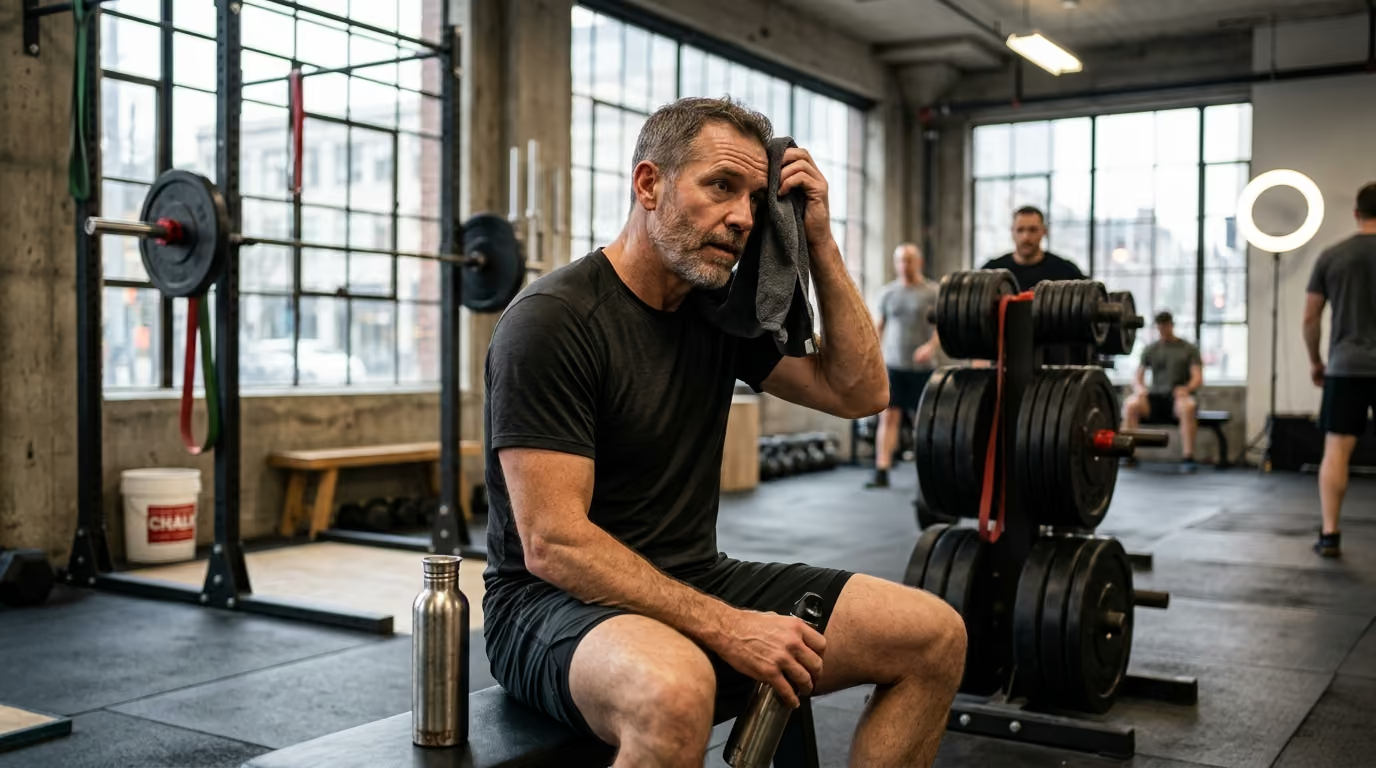
Resistance training for longevity is the systematic use of muscular work against external load to preserve physical capability, metabolic stability, and skeletal resilience across the lifespan. It is not bodybuilding, extreme powerlifting, or an aggressive pursuit of cosmetic perfection. It is a planned habit designed to protect functional capacity so you can live independently, handle physical challenges, and maintain metabolic health.
Many fitness messages focus on aesthetic goals or extreme athletic performance. Longevity training focuses on functional reserve. Functional reserve is the difference between your maximum physical capacity and the minimum effort required to perform daily activities. When that reserve is large, carrying groceries, climbing stairs, walking uphill, and catching your balance after a trip feel manageable. When that reserve shrinks, everyday life becomes demanding and hazardous.
This guide provides a detailed review of the evidence behind resistance training. You will examine the mortality data, metabolic mechanisms, bone adaptations, cognitive effects, and practical programming frameworks designed for men navigating midlife and later life.
- THE LONGEVITY CAPABILITY SPECTRUM
- Peak Athletic Capacity
- Functional Reserve
- Daily Need
- Maximum force Reserve capacity Standing
- Rapid power output Balance correction Stairs
- High metabolic buffer Recovery from illness Carrying
(Diagram concept: The goal of longevity training is maintaining a robust middle buffer so everyday demands never exceed personal capacity.)
What Does the Science Actually Say About Lifting Weights and Living Longer?
The research examining resistance exercise and longevity falls into two distinct categories. The first category includes large observational cohort studies that track mortality over decades. The second category includes randomized controlled clinical trials that measure direct physiological changes over weeks or months.
Observational studies consistently show an inverse association between resistance training and premature death. A 2022 systematic review and meta-analysis of ten studies found that engaging in any resistance training was linked to a 15% lower risk of all-cause mortality compared with no resistance training. That same analysis identified a 19% lower risk of cardiovascular mortality and a 14% lower risk of cancer mortality.
Another meta-analysis showed a 21% lower risk of all-cause mortality for resistance training alone. When individuals combined resistance training with aerobic exercise, the reduction in all-cause mortality reached 40%. The combination of lifting weights and aerobic work appears superior to either training mode alone.
These observational findings show associations rather than direct cause. People who lift weights often differ from sedentary populations in nutrition, smoking habits, financial stability, and access to medical care. Observational studies cannot completely eliminate these confounding variables.
Controlled clinical trials provide direct evidence for physiological mechanisms. These trials demonstrate that structured resistance exercise consistently improves blood pressure, increases resting insulin sensitivity, reduces systemic markers of inflammation, improves bone density, and increases skeletal muscle mass. In clinical settings, lifting weights directly alters the biomarkers that drive chronic cardiometabolic disease.
The dose-response curve for mortality presents an intriguing pattern. Meta-analyses show that approximately 30 to 60 minutes of weekly resistance training produces the steepest drop in mortality risk, with the largest estimated reduction of 27% occurring near 60 minutes per week. Volumes above 130 to 150 minutes per week show diminishing statistical benefits in some pooled models.
Long-term cohort data tracking adults over 30 years show that the mortality benefit plateaus near 120 minutes per week without sudden risk spikes. The precise optimal volume remains uncertain. You do not need hours of daily lifting to secure major health benefits. A modest, consistent dose delivers the vast majority of the protective effect.
Why Does Muscular Capacity Change After Age 45?
Physical capacity shifts naturally across midlife. Understanding the biology of these changes helps you address them without viewing normal aging as an incurable disease.
The age-related loss of muscle mass is known as sarcopenia. Starting in the fourth decade, adults who do not perform strength exercise experience a gradual reduction in muscle tissue. This process involves the selective atrophy and loss of Type II muscle fibers. Type II fibers are fast-twitch fibers responsible for producing high forces and rapid movements. When fast-twitch fibers shrink, absolute strength and explosive power drop faster than endurance.
Strength loss often outpaces the loss of muscle tissue. This distinct condition is called dynapenia. Dynapenia describes the decline in muscle force production caused by neurological and structural changes rather than muscle size alone.
Neurological factors play a massive role in dynapenia. With advancing age, the central nervous system experiences a reduction in motor unit firing rates. Motor units also undergo a remodeling process where denervated fast-twitch fibers are either re-innervated by slow-twitch motor neurons or lost entirely. As a result, the nervous system becomes less efficient at recruiting large pools of muscle fibers simultaneously.
Metabolic and hormonal factors also influence muscle tissue after age 45. Baseline muscle protein synthesis becomes less responsive to small amounts of dietary protein, a phenomenon known as anabolic resistance. Connective tissue within the muscle belly changes, with increased collagen cross-linking and fatty infiltration reducing tissue elasticity.
These biological shifts explain why strength declines if muscles remain unchallenged. Structured resistance training acts as a direct counter-signal. Lifting challenges motor units, forces Type II fibers to activate, stimulates protein synthesis pathways, and preserves neural drive.
How Does Muscle Strength Translate to Daily Capability and Independence?
Muscle is not merely cosmetic tissue. In the context of longevity, muscle functions as an active organ system that protects physical independence and survival capacity.
- SARCOPENIA VS. DYNAPENIA MECHANISMS
- SARCOPENIA (Tissue Loss) DYNAPENIA (Strength Loss)
- Fast-twitch fiber atrophy Decreased motor unit recruitment
- Anabolic resistance Lower firing rates
- Intermuscular fat accumulation Altered tendon stiffness
When an adult experiences acute illness, hospitalization, or enforced bed rest, muscle tissue catabolizes rapidly. A robust reserve of lean mass provides an amino acid buffer that supports immune function and wound repair during systemic stress. Individuals with higher baseline muscle mass and strength tolerate medical treatments and periods of inactivity with fewer functional losses.
Task-specific physical capacity dictates everyday freedom. Rising from a low chair, stepping off a high curb, carrying heavy objects, and climbing several flights of stairs require specific thresholds of force. If your maximal strength drops too close to the force needed to rise from a chair, that basic movement requires near-maximal exertion. When ordinary tasks demand 90% of your maximum capacity, fatigue sets in quickly and injury risks escalate.
Power production is particularly critical for fall prevention. Power represents the product of force and movement velocity. Most trips or stumbles require rapid force production in fractions of a second to move a foot into position and brace the torso.
Because power declines faster than static strength with age, training should occasionally incorporate controlled, faster lifting speeds during the concentric phase. Preserving rate of force development provides the mechanical speed needed to recover your footing during an unexpected loss of balance.
Systematic reviews show that resistance training programs improve functional markers in older adults, including gait speed, chair-rise time, and static balance. Incorporating progressive movement patterns ensures that daily activities remain well below your maximum physical ceiling.
How Does Resistance Training Influence Metabolic and Cardiovascular Health?
Skeletal muscle represents the largest site for post-meal glucose disposal in the human body. When you contract muscles against external resistance, you activate non-insulin-dependent glucose transport mechanisms.
Intracellular glucose transporter type 4 (GLUT4) proteins move to the cell membrane during muscular work. This allows muscle cells to take up glucose directly from the bloodstream without requiring elevated insulin levels.
Regular resistance exercise improves long-term insulin sensitivity by expanding metabolic storage capacity and improving mitochondrial function within muscle fibers. For individuals managing insulin resistance or type 2 diabetes, lifting weights provides meaningful clinical improvements.
A meta-analysis of 20 studies involving 1,172 adults with type 2 diabetes found that resistance training reduced HbA1c by an average of 0.39 percentage points compared with control groups. Another meta-analysis identified reductions in HbA1c of 0.50 percentage points and fasting blood glucose drops of 12.03 mg/dL.
These glycemic improvements occur even when total body weight remains unchanged. Replacing intramuscular fat with healthy, active contractile tissue improves metabolic parameters independent of scale weight.
The cardiovascular benefits of resistance training are equally documented. Resistance training helps lower resting blood pressure by improving vascular function and reducing arterial stiffness.
A systematic review published in cardiovascular literature reported that medium-term resistance training lowered systolic blood pressure by 4.02 mmHg and long-term training lowered it by 5.08 mmHg. Diastolic pressure decreased by 1.73 mmHg in the medium term and 4.93 mmHg over longer periods.
Another meta-analysis showed average dynamic resistance training reductions of 1.8 mmHg for systolic and 3.2 mmHg for diastolic pressure. At a population level, sustained blood pressure drops of this magnitude correlate with significant reductions in stroke and myocardial infarction risk.
Combining resistance training with regular aerobic conditioning yields the most comprehensive cardiometabolic protection. While aerobic work optimizes central cardiorespiratory fitness, lifting ensures robust peripheral glucose handling and vascular adaptability. Men seeking comprehensive metabolic conditioning can read our metabolic health and energy regulation guide to align their physical training with daily nutrition.
What Does the Research Reveal About Bone Density and Brain Health?
Skeletal integrity and cognitive performance are central components of healthspan that respond positively to mechanical loading.
Skeletal Remodeling and Bone Mineral Density
Bone tissue adapts to mechanical strain. When muscles contract forcefully against resistance, tendons exert tensile forces on their bony insertions. Compressive loads from standing, squatting, and carrying compress the skeletal matrix, generating fluid flow within the canaliculi of the bone.
This fluid movement stimulates osteocytes to send biochemical signals that downregulate bone resorption and promote new bone formation. This process is known as Mechanostat Theory.
The skeletal response to exercise is site-specific. Bone density increases primarily in the anatomical regions experiencing direct mechanical strain.
A systematic review and meta-analysis of resistance training in older adults identified modest positive changes in bone mineral density (BMD), showing an increase of 0.64% at the total hip and 0.62% at the lumbar spine. Changes at the femoral neck were neutral, showing a small difference of -0.22%.
A separate meta-analysis compared high-load training against low-load training and found no significant difference in BMD outcomes between the two intensities at the lumbar spine or femoral neck. Both moderate and heavier loading strategies help attenuate the typical age-related loss of bone mass.
Resistance training protects bone health through two distinct mechanisms. It slows structural bone loss through direct loading, and it reduces skeletal fracture rates by improving balance, strength, and fall resistance.
Cognitive Function and Neurological Adaptations
The link between resistance training and brain health is a growing area of longevity research. Physical exercise stimulates the release of neurotrophic factors, including brain-derived neurotrophic factor (BDNF) and insulin-like growth factor 1 (IGF-1). These molecules support synaptic plasticity, neuronal survival, and cerebrovascular blood flow.
Clinical trials show that resistance training positively influences executive cognitive function. A randomized controlled trial in older women demonstrated that both once-weekly and twice-weekly resistance training for 12 months produced measurable improvements in executive tasks such as selective attention and conflict resolution. Task performance improved by 12.6% in the once-weekly group and 10.9% in the twice-weekly group, while the balance-and-tone control group declined by 0.5%.
A meta-analysis examining older adults found that resistance training generated positive effects on global cognition, working memory, verbal memory, and spatial memory. The magnitude of cognitive improvement varies depending on the specific cognitive test, the volume of exercise, and the baseline health of the individual. Resistance training supports cognitive health as part of an active lifestyle, alongside adequate sleep and vascular risk management.
How Should You Structure a Longevity Training Program Across Different Life Stages?
An effective longevity program must be sustainable for years. Programs should prioritize movement consistency, joint tolerance, and progressive overload over extreme muscular fatigue.
The fundamental structure relies on multi-joint movement patterns that mimic daily physical demands:
- CORE LONGEVITY MOVEMENT PATTERNS
- Squat Pattern: Goblet squat, leg press, box squat
- Hinge Pattern: Romanian deadlift, kettlebell deadlift, cable pull
- Upper Push: Dumbbell bench press, overhead press, push-up
- Upper Pull: Cable row, chest-supported row, lat pulldown
- Unilateral / Carry: Step-ups, split squats, farmer carries
You can review our foundational structured strength and muscle training principles for detailed execution notes on these primary patterns.
Beginner Framework (0 to 6 Months Experience)
Beginners experience rapid strength improvements through neural adaptations. The primary goal is learning sound mechanics and building connective tissue tolerance without creating debilitating soreness.
- Frequency: 2 days per week (non-consecutive days).
- Volume: 1 to 2 sets per exercise.
- Repetitions: 10 to 15 controlled repetitions.
- Intensity: Moderate load leaving 3 to 4 repetitions in reserve (RIR).
Sample Beginner Routine:
Session A
- Goblet Squat onto a box: 2 sets of 10-12 reps
- Dumbbell Romanian Deadlift: 2 sets of 10-12 reps
- Incline Push-up or Machine Chest Press: 2 sets of 10-12 reps
- Seated Cable Row: 2 sets of 10-12 reps
- Standing Dumbbell Farmer Carry: 2 walks of 30 paces
- Standing Calf Raise: 2 sets of 12-15 reps
Session B
- Machine Leg Press: 2 sets of 10-12 reps
- Supported Dumbbell Row: 2 sets of 10-12 reps
- Dumbbell Overhead Press (Seated or Standing): 2 sets of 10-12 reps
- Step-up onto low platform: 2 sets of 8-10 reps per leg
- Cable or Band Pallof Press (core stability): 2 sets of 10 reps per side
- Supported Single-Leg Balance Drill: 2 sets of 20 seconds per side
Intermediate Framework (6 Months to 3 Years Experience)
Intermediates possess stable mechanics and can tolerate higher training density. Volume expands to maintain gradual progress in strength and muscle preservation.
- Frequency: 2 to 3 days per week.
- Volume: 2 to 3 sets per exercise.
- Repetitions: 6 to 12 repetitions.
- Intensity: Moderate to heavy load leaving 2 to 3 repetitions in reserve.
Sample Intermediate Routine (Full Body):
Session 1
- Barbell or Dumbbell Front Squat: 3 sets of 6-8 reps
- Chest-Supported Row: 3 sets of 8-10 reps
- Flat Dumbbell Bench Press: 3 sets of 8-10 reps
- Bulgarian Split Squat: 2 sets of 8-10 reps per leg
- Heavy Farmer Carry: 3 walks of 40 paces
Session 2
- Romanian Deadlift: 3 sets of 6-8 reps
- Neutral-Grip Overhead Dumbbell Press: 3 sets of 8-10 reps
- Lat Pulldown or Assisted Pull-up: 3 sets of 8-10 reps
- Leg Press or Hack Squat: 2 sets of 10-12 reps
- Standing Calf Raise: 3 sets of 10-12 reps
Session 3
- Trap Bar Deadlift or Goblet Squat: 3 sets of 6-8 reps
- Incline Dumbbell Press: 3 sets of 8-10 reps
- One-Arm Cable Row: 3 sets of 10-12 reps per side
- Walking Lunges with dumbbells: 2 sets of 10 steps per leg
- Cable Anti-Rotation Hold: 3 sets of 15 seconds per side
Advanced Trainees (3+ Years Consistent Lifting)
Advanced lifters over 45 generate high absolute force, which imposes higher recovery demands on tendons, joints, and the nervous system. The focus shifts toward managing cumulative fatigue and rotating movement stress.
- Volume: 3 to 4 working sets on primary movements.
- Intensity: Varied across the week, cycling heavy days (4-6 reps) and moderate days (8-12 reps).
- Periodization: Scheduled deload weeks every 4 to 8 weeks, reducing volume by 40% to 50% to facilitate recovery.
- Variation: Subbing barbells for dumbbells, specialty bars, or cables to minimize joint wear.
Frail, Deconditioned, or Post-Rehabilitation Adults
For deconditioned individuals, physical frailty can be reversed with low to moderate loads. Clinical reviews show that programs using 30% to 70% of 1RM with 1 to 3 sets of 6 to 15 repetitions yield meaningful gains in functional independence.
- Exercise Selection: Sit-to-stand from an elevated chair, wall push-ups, elastic band rows, seated leg extensions, and supported heel raises.
- Focus: Safe balance support, controlled tempo, and building movement confidence.
- Progression Priority: Consistency first, followed by movement range, then repetitions, and finally modest resistance increases.
Men seeking broader perspectives on maintaining resilience can explore our dedicated healthy aging strategies to integrate movement, recovery, and daily lifestyle habits.
- PROGRAM PROGRESSION HIERARCHY
- Step 1: Attendance & Consistency (Show up 2-3 days weekly)
- Step 2: Technical Execution (Controlled movement, full safe range)
- Step 3: Repetition Capacity (Add reps within the target bracket)
- Step 4: Load & Velocity (Gradual weight increases, explosive lifts)
How Do You Modify Training for Injuries and Changing Recovery?
Joint irritation, tendon sensitivity, and fluctuating energy levels are common in midlife. Longevity training uses autoregulation and movement modifications to maintain consistent training stimuli without aggravating existing issues.
- TRAINING MODIFICATION DECISION TREE
- IF: Sharp joint pain during movement
- THEN: - Reduce range of motion to pain-free arc
- Switch to neutral grip or supportive machine
- Slow down eccentric phase or use isometric holds
- IF: Systemic fatigue / poor sleep / high stress
- THEN: - Keep load stable but reduce total sets by 30-50%
- Increase repetitions in reserve (keep 3-4 RIR)
Navigating Common Joint Limitations
When pain arises, you do not need to stop exercising. You can adjust the movement mechanics to reduce joint strain while keeping the muscle working:
Knee Discomfort
- Switch from deep forward-traveling lunges to reverse lunges or box step-ups.
- Use a leg press with higher foot placement to reduce patellofemoral shear.
- Emphasize hip hinge movements (Romanian deadlifts, hip thrusts) to build posterior chain strength without knee irritation.
Shoulder Discomfort
- Replace straight-bar bench pressing with neutral-grip dumbbell presses or floor presses.
- Use incline landmine presses instead of vertical overhead pressing.
- Increase horizontal pulling volume with chest-supported rows to support scapular stabilization.
Low Back Sensitivity
- Replace standard floor deadlifts with elevated trap bar deadlifts or dumbbell Romanian deadlifts.
- Switch from standing bilateral squats to supported split squats or belt squats.
- Perform seated or chest-supported rows rather than unsupported bent-over barbell rows.
For deeper insights on keeping joints supple and resolving mechanical restrictions, read our comprehensive guide on mobility and joint function.
Practical Autoregulation
Recovery capacity fluctuates based on sleep duration, life stress, nutritional intake, and overall health status. Forcing arbitrary weight increases on days when you are exhausted increases injury risk.
Autoregulation uses Repetitions in Reserve (RIR) or the Rating of Perceived Exertion (RPE) to calibrate training loads in real time:
- Target 2 to 3 RIR on most working sets. You stop the set when you could complete 2 to 3 more clean repetitions before technical breakdown.
- If warm-up sets feel unusually heavy and sluggish, reduce the planned working weight by 5% to 10% while keeping RIR constant.
- If performance drops sharply mid-session, drop the remaining accessory sets and conclude the workout.
Evaluating your physical progress across a multi-week rolling average provides a realistic picture of your development, rather than judging your fitness by any single difficult workout.
What Are the Most Common Misunderstandings About Training for Longevity?
Public discussions about strength training and aging often contain inaccurate simplifications. Reviewing the evidence helps separate genuine physiology from persistent training myths.
Myth 1: More Volume Is Always Better for Longevity
Bodybuilding culture promotes high training volume as the ultimate goal. For longevity, the dose-response relationship follows a curve of diminishing returns.
Studies show that 30 to 60 minutes of weekly lifting provides substantial all-cause mortality risk reductions. Pushing to 10 or 15 sets per muscle group every week builds extra hypertrophy for physique athletes, but it is not required for long-term health, cardiovascular improvements, or physical independence.
Myth 2: Light Weights Cannot Build Strength or Bone
Some assume that if you are not lifting heavy loads at 80% to 90% of your maximum, the exercise is ineffective. Research in older and frail adults shows that loads ranging from 30% to 70% of 1RM produce substantial improvements in muscle strength, power, and functional capacity.
Meta-analyses examining bone density show that moderate-load training yields bone preservation outcomes comparable to high-load training. Consistent effort and progressive difficulty matter more than the absolute weight on the bar.
Myth 3: You Must Train to Complete Muscular Failure
Training to absolute failure occurs when you cannot complete another repetition despite maximum exertion. While training to failure can stimulate hypertrophy, it generates disproportionate central nervous system fatigue, increases connective tissue strain, and prolongs recovery times.
Leaving 1 to 3 repetitions in reserve produces equivalent strength and health benefits with far less fatigue and lower injury risk.
Myth 4: Resistance Training Replaces the Need for Aerobic Exercise
Lifting weights improves several cardiovascular markers, but it does not replace cardiorespiratory exercise. Meta-analyses demonstrate that combining resistance training with aerobic activity reduces all-cause mortality risk by up to 40%, which is nearly double the risk reduction seen with resistance training alone. Aerobic exercise stimulates central cardiac adaptations, capillary density, and mitochondrial enzymes in ways that complement resistance training.
Where Is the Scientific Evidence Still Thin or Mixed?
Responsible scientific literacy requires identifying the boundaries of current evidence. Several longevity claims regarding resistance training remain preliminary or unproven.
First, the exact ceiling for resistance training volume in mortality studies remains debated. While some meta-analyses show an apparent leveling off of mortality benefits beyond 130 to 150 minutes per week, these findings rely on observational surveys.
Self-reported activity data can introduce recall bias, and participants logging very high training volumes may include competitive athletes whose overall lifestyle profiles differ from everyday lifters. We lack long-term randomized trials testing whether 180 minutes of weekly lifting is superior, equal, or inferior to 60 minutes for human lifespan.
Second, the relationship between resistance training and dementia prevention remains unsettled. Controlled trials show consistent improvements in specific executive domains such as selective attention and working memory.
However, studies measuring processing speed and spatial orientation show mixed outcomes. Evidence does not prove that lifting weights directly prevents Alzheimer's disease or other neurodegenerative conditions. Resistance training supports general vascular and metabolic brain health, but specific disease-prevention claims are premature.
Third, while resistance training consistently increases localized muscle strength and improves balance metrics, its isolated effect on direct fall incidence is nuanced. Falls are multifactorial events influenced by vision, inner ear vestibular function, polypharmacy, environmental hazards, and gait dynamics.
Resistance training improves the muscular capacity to withstand a trip, but comprehensive fall prevention requires multicomponent exercise involving balance drills, gait challenges, and environmental safety modifications. To explore how physical exercise fits into broader life extension research, explore our longevity science and optimization research library.
What Is the Core Takeaway for Training After 45?
Engage in progressive resistance training involving all major movement patterns at least two days per week, leaving two to three repetitions in reserve on most sets. Combine this habit with regular aerobic activity, adjust loads to protect your joints, and prioritize sustainable functional capability over maximum weight.
Frequently Asked Questions
Can I get adequate longevity benefits using only bodyweight exercises and bands?
Bodyweight movements, suspension trainers, and elastic resistance bands provide sufficient mechanical tension to stimulate muscle preservation, improve insulin sensitivity, and build functional strength. As long as you can make exercises progressively challenging over time, the body adapts to the mechanical tension regardless of whether it comes from a barbell, a machine, or an elastic band.
How many days per week should a man over 45 lift weights?
Two to three full-body sessions per week provide an optimal balance of stimulus and recovery for most adults. This frequency allows you to train every major movement pattern twice weekly while leaving adequate days for cardiovascular exercise, outdoor recreation, and joint recovery.
Is it safe to start resistance training if I have high blood pressure?
Dynamic resistance training reduces resting blood pressure over the medium and long term. If you have hypertension, avoid prolonged breath-holding during exertion, breathe out during the lifting phase, use moderate loads, and obtain medical clearance before starting strenuous programs.
Should I prioritize lifting heavy weights or lifting with high velocity?
Both traits serve distinct longevity purposes. Moderate to heavy loads build maximal force capacity and support connective tissue resilience, while moving moderate loads rapidly during the concentric phase preserves explosive power. Incorporating controlled, forceful concentric lifts during your sessions supports both strength and rapid balance recovery.
Sources
- A systematic review and meta-analysis of the effects of ... - PMC
- Effects of short-term, medium-term and long-term resistance exercise training on cardiometabolic health outcomes in adults: systematic review with meta-analysis
- Effects of Resistance Training on Executive Functions ...
- Effects of Exercise Training Interventions on Executive ...
- The efficacy of resistance training for the management ... - PMC
- Resistance Training and Executive Functions: A 12-Month ...
- effect of different resistance exercise training intensities on ...
- Effects of Resistance Exercise Training on Cognitive ...
- Effects of physical exercise on executive function in cognitively healthy older adults: A systematic review and meta-analysis of randomized controlled trials
Stay sharp
Get the word
Join our newsletter for the best writing advice and stories from the field.