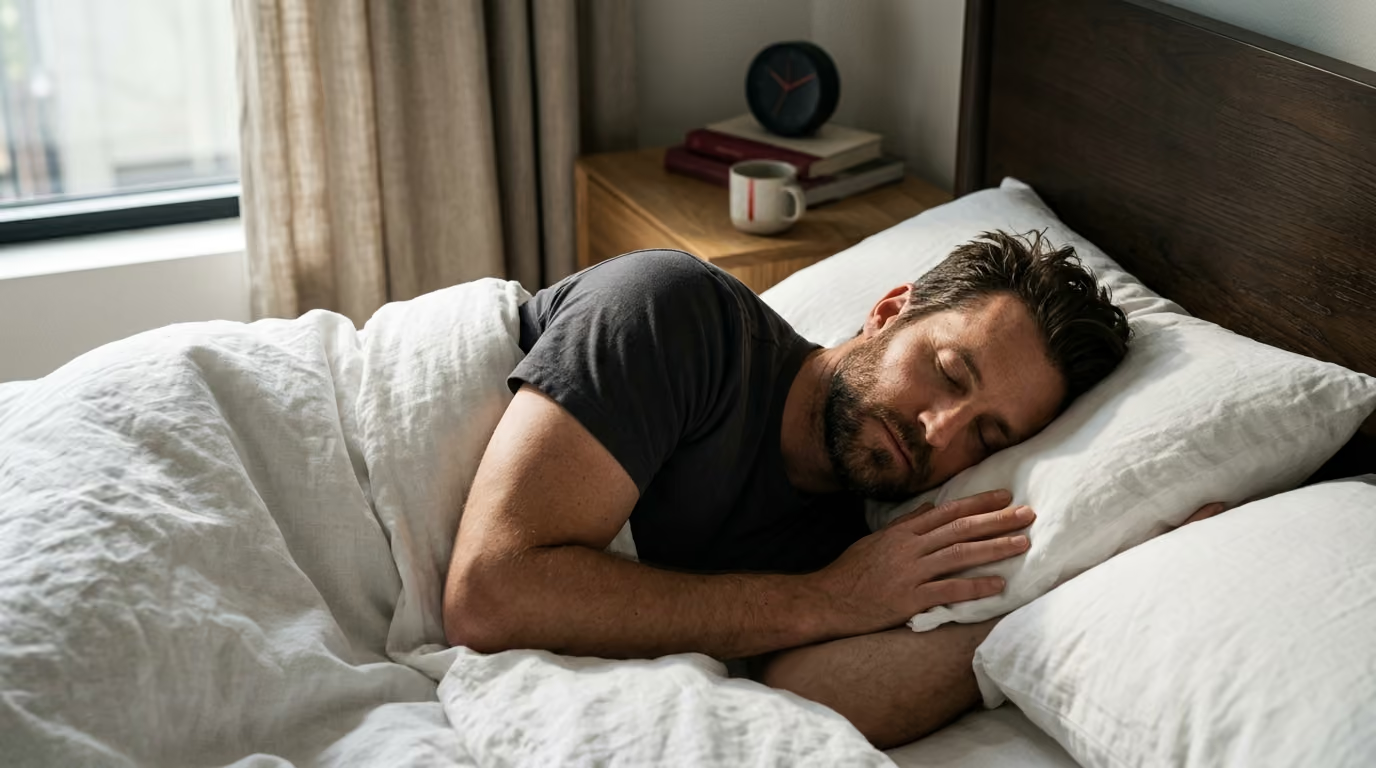
Many men over 45 search online for the exact reason they wake up exhausted after eight hours in bed. They want to know why they wake up at 3:00 a.m. with an active mind, or why their energy drops mid-afternoon. This guide provides a clear, research-backed answer to how sleep influences healthspan, physical capability, and daily energy.
Sleep is often described as a single nightly target. Popular health advice tells adults to get eight hours of sleep, but real biology is multidimensional. Sleep involves duration, timing, regularity, continuity, architecture, and airway mechanics. Understanding each part helps you build a sleep routine that supports long-term health and physical function.
Scientific Evidence On Sleep Dimensions And Mortality
Large population studies show that sleep is a major health exposure. Total duration matters, but sleep regularity may predict mortality risk just as strongly. When researchers track sleep patterns across thousands of adults, consistency often emerges as a primary factor for long-term health.
The American Academy of Sleep Medicine and the Sleep Research Society recommend at least seven hours of sleep per night for adults. Habitual sleep below seven hours is linked to higher rates of cardiovascular disease, metabolic dysfunction, stroke, and early mortality. Chronic sleep restriction reduces immune defense, increases systemic inflammation, and impairs cognitive processing.
Long sleep durations above nine or ten hours also show an association with higher mortality in observational data. This relationship creates a U-shaped curve on mortality charts. Long sleep is rarely the direct cause of poor health. Instead, extended sleep duration often serves as a marker for underlying illness, chronic inflammation, or fragmented rest.
Researchers use tools like the Sleep Regularity Index to measure how consistently people sleep and wake across consecutive days. Data from large biobank cohorts show that people with the most regular sleep patterns have significantly lower risks of all-cause and cardiometabolic mortality compared to those with irregular schedules. Stable timing keeps peripheral body clocks synchronized, which protects metabolic and cardiovascular health.
Biological Shifts In Sleep Architecture After 45
Sleep architecture changes naturally through midlife and older age. Deep non-rapid eye movement sleep, also known as slow-wave sleep, decreases steadily with age. Men often notice their sleep becoming lighter and more prone to interruptions from minor sounds or physical discomfort.
The central biological clock in the brain, located in the suprachiasmatic nucleus, undergoes subtle structural shifts over time. This can cause circadian phase advancement, which creates a natural drive to fall asleep earlier in the evening and wake earlier in the morning. Nighttime production of melatonin also decreases gradually, reducing the strength of the biological signal for sleep initiation.
Physical changes in the upper airway also influence nighttime physiology after 45. The muscle tone of the soft palate and pharynx decreases during sleep, which increases airway resistance. This change raises the risk of snoring and sleep-disordered breathing, even in men who maintain an athletic body weight.
Hormonal patterns shift alongside these neurological and structural changes. Overnight growth hormone secretion drops as slow-wave sleep declines, which alters how muscle tissue repairs overnight. Bladder capacity and changes in prostate tissue can also cause nocturia, leading to awakenings that disrupt sleep cycles.
- Age-Related Biological Shifts After 45
- Neurological & Circadian Structural & Hormonal
- Suprachiasmatic nucleus shifts Decreased upper airway tone
- Reduced slow-wave deep sleep Lower overnight growth hormone
- Earlier melatonin phase rhythm Changes in bladder capacity
Real World Impacts On Physical Capability And Healthspan
For active men, poor sleep directly reduces strength, power, and metabolic resilience. When sleep continuity drops, the body struggles to repair muscle tissue after heavy lifting, cycling, or outdoor activity. Insufficient rest blunts muscle protein synthesis and increases circulating levels of cortisol.
Sleep loss alters insulin sensitivity and glucose control. A few nights of restricted sleep can make healthy muscle cells less responsive to insulin. This metabolic shift increases fat storage, impairs muscle glycogen replenishment, and leaves you feeling sluggish during workouts. You can review our detailed guides on energy and metabolism to see how metabolic health connects to daily recovery.
Cognitive performance and emotional regulation also rely heavily on consolidated sleep. Sleep fragmentation impairs the prefrontal cortex, which governs executive function, short-term memory, and focus. Men who experience interrupted sleep frequently report brain fog, slower reaction times, and poor decision-making at work.
Physical longevity requires keeping joint tissues healthy and reducing long-term cardiovascular strain. During deep sleep, blood pressure and resting heart rate drop significantly. This nightly recovery window protects the vascular lining and lowers systemic arterial stiffness over decades of life. Our resources on healthy aging examine how these cardiovascular processes help preserve physical independence.
Sleep Regularity And Circadian Rhythm Alignment
Maintaining a consistent wake time stabilizes the central circadian clock. Many adults follow an irregular routine, waking early on workdays and sleeping several hours later on weekends. This pattern creates social jet lag, shifting the internal circadian phase back and forth every week.
Social jet lag confuses the internal clock and alters peripheral clocks in the liver, pancreas, and skeletal muscle. When your schedule shifts constantly, your body releases digestive enzymes, cortisol, and melatonin at suboptimal times. This mismatch increases systemic inflammation and disrupts resting blood sugar control.
Light exposure serves as the primary environmental cue for setting your circadian rhythm. Bright natural sunlight in the morning triggers cortisol release, increases daytime alertness, and sets a timer for evening melatonin production. Without adequate morning light, your biological rhythm drifts, making it harder to fall asleep at night.
- Biological Morning
- Outdoor daylight - Suppresses melatonin - Calibrates circadian clock
- Biological Evening
- Dim environment - Triggers melatonin - Prepares sleep onset
Evening light exposure can delay the circadian phase and suppress melatonin. Research shows that typical room lighting can suppress melatonin production by up to 50 percent in many individuals. Dimming indoor lights two hours before bedtime protects natural melatonin production and makes falling asleep easier.
Sleep Disordered Breathing And Occult Health Hazards
Sleep-disordered breathing is one of the most common causes of unrefreshing rest in men over 45. Obstructive sleep apnea occurs when the tissues in the throat relax and temporarily collapse into the airway. These blockages cause micro-arousals that pull you out of deep sleep to resume normal breathing.
Many men with sleep apnea never realize they wake up during the night. They spend eight hours in bed and wake up with a dry mouth, morning headaches, and severe fatigue. Because these micro-arousals happen in seconds, the sleeper remains unaware of the continuous oxygen drops occurring all night.
Untreated sleep apnea places significant stress on the cardiovascular system. Every airway collapse causes blood oxygen levels to drop and triggers a surge in sympathetic nervous system activity. Over time, this recurring stress elevates daytime blood pressure, strains the heart, and increases the risk of stroke and arrhythmias.
- Airway Collapse - Blood Oxygen Drops - Sympathetic Surge - Micro-Arousal - Fragmented Sleep
Airway changes occur naturally with age, which means fit, lean men can still develop obstructive sleep apnea. Snoring, witnessed breathing pauses, morning headaches, and excessive daytime sleepiness warrant a formal medical evaluation. Clinical diagnosis typically involves an overnight sleep study, and standard therapies like positive airway pressure can restore normal breathing and sleep continuity.
Disruptive Compounds And The Mechanics Of Sedation
Many adults use alcohol as an evening sleep aid, believing it helps them rest better. Alcohol acts as a central nervous system depressant and shortens the time it takes to fall asleep. Sedation is fundamentally different from restorative physiological sleep.
As the liver metabolizes alcohol during the night, blood alcohol levels drop, triggering a rebound effect in the nervous system. According to research on sleep physiology, alcohol alters normal sleep architecture, suppresses rapid eye movement (REM) sleep, and causes frequent awakenings during the second half of the night. You can read more about physiological recovery in our mobility and recovery section.
Studies published in peer-reviewed journals confirm that even low amounts of alcohol disrupt REM sleep and reduce overall sleep quality. Alcohol also relaxes the muscles of the upper airway, worsening snoring and sleep apnea events. A sedated night of sleep leaves you waking up fatigued, unrefreshed, and mentally slow.
Caffeine is another common compound that disrupts sleep continuity when consumed late in the day. Caffeine works by blocking adenosine receptors in the brain, masking the natural biological drive to sleep. Because caffeine has an average half-life of five to seven hours, consuming coffee or energy drinks in the late afternoon impairs deep sleep quality hours later.
A Structured Framework For Evaluating Sleep Quality
Improving your sleep requires a systematic approach rather than random lifestyle changes. Using a structured step-by-step process helps you identify specific issues and apply targeted solutions.
Step 1: Identify The Core Pattern
Determine the exact problem affecting your sleep routine:
- Difficulty falling asleep within thirty minutes of going to bed.
- Waking up repeatedly during the middle of the night.
- Waking up too early in the morning and being unable to return to sleep.
- Feeling exhausted and unrefreshed despite spending eight hours in bed.
Step 2: Track A Two-Week Baseline
Keep a simple paper sleep diary for fourteen consecutive days. Record your bedtime, approximate time to fall asleep, nighttime awakenings, final wake time, and out-of-bed time. Note daily caffeine intake, alcohol consumption, exercise timing, and daytime energy ratings.
Step 3: Screen For Medical Red Flags
Review your baseline for symptoms that require medical attention. Loud habitual snoring, witnessed gasping, waking with a racing heart, morning headaches, and falling asleep while driving require professional evaluation. A medical provider can order formal diagnostic testing to identify underlying sleep disorders.
Step 4: Stabilize Your Wake Time
Choose a realistic wake time that you can maintain seven days a week. Keep your wake time within a sixty-minute window on both workdays and weekends. This consistency anchors your circadian rhythm and stabilizes nighttime sleep drive.
Step 5: Optimize Environmental Light
Get ten to twenty minutes of natural sunlight within an hour of waking up in the morning. In the evening, dim bright overhead lights two hours before your planned bedtime. Keep your bedroom as dark as possible, using blackout curtains or an eye mask to block ambient light.
Step 6: Adjust Evening Habits
Set a daily caffeine cutoff time at least eight hours before you go to bed. Limit or eliminate alcohol during the three to four hours before sleep. Avoid large, heavy meals close to bedtime that can cause acid reflux and disrupt sleep continuity.
Step 7: Apply Cognitive Behavioral Principles
If you struggle with chronic insomnia, use structured cognitive behavioral therapy for insomnia (CBT-I) rather than relying on over-the-counter sedatives. Practice stimulus control by leaving the bed if you remain awake for more than twenty minutes. Return to bed only when you feel genuinely drowsy to rebuild the mental link between your bed and sleep. For broader strategies on cognitive performance, explore our guides on mind and focus.
Step 8: Assess Daytime Function
Evaluate your progress by looking at daytime energy, mental clarity, and workout recovery rather than focusing on wearable sleep scores. True sleep restoration shows up as consistent daytime alertness, stable mood, and physical stamina. You can find comprehensive research overviews across all areas of health in our men's health research guides.
Illustrative Lifestyle Models
Reviewing practical examples helps show how sleep disruptions develop and how targeted adjustments can resolve them.
Model 1: The Variable Schedule
An illustrative professional sleeps six hours on weekdays and nine hours on weekends. He reports severe fatigue on Monday mornings and struggles with brain fog early in the week. His total weekly sleep duration looks acceptable on paper, but his irregular schedule causes recurring social jet lag.
By shifting his weekday and weekend wake times to within forty-five minutes of each other, his circadian clock stabilizes. He extends his weekday sleep opportunity by forty-five minutes each night. Within three weeks, his Monday fatigue resolves and his daytime focus becomes consistent throughout the week.
Model 2: The Evening Nightcap
An illustrative active man drinks two glasses of wine every evening to help him unwind after work. He falls asleep quickly at 10:00 p.m. but wakes up every night at 2:30 a.m. feeling warm and alert. He assumes his nighttime awakenings stem from age-related sleep changes or stress.
He conducts a three-week experiment, removing alcohol on weeknights and tracking his sleep quality. His middle-of-the-night awakenings drop significantly, and his morning resting heart rate decreases. Removing the evening sedative restores normal sleep continuity and improves his workout recovery.
Model 3: The Undiagnosed Airway Issue
An illustrative lifelong runner spends eight hours in bed every night, avoids alcohol, and keeps a regular schedule. Despite these healthy habits, he wakes up with a dry mouth, morning headaches, and severe mid-afternoon fatigue. He uses a consumer smartwatch that shows high sleep duration scores, so he assumes his fatigue is caused by hard training.
His partner notices that he snores loudly and occasionally pauses his breathing during the night. A formal medical sleep study reveals moderate obstructive sleep apnea with frequent oxygen drops. Starting clinical airway therapy resolves his morning headaches and restores his daily energy levels.
- Common Sleep Disruption Patterns
- Pattern Primary Mechanism Effective Intervention
- Variable Schedule Circadian misalignment Stabilize daily wake time
- Evening Alcohol REM suppression & rebound Eliminate late drinking
- Occult Airway Issues Physical airway collapse Medical sleep study & CPAP
Common Misinterpretations Of Sleep Research
A widespread misconception is that every adult must get exactly eight hours of sleep every night. Seven hours is a sound baseline for most adults, but individual sleep needs vary based on genetics, training volume, and overall health. Forcing yourself to spend eight or nine hours in bed when your body only requires seven hours can cause broken sleep and unnecessary frustration.
Another common myth is that long sleep durations are universally healthy. Observational studies link habitual sleep above nine or ten hours to higher mortality risks. Extended sleep is often a marker of underlying health issues like chronic inflammation, depression, or fragmented sleep rather than a direct cause of disease.
Many people also assume that falling asleep instantly is a sign of great sleep health. Falling asleep the second your head hits the pillow often signals severe sleep deprivation rather than optimal function. A healthy sleep onset latency usually takes between ten and twenty minutes in a dark, quiet room.
- Misconception: Falling asleep instantly means excellent sleep health.
- Reality: Instant sleep onset often indicates severe accumulated sleep debt.
Finally, consumer fitness trackers and smart rings are frequently mistaken for medical diagnostic tools. These devices use movement, heart rate, and temperature sensors to estimate sleep stages, but they cannot diagnose sleep disorders. A high readiness score on a wearable does not rule out sleep apnea or other medical sleep conditions.
Limitations And Uncertainties In Current Sleep Science
While sleep research is extensive, several areas of the science remain limited or observational. Much of the large-scale data linking sleep regularity to mortality comes from prospective cohort studies like the UK Biobank. These studies show strong associations between consistent sleep patterns and lower mortality, but they do not prove direct causation.
Consumer wearable algorithms present another area of scientific uncertainty. Proprietary device algorithms vary significantly between manufacturers, and their estimates of deep and REM sleep often differ from clinical polysomnography. Relying too heavily on daily wearable scores can cause orthosomnia, a condition where anxiety over sleep metrics worsens actual sleep quality.
The scientific evidence on blue-light blocking glasses is also mixed. Laboratory studies show that intense blue light suppresses melatonin, but real-world studies show that total light intensity and timing matter far more than specific color spectrums alone. Wearing blue-light glasses while sitting under bright overhead lighting provides minimal protection compared to simply dimming your environment.
Finally, while catching up on sleep over the weekend can help relieve short-term sleep debt, the research is mixed on whether it reverses the metabolic and cardiovascular stress of chronic weekday sleep restriction. Catching up on missed sleep is helpful, but it does not fully replace a consistent, sufficient nightly sleep schedule.
Next Steps For Restorative Sleep This Week
You can build a reliable, high-quality sleep routine by taking practical, evidence-based steps:
- Choose a fixed wake-up time that fits your work and lifestyle, and commit to keeping it within sixty minutes every day this week.
- Spend fifteen minutes outside in the morning sunlight shortly after waking to set your circadian clock.
- Move your final cup of coffee or caffeinated beverage to the morning so it clears your system before bedtime.
- Dim bright overhead lighting two hours before bed, using low-placed lamps with warm bulbs instead.
- Remove alcohol on weeknights to protect your rapid eye movement sleep cycles and prevent early-morning awakenings.
- Keep your bedroom cool, dark, and quiet to prevent environmental sleep disruptions.
- Schedule an appointment with a healthcare provider for a sleep evaluation if you experience loud snoring, breathing pauses, or chronic daytime exhaustion.
Prioritizing consistent sleep timing, protecting your natural circadian rhythms, and addressing physical breathing issues helps you maintain energy, strength, and cognitive clarity throughout your life.
Sources
- Alcohol and the Sleeping Brain - PMC - NIH
- Disturbed Sleep and Its Relationship to Alcohol Use - PMC - NIH
- The Effects of Alcohol on Quality of Sleep - PMC - NIH
- Alcohol and sleep I: effects on normal sleep
- Management of Chronic Insomnia Disorder in Adults
- The effect of alcohol on subsequent sleep in healthy adults
Stay sharp
Get the word
Join our newsletter for the best writing advice and stories from the field.