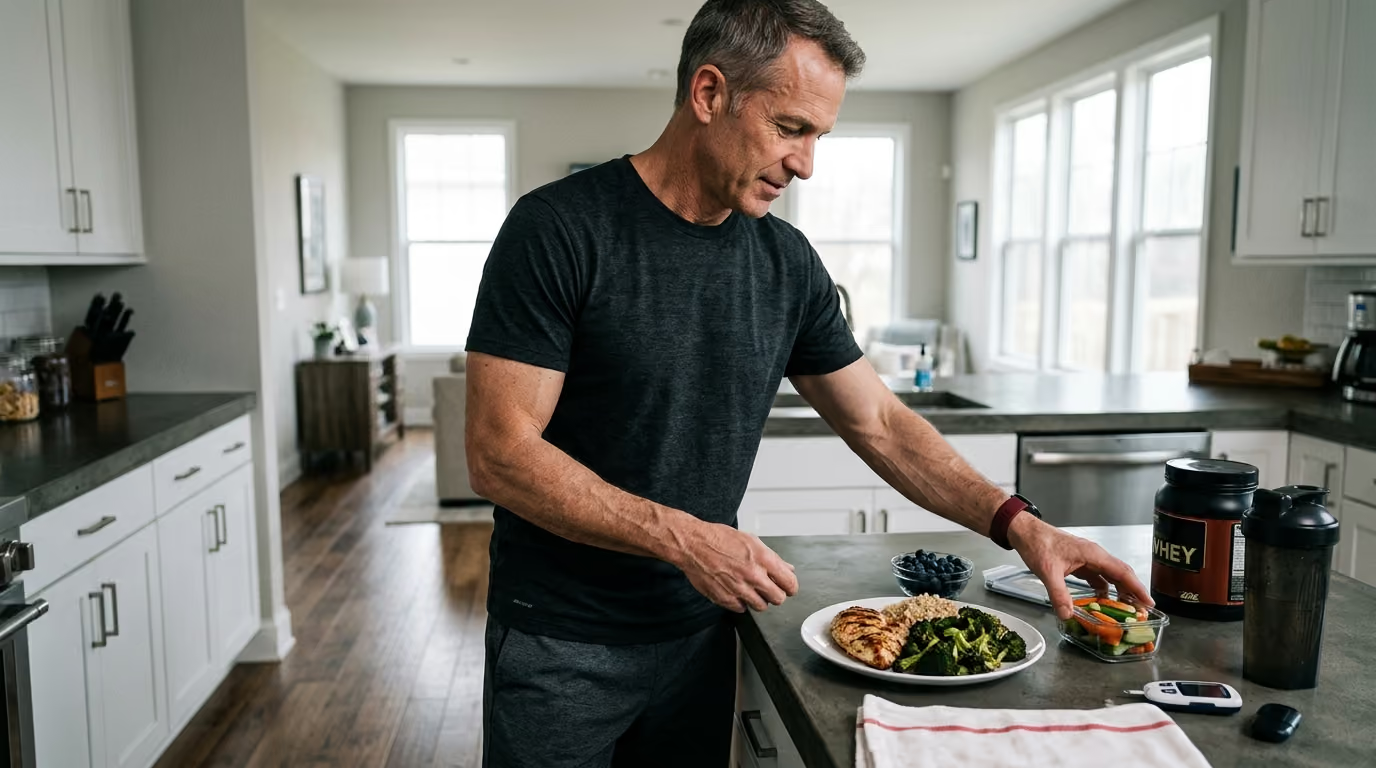
Blood sugar management after 45 is often treated as a quiet struggle against laboratory test results. Many men are told to cut carbohydrates, walk more, and accept declining vitality as an unavoidable consequence of age.
Managing metabolic health is not about extreme deprivation or punishing cardiovascular routines. It is a systematic process of building functional muscle mass, timing nutrition intelligently, and understanding how daily movement clears glucose from the bloodstream.
This guide outlines how resistance training, dietary planning, and glycemic monitoring interact in men over 45. It translates clinical research into a clear framework for building strength while improving glucose control.
What Does the Research Show About Strength Training and Blood Sugar?
Clinical evidence identifies resistance training as a potent tool for glycemic control rather than just a fitness hobby. Skeletal muscle serves as the primary reservoir for blood glucose disposal in the human body. When you lift weights, your muscles draw glucose directly from the bloodstream to fuel contractions.
A meta-analysis of 20 randomized controlled trials involving 1,172 adults with type 2 diabetes evaluated the glycemic effects of lifting weights. The analysis showed that resistance training reduced HbA1c by a weighted mean difference of 0.39 percentage points compared to control groups. This reduction represents a meaningful clinical shift in long-term blood glucose regulation.
Another meta-analysis focused on older adults with type 2 diabetes found even stronger improvements. In that population, regular resistance training reduced HbA1c by 0.50 percentage points and increased muscular strength by 38 percent. These functional strength gains occurred even when total lean body mass did not show large increases on the scale.
- RESEARCH FINDINGS AT A GLANCE
- • HbA1c Reduction (General Adult Meta-Analysis): 0.39%
- • HbA1c Reduction (Older Adult Meta-Analysis): 0.50%
- • Muscular Strength Increase (Older Adults): 38%
- • Latina/Latino Trial HbA1c Drop (16 Weeks): 8.7%- 7.6%
A 16-week randomized trial in older adults with poorly controlled type 2 diabetes demonstrated dramatic changes. Participants performed progressive resistance training three times per week. Their average HbA1c dropped from 8.7 percent down to 7.6 percent over four months.
The same trial recorded marked increases in muscle glycogen storage alongside reductions in abdominal fat and systolic blood pressure. Many participants in the exercise group were able to reduce their diabetes medications under medical supervision.
- SYSTEMIC ADAPTATIONS OBSERVED
- Resistance Training
- Decreased Abdominal / Visceral Fat
- Lower Systolic Blood Pressure
- Reduced Need for Select Meds
Systematic reviews on adults at metabolic risk indicate that free weights and resistance bands are effective tools. Programs using loads above 60 percent of a person's one-repetition maximum produced consistent drops in fasting glucose. Clinical standards from organizations like the American Diabetes Association highlight resistance work as a primary defense against the muscle wasting that often accompanies weight loss.
The research is not completely uniform across every published trial. A 2024 meta-analysis noted variability in HbA1c outcomes across different study designs. Resistance training should be viewed as a foundational pillar of metabolic health rather than an outright replacement for clinical care.
Why Does Blood Sugar Regulation Change After 45?
Blood sugar regulation changes during midlife because the body experiences natural shifts in muscle quality, cellular signaling, and hormonal balance. These alterations occur gradually over decades.
Skeletal muscle accounts for roughly 80 percent of post-meal glucose disposal. In young adulthood, muscle tissue acts like a clean, responsive sponge. As men pass 45, muscle mass tends to decline if it is not actively maintained through resistance training.
- GLUCOSE DISPOSAL PATHWAYS IN SKELETAL MUSCLE
- 1. Insulin-Dependent
- Insulin - Receptor - Intracellular Cascade - GLUT4
- 2. Contraction-Mediated (Bypasses Insulin Resistance)
- Muscle Tension / AMPK - Direct GLUT4 Translocation
This loss of muscle volume reduces the physical space available to store circulating carbohydrates as glycogen. The remaining muscle fibers can accumulate microscopic fat droplets, known as intramyocellular lipids. These internal fat stores interfere with normal insulin signaling inside the muscle cells.
Insulin works like a key that unlocks cell doors, allowing glucose transporter proteins called GLUT4 to move to the cell surface. When intramyocellular lipids accumulate, the key fails to turn smoothly in the lock. The pancreas responds by pumping out higher quantities of insulin to clear the same amount of food.
- THE MIDLIFE METABOLIC SHIFT (MECHANISMS)
- Loss of Lean Muscle Area -----\
- Intramyocellular Lipid Pools Reduced Glucose Sinks
- Declining Capillary Density --/ & Insulin Receptor Drag
Capillary density around aging muscle fibers also decreases when daily activity drops. Blood takes longer to deliver nutrients and insulin to active tissue beds. This delays glucose clearance after eating and prolongs periods of high blood sugar.
Muscle contraction provides an alternate pathway that bypasses sluggish insulin receptors entirely. Contracting muscle fibers push GLUT4 transporters to the cell surface through mechanical tension and cellular energy signals. Lifting weights gives men over 45 a direct method to pull sugar out of the blood without relying entirely on insulin.
What Does the Science Mean for Real Life Training and Energy?
Clinical data translates into tangible benefits for daily energy, physical capability, and long-term independence. High blood sugar and erratic glucose swings create severe afternoon energy crashes, brain fog, and chronic fatigue.
When you train your muscles against resistance, you restore the metabolic sink that stabilizes daily energy levels. You spend less time riding post-meal blood sugar spikes and subsequent crashes. This stability improves daytime focus and stamina for work, family responsibilities, and outdoor pursuits.
Muscular strength predicts mobility and vitality as men age. The 38 percent increase in strength observed in clinical trials means climbing stairs without knee strain, carrying heavy loads without back pain, and maintaining physical resilience.
- REAL-WORLD CAPABILITY IMPACT
- Metabolic Stability - Eliminates afternoon fatigue dips
- Dynamic Strength - Restores knee, hip, and back power
- Neuromuscular Drive - Improves stability and balance
These functional improvements do not require bodybuilder levels of muscle hypertrophy. The research confirms that nervous system adaptations, improved muscle density, and better fuel storage occur long before dramatic changes appear in your shirt size.
Improving your metabolic profile makes body composition management far easier. Better insulin sensitivity allows your body to partition dietary energy into muscle tissue rather than abdominal fat stores. This creates a positive cycle where training builds metabolic capacity, and metabolic capacity supports better training.
You can learn more about managing physical capacity by reviewing our work on strength and muscle physical performance to build a solid foundation.
How Should You Structure Resistance Training for Glycemic Control?
Building a training program for glycemic control requires consistency, appropriate intensity, and multi-joint movements. You do not need complicated equipment or daily workouts to produce meaningful results.
The evidence points toward a baseline of two to three non-consecutive resistance training sessions per week. This frequency allows mature connective tissues and joints to recover while maintaining elevated insulin sensitivity between sessions.
- WEEKLY MOVEMENT DISTRIBUTION
- Day 1: Full Body Strength (Squat, Push, Pull, Carry)
- Day 2: Rest or Zone 2 Aerobic Work / Brisk Walking
- Day 3: Full Body Strength (Hinge, Press, Row, Core)
- Day 4: Rest or Mobility Focus
- Day 5: Full Body Strength (Lunge, Overhead, Pull, Carry)
- Days 6-7: Active Recovery, Hiking, or Rest
Focus each session on fundamental movement patterns rather than single-joint isolation exercises. Compound movements recruit massive amounts of muscle mass, creating a far greater metabolic demand and glucose clearing effect.
Essential Movement Patterns
Structure your weekly sessions around these six core patterns:
- The Squat or Sit-to-Stand: Goblet squats, box squats, or leg presses engage the quadriceps and glutes.
- The Hinge: Romanian deadlifts, kettlebell deadlifts, or trap-bar pickups recruit the hamstrings, glutes, and lower back.
- The Push: Dumbbell bench presses, push-ups, or seated overhead presses load the chest, shoulders, and triceps.
- The Pull: Dumbbell rows, cable rows, or lat pulldowns strengthen the upper back and biceps.
- The Carry: Farmer carries or suitcase carries build core stability, grip strength, and cardiovascular conditioning.
- The Trunk Stabilization: Planks, bird-dogs, or pallof presses support spinal health and abdominal control.
- EXERCISE LOADING PARAMETERS
- Level Sets / Exercise Reps / Set Load (%1RM)
- Beginner 2-3 10-15 50-60%
- Intermediate 3-4 8-12 65-75%
- Advanced Progression 3-5 6-10 70-80%
Beginners should start with loads that allow 10 to 15 controlled repetitions per set. This range builds movement proficiency and strengthens tendons. As your capacity improves, progress toward loads between 60 and 75 percent of your maximum capacity, performing 8 to 10 repetitions per set.
Keep your effort roughly two repetitions shy of muscular failure on working sets. This intensity stimulates glucose uptake and strength gains without creating excessive joint fatigue or prolonged nervous system exhaustion.
Pairing your lifting with light aerobic work creates an ideal balance. For broader strategies on managing midlife energy balance, examine our guides on energy metabolism and body composition.
How Should Nutrition and Protein Intake Be Structured Around Workouts?
Nutrition provides the building blocks for tissue repair and the fuel for training sessions. Managing blood sugar while pursuing strength requires moving away from severe restriction and toward intentional nutrient composition.
Protein intake is critical for preserving lean mass during midlife. The standard baseline recommendation of 0.8 grams per kilogram of body weight is often insufficient for active older men or those managing metabolic resistance.
- DAILY PROTEIN TARGETS (PER KG BODYWEIGHT)
- Baseline Clinical Standard: 0.8 g/kg/day
- Older Adult Functional Target: 1.0 to 1.2 g/kg/day
- Muscle Recovery & Malnutrition: 1.2 to 1.5 g/kg/day
Clinical reviews recommend 1.0 to 1.2 grams of protein per kilogram of body weight per day to maintain muscle mass and physical function in older adults. For men recovering from muscle loss or managing elevated training demands, intakes between 1.2 and 1.5 grams per kilogram may be beneficial.
A man weighing 85 kilograms (roughly 187 pounds) aiming for 1.2 grams per kilogram would consume approximately 102 grams of protein daily. This total should be distributed evenly across three or four meals to maintain a steady supply of amino acids.
- PROTEIN DISTRIBUTION MODEL (85 KG MAN)
- Target: 102g / day ( 1.2 g/kg)
- Meal 1 (Breakfast): 30g (Eggs, Greek yogurt, or fish)
- Meal 2 (Lunch): 30g (Chicken breast, lentils, quinoa)
- Meal 3 (Dinner): 35g (Lean steak, salmon, or tofu)
- Optional Snack: 10-15g (Nuts, seeds, or cottage cheese)
Men with pre-existing chronic kidney disease or abnormal albumin levels must consult their nephrologist or registered dietitian before increasing dietary protein. Kidney health dictates strict parameters for nitrogen clearance that take priority over general fitness advice.
A randomized trial testing whey protein supplementation alongside resistance exercise in older adults with type 2 diabetes found that both the supplement group and the control group achieved significant strength gains. The authors noted that resistance exercise itself was the primary driver of progress. Specialized protein powders are convenient options, but they are not mandatory for success.
- WHOLE FOOD MEAL ARCHITECTURE
- Palm-Sized Protein
- Fist of Fibrous Veg
- Slow-Burning Carbs
- Thumb of Healthy Fat
Carbohydrate intake must match your actual activity levels and individual glycemic tolerance. Focus on slow-digesting, high-fiber sources such as lentils, black beans, steel-cut oats, quinoa, and non-starchy vegetables. Fiber slows the breakdown of food in the digestive tract, preventing rapid spikes in post-meal blood sugar.
You do not need to consume massive amounts of sugar before or after a standard strength session. Unless your workout lasts longer than 75 minutes at high intensity, normal whole-food meals provide sufficient glycogen for lifting.
Does Exercise Timing Relative to Meals Really Matter?
The clock on the wall and the timing of your meals both influence how your body handles physical activity. Research over the past decade shows that when you move matters for glycemic control.
A systematic review of 19 randomized trials evaluated the impact of exercise timing relative to meals. The data showed that exercising after a meal produced more consistent improvements in blood glucose and insulin levels compared to exercising in a fasted state.
- POST-MEAL EXERCISE GLYCEMIC IMPACT
- Glucose Area Under Curve (AUC): Reduced by 30%
- 24-Hour Hyperglycemia Spikes: Reduced by 35%
- Optimal Starting Window: 20 to 45 minutes post-meal
A systematic review on postprandial exercise found that resistance training performed after eating reduced short-term glucose spikes by approximately 30 percent. It also decreased the total prevalence of hyperglycemia over a 24-hour window by roughly 35 percent.
Beginning physical activity roughly 30 minutes after eating intercepts the natural glucose peak. As carbohydrates enter the bloodstream from the digestive tract, working muscle fibers immediately pull those glucose molecules into cells for fuel.
- POST-MEAL GLUCOSE CLEARANCE MECHANISM
- Food Ingestion - Glucose Enters Bloodstream (Peak at 30-60m)
- 30-Minute Post-Meal Movement
- Muscles Absorb Free Circulating Sugar
- Result: Blunted Glucose Peak
Time of day also exhibits distinct metabolic patterns in clinical trials. A randomized crossover study showed that afternoon high-intensity interval training produced better blood glucose control than morning interval sessions in men with type 2 diabetes.
An analysis from the long-term Look AHEAD trial found that moderate-to-vigorous activity performed in the afternoon was strongly associated with superior glycemic improvements over 12 months.
- TIMING VS. CONSISTENCY HIERARCHY
- Priority 1: Consistency (Workouts that happen regularly)
- Priority 2: Safety (Avoiding low-glucose medication windows)
- Priority 3: Post-Meal Placement (Moving 30m after meals)
- Priority 4: Time of Day (Afternoon vs. Morning scheduling)
These timing nuances should never override schedule consistency. A morning workout performed consistently delivers vastly superior benefits compared to an afternoon session that is skipped due to work obligations.
A practical approach is to perform your main resistance workouts when your schedule reliably permits. You can then add a brief 10 to 15-minute walk immediately following your largest meal of the day to capture the postprandial glucose-clearing effect.
To understand how movement supports joint health and systemic recovery, check our resource base on mobility and recovery.
How Should You Manage Glucose Monitoring and Medication Safety?
Safety requires careful coordination when mixing resistance training with blood sugar medications. Exercise increases insulin sensitivity and glucose uptake, which alters the way medications act in the body.
Men who manage blood sugar through diet, exercise, or metformin alone carry a very low risk of exercise-induced hypoglycemia. The risk increases significantly for individuals taking exogenous insulin or insulin secretagogues, such as sulfonylureas (glipizide, glimepiride) and meglitinides.
- HYPOGLYCEMIA RISK STRATIFICATION
- Low Risk
- • Lifestyle modifications only
- • Metformin, SGLT2 inhibitors, GLP-1 receptor agonists
- High Risk (Requires Exercise Carbohydrate Plan)
- • Basal or bolus insulin therapy
- • Sulfonylureas (e.g. glimepiride, glipizide, glyburide)
- • Meglitinides (e.g. repaglinide, nateglinide)
Hypoglycemia occurs when circulating blood sugar falls below safe thresholds during or after physical exertion. The American Diabetes Association recommends structured pre-exercise testing for men on high-risk medications.
When starting a new strength program, establish a short monitoring protocol:
- Check glucose before training: If your pre-workout reading is below 100 mg/dL and you take insulin or sulfonylureas, consume 15 to 20 grams of rapid-acting carbohydrates before lifting.
- Check glucose during unfamiliar sessions: Test your levels halfway through workouts that are longer or harder than normal.
- Check glucose after training: Test immediately upon finishing and again two to four hours later, because muscles continue replenishing glycogen long after the workout ends.
- Log your observations: Record your workout intensity, meal timing, and glucose trends to review with your doctor.
- THE 15-15 RULE FOR LOW BLOOD SUGAR
- Step 1: Detect glucose at or below 100 mg/dL with symptoms
- Step 2: Ingest 15 to 20 grams of fast-acting carbs
- (e.g. 4 oz juice, 3-4 glucose tabs)
- Step 3: Rest quietly and wait 15 minutes
- Step 4: Re-test blood glucose
- Step 5: If still 100 mg/dL, repeat carb dose and wait 15m
Continuous Glucose Monitors (CGMs) offer real-time visibility into these glycemic patterns. Clinical standards strongly support CGM use for older adults using insulin to reduce hypoglycemia risks. A CGM helps you observe how different exercise intensities impact your glucose curve in real time.
- PRE-WORKOUT DECISION PATHWAY
- Pre-Exercise Reading
- 100 mg/dL (On High-Risk Meds) Take 15-20g Fast Carbs
- 100 to 250 mg/dL Safe to begin lifting
- 250 mg/dL with Ketones/Illness - Postpone; seek advice
Never alter medication doses without clinical supervision. If resistance training consistently lowers your baseline glucose readings, bring your logs to your physician. Your doctor can adjust your medication dosages safely based on your improved insulin sensitivity.
For deeper insights into long-term vitality, explore our articles on healthy aging.
What Are Common Misreadings of Strength and Blood Sugar Research?
Misinterpreting metabolic research can lead men over 45 into counterproductive training habits or dietary mistakes. Identifying these common errors helps you stay focused on sustainable, evidence-based practices.
- COMMON RESEARCH MISREADINGS
- Myth 1: "Lifting weights instantly replaces all diabetes
- medications."
- Myth 2: "You must eliminate all carbohydrates to build
- muscle and control sugar."
- Myth 3: "Protein supplements are mandatory for older adults
- to manage glucose."
Misreading 1: Resistance training immediately replaces medical therapies
A common misconception is that lifting weights allows a person to stop all diabetes medications immediately. While clinical studies document significant drops in HbA1c and reduced medication requirements, changes must occur gradually under medical oversight.
Stopping medications abruptly can lead to severe rebound hyperglycemia. Exercise is a powerful therapy, but it works alongside clinical care rather than replacing it overnight.
Misreading 2: Complete carbohydrate elimination is required for muscle and glucose control
Some men assume they must cut all carbohydrates to control their blood sugar while lifting weights. Severe carbohydrate restriction can compromise training intensity, reduce workout volume, and impair recovery in older lifters.
Muscles rely on stored carbohydrate (glycogen) to fuel forceful muscular contractions. The goal is managing carbohydrate quality and timing, using fibrous, nutrient-dense carbohydrates that support training performance without causing volatile glucose spikes.
Misreading 3: Protein supplements are mandatory for metabolic health
Fitness marketing often claims that older men need commercial protein powders to manage glucose and build muscle. The research demonstrates that whole foods provide all the amino acids required for muscular adaptations.
Clinical trials comparing whey protein supplementation against normal diets combined with lifting show that training itself drives strength gains. Supplements are merely a convenience tool for meeting daily protein targets.
Where Is the Evidence Currently Thin or Incomplete?
Responsible science requires recognizing where current data ends and where further research is needed. While the broad benefits of exercise are proven, several specific areas lack rigorous long-term trials.
Much of the available research on resistance training and diabetes groups middle-aged and older adults into wide age brackets. Studies focusing exclusively on men between 45 and 65 are less common than general adult trials.
- AREAS WITH LIMITED EVIDENCE
- • Specific protocols combining PRT, CGMs, and nutrition in
- men aged 45-65 exclusively.
- • Long-term (multi-year) direct comparisons of morning vs.
- afternoon lifting for HbA1c.
- • Precise macronutrient percentage ratios optimized for
- combined muscle gain and glycemic control.
Direct comparisons between morning and afternoon resistance workouts remain limited. Most exercise timing studies rely on small sample sizes, short interventions, or aerobic protocols. We cannot state conclusively that one time of day is universally superior for every individual.
Evidence is also limited regarding ideal macronutrient ratios for men over 45 managing both prediabetes and strength goals. Clinical guidelines provide clear protein minimums, but optimal carbohydrate-to-fat distributions vary widely based on individual genetics, activity levels, and personal food tolerance.
Finally, long-term trials examining continuous glucose monitoring specifically in non-insulin-dependent prediabetic men who lift weights are still developing. Most CGM data comes from populations managing established type 1 or insulin-dependent type 2 diabetes.
What Is the Core Takeaway for Men Over 45?
Progressive resistance training performed two to three times weekly, supported by adequate dietary protein and balanced carbohydrates, directly improves blood sugar regulation and preserves physical strength after 45.
Manage exercise timing and medication risks with your physician to build a sustainable, strong, and metabolically resilient body.
Frequently Asked Questions
Can lifting weights cause a temporary blood sugar spike?
Yes, intense resistance training can cause a short-term rise in circulating blood sugar. High-intensity lifting stimulates a natural release of adrenaline and cortisol, which signals the liver to release stored glucose into the bloodstream for fuel. This temporary elevation is a normal physiological response to hard exertion. The glucose is cleared by active muscles in the hours following the workout, leading to improved baseline insulin sensitivity over the following 24 to 48 hours.
Is fasted morning lifting safe for blood sugar management?
Fasted morning lifting is generally safe for men who manage blood sugar through diet, exercise, or metformin alone. Men who take insulin, sulfonylureas, or meglitinides face a higher risk of hypoglycemia when training fasted. If you take these medications, check your blood glucose before lifting and keep fast-acting carbohydrates nearby. If your pre-workout reading is below 100 mg/dL, consume a small 15 to 20-gram carbohydrate snack before starting your session.
How soon after a workout will my blood sugar levels improve?
Muscles draw glucose directly from the bloodstream during training and continue replenishing depleted glycogen stores for 12 to 48 hours after your session ends. Many men notice lower post-meal glucose spikes on the day of a workout and throughout the following day. Long-term improvements in baseline markers, such as HbA1c, take approximately eight to twelve weeks of consistent training to fully reflect on laboratory blood tests.
Sources
- Exercise Timing in Type 2 Diabetes Mellitus: A Systematic ...
- Nutritional Strategies to Combat Type 2 Diabetes in Aging Adults
- Afternoon exercise is more efficacious than morning exercise at improving blood glucose levels in individuals with type 2 diabetes: a randomised crossover trial
- Effects of exercise and exercise timing on energy intake and appetite control in Danish individuals with overweight or obesity with and without type 2 diabetes: a protocol for a randomised controlled cross-over trial
- Association of Timing of Moderate-to-Vigorous Physical Activity With Changes in Glycemic Control Over 4 Years in Adults With Type 2 Diabetes From the Look AHEAD Trial
- Whey Protein Supplementation in Older Adults With Type 2 ...
- The Effects of Postprandial Exercise on Glucose Control ... - PubMed
Stay sharp
Get the word
Join our newsletter for the best writing advice and stories from the field.