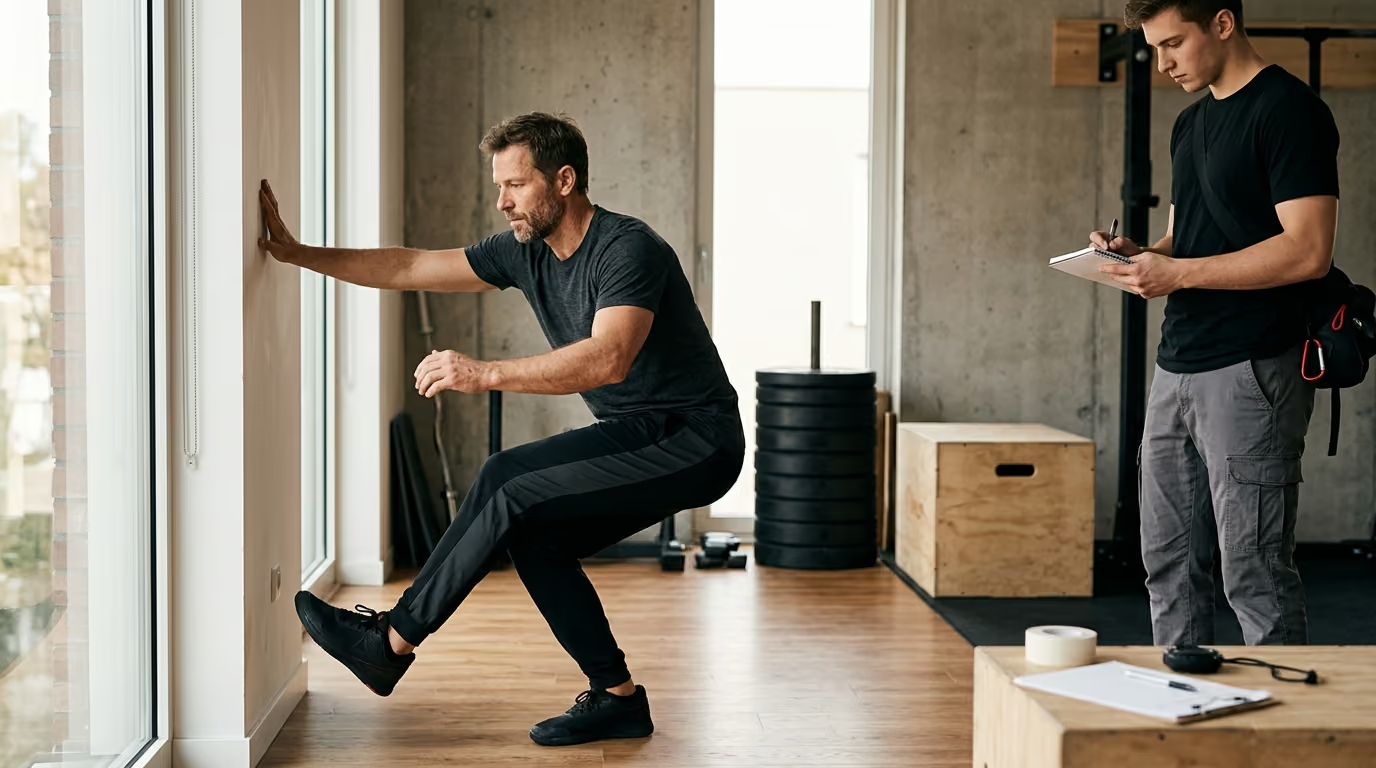
Many men assume that bench press numbers, marathon times, or fitness tracker scores predict how well they will move in thirty years. A man can deadlift twice his body weight yet struggle to catch himself when slipping on a wet curb. Another man can run ten miles on flat asphalt yet lack the leg power to rise quickly from a low armchair.
Physical independence does not depend on a single athletic achievement. It relies on a balanced collection of physical capabilities working together. When one capability drops too low, overall movement breaks down.
Assessing these domains separately reveals vulnerabilities long before they cause disability. The goal is not to chase a single fitness metric. The goal is to build a balanced reserve across aerobic capacity, muscular strength, muscle power, balance, and walking mechanics.
By evaluating each area independently, you can spot weak links early. You can direct your training where it will have the greatest impact on your future independence.
Assess What the Research Shows About Physical Capability
Scientific research shows that physical capability tests provide powerful signals about long-term health, independence, and mortality. These tests evaluate how your heart, lungs, nerves, muscles, and joints function as an integrated unit.
Decades of epidemiological data show strong links between specific physical tests and future functional capability. Researchers frequently study walking speed, grip strength, chair rise ability, standing balance, and aerobic capacity. Each test captures a unique dimension of physical health.
Walking speed is often called a functional vital sign. In a pooled analysis of seven studies examining 27,220 community-dwelling older adults, walking speed strongly predicted independence. For every 0.1 meter per second faster gait speed, the age-adjusted risk of developing bathing or dressing dependence dropped by 32 percent in men. The risk of developing general mobility difficulty dropped by 25 percent per 0.1 meter per second increase. The relationship was continuous, showing that every small improvement in walking speed adds functional reserve.
Muscular strength shows a similar pattern across large populations. In systematic reviews of physical capability studies, people in the lowest quarter of grip strength faced a 67 percent higher all-cause mortality rate compared to those in the highest quarter. Leg strength tests, such as repeated chair stands, provide an even clearer picture of transfer capability and fall risk.
Aerobic capacity remains one of the strongest overall predictors of longevity. Large meta-analyses covering millions of person-years reveal that each 1-MET increase in exercise capacity is linked to an 11 to 17 percent reduction in all-cause mortality. A MET represents the metabolic cost of resting oxygen consumption. Gaining just one or two METs of aerobic reserve significantly changes the physical trajectory of later life.
Composite test batteries bring these individual measures together. The Short Physical Performance Battery combines gait speed, chair stands, and balance tests. It has been validated in hundreds of clinical studies to predict hospitalization, nursing home placement, and mobility loss.
Research also highlights that these domains are not interchangeable. Good endurance does not protect against a fall caused by poor dynamic balance. Strong chest muscles do not help you climb stairs if your leg power is depleted. Functional longevity requires looking across multiple distinct systems. You can read more about these mechanisms in our guide to longevity science and optimization.
Understand How Neuromuscular and Cardiorespiratory Systems Change After 45
Physical decline after midlife is driven by normal biological changes across multiple bodily systems. These shifts are natural physiological processes rather than sudden medical problems. Understanding these mechanisms helps you adapt your physical preparation effectively.
The muscular system undergoes changes in both mass and neuromuscular recruitment. The loss of muscle strength, known as dynapenia, often happens two to three times faster than the loss of actual muscle volume. This divergence occurs because the nervous system changes how it communicates with muscle fibers.
After age 45, the body gradually loses motor units, especially the larger units that innervate type II fast-twitch muscle fibers. The remaining muscle fibers may be re-innervated by slow-twitch motor units. This process preserves basic endurance but reduces your rate of force development. As a result, muscle power declines significantly faster than maximal static strength.
Cardiorespiratory capacity changes through central and peripheral adaptations. Maximal heart rate drops gradually over the decades. Stroke volume, which is the amount of blood pumped per beat, also declines with age.
At the cellular level, mitochondrial density and capillary networks in peripheral muscles decrease if they are not consistently challenged. These changes lower peak oxygen consumption (VO2 max) and reduce your ability to clear metabolic waste during hard exertion. The gap between your maximal aerobic output and the energy required for basic daily activities begins to narrow.
Balance and postural control rely on three distinct sensory systems that shift over time:
- The visual system: Reduced depth perception, slower dark adaptation, and lower contrast sensitivity make detecting obstacles more difficult.
- The vestibular system: The inner ear loses sensory hair cells, which slows head movement detection and spatial orientation.
- The somatosensory system: Peripheral nerves and joint mechanoreceptors lose sensitivity, reducing position awareness in the feet and ankles.
When these sensory inputs change, the brain must work harder to maintain stability. If ankle strength and hip power are also reduced, correcting a sudden slip or trip becomes much harder.
Walking mechanics naturally adapt to these underlying sensory and muscular changes. Men often shorten their stride length, widen their base of support, and spend more time with both feet on the ground. These gait alterations are protective compensations designed to preserve balance, but they also increase the metabolic cost of walking. Understanding these changes is a core part of healthy aging for active men.
Translate Clinical Capability Metrics into Everyday Performance
Clinical capability scores can seem abstract until you see how they affect daily life. The World Health Organization makes an important distinction between intrinsic capacity, functional performance, and functional ability. Understanding these differences clarifies why testing matters.
Intrinsic capacity represents the total composite of all your physical and mental attributes. It includes your raw leg power, lung volume, joint range, and sensory acuity. Functional performance is what you actually do under standardized testing conditions. Functional ability reflects how your intrinsic capacity interacts with your actual daily environment.
A man living in a single-story home with a car may function well with modest physical reserve. That same man will struggle if he must climb subway stairs, carry groceries across broken sidewalks, or hike steep trails on vacation. Functional longevity is about building enough physical reserve to handle demanding, unpredictable environments.
Physical reserve acts like a financial savings account. If a daily task requires 80 percent of your maximum capacity, it feels exhausting and dangerous. If that same task requires only 30 percent of your maximum capacity, you complete it with ease and confidence.
Consider how the five functional domains translate into real-world tasks:
Rising from Low Surfaces
Getting out of a deep sofa, getting off the floor, or rising from a toilet requires leg strength and joint mobility. If relative strength is low, you must use your arms to push yourself upward.
Catching a Stumble
When your toe catches an uneven sidewalk slab, balance systems must detect the fall instantly. Leg power must then fire the swing leg forward quickly to plant a wide protective step. If muscle power is slow, a minor trip turns into an injurious fall.
Crossing the Street Safely
City pedestrian crossings typically require a walking speed of at least 1.0 to 1.2 meters per second. If your usual gait speed drops below 0.8 meters per second, crossing a busy intersection before the traffic signal changes becomes stressful and risky.
Sustaining Work Throughout the Day
Aerobic capacity determines how long you can perform physical work without severe fatigue. Low cardiovascular fitness turns yard work, home maintenance, or walking through airport terminals into grueling chores.
Managing Dual-Task Demands
Walking while carrying a heavy box and talking to a friend requires sensory, motor, and cognitive integration. If physical movements require total conscious focus, handling unexpected distractions becomes hazardous.
When you lose reserve across several areas at once, small physical stressors create outsized disruptions. A minor illness or ankle sprain can temporarily drain your physical capacity. If you have deep reserves, you stay above the threshold of dependence and recover quickly.
Assess the Five Core Domains of Functional Resilience
A practical assessment framework must evaluate the five core physical domains independently. You do not need expensive laboratory equipment to measure these areas effectively. Simple field tests provide reliable data when performed consistently under standardized conditions.
Domain 1: Cardiorespiratory Capacity
Cardiorespiratory capacity measures how well your heart, lungs, and blood vessels deliver oxygen to working muscles during sustained effort. Laboratory testing using a metabolic cart measures VO2 max directly, but several reliable field alternatives exist.
- Treadmill or Cycle Workload: Tracking your sustained workload in METs or watts provides a clear benchmark of conditioning.
- The Six-Minute Walk Test: This test measures the maximum distance you can walk on a flat, hard surface in six minutes. It evaluates submaximal endurance, pacing, and cardiopulmonary reserve.
- Heart Rate Recovery: Measuring how many beats per minute your heart rate drops in the first sixty seconds after hard exertion reflects autonomic nervous system health.
When assessing cardiorespiratory fitness, look beyond peak performance. Note how quickly your breathing normalizes after exertion, how long you can sustain a brisk pace, and how you feel the next morning.
Domain 2: Muscular Strength
Muscular strength represents the absolute force your muscles can generate against external resistance. It provides the mechanical horsepower for lifting, carrying, pushing, and climbing.
- Handgrip Dynamometry: Grip strength serves as a systemic indicator of overall muscular force. While it measures hand and forearm strength directly, it correlates with total-body force output and neuromuscular integrity.
- The Five-Repetition Chair Stand: This test measures the time required to stand up completely from a standard chair five consecutive times as fast as possible without using your arms. It evaluates lower-body force and transfer ability.
- Loaded Carries: Carrying a set percentage of your body weight in your hands for distance tests grip, core bracing, shoulder stability, and hip integrity under load.
Explore our dedicated section on strength, muscle, and physical performance to learn more about developing force after 45.
Domain 3: Muscle Power
Muscle power is the product of force and movement speed. Strength asks how much weight you can move, while power asks how quickly you can move it. Power declines faster than strength with advancing age and is critical for athletic capability and fall prevention.
- Sit-to-Stand Speed: Measuring the explosive speed of rising from a seated position highlights your rate of force development.
- Stair Ascent Velocity: Timing how rapidly you can safely climb a standard flight of stairs provides a practical measure of lower-body power.
- Step-Up Rate: Stepping onto a secure platform with rapid, deliberate concentric drive tests single-leg power and hip extension speed.
Power testing requires caution. Tests should focus on acceleration and intent rather than high-impact landings, especially for men managing joint discomfort.
Domain 4: Balance and Postural Stability
Balance is your ability to maintain your center of mass over your base of support in both stationary and moving conditions. It requires sensory integration, motor planning, and rapid muscular corrections.
- Single-Leg Stance: Standing on one foot with eyes open for up to forty-five seconds measures static stability and hip abductor strength. Performing the test with eyes closed highlights somatosensory and vestibular function by removing visual compensation.
- Tandem Stance: Standing heel-to-toe in a straight line tests postural control with a narrowed lateral base of support.
- Timed Up and Go (TUG): This test measures the seconds required to rise from an armchair, walk three meters, turn around, walk back, and sit down. It evaluates dynamic stability, turning mechanics, and movement transitions.
Testing both static and dynamic balance gives a complete picture of your stability. You can dive deeper into these movement qualities through our resources on mobility, joints, and functional movement.
Domain 5: Gait Mechanics and Speed
Gait speed integrates cardiovascular reserve, lower-body power, coordination, joint comfort, and balance into a single functional metric.
- Usual Gait Speed: Measure the time it takes to walk a marked 4-meter or 10-meter course at your normal, comfortable pace. Divide the distance by time to calculate meters per second. A normal pace above 1.0 to 1.2 meters per second indicates solid functional reserve.
- Fast Gait Speed: Walk the same distance as fast as you safely can without running. Comparing fast speed to usual speed shows your movement reserve. It demonstrates your capacity to accelerate when avoiding a hazard or crossing a street.
- Dual-Task Gait Speed: Measure your walking speed while counting backward by threes from one hundred. A large drop in speed during dual-task walking indicates that movement control requires significant conscious cognitive effort.
Evaluating all five domains provides a clear map of your physical strengths and hidden vulnerabilities.
Build and Interpret Your Personal Scorecard Architecture
A functional longevity scorecard works best when it categorizes performance into clear operational tiers. Rather than relying on a single overall number, you should evaluate each domain on its own merits.
The Five Performance Tiers
Use these five standardized tiers to assess each of your test results:
- Tier 4 (Robust): Performance exceeds typical age-matched standards. You possess substantial reserve capacity for demanding physical activities and unpredictable environments.
- Tier 3 (Functional): Performance is completely adequate for current daily demands. However, reserve capacity is limited during severe physical stress or illness.
- Tier 2 (Borderline): Measurable weakness or reduced speed is present. Daily tasks remain possible, but you are vulnerable to rapid fatigue and unexpected physical challenges.
- Tier 1 (Impaired): Performance is significantly restricted. You may need to modify daily activities, avoid certain environments, or rely on external support.
- Tier 0 (Critical): Inability to complete standard testing tasks safely. Daily independence is compromised and requires clinical evaluation.
Interpreting the Weakest-Link Principle
Averaging your domain scores hides vital information. A man with three scores at Tier 4 and one score at Tier 1 is not average. He is a high-performing individual with a severe vulnerability.
If a man has excellent aerobic capacity, strong grip strength, and fast walking speed, but scores a Tier 1 on single-leg balance, his fall risk remains high. His cardiovascular fitness will not prevent him from losing stability on an icy path or a rocky hiking trail. The lowest score identifies your primary bottleneck and dictates your training priorities.
Common Case Patterns in Active Men
Reviewing real-world profiles shows how domain imbalances show up in practice:
Case 1: The High-Endurance Cyclist
This individual rides one hundred miles a week and displays top-tier aerobic capacity. However, he struggles to rise from a deep chair without using his arms and has poor single-leg balance.
His bottleneck is lower-body power and balance. His cardiovascular training has neglected explosive rate of force development and multi-directional stability. He needs heavy squats, rapid step-ups, and balance drills.
Case 2: The Dedicated Gym Lifter
This man lifts heavy weights three days per week and shows high grip strength and excellent chair-stand force. However, his walking speed is sluggish, and his 6-minute walk distance is low.
His bottleneck is movement efficiency and aerobic reserve. Strength alone does not create fluid, sustained locomotion. He needs zone 2 aerobic base work, loaded carries, and dedicated walking intervals.
Case 3: The Distracted Walker
This individual performs well on standard treadmill and strength tests. However, when asked to walk while performing a simple memory task, his walking speed drops by 40 percent and he stumbles.
His bottleneck is dual-task motor control. Single-task testing masked his balance vulnerability. He needs balance and agility drills that include cognitive tasks, reaction drills, and variable terrain.
Case 4: The Low-Grip Preserver
This man has low grip strength caused by past hand arthritis. However, his leg power, gait speed, balance, and aerobic conditioning all score in Tier 4.
His low grip strength is an isolated anatomical issue rather than a sign of systemic frailty. Because his lower body and cardiovascular systems are robust, his real-world functional independence remains very high.
Evaluating your profile through these lenses keeps your training aligned with real physical capability.
Track Changes and Standardize Longitudinal Testing
A single snapshot of your physical capacity is helpful, but tracking changes over time provides far deeper insight. A gradual downward trend in walking speed or leg power can alert you to emerging issues before you notice them in daily life.
To make testing valid across months and years, you must standardize your testing environment and procedures. Small changes in how you test can skew your results and hide true changes in capacity.
Follow these rules for consistent testing:
- Standardize Footwear: Always perform balance and walking tests in the same style of athletic shoes, or perform balance tests barefoot every time.
- Maintain Fixed Distances and Heights: Use a standard 17-inch chair for chair-stand tests. Measure walking courses accurately with a tape measure on a flat, non-slip surface.
- Control the Time of Day: Conduct your testing at roughly the same time of day, ideally when you are well-rested and not fatigued from hard workouts.
- Record Environmental Conditions: Note room temperature, surface type, and whether testing occurred inside or outdoors.
- Document Symptoms: Note any joint aches, back stiffness, recent illnesses, or sleep disturbances that might affect your scores.
Testing every six to twelve months provides an ideal balance. It gives your body enough time to adapt to training adjustments while catching unwanted declines early.
When testing reveals a drop in performance, targeted training can reverse the decline. Systematic reviews demonstrate that multi-component training programs produce significant improvements in older adults:
- Chair-Stand Performance: Progressive resistance and power training can improve 30-second chair-stand scores by 20 to 40 percent.
- Timed Up and Go Speed: Agility and strength work commonly reduce TUG times by 1.0 to 2.5 seconds.
- Gait Speed: Targeted leg power, dynamic balance, and walking drills can increase walking speed by 0.08 to 0.15 meters per second.
Tracking your functional trajectory gives you objective feedback on whether your current training program is truly preserving your movement reserve.
Avoid Common Misinterpretations and Testing Errors
Self-assessment requires an objective perspective. It is easy to misread physical data or rely on assumptions that the research does not support.
Misreading 1: Equating Muscle Size with Functional Capability
Many men assume that having large muscles guarantees high functional performance. Muscle size accounts for only part of force production.
Neural drive, motor unit recruitment speed, tendon stiffness, and joint mobility determine how well you apply force. A leaner man with high neuromuscular efficiency will often outperform a heavier, more muscular man in rapid balance recovery, stair climbing, and sustained walking.
Misreading 2: Relying Solely on Grip Strength
Grip strength is a valuable, low-cost screening marker in large epidemiological studies. However, it should never be used as your only physical assessment.
Grip strength does not measure lower-body power, walking speed, hip stability, or cardiopulmonary endurance. Relying entirely on grip strength can give you false confidence while lower-body vulnerabilities quietly worsen.
Misreading 3: Treating Static Balance as Complete Fall Protection
Scoring well on a single-leg standing test in a quiet, well-lit room does not mean you have bulletproof balance. Real-world balance is dynamic, multi-directional, and reactive.
Real falls happen when you are distracted, carrying a heavy load, turning quickly, or stepping on uneven ground in dim lighting. Balance testing must evaluate dynamic transitions, stepping responses, and movement under varying conditions.
Misreading 4: Assuming High Scores in One Area Compensate for Deficits in Another
Athletic men often rely on their strongest attributes to mask weaknesses. A runner may use his deep cardiovascular engine to power through joint stiffness and poor balance. A powerlifter may rely on brute force to compensate for poor aerobic conditioning.
In everyday life, physical domains do not compensate for each other indefinitely. When an emergency happens, a severe deficit in any single domain will immediately become the point of failure.
Recognize Where Current Evidence Remains Limited
While the research linking physical capability to longevity is extensive, you should understand the boundaries of the current science.
Most evidence connecting physical test performance to mortality and independence comes from observational cohort studies. These studies prove strong associations, but they do not prove direct causation.
A high VO2 max or fast walking speed is correlated with a lower risk of early mortality. However, scientists cannot guarantee that improving your walking speed by 0.1 meters per second will automatically extend your life by an exact number of years. High test scores often reflect a lifetime of healthy habits, lower systemic inflammation, genetic advantages, and the absence of subclinical disease.
Custom longevity scorecard formulas that combine multiple tests into a single composite score have rarely been validated in large prospective clinical trials. While established batteries like the Short Physical Performance Battery have strong validation, newer commercial longevity scores are often based on theoretical models rather than long-term clinical outcome data.
Field tests also have inherent measurement errors:
- Submaximal Aerobic Tests: Walking and step tests are influenced by motivation, pacing skill, joint pain, and leg strength, not just cardiorespiratory fitness.
- Power Testing: Field tests for power reflect specific motor skills. A rapid chair rise test evaluates leg extension speed, but it does not measure multi-directional cutting power or upper-body pushing power.
- Laboratory Translation: High performance in a controlled testing environment does not always predict how someone moves in a complex, stressful daily environment.
Use the functional longevity scorecard as an educational guide and an objective monitoring framework. Do not view it as a rigid clinical diagnostic tool or an absolute mortality predictor. Combine test results with medical guidance, personal movement goals, and attention to how your body feels and recovers. For more strategies on maintaining your physical foundation, browse our mobility and recovery resources.
Apply the Scorecard Principles for Long-Term Independence
Staying physically capable after midlife requires an intentional, multi-dimensional training strategy. Relying on gym habits formed in your twenties will not address the sensory, neural, and muscular changes that occur after 45.
By assessing aerobic capacity, muscular strength, muscle power, balance, and gait mechanics, you can identify hidden weaknesses before they restrict your lifestyle. Building reserve across all five domains provides the physical buffer you need to navigate unexpected challenges, recover from setbacks, and stay active for decades to come.
Key Takeaways
- Functional resilience is multidimensional: True physical independence requires a balanced combination of aerobic capacity, muscular strength, muscle power, balance, and gait mechanics.
- Power declines faster than strength: After age 45, the rate of force development drops more quickly than maximal force, making rapid power training essential for fall prevention.
- The weakest link dictates vulnerability: A single low score in balance or power increases physical risk, even if your cardiovascular endurance and lifting strength are exceptional.
- Gait speed is a vital sign: Walking speed reflects the health of multiple physiological systems and serves as a reliable indicator of functional reserve.
- Standardize your longitudinal testing: Test every six to twelve months under identical conditions to track your true functional trajectory over time.
Building deep reserves across all five movement domains is the most reliable way to preserve your independence and physical freedom.
Sources
- Intrinsic Capacity in Older Adults: Recent Advances - PMC - NIH
- Intrinsic Capacities, Functional Ability, Physiological Systems ...
- WHO working definition of vitality capacity for healthy ...00200-8/fulltext)
- Research progress on intrinsic capacity in older adults - PMC
- Intrinsic capacity and healthy ageing | Age and Ageing ...
- (PDF) Intrinsic Capacity Framework for Geroscience and Healthspan Trials
- Healthy ageing and functional ability
- A Rapid Review of the Measurement of Intrinsic Capacity in ...
Stay sharp
Get the word
Join our newsletter for the best writing advice and stories from the field.