
Bedtime To-Do Lists: Revisiting Baylor’s 2018 Sleep Study
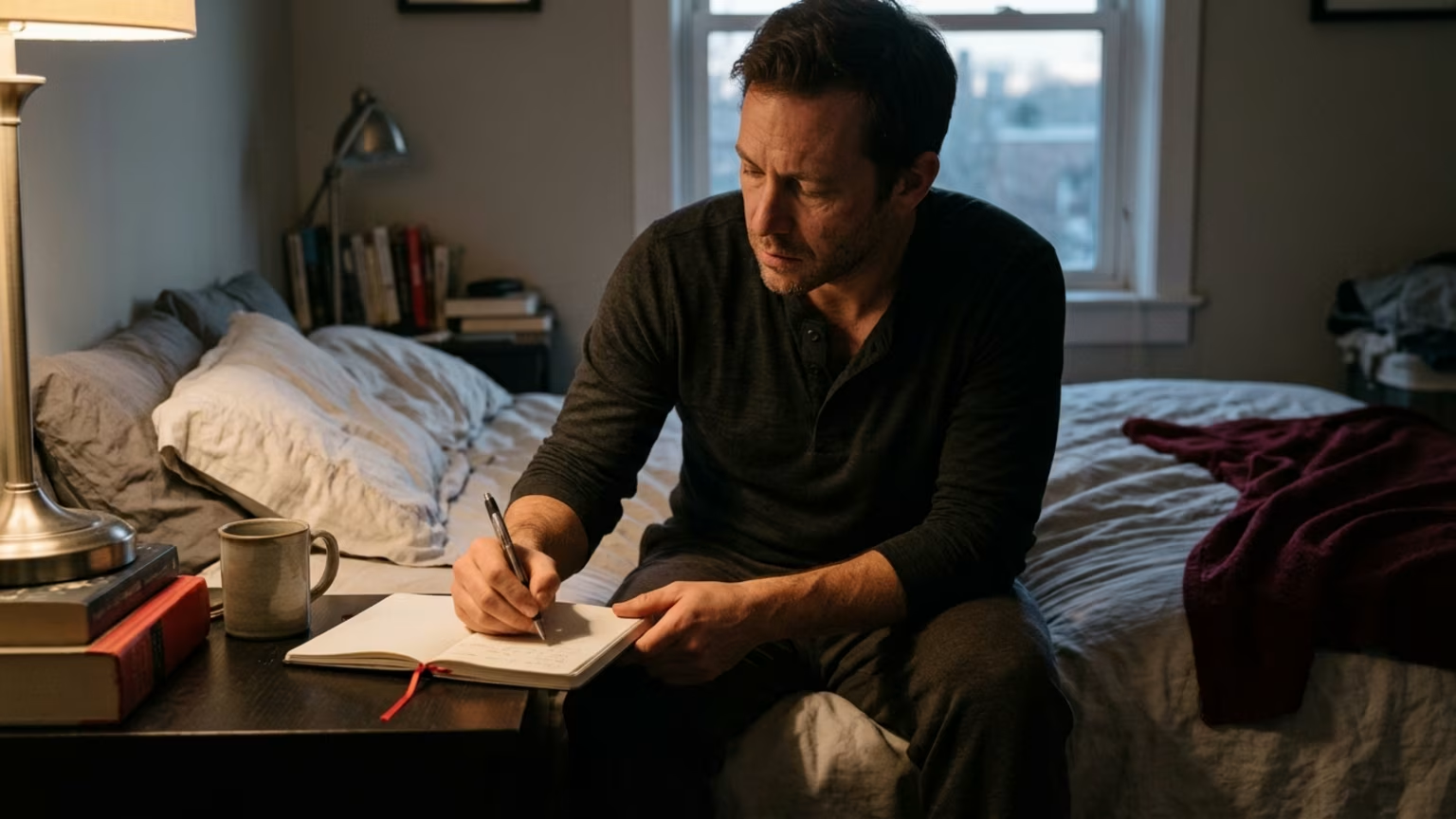
In 2018, the Journal of Experimental Psychology: General published a Baylor University study comparing two kinds of bedtime writing. Participants who listed upcoming tasks fell asleep faster than those who listed completed activities, a finding revisited in later coverage.
How did the researchers test bedtime writing?
The research by Michael K. Scullin and colleagues involved 57 healthy young adults. Participants spent five minutes writing before bed in a sleep laboratory. The researchers compared two prompts rather than asking everyone to write the same kind of entry.
- Upcoming-task group: Participants listed tasks they expected to do in the coming days.
- Completed-activity group: Participants listed activities they had already finished.
The five-minute period was the writing activity, not the length of the sleep assessment. Researchers then assessed sleep overnight. This distinction matters because the study paired a short task with a laboratory measurement of what happened afterward.
A published account of the experiment describes the use of polysomnography to record sleep. That gave researchers a measured sleep-onset outcome rather than relying only on participants’ estimates of how long they had been awake.
Sleep onset means the transition into sleep. The key question was how long participants took to reach that point after the writing task. Keeping the outcome clear helps separate the experiment itself from a broad headline about better sleep.
What changed in the participants’ sleep?
The reported findings centered on the time taken to fall asleep:
- The upcoming-task group fell asleep significantly faster. The comparison was with participants who wrote about completed activities. This was the main sleep outcome reported in the research.
- More specific upcoming-task lists were associated with faster sleep onset. This was a link between the detail in the lists and the measured outcome. It does not establish that adding detail itself caused the difference.
The direction of the writing mattered in this experiment. One prompt looked ahead to tasks still waiting. The other looked back at activities already completed. Both involved writing, but they asked participants to focus on different material.
According to The Economic Times, Scullin described two competing ideas. Thinking about the future might increase worry. Or putting tasks into words might help people set them aside mentally instead of holding them in working thoughts.
The result favored the second explanation. That is the proposed mental offloading account, not a demonstrated mechanism. Researchers tested sleep outcomes rather than proving how the writing changed the mind’s handling of unfinished tasks.
Where are the limits of this evidence?
The most useful reading keeps the boundaries of the experiment visible. These are the points that matter when applying the result outside the laboratory:
- Population: The sample was small and made up of healthy young adults. The Economic Times describes them as college-aged without giving an exact age range. This does not directly establish an effect in men 45 and older.
- Comparison: The experiment tested upcoming-task writing against completed-activity writing. As Quartz notes, that leaves open whether writing beats no writing at all. It also does not show that this approach is better than other wind-down routines.
- Duration: Researchers assessed sleep overnight. That is different from following a habit through ordinary life over time. The result does not establish that an initial benefit would last with repeated use.
Those boundaries leave room for a modest personal experiment. For someone whose thoughts keep returning to unfinished tasks, the activity supported by this study is five minutes of writing a specific list of upcoming tasks before bed. The purpose is to see whether that brief activity helps the person settle.
The research does not provide a required number of tasks or a more elaborate planning system. Keeping the description close to the tested activity avoids turning a simple writing comparison into a much larger claim about productivity or sleep.
Personal observation and a controlled experiment answer different questions. Noticing that a routine feels helpful may inform a preference. It does not make that individual experience evidence that the routine will work for everyone else.
The study does not establish a treatment for anxiety or chronic insomnia. The Economic Times advises discussing chronic sleep difficulties with a clinician rather than treating the habit as a replacement for care.
Does this change sleep advice for men after 45?
The clearest takeaway is about matching a claim to its evidence. A study of bedtime writing is useful when the writing prompt and the measured outcome stay attached to the result. It becomes less useful when the details disappear behind a promise of better rest.
Related reading includes Everfitguys articles on the relationship between anxiety and deep sleep and questions about daytime light and sleep in later life. Those topics address different parts of sleep research. A task-writing experiment belongs alongside that wider reading rather than serving as a complete explanation of sleep.
For a man weighing this habit, the useful distinction is between an optional bedtime preference and a change in clinical care. The former can remain simple. The latter needs evidence matched to the person and the problem.
What this changes: this small study offers a reason to investigate bedtime task lists further, not a basis for changing current sleep-care practices.
How Everfitguys helps
Faster sleep onset is the measured outcome here, and Everfitguys translates healthy-aging research for men 45 and older. Its reporting also addresses stiffness and joint pain that restrict activity, helping readers separate supported findings from broader claims about remaining mobile and independent.
Sources
Stay sharp
Get stories
The best writing on craft and life, delivered once a week. No noise, just the good stuff.


