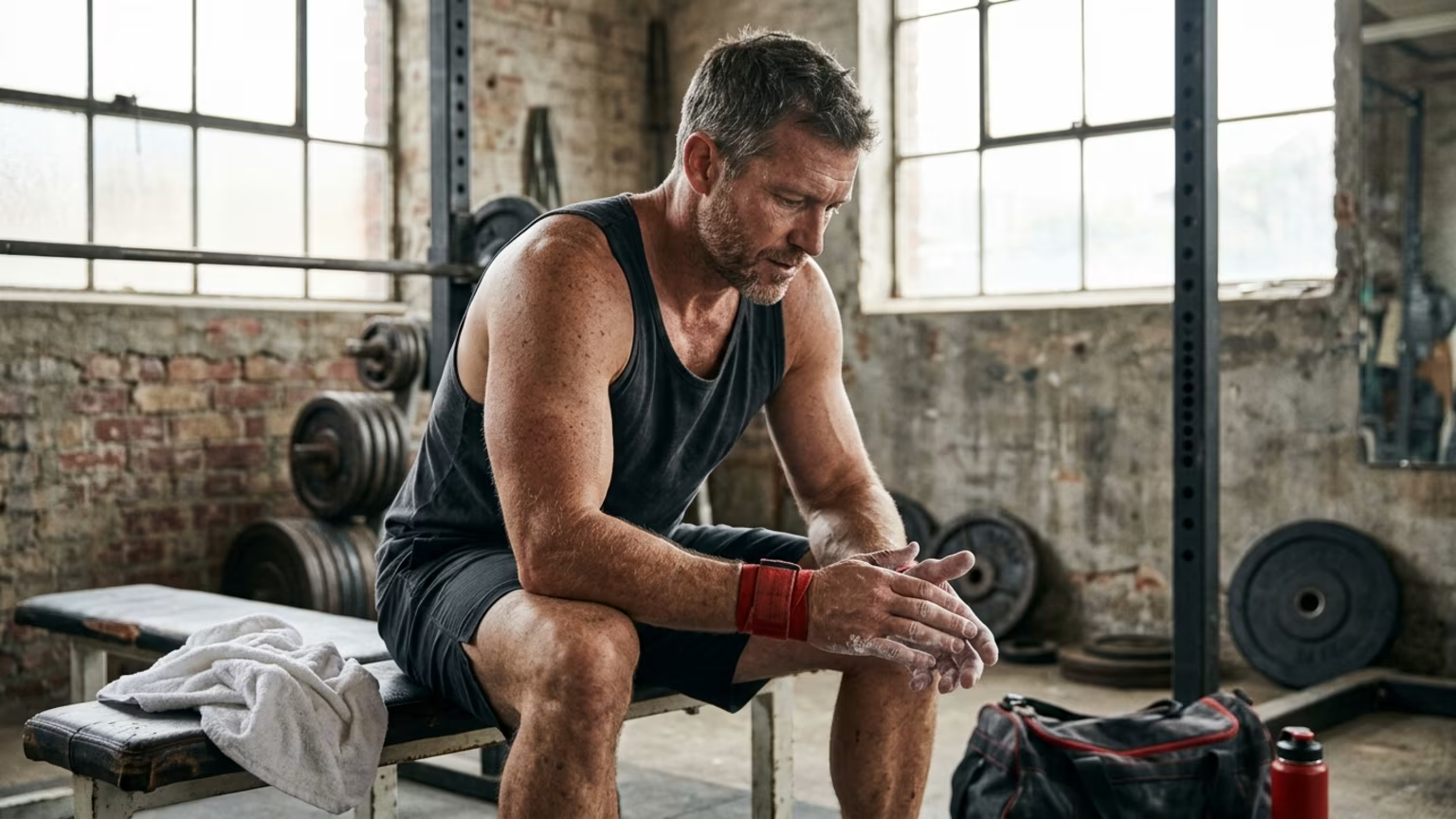
Frank Grillo at 61: A Strength Focus, Not a Workout Template

On October 11, 2026, Men’s Health UK published a profile of actor Frank Grillo at 61, describing his preference for heavy compound exercises and boxing over bodybuilding-style arm isolation.
The coverage follows one actor across different training periods
This was magazine coverage rather than a research trial. The subject was Grillo and the information came from accounts of his training and personal experience. There was no recruited participant group or trial duration to describe.
The main profile describes him as 61. A separate Muscle & Fitness interview published on October 7, 2026, describes him as 60. These are accounts of one man’s routine rather than findings from a sample of older men with different training backgrounds or health conditions.
According to Men’s Health UK, Grillo boxes daily for about 90 minutes. That work includes shadow boxing, pad work and sparring. The magazine also reports five or six strength sessions weekly, with each lasting about an hour.
His lifting preferences include:
- Core work.
- Heavy chest and shoulder exercises.
- Squats and deadlifts.
- Little focus on separate biceps and triceps exercises.
The profile does not present a complete workout with exercise order or progression rules. Its central point is his preference for large movements and strength over building individual muscles mainly for appearance. The reported schedule describes how much he trains but does not explain every decision behind those sessions.
The Muscle & Fitness interview adds coaching context. It recounts an eight-week preparation period involving a boxing trainer, a strength-and-conditioning coach and a home gym. That period was a coached preparation phase rather than the length of an experiment.
The Men’s Health UK profile also looks back at preparation for the 2020 film Boss Level. It describes a powerlifting-style routine with trainer Brendan Johnson over five months. Together, the accounts show different training periods with different goals rather than one unchanged program followed throughout his career.
That distinction helps explain the story. Boxing practice, film preparation and his preferred everyday physique all appear in the coverage. Reading only the list of lifts would leave out much of the context surrounding those choices.
The reported outcomes are muscle gain and perceived recovery
The clearest physical result in the profile concerns a specific film role. Other changes are Grillo’s own descriptions of how he feels. Here is what the coverage reports:
- Muscle gain for a role: Men’s Health UK reports that Grillo gained 11 kg of muscle in five months while preparing for Boss Level. The magazine connects that phase with his coached, powerlifting-style routine.
- A return to his preferred physique: The same profile says he took a further year after filming to return to his preferred weight and physique. His role-specific muscle gain was not presented as the body size he wanted to maintain permanently.
- Energy and recovery: Grillo attributes improvements in these areas to testosterone replacement therapy, or TRT. Those are his reported experiences rather than independently measured treatment outcomes.
- Strength and capability: Remaining strong and capable is his stated aim. The supplied accounts do not establish a measured improvement in lifting strength, mobility or daily function.
The muscle-gain figure belongs to that particular preparation period. It should not become a forecast for what another man will gain from the same category of exercise. The time spent returning to his preferred physique is also part of the story, not an incidental detail to leave out.
Grillo’s usual goal differs from that temporary role requirement. Men’s Health UK frames his current approach around staying capable as he ages rather than pursuing more muscle purely for appearance. His exercise preferences make sense within that stated priority.
The profile also reports that his training has changed with age. Grillo says he does not expect to train as he did at 25, while still maintaining a level he regards as achievable. That is a personal account of adapting expectations, not a measured finding about how all men should train at his age.
For readers, the useful distinction is between a goal and an outcome. Wanting to remain strong explains why he chooses certain exercises. Establishing that those exercises produced a particular improvement would require evidence beyond a description of his routine.
His preferences do not establish rules for other men
The main boundary concerns workload. Grillo’s reported combination of daily boxing and frequent lifting is a demanding personal schedule. The profile does not establish that this amount of training is necessary, suitable or safe for another man.
Exercise selection needs the same care. His preference for compound movements does not show that arm-isolation exercises are harmful or that compound lifts alone produce healthy aging. The coverage reports what he favors, not a comparison proving one style superior for every older trainee.
The coaching details also matter. The Muscle & Fitness account places a preparation phase within a setting that included separate coaches and a home gym. Those circumstances belong alongside the workout description when judging how relevant the story is to someone else’s life.
TRT is a separate medical issue rather than another item on a training checklist. Men’s Health UK quotes Grillo advising men to use it only when a medical professional determines they are candidates. His experience is not a reason for readers to seek treatment or expect the same benefits.
Personal questions about hormone treatment belong with qualified medical care. Everfitguys’ guide to discussing hormone support with a clinician addresses that separate subject. It should remain separate from decisions about exercise preferences.
These boundaries leave the profile with a clear role: it illustrates one actor’s priorities and training history. Its value is the account itself rather than a prescription hidden inside a celebrity interview.
Capability is the useful focus rather than matching his workload
For men after 45, the most relevant part of this story is the goal Grillo describes. He wants strength and physical capability to remain central as he ages. That is a more useful subject for reflection than whether a reader can match every session in his calendar.
A careful reading separates three questions:
- What is the goal? In the profile, Grillo’s usual priority is staying strong and capable. A film role created a different temporary aim.
- What does he do? He reports boxing and heavy compound exercises within a frequent training schedule.
- What result is reported? The coverage gives a role-specific muscle-gain account and his perceived changes in energy and recovery.
Keeping those questions separate prevents a familiar shortcut: treating an impressive physique as proof that every detail of a routine belongs together. The accounts connect several parts of his life but do not test each part against the others.
The practical editorial takeaway is to start with the desired capability rather than a borrowed timetable. For a reader interested in strength development, the next question is how training progresses over time. That is a different question from how often a particular actor trains.
For someone whose activity is limited by discomfort, training load and joint health is another relevant topic. A celebrity’s exercise list does not resolve a personal health decision. Questions involving symptoms or medical conditions require qualified care rather than inference from a profile.
Grillo’s account is engaging because it puts strength ahead of appearance without pretending that his goals have always stayed the same. The role-specific preparation and later return to his preferred physique give that distinction substance. The story is about choices made for different purposes, not one permanent formula.
What this changes: Grillo’s profile reinforces a strength-and-capability focus but does not change current best practices or establish a new training standard.
How Everfitguys helps
Turning Frank Grillo’s demanding schedule into a rule for aging well confuses a personal routine with broader evidence, a mistake Everfitguys addresses through research led explanation. For men concerned about losing muscle and physical capability, the publication focuses on strength and independence while explaining what health research actually supports.
Sources
Stay sharp
Get stories
The best writing on craft and life, delivered once a week. No noise, just the good stuff.