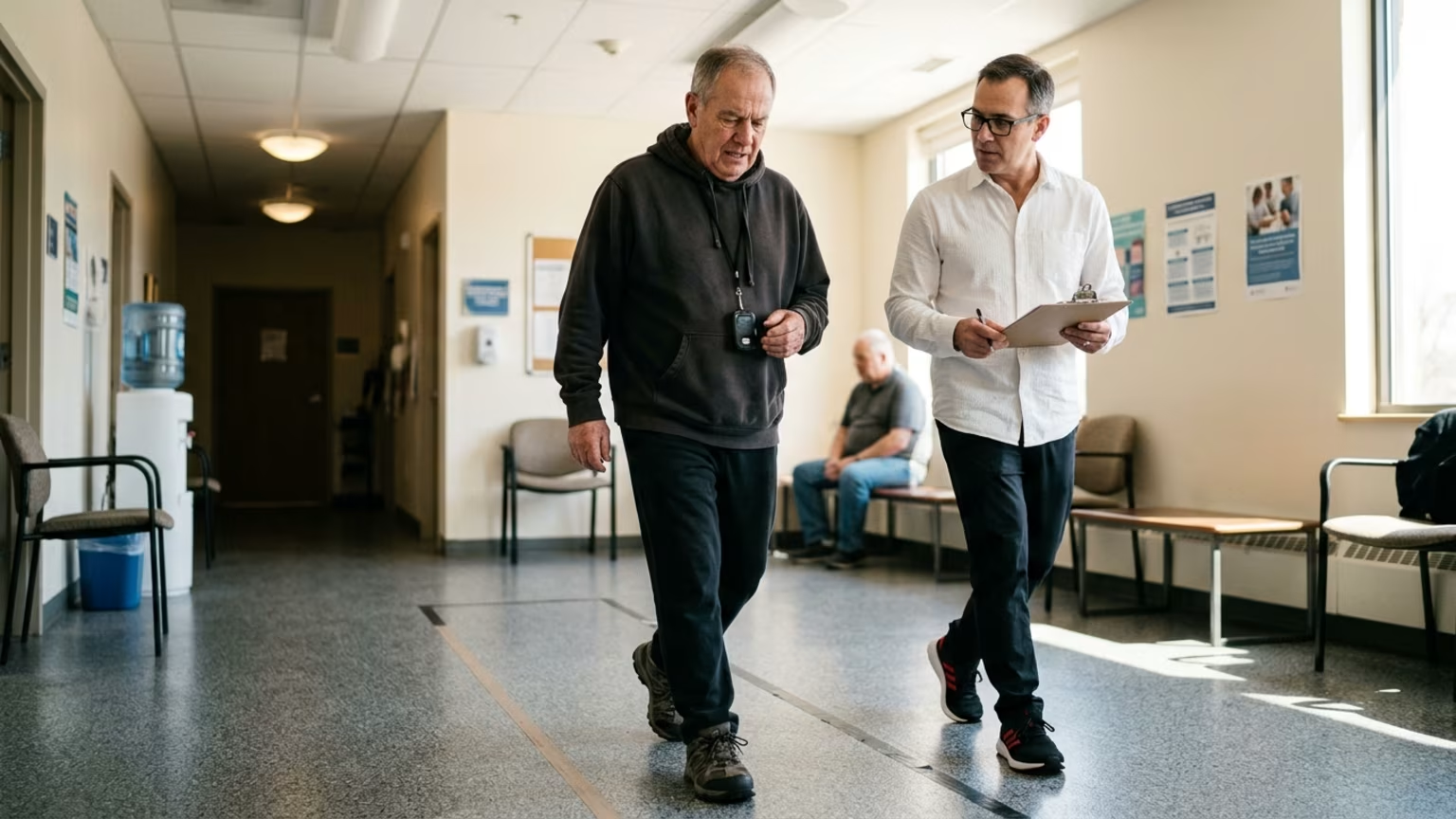
Modifying Physical Training Intensity Helps Older Adults Protect Joint Health and Stay Active
What Is Training Load Management?
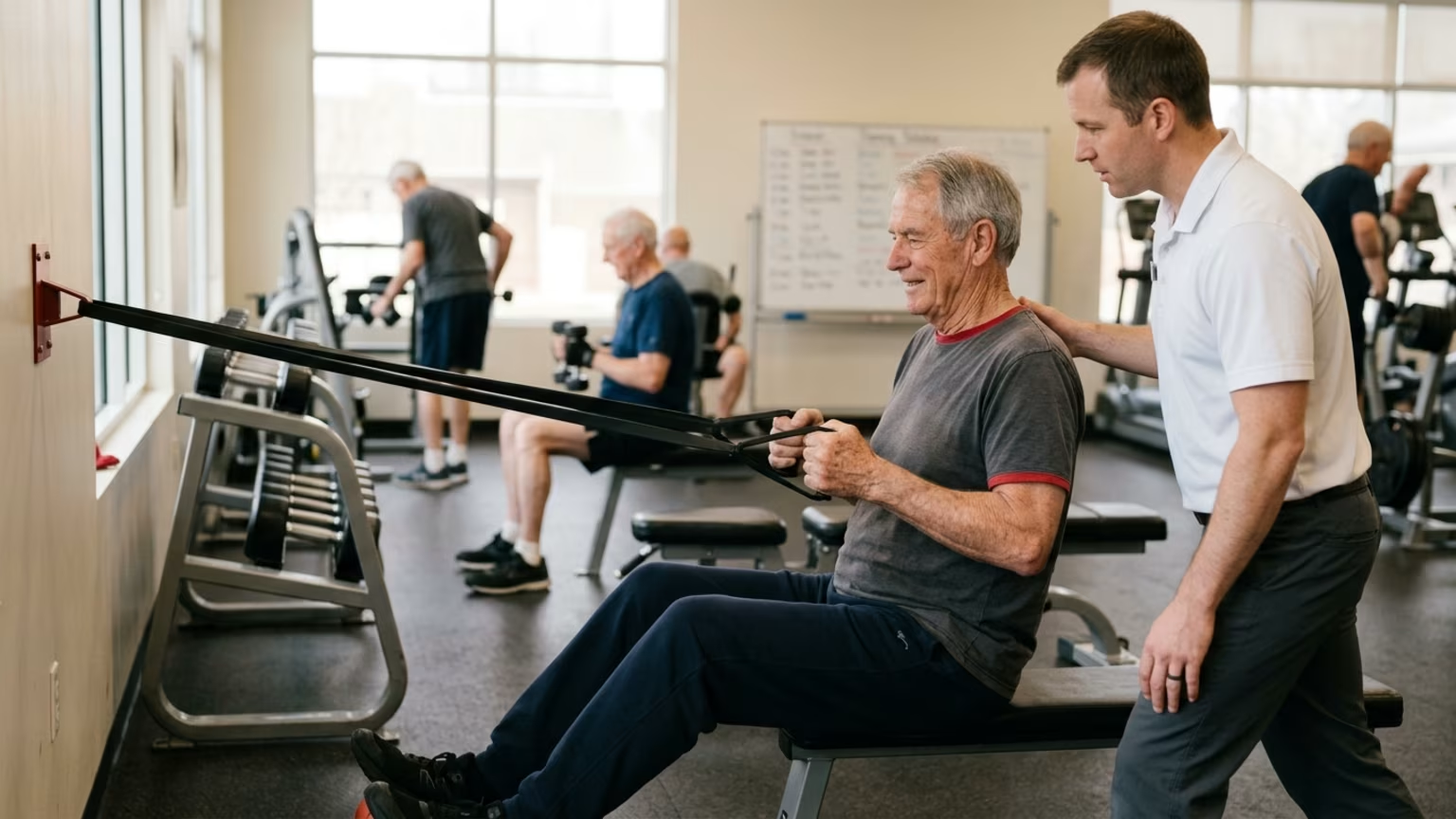
Training load management is the systematic adjustment of physical stress applied to the body during exercise. It involves carefully balancing resistance, sets and repetitions to match a person's current recovery capacity. Load management also accounts for other critical variables like range of motion, movement speed and overall training frequency. By treating every workout as a highly specific dose, individuals can stay active without overwhelming their joints or reactive tendons.
This systematic approach shifts the focus from simply working hard to working intelligently within physical limits. Understanding this concept is highly relevant for any older individual looking to maintain an active lifestyle. Proper dose management allows the body to adapt to the applied stress gradually over time. When the training dose aligns with recovery capacity, tissues grow stronger rather than breaking down.
Why Does Joint Health Change For Men Over 45?
For men over 45, preserving muscle mass and functional independence becomes a central health priority. Many older adults experience joint stiffness, recurring aches or tendinopathy that can make traditional exercise routines feel uncomfortable. The objective is not simply to complete the hardest possible training session regardless of the physical cost. Instead, mature men must accumulate enough productive physical activity to maintain their capability without repeatedly exceeding their recovery limits.
This requires a shift in mindset from aggressive progression to sustainable movement management. Many men mistakenly believe that any joint pain signals a need to cease all physical movement indefinitely. However, adopting a more measured perspective on joint stress helps individuals navigate natural physical changes more effectively.
A central clinical concept for this age group is substitution rather than complete training shutdown. When a specific movement irritates a joint, maintaining general physical activity is usually better than stopping exercise entirely. Complete rest might feel like the safest option during an unexpected symptom flare. A physical-therapy programming source recommends keeping reactive tendons active within a tolerable range because complete rest may actually reduce tissue capacity further.
Rather than abandoning fitness entirely, older men can replace a provocative movement with a version their body can currently tolerate. This modification might mean adjusting the exercise's range of motion, lifting lighter weights or choosing low-impact conditioning options. A lifter with knee irritation might keep training the upper body while temporarily replacing deep, heavy knee-flexion work with a lighter load. This flexible approach allows individuals to support their longevity and healthspan while working around temporary physical limitations.
What Do Current Guidelines Say About Movement And Recovery?
Current clinical guidance increasingly supports integrating functional movement into routine healthcare rather than treating physical activity as an isolated concern. The American College of Sports Medicine directs the Exercise is Medicine initiative, which frames physical activity as part of routine healthcare. This global initiative focuses on providing resources for people of different abilities, explicitly including older adults. The model supports individualized treatment and exercise planning for people with musculoskeletal or neuromuscular conditions before they enter broader physical activity programs.
By modifying the exercise dose based on symptoms, individuals can potentially reduce painful osteoarthritis flares. Regular physical activity is broadly recommended for managing joint health and maintaining overall movement quality. The European Alliance of Associations for Rheumatology officially recommends physical activity for people with rheumatic and musculoskeletal conditions. They report that exercising two to three days per week can significantly improve joint range of motion.
The largest physical gains actually occur when this supportive mobility work is performed on a daily basis. Slow, comfortable mobility routines can be performed regularly while more demanding ranges are reintroduced progressively. Movement lubricates joints and helps maintain functional tissue elasticity over time. This broader medical integration highlights a critical shift away from treating musculoskeletal symptoms as an automatic reason for indefinite physical inactivity.
When designing a resistance training routine, accumulated volume and training fatigue are just as critical as the amount of weight lifted. According to the American College of Sports Medicine, strength adaptations can follow an inverted-U relationship with training fatigue. Their discussion reports that moderate velocity-loss thresholds produce better strength gains than either minimal or near-maximal fatigue. A technically sound lifting set that leaves room for recovery may be more useful than constantly pushing muscles to physical failure.
This supports leaving ample room for physical recovery, especially when several weekly activities compete for the same tissues. Rehabilitation sources also offer practical monitoring rules for navigating acceptable training discomfort safely. One useful practical monitoring rule suggests that exercise-related symptoms should return to baseline by the following morning. If physical symptoms remain elevated the next day, the next session's training dose should be reduced rather than automatically stopping the activity entirely.
For older adults, resistance training should be individualized around daily function, specific injury history and personal fracture risk. One programming recommendation uses two or three weekly sessions built primarily around major functional movement patterns. Staying active under professional guidance provides long-term structural benefits without excessive physical wear.
Where Are The Limitations In Joint Loading Research?
While general physical activity guidelines are clear, specific rules for managing acute training discomfort are much less uniform across clinical sources. The retrieved rehabilitation sources commonly describe mild, tolerable discomfort during tendon loading as a potentially acceptable response. The exact pain threshold varies significantly by protocol and should never be treated as a universal medical prescription. One rehabilitation source sets a defined ceiling of four out of ten for acceptable training pain.
Meanwhile, another programming source uses a stricter limit of three out of ten for symptom management. These conflicting pain thresholds appear largely on practitioner websites rather than in unified primary clinical guidelines, meaning they function as clinical heuristics. There is no universally validated 24-hour symptom rule that applies perfectly to every single joint, reactive tendon or age group. Similarly, the available clinical sources do not provide a single progression calendar or a fixed number of weekly sets that is optimal for every man over 45.
The available medical guidance supports slow movement through a pain-limited range and gradual physical progression under professional supervision. Exercise selection should not be reduced to simplistic rules declaring single movements universally harmful. A qualified physical therapist, sports-medicine clinician or other medical professional can help distinguish a tolerable training response from a condition requiring dedicated rehabilitation. This individualized approach is far safer than relying on arbitrary online pain scales.
It is also critical to understand when physical symptoms reflect something much more serious than a simple training load error. Clinical guidance advises urgent medical assessment for sudden severe pain, an inability to bear physical weight or major tissue swelling. Visible physical deformity or a hot and red joint accompanied by fever also require immediate professional medical evaluation. Mechanical joint locking, sudden loss of movement, numbness or tingling are additional warning signs that require urgent medical care.
How Should You Adjust Your Routine Moving Forward?
Applying a highly modified training approach requires careful patience and close attention to the body's daily responses. A practical load-management principle is to change only one specific training variable at a given time. This progression could mean adjusting resistance, repetitions and sets individually rather than increasing several factors simultaneously. It can also involve modifying movement range or impact exposure one step at a time.
By modifying just one training element, older men can track their exact physical response and determine whether another structural increase is appropriate. This graded functional return is especially useful when resuming demanding activities like heavy lifting, steep hiking or long-distance cycling after a layoff. Cardiovascular fitness might return fairly quickly, but mature tendons and joints often need much more time to adapt to the renewed physical stress. Maintaining strength and muscle conditioning requires balancing this cardiovascular capacity with adequate mechanical tissue recovery.
Joint range of motion should always be adjusted carefully to the person's current physical tolerance rather than being forcefully pushed. Monitoring morning physical symptoms provides a highly practical feedback loop for adjusting the ongoing weekly training dose. If a specific activity causes mild tissue irritation that settles completely by the next day, the current training load is likely acceptable. If a persistent joint ache develops, intentionally reducing the movement's range or lifting weight can help maintain baseline fitness without aggravating the underlying tissue.
Treating every training session as a precise dose allows active men to stay strong while avoiding progressive overuse injuries. Watch next as researchers continue tracking how structured physical activity assessments and individualized exercise plans are integrated directly into routine primary care for aging adults.
How Everfitguys helps
Falling energy, slower metabolism and unwanted changes in body composition often tempt men to abandon physical activity when joint discomfort arises. Everfitguys interprets current clinical research to help you navigate these physical barriers objectively. We provide evidence-based context so you can safely modify your routine, avoid prolonged inactivity and maintain long-term capability. Read the research
Sources
Stay sharp
Get stories
The best writing on craft and life, delivered once a week. No noise, just the good stuff.