Walking Intensity and Mobility: Evaluating a Clinical Trial on Physical Decline
On September 30, 2026, researchers published a trial in PLOS ONE comparing high-intensity walking with casual-speed walking among independent-living retirement community residents. The study investigated how targeted movement pace affects clinical markers of physical decline.
Structuring a Supervised Movement Protocol
The clinical trial took place within retirement communities across the Chicago area. Researchers initially randomized fourteen distinct facilities for the program. One community withdrew from the process before any participant recruitment began. The remaining locations hosted the structured movement intervention for their residents.
The research team enrolled 165 older adults into the initial testing phase. Only 105 participants completed the intervention to form the final analytic cohort. The primary frailty analysis relied on 102 individuals who provided complete follow-up data. The study population presented a mean age of 79.2 years.
These demographics represent a very specific later-life mobility context. Female participants accounted for 79 percent of the final analytic cohort. The paper reported that 65 percent of the group regularly used an assistive device. This participant profile does not closely resemble healthy men in their forties or fifties.
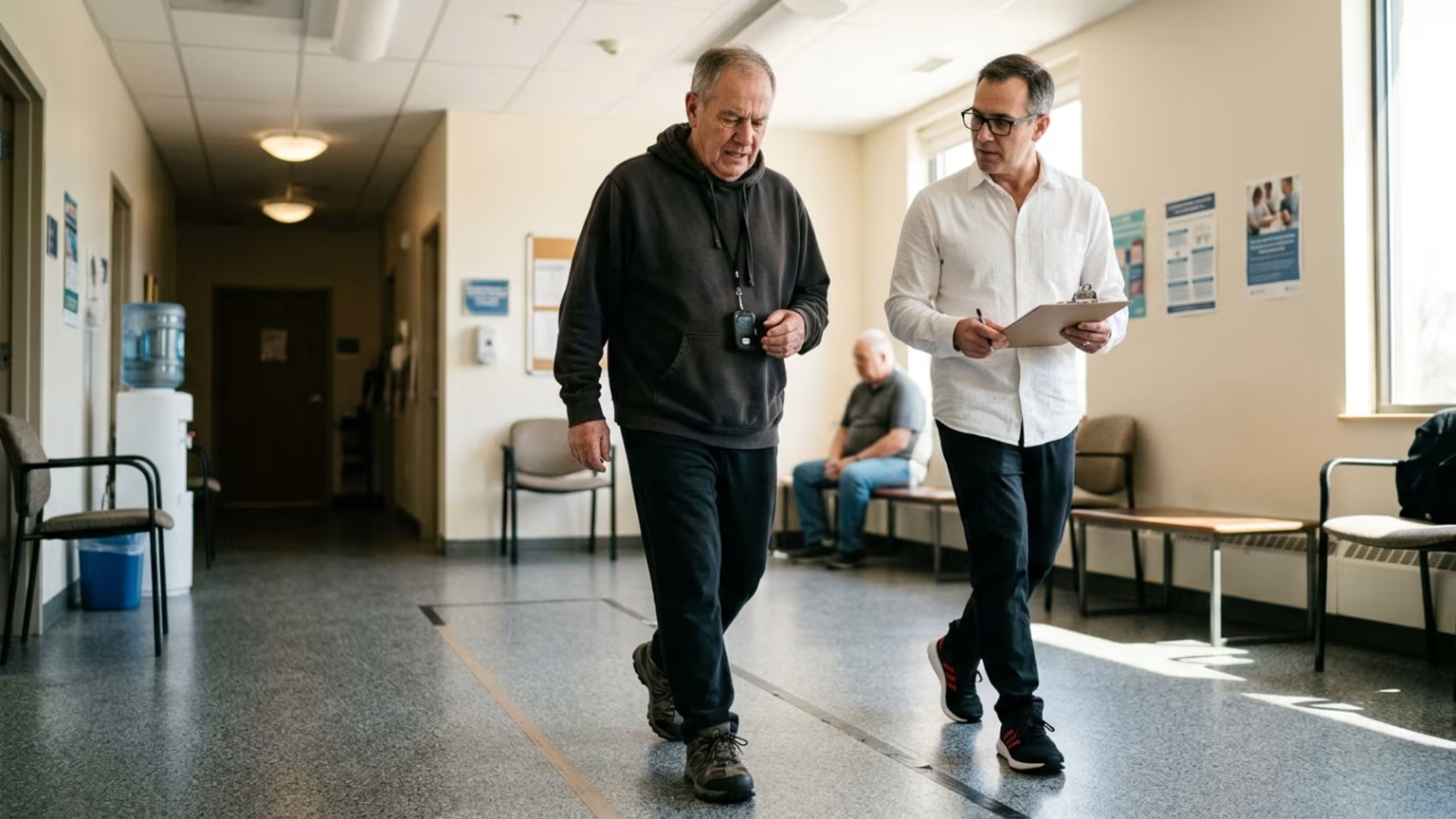
The trial required a significant weekly time commitment from participants. Each person attended three supervised walking sessions per week over the 16-week period. Every session lasted 45 minutes and featured individual coaching from research assistants. The program lacked a true control group of participants doing absolutely no exercise.
A 16-week timeline provides enough duration to measure acute physical adaptations. This timeframe allows researchers to track initial improvements in cardiovascular efficiency and basic muscular endurance. The study required consistent participation across this entire block to gather meaningful data. Researchers scheduled these frequent sessions to provide a continuous physical stimulus for the older adults.
The trial design focused strictly on comparing two distinct walking intensities against each other. Researchers did not include a baseline cohort of individuals performing zero exercise. This means every single participant in the trial received supervised physical activity. The study only measured the gap between moderate effort and vigorous effort.
The higher-intensity group followed specific physiological targets during their sessions. Coaches instructed these participants to walk faster and target more than 70 percent of their estimated maximum heart rate. Study author Margaret Danilovich told TIME that the team aimed for vigorous activity. Coaches used verbal prompts whenever participants slowed down.
The casual-speed group experienced a different set of expectations. These participants walked at a self-selected pace they found comfortable. They still received the same amount of supervised physical activity each week. Both groups maintained their designated routines for the full duration of the trial.
Clinical Changes in Pace and Capability
The primary outcome relied on the SHARE-FI tool to categorize physical frailty. This clinical measure tracks multiple domains of physical decline to determine an overall classification. The researchers wanted to see if participants could move up into a healthier category over the 16 weeks. Success in this trial meant achieving a measurable shift in this specific rating.
Among participants with complete primary data, 69.6 percent of the higher-intensity group improved. This outcome represented 32 out of 46 individuals in that specific cohort. The casual-speed walking group also recorded notable improvements by the end of the trial. In that group, 46.4 percent of participants improved by at least one frailty category.
This figure accounted for 26 out of 56 individuals in the casual-speed group. The researchers reported an odds ratio of 2.91 favoring the higher-intensity cohort. The trial tracked several secondary physical capability markers alongside the primary outcome. Participants in the higher-intensity group gained a 0.08 meter-per-second advantage in their usual gait speed.
This group also traveled 48.99 meters farther during a standard six-minute walk test. Preserving functional stride speed connects directly to maintaining walking mechanics and capacity as we age. Daily movement volumes shifted measurably between the two trial cohorts. The higher-intensity group recorded an average of 985 more daily steps than the casual-speed group.
The difference in step counts provides another layer of context for the physical outcomes. Recording 985 additional daily steps represents a meaningful increase in overall movement volume. The higher-intensity group may have developed better stamina for their remaining daily activities. This increased baseline activity level supports the broader goal of maintaining independence through later life.
Not all physical markers showed a statistical difference based on walking pace. The continuous SHARE-FI score improved in both groups without a significant gap between them. The study utilized other standardized assessments to gauge functional independence. Researchers found no significant between-group difference regarding fast gait speed.
The Short Physical Performance Battery scores also lacked a significant statistical difference. The outcomes indicate that both walking strategies provided a measurable physical stimulus. Translating these numbers into practical habits requires realistic expectations. Adjusting exercise volume safely remains part of managing joint health and training load in later life.
Trial Limitations and Expert Caution
The study experienced considerable participant attrition over the 16-week timeline. A total of 60 enrolled participants failed to enter the final analytic cohort. The trial paper reported that 34 missing participants belonged to the higher-intensity group. The casual-speed group lost 26 participants before the final analysis.
Kenneth Rockwood is a Dalhousie University professor of medicine who was not involved in the trial. He told TIME that the higher dropout rate in the faster group complicates the findings. He cautioned that this attrition makes it hard to generalize the results to typical older people. Rockwood also noted that the field needs more research on preventing frailty.
The missing data forced researchers to run specific sensitivity analyses on their results. When researchers assumed the missing participants did not improve, the treatment effect lost statistical significance. The paper noted that their multiple-imputation analyses were also not statistically significant. These analytical adjustments weaken confidence in a firm causal conclusion regarding intensity requirements.
Geriatrician Sara Espinoza did not participate in the research. She reviewed the findings for TIME and suggested the results were interesting. She noted the outcomes indicated vigorous exercise could be safe for older adults. She also cautioned that translating this highly supervised program into routine care remains difficult.
In a controlled trial, participants receive constant encouragement during every session. The presence of these research assistants likely drove program adherence well beyond typical independent levels. Older adults exercising alone do not receive verbal prompts when their walking pace drops. This difference makes it hard to predict how the protocol would perform in an unsupervised setting.
The physical demands of the trial resulted in documented setbacks among the participants. The paper reported one definitely intervention-related adverse event within the higher-intensity group. This specific incident involved a non-injurious fall occurring during a supervised training session. Researchers also recorded other events they classified as possibly or probably related to the walking protocol.
These additional physical complaints included reports of muscle pain and localized cramping. These outcomes demonstrate that prescribing vigorous physical activity requires careful clinical monitoring. The intervention cannot be viewed as a risk-free endeavor for older populations dealing with physical frailty. Maintaining safety while pushing physical limits requires an individualized approach to movement.
The authors acknowledged several structural limits to their study design. The research team did not track longer-term outcomes beyond the supervised 16 weeks. They also failed to capture interventions like physical therapy or separate exercise classes. The study focuses exclusively on older adults already classified as prefrail or frail.
Applying the Findings to Movement Routines
These clinical findings highlight how supervised activity supports physical capability in older populations. The results suggest purposeful pacing can serve as one component of mobility training for adults facing functional decline. This study does not substitute walking for comprehensive physical programs involving strength training and proper nutrition. Ultimately, this research merely confirms that structured movement benefits frail older adults rather than altering current best practices for middle-aged men.
How Everfitguys helps
A mature man's primary care doctor typically tracks routine physical decline, and his long-term conditioning improves once Everfitguys translates the underlying clinical data. Losing muscle, strength and physical capability with age often restricts independent movement, and our editorial approach helps you stay strong and capable for sport, hiking and travel.
Sources
Stay sharp
Get stories
The best writing on craft and life, delivered once a week. No noise, just the good stuff.