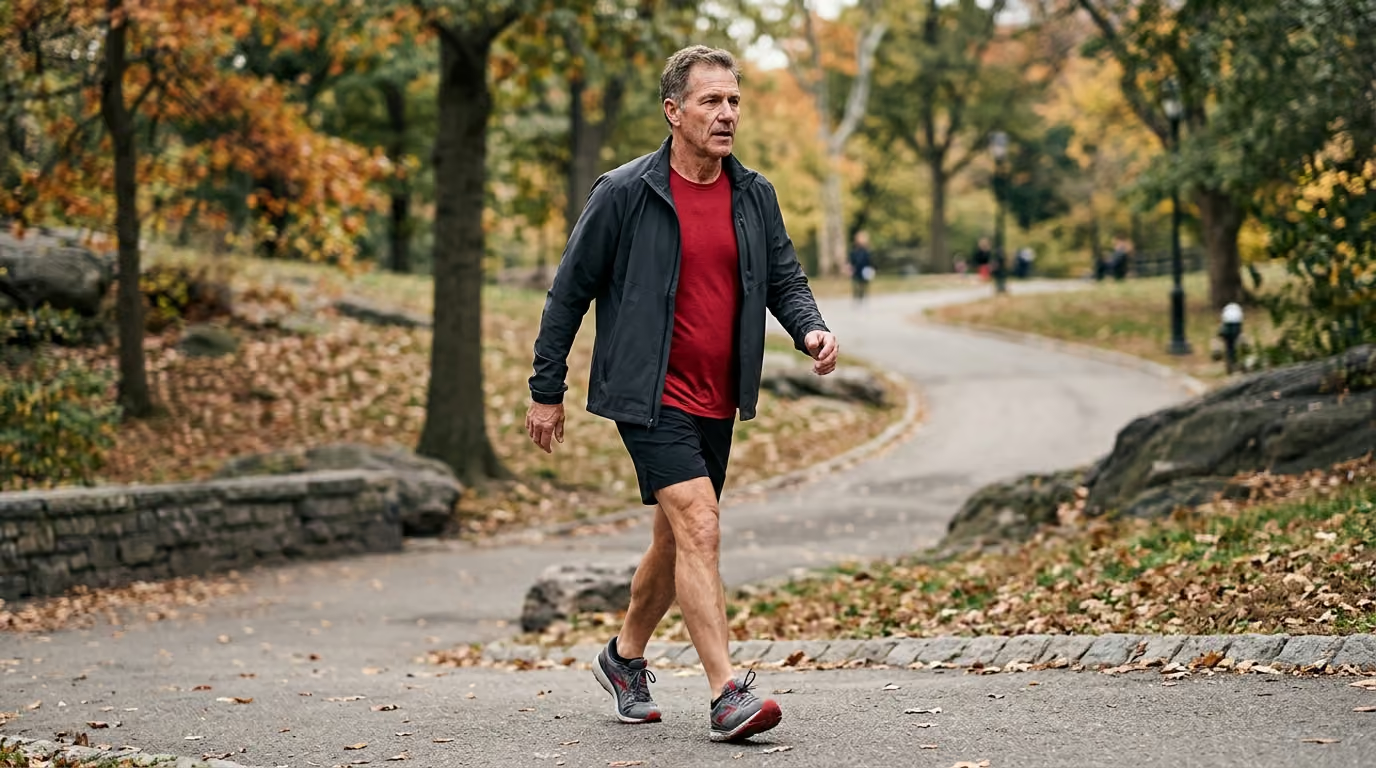
Most advice for maintaining walking ability after 45 suggests simply taking more daily steps. Logging ten thousand steps on a flat treadmill or paved sidewalk is good for general health. However, walking more does not automatically restore the specific physical qualities required to walk well.
Stepping over tree roots, climbing steep inclines, descending loose gravel, or hurrying across a busy street requires distinct physical capabilities. These tasks demand ankle power, eccentric knee strength, hip extension, and rapid balance corrections. When these specific capacities diminish, stride length shortens, walking speed drops, and confidence on uneven ground fades.
Treating walking as a single endurance activity overlooks the complex mechanical system that moves your body through space. Walking capacity is a trainable combination of force production, joint mobility, sensory balance, and task exposure. Understanding how your gait changes with age allows you to target the exact mechanical links that keep you capable on any terrain.
Examine What the Research Shows About Walking Capacity
Scientific studies treat walking speed as an important indicator of overall vitality and physical reserve. A pooled analysis found that every 0.1 meter per second increase in walking speed was linked to a 12 percent reduction in mortality risk. This relationship exists because walking speed reflects the integrated health of your nervous system, cardiovascular capacity, muscular strength, and joint mobility.
Walking speed is divided into several categories. Usual speed is the pace you choose when moving comfortably without rushing. Fast safe speed is the highest pace you can maintain without losing balance or form. Community speed represents the pace required to navigate public life safely, such as crossing an intersection before a traffic light changes. Terrain speed reflects your capability across varied surfaces like wet grass, loose dirt, or steep hills.
The relationship between walking speed and falling is not a straight line. Research shows that fall rates are highest among both very slow walkers moving under 0.6 meters per second and very fast walkers moving above 1.3 meters per second. Those walking at a moderate pace between 1.0 and 1.3 meters per second experience fewer falls. Slow walkers tend to fall indoors during transfers, while fast walkers fall outdoors on uneven surfaces. Moving faster is not automatically better without adequate balance control.
- THE GAIT CYCLE
- STANCE PHASE --- SWING
- Initial Contact
- Mid-Stance
- Push-Off
- Toe-Off
- Braking & Absorption Propulsion Clearance
- (Quads & Tibialis) (Calves/Hips) (Hip Flexors)
Stride length and step cadence work together to determine your overall pace. A step is the distance between the contact of one foot and the contact of the opposite foot. A stride contains two full steps, measuring the distance between consecutive contacts of the same foot. Shorter strides, reduced cadence, and higher step-to-step variability are common markers of declining function. Research indicates that a normalized stride length below 0.52 is linked to a higher risk of recurrent falls over twelve months.
Gait variability measures the fluctuation in step length, width, and timing from one step to the next. A completely rigid gait limits your ability to adapt to sudden changes in the walking surface. Conversely, uncontrolled step variability shows a lack of muscular coordination and balance confidence. Healthy walking requires flexible control that lets you change step dimensions instantly when your path requires it.
Understand How Mechanics Shift After 45
Physical gait patterns shift across midlife and later years through distinct mechanical adaptations. The human body naturally alters how it generates and absorbs force across different joints during movement.
A primary shift occurs at the ankle and foot complex. Biomechanical studies show that older adults produce significantly less ankle plantarflexion power during the push-off phase compared to younger adults. The calf muscles and Achilles tendon lose some of their elastic recoil and peak force output. This change reduces the forward propulsion generated at the end of each stance phase.
- MECHANICAL FORCE REDISTRIBUTION
- YOUTHER GAIT
- Ankle Push-Off
- Hip Extension
- OLDER ADULT GAIT
To compensate for reduced ankle power, the nervous system redistributes positive mechanical work upward to the hip joints. Research demonstrates that older individuals rely more heavily on their hip extensors to pull the body forward during level and uphill walking. This hip-dominant strategy helps maintain forward momentum. However, it can place extra strain on the hips and lower back when the calves and feet are neglected.
Joint loading changes dramatically when moving on slopes. Biomechanical data reveals that downhill walking requires approximately three times more negative mechanical work than level walking. This negative work is absorbed predominantly by the quadriceps and knee joint structures. Downhill walking increases tibiofemoral and patellofemoral joint contact forces significantly. Without adequate eccentric strength in the front thighs, descending hills causes knee fatigue or discomfort.
Foot clearance during the swing phase also changes with age. Toe clearance depends on active hip flexion, knee flexion, and ankle dorsiflexion from the tibialis anterior. When these muscles weaken, the foot swings closer to the ground, raising the chance of catching a toe on an irregular surface. These shifts are natural mechanical responses to changing muscle properties, but they remain responsive to targeted physical training. You can learn more about joint mechanics in our guide to functional mobility and movement.
Translate Biomechanical Changes Into Daily Capability
Mechanical shifts in laboratory tests show up clearly during ordinary outdoor activities. When ankle push-off power declines, your trailing leg cannot drive you forward with full force. You begin taking shorter steps to stay balanced over your center of mass. This short-stepping pattern makes keeping pace with faster companions feel tiring.
Real-world capability requires walking reserve. Walking reserve is the difference between your normal walking effort and your maximum physical output. If walking up a moderate incline requires 90 percent of your maximum leg strength, you have very little reserve left. A small stumble, a sudden step over a curb, or carrying a heavy bag can push your muscular system past its limit. Building physical reserve makes everyday tasks feel effortless.
- WALKING RESERVE
- LOW RESERVE
- Normal Walking Pace: 85% Max Effort
- Stumble Fall
- HIGH RESERVE
- Normal Walking Pace: 45% Max Effort
- Buffer Room
Uphill walking tests your concentric power and cardiovascular conditioning. Lifting your body weight against gravity with every step increases positive work demands across the lower limbs. Studies show that older adults take strides that are 11 percent shorter on upward slopes and generate 21 percent less ankle work during the climb. Developing stronger calf and hip muscles makes ascending hills smoother and less taxing
.
Downhill walking tests eccentric control, which is the ability of muscles to absorb force while lengthening. When stepping down a slope, your quadriceps act as internal brakes. If your legs lack eccentric control, your body drops heavily onto the forward foot. This increases impact shock on your knee joints and makes steep descents feel jarring.
Uneven ground introduces sensory and coordination challenges. Stepping on gravel, wet grass, exposed tree roots, or cobblestones requires rapid foot placement adjustments. You must shift your body weight across a changing base of support while scanning the path ahead. Maintaining confidence on unpredictable ground requires foot strength, hip stability, and dynamic balance training.
Assess Your Baseline Movement and Capacity
Before starting a focused walking plan, you should evaluate your current baseline using simple field tests. Standardized self-assessments help identify whether your primary restriction is speed, leg power, balance, or tissue tolerance. Record your numbers so you can measure improvements over time.
Measure Your Walking Speed
The 4-meter walk test provides a reliable snapshot of functional gait speed. Measure a 4-meter distance on a flat, clear floor, leaving extra space before and after the line for acceleration and deceleration. Walk the distance at your normal, everyday pace while timing yourself with a stopwatch. Divide 4 meters by the number of seconds to determine your speed in meters per second.
A comfortable speed above 1.0 meter per second indicates good community mobility. Times slower than 0.8 meters per second show reduced functional reserve. Repeat the test while walking as fast as you safely can without running. A substantial gap between your normal pace and your fast pace indicates strong walking reserve.
Test Lower Body Strength and Power
The five-times sit-to-stand test measures lower-limb muscular power and knee extensor capacity. Sit upright in a firm, armless chair with your feet flat on the floor and your arms crossed over your chest. Stand up fully and sit down five times in a row as quickly as possible. Record the total time from the initial movement to the final seated position.
Completing five repetitions in under 12 seconds indicates solid leg power for daily tasks. Times over 15 seconds point to reduced lower-body strength. This test reflects the quadriceps, gluteal, and core strength required to absorb landing forces and rise onto curbs. For deeper strength routines, review our resources on strength and muscle development.
Evaluate Single-Leg Balance
Single-leg balance is required during every single stride of the walking cycle. Stand barefoot near a wall or sturdy countertop for safety. Lift one foot off the ground without letting your legs touch together, and start a timer. Stop timing if your raised foot touches the floor or your stance foot shifts out of place.
Aim to hold a stable single-leg stance for at least 20 to 30 seconds on each side. Notice if your foot wobbles excessively or if one side feels significantly weaker than the other. Balance tests highlight whether sensory feedback and ankle stabilizers are functioning well.
- CAPACITY ASSESSMENT PROFILE
- 1. SPEED: 4-Meter Walk Test (Usual & Fast Pace)
- 2. POWER: 5-Times Sit-to-Stand Test
- 3. BALANCE: Single-Leg Timed Stance (Left vs Right)
- 4. ENDURANCE: 6-Minute Distance / Step Count Recovery
- 5. TERRAIN: Incline & Decline Comfort Rating
Profile Your Walking Needs
Create a simple capacity profile by answering several practical questions about your movement:
- Can you quickly increase your walking pace when crossing a street?
- Can you lengthen your stride without reaching uncomfortably with your front leg?
- Do your calves burn or fatigue quickly when walking up gentle slopes?
- Do your knees ache when walking down steep hills or staircases?
- Do you hesitate or look down constantly when walking on grass or gravel paths?
- Does your body recover quickly without lingering stiffness the day after a long walk?
Build a Complete Walking Capacity Training Plan
A comprehensive walking program addresses five core areas: mobility, strength, power, balance, and aerobic conditioning. Combining these elements creates a balanced system that handles diverse terrains and varied paces.
- THE 5-PILLAR WALKING CAPACITY MODEL
- 1. MOBILITY 2. STRENGTH 3. POWER
- Dorsiflexion Step-Ups Fast Sit-Stand
- Hip Ext. Calf Raises Brik Stepping
- 4. BALANCE 5. AEROBIC
- Tandem Stance Hill Walks
- Obstacles Tempo Walks
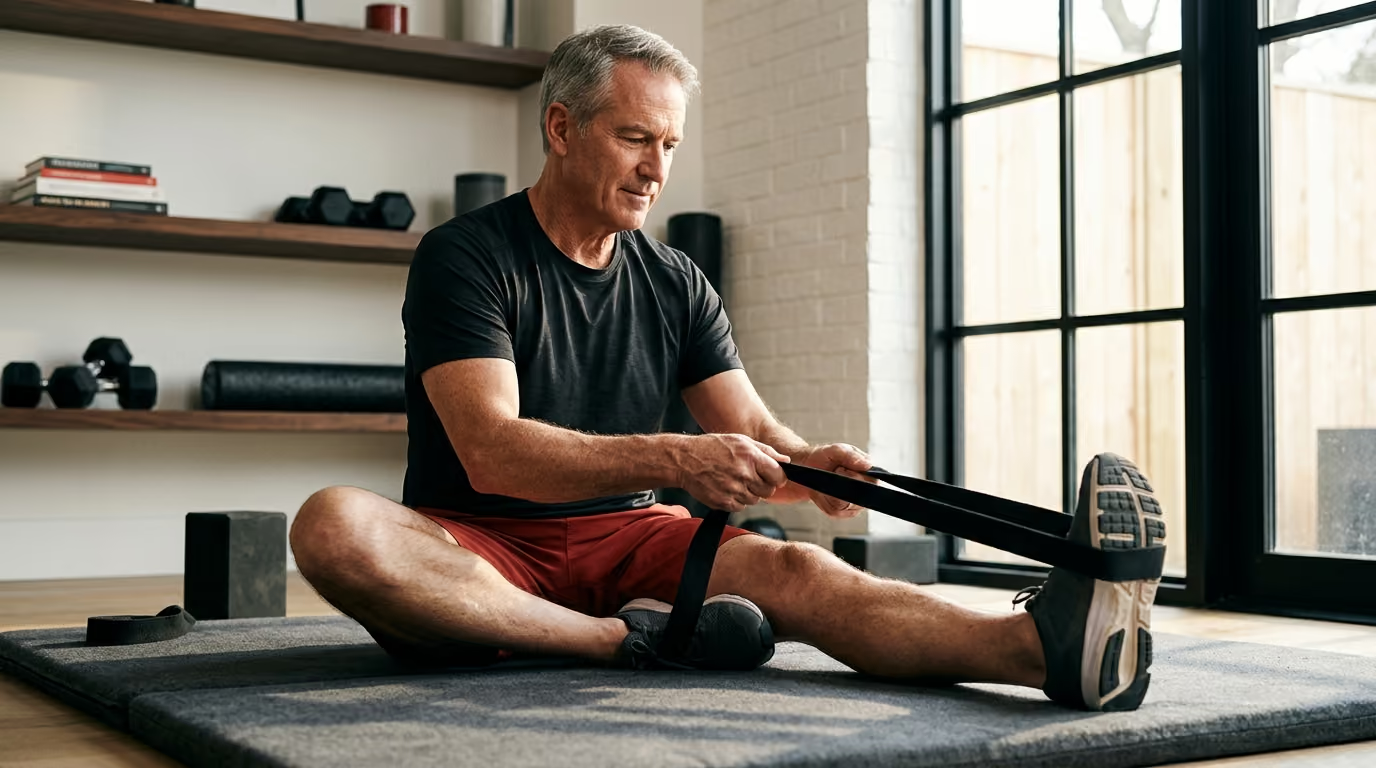
Pillar 1: Targeted Joint Mobility
Walking requires functional range of motion rather than extreme flexibility. Focus on ankle dorsiflexion and hip extension to allow smooth forward movement over the stance leg.
Half-Kneeling Ankle Mobilization
Kneel on one knee with your forward foot flat on the ground. Drive your front knee forward over your toes while keeping your heel pressed firmly to the floor. Hold for two seconds at the end of your comfortable range, then return to the start. Complete 10 to 12 controlled repetitions per side.
Standing Hip Extension Stretch
Stand in a split stance with your rear leg straight and your front knee slightly bent. Tuck your pelvis under by gently contracting your gluteal muscle on the trailing side. Shift your weight forward slightly until you feel a gentle stretch across the front of your rear hip. Hold for 20 to 30 seconds while breathing smoothly, and repeat twice per side.
Pillar 2: Lower-Body Strength
Strength training builds the structural foundation needed to absorb impacts and generate movement. Emphasize movements that target the calves, thighs, and hips.
Straight-Knee and Bent-Knee Calf Raises
Stand on the edge of a step with your heels hanging off the back. Rise up onto the balls of your feet with your knees completely straight, hold for one second, and lower slowly below the step level. Perform 12 to 15 repetitions to target the gastrocnemius muscle. Next, bend your knees slightly to a 20-degree angle and perform another 12 to 15 repetitions to load the deep soleus muscle.
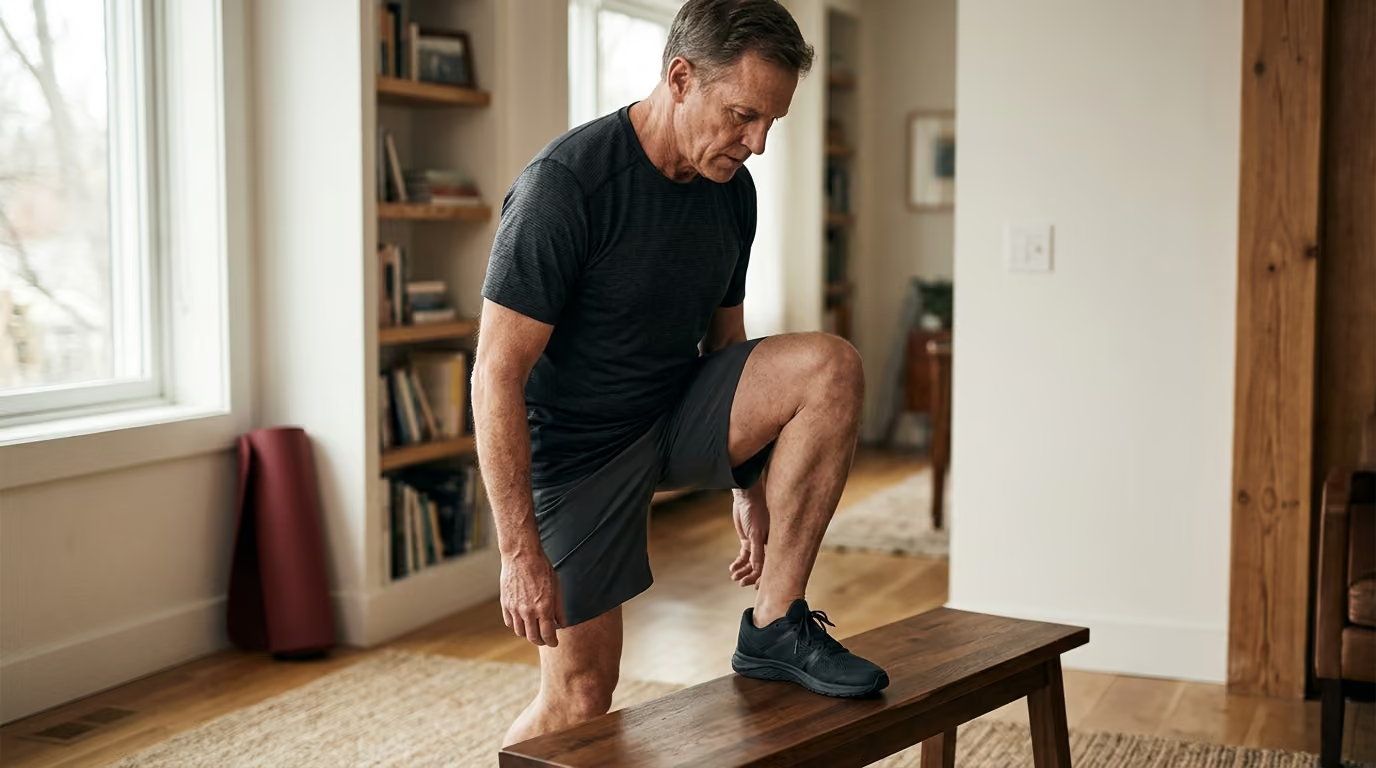
Controlled Step-Ups and Step-Downs
Stand in front of an eight-inch step or sturdy platform. Place your entire right foot on the step and press through your midfoot and heel to stand up smoothly. Lower yourself back down under control over three full seconds, barely tapping the floor with your left foot before rising again. Complete 8 to 10 repetitions per leg to build eccentric quadriceps control.
- ECCENTRIC STEP-DOWN MECHANICS
- Standing on Box
- Hips Back, Knee Flexes Slowly
- v (3-Second Lowering)
- Soft Heel Tap to Ground
- No bouncing or collapsing
Supported Split Squats
Take a long step forward into a staggered stance while holding a sturdy rail or wall for balance. Lower your back knee toward the floor until your front thigh is parallel to the ground. Push through the front foot to return to the top position. Complete 8 to 10 repetitions per side to strengthen your hip extensors and leg stabilizers.
Pillar 3: Muscular Power and Propulsion
Power is the ability to produce force quickly. It is vital for accelerating across a crosswalk or catching your balance during a stumble.
Fast Sit-to-Stand Drills
Sit on a firm chair with your feet shoulder-width apart. Lean slightly forward from your hips and stand up as explosively as you safely can. Pause at the top for one second, then sit down under control at a normal pace. Complete 3 sets of 5 fast repetitions with ample rest between sets.
Trailing-Leg Push-Off Drills
Walk forward along a flat hallway or sidewalk with deliberate intent. As your rear leg finishes its stance phase, actively push the ground away behind you through the ball of your big toe. Feel your rear glute and calf engage to drive your body forward into the next step. Practice this exaggerated push-off for 20 paces, rest, and repeat three times.
Pillar 4: Balance and Sensory Coordination
Dynamic balance drills prepare your nervous system to handle unexpected terrain changes without falling.
Tandem Stance and Tandem Walking
Place your right foot directly in front of your left foot so that your right heel touches your left toes. Hold this position for 20 seconds with your eyes looking straight ahead, then switch feet. Once this feels stable, practice walking forward in a straight line for 15 steps in a heel-to-toe pattern.
Stepping Over Low Obstacles
Place several small items such as rolled towels, yoga blocks, or shoes along a straight walking path. Step over each obstacle with a deliberate high knee lift, focusing on clearing your toes completely. Maintain a tall posture without leaning excessively to the side. Turn around and step back through the course for 4 to 6 passes.
Pillar 5: Structured Aerobic Conditioning
Walking itself builds the cardiorespiratory endurance needed for longer outings. Structure your weekly walks into varied sessions to stimulate different physical adaptations.
Steady Continuous Walks
Walk at a conversational pace for 30 to 50 minutes on level ground. You should be able to speak in complete sentences without gasping for breath. This builds baseline aerobic capacity and connective tissue durability.
Brisk Interval Walks
Warm up with five minutes of easy walking. Alternate between two minutes of fast-paced walking and two minutes of easy recovery walking for five to eight cycles. Finish with a five-minute easy cooldown. These intervals challenge your cadence, stride mechanics, and top-end aerobic power. You can read more about structured routines in our overview of healthy aging practices.
- SAMPLE WEEKLY TRAINING SCHEDULE
- MON: Strength & Power (Calf Raises, Step-Downs, Balance)
- TUE: Easy Aerobic Walk (30-45 mins level ground)
- WED: Mobility & Foot Drills (Ankle/Hip flow Balance)
- THU: Hill Intervals or Tempo Walk (Ascent/Descent work)
- FRI: Lower-Body Strength (Split Squats, Carries, Soleus)
- SAT: Long Varied Terrain Walk (Parks, Trails, Dirt)
- SUN: Active Recovery / Easy Mobility
Master Hills and Variable Terrain
Tackling hills and irregular ground requires specific technique adjustments. Learning how to modify your body position and step mechanics reduces unnecessary joint strain.
Ascend Inclines with Forward Drive
Walking uphill shifts mechanical work toward the rear of your lower limbs. To climb efficiently without burning out your muscles:
- Shorten your step length slightly as the slope steepens to maintain a manageable cadence.
- Hinge forward slightly at the hips to align your torso with the slope, avoiding leaning backward.
- Drive actively through the ball of your trailing foot to use your calf and gluteal muscles together.
- Keep your eyes focused several paces ahead rather than staring straight down at your toes.
- UPHILL VS DOWNHILL POSTURE
- UPHILL MECHANICS
- Slight forward hip hinge
- Shorter step length
- Strong trailing-leg push
- DOWNHILL MECHANICS
- Upright torso over base
- Soft, bent knees
- Short, quiet, high-cadence steps
Descend Slopes with Controlled Braking
Descending places heavy eccentric loads on your quadriceps and knee joints. Use these cues to protect your joints during downhill walking:
- Shorten your stride so your lead foot lands close to your body rather than reaching far ahead.
- Keep a soft bend in your knees throughout each foot strike to absorb impact through muscle instead of bone.
- Land quietly on your midfoot or heel without slapping your shoe onto the ground.
- Increase your step cadence slightly to distribute braking forces across more frequent, smaller steps.
Navigate Uneven Outdoor Ground
Trails, fields, and cobblestones require continuous balance adjustments. Prepare your body for unpredictable surfaces by following these guidelines:
- Scan the trail three to five steps ahead to plan your foot placement before you arrive.
- Widen your stance slightly on loose or slippery ground to provide a broader base of support.
- Allow your arms to swing freely at your sides to assist with quick balance corrections.
- Use trekking poles on steep or rocky hikes to share load between your upper body and legs.
Avoid Common Gait Misconceptions and Pitfalls
Several widespread assumptions about walking mechanics can misdirect your training efforts. Clarifying these points helps you focus on what truly improves movement.
- COMMON GAIT MISCONCEPTIONS
- MYTH: "Walking more is all the training you need."
- FACT: Walking lacks high resistance for power & braking.
- MYTH: "Stretching is the only way to lengthen stride."
- FACT: Stride length relies on ankle push-off & strength.
- MYTH: "Special shoes automatically prevent falls."
- FACT: Footwear cannot replace muscular balance & strength.
Misconception 1: Walking More Is Enough for Walking Capacity
Walking is specific to walking, but flat walking does not provide enough mechanical resistance to build peak strength or power. Over time, walking alone without resistance training can leave your calves and quadriceps underprepared for steep hills or heavy loads. Exercise reviews show that adding structured resistance and balance training produces significant improvements in walking speed and stability. Combine regular walks with targeted strength work for the best results.
Misconception 2: Stretching Is the Only Way to Lengthen Your Stride
Tight hip flexors can restrict movement, but poor stride length is rarely solved by stretching alone. A full stride requires active push-off power from the trailing ankle and stable single-leg support on the stance side. If your calves cannot generate propulsive force, stretching your hips will not restore a brisk pace. Building strength through a full range of motion is far more effective than passive stretching.
Misconception 3: Overstriding Improves Your Walking Speed
Trying to walk faster by reaching your front foot far ahead of your body is a common mistake. Overstriding places your foot far in front of your center of mass, which acts as a brake and increases impact forces through your heel and knee. True walking speed comes from pushing the ground away behind you and increasing your step rate, not from reaching forward. Focus on a powerful push-off rather than a long forward reach.
Misconception 4: Specialized Footwear Solves Balance Problems on Its Own
Supportive shoes with good traction are helpful on rough trails, but footwear alone cannot prevent falls. A systematic review found inadequate evidence linking any specific shoe design to reduced fall rates in everyday life. Thick, overly cushioned shoes can reduce sensory feedback from the ground, making balance corrections slower. Footwear should be comfortable and secure, but it cannot replace strong feet, responsive ankles, and active balance control.
Analyze Common Walking Deficit Patterns
Different individuals experience different mechanical bottlenecks as they age. Identifying your specific movement pattern allows you to apply the most effective training solutions.
- CASE PATTERN & INTERVENTION MATRIX
- Short Stride / Stiff Pace
- Downhill Knee Discomfort
- Uneven Terrain Insecurity
- Uphill Calf Burnout
Pattern 1: Short Stride with Good Aerobic Base
The Presentation: You can walk for an hour without feeling out of breath, but your steps are short and quick. When you try to walk faster with others, your hips feel tight and you struggle to maintain their pace.
The Underlying Issue: Reduced trailing-leg push-off power and limited active hip extension. Your cardiovascular system is strong, but your calves and glutes are not producing enough forward drive.
Training Adjustments:
- Perform straight-knee and bent-knee calf raises with added resistance twice per week.
- Practice trailing-leg push-off drills during your warm-ups.
- Perform supported split squats and step-ups to build hip extensor strength.
- Include short intervals where you focus on pushing the ground away behind you.
Pattern 2: Strong Uphill Ascent with Downhill Knee Discomfort
The Presentation: You climb steep hills easily, but descending makes your knees ache and your thighs shake. You feel unstable on downward slopes and tend to lean back or step down heavily.
The Underlying Issue: Insufficient eccentric quadriceps strength and poor downhill braking mechanics. Your body struggles to absorb the high negative work demands of downhill movement.
Training Adjustments:
- Perform slow, controlled step-downs from an eight-inch box, taking three seconds to lower.
- Add seated leg presses or squats with an emphasis on a slow lowering phase.
- Practice walking down gentle inclines using short, quiet steps with softly bent knees.
- Incorporate trekking poles on longer downhill hikes while building leg strength.
Pattern 3: Confident on Pavement, Insecure on Rough Ground
The Presentation: You walk comfortably on smooth sidewalks or indoor tracks, but you feel unsteady on grass, dirt trails, or rocky paths. You look down constantly and walk very slowly when the ground is uneven.
The Underlying Issue: Reduced dynamic balance, slower sensory integration, and limited foot mobility. Your nervous system is unaccustomed to rapid balance adjustments on unpredictable surfaces.
Training Adjustments:
- Practice single-leg balance and tandem walking on firm ground, then progress to standing on a folded towel.
- Perform low-obstacle stepping drills in multiple directions.
- Incorporate barefoot foot-strengthening exercises, such as picking up small towels with your toes.
- Gradually introduce short walks on smooth grass before progressing to gravel paths and hiking trails.
Pattern 4: Premature Calf Burnout on Gentle Inclines
The Presentation: You feel fine walking on flat ground, but your lower calves burn and tighten after just a few minutes of uphill walking.
The Underlying Issue: Limited local muscular endurance in the soleus and gastrocnemius muscles. Your calves lack the stamina to handle continuous uphill propulsion.
Training Adjustments:
- Perform high-repetition bent-knee calf raises to target the endurance-oriented soleus muscle.
- Incorporate short hill repeats, walking up a moderate slope for 60 seconds and resting before the next repetition.
- Ensure adequate ankle dorsiflexion mobility so your calf muscles are not working from an overly restricted position.
- Progress incline volume gradually rather than tackling steep mountain trails immediately. Additional training ideas appear in our guide to longevity science and functional training.
Recognize Where the Evidence Remains Limited
While exercise science offers clear insights into walking mechanics, several areas of research remain early or mixed. Acknowledging these limitations prevents overconfidence in unproven methods.
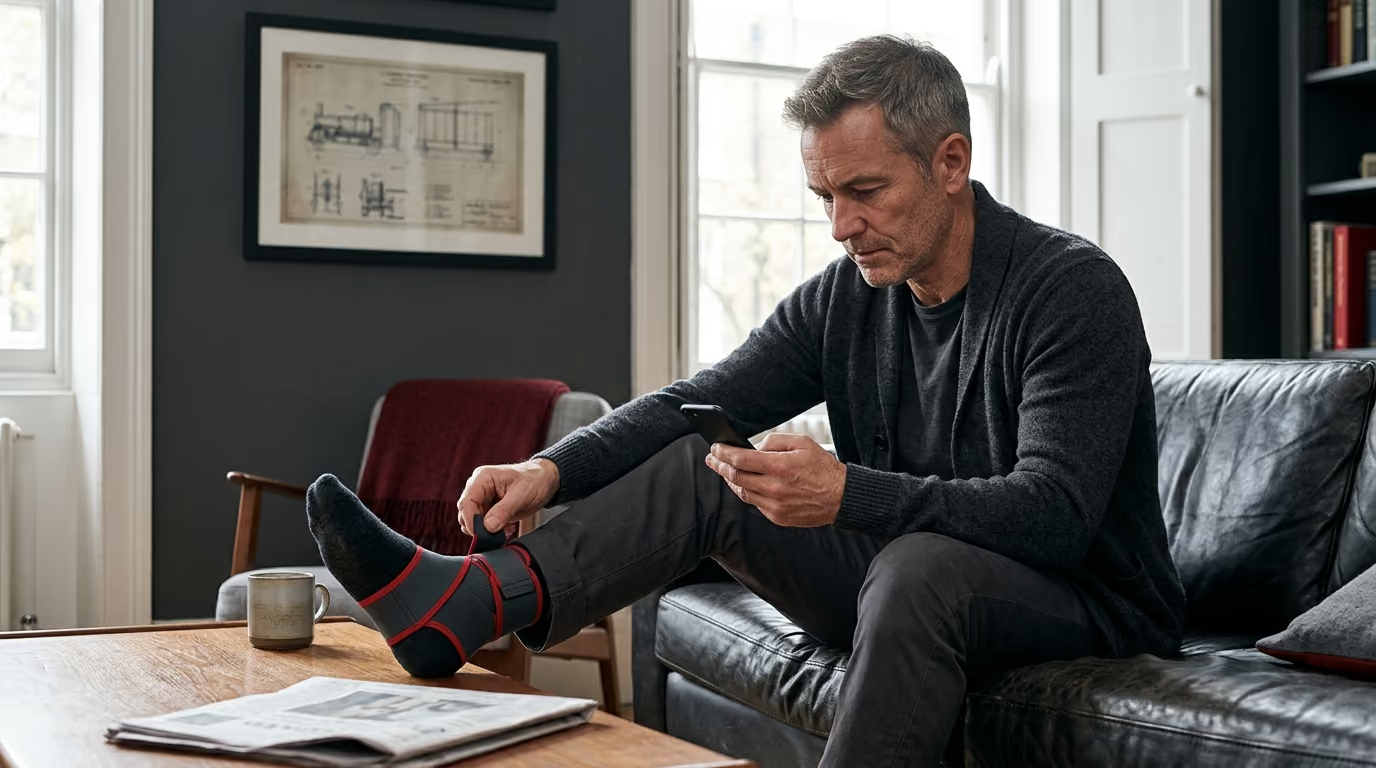
Commercial footwear and orthotic inserts are often marketed with claims of correcting gait and eliminating joint wear. However, high-quality clinical trials showing that specific shoe brands or custom orthotics prevent long-term mobility decline in healthy adults are sparse. Footwear is an individual comfort choice rather than a standalone cure for mechanical deficits.
- CURRENT STATE OF SCIENTIFIC EVIDENCE
- ROBUST EVIDENCE
- Multimodal resistance & balance training improves speed
- Uphill & downhill walking require distinct joint work
- Ankle push-off power declines naturally with age
- LIMITED / MIXED EVIDENCE
- Specific shoe models independently preventing falls
- Universal "perfect" walking posture for all adults
- Isolated stretching restoring dynamic stride length
Laboratory gait assessments use precise motion-capture cameras and force plates on flat, straight runways. While these tests provide valuable mechanical data, they do not fully capture the complexity of real-world walking. Outdoor navigation involves turning, stepping over obstacles, carrying groceries, and managing visual distractions. Real-world capability requires diverse movement practice beyond simple laboratory parameters.
There is no single ideal walking posture that fits every human body. Height, limb proportions, joint structure, and injury history influence how a person walks. Forcing everyone into an identical upright posture can create unnecessary tension and reduce walking efficiency. The goal of training is to build functional adaptability, balance control, and sufficient strength rather than enforcing a rigid cosmetic walking style. You can explore complementary recovery methods in our section on mobility and recovery strategies.
Retain Lifelong Walking Reserve
Preserving your walking ability after 45 is entirely realistic when you treat gait as a complete physical system. True mobility is built by strengthening the calves, knees, and hips, practicing dynamic balance, and challenging your body across varied outdoor terrains.
Key Takeaways
- Walking speed and stride length depend on trainable muscular forces, particularly ankle push-off power and hip extension.
- Downhill walking demands three times more negative mechanical work than flat ground, requiring strong eccentric quadriceps control.
- Overstriding increases joint impact, whereas a powerful trailing-leg push-off drives efficient forward momentum.
- Resistance training and dynamic balance drills improve walking mechanics far more effectively than passive stretching or logging flat steps alone.
- Progressive exposure to inclines, declines, and uneven paths preserves physical reserve and confidence across any terrain.
Consistently training your strength, balance, and mechanical power ensures that walking remains an effortless, dependable capability throughout your life.
Sources
- Advanced age and the mechanics of uphill walking: a joint ...
- Advanced Age Redistributes Positive but Not Negative Leg Joint Work during Walking
- Advanced age affects the individual leg mechanics of level ...
- Advanced age and the mechanics of uphill walking: A joint ...
- Age does not affect the relationship between muscle activation and joint work during incline and decline walking - PubMed
- A systematic review of the effect of foot orthoses and shoe characteristics on balance in healthy older subjects
- How does age affect leg muscle activity/coactivity during uphill ...
- Is knee biomechanics different in uphill walking on different slopes for older adults with total knee replacement?
- Lower limb joint forces during walking on the level and slopes at different inclinations
Stay sharp
Get the word
Join our newsletter for the best writing advice and stories from the field.