You step out of bed, walk down the hallway, and start down the stairs. On the third step, a familiar dull ache pinches the front of your kneecap. It is not an injury from a sudden fall, and it does not stop you from walking. It simply reminds you that your knees feel different than they did twenty years ago.
Many men assume this stiffness is the start of irreversible wear and tear. They cut back on hiking, stop lifting weights, and avoid stairs to protect the joint. Research shows that total rest usually produces the opposite result. Knee health after 45 is a matter of physical capacity, joint control, sensible loading, and tissue tolerance. Building strength in the muscles supporting the leg keeps you active, confident, and capable in daily life.
What the Research Shows About Knee Health and Exercise
Clinical trials and medical guidelines consistently support exercise as a foundational strategy for long-term knee function. A systematic review of clinical guidelines found that every single guideline recommended exercise for managing knee osteoarthritis symptoms. Six of those guidelines made this a strong recommendation. Movement maintains joint fluid circulation, supports cartilage health, and preserves the strength of surrounding muscles.
Quadriceps strength plays a central role in knee mechanics. A 2025 review of nine randomized controlled trials examined quadriceps strengthening in adults with knee osteoarthritis. The researchers found significant reductions in pain and clear improvements in physical function over eight to twelve weeks. The effective programs included straight-leg raises, terminal knee extensions, and combined open-chain and closed-chain movements.
Resistance training does not cure every ache, but it reliably builds physical capability. A systematic review of 21 randomized controlled trials involving 2,345 participants showed that resistance training improved physical function and reduced joint stiffness. Pain outcomes varied across different measurement methods, and quality of life scores showed mixed results. Strength training gives tissues the ability to handle daily work, even when some baseline discomfort remains.
Aerobic exercise provides another layer of support for joint function. A 2025 network meta-analysis found that aerobic training was one of the most beneficial options for improving pain, physical function, walking performance, and quality of life in people with knee osteoarthritis. For front-of-knee discomfort, clinical guidelines highlight the value of combined hip and knee strengthening. Adding hip-focused exercises to knee programs produces better pain reduction and functional improvement than focusing on the knee alone.
- CLINICAL EVIDENCE SUMMARY: EXERCISE FOR KNEE HEALTH
- Systematic Reviews: All reviewed clinical guidelines recommend
- exercise for knee osteoarthritis management.
- Quadriceps Strength: 8 to 12 weeks of targeted training reduces
- pain and improves everyday function in clinical trials.
- Resistance Training: High-quality evidence demonstrates clear
- improvements in joint stiffness and functional capacity.
- Aerobic Exercise: Supported by meta-analyses for walking
- capacity, overall conditioning, and general symptom relief.
- Hip & Knee Integration: Combined training outperforms isolated
- knee exercises for anterior knee pain and stair tolerance.
Why Knee Function Changes After 45
Knee changes in midlife are part of normal biological aging, not a sudden structural failure. Muscle mass and the speed of muscle contraction decline gradually over time. When quadriceps and hamstring strength decreases, the joint absorbs higher peak forces during repetitive tasks like walking down stairs or stepping off curbs.
Tendon and ligament tissues also change their physical properties with age. Tendons become slightly stiffer, and collagen turnover slows down. This shift alters how well the patellar and quadriceps tendons store and release energy during movement. Joints adapt well to exercise, but the recovery window between hard training sessions becomes longer.
Cartilage experiences natural compositional changes over decades of use. Joint cartilage has limited blood supply and relies on dynamic loading to move fluid and nutrients in and out of the tissue. When a person reduces physical activity because of minor discomfort, the cartilage receives less mechanical stimulation. This inactivity leads to stiffness and reduced load tolerance across the entire lower body.
Age-related shifts in hip control and ankle flexibility also influence the knee. The knee sits between the hip and the foot, functioning largely as a hinge. When the hip abductors or the ankle joint lose strength or range of motion, the knee experiences extra rotational stress. Improving strength and mobility across the whole leg distributes daily forces far more evenly.
How Knee Capacity Affects Daily Movement and Training
Knee symptoms rarely happen in isolation from daily habits. A helpful way to view joint health is the balance between capacity, demand, and tissue irritability.
- THE CAPACITY VERSUS DEMAND EQUATION
- CURRENT CAPACITY: Muscle strength, tendon tolerance, joint range
- DAILY DEMAND: Stairs, hills, running, lifting, yard work
- TISSUE IRRITABILITY: How easily symptoms flare and settle
- GOAL: Increase physical capacity so daily demand remains well
- below your symptom threshold.
Capacity is the total amount of mechanical work your tissues and nervous system can tolerate. Demand is the physical load you place on your body through walking, climbing, lifting, or running. Irritability describes how quickly symptoms flare up when overloaded and how long they take to calm down.
When your demand exceeds your current capacity, the joint can become irritated. A man might have enough strength to walk three miles on flat ground without issue. That same man may lack the capacity to descend a steep mountain trail with a weighted pack. His knee pain on the trail does not mean his joint is broken. It simply means the descent exceeded his current quad deceleration capacity.
You can monitor your joint response using a simple three-point check:
- Symptoms during the exercise or activity.
- Symptoms a few hours later that same day.
- Symptoms the next morning upon waking.
Minor discomfort during movement is common and acceptable if it stays mild. If your joint swells, feels hot, or shows elevated stiffness the next morning, the previous day's load was too high. You do not need to quit the exercise entirely. You simply need to adjust the volume, range, or weight to match your current threshold.
Understanding this balance helps you pursue strength and physical performance without fearing routine movement. Building physical capacity protects your independence for decades ahead.
The Knee Strength Hierarchy: Quads, Hamstrings, and Calves
Building durable knees requires progressive strength across three primary muscle groups. Each group manages specific mechanical forces during walking, squatting, and balance tasks.
Quadriceps Capacity
The quadriceps muscle group on the front of the thigh extends the knee and acts as the main brake for your body weight. When you walk down stairs, sit into a low chair, or hike downhill, your quadriceps contract eccentrically to control your descent. Weakness in the quadriceps increases the mechanical stress placed directly on the patellofemoral joint.
Beginners or those managing high irritability can start with simple movements:
- Isometric quadriceps sets against a firm surface.
- Straight-leg raises while lying on your back.
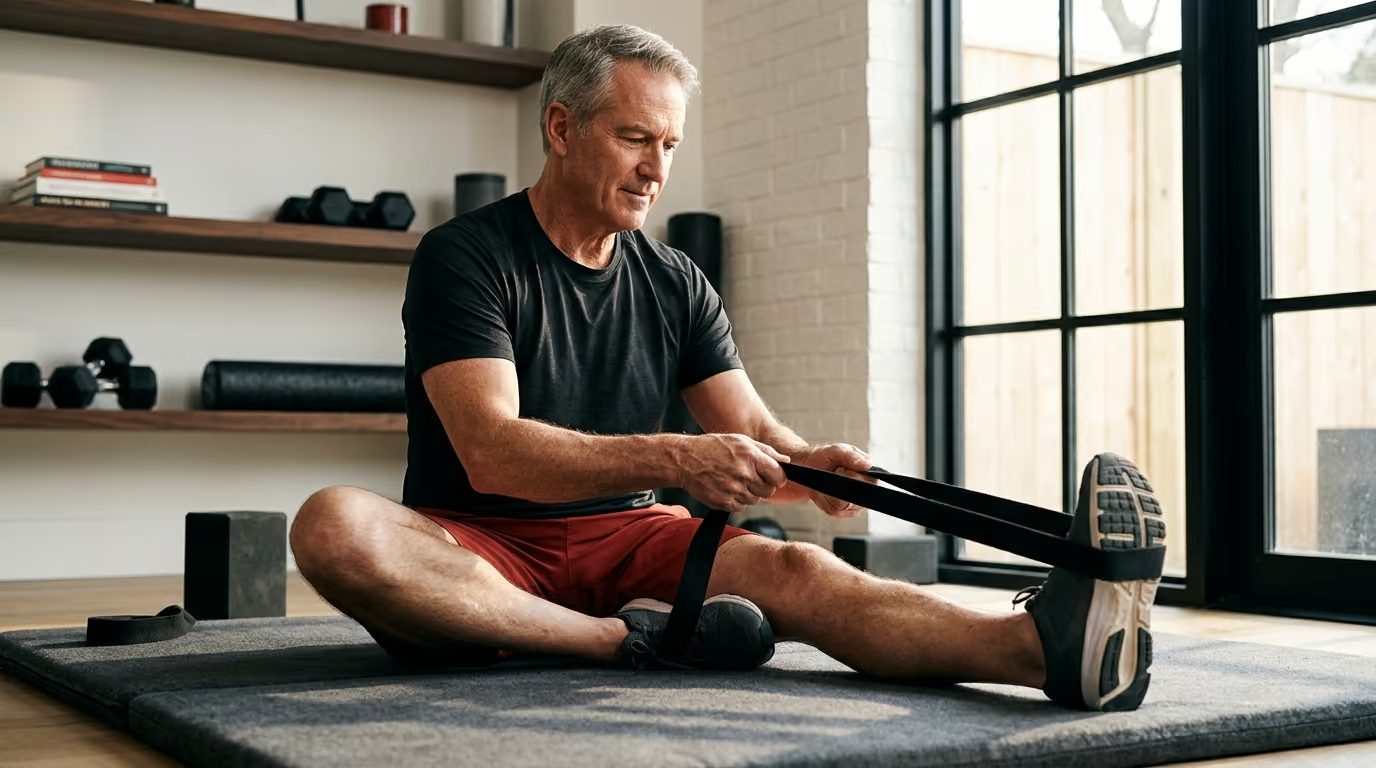
- Terminal knee extensions using a light resistance band.
- Sit-to-stand repetitions from a high chair or bench.
As strength improves, move to loaded multi-joint exercises:
- Leg press machines with controlled lowering phases.
- Squats to a comfortable box height.
- Split squats with rear foot support.
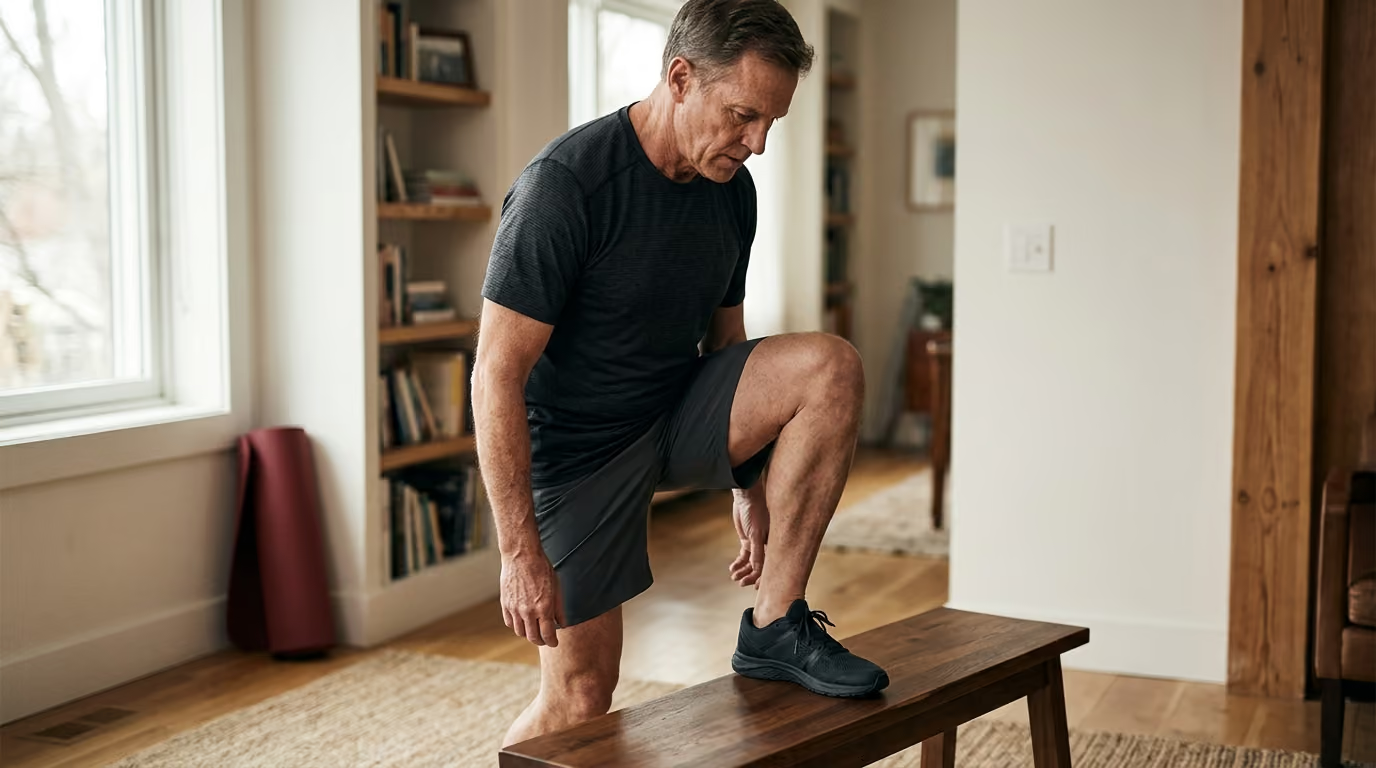
- Step-ups on a low platform.
Advanced training builds high-level force production:
- Goblet squats or barbell front squats.
- Controlled step-downs from an elevated step.
- Single-leg press variations.
- Loaded reverse lunges.
Hamstring and Posterior-Chain Strength
The hamstrings on the back of the thigh bend the knee and extend the hip. They stabilize the shin bone relative to the thigh bone during rapid deceleration and directional changes. Balanced hamstring strength protects the joint during deep bending and athletic movements.
Effective posterior-chain options include:
- Glute bridges with feet flat on the floor.
- Seated or lying machine hamstring curls.
- Romanian deadlifts focusing on a controlled hip hinge.
- Slider leg curls using a smooth floor surface.
Hamstring curls give direct strength to the knee flexors, while hip hinges build the glutes and upper hamstrings together. Choose variations that feel smooth and avoid sharp pinching behind the joint.
Calf and Lower-Leg Strength
The calf complex consists of the gastrocnemius and soleus muscles. These muscles attach behind the knee and insert into the heel via the Achilles tendon. They absorb ground reaction forces during walking, running, and jumping, while stabilizing the ankle and shin.
Calf training should target both major muscles:
- Standing heel raises for the gastrocnemius.
- Seated heel raises with bent knees for the soleus.
- Single-leg bodyweight heel raises on a flat floor.
- Loaded calf raises off the edge of a step for full range.
Strong lower legs improve your push-off power during uphill walking and reduce impact forces transmitted upward to the knee.
The Role of the Hips and Ankles in Knee Mechanics
The knee is caught in the middle between the hip above and the ankle below. Restrictions or weakness in either area directly changes the forces passing through the knee joint.
- THE LOWER-BODY MECHANICAL CHAIN
- HIP: Controls thigh rotation and pelvic level. Weak abductors
- allow the femur to collapse inward during single-leg tasks.
- KNEE: Operates as a hinge joint. It absorbs the rotational and
- lateral stresses created by poor hip or ankle control.
- ANKLE: Manages shin travel. Restricted dorsiflexion forces the
- knee to twist or limits squat depth.
Hip Control and Stability
The gluteus medius, gluteus maximus, and deep hip rotators control the position of your pelvis and thigh bone during single-leg support. When you walk, run, or climb stairs, these muscles keep your pelvis level and prevent your thigh from collapsing inward.
Clinical research shows that combined hip and knee strengthening outperforms knee training alone for reducing pain in active adults. Exercises like side-lying leg lifts, banded lateral walks, hip thrusts, and single-leg deadlifts improve hip support. This control provides a stable foundation for every step you take.
Integrating hip work with mobility and recovery routines helps maintain fluid movement patterns across the entire lower body.
Ankle Dorsiflexion and Foot Mechanics
Ankle dorsiflexion is the ability to move your shin forward over your foot while keeping your heel firmly planted. If your ankle is stiff, your body will compensate during squats, stair descent, and downhill walking.
Biomechanical studies show clear relationships between ankle flexibility and knee mechanics:
- For every 1 degree reduction in clinical dorsiflexion, hip flexion decreases by 1.0 degree and peak knee flexion decreases by 1.2 degrees.
- For every 10 percent reduction in dorsiflexion used during movement, peak knee-abduction angle increases by 3.2 degrees.
When the ankle cannot bend forward, the knee often collapses inward to find extra range. This inward collapse increases mechanical stress on the kneecap.
Practical ways to address ankle restrictions include:
- Knee-to-wall mobility drills.
- Calf stretches with a straight back leg.
- Soleus stretches with a bent back leg.
- Temporary heel elevation during squats using small plates or a wedge.
Using a heel wedge during squats reduces the ankle range required, allowing you to train your quadriceps through a deep, comfortable range of motion.
Practical Programming Frameworks Across Four Stages
Progressing your knee training requires patience and structured loading. Moving systematically through four training stages allows your tissues to adapt safely.
Stage 1: Establishing Tolerable Movement
This stage focuses on calming irritated tissues, building basic muscle activation, and restoring movement confidence. It is suitable for men returning to exercise after a painful flare-up.
- Low-resistance stationary cycling for 5 to 10 minutes.
- Isometric quadriceps contractions: 5 sets of 10-second holds.
- Sit-to-stand from a high bench: 2 to 3 sets of 8 to 10 repetitions.
- Standing double-leg calf raises: 2 sets of 15 repetitions.
- Side-lying hip abduction: 2 sets of 12 repetitions per side.
- Knee-to-wall ankle mobility drills: 2 sets of 8 repetitions per side.
Perform this routine three days per week. Focus on smooth, controlled movement without forcing depth.
Stage 2: Building Foundational Strength
Once basic movements feel comfortable, you can introduce external resistance and multi-joint exercises. This stage builds the muscle mass and tendon stiffness needed for daily tasks.
- Leg press or box squat: 3 sets of 8 to 10 repetitions.
- Romanian deadlifts with light dumbbells: 3 sets of 8 repetitions.
- Low step-ups onto a 4-inch box: 2 sets of 10 repetitions per leg.
- Seated or lying hamstring curls: 2 to 3 sets of 10 to 12 repetitions.
- Banded lateral walks: 2 sets of 12 steps in each direction.
- Moderate walking or cycling for 15 to 25 minutes.
Allow at least 48 hours of recovery between strength sessions to give your connective tissues time to rebuild.
Stage 3: Single-Leg Capacity and Task-Specific Loading
Stage 3 develops single-leg balance, dynamic stability, and tolerance for uneven ground. This phase prepares you for active recreational pursuits like hiking, golf, and travel.
- Dumbbell split squats: 3 sets of 8 repetitions per leg.
- Controlled step-downs from a 4-inch step: 3 sets of 6 to 8 repetitions per leg.
- Single-leg Romanian deadlifts with wall support: 2 sets of 8 repetitions per leg.
- Standing single-leg calf raises: 3 sets of 10 to 12 repetitions per leg.
- Farmer carries with moderate weights: 3 sets of 40-yard walks.
- Brisk walking on varied terrain or gentle hills for 25 to 40 minutes.
Prioritize slow lowering phases during step-downs and split squats to train eccentric quad strength.
Stage 4: Dynamic Activity and Higher Demands
Stage 4 is designed for men who want to return to running, trail hiking, tennis, or heavy lifting. It introduces higher speeds, lateral changes of direction, and greater force absorption.
- Goblet squats with challenging resistance: 3 to 4 sets of 6 to 8 repetitions.
- Loaded reverse lunges: 3 sets of 8 repetitions per leg.
- Fast-paced step-ups with light hand weights: 3 sets of 10 repetitions per leg.
- Lateral skater bounds or side shuffles: 2 to 3 sets of 8 repetitions per side.
- Interval cycling or hill walking with steady incline changes.
Adjust training volume based on how your knees feel the following morning. Consistency matters far more than rapid jumps in weight.
Prioritizing structured strength work forms a key foundation of long-term healthy aging for active men.
Common Misreadings and Outdated Beliefs
Many popular ideas about knee health are based on outdated models of the human body. Correcting these misconceptions helps you train with clarity and confidence.
- POPULAR BELIEFS VERSUS CURRENT EVIDENCE
- MYTH: Scans and X-rays predict exactly how much pain you will
- experience.
- REALITY: Many active, pain-free adults have notable joint changes
- on imaging. Symptoms depend on capacity, load, and inflammation.
- MYTH: Knees must never travel forward past your toes.
- REALITY: Knees naturally pass the toes on stairs and slopes.
- Gradual exposure builds tolerance in that functional range.
- MYTH: Total rest is the safest way to fix an aching knee.
- REALITY: Inactivity weakens muscles and reduces joint nutrition.
- Appropriately dosed loading restores tissue tolerance.
Misreading 1: Scans Show the Entire Problem
Many men believe that an X-ray or MRI tells the whole story about their joint health. High-quality research shows that structural changes visible on scans correlate poorly with pain levels. Many adults over 50 have signs of cartilage thinning, bone spurs, or meniscus wear on scans while experiencing zero knee symptoms.
Clinical guidance from the National Institute for Health and Care Excellence (NICE) advises against routine imaging for typical joint pain. Scans are generally reserved for situations where unusual features suggest an alternative diagnosis. Treating the person, their movement capacity, and their symptoms is far more effective than trying to treat an image on a screen.
Misreading 2: Knees Must Never Pass the Toes
For decades, fitness instructors told people that letting their knees pass their toes during squats was dangerous. In reality, forward knee travel is a normal part of daily life. Your knees move forward when you descend stairs, sit on a low stool, or walk down a ramp.
Avoiding forward knee travel completely leaves your patellar tendon and quadriceps unprepared for real-world demands. If deep bending causes discomfort, temporarily reduce your range of motion or elevate your heels. Gradually reintroduce forward shin travel over time to build resilience across all angles.
Misreading 3: Total Rest Heals Joint Pain
When a joint aches, resting until all discomfort vanishes seems logical. Extended rest causes surrounding muscles to lose strength, reduces bone density, and limits joint fluid circulation. When you finally return to your normal routine, your knee has even less capacity than before.
Targeted, well-dosed exercise stimulates cartilage metabolism, strengthens tendon insertions, and improves neuromuscular control. The goal is to modify the volume, range, or load rather than stopping activity altogether.
Developing lasting capability across your lower body requires dedicated attention to joint mobility and functional movement.
Where the Evidence Remains Limited or Mixed
While exercise is strongly supported for knee health, certain popular practices rest on weaker scientific evidence. Understanding these limitations prevents wasted time and money.
Isolated Movement Versus General Strength
Fitness trends often promote complex, highly specific balance drills claiming to activate forgotten stabilizer muscles. Current research shows that standard multi-joint strengthening exercises produce comparable or superior functional outcomes. Complex stability drills can be engaging, but basic squats, leg presses, step-ups, and hinges deliver the primary physiological adaptations.
Permanent Orthotics and Foot Corrections
Prefabricated shoe inserts can offer temporary symptom relief for individuals with pronounced foot pronation and front-of-knee pain. Clinical guidelines suggest using orthoses as a short-term aid for up to six weeks alongside an active strengthening program. Evidence does not support custom orthotics as a standalone, permanent cure for knee pain. Active strength training remains the primary driver of long-term improvement.
Passive Therapies and Cartilage Regeneration Claims
Commercial products frequently claim to rebuild worn joint cartilage through supplements, massage devices, or special injections. High-quality systematic reviews show limited, mixed, or short-lived benefits from passive modalities like ultrasound, laser therapy, and over-the-counter joint supplements. No non-surgical intervention has been proven to regenerate lost joint cartilage in humans. Focus your time and effort on progressive exercise, sensible load management, and overall conditioning.
Red Flags and When to Seek Medical Evaluation
Most knee discomfort responds well to progressive exercise and modified activity. Certain symptoms indicate the need for prompt medical evaluation rather than self-guided exercise.
- SYMPTOMS REQUIRING PROMPT MEDICAL EVALUATION
- Hot, red, severely swollen joint accompanied by a fever.
- Sudden inability to bear any weight following a direct trauma.
- True mechanical locking where the joint physically cannot
- straighten out.
- Rapid, tense swelling developing within two hours of an injury.
- New, unexplained swelling or tenderness in the calf muscle.
- Constant, severe pain that disrupts sleep night after night.
Seek assessment from a qualified healthcare professional if you experience:
- A hot, red, and swollen knee, especially if you feel feverish or generally unwell.
- An acute traumatic injury followed by an immediate inability to put weight on the leg.
- True joint locking, where the knee physically catches and cannot be fully straightened.
- Rapid joint swelling developing within two hours of a sudden twist or impact.
- Unexplained calf swelling, redness, or tenderness, which requires screening for vascular concerns.
- Severe pain that persists unchanged at night while resting in bed.
- A history of cancer accompanied by new, unprovoked joint or bone pain.
These red flags fall outside ordinary exercise management and warrant a thorough medical assessment.
Key Takeaways for Knee Health After 45
Durable knee health after 45 is built through progressive quadriceps and hamstring strength, steady hip control, adequate ankle mobility, and sensible daily loading. Exercise does not promise to eliminate every joint click or minor ache, but it reliably restores physical capacity and keeps you moving with confidence.
When to Revisit This Resource
Review this guide whenever you plan a significant increase in training volume, notice lingering joint stiffness after outdoor activities, or need to adjust your exercise selection during a temporary flare-up.
Building capable, resilient knees takes consistent work, but the payoff is an active, unrestricted life on your own terms.
Sources
- Knee Pain in Adults
- Ankle Dorsiflexion Affects Hip and Knee Biomechanics ...
- Ankle Dorsiflexion Affects Hip and Knee Biomechanics During ...
- Knee Pain and Management in Adults - North & East
- (PDF) Summary Guidance for Management of Knee Pain or
- Effects of foot core training combined with hip and knee ... - PubMed
- Knee Pain - Prescribing, Policies and Pathways
Stay sharp
Get the word
Join our newsletter for the best writing advice and stories from the field.