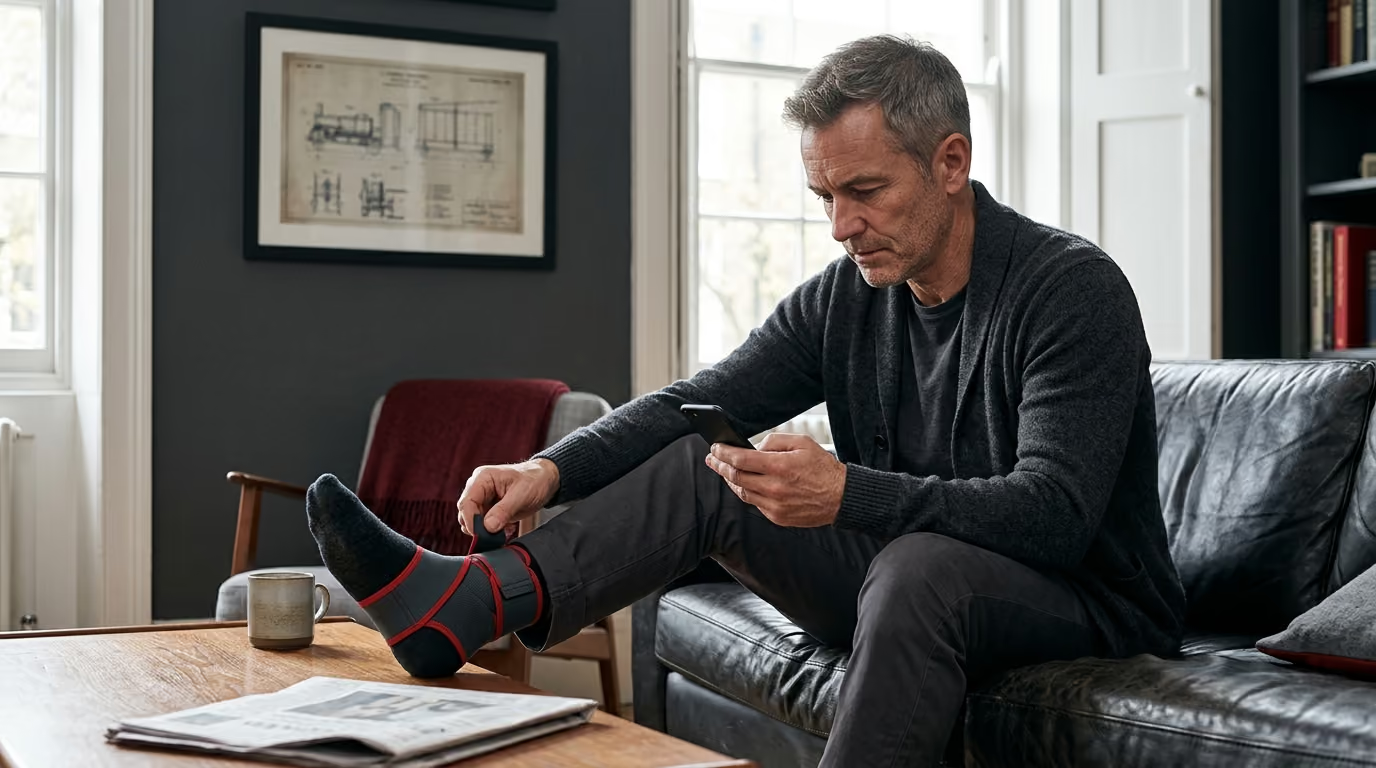
When joint pain appears after 45, the most common instinct is to stop moving and protect the joint from friction. Medical research shows that prolonged rest is often the worst response for joint cartilage and surrounding tissue. Joints require movement to circulate fluid, distribute nutrients, and maintain the muscular support that absorbs daily impact.
Managing osteoarthritis through midlife and later life does not require reckless pushing through sharp pain. It requires a structured, adaptable approach to physical loading. This comprehensive guide examines what current evidence says about training with osteoarthritis, why joint symptoms change during midlife, and how to build a routine that preserves capability for decades.
- Joint Stress
- Is Load Managed?
- YES
- Muscular Support Overload & Flare
- Fluid Circulation Loss of Mobility
- Joint Protection Tissue Irritation
Examine What Clinical Research Confirms About Joint Loading
Clinical guidelines across the world have shifted their view on osteoarthritis. The condition was once viewed as an inevitable mechanical failure where cartilage simply wore away like the tread on a tire. Modern research views osteoarthritis as a whole-joint process involving cartilage, bone, synovial fluid, and surrounding muscles.
Major organizations such as the National Institute for Health and Care Excellence (NICE) identify therapeutic exercise as a primary treatment for osteoarthritis. NICE guidelines state that tailored exercise should be offered to anyone with joint symptoms, regardless of age or structural severity. Therapeutic exercise includes local muscle strengthening and general aerobic conditioning.
The Centers for Disease Control and Prevention (CDC) report that regular physical activity reduces pain and improves physical function in adults with arthritis. Exercise also improves mood, sleep quality, and general cardiovascular health. Physical movement does not guarantee a total reversal of existing structural changes. It builds the muscular support and movement tolerance needed to live without severe functional restrictions.
- THE ARTHRITIS ADAPTATION CYCLE
- Targeted Loading Muscle Support Less Strain
- Better Function
Research draws a clear line between structural changes and symptomatic limitations. Imaging tests often reveal cartilage thinning or bone spurs in people who experience zero daily pain. Other individuals report significant stiffness and discomfort despite mild findings on an X-ray. NICE emphasizes that management decisions must follow functional capacity and symptoms rather than imaging alone.
Evidence shows that joint cartilage thrives on cyclical, moderate loading. Cartilage possesses no direct blood supply. It relies on the sponge-like compression and release of movement to circulate synovial fluid and exchange metabolic waste. Complete inactivity starves the joint of this natural nourishment. Controlled loading through strength and aerobic work supports joint health while keeping the nervous system calibrated to movement.
Epidemiological data shows that osteoarthritis affects hundreds of millions of adults worldwide. Global Burden of Disease studies estimate that nearly 600 million people lived with the condition in 2020. Knee osteoarthritis is especially common, affecting over 20 percent of adults aged 40 and older. Because millions of these individuals are working, traveling, and staying physically active, exercise programs must support real-world movement rather than gentle resting.
Understand How Joint Mechanics and Tissue Capacity Change After 45
Joints change over time through normal physiological shifts. These shifts do not mean the body is deteriorating or fragile. Understanding these mechanisms helps men make smarter training choices without fearing normal biological adaptations.
Cartilage water content and proteoglycan density shift as decades pass. The collagen matrix inside joint capsules becomes less pliable. At the same time, adults often lose muscle mass and strength when physical demands decrease. This loss of muscle reduces the shock-absorbing capacity around the hips, knees, and spine.
- FACTORS IN MIDLIFE JOINT CHANGES
- • Natural shifts in collagen matrix pliability
- • Gradual reductions in surrounding muscle mass
- • Historical micro-trauma from sports or work
- • Metabolic changes influencing systemic recovery
Prior injuries from younger years also shape joint mechanics later in life. An old meniscus trim, an ankle sprain, or a shoulder dislocation changes how forces distribute across a joint. Decades of asymmetric movement can create localized stress points on bone and cartilage surfaces.
Metabolic health influences joint tissues as well. Low-grade systemic inflammation can make joint linings more sensitive to routine mechanical stress. Hormonal changes in midlife also affect tissue repair rates, tendon stiffness, and recovery times between hard workouts.
None of these factors mean that physical decline is unavoidable. They simply mean that tissue tolerance changes. The gap between what a joint can tolerate and the physical demands placed on it determines whether symptoms occur. By applying intelligent loading, men can increase their physical capacity and maintain excellent function throughout their 50s, 60s, and beyond. Exploring structured healthy aging principles provides context on how consistent movement counteracts age-related physical declines.
Translate Clinical Findings Into Real-World Movement and Daily Energy
Osteoarthritis affects real-world capability before it causes severe structural loss. A man might notice hesitation when stepping off a curb, rising from a low car seat, or carrying heavy gear down stairs. These subtle changes often lead to compensatory movement habits that make the problem worse over time.
When joint pain appears, the nervous system tries to protect the area by tightening surrounding muscles and altering gait patterns. A man with knee pain might shift his weight away from the affected leg. This temporary fix overloads the opposite hip, lower back, and ankle. Over months, this protective guarding decreases usable range of motion and drains daily energy.
- THE COMPENSATORY OVERLOAD PATHWAY
- Joint Discomfort Guarded Gait Muscle Tension
- Excess Fatigue
Morning stiffness is another classic symptom. People often describe feeling like their joints need oiling before they can move freely. This sensation occurs because synovial fluid thickens during overnight rest and tissues settle into fixed positions. A short routine of light, rhythmic movement clears this stiffness far faster than sitting still.
Maintaining physical capacity directly protects a man's independence and lifestyle. The ability to hike, play golf, work around the house, and travel without hesitation requires functional strength. Treating osteoarthritis as a movement challenge rather than a disability preserves physical freedom and long-term vitality.
Fatigue also plays a role in joint symptoms. When muscles tire, their ability to stabilize a joint drops. An activity that feels comfortable during the first ten minutes can stress the joint during the final ten minutes if muscular endurance is low. Building aerobic stamina and muscular endurance creates a protective buffer against daily joint strain.
Build a Balanced Routine Around Strength, Aerobic Work, and Usable Range
A comprehensive joint-friendly training program combines multiple physical qualities. Strength training builds the muscular framework around the joint. Aerobic conditioning improves stamina and tissue health. Mobility work preserves usable joint range, and balance training restores movement confidence.
- FOUR PILLARS OF JOINT CONDITIONING
- 1. Resistance Training (Muscular shock absorption)
- 2. Low-Impact Aerobic Work (Circulation and stamina)
- 3. Targeted Mobility Drills (Usable joint angles)
- 4. Balance and Proprioception (Movement stability)
Prioritize Resistance Training
Strength training forms the foundation of joint management. Clinical practice guidelines suggest working within ranges of two to four sets of 8 to 15 repetitions. Training loads between 60 and 80 percent of one-repetition maximum work well for experienced lifters. Beginners or those returning from a flare should start between 50 and 60 percent.
Resistance exercises do not require heavy barbells or complicated machines. Effective options include:
- Sit-to-stand repetitions from a chair or bench.
- Supported split squats with hand assistance.
- Leg presses with controlled tempos.
- Hip thrusts and glute bridges.
- Standing calf raises on flat ground.
- Seated rows and chest-supported dumbbell pulls.
Focus on controlled tempos. Lower the weight slowly over three seconds, pause briefly, and return with control. This tempo builds muscular tension without placing abrupt impact forces on joint surfaces. You can discover more exercise setups in our guides on progressive strength training for men.
- CONTROLLED REPETITION TEMPO
- 3 Seconds Lowering 1 Second Pause
- 1 Second Lift
Integrate Low-Impact Aerobic Conditioning
Aerobic exercise supplies oxygen and nutrients to working muscles and stimulates joint lubrication. Public health guidelines from the CDC recommend 150 minutes of moderate-intensity aerobic activity per week. Adults with osteoarthritis can break this total into smaller, manageable chunks throughout the day.
Evidence shows that accumulating as little as 45 minutes of moderate aerobic activity per week provides clear functional benefits for lower-limb osteoarthritis. Choose low-impact modalities that challenge the heart and lungs without irritating sensitive joints:
- Upright or recumbent stationary cycling.
- Incline treadmill walking at modest speeds.
- Outdoor walking on flat, natural turf or smooth paths.
- Elliptical training with smooth pedal transitions.
- Rowing machines with moderate resistance.
Pacing is critical for aerobic work. If a 30-minute walk triggers knee swelling, break the workout into two 15-minute walks or three 10-minute sessions spread across the day. Total volume matters more than doing everything in one continuous effort.
Maintain Usable Range of Motion
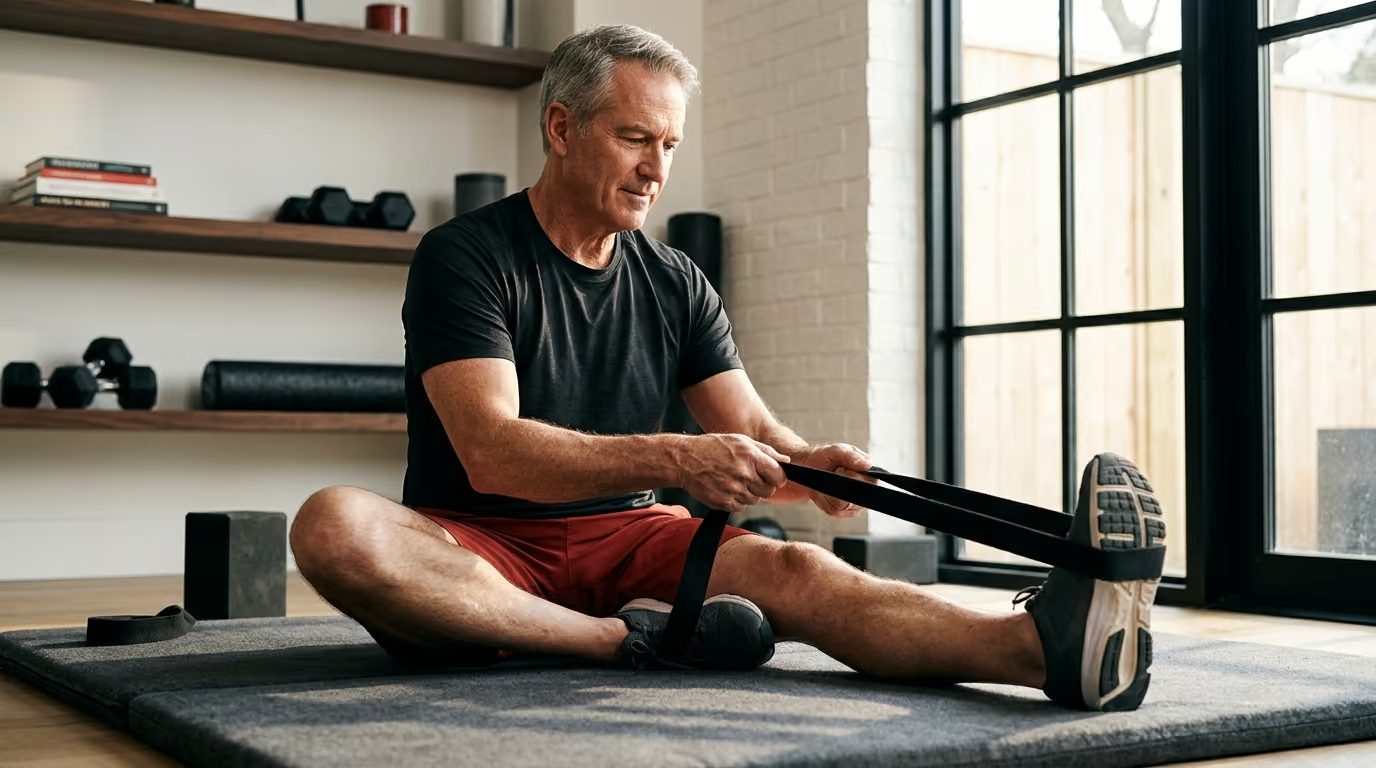
Mobility work for osteoarthritis must focus on usable control rather than passive, aggressive stretching. Forcing a stiff joint into deep end-range positions can irritate inflamed capsules and trigger protective muscle spasms.
Effective mobility drills move the joint through its comfortable range with active muscular control:
- Heel slides on a smooth surface for knee flexion and extension.
- Standing hip circles and leg swings within a pain-free arc.
- Ankle dorsiflexion rocks against a wall.
- Cat-cow movements and thoracic spine rotations for the back.
- Shoulder blade retractions and arm circles.
Perform mobility drills daily, especially during morning stiffness or before strength sessions. Move slowly, breathe steadily, and avoid bouncing or forcing the joint into sharp pinches. For targeted mobility routines, browse our dedicated mobility and joint health resources.
- ACTIVE MOBILITY EXECUTION
- Smooth Entry Controlled Hold Slow Return
- (Never force into sharp, pinching sensations)
Develop Balance and Coordination
Joint pain often impairs proprioception, which is the body's internal sense of joint position. When position awareness declines, the risk of missteps, joint tweaks, and falls increases.
Balance training restores communication between the nervous system and stabilizing muscles. Safe balance exercises include:
- Single-leg standing near a wall or sturdy counter.
- Tandem standing with one foot directly in front of the other.
- Controlled weight shifts side to side and front to back.
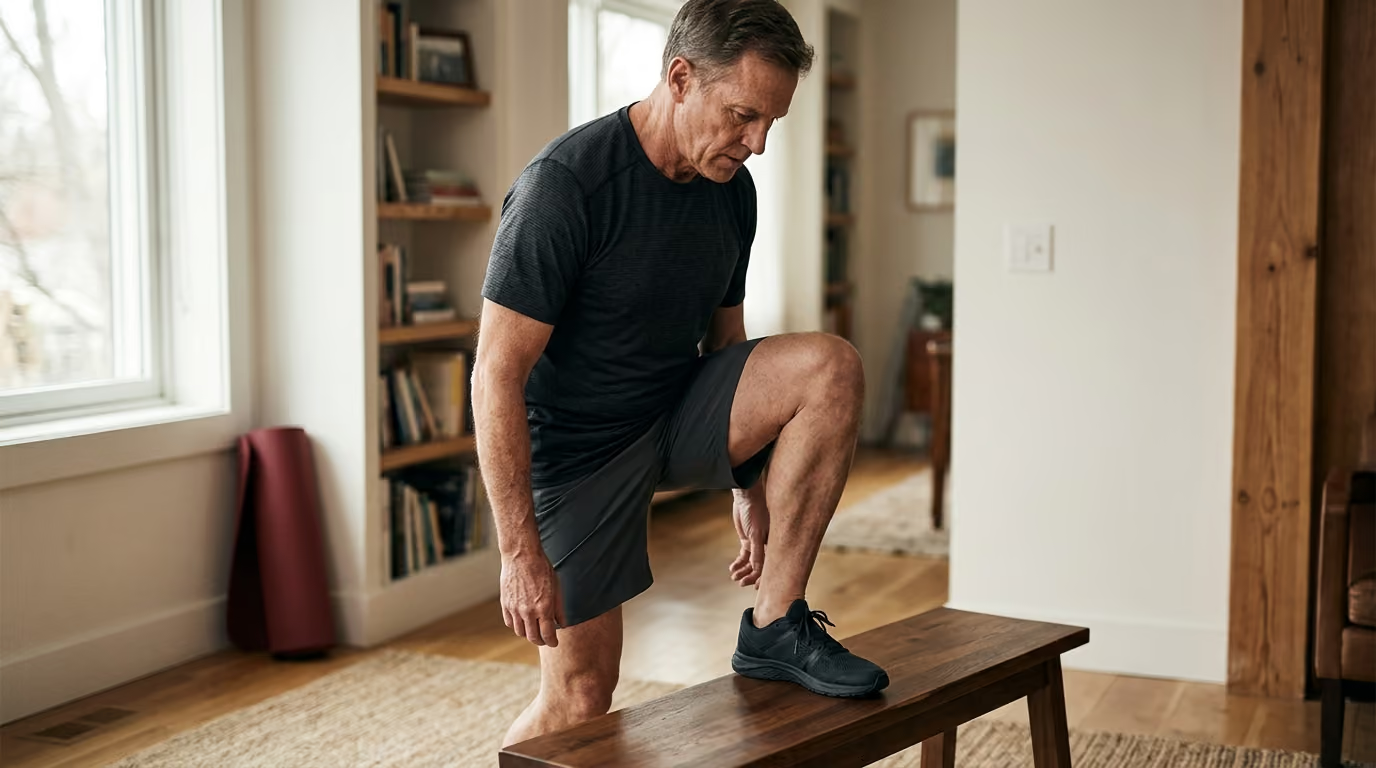
- Slow step-ups onto a low, stable platform.
Perform balance drills while standing barefoot or in flat, stable shoes. Keep a hand near a secure surface so you can catch yourself instantly if balance wavers.
Use Aquatic Exercise as an Active Bridge
Water exercise provides a unique environment for painful joints. The buoyancy of water reduces gravitational load on hips, knees, and ankles while providing gentle, multi-directional resistance.
Meta-analyses show that aquatic exercise programs lasting at least six weeks improve lower-limb strength and reduce pain in people with osteoarthritis. Water exercise works well for:
- People experiencing an acute symptom flare.
- Individuals with severe joint sensitivity who struggle with land walking.
- Those returning to physical activity after years of deconditioning.
Treat aquatic exercise as a bridge toward land-based strength rather than a permanent replacement. Land loading remains necessary to maintain bone density and prepare the body for real-world demands.
- THE REHABILITATION BRIDGE
- Aquatic Training Supported Land Full Load
- (Low Gravitational (Graded Weight (Standard
- Forces) Bearing) Training)
Regulate Training Load Using the Traffic-Light Symptom Model
Managing osteoarthritis requires learning how to interpret joint sensations. Pain is information about current tissue tolerance, not an automatic warning of structural harm. Using a structured monitoring system prevents both reckless overtraining and unnecessary fear.
- TRAFFIC-LIGHT SYMPTOM SYSTEM
- GREEN
- AMBER
- RED
The Traffic-Light System
Categorize sensations during and after workouts into three distinct zones:
Green Light: Safe to Proceed
- Mild, familiar muscular or joint aching during exercise.
- Discomfort stays stable and does not rise during the workout.
- Normal daily tasks remain comfortable after the session.
- Symptoms return to baseline within a few hours or after sleep.
Amber Light: Caution and Modification
- Joint pain increases noticeably during training.
- Morning stiffness or joint aching feels worse the next day.
- Mild swelling or a temporary limp appears after activity.
- Fatigue makes normal daily movement difficult.
When amber symptoms appear, modify the workout instead of quitting entirely. Reduce resistance, decrease repetitions, shorten workout duration, or limit the range of motion.
Red Light: Stop and Seek Assessment
- Sudden, sharp, or severe pain during a movement.
- Major joint swelling, heat, or skin redness.
- Inability to bear weight on the limb.
- A joint that locks, catches mechanically, or gives way.
- Pain accompanied by fever, chills, or sudden numbness.
Red light symptoms require professional medical evaluation. Do not attempt to train through these warning signs.
- THE 24-HOUR RESPONSE RULE
- Workout Completed Monitor Next Morning
- Symptoms at Baseline Keep Plan
- Symptoms Elevated Reduce 1 Variable
Apply the 24-Hour Response Principle
The true test of an exercise session occurs over the following 24 hours. Compare your morning stiffness, swelling, and comfort to your normal baseline. If your joint feels significantly worse the next morning, the previous day's load exceeded current capacity.
Adjust your plan by changing only one variable at a time:
- Reduce walking time from 30 minutes to 20 minutes.
- Lower the resistance on a leg press while keeping sets the same.
- Raise the box height on a squat to shorten the knee angle.
- Switch one walking session to a stationary bike ride.
- Add an extra rest day between resistance workouts.
Changing one variable at a time shows you exactly what triggered the symptom increase.
Adapt Specific Movements for Knees, Hips, and Hands
Different joints face unique mechanical demands. Customizing exercises for specific areas keeps training effective and comfortable.
- JOINT-SPECIFIC STRATEGIES
- • Knees: Manage flexion depth and quad mechanics
- • Hips: Target glute activation and pelvic stability
- • Hands: Modify grip surfaces and use strap support
Knee Modifications
The knee functions primarily as a hinge that handles significant compressive forces during deep bending and stair climbing.
- Elevate the surface: Perform squats to a chair or bench set at a comfortable height. Lower the bench height gradually as strength and tolerance improve.
- Adjust foot position: Turning the toes out 10 to 15 degrees often clears space inside the joint capsule and reduces kneecap pressure.
- Use backward movement: Backward walking on a treadmill with the motor turned off provides excellent quadriceps loading with low joint shear.
- Step-up adjustments: Start with low steps measuring two to four inches. Focus on pushing through the heel rather than launching off the back toe.
- KNEE SQUAT PROGRESSION
- High Bench Squat Low Bench Squat Free Squat
- (Minimal Flexion) (Moderate Depth) (Full ROM)
Hip Modifications
The hip is a deep ball-and-socket joint that relies heavily on pelvic control and gluteal strength.
- Limit deep flexion: Avoid deep lunges or low squats if they pinch the front of the hip. Substitute Romanian deadlifts with soft knees.
- Strengthen hip abductors: Use side-lying leg raises, banded lateral walks, or cable kickbacks to build the gluteus medius.
- Adjust seat height: Set stationary bike saddles high enough so the hip does not close past a 90-degree angle at the top of the pedal stroke.
- Focus on extension: Glute bridges and hip thrusts strengthen the posterior chain without forcing deep hip flexion.
Hand and Wrist Modifications
Hand osteoarthritis can make gripping barbells, dumbbells, and cable attachments painful.
- Thicken the grip: Wrap foam, rubber grips, or towels around handles to reduce the required finger flexion force.
- Use lifting straps: Use wrist straps or hooks for pulling exercises like rows and deadlifts so back muscles work without straining finger joints.
- Choose open-palm presses: Perform push-ups on parallettes, push-up bars, or open palms against a wall to keep the wrist neutral.
- Warm up with heat: Soak hands in warm water or use gentle tendon-gliding exercises before gripping weights.
- HAND GRIP ADAPTATIONS
- Thin Metal Bars (High Stress) Thick Foam Handles
- Direct Finger Hold (Strained) Wrist Hook Support
Illustrative Models of Movement Adaptation
Reviewing how different people adapt their training demonstrates these principles in practice.
Model 1: Rebuilding Walking Tolerance with Knee Symptoms
A 58-year-old man experiences knee discomfort after walking for 15 minutes and struggles with stairs. Rather than stopping daily walks, he splits his routine into two eight-minute walks on flat surfaces. He introduces sit-to-stand exercises from a high bench, standing calf raises, and seated leg extensions with light resistance. As his quad strength and tissue tolerance improve over eight weeks, he lowers the bench height and extends his walking bouts.
- MODEL 1: WALKING REHABILITATION
- Single 15-Min Walk Two 8-Min Walks Quad Work
- (Triggered Pain) (Well Tolerated & Progressive)
Model 2: Restoring Confidence in Hip Movement
A 64-year-old man avoids bending his hip because he worries that deep movements will damage the cartilage. His program begins with supported chair squats, stationary cycling with an elevated seat, and standing cable hip extensions. Learning to hinge at the hips without sharp pinching restores his movement confidence. Over several months, he progresses to independent bodyweight squats and outdoor hiking.
Model 3: Navigating a Flare After Strenuous Activity
A 49-year-old active man develops knee swelling and stiffness after an aggressive mountain hike. Instead of resting in bed for a week, he shifts to stationary cycling with low resistance and performs upper-body workouts. He performs gentle range-of-motion heel slides daily. Once the swelling settles after four days, he resumes flat walking and gradually reintroduces incline terrain over the following month.
- MODEL 3: FLARE-UP MANAGEMENT
- Mountain Hike Flare Stationary Bike Heel Slides
- (Swelling & Pain) (Maintains Blood Flow/Restores)
To learn more about joint mechanics, read our guides on recovery and movement strategies.
Challenge Outdated Assumptions About Cartilage and Exercise
Many widespread beliefs about joint health contradict modern sports science and clinical evidence. Unpacking these misconceptions helps men train with confidence.
- COMMON MISCONCEPTIONS VS FACTS
- "Cartilage wears out like rubber"
- Cartilage responds positively to cyclical load.
- "Pain always signals joint damage"
- Pain reflects sensitivity and current tolerance.
- "You must achieve 10,000 steps daily"
- Even 45 minutes of weekly activity helps joints.
The "Wear and Tear" Myth
Describing osteoarthritis simply as "wear and tear" suggests that human joints are passive mechanical parts that degrade with use. Living tissue adapts continuously to stress. Research confirms that moderate, progressive loading improves muscle function, supports joint metabolism, and reduces pain sensitivity. Joints do not wear out from sensible exercise; they stiffen and weaken from disuse.
The Belief That Running or Walking Accelerates Damage
Many active adults worry that accumulating steps will ruin their knees. Large epidemiological reviews cited by the CDC show that walking up to 10,000 steps per day does not accelerate the progression of knee osteoarthritis. Sensible, well-paced walking strengthens lower-body muscles and supports cartilage nutrition.
- STEP VOLUME AND JOINT SAFETY
- 0 Steps 5,000 Steps 10,000 Steps Daily
- Low Fluid
- Good Flow
- Safe Loading Zone
The Idea That Pain Demands Total Inactivity
Experiencing mild joint discomfort does not mean you must halt all exercise. NICE guidelines explicitly note that starting an exercise program may cause temporary discomfort. Modifying workout variables allows you to train around sensitive areas while tissues adapt. Total rest leads to muscle atrophy, joint stiffness, and increased pain sensitivity over time.
The Assumption That Only Low-Impact Work Counts
Low-impact exercise is a helpful tool, but it is not the only option. Controlled resistance training with moderate loads builds bone density and muscular strength in ways that swimming and cycling cannot match. A balanced program includes both low-impact conditioning and progressive resistance training.
- BALANCED EXERCISE SPECTRUM
- Low-Impact (Biking/Swimming) Aerobic Capacity
- Resistance (Weights/Bands) Structural Strength
The Belief That Stretching Alone Fixes Osteoarthritis
Stretching tight muscles can provide temporary symptom relief, but it does not address the underlying need for joint stability. Passive stretching cannot replace the joint-protecting strength gained from resistance exercises. Flexibility must be paired with muscular control to improve real-world function.
Manage Body Composition and Joint Load Thoughtfully
Body weight influences joint mechanics, particularly in weight-bearing joints like the hips and knees. Biomechanical studies show that every pound of body weight transmits multiple pounds of compressive force across the knee joint during walking.
NICE guidelines emphasize that modest weight reduction can improve physical function and reduce joint pain in adults carrying excess weight. A loss of 10 percent of body weight provides greater symptom relief than a 5 percent reduction. These improvements occur because weight loss reduces both physical joint loading and systemic inflammatory markers.
- WEIGHT AND JOINT MECHANICS
- Excess Mass High Compressive Load Inflammation
- Weight Loss Reduced Joint Force Lower Pain
Weight management should never become a barrier to starting exercise. No one needs to achieve a specific weight before beginning a strength or walking program. Exercise delivers cardiovascular, metabolic, and mental health benefits regardless of scale weight.
Approach body composition through a supportive, practical lens:
- Focus on progressive strength training to preserve muscle mass.
- Prioritize whole foods, adequate protein, and consistent nutrition.
- Avoid crash diets that deplete energy and compromise tissue recovery.
- Use low-impact exercise to maintain daily calorie expenditure when joints are sensitive.
Combining sensible nutrition with regular movement creates a sustainable path toward joint comfort and metabolic health.
Recognize Where Clinical Evidence Remains Incomplete or Mixed
Scientific honesty requires acknowledging the boundaries of current research. While exercise is proven to relieve symptoms, several common claims lack strong clinical backing.
- CURRENT LIMITS OF CLINICAL EVIDENCE
- • Exercise reduces pain; it does not regrow cartilage
- • Supplements show mixed, weak clinical results
- • Advanced imaging does not match daily pain levels
- • Optimal training volume varies by individual
Cartilage Regrowth vs. Symptom Management
Exercise reliably reduces pain, strengthens supporting muscles, and restores functional capacity. It does not consistently regrow lost cartilage or reverse advanced structural changes seen on imaging. Framing exercise as a functional management strategy rather than a structural cure sets realistic expectations.
Glucosamine, Chondroitin, and Collagen Supplements
Popular joint supplements frequently promise cartilage regeneration. Large systematic reviews and clinical guidelines generally show weak or conflicting evidence for their effectiveness. While these supplements are rarely harmful, they cannot replace progressive strength training and load management.
Imaging Accuracy for Exercise Decisions
Magnetic resonance imaging (MRI) and X-rays provide detailed views of joint structure. However, research consistently shows a weak correlation between structural findings and day-to-day pain. Relying solely on imaging to dictate what a person can or cannot do leads to unnecessary restrictions. Clinical decisions should follow symptoms and physical function.
- IMAGING VS FUNCTIONAL REALITY
- X-Ray Appearance X Real-World Function
- (Structural Image) (Actual Movement Ability)
Optimal Exercise Dosing Parameters
Researchers agree that strength and aerobic training work, but the exact weekly dose remains open to debate. No single set, repetition, or heart rate prescription fits every individual with osteoarthritis. Training volume must be individualized based on joint response, recovery capacity, and overall health.
Execute a Structured Four-Week Movement Strategy
This sample plan demonstrates how to integrate strength, aerobic conditioning, mobility, and balance into a sustainable weekly routine. Adjust all sets, repetitions, and walking durations to match your current capacity.
- WEEKLY TRAINING SPLIT BLUEPRINT
- Mon / Thu Strength Training Balance Drills
- Tue / Fri Low-Impact Aerobic Work (Bike/Walk)
- Wed / Sat Active Recovery & Targeted Mobility
- Sunday Complete Rest & Recovery
Weekly Schedule Outline
- Monday: Lower-Body Strength and Core + Balance
- Tuesday: Low-Impact Aerobic Conditioning (Cycling or Walking)
- Wednesday: Targeted Joint Mobility and Active Recovery
- Thursday: Upper-Body Strength and Lower-Body Assistance
- Friday: Low-Impact Aerobic Conditioning (Intervals or Incline Walk)
- Saturday: Full-Body Mobility Routine or Leisure Movement
- Sunday: Complete Rest
Detailed Session Plans
- SAMPLE STRENGTH WORKOUT
- 1. Supported Chair Squats: 3 sets x 8-10 reps
- 2. Standing Calf Raises: 3 sets x 12-15 reps
- 3. Seated Cable Rows: 3 sets x 10-12 reps
- 4. Single-Leg Stance Balance: 3 sets x 20-30 secs
Monday: Strength and Balance Focus
- Warm-Up: 5 minutes of easy cycling or flat walking.
- Chair Squats: 3 sets of 8 to 10 repetitions with a 3-second lowering phase.
- Glute Bridges: 3 sets of 10 to 12 repetitions with a 2-second hold at the top.
- Standing Calf Raises: 3 sets of 12 to 15 repetitions using hand support.
- Single-Leg Balance: 3 sets of 20 to 30 seconds per side near a wall.
- Cool-Down: Gentle heel slides and slow deep breathing.
Tuesday: Aerobic Conditioning
- Stationary Cycling or Brisk Walking: 20 to 30 minutes at a conversational pace.
- Pacing Guideline: You should be able to speak in short sentences without gasping.
- Post-Cardio Mobility: 5 minutes of ankle circles, hip swings, and torso rotations.
Thursday: Strength Assistance Focus
- Warm-Up: 5 minutes of dynamic upper-body and torso movements.
- Chest-Supported Dumbbell Rows: 3 sets of 10 to 12 repetitions.
- Incline Push-Ups on Wall or Counter: 3 sets of 8 to 10 repetitions.
- Step-Ups onto Low Platform: 2 to 3 sets of 8 repetitions per leg.
- Side-Lying Hip Abductions: 2 sets of 12 repetitions per side.
- Cool-Down: Easy standing quad and hamstring stretches within a comfortable range.
Friday: Aerobic Conditioning
- Alternative Cardio (Rowing, Elliptical, or Incline Walk): 20 to 25 minutes.
- Structure: Alternate 3 minutes at a moderate pace with 1 minute at an easy pace.
- Cool-Down: 5 minutes of easy walking and deep diaphragmatic breathing.
Apply the Core Principles of Lifelong Joint Function
Staying strong and capable with osteoarthritis requires a steady, methodical approach. View joint discomfort as a signal to adjust your training variables rather than an excuse to stop moving. By building muscular support, maintaining aerobic conditioning, and respecting tissue recovery, you can protect your joint health and maintain your physical freedom for years to come.
- CORE RULES FOR LIFELONG JOINTS
- • Keep Moving: Synovial fluid needs regular motion.
- • Build Muscle: Strength absorbs daily impact.
- • Adjust Smartly: Modify volume before quitting.
- • Stay Patient: True tissue adaptation takes time.
Key Takeaways
- Exercise is primary care: Clinical guidelines confirm that tailored strength training and aerobic conditioning reduce osteoarthritis pain and restore physical function.
- Structure does not equal symptoms: Joint changes visible on X-rays do not dictate daily capabilities. Always base training on functional tolerance rather than imaging alone.
- Build the shock absorbers: Resistance training strengthens the muscles surrounding your joints, reducing daily impact and preserving mobility.
- Use the traffic-light system: Pay attention to how joints feel during exercise and monitor symptoms over the following 24 hours to adjust training loads smartly.
- Embrace consistent loading: Joints adapt to progressive, moderate physical demands. Consistent movement preserves independence and physical capability far better than prolonged rest.
Sensible, progressive movement remains the most effective tool for managing joint symptoms and maintaining strength after 45.
Sources
Stay sharp
Get the word
Join our newsletter for the best writing advice and stories from the field.