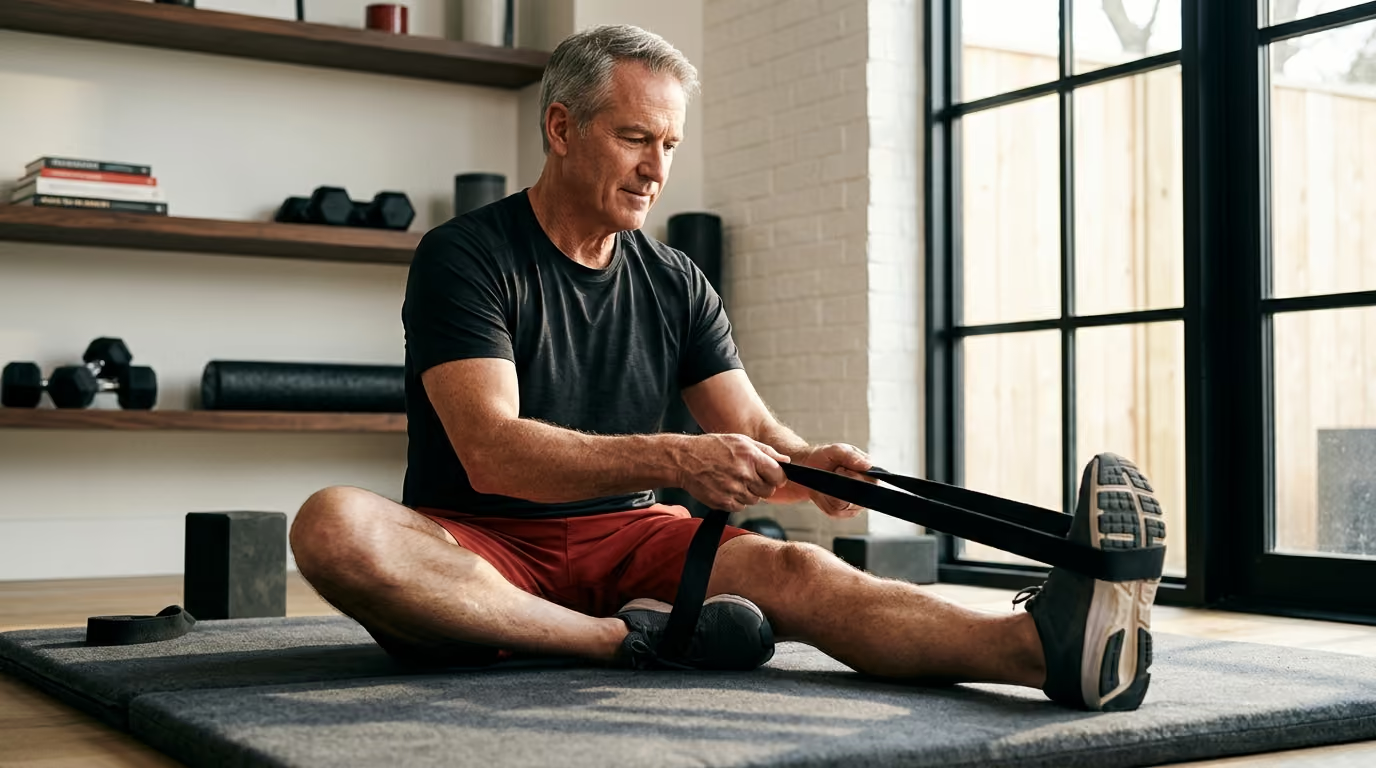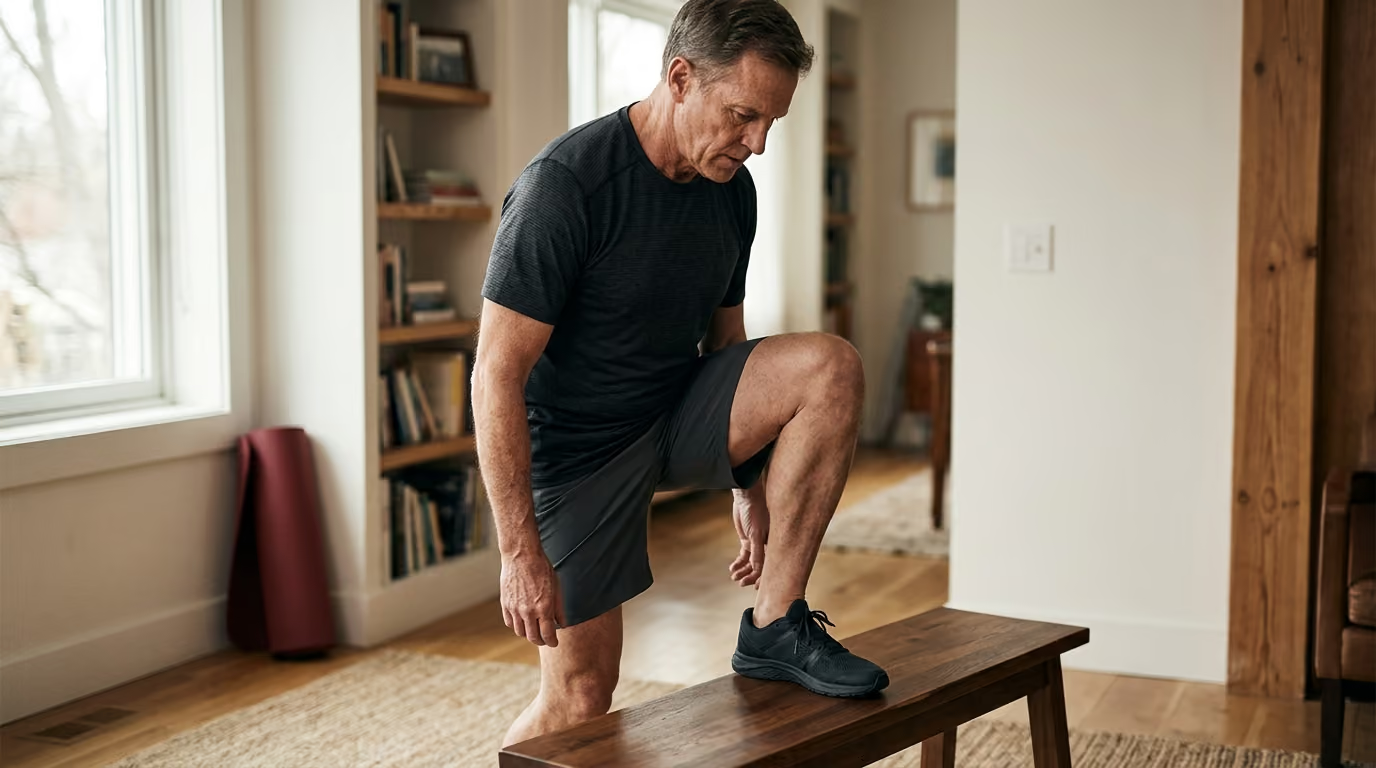
Many men over 45 search online for ways to fix stiff joints, tight hamstrings, or aching lower backs. They often type phrases like "how to get flexible fast" or "best stretches for stiff hips" into search bars.
The search results usually provide generic stretching routines, foam rolling videos, and promises of instant relief. Most of these solutions fail to produce lasting changes in daily movement.
This guide provides a definitive breakdown of why conventional flexibility advice fails after midlife. It replaces common training errors with evidence-based principles that restore usable movement, physical strength, and joint confidence.
The Current Scientific Evidence on Mobility and Range of Motion
The scientific literature on physical movement draws a clear line between flexibility and mobility. Flexibility describes the passive range of motion available at a joint when an outside force moves the limb. Mobility describes the active control, strength, and coordination required to move a joint through a range under personal muscular effort.
Research shows that passive flexibility interventions do increase joint range of motion over time. A systematic review of chronic stretching interventions confirmed that regular flexibility training creates measurable increases in joint excursion across various populations. However, the exact mechanisms behind these changes involve altered stretch tolerance in the nervous system rather than permanent structural lengthening of muscle tissue.
The relationship between increased passive range of motion and improved daily function remains mixed in clinical trials. A review examining flexibility training in older populations noted conflicting evidence regarding whether stretching programs directly improve functional performance in real-world tasks. Simply making a joint looser does not automatically improve walking speed, balance, or the ability to lift heavy objects safely.
Active resistance training produces range of motion improvements comparable to dedicated stretching protocols. A systematic review and meta-analysis comparing strength training to stretching found no significant difference between the two modalities for improving joint range of motion. Resistance exercises performed through a full, comfortable excursion build usable range while developing muscular capacity simultaneously.
The World Health Organization outlines physical activity standards that reinforce this integrated approach. WHO guidelines recommend that mature adults participate in multicomponent physical training on three or more days per week. These programs prioritize functional balance and strength training at moderate or higher intensity to preserve capacity and reduce fall risks. Long-term movement health depends on combining range, active control, and load tolerance rather than pursuing passive flexibility alone.
Biological and Mechanical Drivers of Stiffness After 45
Physical stiffness after 45 is a normal biological process rather than an acute medical condition. Connective tissues undergo natural structural shifts as the body ages. Tendons, ligaments, and joint capsules experience gradual reductions in water content and changes in collagen cross-linking.
These collagen shifts make passive structures stiffer and less compliant under rapid loading. Collagen turnover slows down, which increases the density of the surrounding extracellular matrix. While this increased stiffness provides passive stability to joints, it can create a noticeable sensation of restriction during morning movement or after prolonged sitting.
Neurological regulation also plays a major role in perceived joint tightness. The central nervous system constantly monitors joint positions, tissue tension, and sensory feedback to protect the body from perceived threat or injury. When a muscle group feels weak or unstable at an end range, the nervous system increases baseline muscle tone to restrict movement.
This protective muscle activation is frequently misidentified as physical tissue shortening. A man who spends hours sitting at a desk may feel intense hamstring tightness when bending forward to touch his toes. In many cases, the hamstrings are not physically short. The nervous system simply tightens the posterior chain to protect an unstable lumbar spine or weak pelvic stabilizers.
Joint surfaces and synovial fluids also change throughout midlife. Synovial fluid provides lubrication and nutrients to articular cartilage inside joint capsules. Joint movement stimulates the production and circulation of this fluid. Inactivity allows the fluid to become more viscous, which creates a temporary feeling of joint friction until movement warms the area.
Understanding these biological mechanisms prevents men from treating normal age-related adaptations as permanent damage. Stiffness reflects changes in connective tissue properties, hydration, habitual movement patterns, and neurological threat perception. Addressing stiffness requires active movement, progressive loading, and gradual exposure rather than aggressive force.
The Difference Between Passive Range and Functional Movement Capacity
To train effectively after 45, you must distinguish between passive range, active range, and functional movement capacity. Confusing these concepts leads to wasted gym time and frustrating training plateaus.
Passive range of motion represents the outer limit of a joint when moved by gravity, a strap, or a training partner. A person lying on their back can often have their leg pushed to a ninety-degree angle with the help of an elastic band. This measurement shows what the passive tissues can tolerate when completely relaxed.
Active range of motion represents the position a person can achieve using only their own muscular contraction. If that same person removes the strap and attempts to lift their leg toward ninety degrees using their hip flexors and core, the leg might stop at sixty degrees. The thirty-degree gap between passive flexibility and active control represents an unstable zone where injury risk increases under load.
Usable mobility narrows this concept further by adding force production and deceleration. Usable mobility is the capacity to enter a joint position, hold it under load, produce force from that position, and return safely to the starting point. This quality determines whether you can step out of a deep squat or catch yourself during a slip on wet pavement.
Functional movement capacity represents the highest tier of physical movement. It combines usable mobility with systemic endurance, balance, spatial awareness, and psychological confidence. High functional capacity allows an individual to navigate unpredictable environments, hike uneven trails, carry heavy luggage, and rise from the floor without hesitation.
Focusing exclusively on passive range leaves the body unprepared for dynamic physical demands. When men over 45 train only for passive flexibility, they expand joint ranges without building the muscular strength needed to control those positions. Sustainable joint health requires closing the gap between passive flexibility and active control through functional movement guides that prioritize strength across full ranges.
The Eight Most Common Mobility Training Mistakes
Many popular flexibility practices fail because they ignore fundamental physiological principles. The following eight mistakes represent the most common errors men over 45 make when trying to improve their movement.
Aggressive Stretching Past Joint Tolerance
The belief that painful stretching produces faster results remains widespread. Men often force joints into deep, painful positions and hold them while gritting their teeth. They assume that intense discomfort indicates productive tissue deformation.
Research indicates that aggressive static stretching carries distinct performance trade-offs. A systematic review on the acute effects of static stretching demonstrated that holds exceeding 60 seconds per muscle group produce significant reductions in muscle strength and power output. These acute performance decrements range from 4.0 percent to 7.5 percent.
Forcing tissues past their current tolerance triggers a protective stretch reflex. Muscle spindles detect excessive strain and signal the spinal cord to contract the target muscle forcefully to prevent tearing. Aggressive stretching fights against this natural defense system, which increases neurological tension instead of relieving it.
A systematic review on static stretching and injury prevention found moderate-to-strong evidence that routine stretching does not reduce overall exercise-related injury rates. Stretching harder does not bulletproof joints. It creates localized irritation and increases joint sensitivity.
A better approach relies on graded exposure and sub-maximal tension. Move into a range where you feel mild-to-moderate muscular tension without joint pinching or pain. Hold the position while taking slow, nasal breaths to encourage nervous system relaxation. Progress comes from consistent, low-threat exposure rather than brute physical force.
Excessive Reliance on Passive Modalities
Many men spend twenty to thirty minutes before every workout using foam rollers, massage guns, massage balls, and strap-assisted stretches. They believe these tools break up scar tissue or physically lengthen dense fascia.
Passive modalities alter sensory perception and decrease pain sensitivity in the short term. They stimulate mechanoreceptors in the skin and fascia, which temporarily down-regulates resting muscle tone. This creates a short-lived window of improved joint range that usually lasts between fifteen and thirty minutes.
Relying entirely on passive tools fails to create permanent movement improvements. If you use a foam roller to loosen your thoracic spine but never perform active rotational exercises, your nervous system will reset to its baseline stiffness within an hour. Passive tools provide a temporary window of opportunity, not a permanent solution.
A better strategy converts passive range into active control using a one-to-one conversion rule. If you spend one minute foam rolling your quadriceps or using a band to open your hips, immediately follow that drill with one minute of active movement. Perform controlled bodyweight split squats, active leg raises, or step-downs to teach your nervous system how to stabilize the new range.
Random Exercise Selection Without Clear Assessment
Social media platforms feature endless feeds of complex mobility drills. Men often collect these exercises at random, performing hip openers on Monday, wrist flows on Tuesday, and spine circles on Wednesday.
This scattershot approach lacks systematic progression. Without an initial assessment, you cannot determine whether a movement restriction stems from joint shape, muscular weakness, or motor control deficits. Practicing random drills makes it impossible to identify which exercises provide value and which waste your time.
A better alternative begins with a structured movement audit based on real-world functional tasks. Identify the exact physical movements you need for daily life, recreational sports, or outdoor activities. If your primary goal is hiking downhill without discomfort, focus specifically on ankle dorsiflexion, knee flexion control, and single-leg hip stability.
Select one or two targeted exercises per movement pattern and track them over eight to twelve weeks. Measure your progress using clear objective markers such as comfortable squat depth, single-leg balance duration, or the ease of standing up from a low chair. Consistency with a few high-value movements outperforms a rotating collection of novel drills.
Isolating Flexibility Work from Strength Training
A common misconception suggests that lifting weights makes muscles tight and bulky, while stretching makes them long and loose. Many men believe they must finish an entire mobility program to fix their joints before they are allowed to lift weights.
This false dichotomy contradicts exercise physiology. Muscles and tendons adapt to the mechanical tension and excursion demands placed upon them during resistance training. When you perform a resistance exercise through a full range of motion, you load the muscle eccentrically while it lengthens, which stimulates both strength gains and range improvements.
A systematic review confirmed that resistance training produces increases in joint range of motion that match dedicated stretching protocols. Resistance training offers an added benefit that stretching cannot match: it increases tendon stiffness in a healthy way, improves bone mineral density, and builds functional force capacity.
A better approach integrates strength training directly into your joint health routine. Use exercises like deep goblet squats, Romanian deadlifts, full-range push-ups, and dumbbell chest presses to build usable range. Emphasize controlled lowering phases to challenge the muscle in its fully lengthened position, which builds resilience where injuries frequently occur.
Moving Through Progression Ladders Too Fast
Mature adults often attempt advanced mobility positions before mastering basic movement patterns. They attempt deep Cossack squats or unsupported single-leg pistol squats without building the required baseline capacity.
Connective tissues adapt to physical stress at a slower rate than muscular tissue. Tendons and ligaments receive less blood flow than skeletal muscle, which means their collagen remodeling cycles take several months. Adding heavy loads or extreme ranges too quickly overloads joint structures and leads to chronic tendon irritation.
Adverse event data from progressive resistance studies in older populations show that most reported exercise issues consist of minor musculoskeletal aches and pains. These issues occur primarily when training volume, range, or intensity spikes too rapidly without adequate structural preparation.
A better method follows a methodical progression ladder that modifies one variable at a time. The ladder proceeds in this exact sequence:
- Position: Learn the basic geometry of the movement on the floor or with external support.
- Support: Reduce support gradually as stability and confidence improve.
- Control: Slow down the movement tempo to eliminate momentum and build control.
- Range: Gradually increase the movement depth by a few inches over several weeks.
- Volume: Add repetitions and sets to build local muscular endurance.
- Load: Introduce external resistance using dumbbells, kettlebells, or barbells.
- Complexity: Introduce multi-planar demands, balance challenges, or unilateral variations.
Equating Pain and Discomfort with Effectiveness
The old athletic slogan "no pain, no gain" causes significant harm to men over 45. Many lifters interpret joint aching, tendon tenderness, and muscular pinching as signs of hard work and physical transformation.
Pain is a complex neurological output designed to protect the body from real or perceived threat. When you repeatedly train through sharp or pinching sensations, your central nervous system associates that movement pattern with danger. In response, the brain increases muscle guarding around the affected joint, which paradoxically increases joint stiffness over time.
A better framework uses a response-based traffic-light system to monitor training sensations:
- Green Light: Mild muscular effort, general stretching tension, and normal muscular fatigue. The joint feels equal or better thirty minutes after the session. You may continue training normally.
- Yellow Light: Noticeable discomfort, mild joint awareness, or minor technique compensation. The sensation fades quickly after the exercise stops. Modify the exercise by reducing the movement range, lowering the resistance, or slowing the tempo.
- Red Light: Sharp, catching, pinching, or radiating pain. Joint swelling or functional weakness appears during or after the session. Stop the exercise immediately and choose a pain-free alternative.
Consult a qualified physical therapist or sports medicine physician if red-light symptoms persist across multiple sessions or disrupt sleep. Learning to interpret sensory signals accurately allows you to train consistently without setbacks.
Poor Timing of Static Stretching Protocols
Static stretching remains a common warm-up ritual before recreational sports, running, and heavy strength training. Men spend several minutes holding deep calf, hamstring, and quad stretches before their first set or stride.
Performing long static holds immediately before explosive or heavy strength tasks temporarily reduces the force-producing capacity of the muscle. Prolonged stretching decreases the sensitivity of motor units and reduces the passive elastic recoil of the tendon unit. This acute reduction in power can impair athletic performance and compromise joint stability during heavy lifting.
A systematic review on static stretching revealed that short holds under 60 seconds produce negligible performance drops, but long holds reliably impair strength. Spending extended periods in relaxed, passive stretches right before demanding physical activity blunts the nervous system when it needs to be alert and responsive.
A better approach structures mobility work based on training timing:
- Pre-Workout Window: Focus on general temperature elevation, dynamic joint rotations, and movement rehearsals. Perform leg swings, arm circles, bodyweight lunges, and light warm-up sets that mirror the workout.
- Post-Workout Window: Use gentle static stretching, deep diaphragmatic breathing, and supported floor positions. This helps lower systemic arousal, down-regulates the sympathetic nervous system, and restores resting muscle length.
- Standalone Mobility Sessions: Perform comprehensive mobility routines on non-lifting days or several hours removed from high-intensity training.
Viewing Age as an Absolute Limit Rather than Context
Two damaging attitudes regarding age exist among active men. The first attitude views physical decline as an unavoidable consequence of turning 45, which leads to defeatism and complete inactivity. The second attitude ignores biological aging entirely, which leads men to train with the exact volume and intensity they used in their twenties.
Biological aging is a continuous, adaptable process influenced heavily by training consistency, nutrition, sleep quality, and stress management. Research on progressive resistance training demonstrates that older adults retain the capacity to build muscle mass, increase neural drive, and improve functional gait speed. Age alone does not prevent the body from adapting to intelligent physical training.
Ignoring your training history, joint wear, and recovery capacity leads to overuse injuries. Recovery kinetics slow down across midlife. Muscle protein synthesis rates, tendon remodeling, and nervous system recovery require more time between intense sessions than they did decades earlier.
A balanced mindset treats chronological age as useful context rather than a strict boundary. A well-conditioned 55-year-old man may possess far higher movement capacity than a sedentary 30-year-old. Base your exercise selection, training volume, and progression pace on your current physical capabilities rather than an arbitrary age bracket.
Practical Movement Strategies and the RCCC Framework
To build a reliable mobility routine, you need a coherent organizing structure. The RCCC Framework provides a practical system that categorizes movement drills into four distinct phases: Range, Control, Capacity, and Context.
Range and Joint Exposure
The Range phase determines whether a joint can physically access a specific angle or anatomical position. It addresses the available space within the joint capsule and the tolerance of the surrounding connective tissues.
If an ankle cannot dorsiflex past ninety degrees due to joint restriction or calf tightness, the body cannot perform a deep, upright squat. The Range phase uses low-intensity drills to expose the joint to restricted angles without adding external load.
Key drills for the Range phase include:
- Half-Kneeling Ankle Rocks: Place one foot forward near a wall and gently guide the knee forward over the middle toes while keeping the heel firmly planted on the floor.
- Quadruped Thoracic Rotations: Rest on hands and knees, place one hand behind the head, and rotate the elbow up toward the ceiling while keeping the lower back stable.
- Prone Hip Extensions: Lie face down on the floor and gently lift one straight leg a few inches using the glute musculature without arching the lower back.
Control and Active Stabilization
The Control phase bridges the gap between passive flexibility and active movement. It trains the nervous system to coordinate muscular contractions, stabilize adjacent joints, and control movement tempo through the newly accessed range.
Control drills require slow, deliberate execution and high mental focus. They eliminate momentum to ensure that the primary muscles actively guide the joint through its entire excursion.
Key drills for the Control phase include:
- Controlled Articular Rotations for the Hips: Stand tall while holding a solid support, lift one knee toward the chest, rotate the thigh outward, sweep the leg backward into extension, and return to the starting position without shifting the pelvis.
- Wall Slides with Forearm Lift-Offs: Stand with your back and arms against a flat wall, slide the forearms upward into a "Y" position, and actively pull the forearms off the wall for two seconds using the mid-back muscles.
- Slow Eccentric Step-Downs: Stand on a low box or step, take three full seconds to lower the opposite heel toward the floor by bending the stance knee, tap the floor lightly, and return to standing.
Capacity and Loaded Strength
The Capacity phase builds muscular strength, tissue tolerance, and endurance within the functional range. It ensures that the body can absorb impact, produce force, and handle unexpected loads without structural breakdown.
This phase relies on progressive resistance exercises. Loading joints through their full active range stimulates tendon remodeling, increases bone density, and reinforces motor patterns under realistic physical stress. Incorporating these exercises into regular strength and muscle preservation routines ensures that joint ranges remain robust under real-world conditions.
Key exercises for the Capacity phase include:
- Goblet Squats with a Two-Second Pause: Hold a dumbbell or kettlebell at the chest, lower into a full comfortable squat, pause at the bottom to own the position, and stand up with control.
- Romanian Deadlifts: Hold weights in front of the thighs, hinge backward at the hips while maintaining a neutral spine until the hamstrings are fully lengthened, and drive the hips forward to return to standing.
- Supported Split Squats: Step one foot forward and one foot back, lower the back knee toward the floor under control, and press through the front foot to return to the top position.
Context and Task Application
The Context phase integrates isolated joint mobility and strength into complex, multi-joint movements that mirror daily life, work tasks, and recreational athletics.
Mobility training holds little value if it remains confined to a gym mat. The Context phase ensures that your joint control transfers directly to carrying heavy objects, playing sports, navigating uneven terrain, and rising from the floor effortlessly.
Key applications for the Context phase include:
- Offset Farmer Carries: Walk fifty paces carrying a heavy dumbbell in one hand while maintaining an upright posture, level shoulders, and steady breathing.
- Ground-to-Standing Transfers: Practice getting down to the floor and standing back up using different movement strategies without relying on your hands if possible.
- Multi-Directional Lunges: Step and lunge in different directions, including forward, lateral, and rotational angles, to prepare the lower body for unpredictable real-world movement.
Common Cultural Misreadings of Flexibility Training
Modern fitness culture promotes several persistent myths about stretching and joint health. Examining these claims through an objective scientific lens helps separate valuable practices from misleading trends.
Myth One: Daily Aggressive Stretching Permanently Lengthens Muscle Bellies
A widespread belief claims that pulling on a muscle every day mechanically lengthens the muscle fibers like an elastic band. People assume that chronic tightness means their muscles have physically shortened in length.
Skeletal muscle architecture does not lengthen simply through passive tensile pulling. Increases in range of motion achieved through stretching routines stem almost entirely from changes in the central nervous system. The brain gradually increases its tolerance to stretch signals, which permits greater joint excursion before sending pain warnings.
Structural changes in muscle length require significant mechanical tension applied while the muscle produces force, such as heavy eccentric resistance training. Eccentric loading can stimulate sarcomerogenesis, which is the addition of sarcomeres in series along the muscle fiber. Relying on passive stretching alone will not physically lengthen muscle bellies.
Myth Two: Flexibility Training Eliminates Muscle Soreness
Many gym members perform extensive stretching immediately after tough workouts under the assumption that it prevents delayed onset muscle soreness (DOMS).
Exercise science does not support this claim. Delayed onset muscle soreness results from microscopic structural disruption in muscle fibers, localized inflammation, and chemical sensitization of nociceptors following unaccustomed exercise. Passive stretching does not accelerate the clearance of metabolic waste products or repair micro-trauma in muscle tissue.
A systematic Cochrane review evaluating stretching before or after exercise found that stretching produced negligible reductions in delayed onset muscle soreness across healthy adults. Gentle active movement, light walking, adequate hydration, protein intake, and high-quality sleep remain the only proven methods for managing post-exercise soreness and supporting joint mobility and active recovery.
Myth Three: You Must Restore Perfect Joint Symmetry to Avoid Pain
Commercial posture and movement screening programs often claim that minor asymmetries between the left and right sides of the body cause chronic pain and joint degeneration. Men are told that having one hip slightly tighter than the other represents a functional flaw that requires urgent correction.
Human anatomy is naturally asymmetrical. Internal organ placement, dominant hand usage, athletic history, and structural variations in bone morphology create natural differences between limbs. Research consistently shows that structural asymmetries correlate poorly with the presence of musculoskeletal pain.
Attempting to force the body into perfect geometric symmetry through endless mobility drills is unnecessary. Focus on ensuring that both sides of the body possess adequate strength, control, and range to handle your daily tasks comfortably. Functional capability matters far more than visual symmetry on an assessment chart.
Gaps, Inconsistencies, and Limits in the Research Literature
While research provides clear guidance on movement and strength, several areas of mobility science remain incomplete, inconsistent, or limited in scope.
Much of the existing literature on stretching and range of motion relies on heterogeneous study designs. Clinical trials frequently vary in stretching techniques, duration of holds, total weekly volume, and participant fitness levels. This variation makes it difficult for researchers to establish a single, universal dosage prescription for mobility training across different age groups.
The scientific evidence evaluating the direct transfer of flexibility interventions to real-world functional tasks remains limited. While studies reliably demonstrate that stretching increases joint range of motion on laboratory measuring devices, they often fail to track long-term functional changes in walking mechanics, stair climbing efficiency, or fall frequency. More high-quality, long-term randomized controlled trials are needed to clarify how specific mobility drills impact daily physical independence.
Adverse event reporting across exercise trials in mature populations is frequently inconsistent. Systematic reviews examining progressive resistance and mobility programs note that many published studies fail to detail minor musculoskeletal complaints or dropouts systematically. This reporting gap limits our ability to calculate precise injury risks for specific exercise progressions in older adults.
Many popular mobility tools and manual techniques are supported primarily by commercial claims rather than rigorous clinical evidence. Devices such as percussion massage guns, vibrating foam rollers, and specialty stretching straps are widely marketed with claims of improving fascia quality and joint longevity. Independent peer-reviewed trials on these commercial tools are often small, short-term, or show only minor sensory effects.
Recognizing these research gaps allows active men to maintain a healthy skepticism toward fitness fads. Rely on foundational training principles that are supported by extensive physiological evidence: progressive resistance training, active movement control, gradual workload management, and balanced physical activity.
Actionable Next Steps and Weekly Movement Checklist
Improving your joint mobility and physical capability after 45 does not require hours of complicated stretching every day. Sustainable progress comes from integrating brief, focused movement habits into your existing weekly routine.
Review this practical checklist and apply these steps to support healthy physical aging over the coming week:
- Audit Your Movement Goals: Select two specific real-world tasks you want to improve this month, such as standing up smoothly from the floor, walking downhill without knee awareness, or reaching overhead comfortably.
- Eliminate Aggressive Stretching: Stop forcing your joints into painful end ranges. Replace intense, painful holds with gentle, active range-of-motion drills performed with slow, controlled breathing.
- Apply the 1:1 Conversion Rule: Follow every minute of passive stretching or foam rolling with one minute of active control work, such as slow step-downs, wall slides, or paused squats.
- Train Strength Through Full Ranges: Perform multi-joint resistance exercises two to three days per week. Use controlled lowering phases and focus on full, comfortable joint excursion during squats, hinges, pushes, and pulls.
- Use the Traffic-Light System: Monitor your joint sensations during training. Stay in the green zone, modify exercises that trigger yellow warnings, and stop any movement that produces sharp red-light pain.
- Structure Your Training Windows: Use dynamic joint rotations and movement rehearsals before workouts. Save relaxed static stretches and deep breathing for post-workout recovery or dedicated rest days.
- Track Objective Functional Markers: Measure your progress every four weeks using functional standards like single-leg balance time, paused squat comfort, or walking speed rather than passive flexibility measurements.
Long-term joint health depends on viewing mobility as an active physical capability rather than a passive flexibility contest. By pairing adequate joint range with muscular strength, balance, and gradual exposure, men over 45 can maintain physical independence and continue pursuing the sports, outdoor activities, and lifestyle pursuits they value. For deeper perspectives on sustaining vitality across midlife, explore our long term physical capability research.
Sources
- Acute Effects of Static Stretching on Muscle Strength and Power - PMC
- Effectiveness of active stretching during training for injury prevention ...
- Adverse Events Reported in Progressive Resistance ...
- Practical recommendations on stretching exercise: A Delphi ... - PMC
- Non-local Acute Passive Stretching Effects on Range of Motion in Healthy Adults: A Systematic Review with Meta-analysis
- Review Chronic effects of stretching on range of motion ...
- Systematic review of progressive resistance strength training in ...
Stay sharp
Get the word
Join our newsletter for the best writing advice and stories from the field.