Study Links Later-Life Instability With Frailty
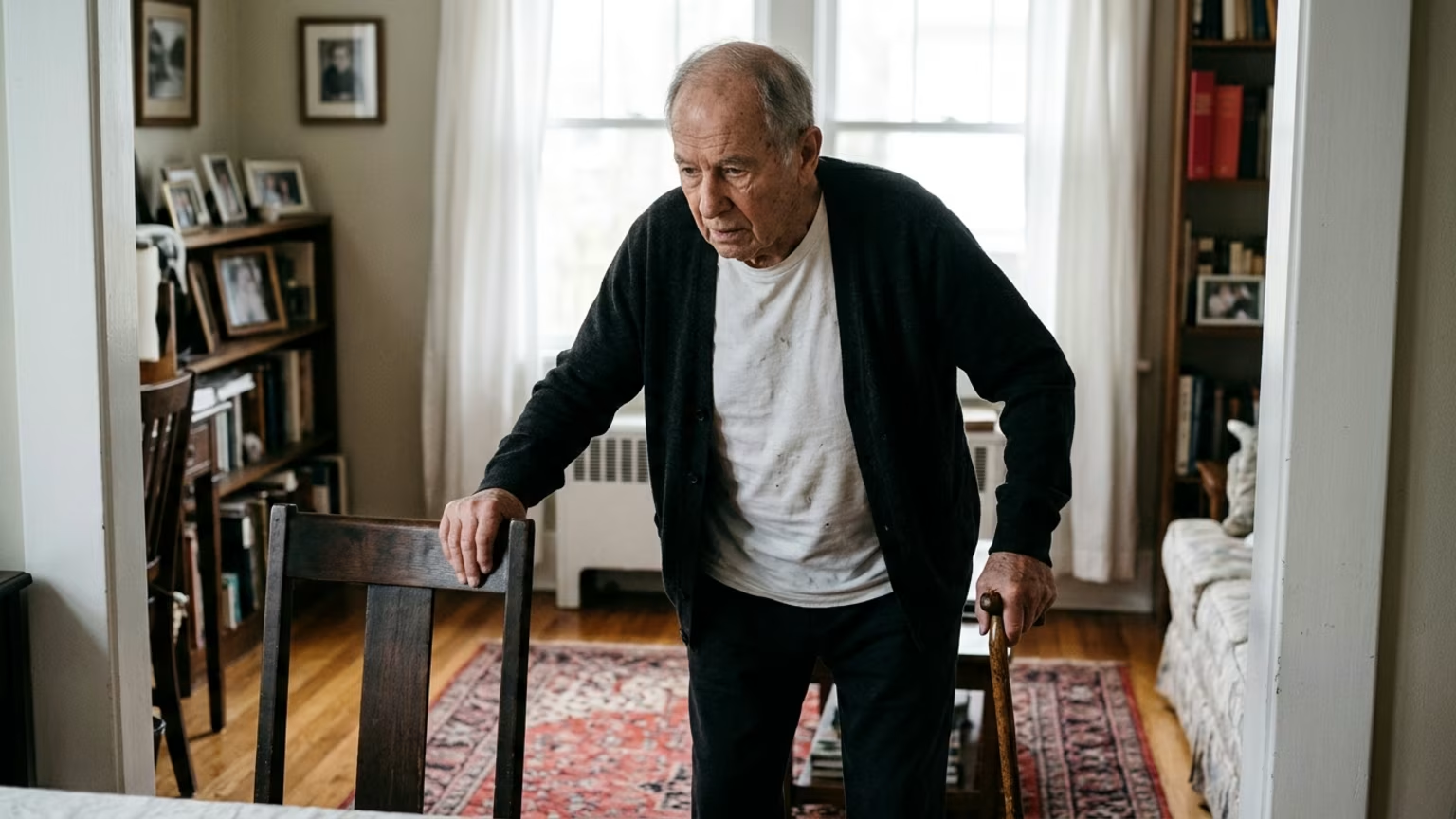
On 2026-09-28, mindbodygreen covered research published in Ageing & Society that linked later-life instability with frailty in older adults in England.
How to read the study design
The paper, “Later life precarity and longitudinal frailty trajectories in older adults”, examined more than 15,000 older adults in England. The researchers used the English Longitudinal Study of Ageing, known as ELSA.
Their analysis drew on data collected from 2004/05 to 2018/19. Rather than assigning participants to a treatment, the researchers examined social circumstances and frailty across the study period. This longitudinal approach allowed them to look at patterns over time rather than a single snapshot.
The central concept was later-life precarity. In plain English, this means insecurity in the circumstances that support daily life. The analysis brought together multiple social risks rather than treating financial resources as the whole picture.
Those circumstances included housing, food and energy affordability, relationships and unpaid care. The researchers examined how individual risks and a composite measure of precarity related to a multidimensional Frailty Index. A frailty trajectory describes how that measured outcome changes over time.
The authors also asked whether looking at specific material risks could add insight beyond wealth and education. Those broad measures describe socioeconomic position. Their argument was that particular pressures can provide a more detailed account of the conditions surrounding later-life health.
For men interested in staying active and independent, that distinction gives the study its relevance. It examines the setting in which healthy aging takes place rather than focusing only on an individual's health habits.
Why housing, food and fuel stood out
The Ageing & Society paper linked greater later-life precarity with worse frailty outcomes. Its more specific findings showed that the pattern varied across different circumstances.
The reported outcomes included:
- Housing-related risks were among the stronger associations. Renting, housing problems and past homelessness were linked with frailty in the analysis.
- Food insecurity and fuel poverty had strong independent associations with frailty. These findings brought food and energy affordability into the picture alongside housing.
- Lower amounts of unpaid care were associated with lower frailty. The comparison was with participants who never provided unpaid care.
- Leaving a job to provide care was associated with slightly worse frailty. This differed from the result for lower amounts of care.
- Being widowed or living alone was associated with a small increase in frailty. These were modest associations in the reported model.
- Being divorced was not statistically significant in that model. The relationship findings therefore did not point in a single direction.
The caregiving results deserve particular attention. A headline about instability could make every caring responsibility sound harmful. The paper instead distinguished between circumstances that had different relationships with frailty.
That distinction makes the findings more useful. Providing some unpaid care and leaving employment to provide care are not interchangeable experiences in this analysis. The study's value lies partly in preserving those differences rather than reducing them to a single message about stress.
The same care is needed when reading the housing findings. Renting appeared among the housing-related risks associated with frailty. The reported association should be understood as part of the study's wider social and material picture.
The authors' broader argument was that looking at specific risks adds context beyond wealth and education alone. That keeps the focus on the actual circumstances people face rather than assuming a broad socioeconomic label describes every relevant pressure.
Why the evidence needs clear boundaries
The authors caution that this was an observational study. It does not prove that precarity causes frailty. The relationship could also run in the other direction because frailty may increase exposure to some social risks.
The composite precarity measure also requires care. Some social-risk variables were selected partly because they were associated with frailty in the study data. Its performance in this analysis does not establish that it is a validated clinical screening tool or a measure of causation.
Representation and participant dropout were further concerns noted by the authors. Frailer or more socially vulnerable participants may have been more likely to leave the study. The unweighted analysis may therefore not fully represent the wider population.
Weighted sensitivity analyses produced substantively similar results. That supports the consistency of the findings within the analysis but does not remove the concerns about dropout and representation. The historical study period also does not establish how common or severe these risks are among older adults today.
The outcome needs an equally clear distinction. Mindbodygreen used “faster biological aging” in its headline, but the primary paper measured frailty rather than biological age directly. Readers following research on biological-age estimates should keep the actual measurement separate from the broader aging language around it.
Finally, the study did not test whether improving housing or changing financial circumstances reduces frailty. It did not compare social changes against exercise, diet or sleep interventions. Its population-level findings are not an individual prediction and do not mean that instability inevitably leads to frailty.
How to bring life circumstances into the conversation
The practical value is a broader set of questions about healthy aging. Alongside a discussion of health habits, there is room to ask what makes those habits difficult to maintain. This is a reasonable editorial application of the research rather than another result from the analysis.
Mindbodygreen's coverage suggested reviewing pressures around housing, finances and caregiving. That idea can be used without turning the paper into a personal risk score. The useful question is which persistent pressures deserve attention and what kind of support might fit them.
A discussion could include:
- Security at home: Are housing problems or uncertainty taking up a large part of daily attention?
- Food and energy costs: Are affordability pressures making ordinary routines harder to maintain?
- Caregiving demands: What does the role involve, and has it required leaving paid work?
- Available support: Is there a suitable health professional or support service for the concern being raised?
These questions move the conversation away from treating every difficulty as a failure of motivation. They also leave room for the mixed findings on care and relationships. The details of a person's circumstances matter more than attaching a simple good or bad label to a role.
Personal health decisions belong with qualified healthcare professionals. Housing, financial or caregiving concerns may call for different forms of support where available. The purpose of raising them is to make the conversation more complete.
For men after 45, this wider lens belongs beside the focus on strength and everyday independence. It does not require choosing between physical capability and the circumstances surrounding daily life. Both can remain part of a serious discussion about staying active through later years.
The useful shift is one of attention. Healthy-aging conversations can include the material and social conditions around a person rather than stopping at individual habits. The paper gives that broader discussion a research foundation while keeping the measured outcome specific: frailty over time.
What this changes: the findings support a wider view of healthy aging but do not alter current best practices or establish a new way to prevent frailty.
How Everfitguys helps
Once the frailty findings are understood, judging their place among longevity claims is the next task, and Everfitguys addresses that task with evidence-first reporting. Its plain-language editorial work helps men 45 and older sort supported findings from uncertain claims while keeping strength, mobility and mental sharpness at the center of healthy aging.
Sources
Stay sharp
Get stories
The best writing on craft and life, delivered once a week. No noise, just the good stuff.