Strength training is presented as a foundation for healthy aging and everyday mobility
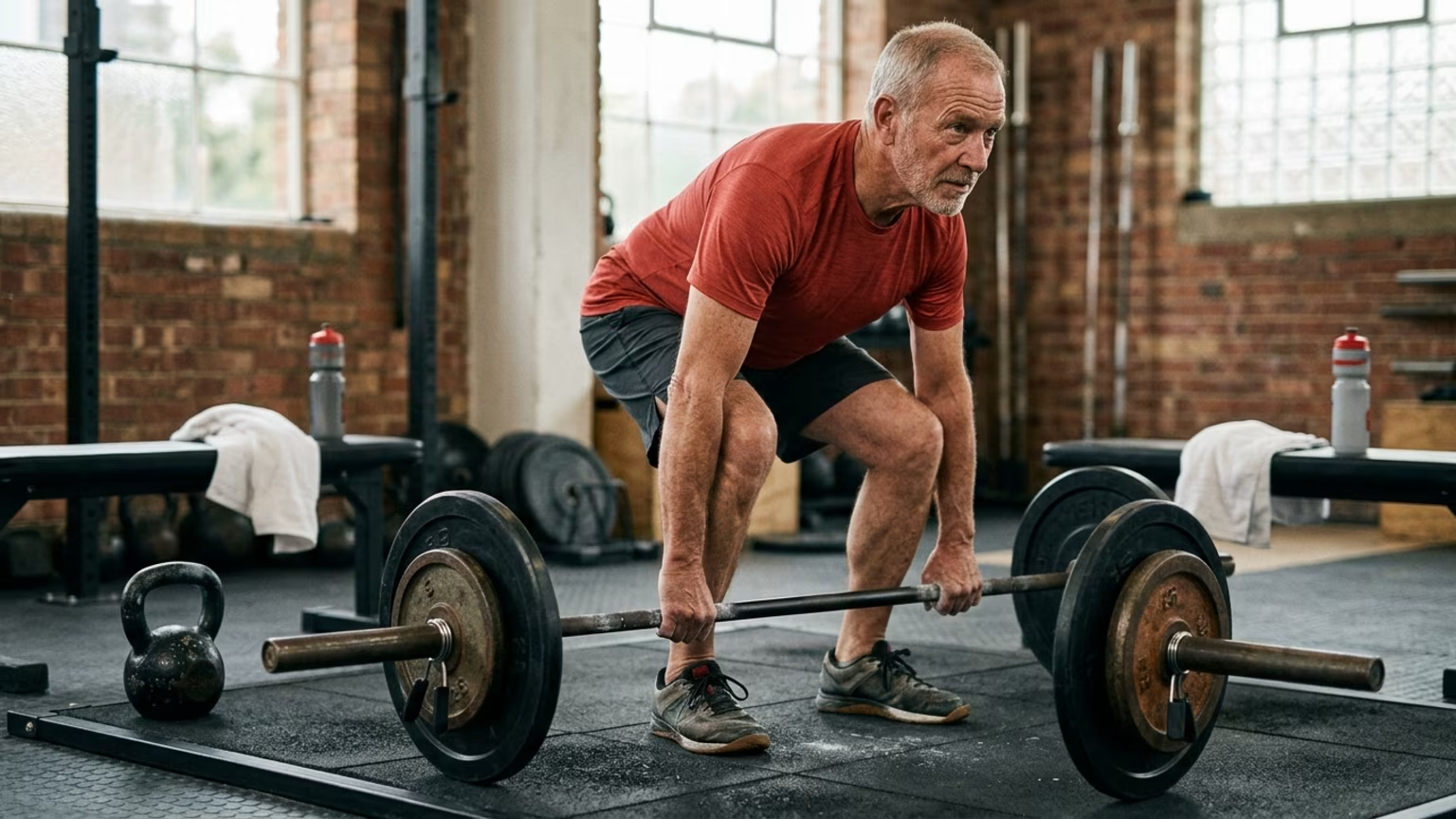
On September 10, 2026, SciTechDaily reported that strength training preserves the physical reserve needed for daily independence. This report followed an August 18, 2026, publication by The Conversation detailing how specific resistance protocols impact physical mobility well into later life.
Diverse Trial Methodologies Highlight Functional Decline
The underlying research relies on multiple clinical trials tracking physical function over time. The Conversation cites a three-year study following nearly 1,900 adults aged 70 to 79. Researchers also reviewed 59 separate trials to measure fall rates across different exercise interventions.
A separate meta-analysis examined 19 trials focused specifically on eccentric muscle training. Another meta-analysis looked at seven trials measuring the effects of specific step training on balance. The primary article from SciTechDaily also addresses physical adaptations in adults in their 80s and 90s.
Muscle Size Does Not Guarantee Retained Leg Strength
A notable finding is that maintaining muscle size does not automatically preserve functional capability. In the three-year study of older adults, leg strength declined about three times faster than muscle mass. This functional decline occurred even among people who successfully maintained or gained muscle mass. This data supports a key nuance for older men aiming for functional strength and daily movement rather than visual changes alone.
SciTechDaily defines sarcopenia as the age-related loss of muscle mass and physical strength. This condition links directly with reduced mobility, more difficult daily activities, and greater vulnerability to fractures. The SciTechDaily article describes exercise training as the most effective treatment for sarcopenia. Resistance exercise serves as the most effective way to maintain or improve strength with age.
Combining Resistance and Balance Work Reduces Falls
Resistance training alone has uncertain effects on preventing accidental falls. The comprehensive review of 59 trials found that basic exercise reduced overall fall rates by 23 percent. Programs that combined dedicated balance work with resistance training produced superior outcomes. These combined protocols reduced accidental falls by 34 percent.
This evidence indicates that strength alone is not a complete fall prevention program. The meta-analysis of seven trials found that specific step training reduced both fall rates and the proportion of people who fell by approximately half. Examples of accessible balance practice reported in the related coverage include single-leg standing, heel-to-toe walking, and tai chi. Adding these movements to a standard resistance routine provides a much stronger physical defense.
Eccentric Control Supports Everyday Movement Patterns
The meta-analysis of 19 trials looked closely at the physical benefits of eccentric training. This method involves controlling a movement while the muscles actively lengthen under tension. The analysis found that eccentric training helped participants rise from a chair and walk short distances faster than conventional strength training.
Everyday household movements can effectively train this type of physical control. Controlled stair descents act as a practical form of eccentric exercise. This remains true only when the specific movement is safe for the individual. Treating physical strength as a practical health priority means preparing the body for these exact functional tasks.
Lighter Weight Accommodates Physical Health Through Effort
Men returning to exercise often worry that heavy lifting is strictly mandatory for physical progress. The SciTechDaily article reports that lighter loads performed for roughly 20 to 25 repetitions can produce improvements similar to heavier loads. These lighter sets mirror the benefits of sets performed for about 10 repetitions. This requires the physical effort to be sufficiently high by the end of the set.
This approach helps men protect their joint health and movement while still building true capability. The Conversation identifies structured progression as the practical principle that determines whether a routine actually builds strength. The standard rule is that the final two or three repetitions of any set must feel genuinely hard. If these final repetitions do not feel challenging, the physical load should gradually increase over time.
Weekly Frequency Guidelines Balance Effort With Recovery
Determining the correct training volume presents a common hurdle for older adults. The SciTechDaily article states that one weekly strength training session may produce meaningful strength gains. This low frequency works particularly well among people who are completely new to training. The World Health Organization offers a higher baseline for consistent physical activity.
The World Health Organization guidance recommends muscle-strengthening activity involving all major muscle groups on at least two days per week. This weekly strength training frequency should cover the major movement regions across the body. The guidelines recommend training the legs, hips, back, abdomen, chest, shoulders, and arms. For older adults, the World Health Organization also emphasizes varied activity involving functional balance and strength on three or more days weekly.
Activity Selection Goes Beyond Walking and Cycling
Many men rely entirely on walking or cycling to maintain their physical health as they age. SciTechDaily points out that these repetitive activities primarily develop cardiovascular fitness. They are not equally effective for improving muscle strength and daily physical function. Maintaining true physical independence requires targeted resistance movements to preserve physical reserve.
Lower-body training carries particular functional relevance for mature adults. The muscles in the legs and hips heavily support standing from a chair, stair climbing, and confident walking. The SciTechDaily article presents several accessible resistance training options for older men. These include basic dumbbells, workout machines, resistance bands, and bodyweight exercises like squats, step-ups, and press-ups. This evidence shows that men do not need a bodybuilding program to build full-range strength safely.
Current Medical Claims Carry Structural Limitations
The current medical reporting on healthy aging contains a few structural limitations and unverified claims. The primary article from SciTechDaily states that exercise is the most effective treatment for sarcopenia. The publication does not provide the study citations, participant numbers, or comparison treatments needed to independently verify that strong medical claim.
The specialized meta-analyses also require careful interpretation before changing a routine. The eccentric training analysis did not directly measure falls and received only a fair quality rating from reviewers. The impressive fall reductions from step training concern one specific method and should not be broadly applied to all strength programs. The Conversation explicitly notes that improved strength and bone density should not automatically be described as proven fracture prevention.
Medical History Demands Specific Exercise Modifications
Physical capability can improve late in life when the training methods respect personal medical history. SciTechDaily emphasizes that people in their 80s and 90s can build strength with appropriate support, exercise modifications, and supervision. This encouraging data does not mean every exercise is appropriate for every person at that advanced age.
People who have not exercised for some time should speak with a doctor before starting. Individuals with diagnosed osteoporosis or a previous spinal fracture face very specific physical risks. They must obtain individualized advice before adding impact activities such as hopping or skipping to their routine. What this changes is the outdated view that heavy resistance alone preserves physical function, confirming instead that a complementary routine of progressive strength and targeted balance practice is required to maintain daily capability as we age.
How Everfitguys helps
Managing daily movement habits usually falls to older men trying to preserve their independence alone, but that isolated effort becomes highly structured when Everfitguys delivers objective physiological reporting. Stiffness, joint pain and reduced mobility that limits activity frequently derail well-intentioned workout plans, and our clinical translation helps you adapt your weekly resistance training safely. Read the research
Sources
Stay sharp
Get stories
The best writing on craft and life, delivered once a week. No noise, just the good stuff.