You drop your car keys under a low table. You kneel down, pick them up, and stand back up without thinking. Or maybe you notice a slight pause. You look for a nearby chair to brace against, feeling a momentary hitch in your knees and hips.
Many men in their late forties and fifties notice these subtle shifts. A flight of stairs requires more focus with heavy bags in hand. Getting off the living room floor after playing with a dog takes an extra push.
These daily moments reveal the reality of functional longevity. Functional longevity is the preservation of physical abilities needed to live independently across decades. It means being able to walk easily, climb stairs, carry heavy objects, and get off the floor without assistance.
Training for long-term capability requires looking past mirror aesthetics or isolated gym numbers. It requires building a physical reserve that keeps you well above the baseline demands of daily life.
What the Research Shows About Physical Capability
Scientific research shows a direct link between physical capability and long-term health outcomes. Large observational studies show that objective tests of physical function predict mortality and disability. These tests include walking speed, chair rise speed, grip strength, and standing balance.
A systematic review of physical capability studies found that poorer performance on simple physical tests is consistently linked with higher all-cause mortality. When researchers measure how fast an older adult walks or how easily they stand up from a chair, they are measuring physiological reserve.
Walking speed serves as a clear example in clinical literature. Research analyzing walking speed across multiple cohorts found that every 0.1 meter per second increase in walking speed was linked with a lower risk of mortality. A walking speed around 0.8 meters per second often reflects median life expectancy in older populations. Speeds below 0.6 meters per second frequently signal a higher risk of hospital stays and functional decline.
Research also shows that targeted exercise reduces fall risk. A Cochrane systematic review of 59 studies involving over 12,000 community-dwelling older adults evaluated exercise programs. The review showed that exercise reduced the rate of falls by 23 percent.
When programs combined balance and functional training with resistance exercise, fall rates dropped by roughly 34 percent. Resistance training alone offers many health benefits, but combining balance, functional patterns, and strength yields the strongest protection against falls.
The National Institute on Aging highlights that regular exercise slows age-related physical decline. Evidence confirms that men can build muscle and gain strength well into their seventies, eighties, and beyond. Physical decline is common, but it is not entirely fixed or unchangeable.
Why Physical Capacity Changes After 45
Physical changes across midlife happen through distinct biological mechanisms. Muscle mass decreases at a rate of roughly 3 to 8 percent per decade after age 30. This loss rate often increases after age 60.
This gradual loss of muscle mass, strength, and function is known as sarcopenia. Sarcopenia involves changes in muscle quality as well as muscle size. The body loses fast-twitch muscle fibers faster than slow-twitch fibers. Fast-twitch fibers provide the quick bursts of force needed to step quickly or catch yourself during a slip.
Power production declines faster than raw strength. Maximum strength is the total force a muscle can produce. Power is the product of force and speed. When power drops, catching a trip or climbing steep stairs becomes noticeably harder.
Joints, tendons, and ligaments also change over time. Connective tissues lose water content and become stiffer. Cartilage thins, and synovial fluid production can decline with prolonged inactivity. These tissue changes can limit joint range of motion, particularly in the ankles, hips, and upper back.
Sensory systems change alongside muscles and joints. Balance relies on three inputs: vision, the vestibular system in the inner ear, and proprioception from nerves in the joints and feet. Proprioceptive signaling can slow down with age. This sensory delay makes dynamic balance and reaction time less automatic.
These physical shifts are part of normal biology. They do not mean the body is broken or diseased. Recognizing these changes helps you choose training methods that target power, mobility, and balance directly.
What Functional Longevity Means in Daily Life
Functional longevity is best understood through the relationship between personal capacity and daily demand. Independent living requires performing two distinct groups of daily activities.
Basic activities of daily living are simple self-care tasks. They include getting out of bed, standing up from a toilet, bathing, dressing, and walking around a single room. These tasks require a modest baseline of physical capability.
Instrumental activities of daily living require a much larger reserve of strength and stamina. These tasks include:
- Carrying heavy bags of groceries up a flight of stairs.
- Lifting heavy luggage into an overhead compartment.
- Doing yard work, gardening, or home maintenance.
- Walking across uneven trails or navigating busy city streets.
- Getting up quickly from the floor after working under a sink or playing with family.
- Reacting quickly to avoid a fall on a wet or icy surface.
When your maximum capacity is only slightly higher than the demand of a task, that task feels exhausting. Standing up from a low chair requires near-maximum effort if your leg strength is low. If you become ill, lose sleep, or carry a heavy bag, the demand exceeds your available strength.
Building a wide reserve capacity keeps daily tasks well below your maximum effort. When a chair rise requires only 30 percent of your maximum leg strength, you can perform it easily all day. You maintain independence because your physical ceiling is set high above normal daily demands.
Understanding this dynamic allows you to select smarter physical priorities through evidence on longevity science.
The Five Anchors of Functional Longevity
A complete functional training program focuses on five measurable physical anchors. These anchors work together to maintain total independence and resilience.
Anchor 1: Usable Strength and Power
Strength provides the raw force necessary to move your body and external loads. Power allows you to produce that force rapidly.
Training for usable strength should prioritize multi-joint movements that mirror daily life:
- The Squat Pattern: Sitting down and standing up under control.
- The Hinge Pattern: Bending at the hips with a flat back to lift objects from the floor.
- The Push Pattern: Moving resistance away from the chest or pressing overhead.
- The Pull Pattern: Rowing weight toward the torso or climbing.
- The Split-Stance Pattern: Lunges and step-ups that challenge one leg at a time.
- The Loaded Carry: Walking with weights in hand to build grip, shoulder, and core stability.
Power training should be introduced carefully after establishing good movement technique. You can train power by moving the lifting phase of an exercise with rapid intent. Examples include brisk step-ups, controlled medicine ball chest passes, or rising quickly out of a chair before sitting down slowly.
You can learn more about structuring these lifts in our guide to strength and physical performance.
Anchor 2: Active Joint Mobility
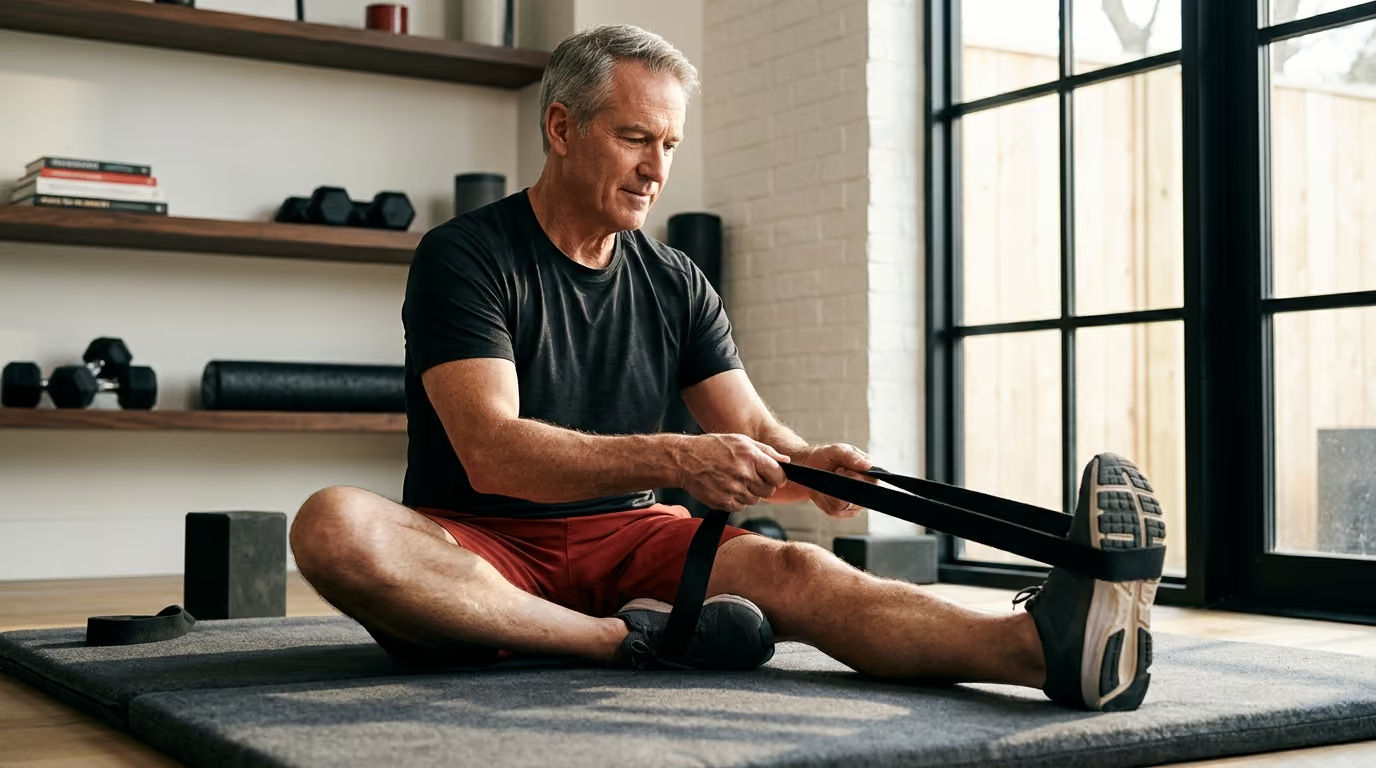
Flexibility is the passive range of motion available at a joint. Mobility is your ability to actively control that range of motion using muscular strength.
Passive flexibility alone will not protect a joint during movement. You must be able to produce force at the end ranges of your joint motion. Functional training focuses on four critical mobility zones:
- Ankles: Ankle dorsiflexion is needed for smooth walking, descending stairs, and deep squatting.
- Hips: Hip extension allows a full stride during walking. Hip internal and external rotation allows safe turning and floor transfers.
- Thoracic Spine: Upper back rotation and extension allow you to reach, turn, and maintain an upright posture.
- Shoulders: Overhead flexion and rotation allow safe lifting, carrying, and reaching behind your back.
Mobility routines should emphasize active movement rather than long, static stretches. Performing controlled joint rotations and moving through full ranges under light load builds usable joint control.
Anchor 3: Dynamic and Reactive Balance
Balance is a skill that adapts quickly to training. It requires keeping your center of mass over your base of support while stationary or moving.
Static balance involves standing still on one leg or in a narrow stance. Dynamic balance involves maintaining stability while walking, turning, stepping over obstacles, or reaching. Reactive balance is your body's ability to recover after an unexpected trip or bump.
Effective balance training moves through progressive stages:
- Narrow Stance Holds: Standing with feet touching side by side, then moving to a heel-to-toe tandem stance.
- Single-Leg Balance: Standing on one foot near a sturdy wall or counter for safety.
- Dynamic Stepping: Taking deliberate steps in multiple directions and pausing to stick the landing.
- Variable Tasks: Walking while turning your head from side to side, or carrying an uneven load in one hand.
Balance drills should be practiced near a wall, railing, or sturdy table so you can catch yourself instantly if you lose stability.
Anchor 4: Walking Ability and Gait Quality
Walking is a primary indicator of overall vitality. It integrates cardiovascular fitness, leg strength, joint mobility, balance, and coordination into a single activity.
Maintaining walking speed and endurance requires varied walking habits. Your routine should include steady walking for volume, brisk walking for cardiovascular conditioning, and variable-terrain walking.
Walking on uneven trails, grass, gravel, and hills challenges the stabilizer muscles of the feet and ankles. It also forces the nervous system to adjust your stride continuously. Tracking your comfortable walking speed over a measured distance gives you a clear window into your functional reserve.
Anchor 5: Floor Transfers and Transitional Control
The ability to get down to the floor and return to a standing position is a vital functional skill. It combines lower-body strength, hip mobility, trunk control, balance, and movement confidence.
Floor transitions should be trained as a regular movement practice rather than a high-stress test. You can build this capacity through progressive stages:
- Tall-Kneeling: Kneeling upright on both knees on a padded mat.
- Half-Kneeling: Kneeling on one knee with the opposite foot flat on the floor in front of you.
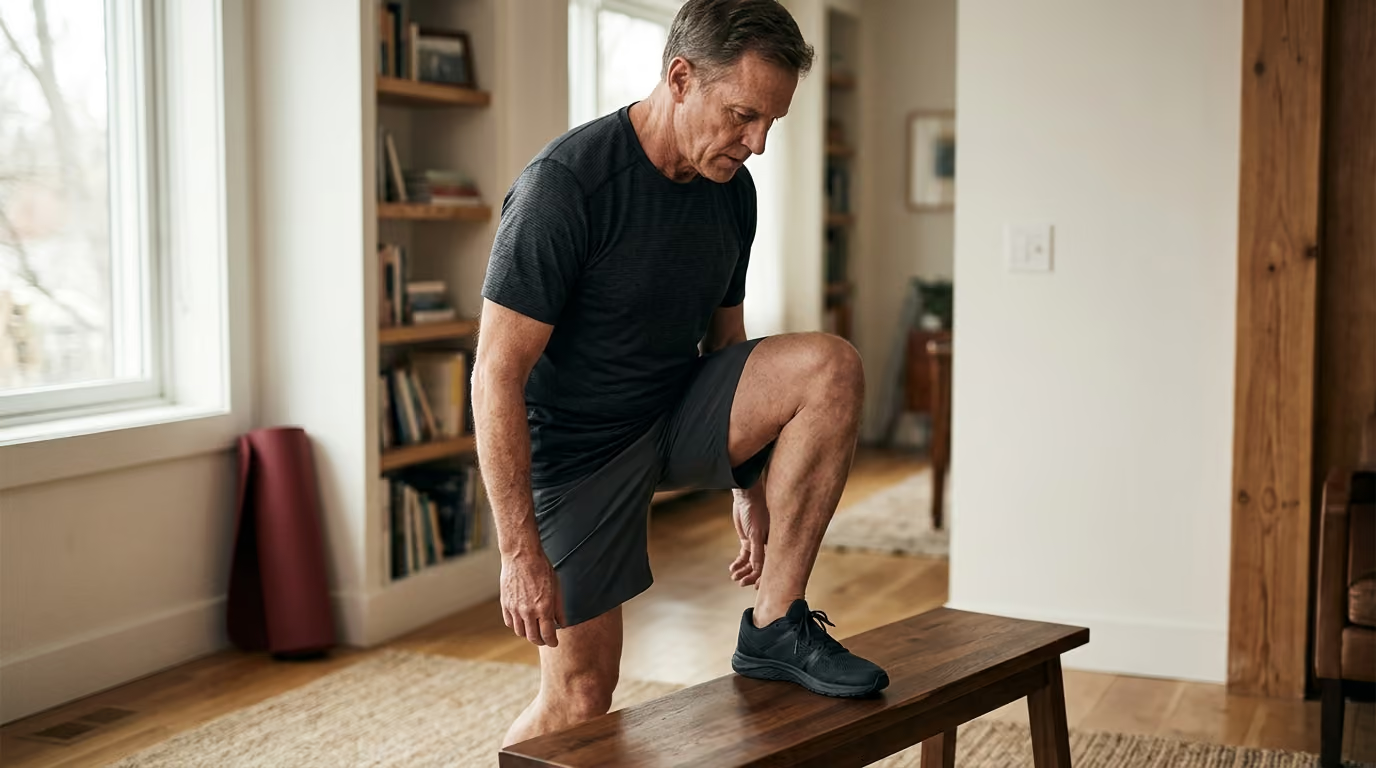
- Supported Transitions: Using a sturdy chair or bench to assist your hands while moving from kneeling to standing.
- Seated Floor Shifts: Sitting on the floor and shifting weight between your hips and hands.
- Unsupported Transitions: Rising from the floor using a cross-legged, side-sit, or lunge technique without hand support.
Practicing floor transitions regularly preserves the joint ranges and coordination needed to handle a fall or work comfortably on the ground. For structured routines, review our resources on mobility and functional movement.
Practical Assessments You Can Use at Home
Objective assessments help you track changes in your physical reserve over time. Standardized clinical tools can be modified for safe self-assessment at home.
The 30-Second Chair Stand Test
This test measures lower-body strength and muscular endurance.
- Place a standard, armless chair against a wall so it cannot slide.
- Sit in the middle of the seat with your feet flat on the floor.
- Cross your arms over your chest.
- Set a timer for 30 seconds.
- Count how many times you can come to a full standing position and sit back down completely.
Keep your movements controlled. Do not bounce off the seat. Track your completed repetitions every few months under identical conditions.
The Timed Up-and-Go (TUG)
The Timed Up-and-Go measures dynamic balance, agility, and walking speed.
- Place a chair against a wall.
- Measure a line on the floor 3 meters (roughly 10 feet) in front of the chair.
- Mark the line clearly with tape.
- Sit with your back against the chair.
- Start a stopwatch, stand up, walk at a normal, comfortable pace to the line, turn around, walk back, and sit down.
- Stop the timer the moment your back touches the chair.
In clinical settings, completing the test in 12 seconds or more indicates an elevated fall risk in older adults. Healthy, active adults often complete the test in under 9 to 10 seconds.
The Four-Stage Balance Assessment
This test evaluates your static balance across four progressively difficult foot positions.
- Parallel Stance: Stand with your feet side by side, touching each other. Hold for 10 seconds.
- Semi-Tandem Stance: Place the instep of one foot against the big toe of the other foot. Hold for 10 seconds.
- Tandem Stance: Place one foot directly in front of the other, heel touching toes. Hold for 10 seconds.
- Single-Leg Stance: Lift one foot off the ground without letting your legs touch. Hold for up to 10 seconds.
Perform this test next to a wall or sturdy countertop. Keep your hands hovered just above the surface, ready to grab support instantly if you lose balance.
How to Structure Your Weekly Training Plan
Building a balanced program does not require hours of complex training each day. A sustainable schedule blends strength, aerobic work, balance, and mobility across the week.
The World Health Organization recommends 150 to 300 minutes of moderate aerobic activity weekly, or 75 to 150 minutes of vigorous activity. It also recommends muscle-strengthening activities on two or more days per week. For older adults, multicomponent physical activity emphasizing functional balance and strength is recommended on three or more days per week.
Here is a practical weekly template designed for functional longevity:
Monday: Full-Body Strength and Balance
- Warm-Up: 5 minutes of joint rotations for ankles, hips, and shoulders.
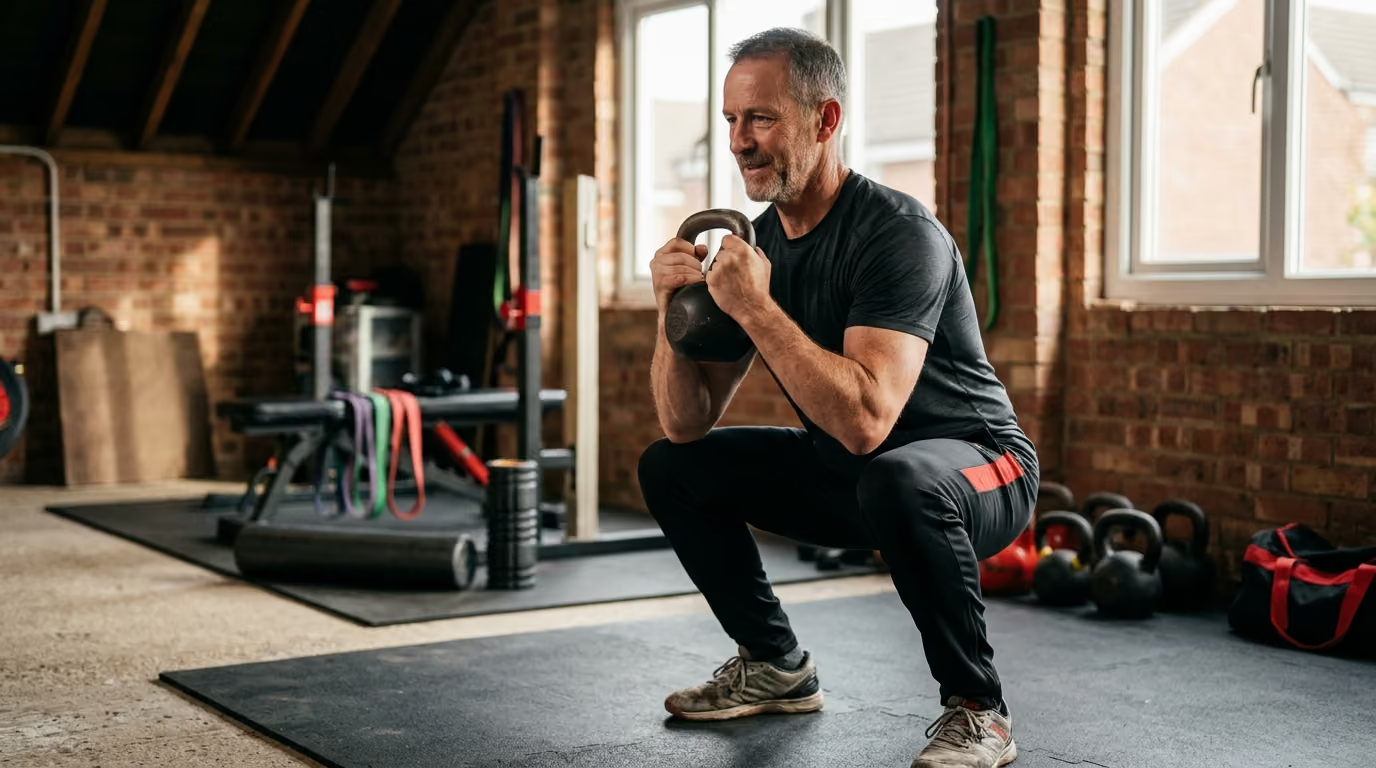
- Squat Variation: Goblet squats or box squats (3 sets of 8 to 10 repetitions).
- Upper-Body Pull: Dumbbell rows or lat pulldowns (3 sets of 8 to 10 repetitions).
- Hinge Variation: Romanian deadlifts or kettlebell deadlifts (3 sets of 8 to 10 repetitions).
- Balance Practice: 3 sets of 20-second tandem stance holds per side.
- Carry: Farmer carries with moderate weights (3 walks of 30 paces).
Tuesday: Aerobic Conditioning and Mobility
- Cardiovascular Work: 30 to 45 minutes of brisk walking, cycling, or rowing at a conversation pace.
- Mobility Flow: 10 minutes focusing on hip extension, ankle dorsiflexion, and thoracic spine rotation.
Wednesday: Active Recovery or Low-Intensity Movement
- Daily Movement: Light walking, gardening, or casual recreational activity.
- Floor Transitions: 5 minutes of slow, supported transitions from tall-kneeling to standing.
Thursday: Full-Body Strength and Power
- Warm-Up: 5 minutes of dynamic movement and arm swings.
- Split-Stance Movement: Step-ups onto a stable box or reverse lunges (3 sets of 8 repetitions per leg).
- Upper-Body Push: Dumbbell floor press or overhead press (3 sets of 8 to 10 repetitions).
- Power Focus: Medicine ball chest passes or intentional fast-concentric box squats (4 sets of 5 repetitions).
- Trunk Stability: Suitcase carries or side planks (3 sets per side).
Friday: Aerobic Conditioning and Dynamic Balance
- Cardiovascular Work: 30 minutes of interval walking (alternating 2 minutes of brisk walking with 1 minute of easy recovery).
- Dynamic Balance: Heel-to-toe line walking and multi-directional stepping drills (5 to 10 minutes).
Saturday: Functional Outdoor Activity
- Endurance & Adaptability: 45 to 60 minutes of trail hiking, cycling, yard maintenance, or recreational sport.
Sunday: Rest and Joint Maintenance
- Restoration: Full day of recovery with brief joint circles and relaxed breathing work.
This structure satisfies major exercise guidelines while leaving time for recovery and daily responsibilities. Explore more long-term training ideas in our collection of healthy aging strategies.
Modifying Exercise for Common Joint and Health Concerns
Functional longevity training must adapt to your individual health status, joint history, and physical limitations.
Managing Osteoarthritis
Joint pain from osteoarthritis often tempts people to stop moving altogether. Complete rest usually leads to joint stiffness and muscle weakness around the affected area.
Train within comfortable, pain-free ranges of motion. Use low-impact cardiovascular options like cycling, swimming, or elliptical trainers to build endurance without heavy joint impact. Strengthen the muscles surrounding the affected joint using slow, controlled tempos and moderate loads.
Managing Osteoporosis and Bone Health
Men with low bone density need resistance training and impact to stimulate bone remodeling. However, movement selection must be handled with care.
Avoid loaded spinal flexion, aggressive twisting under load, and high-risk balance exercises that could cause a fall. Focus on hip hinges with a neutral spine, supported step-ups, standing presses, and posture-strengthening back exercises.
Building Back from Sedentary Habits
If you have been inactive for years, do not rush into high-intensity workouts. Sudden spikes in training volume can cause tendon irritation and excessive fatigue.
Start by accumulating 10-minute walks two or three times each day. Begin resistance training using simple bodyweight sit-to-stands from a high chair. Gradually lower the chair height and add light weights over several months as your movement confidence improves.
Common Misconceptions About Functional Fitness
Several widespread myths cause men to waste effort or avoid necessary forms of training.
Myth 1: Walking Every Day Is All You Need
Walking is an excellent foundation for cardiovascular health and mental well-being. However, walking alone does not provide enough resistance to preserve upper-body strength, trunk stability, or rapid force production.
Walking does not challenge your full joint range of motion or force you to lift heavy loads. A complete routine combines regular walking with dedicated resistance and balance training.
Myth 2: Stretching Automatically Fixes Mobility Problems
Passive stretching can temporarily increase flexibility, but it rarely produces lasting functional mobility on its own. Being able to pull your leg into a position with your hands does not mean you can control that position while carrying weight.
True mobility requires strength at the end of your joint range. Pair active mobility drills with loaded resistance exercises through full, controlled ranges of motion.
Myth 3: Balance Cannot Be Trained
Some people assume that balance naturally fades and cannot be improved. Clinical trials show that the nervous system retains high plasticity as you age.
Balance is a motor skill that responds to deliberate practice. Practicing static and dynamic balance drills several times per week improves stability and lowers your risk of falling.
Myth 4: Heavy Gym Lifts Guarantee Daily Function
Being able to leg press a heavy weight on a fixed machine does not ensure functional capability. Machine exercises stabilize the weight for you, removing the need to balance, brace, or adjust your center of mass.
Real-world independence requires moving free weights, carrying uneven loads, and moving your body through space across multiple directions.
Myth 5: Any Discomfort Means You Must Stop Moving
Experiencing mild muscle fatigue or joint awareness during exercise is normal. Discomfort that stays below a mild level and resolves quickly after training is generally acceptable.
Sharp, shooting, or escalating pain warrants professional evaluation. Mild, temporary stiffness often improves as tissues warm up during light, controlled movement.
Where the Evidence Is Thin or Overstated
Health and longevity media frequently make claims that run far ahead of scientific evidence. Understanding where the evidence is limited helps you avoid wasted time and unnecessary purchases.
The Sitting-Rising Test as a Mortality Predictor
The sitting-rising test measures how easily you can sit on the floor and stand back up with minimal hand support. A well-known 2012 study linked lower scores on this test with higher all-cause mortality in adults aged 51 to 80.
This research is observational. The test reflects general physical fitness, joint mobility, body weight, and strength. Failing the test does not mean you face an immediate health crisis, nor does passing it guarantee longevity. Use floor transfers as a practical training goal, not an anxiety-inducing test of lifespan.
Gait Speed Cutoffs as Individual Predictions
Gait speed is a well-validated population marker for health and survival. However, applying precise population thresholds to an individual can be misleading.
A slower walking speed on a given day can stem from temporary foot pain, poor footwear, minor fatigue, or distractions. Look at your walking speed as an ongoing trend rather than relying on a single measurement.
Unstable Surface Training Gadgets
Commercial fitness programs often promote balance boards, foam pads, and unstable surfaces as essential tools for functional fitness.
While these tools challenge stability, they significantly reduce the amount of force your muscles can produce. Most real-world functional tasks require producing force against a solid, stable ground. Ground-based balance exercises, carries, and single-leg drills provide better functional transfer for daily life.
The Key Takeaway
Functional longevity is built by keeping your physical capacity well above the demands of daily life through regular strength, mobility, balance, and walking practice.
When to Revisit This Guide
Return to these assessments and training templates every three to six months to evaluate your walking speed, chair rise endurance, and balance progress. Adjust your training volume and exercise choices whenever daily physical tasks begin to feel harder than usual.
Consistent, progressive training preserves your independence across decades.
Sources
- Muscle tissue changes with aging - PMC - NIH
- Table 1.
- Sarcopenia in older adults - PMC - NIH
- How can strength training build healthier bodies as we age?
- American College of Sports Medicine position stand. Quantity and quality of exercise for developing and maintaining cardiorespiratory, musculoskeletal, and neuromotor fitness in apparently healthy adults: guidance for prescribing exercise - PubMed
- Functional Fitness Tests for Healthy Aging | Hillary Lin, MD
Stay sharp
Get the word
Join our newsletter for the best writing advice and stories from the field.