Analyzing the Standing Backward Bend for Joint Stiffness After 50
On Oct. 6, 2026, NBC News published a report featuring physical therapist Karena Wu detailing a standing backward bend for older adults. The segment frames this movement as a simple way to address stiffness for men and women over 50.
The Evidence Behind the Recommendation
The recent media feature does not rely on a formal clinical trial or newly published academic research. The report offers no participant demographics, control groups, or study duration. It serves as a general news segment based entirely on the clinical experience of a single orthopedic physical therapist. Readers looking for a validated physical progression will not find clinical data in this report.
Everfitguys approaches healthy aging by looking for clear evidence before adopting new routines. We review how the body changes after 45, prioritizing movements that protect long term capability. A news segment offers a helpful prompt to consider joint health. A single recommendation requires a critical look at the available physiological facts.
Intended Outcomes for the Lower Body
The NBC News feature highlights specific areas that the standing backward bend targets. Wu states that the movement can loosen the low back, hips, and knees. She connects this mobility exercise to the stiffness that often follows prolonged periods of sitting or driving. Restoring mobility remains a common goal for older adults returning to exercise.
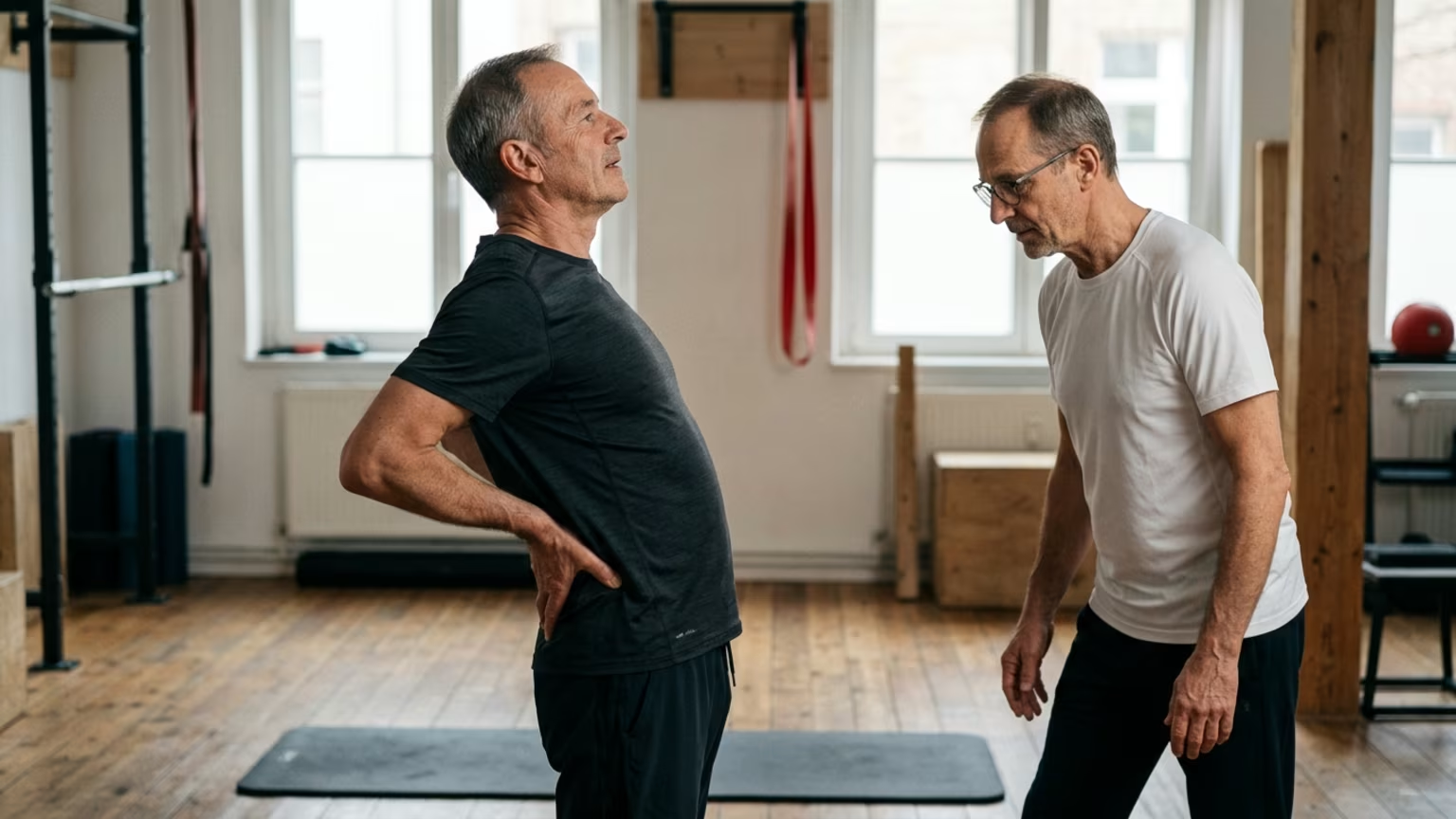
The execution of the movement requires no specialized equipment. The report instructs individuals to stand upright and lean backward. A person places their hands on their lower back, moves their hips forward and backward, and keeps the lower back arched. This sequence provides a basic way to introduce spinal movement into a static day.
The physical therapist also notes broader physical shifts that occur with age. Wu states that aging can bring changes to walking, balance, free movement, and physical strength. These observations align with the reality that men over 45 face changing capabilities. Maintaining functional mobility requires deliberate effort as daily activity levels fluctuate.
The segment includes a statistical claim about spinal discomfort. Wu told the publication that two-thirds of people will experience back pain at some point. The news article does not identify a specific study or methodology for this estimate. Readers should view this figure as a general clinical observation rather than an independently verified population metric.
Men managing stiffness often find that consistent mobility routines help preserve their independence. Understanding how movement affects the joints is part of building a resilient body. Practical modifications help older adults protect their joint health while they stay active. The right approach keeps active men strong without breaking down.
Practical Limitations and Movement Safety
The media report presents the backward bend as a general option rather than a universal medical treatment. The feature gives no quantified clinical outcome establishing the effectiveness of the exercise. The article lacks a standardized dose, a verified progression, or a list of physical contraindications. The recommendation serves as practical advice rather than a rigid prescription for joint pain.
Wu suggests that individuals can repeat the movement multiple times a day if they need it. This flexible advice should not be interpreted as a mandatory daily requirement or a guaranteed cure. Every body responds differently to spinal extension and unweighted mobility work. Men with existing conditions should not treat a general news feature as individualized clinical guidance.
Age-related changes in physical capability do not follow a uniform schedule. Individual declines in strength, balance, and range of movement vary significantly from person to person. Men rebuilding their fitness need to start with movements they can tolerate safely. Progressing slowly prevents acute joint irritation and protects long term physical resilience.
NHS physiotherapy guidance offers a useful baseline for managing joint and bone problems. The NHS advises people to remain gently active where possible. Individuals should adapt any activity that significantly worsens their symptoms. Seeking professional advice makes sense if symptoms escalate or if new physical issues develop unexpectedly.
Active men over 45 frequently ask about managing joint loads with age. Adapting exercises to fit personal biomechanics keeps mature lifters in the gym safely. A rigid approach to movement often leads to frustration or forced time away from training. Flexibility in exercise selection remains important for ongoing physical progression.
Relying on a single movement will not reverse decades of inactivity or mechanical wear. Men who want to maintain physical capability need a comprehensive approach to strength and movement. Adding a simple backbend might offer brief relief from sitting. It does not replace a structured plan for cardiovascular fitness and muscular maintenance.
Understanding Body Composition and Joint Health
Men roughly 45 to 70 frequently notice an increase in joint stiffness as their body composition changes. Losing muscle and strength with age directly affects how the skeletal system handles mechanical stress. Slower metabolism and falling energy levels often lead to more sedentary behavior throughout the week. This reduction in daily movement accelerates the loss of joint lubrication and range of motion.
A single mobility exercise acts as one small piece of a much larger physical puzzle. Reversing a loss of capability requires men to address their overall physical reserve. We focus on evidence based methods to retain strength, mobility, and metabolic health. Ignoring the structural changes of aging often leads to reduced physical independence later in life.
Understanding the core metabolic markers helps active men monitor their long term physical health. Men can read about the metabolic health numbers that matter to build a clearer picture of their resilience. Blood sugar management and body composition directly influence systemic inflammation. High inflammation often worsens the joint stiffness that mobility movements attempt to relieve.
Moving Past Simplistic Solutions
Mature readers frequently encounter media claims presenting one exercise as a definitive solution for aging. Everfitguys rejects hype and exaggerated claims in favor of honest analysis. The reality is that no single backward bend will completely restore youth or eliminate all joint pain. True physical capability requires a consistent mix of resistance training, cardiovascular effort, and targeted mobility.
Confusion about physical recovery often stems from isolated news segments lacking broad context. A physical therapist might offer excellent situational advice that a short article cannot fully detail. Men returning to exercise must interpret these recommendations as supplementary ideas rather than primary fitness strategies. A realistic approach acknowledges that progress takes time, effort, and intelligent load management.
Daily movement habits provide a strong foundation for any isolated mobility work. Reaching a reasonable daily step count supports joint health and general longevity. The science behind daily steps for adults over 60 shows that modest activity yields measurable physiological returns. Walking pairs well with targeted spinal movements to counteract prolonged sitting.
Integrating Mobility Into Daily Life
Applying a new movement requires active men to evaluate their current daily habits realistically. A person who sits at a desk for eight hours might find a backward bend temporarily refreshing. The movement breaks the static forward posture that dominates modern office environments. This minor postural reset serves a purpose, but it does not fix the underlying lack of activity.
Staying strong and sharp after 45 demands a more rigorous physical commitment. Men who train regularly know that true mobility comes from moving joints through their full range under load. Lifting weights, cycling, and hiking demand functional strength that a quick stretch cannot provide. We encourage readers to view these isolated movements as warmups rather than complete workouts.
Men dealing with hormonal changes sometimes attribute their physical stiffness to lower testosterone. While hormonal shifts matter, mechanical disuse remains a primary driver of lost mobility. A clear understanding of actual clinical data helps men avoid blaming age for correctable mechanical issues. Objective evaluation of symptoms guides active men toward the right interventions.
The Value of Structured Physical Protocols
Relying on random tips from news features rarely builds lasting physical resilience. Men looking to preserve their independence benefit from a planned approach to movement. A structured protocol tracks volume, intensity, and recovery over several months. Measuring these variables removes the guesswork from healthy aging and joint preservation.
A consistent routine allows mature adults to identify which movements actually improve their capabilities. Some men find that targeted stretching relieves pain, while others require loaded strength work. Recording physical responses to different exercises highlights what works for a specific body. This data driven approach beats blindly following general advice from a short article.
Clear goals keep older adults focused on practical physical improvements. Whether the objective involves hiking, lifting, or simply moving without stiffness, success requires measurable steps. We suggest that readers establish a baseline for their current strength and mobility. Tracking progress against that baseline provides a realistic view of how their capability evolves over time.
The Reality of Mobility Guidance
This news report does not alter current best practices for aging adults, but it confirms existing knowledge that regular, simple spinal movement helps combat the stiffness of a sedentary lifestyle.
How Everfitguys helps
Processing new physical therapy features requires active men to evaluate their daily habits realistically, a step Everfitguys handles by analyzing complex movement literature. Declining focus, memory and mental sharpness often complicate a return to regular exercise, an obstacle we help readers manage to retain their long-term capability. Read the research
Sources
Stay sharp
Get stories
The best writing on craft and life, delivered once a week. No noise, just the good stuff.