Gentle Exercise Programs Gain Ground for Improving Mobility After 45
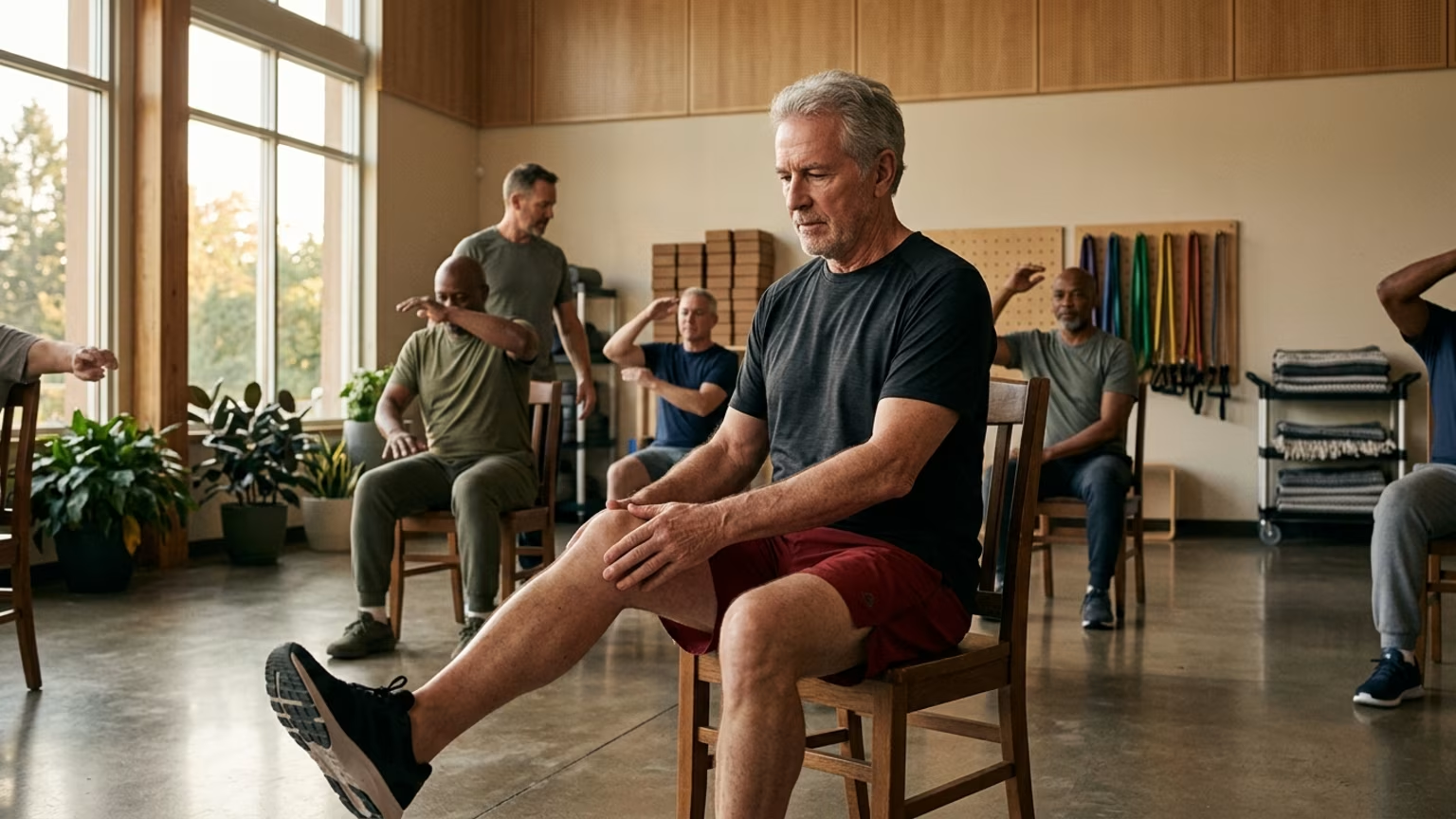
On September 20, 2026, the Pittsburgh Post-Gazette published a report on the rising visibility of lower-impact workouts. The piece detailed a chair-yoga class at the Homewood-Brushton YMCA to illustrate this growing trend.
Analyzing the Approach
The newspaper examined how older adults utilize gentle movement formats. The article frames lower-impact exercise as appealing to people who are older. It highlights individuals recovering from injury or living with chronic pain. The publication noted that sedentary adults or those intimidated by strenuous workouts often choose these accessible options.
Academic evaluations continue to explore the mechanics behind these formats. A 2026 review evaluated mind-body exercise among older adults classified as prefrail. The available research summary does not provide the total sample size for this review.
The Post-Gazette article featured older adults describing their personal experiences with chair yoga. Participants reported that the classes helped them manage aches and recover from hip replacements. The newspaper presented these individual accounts as personal stories rather than clinical evidence of causation. The class itself served as a practical case study of how these programs operate in community fitness centers.
Movement Mechanics
The Homewood-Brushton YMCA class demonstrated a dynamic approach to modified exercise. Participants did not remain seated throughout the entire session. The chair was used for stretching and physical support. The instructor also incorporated sit-to-stand exercises to challenge the lower body.
This format aligns with recommendations for maintaining functional independence. Practicing sit-to-stand movements builds fundamental leg strength required for daily tasks. Men looking for a manageable return to physical activity can benefit from this graded approach. The chair provides a safe constraint while allowing participants to load their leg muscles safely.
Documented Physical Outcomes
The 2026 review on mind-body exercise revealed clear balance benefits for prefrail older adults. That analysis reported measurable improvements in overall balance. Researchers also documented specific gains in static and dynamic balance. The study summary provided standardized mean differences of 0.54 for overall balance and 1.36 for static balance. It showed a negative 1.08 difference for dynamic balance outcomes.
Brian Oddi is an exercise and sports science professor quoted by the Post-Gazette. He described tai chi as an evidence-based form of gentle movement. Oddi stated that research has documented benefits involving lower-body strength and mobility. He also noted positive effects on coordination, flexibility, and blood pressure. He highlighted improvements in sleep quality and stress management.
Practical Exercise Design
The reported benefits require structured physical effort. Oddi argued that the best exercise is not necessarily the hardest routine available. He stated that a program should be safe and individually appropriate. The professor emphasized that routines must be feasible and sustainable for the participant.
Christopher Sciamanna is a Penn State professor of medicine and public health sciences. He cautioned that the accessibility of an activity does not automatically establish its effectiveness. Sciamanna explained that exercise generally needs to challenge the body enough to prompt physical adaptation. This principle applies heavily to older adults seeking sustainable mobility and recovery strategies for their joints.
Sciamanna acknowledged that seated movement holds potential to support basic mobility. He noted it can help maintain some degree of muscular control. He warned that remaining entirely seated may lack the necessary balance and strength challenge. He pointed out that tai chi uses slow movements to effectively challenge positional awareness and physical control.
Structural Limitations
The Post-Gazette report lacks specific quantitative data regarding the broader fitness trend. The newspaper identifies yoga classes at Pittsburgh-area YMCAs but provides no attendance figures. The publication also omits participation-growth statistics for the lower-impact movement category.
The broad list of reported benefits carries important scientific caveats. The article does not identify the specific studies or research dates backing Oddi's summary. It omits the effect sizes behind the reported improvements in blood pressure and sleep. Evidence regarding tai chi should not be automatically presented as direct evidence for chair yoga.
The 2026 review of prefrail older adults evaluates mind-body exercise as a broad category. It does not establish that chair yoga produces identical results. Neither search result establishes a specific benefit for men over 45 as a distinct demographic group.
Medical Clearances
A yoga teacher and psychotherapist named Lauren Maher offered practical advice in the article. She noted that people do not need to begin with a lengthy class. Maher described short bouts of movement as practical exercise snacks. This concept supports the use of a brief daily mobility sequence to maintain joint health.
Maher also outlined strict medical boundaries for new participants. She advised anyone with medical concerns to consult a doctor before beginning. The same recommendation applies to individuals recovering from surgery. Maher instructed participants to back off immediately if a posture causes physical straining.
Adapting the Routine
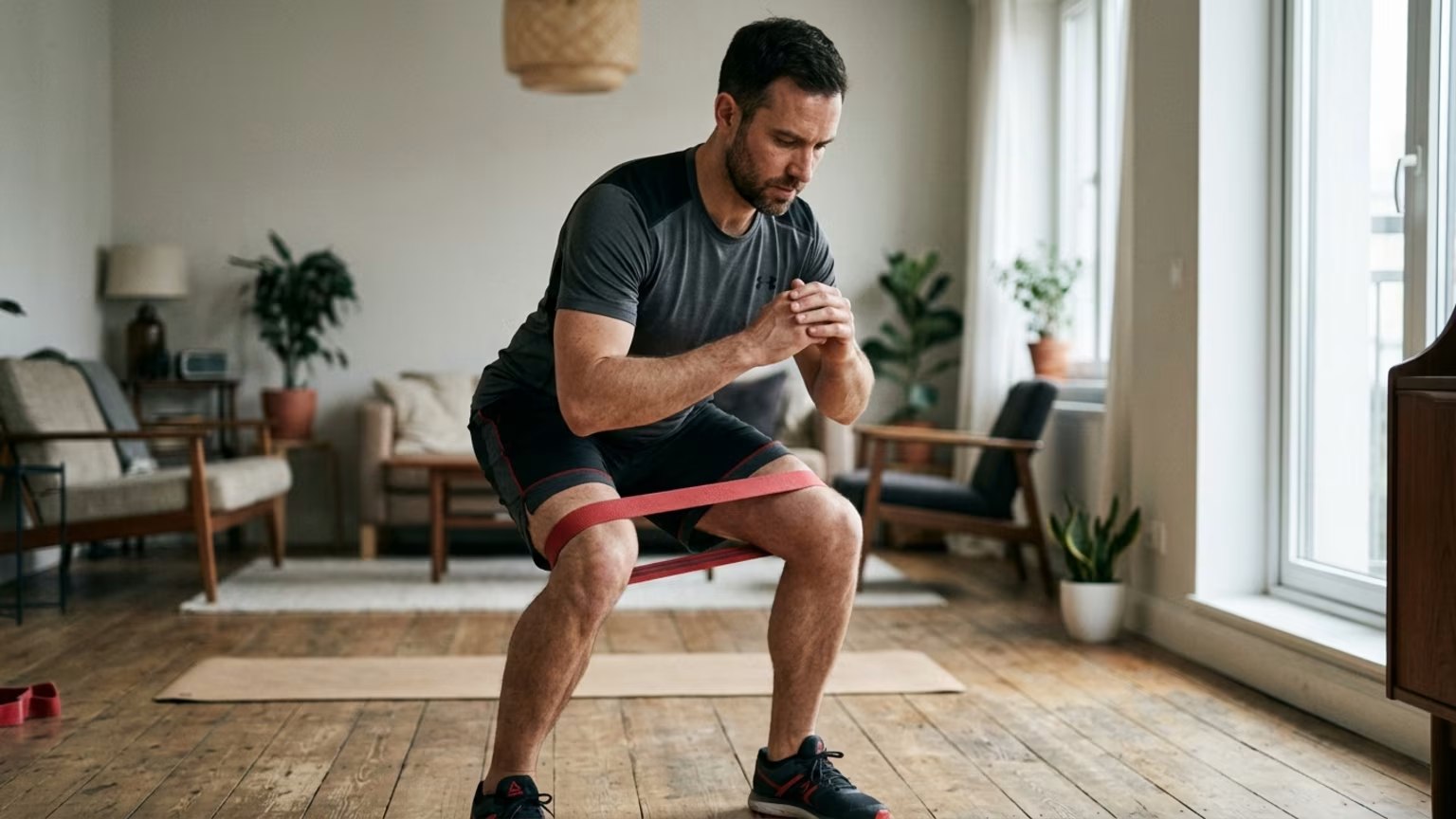
Men over 45 can use the newspaper's framework to evaluate local fitness classes. A practical first step involves asking what specific physical capacity the class trains. Participants should determine if the program offers a manageable progression over time. The routine should include movements relevant to personal goals like standing and walking.
A class that never progresses beyond seated stretching will eventually limit physical adaptation. Incorporating transitional movements helps maintain basic functional capacity for daily living. The YMCA class described by the Post-Gazette successfully integrated standing work with seated support.
Exercise selection always requires a clear understanding of personal limitations and goals. Lower-impact workouts offer a viable path for men managing joint wear or chronic pain. The format allows participants to practice load management while retaining consistent activity levels.
The scientific reviews show that gentle movement generates real physiological responses. Improvements in static balance directly translate to better stability during everyday tasks. Better physical stability correlates with improved lower-body function and overall independence.
The Value of Sit-to-Stand Mechanics
The mechanics of standing up from a chair require synchronized muscular effort. The quadriceps, hamstrings, and glutes must generate sufficient force to lift the body against gravity. The YMCA class utilized the chair to facilitate this exact mechanical sequence.
By practicing sit-to-stand movements, participants actively train their lower-body strength. Sciamanna emphasized that this level of challenge is necessary to prompt physical adaptation. A routine that stays entirely seated eliminates this gravitational challenge. It may help with basic mobility but falls short for building robust leg strength.
Recovery and Joint Loading
Older men often struggle to differentiate between productive physical fatigue and joint damage. Lower-impact classes provide a space to test physical boundaries safely. A chair-supported workout removes the heavy compression forces associated with heavy barbell lifting. This offloading gives irritated joints an opportunity to recover while muscles remain active.
Active recovery relies on moving blood and fluid through working tissues. Gentle movement facilitates this circulation without demanding prolonged recovery periods. Men can schedule lower-impact sessions between heavier training days to maintain activity without overtraining.
The absence of aggressive impact makes these routines sustainable for daily practice. The Penn State professor noted that physical adaptation relies on adequate challenge. Gentle movement provides that challenge through slow, controlled muscular tension rather than heavy external loads.
Balance and Positional Awareness
Managing positional awareness safely reduces the risk of accidental falls. Fear of falling often leads to reduced physical activity in older populations. Restoring confidence through controlled movement helps break this negative cycle.
Tai chi requires participants to shift their weight slowly across different bases of support. This slow movement demands continuous muscular tension and precise positional awareness. The nervous system adapts to these challenges by improving static and dynamic balance.
Maintaining Independence
The core objective for mature men involves protecting physical independence. Tai chi and hybrid yoga classes provide controlled environments for balance training. These formats encourage regular participation through their accessible design. Sustainability matters just as much as physical intensity when building an exercise habit. A consistent gentle routine provides more benefit than an intense program that causes injury.
The focus must remain on safe physical challenges. Moving from seated support to standing execution represents a fundamental strength progression. Men can apply this concept to various aspects of their physical training.
Evaluating the Evidence
The Post-Gazette piece successfully highlights a growing sector of community fitness. It accurately captures the appeal of routines that avoid aggressive joint loading. The inclusion of expert commentary provides necessary boundaries for participant expectations.
Readers must evaluate broad media summaries of health benefits with careful scrutiny. The absence of specific study citations limits the clinical utility of the newspaper report. Broad claims about blood pressure and sleep require detailed examination of the underlying literature.
However, the reported balance and mobility outcomes align with recent systematic reviews. The 2026 data on prefrail older adults confirms the utility of mind-body practices. These exercises deliver measurable improvements in critical physical markers.
This coverage confirms existing knowledge that gentle movement serves as a practical entry point for maintaining physical capacity, provided the routine includes adequate physical challenges rather than remaining entirely seated.
How Everfitguys helps
Evaluating gentle exercise programs for safe physical progression requires a clear analysis of movement mechanics, a step Everfitguys handles by reviewing current physiological literature. Stiffness, joint pain and reduced mobility that limits activity often frustrate active men, an obstacle we help readers overcome to build lasting physical capacity. Read the research
Sources
Stay sharp
Get stories
The best writing on craft and life, delivered once a week. No noise, just the good stuff.