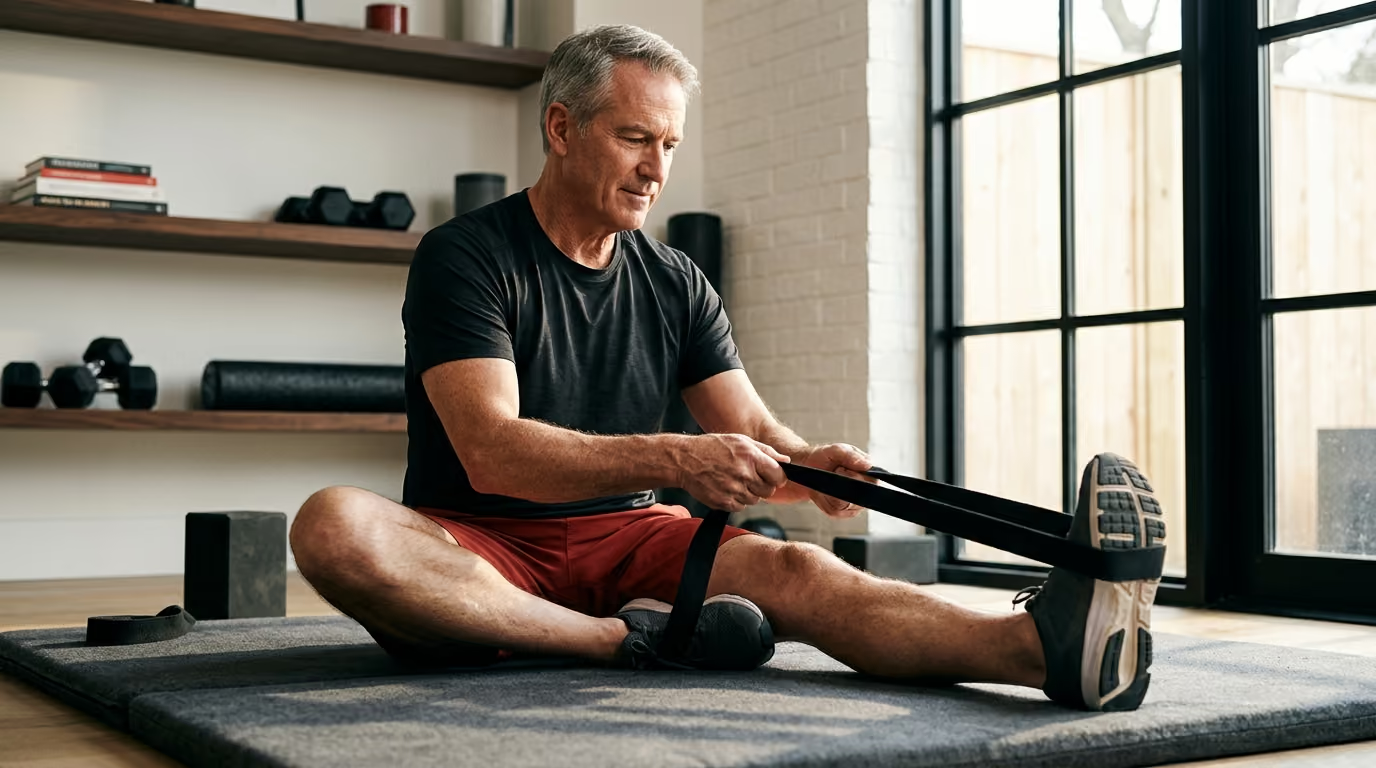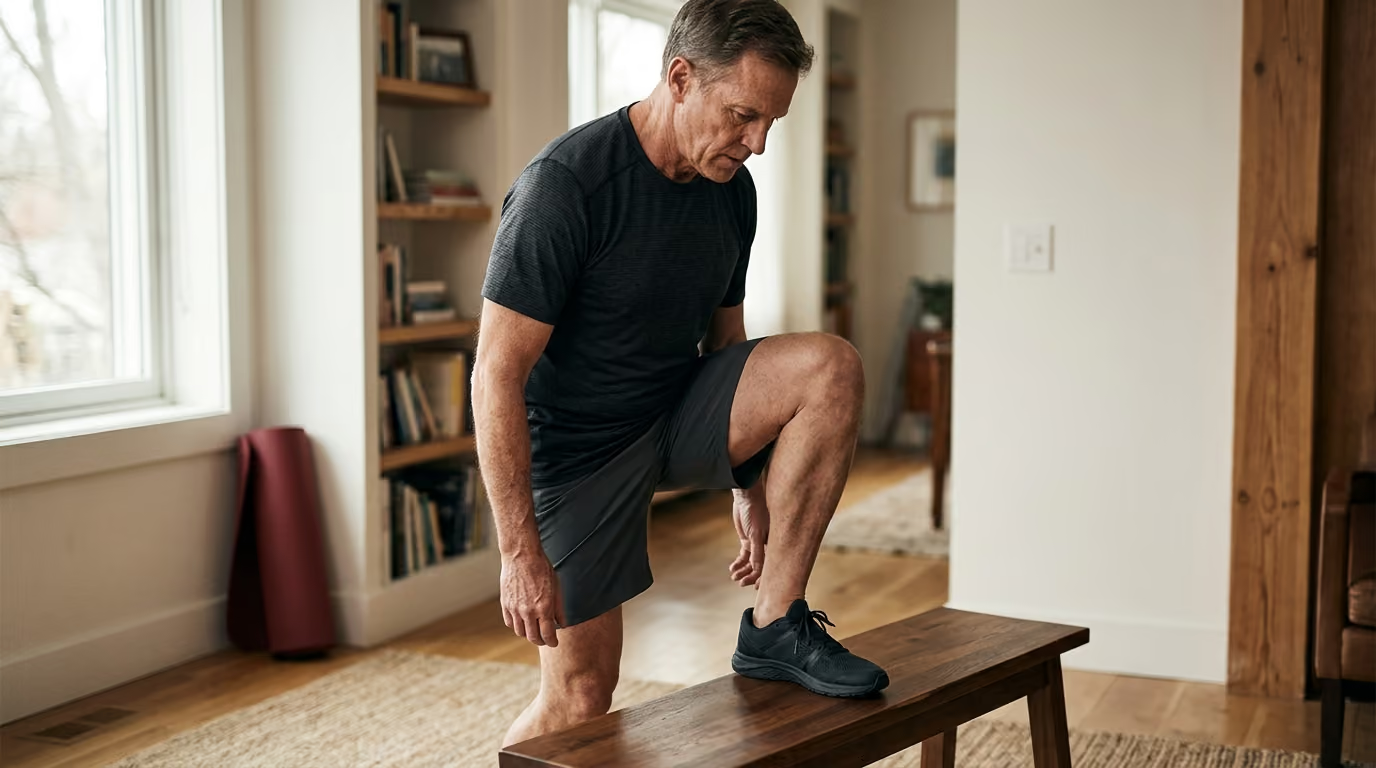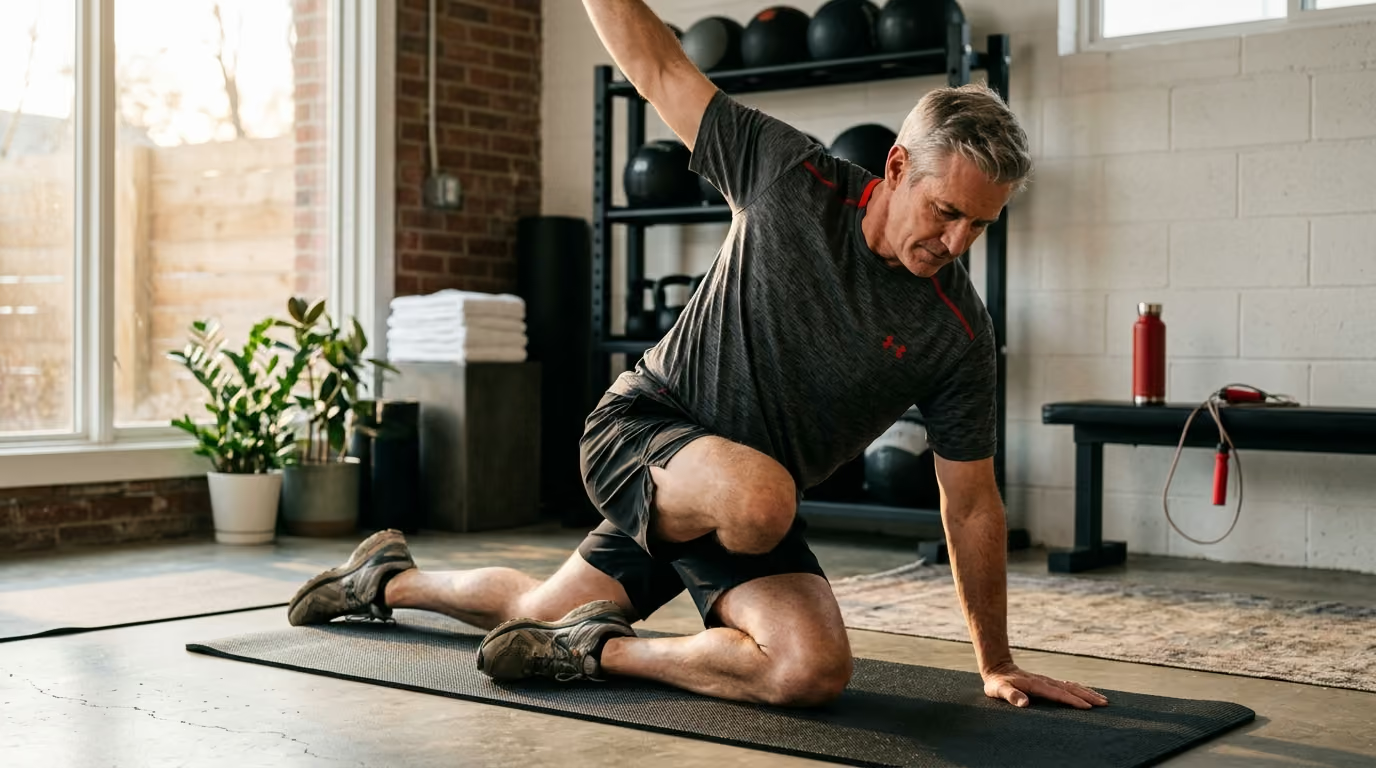
How to start working out again after 40 or 50 without getting hurt is one of the most common fitness questions men search for online. Many men find that restarting the exact workout routines they used in their twenties leads straight to joint pain, intense muscle soreness, or sudden frustration. This guide provides a clear, evidence-backed roadmap to rebuild movement tolerance, restore functional mobility, and safely transition back to meaningful strength training after months or years away.
Clinical Evidence on Movement Capacity and Aging
The medical consensus on restarting exercise in midlife has shifted away from chronological age as a primary limitation. Major clinical guidelines from exercise physiology organizations emphasize current physical activity habits, existing medical conditions, and known symptoms over the number on your birth certificate. Age 45 is not an abrupt physiological boundary. It is simply a point where accumulated periods of inactivity, occupational sitting, and old minor injuries begin to show their effects.
Current research shows that adult skeletal muscle and connective tissues maintain an impressive capacity to adapt to mechanical load at any age. When people remain inactive for long stretches, their tissues lose tolerance to rapid forces, long durations, and deep ranges of motion. The initial objective of returning to exercise is to restore this baseline tolerance rather than testing mental toughness. Clinical trials demonstrate that low-volume resistance training improves physical function, increases lean mass, and rebuilds motor control in mature adults.
Scientific reviews examining flexibility and functional movement reveal that joint range of motion alone does not predict everyday physical capability. While stretching interventions can temporarily increase passive range of motion, the evidence linking passive flexibility gains to real-world performance is inconsistent. Research comparing strength training through full ranges of motion against traditional stretching shows that resistance training produces comparable improvements in flexibility while also building usable joint control.
A safe return requires a progressive rebuilding of capacity. The nervous system requires repeated exposures to basic movement patterns to re-establish coordination and balance. By approaching exercise as a gradual reconstruction of joint stability, tissue tolerance, and movement skill, men over 45 can build durable physical strength without triggering unnecessary setbacks.
Physiological Mechanisms of Physical Deconditioning
Understanding why movement feels different after 45 helps remove unnecessary worry about normal bodily changes. When an adult reduces physical activity for months or years, changes occur across several body systems simultaneously. These shifts are natural responses to a lack of physical demand rather than irreversible diseases.
Muscular tissue experiences a loss of fast-twitch muscle fibers and a decrease in motor unit recruitment efficiency during prolonged inactivity. The nervous system becomes less practiced at coordinating complex motor tasks quickly. When you attempt a deep squat or an overhead press after years away, the movement often feels awkward not because your muscles are broken, but because the neural pathways controlling those joint positions have been underused.
Connective tissues, including tendons, ligaments, and joint capsules, undergo subtle structural alterations when unweighted for long periods. Tendons adapt to regular tension by maintaining stiffness and load-bearing tolerance. When inactive, tendons become less capable of absorbing sudden mechanical stress, which explains why jumping back into intense running or heavy lifting often causes tendon discomfort around the knees, shoulders, or heels. Synovial fluid production inside joint capsules also decreases during sedentary periods, which creates that familiar morning stiffness.
Metabolic and cardiovascular adjustments happen alongside these musculoskeletal shifts. Mitochondrial density within muscle cells declines during extended periods of sitting, reducing the speed at which your muscles produce energy and clear metabolic waste products. Capillary density around muscle fibers drops slightly, slowing the delivery of oxygen during physical effort. These metabolic factors mean that early workouts will feel tiring faster, and your body will require slightly more time between training days to recover.
Practical Impact on Daily Movement and Joint Function
Deconditioning changes how your body handles standard daily activities. Lifting heavy boxes from the floor, reaching into top storage shelves, or getting up from the ground can suddenly require noticeable effort. Joints that used to move freely can feel restricted or tight, altering your natural mechanics and shifting stress to other areas of the body.
True mobility is the usable, controllable range of motion you can demonstrate during an active task. It is distinct from passive flexibility, which is merely how far a joint can be pulled by an external force. If you have enough passive hamstring flexibility to touch your toes while sitting, but lack the hip and back control to bend over and lift a bag of soil without discomfort, your usable mobility is limited. Real-world mobility requires active strength, balance, and motor coordination working together.
Joint stability is another quality that suffers during long breaks from training. Stability is the ability of your nervous system and muscles to maintain joint alignment while your body is moving or resisting gravity. It is dynamic, not rigid. A stable shoulder or hip makes tiny, smooth adjustments while you carry a heavy suitcase, walk across uneven trails, or walk down a steep flight of stairs.
When tissue capacity drops, ordinary tasks begin to sit closer to your physical ceiling. If rising from a low chair requires 80 percent of your maximum leg strength instead of 40 percent, your daily energy drains rapidly. Rebuilding baseline movement restores a wide buffer between your physical capacity and daily tasks, leaving you feeling energetic and capable throughout the week. Exploring structured functional mobility and joint health helps re-establish this physical margin.
Preparticipation Safety Screening and Medical Evaluation
Before beginning any exercise routine after an extended break, a brief safety assessment is sensible. Professional exercise organizations provide clear screening guidelines based on your current activity habits, symptoms, and the intensity of your planned training.
Asymptomatic adults who currently lead sedentary lifestyles and plan to start light to moderate physical activity can usually begin without formal medical clearance. Light activity includes walking at an easy pace, bodyweight chair squats, or gentle mobility drills. However, if you plan to jump immediately into vigorous activity, or if you have known cardiovascular, metabolic, or kidney issues, consulting a healthcare provider first is the recommended step.
You should pause and seek a thorough medical evaluation if you experience any of the following signs:
- Discomfort, pressure, tightness, or pain in your chest, neck, jaw, or arms during physical effort
- Unexplained shortness of breath while resting or with mild daily exertion
- Episodes of dizziness, lightheadedness, or fainting during or after movement
- Noticeable heart palpitations or a sudden, irregular racing heartbeat
- Unexplained swelling in both ankles
- Persistent cramping or burning sensations in the calf muscles during short walks
- Unusual exhaustion during normal, non-strenuous daily tasks
Musculoskeletal symptoms also provide valuable guidance on when to seek specialized care. You should consult a physical therapist or physician if you notice sharp, localized joint pain that worsens steadily, a joint that catches or gives way, unexplained night pain, or swelling that does not subside after rest. These signs do not mean you can never train, but they require professional assessment rather than self-guided progression.
Baseline Movement Screening and Functional Tests
A simple baseline assessment helps you identify what your body can currently do comfortably. You do not need expensive equipment or complicated screening systems. The goal is simply to observe your baseline balance, positional control, and joint comfort before adding external weight.
The Self-Observation Screen
Perform these simple movements at a calm pace and observe how each joint feels:
- Comfortable walking: Walk on flat ground for five minutes. Notice if your gait is smooth, if your feet land evenly, and whether your hips feel loose.
- Chair sit-to-stand: Sit on a sturdy, standard-height chair. Stand up without using your hands for support, then sit back down under control.
- Assisted hip hinge: Stand with your feet hip-width apart and your hands resting on your thighs. Push your hips backward while sliding your hands down toward your knees, keeping your back straight.
- Step-up and controlled descent: Step onto a low, stable step with one foot. Step up smoothly, then step back down slowly without letting your lead knee collapse inward.
- Wall push-up: Stand an arm-length away from a wall. Place your hands flat against the wall, lower your chest slowly, and push back to the start.
- Single-leg balance: Stand near a sturdy countertop. Lift one foot off the ground and time how long you can balance comfortably before touching down.
- Floor transfer: If safe and comfortable, lower yourself down to the floor, sit for a moment, and stand back up using whatever hand support you require.
During these movements, watch for breath-holding, sudden sharp twinges, or severe balance wobbles. If an exercise causes discomfort, do not force the range. Record the variation you can complete smoothly so you have an accurate starting point.
Functional Progress Indicators
Tracking baseline numbers provides objective evidence of progress over time. Useful markers include:
- The number of controlled chair sit-to-stands completed in 30 seconds
- The duration of single-leg balance on each side with light fingertip support nearby
- The number of minutes you can walk at a moderate pace before feeling leg fatigue
- Your comfort level when getting up from the ground
These metrics serve as progress markers rather than pass-fail tests. You can improve functional capability substantially even before seeing major changes in isolated flexibility tests.
Fundamental Movement Patterns and Regressions
Human movement can be organized into six primary patterns. Building a program around these patterns creates balanced, usable strength that transfers directly to daily life and recreation. When restarting after an extended break, use regressed versions that match your current joint tolerance, then progress gradually.
The Squat Pattern
Squatting rebuilds the strength required for sitting down, standing up, climbing stairs, and lifting objects from low surfaces. It develops the quadriceps, glutes, and core musculature.
- First regression (High chair sit-to-stand): Use a chair with a firm cushion added to raise the seat height. Place your feet flat on the floor, lean slightly forward from your hips, and stand up smoothly. Sit back down slowly under control.
- Second regression (Counter-supported squat): Hold onto a sturdy countertop or doorframe. Lower your hips back and down to a comfortable depth, using your hands to assist balance and take pressure off the knees.
- Standard baseline (Bodyweight box squat): Stand in front of a standard chair. Lower your hips back until you lightly touch the seat, then stand back up without resting your full weight on the chair.
- Progression (Goblet squat): Hold a light dumbbell or kettlebell against your chest while performing a controlled squat to parallel.
The Hinge Pattern
The hip hinge is the mechanical foundation for picking objects off the floor, yard work, and protecting your lower back during bending tasks. It trains the hamstrings, glutes, and spinal extensors.
- First regression (Wall-touch hinge): Stand about six inches away from a wall with your back to it. Soften your knees slightly, push your hips backward until your glutes touch the wall, and stand tall.
- Second regression (Dowel-assisted hinge): Hold a light broomstick or dowel vertically along your spine, touching your head, upper back, and tailbone. Practice hinging at your hips while keeping all three contact points intact.
- Standard baseline (Elevated kettlebell deadlift): Place a light weight on a sturdy block or step. Stand over the weight, hinge at your hips to grip the handle with flat back mechanics, and drive through your heels to stand.
- Progression (Romanian deadlift): Hold dumbbells in front of your thighs. Lower them along your shins by pushing your hips backward, feeling a stretch in your hamstrings, and return to standing.
The Upper-Body Push Pattern
Pushing movements rebuild chest, front shoulder, and tricep strength, which helps with pushing heavy doors, rising from the floor, and overhead reaching tasks.
- First regression (Wall push-up): Stand arm-length from a wall, place your hands shoulder-width apart, and complete smooth push-ups while keeping your body in a straight line.
- Second regression (Incline countertop push-up): Place your hands on a kitchen counter or sturdy elevated table. Lower your chest to the edge and push back up, which provides more resistance than a wall.
- Standard baseline (Knee push-up or low-incline push-up): Perform push-ups with your hands on a low bench or from your knees on an exercise mat.
- Progression (Standard floor push-up or dumbbell floor press): Complete standard push-ups on the floor, or lie on your back with dumbbells and press them toward the ceiling.
The Upper-Body Pull Pattern
Pulling exercises strengthen the upper back, rear shoulders, and biceps. This pattern supports healthy posture, stabilizes the shoulder blades, and assists with lifting and carrying tasks.
- First regression (Seated resistance band row): Sit tall on a firm chair with a resistance band looped around your feet. Pull the handles toward your lower ribs, squeezing your shoulder blades together.
- Second regression (Standing cable or band row): Anchor a resistance band to a secure door attachment at chest height. Step back to create tension and pull your elbows back smoothly.
- Standard baseline (Chest-supported dumbbell row): Lie face down on an inclined workout bench while holding light dumbbells, pulling your elbows up alongside your torso.
- Progression (Single-arm dumbbell row or assisted pull-up): Place one hand on a bench, hinge at your hips, and row a dumbbell with the opposite arm through a full range of motion.
The Single-Leg and Step Pattern
Single-leg control is essential for walking on uneven ground, managing stairs, and preventing stumbles. It develops stability across the hips, knees, and ankles.
- First regression (Supported weight shift): Stand near a kitchen counter. Shift your full weight onto one leg for three seconds while keeping your pelvis level, then shift to the other side.
- Second regression (Low step-up with handrail): Step onto a four-inch platform or bottom staircase step while holding the railing, stepping up under complete control without pushing off the back foot.
- Standard baseline (Static split squat): Stand in a split stance with one foot forward and one foot back. Lower your back knee toward the floor as far as comfortable, then push back up without moving your feet.
- Progression (Reverse lunge or higher step-up): Step backward from a standing position into a reverse lunge, or perform step-ups onto an eight-inch box with light hand weights.
The Loaded Carry Pattern
Carrying objects builds whole-body coordination, grip strength, and core stability. It translates directly to carrying groceries, luggage, and household supplies.
- First regression (Two-handed light carry): Hold a light weight in each hand at your sides and walk smoothly across a flat room for 30 seconds, maintaining an upright posture.
- Second regression (Single-arm suitcase carry with light weight): Hold a light weight in one hand only. Walk slowly without letting your torso lean toward the weighted side.
- Standard baseline (Moderate suitcase carry): Carry a moderate dumbbell or kettlebell for 40 to 50 paces, switch hands, and repeat.
- Progression (Asymmetrical carries): Carry uneven weights or walk on slight inclines to challenge your balance and core endurance further.
- Regressed Movement Progression Path
- Wall Push-Up Countertop Push-Up Floor Push-Up
- High-Chair Squat Supported Squat Goblet Squat
- Wall-Touch Hinge Elevated Deadlift Dumbbell RDL
- Band Row Chest-Supported Row Single-Arm Row
- Weight Shift Low Step-Up Reverse Lunge
These progressive variations allow you to build usable joint strength without overloading sensitive areas. For more training strategies on building muscle mass safely, review our guide to strength training for muscle preservation.
Staged Return Phases from Inactivity to Training
A successful comeback follows distinct phases based on bodily adaptation rather than a rigid calendar. Move to the next phase only when your current workload feels manageable and repeatable without joint irritation.
- Return-to-Exercise Timeline
- Phase 1: Reintroduction (Weeks 1 to 3)
- 10-15 minute daily walking
- Low-threat mobility drills
- Regressed bodyweight strength (2 days/week)
- Phase 2: Capacity Building (Weeks 4 to 7)
- 20-30 minute brisk walking
- Reduced external hand support
- Light resistance bands/dumbbells (2-3 days/week)
- Phase 3: Structured Strength (Weeks 8 to 12)
- Progressive loading (8-12 rep range)
- Full movement pattern coverage
- Target 150 minutes weekly aerobic activity
- Phase 4: Goal-Specific Training (Week 13 )
- Hiking, cycling, running intervals, or recreational lifting
Phase 1: Movement Reintroduction (Weeks 1 to 3)
The goal of the first three weeks is to re-establish a daily habit of movement, lubricate stiff joints, and observe how your body reacts to light mechanical stress.
- Frequency: Two short strength sessions per week, combined with short daily walks.
- Session length: 15 to 25 minutes per session.
- Sample structure: * 5 minutes of easy walking or gentle marching in place * 2 sets of 8 to 10 high-chair sit-to-stands * 2 sets of 8 to 10 wall push-ups * 2 sets of 10 seated resistance band rows * 2 sets of 10 standing heel raises near a counter * 30 seconds of supported single-leg balance per side * Gentle ankle circles and arm swings to finish
During this phase, keep your perceived effort low to moderate. Finish each session feeling like you could have done twice as much work.
Phase 2: Capacity Building (Weeks 4 to 7)
Once basic movements feel smooth and cause no lasting joint ache, begin reducing external support and adding light resistance.
- Frequency: Two to three sessions per week on non-consecutive days.
- Session length: 25 to 35 minutes per session.
- Sample structure: * 5 minutes of brisk walking * 2 to 3 sets of 8 bodyweight box squats * 2 to 3 sets of 8 incline countertop push-ups * 2 to 3 sets of 8 elevated kettlebell deadlifts with a light weight * 2 to 3 sets of 10 standing band rows * 2 sets of 6 low step-ups per leg * 2 sets of 30-second two-handed suitcase carries
This phase enhances coordination and balance. Your body will feel noticeably sturdier during everyday tasks as your neural recruitment improves.
Phase 3: Structured Strength Training (Weeks 8 to 12)
In this phase, resistance training becomes a structured routine designed to build muscle mass, bone density, and joint integrity. Public health guidelines recommend muscle-strengthening activities that work all major muscle groups at least two days per week.
- Frequency: Two to three full-body strength sessions per week.
- Session length: 35 to 45 minutes per session.
- Working rep range: 8 to 12 repetitions per set for most exercises.
- Sample structure: * General warm-up: 5 minutes of dynamic movement and walking * Goblet squats: 3 sets of 8 to 10 repetitions * Romanian deadlifts with dumbbells: 3 sets of 8 to 10 repetitions * Flat dumbbell chest presses or low-incline push-ups: 3 sets of 8 to 10 repetitions * Single-arm dumbbell rows: 3 sets of 10 repetitions per arm * Static split squats or reverse lunges: 2 sets of 8 repetitions per leg * Single-arm suitcase carries: 3 sets of 40 paces per side
At this stage, you are actively building new tissue capacity and joint resilience. You can read more about integrating physical activity into long-term routines in our guide on physical resilience in healthy aging.
Phase 4: Training for Personal Goals (Week 13 and Beyond)
Once you establish baseline strength and movement tolerance, tailor your workouts toward your personal interests:
- For hiking: Focus on step-ups, walking lunges, calf strength, loaded pack carries, and incline walking.
- For golf or tennis: Emphasize hip rotational mobility, anti-rotation core holds, shoulder stability, and lateral lunges.
- For general vigor and longevity: Continue two to three weekly full-body strength workouts while working toward 150 minutes of moderate aerobic activity weekly.
This transition marks the shift from rehabilitation back into enjoyable, lifelong fitness.
Load Progression and Autoregulation Models
Progression must be deliberate when returning after inactivity. Increasing weight, volume, and workout frequency all at once is a reliable recipe for joint flare-ups. Change only one training variable at a time.
- Progressive Loading Step Hierarchy
- Step 1: Learn the movement pattern with perfect form
- Step 2: Repeat the pattern consistently for 2 weeks
- Step 3: Add repetitions (e.g. progress from 8 to 12 reps)
- Step 4: Increase range of motion slightly
- Step 5: Add external weight (2% to 5% load increase)
- Step 6: Add an additional set
Professional resistance training progression models recommend that when you can perform one or two repetitions above your target count with clean form, you may increase the weight by 2 to 10 percent. For men returning after long breaks, staying at the lower end of that range (2 to 5 percent) is safer for connective tissues.
The Three-Zone Effort Scale
Using an autoregulation system based on your perceived effort keeps you in a safe training zone:
- Green Zone (Easy to Moderate): You complete all repetitions smoothly and could easily perform three to four more repetitions if asked. Form is crisp, and your breathing is controlled. This is where all Phase 1 and Phase 2 training should live.
- Amber Zone (Challenging): The last two repetitions require noticeable focus and effort, but your technique does not break down. You could perform one or two more repetitions before failure. This is the ideal zone for Phase 3 and Phase 4 strength sets.
- Red Zone (Maximal Effort / Failure): You cannot complete another repetition without compromising form, holding your breath violently, or shifting your body awkwardly. Avoid this zone completely when returning from an extended break.
Training to complete muscular failure is unnecessary for building functional strength and significantly increases your recovery timeline. Leaving two repetitions in reserve on each set delivers nearly identical strength gains with far less joint stress.
Soreness Management and Recovery Monitoring
Experiencing some bodily feedback is a normal part of reintroducing physical activity. Learning to distinguish between productive muscular adaptation and joint distress ensures you make steady progress.
Delayed-Onset Muscle Soreness
Delayed-onset muscle soreness, commonly called DOMS, is the normal muscular aching that appears after unfamiliar physical exertion. It typically follows specific patterns:
- It feels like a dull, diffuse ache across the belly of the muscle rather than a sharp point inside a joint.
- It peaks between 24 and 72 hours after your workout.
- It is usually symmetrical on both sides of your body.
- It improves with light walking, gentle movement, and warm showers.
- It completely resolves within three to five days.
If you feel sharp pain inside a joint, localized swelling, warmth, or pain that alters how you walk, that is not standard muscle soreness. Modify the responsible exercise immediately.
The 24-Hour Recovery Rule
A reliable way to monitor your training load is the 24-hour symptom rule:
- Green Light: You feel normal muscular fatigue, but your joints feel comfortable. Any mild muscle stiffness settles within 24 hours. You are clear to progress your training gradually.
- Amber Light: You notice mild joint aching or stiffness that lingers for up to 24 hours but then returns to your normal baseline. Maintain your current workout weights and volume without increasing them until the session produces no lingering ache.
- Red Light: Pain, significant stiffness, or swelling lasts beyond 24 hours, or your everyday walking mechanics are altered. Reduce your training load substantially on the next session, regress the movement pattern, and allow symptoms to settle completely.
The Pillars of Recovery
Your capacity to recover between workouts depends heavily on lifestyle factors outside the gym. If work stress is elevated, sleep is compromised, or your nutrition is lacking, your tissues will repair more slowly.
Prioritize consistent sleep schedules, stay well-hydrated throughout the day, and consume sufficient dietary protein to support muscle repair. Combining workouts with active recovery strategies like leisurely walking and gentle stretching accelerates tissue repair. Review our resources on mobility and active recovery to refine your recovery approach.
Balance Training and Fall Prevention
Balance is an active skill that requires regular practice rather than an innate trait that disappears with age. Balance training protects joints, improves athletic agility, and dramatically lowers the risk of trips and falls. Research from systematic reviews shows that multicomponent exercise programs combining balance, functional movements, and strength training reduce fall rates by approximately 34 percent in community-dwelling adults.
Balance can be progressed smoothly by changing your foot stance and reducing hand support:
- Wide stance with support: Stand with feet shoulder-width apart, resting both hands lightly on a sturdy kitchen counter.
- Narrow stance: Bring your feet together so they touch side by side, maintaining light fingertip support on the counter.
- Semi-tandem stance: Place one foot slightly ahead of the other, with the heel of the front foot resting beside the big toe of the back foot.
- Full tandem stance: Place one foot directly in front of the other in a heel-to-toe line, holding the counter for balance.
- Supported single-leg stand: Lift one foot two inches off the floor while keeping one hand hovering right above the counter for safety.
- Dynamic balance stepping: Practice stepping forward, sideways, and backward onto balance targets while maintaining an upright posture.
Practice balance exercises when you are physically fresh, preferably at the start of a session or during dedicated movement breaks throughout the day. Always maintain a secure support surface within arm reach.
Illustrative Progression Models
These illustrative models demonstrate how different baseline situations require tailored entry points and pacing.
Model A: The Desk Worker with Hip Stiffness
- Context: A 48-year-old accountant sits for nine hours daily, reports morning hip stiffness, and has not exercised regularly in four years.
- Initial Focus: Frequent walking breaks, chair sit-to-stands, wall push-ups, and supported hip hinges to restore hip extension and spinal mobility.
- Progression Path: Moves from high-chair sit-to-stands to full bodyweight box squats over six weeks, gradually adding dumbbell Romanian deadlifts to build posterior chain strength.
- Key Principle: The solution to prolonged sitting is not endless passive stretching. It is regular exposure to standing, hinging, and loaded hip extension.
Model B: The Former Athlete Returning After a Hiatus
- Context: A 52-year-old former recreational runner has been sedentary for five years and wants to return to fitness, but develops knee discomfort whenever attempting to jog.
- Initial Focus: Low-impact flat walking, step-ups to a low platform, static split squats, calf raises, and glute bridges.
- Progression Path: Rebuilds lower-body muscular strength and tendon tolerance through structured resistance training for eight weeks before introducing light jogging intervals.
- Key Principle: Past athletic memory does not equal current tendon capacity. Rebuild tissue strength first before returning to high-impact activities.
Model C: The Cautious Beginner with Balance Concerns
- Context: A 66-year-old individual feels unsteady when walking on gravel paths or turning quickly and has low confidence in physical capabilities.
- Initial Focus: Countertop-supported balance drills, high-box squats with hand assistance, seated cable rows, and smooth flat-surface walking.
- Progression Path: Gradually reduces handrail assistance during balance drills, introduces light suitcase carries, and moves toward unsupported sit-to-stands over ten weeks.
- Key Principle: Confidence follows competence. Breaking balance and strength tasks into small, achievable steps builds neural coordination safely.
Common Misconceptions Regarding Midlife Exercise
Several widespread myths cause men to either avoid exercise entirely or train in ways that lead to injury.
Myth 1: You Must Regain Full Flexibility Before Lifting Weights
Many men believe they must spend months stretching on a floor mat before touching a weight. In reality, strength training through a comfortable, controlled range of motion is one of the most effective ways to build usable flexibility. You can safely perform regressed strength exercises while gradually expanding your available joint range.
Myth 2: Soreness is the Best Indicator of a Great Workout
Severe muscle soreness simply indicates that an exercise was novel or that the workload exceeded your current tolerance. It is not a reliable sign of muscle growth or cardiovascular improvement. In fact, excessive soreness impairs movement quality and prevents you from training consistently.
Myth 3: Weight Machines are Inferior to Free Weights
While free weights are excellent tools, resistance machines provide exceptional value when returning from inactivity. Machines offer external stability, guide your path of motion, and allow you to safely challenge specific muscle groups without demanding complex balance. They serve as great stepping stones toward free-weight exercises.
Myth 4: You Must Achieve 150 Minutes of Exercise in Week One
Public health targets of 150 minutes of weekly moderate aerobic activity represent long-term targets rather than day-one prerequisites. Guidelines from global health organizations emphasize that any amount of physical activity is far better than none. Starting with three ten-minute walks per week creates meaningful metabolic benefits and establishes a lasting foundation. Learn more about fueling your routine in our guide to building daily metabolic energy.
Research Limitations and Gaps in Current Evidence
While the benefits of physical activity after 45 are well-documented, certain areas of exercise science remain less defined. Much of the clinical literature on resistance training protocols focuses on younger athletic populations or older clinical populations in assisted settings. Healthy, middle-aged adults returning to exercise after desk-bound inactivity represent a group with fewer dedicated, long-term randomized trials.
Scientific evidence comparing different stretching modalities against active mobility training is still mixed. While studies demonstrate that resistance training through full ranges of motion improves flexibility, the optimal balance between static stretching, dynamic warm-ups, and loaded eccentric exercises varies across individuals. Commercial mobility programs often make bold claims about ungluing fascia or resetting posture that lack rigorous scientific backing.
Furthermore, individual recovery rates vary widely based on genetic factors, previous athletic background, and sleep quality. There is no single universal algorithm that predicts exactly how many sets or days of rest an individual needs. This is why self-monitoring, gradual progression, and autoregulation remain the most reliable tools for navigating a safe return to fitness.
The Practical Takeaway and Weekly Action Plan
Returning to exercise after 45 is a process of rebuilding tissue capacity, movement control, and consistent habits rather than proving your toughness. By starting with manageable movement regressions, pacing your progress, and listening to 24-hour bodily feedback, you can build lasting physical strength and joint mobility.
Your Action Plan for This Week
Follow this straightforward checklist to start your return safely:
- Complete a self-safety screen: Check the warning signs outlined above. If you have chronic conditions, symptoms, or intend to begin vigorous training immediately, schedule a consultation with your doctor.
- Establish a baseline walking routine: Commit to a 10 to 15 minute walk each day at an easy, conversational pace to wake up your cardiovascular system.
- Pick three basic movement regressions: Choose three foundational exercises, such as high-chair sit-to-stands, wall push-ups, and wall-touch hinges.
- Perform your first short strength session: Complete two sets of 8 to 10 repetitions for each chosen movement, keeping your effort in the easy Green Zone.
- Practice one balance drill daily: Spend 60 seconds practicing narrow-stance or tandem-stance balance near your kitchen counter while brewing coffee or waiting for a meal.
- Monitor your 24-hour response: Notice how your joints and muscles feel the next morning. If your joints feel comfortable, repeat the routine two days later.
Sources
- Applying the ACSM Preparticipation Screening Algorithm to ...
- Preparticipation Screening Prior to Physical Activity in ... - PMC
- Flexibility Training and Functional Ability in Older Adults: A Systematic Review
- Strength and Stretching Training and Detraining on Flexibility ... - OUCI
- (PDF) Personal Exercise Diary
- Pain and injuries after exercise
- Review Chronic effects of stretching on range of motion ...
- The effects of an active-assisted stretching program on ... - PMC
Stay sharp
Get the word
Join our newsletter for the best writing advice and stories from the field.