Does Creatine Work Without Exercise After 45?
In August 2026, researchers published a randomized controlled trial in the Journal of the International Society of Sports Nutrition detailing how creatine monohydrate affects body composition and strength in adults.
How the Trial Evaluated Sedentary Adults
The new trial examined whether creatine could influence health markers in middle-aged and older adults. The researchers enrolled 73 healthy and sedentary adults for the project. Out of that initial group, 64 participants completed the trial and were analyzed for the final results. The final analyzed group included 40 women and 24 men.
Participants ranged from 45 to 65 years old. The mean age across the cohort was 54.5 years. The trial was conducted by researchers affiliated with Texas A&M University’s Exercise & Sport Nutrition Laboratory. The trial was registered officially as ISRCTN83081058 to document the clinical methodology.
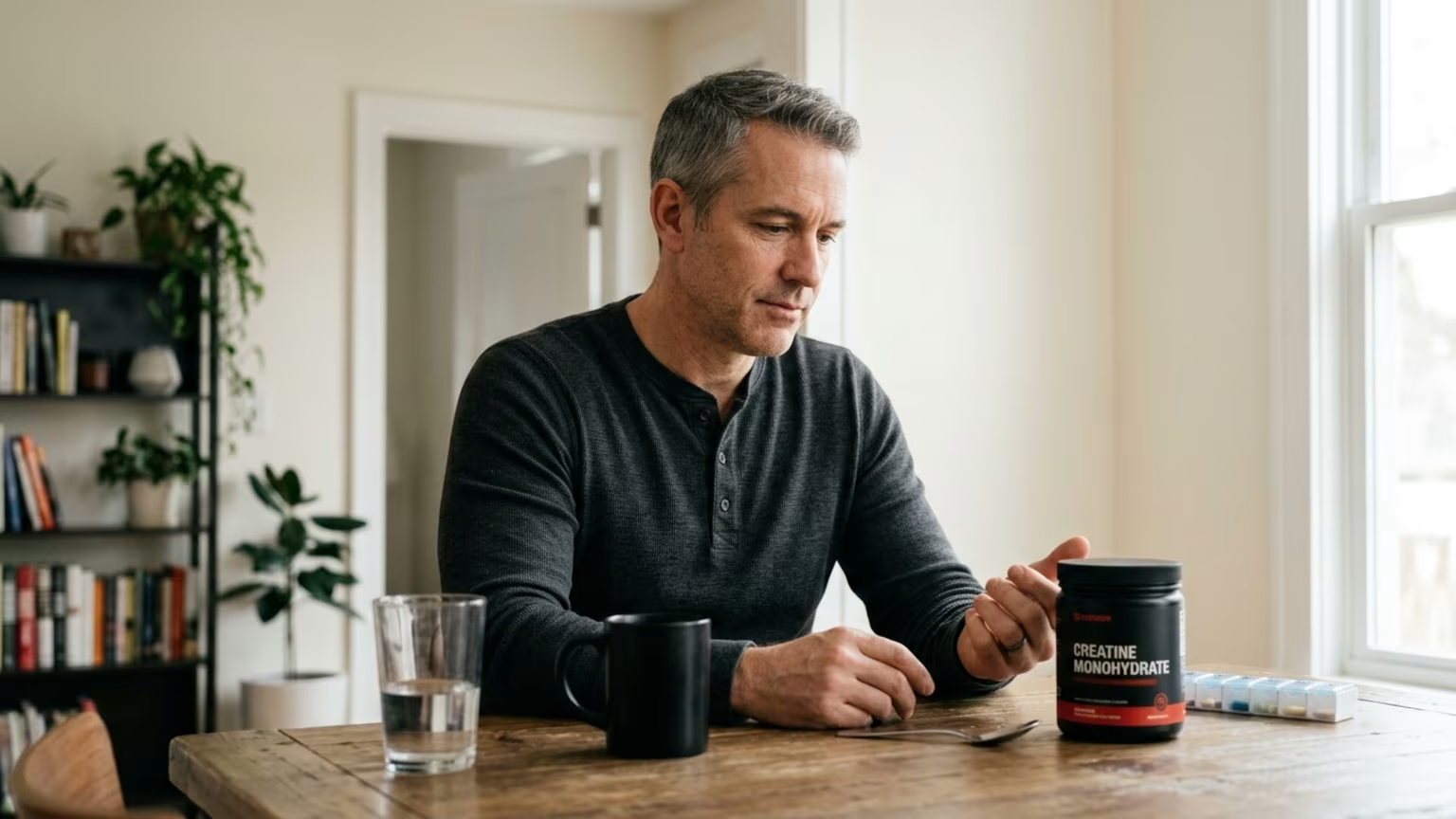
The intervention lasted 12 weeks total. Assessments took place at baseline, six weeks and 12 weeks to track physiological changes over time. Participants consumed either creatine monohydrate or a maltodextrin placebo. The designated daily dose was 10 grams per day. They divided this amount into two separate five-gram servings.
Evaluating creatine after 45 requires understanding how researchers structured this specific trial. Participants selected either a non-exercise intervention or an exercise-and-weight-loss-diet intervention before any randomization occurred. After making this selection, researchers randomly assigned them to the creatine or placebo group. This setup means the study did not randomly assign every participant to exercise versus no exercise.
This specific sequence created four practical comparison groups for the researchers to analyze. The inactive groups were no exercise plus placebo and no exercise plus creatine. The active groups were exercise plus placebo and exercise plus creatine.
What the Research Revealed About Lean Mass and Strength
The most surprising finding involved the participants who remained sedentary. Researchers reported increases in lean mass and strength among participants taking creatine without the structured exercise intervention. A report in Men’s Fitness confirmed this unusual outcome. The study abstract also noted improvements in muscular endurance for the creatine-only condition.
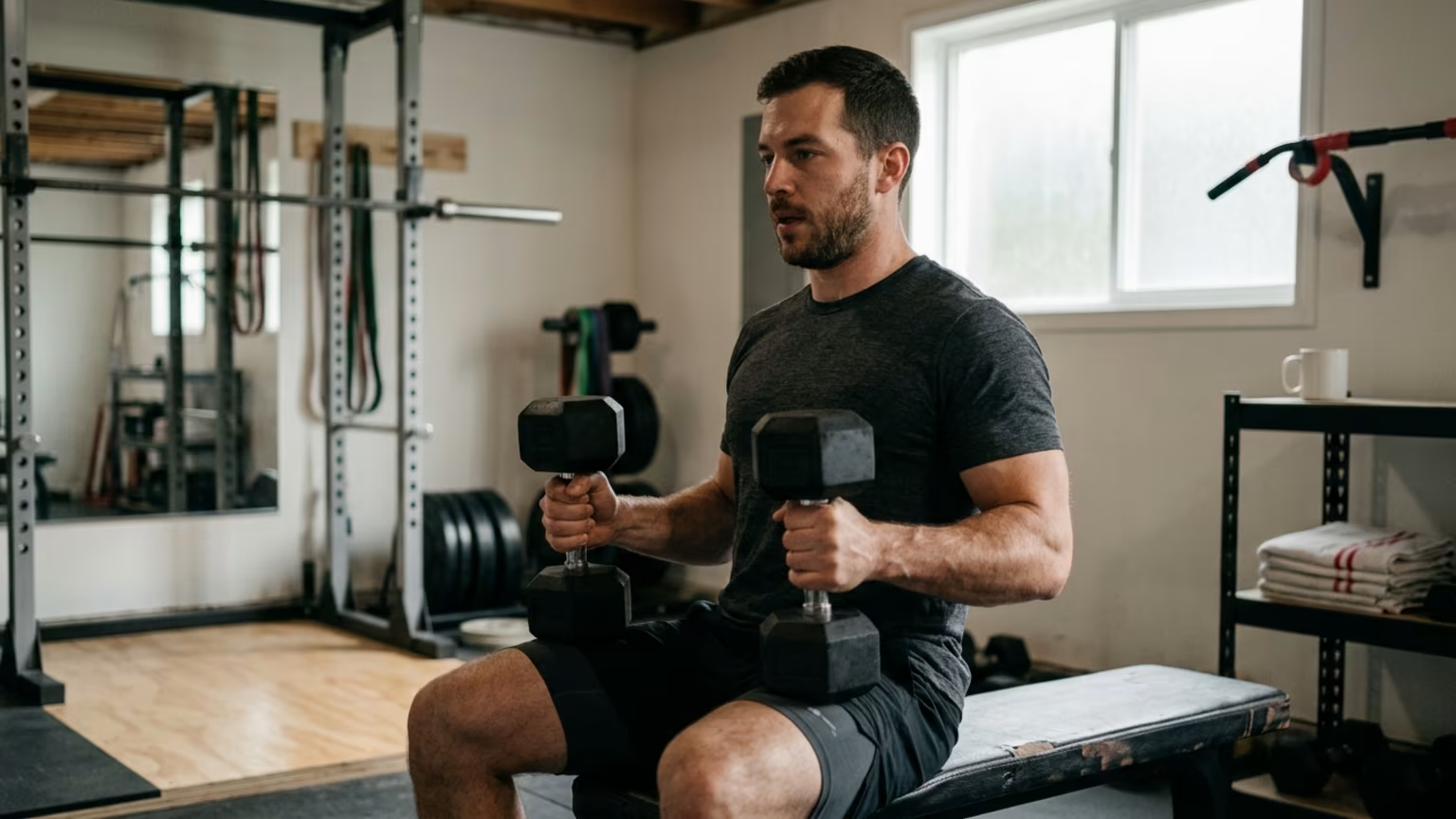
These sedentary results are interesting for men dealing with temporary training interruptions. However, the active groups achieved better outcomes overall. The exercise-and-diet condition combined with creatine was associated with increased lean tissue and improved strength. The Men’s Fitness report says the creatine-plus-exercise group produced the strongest overall results for fat loss and muscle gains.
Achieving lasting fat loss after 45 requires understanding how these different protocols compare. The trial looked at specific metabolic markers during the 12 weeks alongside the physical measurements. The creatine-only group showed favorable changes in selected blood lipids. They also experienced favorable changes in HbA1c levels. The study authors described these individual biomarker findings as exploratory.
Cognitive testing was another prominent component of the 12-week trial. The study reported modest improvements in memory-related testing among both creatine groups. The Men’s Fitness summary noted that memory recall appeared to improve more consistently. The Stroop, Corsi block and light-reaction tests did not show benefits in the Men’s Fitness summary. The authors called all individual cognitive findings exploratory.
Practical Applications for Men Facing Training Interruptions
Someone returning from injury or dealing with a temporary training interruption may find the no-exercise result interesting. The study does not show that supplementation can replace rehabilitation, progressive loading, walking or balance work. Medical guidance remains critical for anyone managing a physical setback. The cognitive and metabolic findings may justify further research, but they should not be used to market creatine as a proven memory, cholesterol or blood sugar treatment.
Readers should distinguish carefully between lean tissue and practical daily function. The featured study reported lean tissue and strength improvements. The available abstract does not provide enough numerical detail to determine how large or clinically meaningful those changes actually were. Men looking to maintain their independence should prioritize activities that build usable force. Structured training provides the movement patterns necessary to stay mobile and capable.
How These Findings Compare to Broader Clinical Data
Putting this trial into context requires looking at other recent scientific reviews. A separate 2026 meta-analysis examined 11 randomized controlled trials involving adults aged 60 and older. These trials evaluated older adults who combined creatine with resistance training. The review found a small but statistically significant improvement in muscle strength compared with resistance training alone.
The effect size for this strength improvement was 0.31 with moderate certainty of evidence. Men interested in sarcopenia prevention and treatment often track these specific clinical benchmarks. The same meta-analysis found that creatine’s additional effects on muscle mass and physical function remained uncertain. The certainty of evidence for those specific outcomes was low or very low.
Its authors concluded that creatine may provide a useful adjunct for modest strength improvements. They cautioned that evidence from healthy older adults should not be applied directly to frail populations. The results may differ significantly for people with significant illness or major functional limitations.
The strongest consistent practical case supports creatine as an addition to resistance training. Relying on it as a total replacement for exercise is not supported by the broader literature. Adding it to a routine can help, but structured movement remains the primary driver of physical capacity. The exercise-plus-creatine group in the featured trial clearly demonstrated this principle.
Structural Limitations and Commercial Funding
The new trial provides helpful data but carries several notable structural limitations. The sample size was relatively small with only 64 analyzed participants. The final group included only 24 men. These results therefore should not be treated as definitive evidence specifically for all men over 45.
The specific study design also creates interpretation challenges for the exercise comparisons. Because participants chose their exercise status before randomization, the trial was not fully randomized regarding activity. This makes the comparison between exercising and non-exercising participants harder to evaluate objectively. A trial in which all participants are randomly assigned to each condition provides clearer causal data.
Data reporting in the abstract also leaves several questions unanswered. The abstract reports the direction of the main findings but does not provide the numerical magnitude of the lean mass gains. It also omits the numerical strength gains for each specific group. Lean tissue measured by DXA is not identical to contractile muscle tissue. The available study summary does not establish how much of the observed change represented functional skeletal muscle growth.
Financial and professional ties were also disclosed in the published paper. The paper’s disclosures note that senior author Richard B. Kreider has conducted industry-sponsored creatine research. He has received financial support for conference presentations and served as an expert witness. Kreider also serves as chair of the scientific advisory board for AlzChem, a creatine manufacturer.
The trial noted that supplementation was well tolerated during the 12-week intervention. Men with kidney disease or other medical conditions should discuss supplementation with a qualified clinician. The findings in healthy sedentary adults do not automatically apply to every individual health status. Managing recovery and adaptation after 45 requires prioritizing medical safety above all supplement claims.
What this changes is that while current research now suggests creatine may offer minor lean mass and strength benefits during sedentary periods, it confirms that progressive resistance training remains the primary requirement for significant physical adaptation.
How Everfitguys helps
Evaluating whether a dietary supplement can support muscle preservation without structured training requires looking directly at clinical trial data. Falling energy, slower metabolism and unwanted changes in body composition frequently complicate healthy aging, and Everfitguys translates current scientific research to help you maintain your physical capability effectively.
Sources
Stay sharp
Get stories
The best writing on craft and life, delivered once a week. No noise, just the good stuff.