Building Muscle and Retaining Strength Without Pushing Sets to Complete Physical Exhaustion
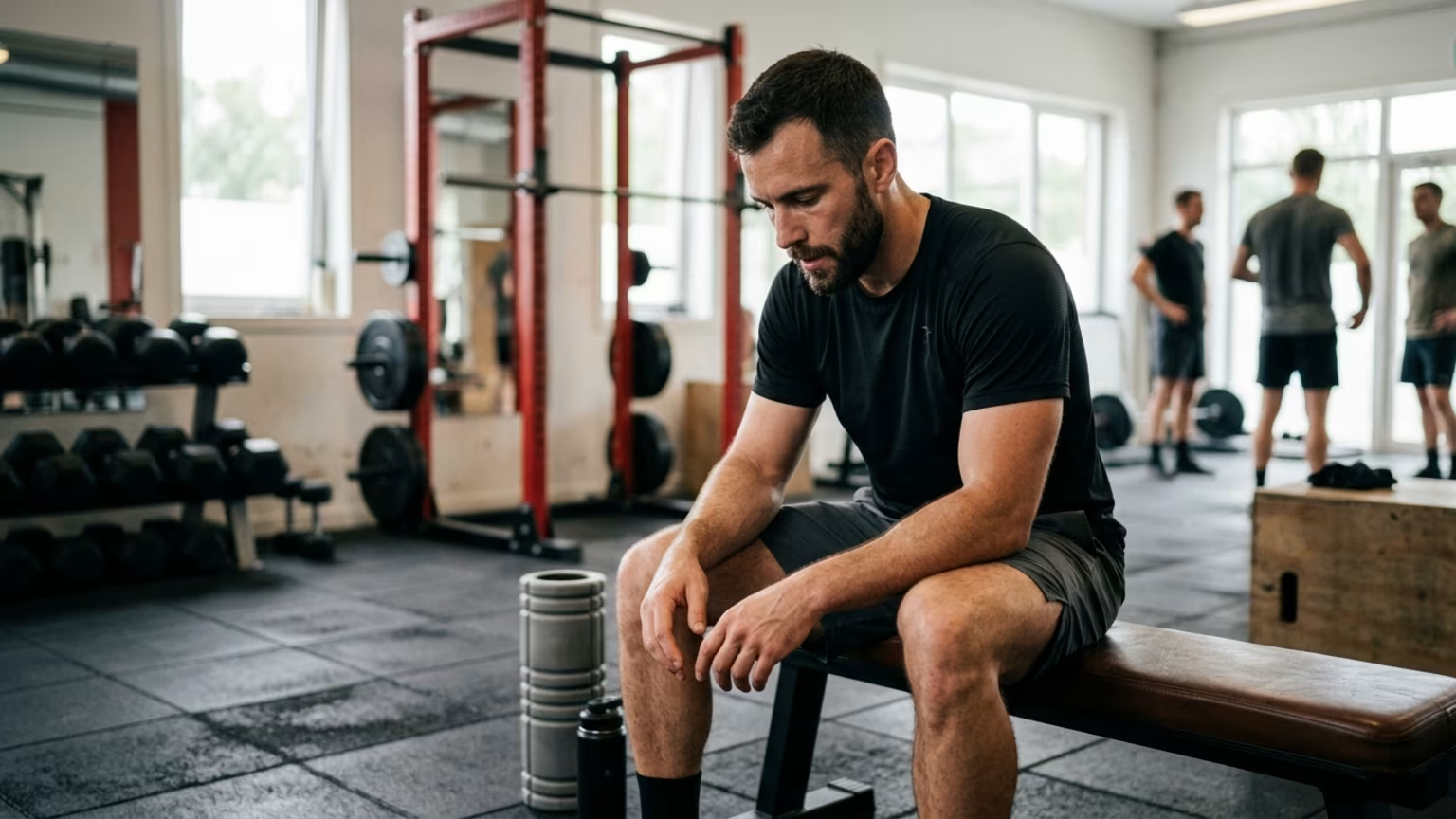
On October 2, 2026, Apotheken Umschau published a report by medical editor Silke Stuck examining whether strength training needs to reach muscular failure. The article evaluates if this physical limit is necessary to build muscle.
For mature lifters, deciding how hard to push a set is a primary programming concern. Men in their fifties and sixties must balance a sufficient physical stimulus with recovery capacity. They also need to consider joint tolerance and the risk of injury. The German report looks at the broad evidence regarding training effort. It raises a practical question about whether stopping short of complete exhaustion delivers the same results. Understanding this balance helps men structure their workouts safely.
The Science of Muscle Fiber Growth
The Apotheken Umschau article defines hypertrophy as muscle fiber growth associated with regular resistance training. Building structural strength requires challenging the body through consistent physical effort. Muscles adapt to physical stress by repairing microscopic tissue. This natural repair process leads to the growth of muscle fibers.
The exact proximity to failure required to trigger this adaptation remains a debated topic among fitness professionals. Some routines push lifters until they cannot complete another repetition with proper form. Other methods stop sets while the lifter still has physical energy in reserve. The German report relies on systematic reviews to compare these two distinct approaches.
Retaining muscle is a priority for mature men who want to stay active through lifting, hiking, cycling and travel. Maintaining strength supports everyday mobility and independence. Understanding how much effort is strictly necessary helps them plan routines that support these daily activities. If a man knows he does not need to train to absolute failure, he might feel more comfortable maintaining a consistent gym schedule.
Evaluating the Study Methodology
To assess the methodology of these training approaches, the report cites systematic reviews that compare training to repetition failure against non-failure training. A secondary summary of a review by Grgic and colleagues describes a synthesis of 15 studies. A separate search result describes a 2023 review by Refalo and colleagues. The assembled evidence evaluates general training outcomes without isolating specific trial durations or exact demographics for men over 45.
Because the primary article uses broad systematic reviews, the study populations span a wide range of participants. The underlying studies do not focus exclusively on mature men. The methodology in these reviews centers on how close sets come to failure rather than standardizing an exact age bracket. This broad data collection is standard in physical conditioning research. It provides a baseline understanding of human physiology. It also leaves room for practical adjustments based on an individual's age and experience level.
Primary Findings on Physical Exertion
The primary findings reported in the secondary summaries show that reaching absolute exhaustion is not strictly mandatory for progress. According to a summary of the Grgic synthesis, there is no significant overall difference in strength or hypertrophy between failure and non-failure training across the 15 studies. The summary of the 2023 Refalo review found no evidence that momentary muscular failure is superior for hypertrophy.
The Grgic summary does note one specific exception, observing a small hypertrophy advantage for failure specifically in trained participants. These outcomes indicate that men can stimulate muscle growth without pushing every set to the absolute limit. The lack of a significant overall difference means that stopping short is a viable path for the majority of people.
For those who have been lifting for years, the small advantage noted in the Grgic summary might be a relevant factor. However, the Refalo review reinforces that momentary muscular failure does not universally outperform a measured approach.
Practical Adjustments for Mature Lifters
Mature lifters often focus on retaining muscle while avoiding unnecessary wear on their bodies. The available evidence does not quantify joint risk or recovery time specifically for men over 45. It also does not establish a clear injury comparison between failure and non-failure training for this older demographic. Because of these data gaps, men must rely on practical programming adjustments in the gym.
It is a wise strategy to protect joint health by stopping sets before physical form breaks down completely. Programming an effective routine means managing cumulative physical stress over time. Men who choose to push closer to failure might need more rest between sessions. Understanding how to manage training fatigue is a core component of staying consistent in later life.
The evidence shows that hypertrophy is possible without extreme exhaustion. This allows lifters to adjust their daily effort based on how their joints feel. Adjusting effort also requires paying attention to the body after the workout ends. Distinguishing between normal post workout aches and actual joint pain helps mature men train sustainably.
Since the research does not provide a universal failure prescription, individuals must gauge their own recovery speed. Modifying the weekly resistance training frequency can help balance the workload if a particular session feels too intense.
Interpreting the Research Caveats
The accessible evidence carries distinct structural limitations. The Apotheken Umschau page is only partially accessible, meaning the full interpretation by the medical editor is restricted. The available descriptions of the two reviews come from search result summaries rather than the primary texts. This limits confidence in detailed statistics and specific subgroup conclusions.
Furthermore, the sources assembled here do not provide a specific screening protocol or age specific injury risk estimates. Readers with individual health concerns should seek individualized advice from an appropriately qualified clinician. Relying on secondary summaries means the granular details of the 15 studies in the Grgic review are not fully visible. The methods and precise results of the Refalo review also remain behind the summaries.
The lack of demographic specificity means the data should be applied carefully. Without a specific injury comparison, the claim that failure training causes injuries is not explicitly supported by this evidence set. The research simply does not provide enough detail to declare failure training inherently dangerous for older men.
Balancing Stimulus and Recovery
The question raised by Apotheken Umschau is highly relevant to long-term physical conditioning for older men. Muscle retention is a major goal for maintaining independence and metabolic health after 45. As men age, their recovery capacity naturally shifts. A training session that felt easy at thirty might require a full day of rest at fifty.
The finding that non-failure training produces comparable results offers practical flexibility. It suggests that older men do not need to mimic the extreme intensity of professional bodybuilders. Men who enjoy pushing their physical limits can do so, knowing there may be a small advantage if they are already highly trained. Men who prefer a more measured approach can still achieve significant muscle fiber growth.
This flexibility is crucial when designing a routine that lasts for decades rather than weeks. A sustainable routine allows men to enjoy their active hobbies without chronic fatigue. Training just short of failure can leave a lifter feeling energized rather than depleted. Rigorous consistency often matters more than absolute intensity in a single exercise session.
The evidence supports the idea that staying engaged with regular resistance training is the true driver of hypertrophy. Frequent, moderate sessions can accumulate significant volume over time. If stopping a few repetitions short of failure keeps a man returning to the gym, that measured strategy has immense practical value. It removes the physical dread that sometimes accompanies excessively demanding workouts.
The absence of a universal prescription means that personal observation remains necessary. Every lifter must assess his own joint tolerance on a weekly basis. He must decide if the small potential benefit of pushing to failure outweighs the immediate physical fatigue. The evidence assembled here provides a calm foundation for that decision.
What this changes is the assumption that maximum exertion is mandatory, confirming that men can build strength and muscle effectively without forcing every set to complete failure.
How Everfitguys helps
Applying the evidence on muscular failure to a weekly routine requires mature men to separate proven training outcomes from exaggerated fitness trends, a process Everfitguys supports by evaluating peer-reviewed data. Not knowing which longevity and healthy aging claims are actually supported by research complicates decisions about exercise intensity, but Everfitguys translates this evidence so you can confidently maintain your physical capability.
Sources
Stay sharp
Get stories
The best writing on craft and life, delivered once a week. No noise, just the good stuff.