New Fisetin Trial Shows Exercise Amplifies Healthy Aging Biomarkers
On September 14, 2026, NutraIngredients reported on two papers from a randomized trial evaluating fisetin supplementation and interval resistance-aerobic training in men with obesity. The publication notes that the largest and broadest marker changes appeared in the combined intervention group.
Targeting Inflammatory Markers
Men over 45 frequently look for ways to manage systemic inflammation and preserve their physical capabilities. As the body ages, baseline levels of inflammatory markers often rise slowly. This gradual shift can influence recovery, energy levels, and overall joint comfort. Active adults want to know whether specific compounds can mitigate these internal changes.
Evaluating any new compound requires a close look at how it performs in controlled clinical settings. It is necessary to understand what chronic inflammation actually means and how to address it through lifestyle habits. The latest trial data provides insight into how one specific supplement interacts with physical training.
Trial Structure Specifics
Researchers designed a 12-week randomized trial to test these interventions in a specific population. The study involved 44 men with obesity. They separated the participants into four distinct groups to compare different approaches. The first group served as a placebo control.
The second group took fisetin alone at a dose of 200 milligrams per day. The third group completed interval resistance and aerobic training without the supplement. The final group combined the interval resistance-aerobic training with the daily fisetin supplement. This four-arm design allowed researchers to observe the combined effects of the compound and the physical training.
Tracking Metabolic Shifts
The trial authors reported statistically significant group-by-time interactions for several key markers. These included Maresin-1, along with well-known inflammatory markers like IL-6 and TNF-α. Maresin-1 is a specialized pro-resolving mediator that plays a role in the resolution of inflammation. According to the published results, Maresin-1 increased in both of the training arms.
NutraIngredients notes this specific result suggests that an exercise stimulus may be necessary to activate that pathway in this population. Meanwhile, IL-6 decreased in both training arms and in the fisetin-only arm. The marker TNF-α decreased across all three of the active intervention arms. These results show a varied biological response depending on the specific marker tracked.
Measuring Blood Glucose
The researchers also tracked systemic metabolic health indicators. These measurements included fasting blood glucose, insulin levels, and HOMA-IR. HOMA-IR is a standard clinical measure used to assess insulin resistance. Maintaining healthy insulin sensitivity becomes a priority for many men as their metabolism changes in midlife.
All three active intervention arms saw decreases in fasting glucose, insulin, and HOMA-IR. However, the largest reported reductions in these metabolic markers occurred in the combined training and fisetin group. This suggests the combination provided a broader shift in these specific blood measurements. Men seeking to optimize their body composition often monitor these same metabolic indicators.
Tracking Adipokine Changes
NutraIngredients also summarizes a companion paper published in the journal Nutrients. This secondary paper examined asprosin alongside other adipokines and lipid-related markers in the same study participants. The report indicates that the most pronounced pattern of change occurred in the combined group. The fisetin-only group showed smaller changes in comparison.
These are study-specific biomarker results. They reflect chemical changes measured in a laboratory setting during a 12-week window. Understanding these shifts helps researchers map the biological pathways involved in metabolic health and inflammation.
Biomarkers Versus Capability
Mature adults must distinguish between changing a biomarker and improving a physical capability. Blood tests can show reductions in inflammatory cytokines or improvements in insulin sensitivity. While these internal shifts matter for long-term health, they do not automatically translate to noticeable physical gains.
A man reading about senolytics might hope for reduced joint stiffness or better recovery after a workout. A drop in IL-6 does not guarantee that picking up a heavy barbell will feel easier. Physical strength training forms the true foundation for everyday mobility, and supplements cannot replicate the mechanical tension required to build muscle. Evaluating primary evidence requires keeping this fundamental distinction clear.
Future Sleep Research
Scientific interest in fisetin extends beyond metabolic markers. A separate trial listing outlines another study evaluating fisetin and urolithin A. This listed study focuses on sleep quality and aging biomarkers in middle-aged and older adults. The trial listing specifies a participant age range of 30 to 75 years.
This source describes the aims of the study rather than completed results. Therefore, it does not establish that either supplement improves actual sleep outcomes. Sleep architecture changes significantly in midlife, and men often seek clear ways to protect their rest. Understanding how daily habits influence sleep quality after 60 remains crucial while researchers continue to test specific nutritional compounds.
Recognizing Trial Boundaries
The results from this trial come with distinct clinical limitations. The study observed a small cohort of 44 men with obesity over just 12 weeks. These findings should not be assumed to apply directly to all men over 45, people without obesity, or individuals with different training histories. The available reporting does not establish improvements in muscle strength, mobility, recovery, cognition, sleep, independence, or lifespan.
Furthermore, the results do not establish the long-term safety of fisetin. They also do not support a universal consumer dosing recommendation for healthy aging. The available coverage does not provide a quoted independent clinician evaluating the results. The interpretation that fisetin has independent activity comes from the study reporting and NutraIngredients, not a field-wide consensus.
The Physical Demands
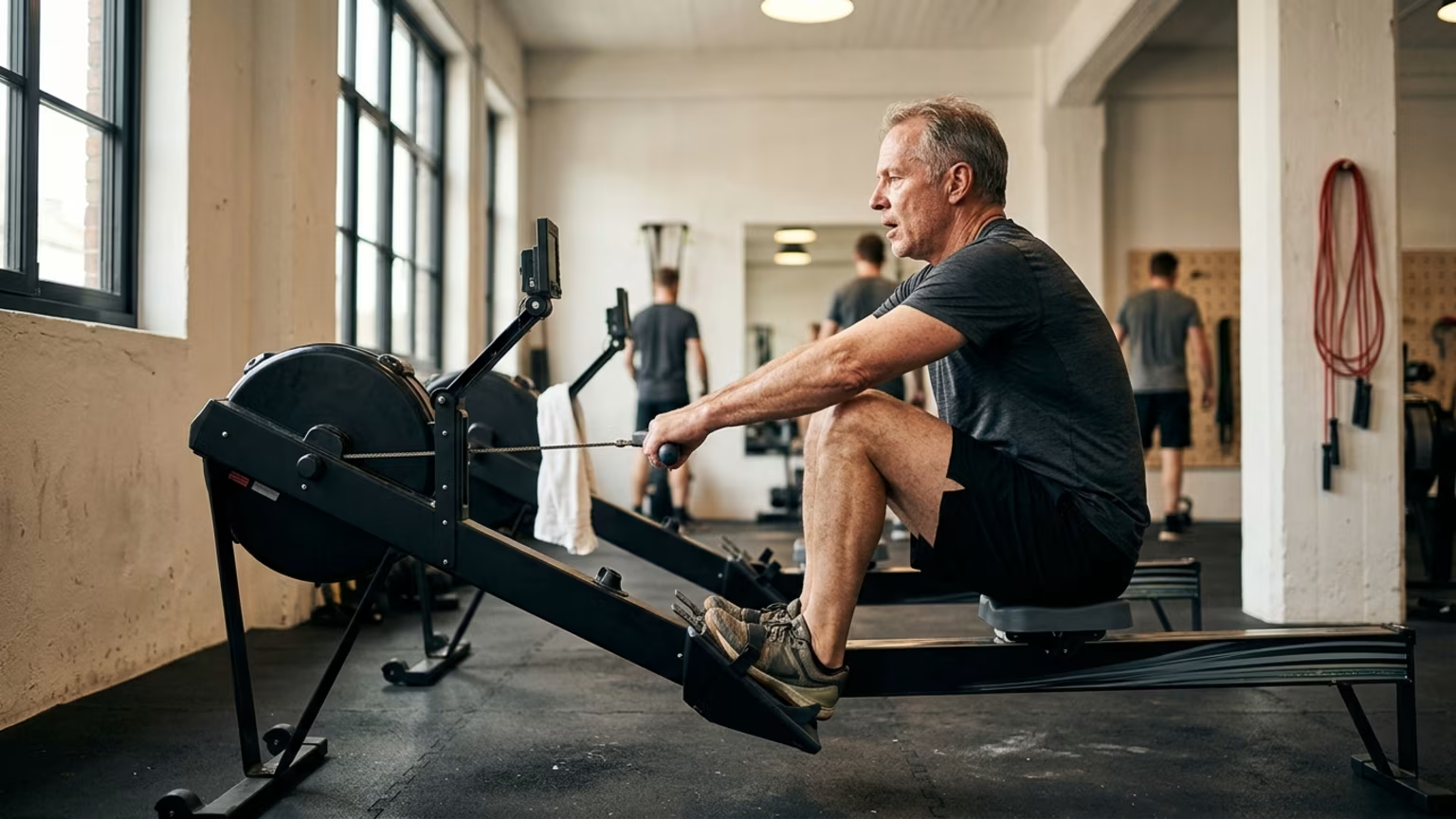
Interval resistance and aerobic training combines strength movements with higher heart rate periods. This style of exercise demands significant energy and forces the cardiovascular system to adapt quickly. For men over 45, maintaining this type of intensity requires careful programming and adequate recovery. The physical stress of the workout is exactly what signals the body to improve its metabolic efficiency.
The trial design paired this demanding physical work with the senolytic compound to see how they interacted. The results suggest that the physical stress of the workout is a non-negotiable factor for certain pathways. When the body faces physical resistance, it upregulates specific repair mechanisms to handle the load. A supplement might interact with those mechanisms, but the initial physical demand is what turns the system on in the first place.
Interpreting Longevity Claims
The market for healthy aging supplements frequently outpaces the available clinical data. Senolytics like fisetin receive significant attention for their potential role in cellular maintenance. Early human trials often focus on specific, isolated measurements rather than broad functional improvements. Men interested in long-term vitality must read these reports with a clear understanding of what they actually measure.
A study showing a drop in insulin resistance in a specific population is a valuable scientific step. It provides data for future trials and helps map the biological effects of the compound. Honest evaluations of these early trials help active adults make informed decisions about where to invest their time and resources.
Training Remains Fundamental
The fact that Maresin-1 only increased in the training arms highlights a critical point for mature adults. Physical exertion triggers specific biological responses that resting and supplementing simply cannot replicate. Regular interval resistance and aerobic training force the body to adapt. This adaptation builds resilience across the cardiovascular and musculoskeletal systems.
Men looking to stay active often worry about the wear and tear of exercise. Managing physical training load carefully helps older adults protect joint health while still providing the necessary stimulus for metabolic improvement. Relying on a pill without maintaining a consistent exercise routine leaves significant health benefits on the table. This research confirms existing knowledge that a structured exercise stimulus remains the primary driver of physical adaptation, showing that targeted supplementation may influence selected biomarkers but cannot replace physical training.
How Everfitguys helps
Applying early trial data about metabolic markers to an actual physical routine requires translating complex biological shifts into practical habit changes, and Everfitguys evaluates this primary clinical research to guide those daily decisions. Stiffness, joint pain and reduced mobility that limits activity frequently frustrate mature men, but our objective analysis allows them to rebuild their strength and remain fully capable.
Sources
Stay sharp
Get stories
The best writing on craft and life, delivered once a week. No noise, just the good stuff.