The Long Term Muscle Strategy: Preserving Strength and Power After 45
Defining the Elements of Physical Capacity
Muscle maintenance is not a single physiological outcome. A complete physical strategy requires tracking four distinct but related qualities: muscle size, maximal strength, rate of force development, and real world function. Muscle size describes the actual physical amount of contractile tissue a person carries. It is typically estimated through clinical measures like lean mass or fat free mass.
Maximal strength is the ability to produce mechanical force using that available tissue. It depends heavily on neural recruitment, physical coordination, and technical leverage. Rate of force development describes how rapidly force rises during the early portion of a physical contraction. This specific neuromuscular quality governs how quickly you can express physical power when reacting to a sudden physical demand.
Finally, functional performance measures how well you can apply these physiological traits to your daily movement. Function involves walking confidently, carrying heavy objects, climbing steep stairs, and retaining physical independence over time. Distinguishing these four concepts prevents the common mistake of treating muscle tissue as a single uniform metric of capability. Measuring only your body weight will leave you blind to critical changes in your actual physical capacity.
The Biological Shift in Midlife
Retaining physical capability becomes a precise challenge for men entering their middle decades. The nervous system and the muscular system do not age at the same speed. A man can preserve a significant amount of muscle mass while still losing his ability to produce force. This disconnect means visual body composition is an incomplete marker of true physical resilience.
Recent reporting in The Washington Post noted that muscle power loss typically begins in the 40s and accelerates in later decades. The decline in maximal strength is often more severe than the loss of actual muscle tissue. A review derived estimate in Frontiers in Aging suggests that age related strength loss may outpace muscle mass loss by approximately two to five times. You can look physically unchanged while becoming noticeably weaker over the years.
This unequal decline is clearly visible in older populations. Research summarized in The Conversation tracked nearly 1,900 adults aged 70 to 79 over a three year period. The study found that leg strength declined about three times faster than muscle mass. Men who rely purely on body weight or muscle size to gauge their fitness may miss critical declines in their actual capability. A body composition scan simply cannot serve as the only measure of your physical progress.
A man may maintain his body weight and lean mass while slowly becoming less capable of lifting heavy objects or climbing steep stairs. The nervous system governs how well those muscles fire in real time. If the neural connection weakens, the physical tissue becomes less effective at performing demanding tasks. Building a physical reserve is fundamental to healthy aging because it protects functional independence. Recognizing the differences between size, strength, and power allows men to build a targeted training routine.
The Evidence on Resistance Training
Progressive resistance training is the most defensible method for improving physical force production. A meta-analysis of 41 randomized trials involving 3,141 participants found that resistance exercise improved muscle specific strength in older adults. For men returning to exercise after a long layoff, progression must focus on joint tolerance rather than past athletic numbers. A conservative re-entry phase builds the foundation for heavier loading later.
A sensible progression framework begins with stable exercises and moderate effort. The initial goal is establishing consistent, repeatable technique without provoking excessive joint soreness. Once your capacity improves, you can gradually add repetitions, sets, or physical load. Heavier, controlled efforts belong in a later phase once your technique and recovery habits are reliable.
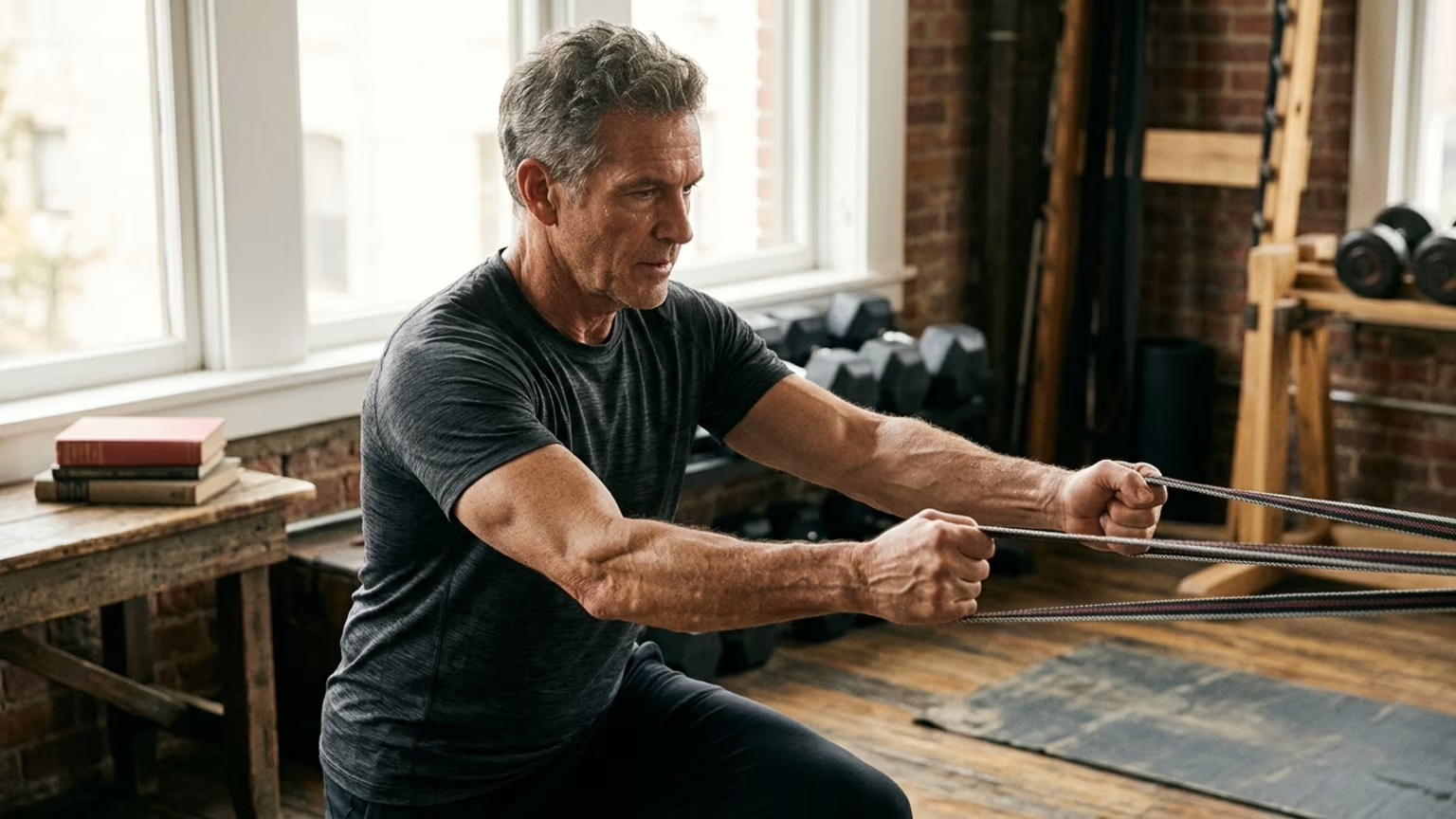
The program should include major movement patterns like the squat, hip hinge, push, pull, and loaded carry. This approach allows sensible substitutions for previous injury history or current joint pain. You can read more about building physical capability in our guide to strength and muscle preservation. Incorporating these fundamental movements creates a balanced, durable physical structure that supports daily life.
Nutritional Support for Adaptation
Dietary protein supports the mechanical work of resistance training, but it is not a standalone solution. A meta-analysis estimated that resistance training benefits from additional protein plateaued around 1.62 g/kg/day. The uncertainty interval for this estimate was wide, spanning approximately 1.03 to 2.20 g/kg/day. This figure serves as a reasonable reference point rather than a rigid biological cutoff for every individual.
Protein recommendations vary significantly based on physical activity and health status. Search results cite commonly used ranges of approximately 1.0 to 1.2 g/kg/day for healthy older adults. Higher protein intakes are typically recommended when training, recovering from illness, or trying to preserve muscle during stress. Proper nutrition aids recovery, which is critical for energy, metabolism and body composition.
Men with kidney disease, significant liver disease, or unexplained weight loss should obtain individualized medical advice before materially increasing their protein intake. This is a clinical safety standard rather than a claim that high protein diets are inherently dangerous for healthy adults.
Functional Movement and Daily Habits
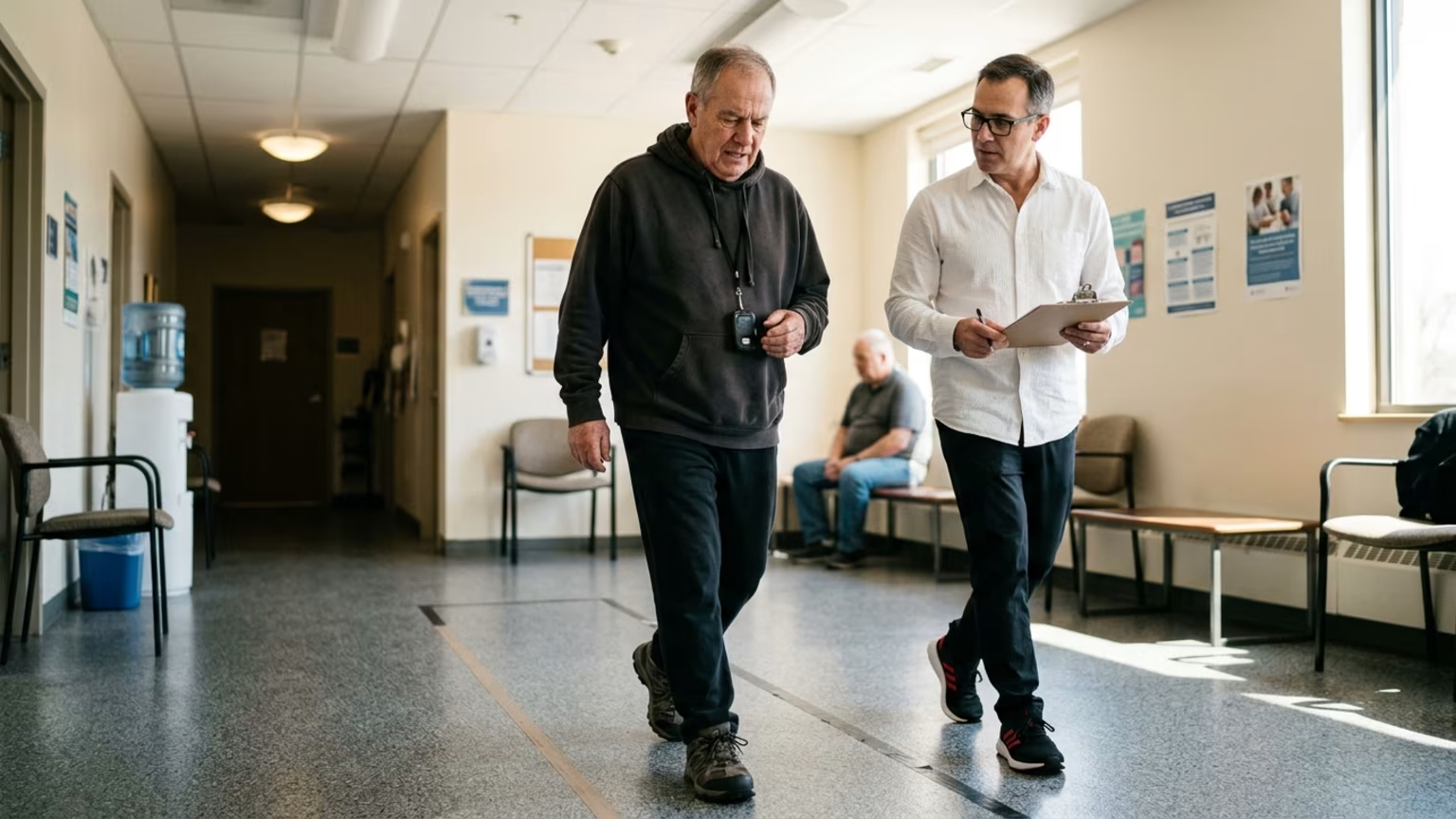
Gym performance must eventually translate to real world function. Walking speed, loaded carries, and task confidence are the ultimate scoreboards for physical capability. In one observational study, each additional 1,000 steps per day was associated with modestly better strength and mobility measures in older adults. This simple daily habit provides a steady baseline of physical activity outside the gym.
The improvements associated with those additional 1,000 daily steps were highly measurable across several physical tests. They included a 0.31 repetition increase in sit to stand performance, which is a classic test of lower body capability. The data also showed a 0.89 kgF increase in handgrip strength. Handgrip is a well documented proxy for overall systemic strength in older adults.
Furthermore, the study noted a 0.30 second reduction in timed up and go performance. Measuring functional tasks alongside your gym lifts provides a complete, accurate picture of your physical longevity. A comprehensive training framework must eventually bridge the gap between lifting weights and living actively. Incorporating brisk walking, recreational sports, or regular hiking helps translate gym strength into lasting stamina.
Limitations in the Current Science
The accessible clinical evidence does not provide a single universal loading formula for every man over 45. The 41 trial meta-analysis reported substantial statistical heterogeneity in the strength outcome across the included research studies. This massive variation means that optimal training frequency, volume, and physical load differ widely among individuals. Furthermore, a universally validated, step by step protocol for men returning to exercise after a long layoff simply does not exist in the primary literature.
Individual recovery depends heavily on your training age, exercise selection, volume, sleep habits, and medical status. Much of the strongest evidence relies on older populations or specific medical cohorts. A systematic review found that resistance training improved several functional outcomes in older adults with sarcopenia. The improvements included better strength, lean mass, walking ability, grip strength, and overall muscle quality.
However, those specific findings should not automatically be treated as the exact expected effect for every healthy man in his 40s or 50s. Measurement techniques also create uncertainty in the scientific literature. Evidence connecting the rate of force development to athletic performance remains partly dependent on the specific testing protocol used. Different test durations and equipment choices produce varying results, making it difficult to establish a single standardized metric. Finally, the data linking step counts to strength gains is observational, which means it shows an association rather than direct causation.
What to Watch Next
Watch for future clinical trials to clarify the optimal exercise selection and progression models for developing physical power specifically in healthy, middle aged men.
How Everfitguys helps
Constructing a long term strategy for physical capability requires treating strength and power as distinct physiological qualities. Falling energy, slower metabolism and unwanted changes in body composition often frustrate older men trying to maintain their fitness, and Everfitguys delivers the objective context needed to interpret these changes safely.
Sources
- Accelerated Anthropometric Ageing Links Loss of Physical ...
- The muscle ability you lose fastest with age — and how to preserve it
- The hallmarks of protein and amino acid restriction in aging ...
- Resistance training and health in adults: an overview of systematic reviews.
- Effects of exercise and nutritional interventions on muscle ...
Stay sharp
Get stories
The best writing on craft and life, delivered once a week. No noise, just the good stuff.