
Resistance Training After 45: Why Progression and Function Matter
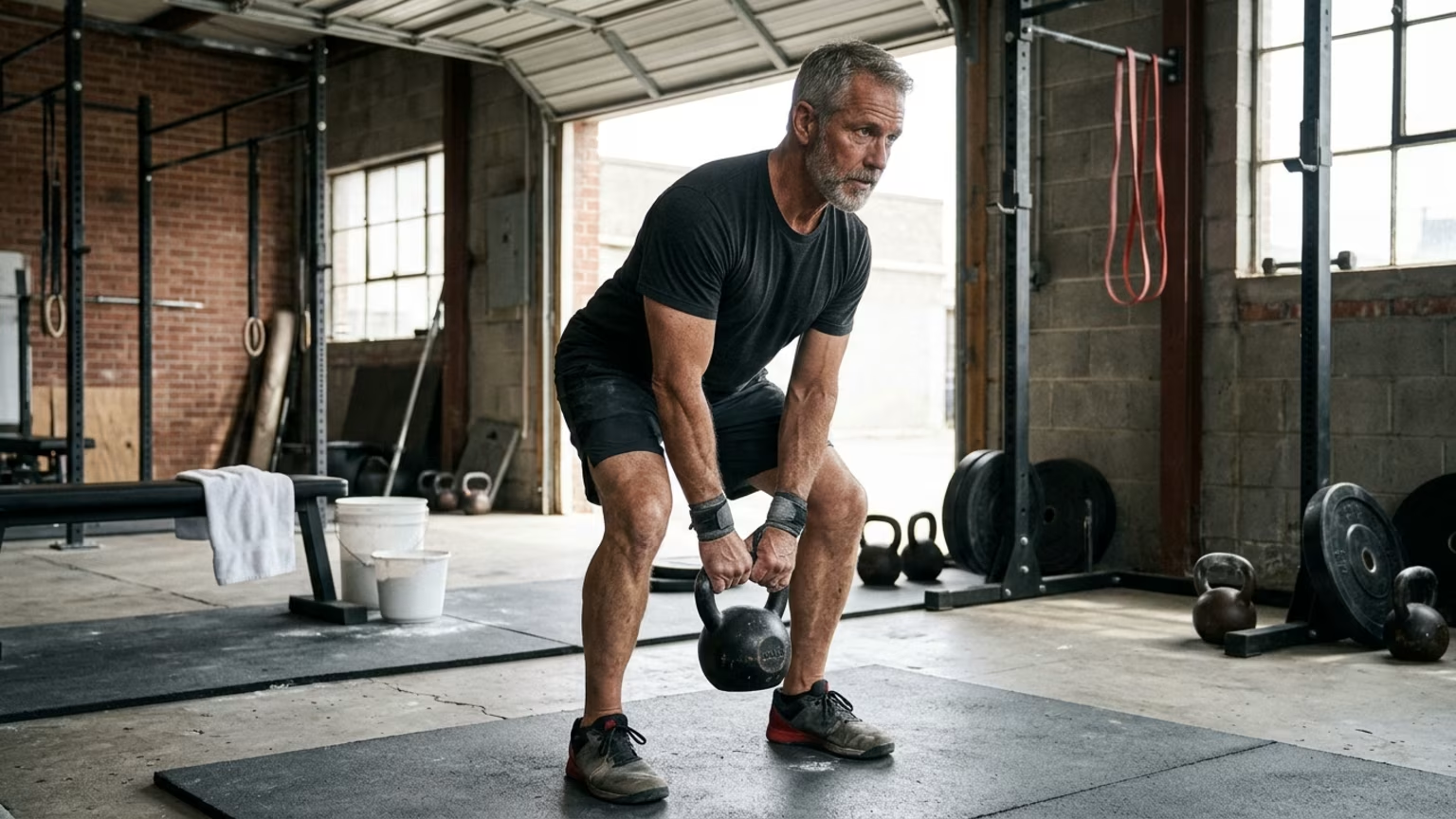
On September 30, 2026, Acibadem International published a clinical explainer titled Sarcopenia: Muscle Loss After 40, Signs & How to Slow It. It reviewed evidence on progressive resistance training and adequate nutrition as ways to address age-related losses in muscle and everyday function.
Behind the explainer
Acibadem’s article summarizes randomized trials rather than reporting a new experiment. The participants it describes were older adults, including people in their nineties. The reported training periods were 8 to 12 weeks.
The training approach was progressive resistance exercise. Acibadem describes this as increasing resistance over time as strength improves, rather than repeating the same load indefinitely. Progression is therefore part of the method being discussed, not an extra feature added to an otherwise unchanged routine.
Broader context comes from a scientific statement by the European Association of Preventive Cardiology. Its summary advises combining resistance and endurance exercise with adequate nutrition. This places strength training within a wider approach to muscle health rather than presenting one exercise routine as the whole answer.
The relevant question is not simply whether participants exercised. It is what kind of training they performed and which outcomes researchers assessed.
Four reported outcomes
Acibadem’s explainer reports improvements across four areas:
- Muscle strength. The summarized trials found gains in strength following progressive resistance training. Strength is an outcome in its own right, separate from how large a muscle looks.
- Muscle size. The article also reports increases in muscle size. This addresses the amount of muscle rather than treating performance alone as the full picture.
- Walking speed. Improvements extended to a measure of mobility. This gives the findings relevance beyond appearance or performance on a resistance exercise.
- Stair-climbing ability. The article names better stair-climbing performance among the reported results. That brings an everyday physical task into the assessment of training benefits.
These outcomes support a broader view of muscle health. More muscle is one part of the story. The reported changes in strength and movement are also relevant to men who care about remaining physically capable.
A separate 2026 review on sarcopenia describes a diagnostic framework that prioritizes muscle strength. Read alongside Acibadem’s summary, that supports keeping function central rather than judging muscle health by size alone.
For this article’s practical focus, the useful distinction is between a change in muscle tissue and a change in physical performance. The reported outcomes cover both. Neither needs to crowd out the other when discussing healthy aging.
Limits that matter
Acibadem’s page does not provide the trial names or study references behind its summary. It also omits sample sizes and numerical outcome estimates. Those gaps prevent an independent assessment of the specific trial claims from the page alone, including how large or consistent the improvements were.
The broader evidence has qualifications too. The European scientific statement notes that evidence is more limited in people specifically diagnosed with sarcopenia than in older populations more broadly. The predominantly female sample discussed in that evidence also limits direct translation to men.
The “after 40” framing should not be read as a precise clinical starting point. The supplied evidence does not establish that sarcopenia begins at exactly that age or follows one universal rate in every man.
Acibadem’s starter routine is a proposed plan, not a separately validated training package. Its reported trial timetable is not a promise about an individual reader’s results.
Nutrition also requires context. Acibadem’s protein discussion distinguishes healthy older adults from people who need individualized advice, particularly those with kidney disease. Personal concerns about muscle loss and nutrition belong with qualified healthcare professionals rather than a self-diagnosis based on an article.
Practical meaning
With those boundaries clear, the practical message is straightforward: judge a training approach by its progression and its relevance to function. A list of exercises is useful, but it does not explain the whole training process.
Progression comes first
Acibadem’s central training idea is that resistance changes as strength improves. The useful feature is the planned increase in challenge over time, not simply repeating a familiar session.
That gives readers a concrete way to assess a training description. Does it explain how the starting point develops? Or does it only name exercises without describing progression?
Everfitguys’s discussion of how training demands change over time provides related context for understanding this principle. The focus is the structure of training rather than a promise attached to one exercise.
Familiar movement choices
Acibadem highlights squats or sit-to-stands alongside step-ups. It also includes rows, presses and carries. These familiar movements give its explanation a practical shape without making the article solely about muscle appearance.
The broader recommendation in the explainer is two to three resistance-training sessions weekly. Its proposed introduction uses a smaller set of movements: sit-to-stands, wall or counter push-ups, low step-ups and carries.
That starter plan lasts two weeks and uses twice-weekly sessions of 20 minutes. The proposed format is two rounds of 8 to 12 repetitions, with repetitions increased before resistance is added. These details describe Acibadem’s suggested starting structure rather than instructions tailored to a reader’s health or training history.
The useful editorial distinction is between the movement menu and the progression principle. The menu describes what appears in the session. Progression describes how the challenge develops.
Our coverage of strength work connected to everyday movement offers a related way to think about the function-focused outcomes reported here.
Food alongside training
Acibadem places adequate nutrition alongside resistance exercise. It also suggests spreading protein across meals. The practical point is that its muscle-health discussion includes food rather than treating training as an isolated factor.
The European scientific statement takes a similarly broad approach by pairing exercise with adequate nutrition. Resistance work and endurance activity sit within that combined framework.
For readers comparing approaches, this is a reason to keep training and nutrition in the same discussion. It is not a reason to turn a general protein recommendation into an individual target without the relevant health context.
Everfitguys’s coverage of how eating patterns relate to training goals provides further editorial context without making one eating pattern the answer for every man.
The clearest takeaway is a way to frame the goal. Muscle size matters, but so do strength and the ability to move through daily life. Acibadem’s summary keeps those outcomes together and places gradual progression at the center of its training advice.
What this changes: This explainer reinforces existing practice around progressive resistance training and adequate nutrition rather than establishing a new protocol for men after 45.
How Everfitguys helps
Men and their healthcare teams make decisions about age-related strength loss; Everfitguys supplies research-led reporting rather than individual care. For regular trainers and returning exercisers, its plain-English coverage connects questions about losing muscle with the goal of retaining physical capability for work, sport and family life.
Sources
- Sarcopenia: Muscle Loss After 40, Signs & How to Slow It
- Influence of exercise and nutrition on sarcopenia in cardiovascular disease: a Scientific Statement of the European Association of Preventive Cardiology of the European Society of Cardiology
- Beyond Fat Loss: Addressing the Sarcopenia Challenge of ...
Stay sharp
Get stories
The best writing on craft and life, delivered once a week. No noise, just the good stuff.


