Functional Resistance Training: Building Practical Strength After 45
On September 22, 2026, Health published a report detailing how functional resistance movements can help preserve physical capability and mobility in older adults.
How Were the Recent Studies Structured?
The recent reporting synthesizes findings from multiple separate study groups and timeframes to evaluate physical aging. One major longitudinal study tracked men and women over a 47-year period to observe natural changes in physical fitness. Another trial focused on a specific demographic of women aged 60 to 80. These older women completed a targeted four-week resistance training program using specific functional exercises.
Additional methodologies focused on more vulnerable older populations to test baseline mobility improvements. A separate 2026 randomized trial covered by SciTechDaily studied adults aged 65 and older who had existing mobility disabilities. These participants completed a 12-week program testing a very brief daily functional-strength routine called FAST 2. The routine required only about a four-minute daily effort featuring approximately 60 seconds of dedicated lower-body resistance work.
Broader professional context for these training methods comes from the 2026 American College of Sports Medicine position stand. Secondary reports indicate that this massive organizational review analyzed 137 distinct systematic reviews. This comprehensive review process involved more than 30,000 total participants across varying age groups and fitness levels. A separate 2026 meta-analysis also reviewed resistance training data specifically for older adults with dementia to track functional outcomes in clinical groups.
What Outcomes Did the Researchers Observe?
The gathered research points to measurable physiological benefits from functional resistance training across multiple demographic groups. The 47-year longitudinal study found that average physical fitness peaked at approximately age 35. After this peak, the participants' physical capacity and fitness tended to worsen with each passing year. The researchers observed that regular physical exercise helped slow these predictable age-related declines over the nearly five-decade observation period.
The four-week study of women aged 60 to 80 reported clear physiological improvements after a month of targeted work. The researchers noted specific gains in physical endurance, overall muscle quality and other critical physiological health markers. The 12-week FAST 2 trial also yielded positive results for its older, mobility-restricted participants. Using basic movements like push-ups, chair stands, two-arm rows and stair stepping, the trial reported measurable improvements in standard functional-performance measures.
The massive American College of Sports Medicine position stand supports these specific findings on a much larger scale. The organizational review concluded that strength training serves as a true foundation for physical health in older adults. It found clear benefits for muscular strength, total muscle size, physical power output and highly practical outcomes like muscular endurance. It also improved maximum walking speed, physical balance and general physical function.
A separate 2026 meta-analysis focused on older adults with dementia found that resistance training improved basic gait speed. The researchers noted that this physical improvement may directly contribute to a lower overall fall risk for that population.
The Six Movement Patterns for Daily Life
Health defines functional resistance training as purposeful exercise that reflects everyday activities associated with an active lifestyle. The article explicitly distinguishes this movement-based training from traditional bodybuilding isolation work. A seated hamstring curl strengthens specific leg muscles in a fixed plane of motion. A deadlift trains the hip hinge, glutes, calves and core in a highly coordinated physical pattern.
This multi-joint approach more closely resembles lifting a heavy physical object, helping you stay capable and protect aging joints. To build practical capability outside the gym, Health highlights six primary functional movement patterns.
- Squats: The article links the squat pattern directly to sitting down in a chair, getting in and out of a car and using a standard toilet. These daily transitions require significant lower-body strength and joint control.
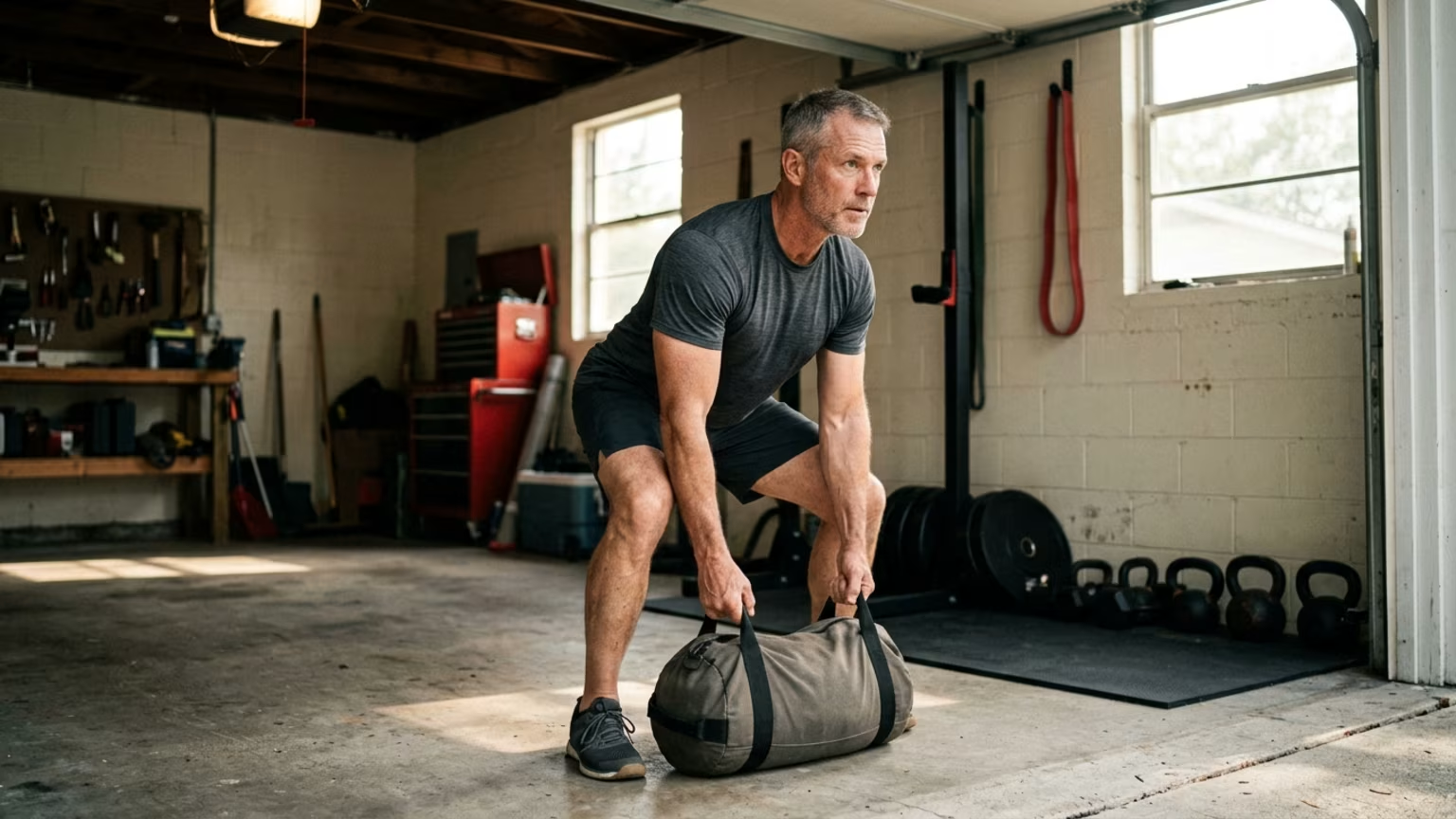
- Deadlifts: This hip hinge movement prepares the body for picking up books, clothing, boxes and heavy household objects from low positions. The focus remains strictly on hinging through the hips and using the legs rather than rounding and loading the vulnerable lower back.
- Overhead presses: Pressing a physical weight upward connects directly with placing heavy luggage in an airplane overhead compartment. It translates directly to reaching for or storing physical objects securely above shoulder height.
- Rows: Horizontal pulling movements are strongly associated with pulling open heavy doors or stiff drawers. They help with everyday physical tasks like active gardening and sliding a heavy tray from a kitchen counter.
- Lunges: The unilateral lunge pattern connects directly with daily walking, climbing steep stairs and outdoor hiking. The article notes that some clinical research links regular lunge training with improved physical balance and spatial awareness.
- Chest presses: Pushing forcefully against physical resistance translates to pushing or lifting one's own body weight from the floor. This physical capability may become absolutely critical if an older person needs to recover quickly from an unexpected fall.
Integrating Movement into a Weekly Routine
Current older-adult exercise guidelines combine aerobic activity, muscle strengthening and dedicated balance work to maintain overall resilience. Resistance training is not treated as a total replacement for walking, cycling or other sustained cardiovascular activity. These functional strength movements complement cardiovascular endurance rather than replacing it. A strong heavy deadlift does not replace a daily brisk walk, and a daily brisk walk does not fully replace progressive resistance training.
Baptist Health describes several practical ways to implement these physical patterns safely into a weekly routine. Their clinical overview suggests chair stands, controlled step-ups, heel raises, supported single-leg stands, wall push-ups and basic resistance bands. These scaled options serve as highly accessible forms of strength work for older adults.
You can use lighter scaled versions of these foundational movements when returning to a regular exercise routine. A simple bodyweight chair sit-to-stand can precede heavily loaded barbell squats. A controlled hip hinge with a light kettlebell can precede heavy floor-level deadlifting. A basic standing wall push-up can precede a standard horizontal floor push-up.
The ultimate practical test for these exercises is whether the physical movement remains stable and entirely comfortable. The primary goal is to build exercise programs around movement categories that recur constantly in daily life. You can progress safely and gradually by increasing the physical resistance, total repetitions or overall range of motion.
Tracking functional outcomes outside the gym helps measure true physical progress. Notice how easily you rise from a low chair, climb steep stairs, carry heavy groceries and maintain physical balance. Building functional strength and independence relies on consistent, progressive movement over time.
Where Are the Gaps in the Current Data?
The reports on functional resistance training contain several structural limitations and missing details. The Health publication does not identify the study authors, journal, sample size, comparison group or effect sizes for the 47-year longitudinal study. The article also omits these specific statistical details for the cited meta-analysis and the four-week study on older women.
The 47-year fitness finding is presented purely as an observational relationship. The article reports a correlation between physical exercise and a slower physical decline. The report does not provide enough methodological detail to establish that exercise alone caused the difference.
The 12-week FAST 2 trial features specific demographic limitations. The studied population consisted strictly of adults aged 65 and older who had existing mobility disabilities. This specific clinical demographic should not be automatically generalized to represent healthy, independently mobile men in their 40s or 50s. The 2026 meta-analysis focused strictly on a clinical population of older adults with dementia, meaning those specific results apply directly to that group.
Functional exercises are not automatically safe or appropriate for every individual. A person with significant pain, a recent operation, recurrent falls or a chronic condition may need professional medical guidance before starting or modifying a routine. The exercises named by Health range from simple low-load bodyweight movements to technically demanding lifts like deadlifts and overhead presses. The appropriate version for any individual depends heavily on baseline strength, joint tolerance, training history and movement control.
The available evidence reports improvements in specific physical outcomes, not a promise of universal protection against all age-related decline.
This research confirms existing knowledge about the value of resistance training while shifting the standard best practice from aesthetic isolation work toward functional movement patterns that directly preserve physical capability.
How Everfitguys helps
Sorting through functional movement routines often gets complicated by widespread confusion about hormonal changes and testosterone claims, and Everfitguys evaluates the current primary literature to solve this problem. Losing muscle, strength and physical capability with age limits daily activity, so we present the physiological facts to help men stay capable for work, sport and travel.
Sources
- 6 Functional Movements That Can Help You Stay Strong and Mobile ...
- Resistance training effect on functional decline in older ...
- Just 4 Minutes of Daily Strength Training Can Quadruple ...
- The ACSM Finally Updated the Resistance Training Guidelines
- 2026 ACSM Strength Training Guidelines After 40
- 7 Low-Impact Exercises for Seniors Aged 60,70,80+ | LovelySkin
- Why Strength Training Is Essential Medicine for Aging Adults
Stay sharp
Get stories
The best writing on craft and life, delivered once a week. No noise, just the good stuff.