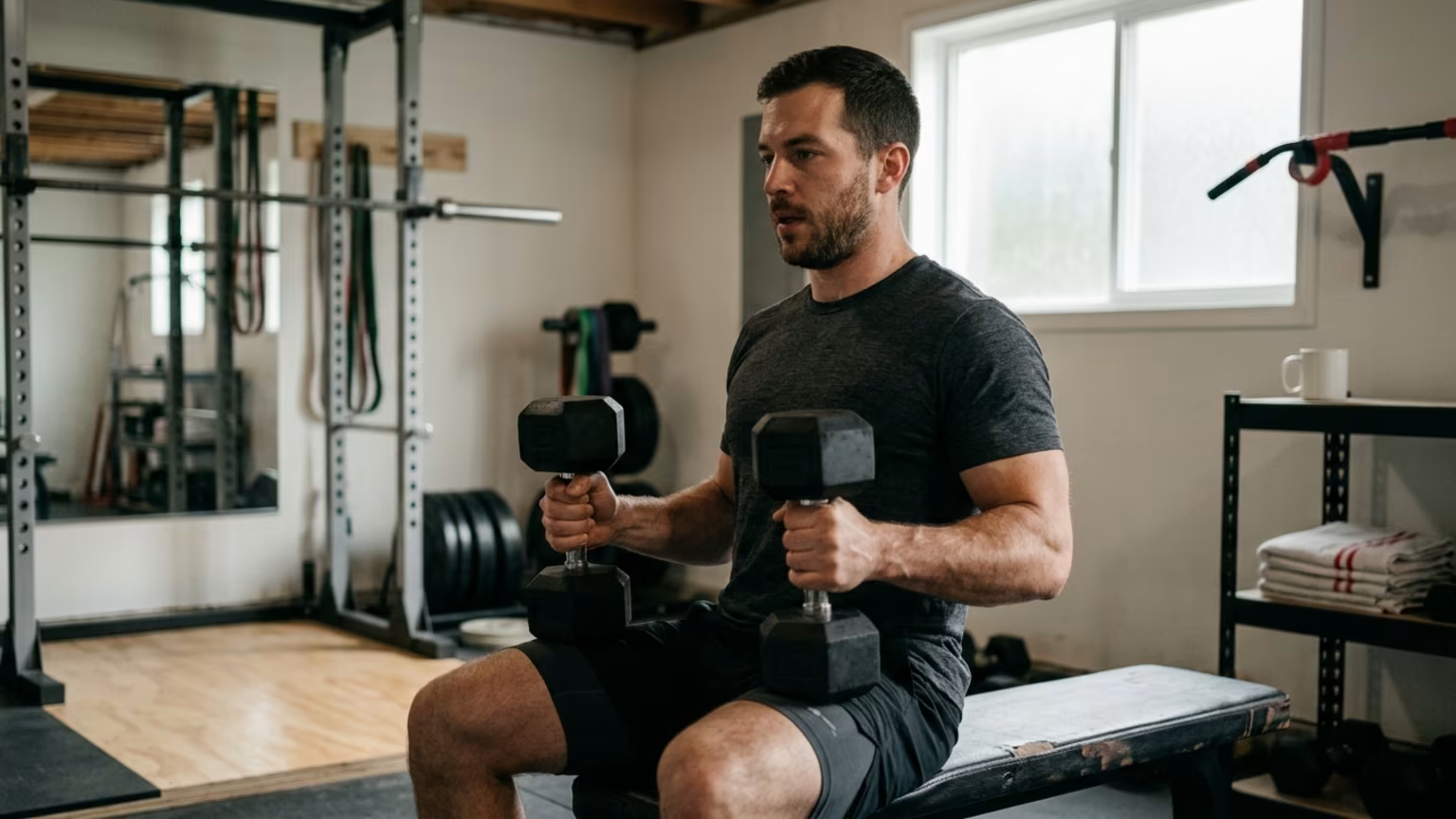
Progressive Overload After 45: Updated Guidance for Safe Muscle Growth
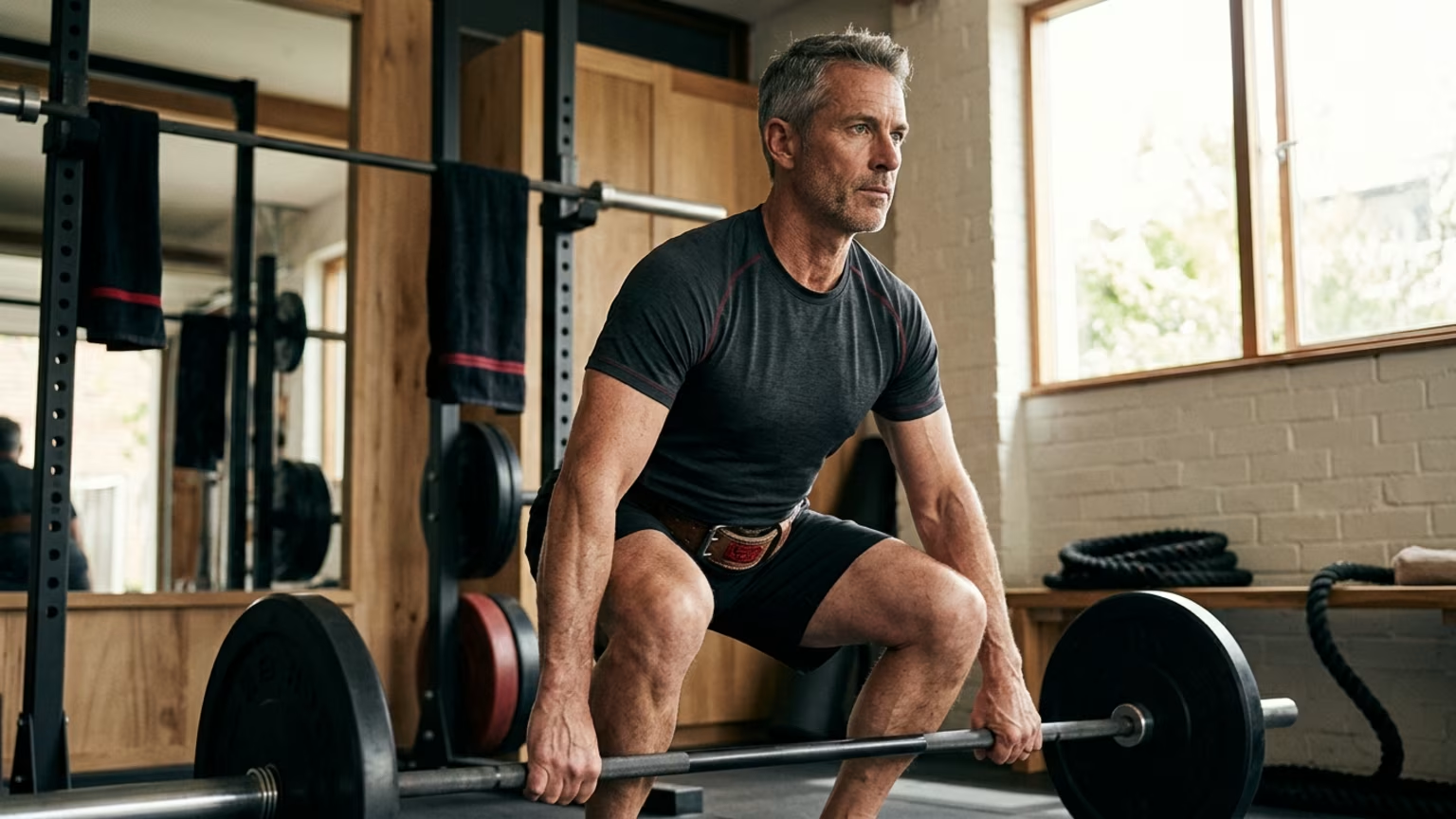
On September 19, 2026, Acibadem International updated its practical guidance on progressive overload as the central mechanism for continued muscle adaptation. The publication introduces specific age-related cautions for older trainees seeking to build physical capability safely without risking joint injuries.
Clinical Reviews Inform Structured Training
The updated guidance reflects broader clinical reviews of resistance training in aging populations. Researchers examining older adults with sarcopenia commonly evaluate supervised and structured resistance programs to measure physical changes over time. These specific clinical protocols typically utilize training loads set between 50 and 80 percent of a person's one-repetition maximum.
This precise percentage range allows participants to train with challenging resistance without attempting absolute maximum lifts. Training frequency in these supervised clinical settings usually spans two to three sessions per week. Intensity is carefully managed in these testing environments to prevent overexertion. Participants typically report a perceived exertion of around 13 to 15 on the Borg scale during structured sessions.
This scale rating indicates a somewhat hard effort that leaves physical capacity in reserve. Guidance for aging adults consistently prioritizes individualized progression over a single universal training program. Prescriptions are scaled according to a patient's mobility and health status. Clinicians also consider joint pain levels, fall risk and previous exercise experience.
A prominent clinical review suggests working major upper and lower-body muscle groups on two to three nonconsecutive days per week. Structured programs often begin with one to three sets of approximately eight to twelve repetitions for each movement. This starting load must be a weight the trainee can complete with strictly correct technique.
An expert consensus document on exercise in older adults also recommends combining resistance training with aerobic and balance work. The current trend in healthy aging guidance moves away from treating lifting as an isolated intervention.
Resistance Work Improves Physical Function
The primary finding across the collected literature is that progressive resistance training improves muscle strength and physical function in older adults. A clinical review summarized in the research reports that this exercise can modestly increase muscle mass in older adults with sarcopenia. Resistance training is widely described in the literature as a critical tool for preserving physical function. This retained strength acts as a true foundation for everyday independence as men age.
Maintaining physical reserve matters immensely because Acibadem cites an estimated loss of approximately three to eight percent of muscle mass per decade after age 30. The article notes that progressive overload remains relevant, and potentially especially valuable, as men grow older. These structured exercise interventions are broadly well tolerated by older adults in clinical settings. A recent review analyzing resistance training in older populations found no serious adverse events directly attributed to the exercise protocols.
Reported problems in the reviewed trials mainly involved minor musculoskeletal complaints like temporary soreness. The sector is consequently moving away from a basic message to simply lift heavier weights. Modern guidance points toward a model prioritizing planned progression, technical quality and risk-sensitive programming.
Another recent review examined the effects of creatine combined with resistance training in healthy older adults. The data showed possible additional strength benefits from the combination. The researchers noted that effects on muscle mass and physical function remained uncertain. They advised against directly extrapolating these specific results to frail or functionally limited individuals.
Progression Requires Controlled Variables
Acibadem defines progressive overload as gradually increasing the demands placed on muscles over time. The core argument is that muscles require a progressively greater training stimulus because they adapt to previously familiar demands. Trainees can achieve this required overload using variables such as weight and repetitions. Modifying sets, tempo, range of motion or exercise difficulty also works.
Adding more weight is just one option for older adults building a safe progressive overload after 45 routine. The updated guidance offers a practical window for load increases in the gym. Acibadem suggests earning a load increase roughly every one to three weeks for a specific movement. The publication recognizes that some weeks should simply repeat the previous performance to solidify technique.
A clinical review advises progressing load or volume only when target repetitions can be completed without excessive breathlessness, pain or loss of form. Using progressive overload as a decision rule prevents older trainees from forcing an increase at every workout. This systematic approach means physical capacity should recover fully by the following day. If a man trains on nonconsecutive days, his recovery status dictates his next session.
The expert consensus approach treats this recovery period as a direct prescription variable. Men returning to exercise often wonder how much strength training do you need to see tangible results. The current clinical data points clearly toward consistent adherence and recovery over sheer training volume. Trainees are encouraged to change only one variable modestly when their performance becomes completely stable.
A man might add a small amount of weight or perform an additional repetition. He could also add an extra set, improve his active range of motion or use a slower controlled tempo. First repeating the same load until the prescribed repetitions are consistently completed builds a safer foundation for older adults.
Joint Tolerance Dictates Progression Pace
Progressive overload is a central training principle, but it does not guarantee continuous muscle growth. Physical adaptation depends heavily on training quality, sufficient recovery and daily nutrition. Baseline health status and long-term program adherence also play critical roles. The one to three week progression window is a practitioner-oriented rule of thumb rather than a formally validated medical schedule.
Muscle loss rates are not identical across individuals or specific populations. The cited three to eight percent per decade figure is a broad age-related estimate. It does not represent a precise forecast for any particular man in his fifties or sixties. Joint and connective tissue tolerance frequently acts as the primary limiting factor for older trainees.
Properly managing training load with age requires patience and careful observation. Muscles might feel physically prepared for a heavier load before tendons, ligaments or irritated joints are ready for the same increase. Older trainees should never assume that muscle adaptation and joint tolerance occur at the exact same rate. The available safety evidence is reassuring but has clear boundaries based on the studied populations.
The review showing broad tolerability focused strictly on selected exercise interventions. This evidence does not establish that unsupervised programs or aggressive loads are universally safe for every older adult. Men returning after a long period of inactivity may require a clinical assessment before attempting any aggressive progression. This medical caution also applies to men experiencing cardiovascular symptoms, neurological problems or significant joint disease.
Men dealing with osteoporosis, recurrent falls or substantial functional limitations need similar clinical oversight. Older adults are warned not to confuse normal training discomfort with persistent joint pain. Progression specifically relies on the absence of excessive pain and the strict preservation of exercise form. Men with diagnosed sarcopenia or high fall risk should have their programs professionally scaled to their unique physical circumstances.
Supervised training environments often provide the safest starting point for older men managing significant medical conditions.
Planned Progression Shifts Training Priorities
This updated guidance shifts the focus away from forcing a heavier weight at every session by confirming that planned progression and adequate recovery dictate the safest path to muscle adaptation.
How Everfitguys helps
Managing poor sleep, stress and slower recovery usually falls to the active man trying to organize his own weekly routine, and this isolated effort gains structure when Everfitguys translates the latest clinical data. Persistent fatigue frequently disrupts consistent strength training, so we clarify the functional evidence to help you stay strong, mobile and energetic through midlife and later life.
Sources
- Progressive Overload: The One Principle Behind All Muscle Growth
- Does resistance training improve strength and physical function in older adults with sarcopenia? | Is There Consensus
- Effects of resistance training combined with creatine ...
- Resistance training effect on functional decline in older adults with ...
- Combined effects of strength training, whey protein, and HMB on sarcopenia in older people: A systematic review and meta-analysis
- Coexisting Sarcopenia and Osteoporosis in COPD - PMC - NIH
Stay sharp
Get stories
The best writing on craft and life, delivered once a week. No noise, just the good stuff.