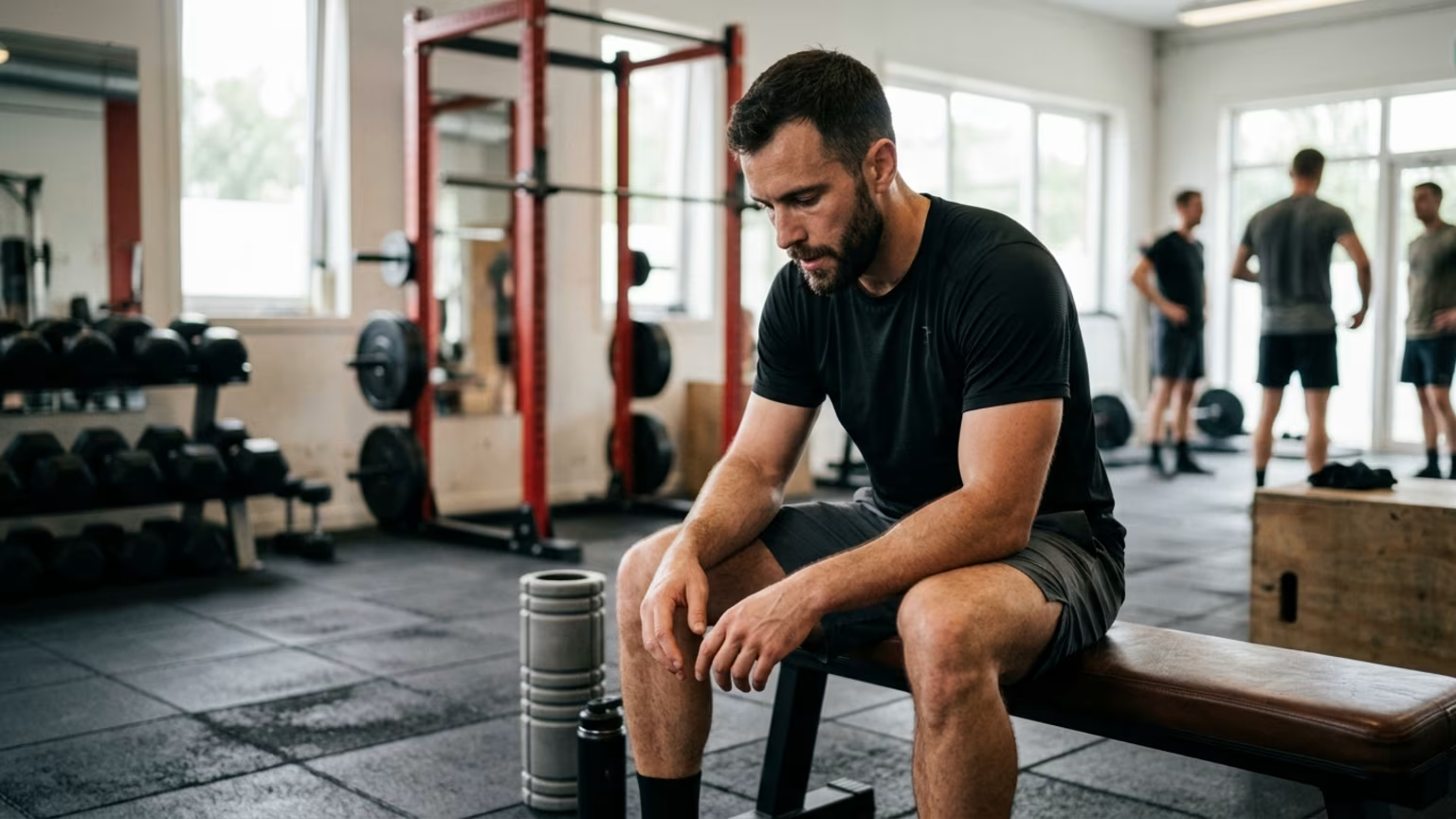
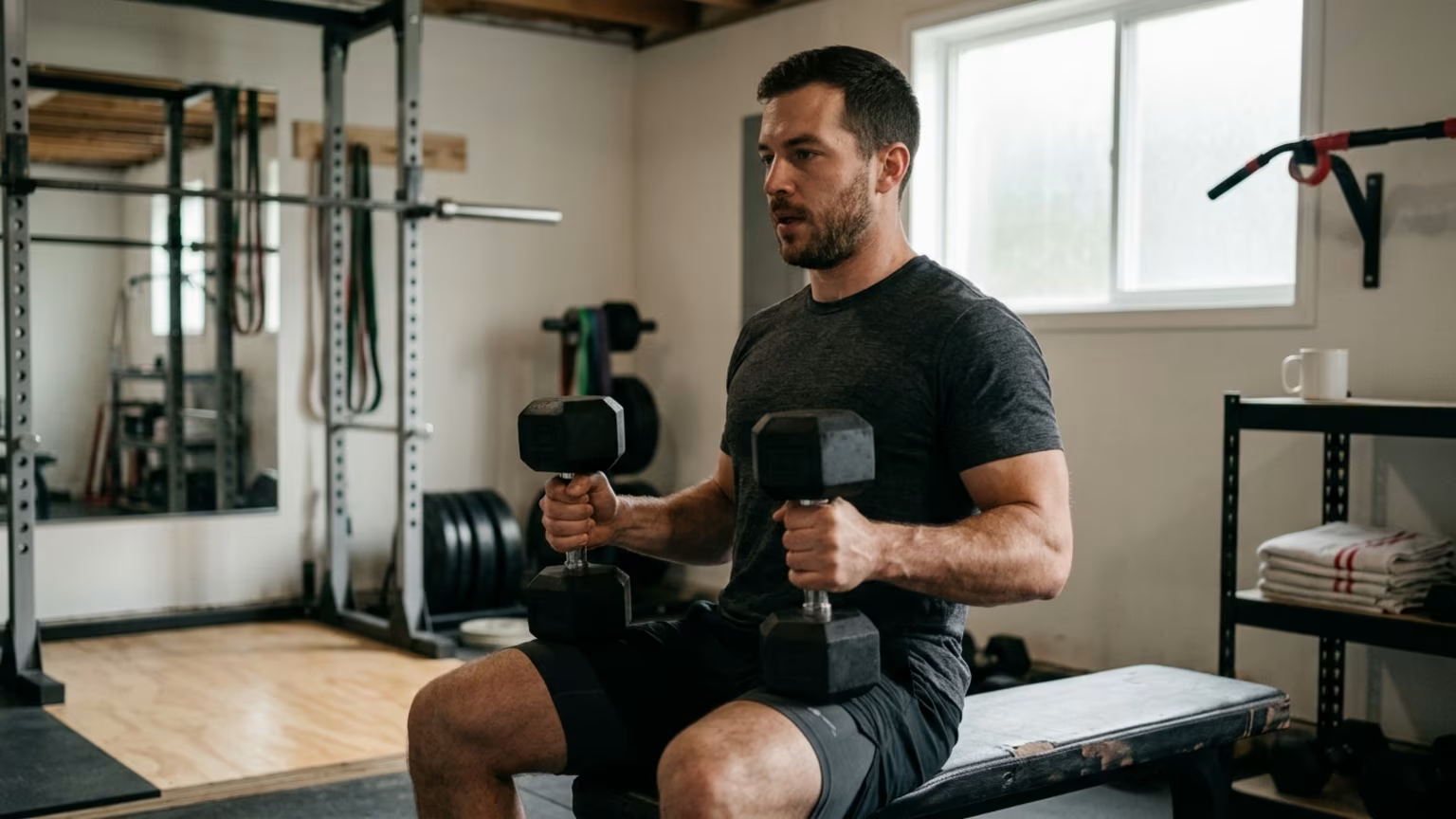
Practical Guidelines for Experienced Lifters Returning to the Gym to Rebuild Physical Strength
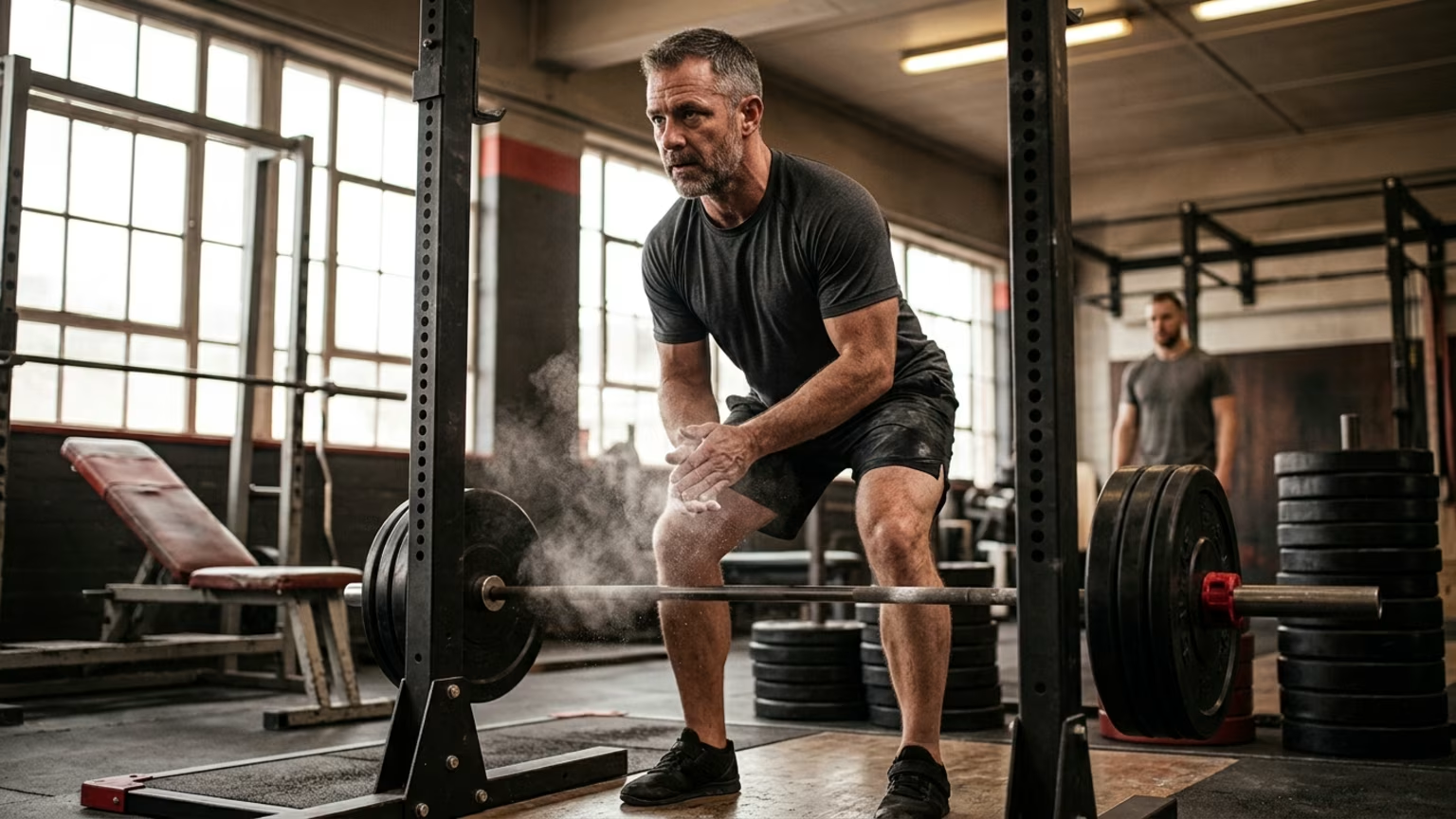
Rebuilding physical capability after time away from the gym requires a structured plan. This plan must honor your previous lifting experience while establishing a conservative starting load to safely restore long term strength.
Medical and Physical Prerequisites
Before resuming any resistance training routine, a returning trainee must clear basic safety checks. Exercise safety guidance advises stopping and seeking appropriate care for several specific warning signs. These include chest discomfort, fainting, severe unexplained breathlessness, sustained palpitations or neurological symptoms. Chest discomfort accompanied by cold sweating, nausea or severe breathlessness requires immediate attention.
Pain radiating to the arm, jaw, neck or back should also be treated as a medical emergency. Musculoskeletal symptoms that warrant immediate assessment include sharp pain, sudden pain during a lift, significant swelling or loss of function. Persistent joint pain or progressive weakness also require professional medical evaluation. Seek evaluation from a qualified professional if you have a known cardiovascular, pulmonary or metabolic condition.
Neurological or musculoskeletal conditions also require clearance before you begin lifting weights. The American College of Sports Medicine encourages clinicians to integrate physical activity into care plans and refer patients to qualified exercise professionals. Their established framework includes preparticipation screening, cardiovascular risk assessment and older adult programming considerations.
Before loading any weight on a bar, you should pass a practical movement screen. This screen evaluates your current physical capacity rather than your remembered capability. A practical assessment involves performing unloaded versions of fundamental movement patterns with complete control. You should systematically test your squat, hip hinge, push and pull movements.
Loaded carries, step ups, trunk bracing and basic balance tests are also necessary. These fundamental movement checks serve as a practical coaching screen rather than a medical diagnosis. They verify whether your joints can tolerate basic ranges of motion safely without external load. If you experience sharp pain during an unloaded hip hinge or bodyweight squat, you should consult a professional before adding external resistance.
How to Restart Your Lifting Routine
A man returning to the gym does not necessarily need a beginner program. You can regress the initial load without regressing your entire movement vocabulary. If you have previously squatted, deadlifted or pressed heavy weights, your goal is demonstrating current control before adding resistance. Follow this sequential protocol to rebuild your physical base safely and effectively.
- Rehearse familiar movement patterns with very low fatigue. Start your session using unloaded movements, machines, cables or light free weights. Focus entirely on maintaining your full range of motion and technical control. Your central nervous system needs adequate time to relearn the timing and coordination of these specific lifts.
- Select a conservative starting load below your remembered working weight. Physical therapy and coaching guidance commonly recommends reducing your initial workload to approximately 40 to 60 percent of your former working load. Combine this reduced weight with fewer total sets for each exercise. This offers a highly practical starting point provided you have no underlying medical contraindications.
- Leave clear repetitions in reserve during every single working set. Your first workouts should feel like you have plenty of energy left over. Practitioner guidance describes finishing the training session feeling that a little more could have been done. Do not push any set to momentary muscular failure during these initial weeks of training.
- Schedule two full body sessions per week to begin your routine. Practitioner guidance from commercial training sites recommends two weekly full body strength sessions for general health and function in adults over 40. This frequency gives your body adequate time to process unaccustomed mechanical stress. It allows your connective tissues to recover sufficiently between bouts of physical exertion.
- Progress only one single training variable at a time. Choose to increase either repetitions, sets, load or exercise complexity in a given week. Practitioner sources recommend gradual progression and caution against simultaneous increases in training volume and intensity. A conservative progression should add load only after the current workload is highly repeatable.
Modifying the Plan for Joint Health and Recovery
Older adults require specific adjustments for tissue tolerance, recovery capacity and overall joint health. A 2026 meta analysis of 41 randomized trials involving 3141 participants found that resistance exercise improved muscle specific strength in older adults. The studied programs varied substantially in their recorded results and effectiveness. This means exact exercise routines must be highly individualized based on how your body responds to the initial stimulus.
One supervised exercise intervention in older adults reported clear improvements in physical function. Participants improved their Short Physical Performance Battery score, grip strength and walking gait speed. The broad category of resistance training is strongly supported by clinical research. However, the exact starting dose and progression rate remain highly context dependent for older men returning after long periods of inactivity.
Soreness management is a primary adjustment required for men over 45 who are rebuilding strength and muscle. Delayed onset muscle soreness after unfamiliar training commonly appears after exercise. Practitioner sources describe this soreness as typically peaking around 24 to 48 hours and improving steadily thereafter. Widespread next day soreness after unaccustomed exercise generally settles within days and tends to diminish as training sessions repeat.
You must learn to distinguish this ordinary physical fatigue from actual tissue damage. Sharp, localized, joint centred or worsening pain is described in practitioner sources as completely different from ordinary post exercise soreness. These specific symptoms are always worthy of immediate professional attention. Soreness that is severe, persistent or associated with swelling warrants medical evaluation rather than routine self management.
Men returning to training should utilize four specific performance checkpoints instead of following an arbitrary calendar. The first checkpoint is movement quality and structural control. You must perform the selected pattern through a comfortable range of motion without compensating, holding your breath excessively or provoking sharp pain. If you cannot maintain perfect form throughout the set, the selected load is simply too heavy.
The second checkpoint focuses on repeatability and technical consistency. You must be able to repeat the same workout session with stable technique and without a disproportionate decline in overall performance. Practitioner guidance recommends rebuilding in stages and increasing gradually according to your bodily response. If your physical performance drops significantly from one set to the next, you likely need more recovery time between sets.
The third checkpoint evaluates your systemic recovery and readiness between sessions. Ordinary muscle soreness must be improving rather than accumulating before you train that specific muscle group again. You should feel generally recovered and physically prepared for the next planned lifting session. A persistent feeling of heavy legs or systemic physical fatigue indicates a clear need for extended rest.
The final checkpoint assesses your overall load tolerance during the actual lift. You must complete the planned repetitions without grinding, technical breakdown or any noticeable symptom escalation. If you meet all four performance checkpoints, you can safely increase the load or volume for your next scheduled workout. This specific checkpoint system prioritizes your long term joint health over chasing short term strength milestones.
Prioritizing healthy aging means checking your ego at the gym door. Memory of your previous lifting capacity should not dictate your current training loads. Your old weights may no longer reflect your current joint tolerance, physical balance, cardiovascular fitness or recovery capacity. Start lighter than you think is necessary to protect your joints and connective tissues.
The concept of muscle memory should never be used to imply that previous strength makes a returning trainee immune to injury. Prior lifting history does not eliminate the need for careful physical screening or conservative reloading. The available evidence strongly supports resistance training in older adults but does not establish that past experience guarantees a risk free restoration of former strength.
A fixed percentage of your former one repetition maximum is not automatically safe for your current body. The clinical search did not identify any controlled study validating one universal restart percentage specifically for men over 45. Commercial coaching sources commonly suggest roughly 40 to 60 percent of former working loads as a starting point. This should always be treated as a conservative coaching heuristic rather than a definitive clinical rule.
Maintaining joint health is just as important as regaining muscle mass. Rebuilding mobility and joint function takes patience and consistent practice. A gradual approach allows your tendons and ligaments to adapt to the new physical demands safely. By progressing slowly, you avoid the common pitfalls that force returning trainees back into inactivity.
Long Term Progression
Key takeaway: The most critical habit for maintaining this return to lifting protocol is using ordinary muscle soreness as a recovery signal rather than a badge of achievement while immediately reporting any sharp or worsening pain.
How Everfitguys helps
Deciding how to program a conservative return to resistance training requires separating previous capability from current capacity, and Everfitguys provides the objective context to guide those decisions safely. We translate clinical evidence to help mature men address declining focus, memory and mental sharpness through properly dosed physical activity. By interpreting current research, we help you build sustainable routines that support long term physical independence.
Sources
Stay sharp
Get stories
The best writing on craft and life, delivered once a week. No noise, just the good stuff.