Wearable Sleep Trackers Poorly Reflect Perceived Sleep Quality
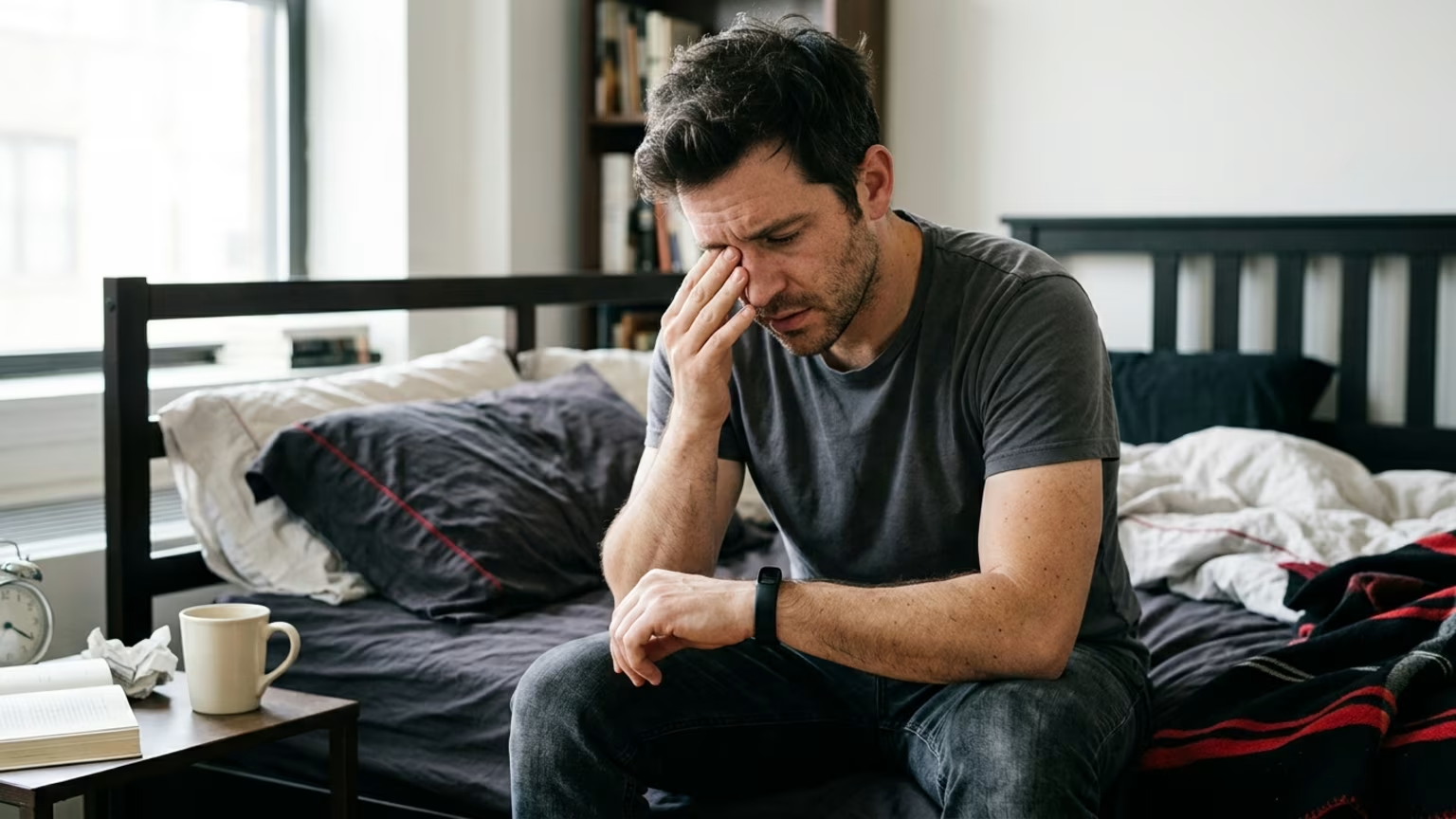
In September 2026, researchers published a systematic review in Sleep Medicine evaluating how consumer wearable sleep metrics compare to patient-reported sleep quality. Authors Narat Srivali and Wisit Cheungpasitporn analyzed whether these devices accurately capture how rested people actually feel.
The researchers built their review by synthesizing data from five earlier studies. These previous clinical studies included more than 2,000 participants in total. The review focused specifically on consumer wrist-worn devices. This analytical scope included the sleep tracking functions found on platforms like Fitbit and the Apple Watch.
The authors compared the objective measurements generated by these consumer devices against validated patient-reported assessments. They wanted to determine if the numerical sleep scores output by trackers matched the subjective sleep quality reported by the participants. The analysis looked directly at how well device metrics aligned with real feelings of morning refreshment and daytime physical recovery.
The Gap in Subjective Quality
The central finding of the review was that wearable measurements explained only 2.5 percent to 16.2 percent of the variation in subjective sleep-quality ratings. Put another way, between 83.8 percent and 97.5 percent of the differences in how people judged their nightly rest remained entirely unexplained by device metrics. The Forbes analysis of the study noted that commercial wearable trackers demonstrated poor to moderate agreement with validated subjective measures. This outcome challenges the popular assumption that a composite sleep score truly represents a restorative night.
The New York Post reported that 48 percent of American adults have experimented with sleep trackers. This high public adoption rate means the study findings apply to a massive segment of the adult population. Many men rely heavily on these specific tools to monitor their recovery and regulate their daily energy levels. The review indicates that a tracker might present a reassuring numerical score even when the user wakes up feeling physically exhausted and mentally drained.
Device Limits Versus Laboratory Tests
The accuracy of these commercial devices also varied substantially depending on the population being studied. In one study included in the review, Fitbit measurements agreed with laboratory polysomnography results in 82.4 percent of cases among healthy sleepers. However, that agreement dropped to just 39.4 percent among participants diagnosed with insomnia. The New York Post reported that agreement was consistently lower among older adults and people managing other health conditions.
Polysomnography is a clinical laboratory sleep test that directly records multiple physiological signals. These tests measure brain wave activity and heart rhythms alongside continuous breathing and blood oxygen levels. Clinical laboratories also track specific eye movements and leg movements throughout the night. Consumer wrist wearables simply do not record this complete set of biological signals.
Because smartwatches primarily rely on movement sensors and optical heart monitors, they can easily misclassify periods of quiet wakefulness as actual sleep. One study included in the review highlighted specific and substantial overestimates from consumer devices. Researchers found that consumer wearables overestimated total sleep duration by roughly 30 minutes. They also found that the devices overestimated true sleep efficiency by a full 8 percentage points.
This error rate becomes highly relevant for mature men who lie still in bed while awake or experience repeated awakenings. A consumer watch uses an optical sensor to measure pulse and an accelerometer to detect motion. When a man lies perfectly still while trying to fall back asleep, the accelerometer registers zero movement. The optical sensor simultaneously registers a very low resting heart rate.
The device algorithm then incorrectly logs this frustrating period of insomnia as deep sleep. For an older man who spends a significant amount of time lying awake before finally dozing off, a tracker might show a perfectly normal night of recovery. His subjective rating the next morning will be understandably low, while his device score remains confusingly high. This technological gap explains why a man's personal experience often contradicts his digital data.
Trend Monitoring Over Daily Scores
The systematic review does not state that consumer wearables hold zero value for active men. The New York Post noted that the study authors view the devices as potentially useful for observing broad changes in sleep duration and schedule regularity. However, the authors explicitly cautioned that men should never interpret these digital metrics in isolation. The clinical evidence suggests treating the tracker as a broad trend tool rather than a final verdict on daily physical recovery.
A wrist device can successfully help identify positive shifts in bedtime habits or wake times. It can also point out long-term changes in a daily physiological routine. Yet these exact same metrics do not fully capture a person's perception of actual restfulness or recovery. If a fitness tracker repeatedly reports good sleep while you feel mentally sluggish, the mismatch itself is a meaningful signal that requires attention.
The study authors warned that device measurements could provide highly misleading reassurance. The New York Post reported this false digital confidence might delay someone from seeking appropriate clinical intervention for persistent sleep problems. A high digital sleep score cannot replace a validated clinical assessment when daily exhaustion symptoms persist. Men over 45 should prioritize their subjective daytime mental performance rather than attempting to increase a proprietary metric.
Practical Steps for Mature Men
Men should actively record how they function during the day instead of relying strictly on device data. Experts quoted by the New York Post advise keeping a simple personal sleep diary. This written diary should track subjective morning refreshment, specific periods of wakefulness, daytime sleepiness and general mood. The central finding of the review confirms that device metrics explain only a small fraction of perceived sleep quality.
You should pay close attention to any persistent mismatches between your watch data and your subjective experience. A tracker might indicate excellent sleep regularity, but you might still struggle with concentration and basic physical recovery. This is particularly relevant because men over 45 often deal with stress, joint pain or breathing conditions that disrupt rest. If a mismatch persists, a commercial wearable cannot replace professional medical advice or formal laboratory testing.
For men focused on staying mentally sharp as they age, daytime alertness and mood remain the most reliable real-world indicators of restorative sleep. It is wiser to observe your daily concentration levels than to worry about minor fluctuations in estimated digital sleep stages. Maintaining a consistent physical schedule that supports your metabolism is much more practical than chasing a flawless tracker score. By focusing on subjective recovery, men can maintain their health without digital anxiety.
Structural Limitations
The review rests on five earlier observational studies rather than a single standardized clinical trial. The reported agreement range reflects significant differences in devices, populations and study designs across the included trials. The findings describe how much variation in subjective ratings the devices explain, not the overall baseline accuracy of every single wearable feature.
Ultimately, this research shifts the focus away from attempting to increase proprietary sleep scores and confirms the need to prioritize subjective daytime alertness as the most reliable measure of restorative sleep.
How Everfitguys helps
Evaluating complex wearable sleep data usually falls to men trying to manage their recovery alone, but that isolated effort becomes much clearer when Everfitguys analyzes the clinical evidence. Falling energy, slower metabolism and unwanted changes in body composition frequently complicate daily routines, and we interpret physiological research to help you address those problems effectively. Read the research
Sources
- Wearable Sleep Trackers Capture Only 16% of How Rested You Really Feel, Study Finds | XenoSpectrum
- What your sleep tracker actually gets wrong about sleep: study
- Scientists Discover a Serious Problem With Sleep Trackers
- Your Fitbit Air Or Apple Watch May Lie About How You Sleep
- Concordance of wearable device sleep metrics with patient-reported ...
Stay sharp
Get stories
The best writing on craft and life, delivered once a week. No noise, just the good stuff.