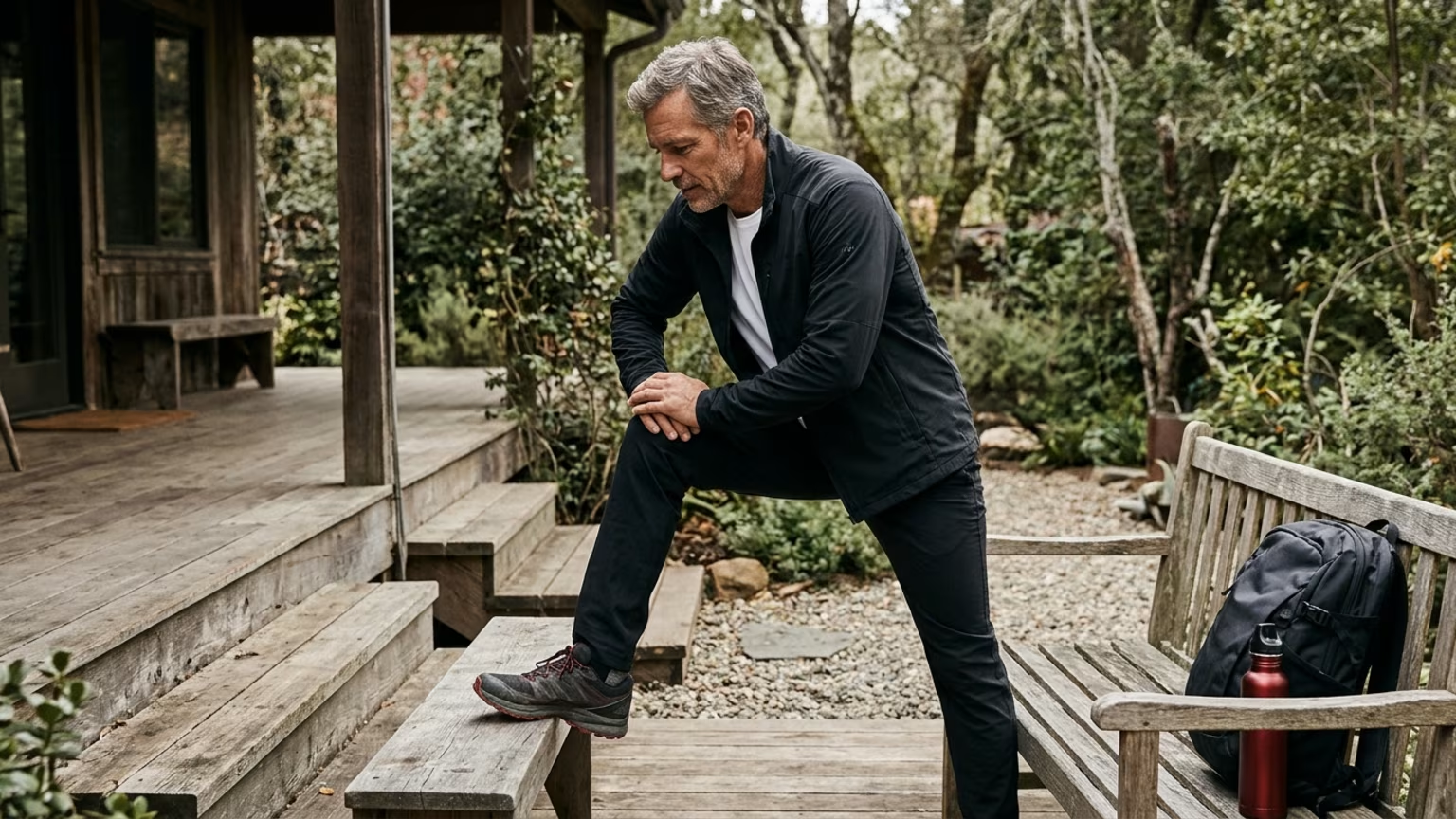
Winter Exercise After 45: Gentle Warm-Ups and Strength Work

On 22 October 2026, The Independent published “Nine simple tips to help you protect your bones this winter.” Its exercise advice came from physiotherapist Uzo Ehiogu and covered gentle joint warm-ups alongside strength and weight-bearing activity.
Is this new research or physiotherapy advice?
The Independent presents practitioner advice rather than a controlled trial of winter exercise. Ehiogu is a physiotherapist at the Royal Orthopaedic Hospital in Birmingham and a spokesperson for the Musculoskeletal Association of Chartered Physiotherapists.
The report gives no recruited participant group, demographic breakdown or trial duration. It does not describe an exercise programme tested specifically in men after 45.
That makes the status of its recommendations clear. The exercise examples and weekly frequencies come from Ehiogu’s advice, not from a newly reported experiment with a defined group of participants.
What physical benefits does Ehiogu describe?
The newspaper article reports no measured physiological or clinical outcomes. Instead, Ehiogu describes the intended roles of different kinds of movement:
- Joint mobility: He says gentle joint movements can help loosen joints and make them more mobile.
- Muscle strength: He describes squats and lunges as movements that strengthen muscles around the skeleton while placing load on bones.
- Skeletal loading: He presents sit-to-stands as a way to load the ankles and hips, lower-body long bones and spine.
- Bone and muscle health: He recommends regular strength work to support both.
“Bone responds to the demand that we place upon it,” Ehiogu tells The Independent. He links that explanation to a winter concern: cold and wet weather may reduce activity, with some protective strength lost along the way.
The focus is therefore broader than warming up. His advice connects preparation before exercise with keeping strength and weight-bearing activity in the week.
Which gentle movements does he recommend before exercise?
Ehiogu recommends gentle mobility exercises before activity in colder months. His examples are two sets of 10 knee flexions and extensions or calf raises.
These are preparation movements in his account. They sit before the main activity rather than replacing the strength work discussed elsewhere in the article.
For readers sorting through winter exercise advice, that distinction is useful. A suggestion about how to begin a session answers a different question from advice about maintaining muscle and bone health over time.
Related reading on gentle movement for everyday mobility offers another route into the broader mobility topic. Here, the specific winter message is to place gentle joint movement before exercise.
How does strength work fit into the advice?
Ehiogu names squats, lunges and sit-to-stands as strength and weight-bearing examples. He recommends strength training around three times a week to support bone and muscle health.
For sit-to-stands, he suggests eight or 10 repetitions. If the movement becomes too easy, his example of progression is adding a shopping bag of books.
The progression idea is straightforward: the same movement can involve more load. The source does not establish a required starting weight or a universal schedule for adding it.
For men concerned about losing muscle and physical capability, the distinction between mobility and strength deserves attention. In Ehiogu’s account, gentle movement prepares the joints for activity. Squats and lunges have a different role because they load the skeleton while working the surrounding muscles.
That puts familiar movements such as getting up from a chair into the strength discussion, rather than treating every simple movement as a warm-up. Readers interested in that wider topic can find related coverage of strength for everyday movement.
What does he say about shorter sessions and walking?
Ehiogu also recommends short activity sessions that can be repeated. He says three or four shorter sessions a week may be easier to maintain than one long session.
That is separate from his recommendation about strength-training frequency. One suggestion concerns strength work, while the other concerns making activity manageable across the week. They should not be combined into a rigid timetable that the article never sets out.
Walking is another weight-bearing option in the report. When conditions outside are dark or slippery, the article suggests indoor walking instead. Its example is about 10 minutes of marching around the home and up stairs.
The practical theme is continuity. The article makes room for changing where activity happens rather than treating outdoor exercise as the only worthwhile option.
Read together, the shorter-session and indoor-walking examples point toward repeatable activity. They offer ways of thinking about winter participation without turning every session into a long workout.
How does this fit with wider healthy-ageing guidance?
The UK government’s October 2026 response on healthy ageing provides broader context. It says the Chief Medical Officers’ guidance had an evidence update in July 2026 and reaffirms that some movement is better than none.
The response also says strength and balance activity matter for older adults. It describes their role in helping reduce falls and fractures and preserve independence.
The participation figures show why maintaining activity remains a public-health concern. Citing 2021 Health Survey for England data, the government reports that 10% of people aged 75 and over met physical-activity recommendations. The figure was 43% among 16- to 24-year-olds.
Those figures describe different age groups, not older men specifically. They also do not measure winter exercise or test Ehiogu’s warm-up suggestions.
Their relevance here is context rather than proof of a particular routine. The government’s message supports achievable activity alongside attention to strength and balance, while the newspaper article supplies a practitioner’s examples.
Where does the guidance leave personal decisions?
The Independent article provides no direct comparisons showing that its chosen warm-up prevents injuries or improves bone density. Its recommendations should therefore remain examples rather than a clinically established winter protocol.
The report also gives no medical screening criteria or detailed contraindications for the suggested exercises. It cannot establish which movements suit every reader’s joints, symptoms or circumstances.
For personal decisions about painful joints or returning to activity, suitability is a matter for qualified care. The modest practical takeaway from the guidance is gentle preparation before a colder-weather session, followed by manageable strength and weight-bearing activity where appropriate.
Does this change current exercise practice?
For men after 45, this is a reminder to keep preparation and strength work in the same conversation. Ehiogu’s advice puts gentle movement before exercise without allowing the warm-up to become the whole story.
The wider government message also keeps the focus on achievable participation. Shorter sessions and indoor options fit that theme when winter changes the setting for activity.
What this changes: the guidance reinforces existing advice to remain active and include strength work, rather than establishing a new best-practice winter warm-up protocol.
How Everfitguys helps
Keeping winter activity workable is a daily task for men and the professionals supporting them, while Everfitguys handles the research explanation. Its plain-English coverage places questions about losing muscle and strength alongside the goal of remaining physically capable for work, sport and family life.
Sources
Stay sharp
Get stories
The best writing on craft and life, delivered once a week. No noise, just the good stuff.