Floor-Transfer Testing and Targeted Lifting Routines to Counter Muscle Loss in Older Adults
On September 24, 2026, TIME published an article by Sarah Klein outlining five specific strength exercises designed to help older adults preserve muscle and mobility. The publication draws on fitness professionals to frame resistance training as a necessary tool for maintaining physical balance and everyday function.
How Did Researchers Measure The Sitting-Rising Movement?
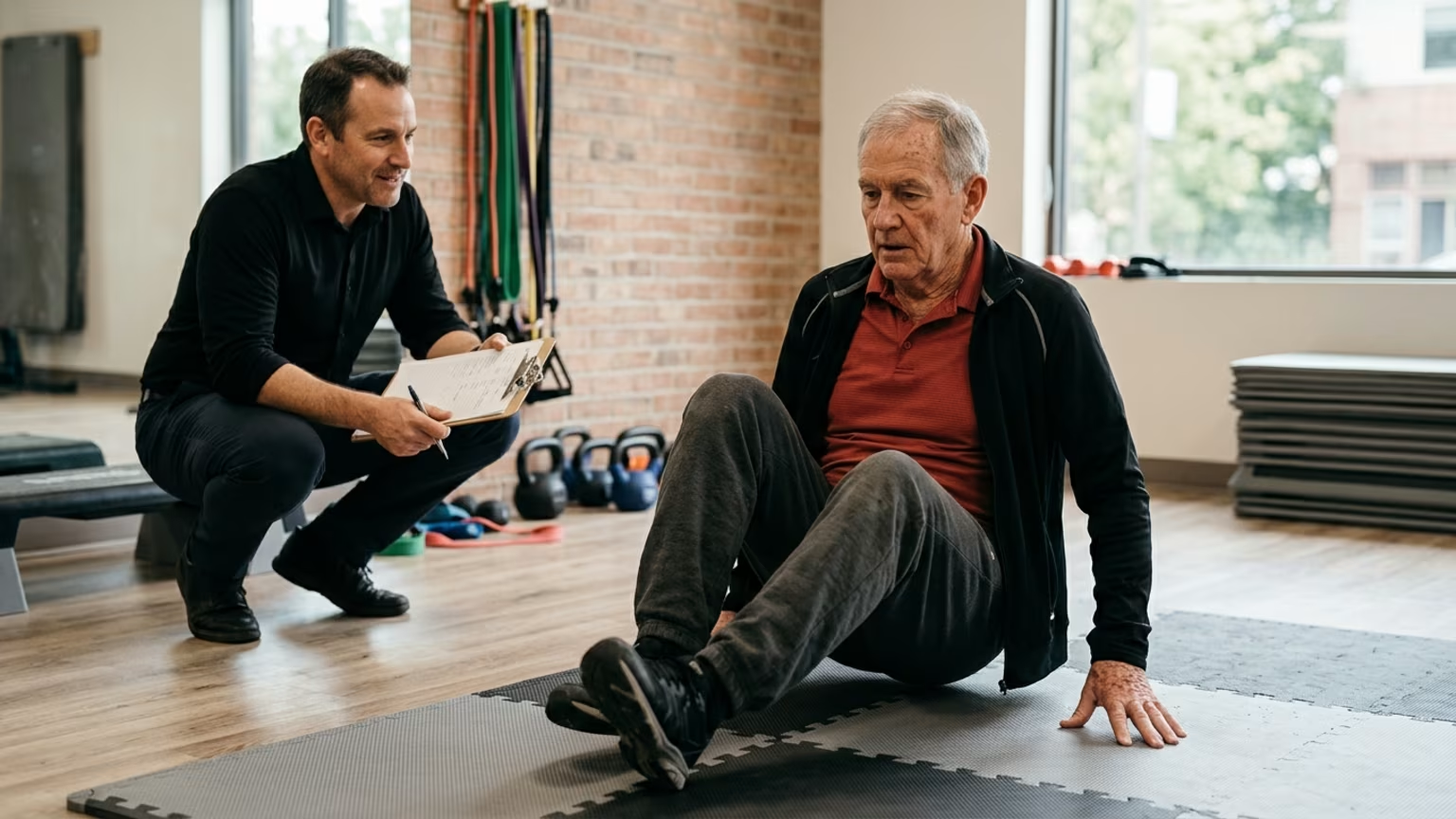
A related September 2026 study published in the European Journal of Preventive Cardiology investigated a floor-transfer movement called the sitting-rising test. Researchers examined an observational cohort of middle-aged and older men and women aged 46 to 75. The scientists tracked these participants during a defined follow-up period to evaluate specific natural-cause and cardiovascular mortality rates. The assessment tested how well individuals could sit on the floor and stand back up with minimal hand or leg support. The authors categorized this zero-equipment test as a practical screening tool to capture elements of physical strength, flexibility and balance.
What Does Current Research Say About Muscle Decline?
The TIME publication detailed specific physiological realities regarding age-related physical changes. The article cited Women’s Health.gov for the estimate that people lose roughly three to five percent of their lean muscle mass per decade. This biological shift reliably begins around age 30 for most adults. However, the physical decline may not become obvious until a person reaches approximately age 60. To counteract this gradual loss, the publication outlined five functional movements designed to preserve practical physical capacities.
Which Five Exercises Build Usable Everyday Strength?
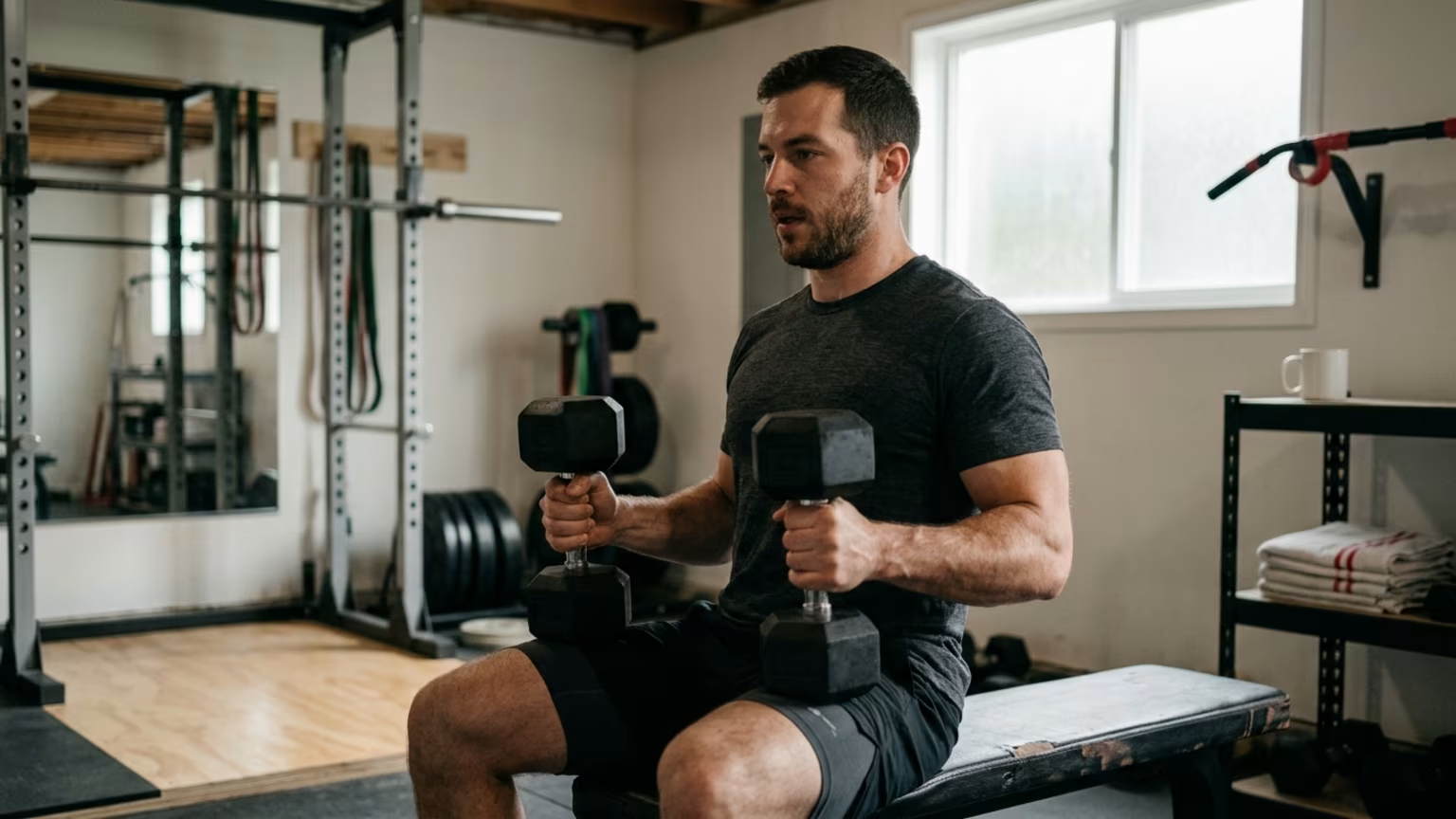
The first recommended movement is the goblet squat. This exercise safely targets the quadriceps, hamstrings, glutes and core muscles. This loaded squat pattern has a direct physiological application to standing up from a low chair or toilet. The second movement is the sitting-rising test, which actively challenges lower-body strength and hip joint mobility. The third functional exercise is the seated overhead press. This specific upper-body pressing movement relates directly to reaching tasks, such as placing heavy items on a high shelf or storing luggage.
The fourth recommended movement is the kickstand Romanian deadlift. This staggered-stance hip hinge develops the posterior chain to help older adults safely pick objects up from the floor. The staggered stance also actively challenges a person's standing balance. The fifth exercise is the bear crawl hold. This isometric physical drill demands high levels of shoulder and core stability while the knees hover slightly above the floor.
What Are The Mortality Risks Associated With Poor Mobility?
The European Journal of Preventive Cardiology study revealed explicit clinical outcomes tied to the sitting-rising test. Researchers reported that each one-point decrease in a participant's score correlated with a 33 percent higher risk of natural-cause mortality. That same one-point drop was simultaneously associated with a 31 percent higher risk of cardiovascular mortality. During the follow-up timeline, mortality rates reached 42.1 percent among participants positioned in the lowest score group. In sharp comparison, the mortality rate was just 3.7 percent among participants who achieved the highest scores.
Participants scoring between zero and four faced a 3.8-fold higher risk of natural-cause mortality than those who scored a perfect ten. Their subsequent cardiovascular mortality risk was approximately six times higher for the lowest-scoring participants compared to the top performers. These explicit statistics highlight how maintaining physical capability forms the foundation for everyday mobility.
How Should Older Adults Approach Sets And Repetitions?
The TIME publication provided clear parameters for training volume and physical consistency. Citing the American College of Sports Medicine, the guide stated that older adults benefit from one to three sets of six to 15 repetitions. The article recommended this six to 15 repetition range for the goblet squat, seated overhead press and kickstand Romanian deadlift. For the sitting-rising practice, the guide advised completing three to five repetitions. The bear crawl hold is prescribed for an isometric duration of 10 to 60 seconds per set. Understanding this weekly resistance training frequency provides a sensible framework for men returning to the gym.
How Does Function Organize A Training Plan?
A useful way to evaluate any resistance exercise is to determine which real-world physical ability it supports. The functional movements highlighted by TIME provide excellent examples of this practical approach. Sitting-rising practice directly trains a person's ability to get down to the floor and successfully recover a standing position. The kickstand Romanian deadlift reinforces the proper mechanics needed to pick up items while safely controlling the hips and trunk. Evaluating exercises through this functional lens prevents older adults from getting distracted by aesthetic goals.
Why Should Older Adults Start With Easier Variations?
The guide noted that individuals should start their training regimens with much easier movement variations than their ego might suggest. Older adults should readily utilize a lighter dumbbell, a higher support surface or a shorter range of motion when necessary. A supported physical variation allows a person to master the movement pattern before adding dangerous amounts of resistance. For example, the article suggests utilizing an assisted step-down modification for individuals who struggle with the standard goblet squat.
During the sitting-rising test, individuals should use assistance from their hands or legs rather than forcing a strict unassisted repetition. An elevated hand position can make the bear crawl hold much safer for individuals with weak shoulders. Similarly, an unloaded version of the kickstand hinge allows a person to practice their balance before introducing heavy weights. This sensible approach prioritizes joint health over rapid strength gains. Men who want to structure a long-term plan for muscle retention should strictly follow these gradual progression models.
How Does Consistent Practice Translate To Daily Independence?
TIME stresses that consistent participation matters much more than testing maximal physical effort. Older adults should ideally perform strength training at least twice per week to maintain their physical adaptations. Charlie Grundas, a certified personal trainer in Chicago, noted that people should safely adapt exercises rather than abandoning the pattern entirely.
Grundas offered the practical example of replacing an 18-inch box jump with a manageable six-inch box. An older adult could potentially progress to a 12-inch box after six months of consistent practice. Grundas asked readers to consider whether they ever want to face a time where they cannot get off the toilet. This stark question frames leg strength as a non-negotiable tool for independent living. Will Hewitt, a certified personal trainer in Massachusetts, explained that muscle tissue provides practical physical protection. He noted that core-focused drills like the bear crawl hold heavily support balance and aid in strict fall prevention.
How Does Recovery Affect Older Men Returning To Exercise?
Adults returning to resistance training after a long break may require significantly more physical recovery between sessions than they did in their twenties. This recovery gap becomes particularly evident if they suffer from sleep problems, high work stress or chronic joint pain. The publication's strong focus on gradual physical progression supports a cautious approach to exercise intensity. Individuals should add load, repetitions or structural complexity one variable at a time rather than increasing everything simultaneously.
This calculated approach prevents sudden physical burnout and protects vulnerable tendons from overuse injuries. Treating two weekly training sessions as a realistic baseline allows adequate time for muscle tissue to repair. Leaving room for adequate recovery helps men sustain their new fitness habits over the long term.
Why Does Aerobic Movement Still Matter?
Strength training effectively supports muscle retention and joint function, but it does not completely replace the need for cardiovascular conditioning. Walking, cycling, hiking and other aerobic activities remain highly relevant for maintaining cardiovascular fitness and overall daily activity levels. The wider medical evidence base strongly supports combining resistance training with regular aerobic movement. Presenting five specific strength exercises as a complete health solution ignores the critical role of the cardiovascular system.
A broader healthy-aging program must balance heavy resistance work with consistent heart rate elevation. Men looking to protect their long-term health should carefully integrate these resistance drills into their wider mobility and recovery routines while maintaining their walking habits. This comprehensive physical defense strategy provides the highest level of protection against age-related decline.
Are There Limitations To These Movement Guidelines?
The sitting-rising study remains strictly observational and does not prove that practicing the movement directly extends a person's lifespan. People who score highly on the test may possess better baseline cardiovascular health, healthier body composition or higher daily activity levels. A related editorial in the European Journal of Preventive Cardiology carefully clarified this medical nuance. The editorial noted that the test provides valuable prognostic information about cardiovascular mortality risk. The physical movement serves as an indicator of general physical function rather than a standalone medical prescription for extending life. A poor test score should not be treated as an absolute medical diagnosis.
The TIME piece's designation of these five exercises as the 'best' options remains an editorial choice rather than a universal scientific ranking. The optimal exercise program for any older adult depends heavily on their specific training history, baseline joint health and pre-existing medical conditions. A standard goblet squat might irritate a painful knee flare, meaning a supported sit-to-stand, a leg press or a box squat would be a safer starting choice. Furthermore, the bear crawl hold places significant body weight straight through the wrists, shoulders and hands. This specific structural demand can make the isometric hold unsuitable for individuals managing chronic joint inflammation or unresolved shoulder injuries.
The six to 15 repetition range serves as a helpful starting framework, but it does not dictate every fitness outcome. Beginners might require far fewer repetitions and much lighter loads to master the technical aspects of a kickstand Romanian deadlift. The quality of physical movement, tolerable muscular effort and gradual progression are likely more important than forcing every exercise into one prescribed range. Additionally, these unsupervised floor exercises should not replace clinical rehabilitation for older adults with significant fall risks, dizziness or neurological symptoms. The TIME article explicitly advises anyone returning from surgery or dealing with chronic pain to obtain medical clearance first.
The five highlighted movements successfully cover squatting, pressing, hinging and core control. However, they do not fully represent every major biomechanical movement pattern required for total fitness. A truly balanced strength program must also include pulling exercises, specific calf work and heavy loaded carries. It should incorporate direct resistance work for muscles that are especially important to an individual's sport, occupation or daily life.
What this changes: The growing reliance on functional assessments like the sitting-rising test confirms that resistance training must prioritize everyday movement capacity over isolated muscle building to preserve independence in later life.
How Everfitguys helps
Modifying functional movements to safely preserve joint health frequently intersects with confusion about hormonal changes and testosterone claims, and Everfitguys provides research led editorial clarity to answer these questions. Losing muscle, strength and physical capability with age directly limits older men, and we provide research led editorial analysis to help readers remain physically capable for sport, work and travel.
Sources
Stay sharp
Get stories
The best writing on craft and life, delivered once a week. No noise, just the good stuff.