Playing more of your favorite sport is often the worst way to build durability after age 45. Many recreational athletes believe that logging extra sets on the tennis court, swinging more clubs at the driving range, or adding extra ski runs will automatically build the fitness needed for those activities. In reality, repetitive sport practice without foundational physical preparation frequently produces localized joint wear, muscular imbalances, and premature fatigue.
Real physical durability requires training outside the sport. Building strength, rotational control, deceleration mechanics, and tissue tolerance creates a physical reserve. This reserve protects joints and improves performance when recreational activities become demanding.
Examine What The Research Shows About Athletic Longevity
Scientific research on athletic performance in midlife and older adults provides a clear picture of how physical capacity changes and how targeted training alters that trajectory. Resistance training produces reliable improvements in muscle mass, force output, tendon stiffness, and movement control across all decades of adult life. Physical decline is not an unchangeable straight line. A large component of midlife athletic loss stems from reduced training volume, loss of high-effort physical stimuli, and unaddressed movement deficits.
Studies on intermittent sports like tennis demonstrate that performance depends on a mix of short, explosive efforts and cardiovascular recovery. According to research on tennis physiology, tennis matches require rapid acceleration, directional changes, and high-force rotational swings interspersed with short rest periods. Aerobic capacity dictates how quickly an athlete recovers between points, while anaerobic power determines movement speed during the rally. When either system is undertrained, movement technique breaks down as matches progress.
Repeated-sprint research shows that high-intensity efforts place heavy demands on the neuromuscular system. When rest intervals between hard efforts are too short, power output declines and movement mechanics degrade. For men over 45, preserving movement quality under fatigue is the primary factor in preventing late-match or late-round performance drops.
Alpine skiing research highlights the distinct muscular demands of winter sports. Investigations into skiing physiology show that turning requires high levels of eccentric force, where leg muscles lengthen under heavy loads. Skiers must absorb massive ground forces while holding balance on changing snow surfaces. Evidence indicates that ski injuries frequently occur when an athlete is off balance or fatigued, showing the need for dedicated eccentric strength and stability training prior to stepping onto the snow.
Understand Why Physical Capacity Shifts After 45
Physical changes after age 45 reflect normal biological adaptations rather than sudden pathology. Muscle tissue undergoes a gradual reduction in the total number and size of fast-twitch muscle fibers. These fast-twitch fibers are responsible for producing rapid bursts of force during sprinting, jumping, cutting, and swinging. When training consists only of slow, steady aerobic exercise, these power-producing fibers receive little stimulation and decline faster.
Tendon and ligament structures also experience shifts in collagen turnover and water content. Connective tissues become somewhat stiffer and less compliant. This shift alters how tendons store and release elastic energy during dynamic sports. Without progressive strength training, tendons become less tolerant of sudden shock absorption, such as landing from a split step or braking hard on a ski slope.
Hormonal profiles change steadily over time, influencing muscle protein synthesis rates and recovery speed. Men in their late forties and fifties still build strength and muscle effectively, but systemic recovery from hard efforts takes slightly longer. High-volume workouts that cause extreme soreness can interfere with subsequent sports performance. Training must focus on precise stimuli that stimulate adaptation without creating deep systemic exhaustion.
Joint structures experience natural age-related wear, particularly in the knees, hips, lumbar spine, and shoulders. These joint changes do not mean sports participation must stop. Instead, they require the muscular system to provide better support. When the muscles surrounding a joint are strong and properly coordinated, they absorb forces that would otherwise stress joint capsules and cartilage.
Translate The Science Into Real-World Athletic Demands
Recreational sports place specific physical demands on the human body that simple treadmill walking or generic machine circuits do not address. To perform well and stay active across decades, men over 45 must target five core physical qualities.
Maximum Force Production
Maximum strength represents the ceiling of force your muscles can generate. In recreational sports, higher maximum strength creates an operational buffer. If swinging a golf club or pushing off the tennis court requires 100 pounds of force, an athlete with a 200-pound maximum uses half their capacity. An athlete with only a 120-pound maximum operates near their absolute limit. Building general strength through targeted strength and muscle development makes every submaximal athletic action feel easier and less exhausting.
Rapid Force Absorption and Deceleration
Most non-contact sports injuries happen during deceleration rather than acceleration. Slowing down, landing, and changing direction require muscles to work eccentrically. In tennis, you must sprint toward the sideline and brake hard on one leg before hitting the ball. In downhill skiing, quadriceps must constantly resist gravity and centrifugal force to maintain edge control. Cross-training must train the body to absorb force smoothly before demanding high-speed directional changes.
Coordinated Rotational Power
Golf, tennis, baseball, and paddling require rotation through the torso. Many athletes make the mistake of twisting aggressively through the lower back to generate power. True athletic rotation relies on hip mobility, thoracic spine movement, and trunk stiffness. The hips generate rotational power from the ground, the core transfers that energy across the midsection, and the upper body releases it into the club, racquet, or paddle. Training must emphasize both the ability to produce rotation and the ability to resist unwanted twisting through the lumbar spine.
Single-Leg Balance and Stability
Recreational sports are rarely performed with both feet planted evenly on flat ground. Running, changing direction, climbing uneven trails, and balancing on skis require single-leg stability. Single-leg strength requires coordinated action between the foot, calf, quadriceps, gluteal muscles, and deep hip rotators. Training on one leg at a time identifies side-to-side strength differences and builds the balance needed to handle uneven terrain.
Aerobic Recovery and Repeatable Output
A single great tennis serve or dynamic ski turn is useless if your technique collapses five minutes later. Repeatable performance relies on your aerobic system to clear metabolic byproducts and restore cellular energy between hard efforts. Cross-training should build a steady cardiovascular foundation that supports high-intensity bursts without leaving you gasping for air. Integrating aerobic energy metabolism conditioning keeps you mentally sharp and physically capable throughout long games or active outings.
Master Cross-Training Methods For Specific Sports
Every recreational sport places a distinct combination of forces on the body. Effective cross-training targets the exact physical gaps created by each activity.
Tennis and Racquet Sports
Tennis demands rapid multi-directional footwork, repetitive rotational impacts, overhead serving power, and high cardiovascular endurance.
Key physical priorities for tennis include:
- Single-leg lateral deceleration to stop and reverse direction quickly.
- Rotational core power combined with anti-rotation trunk control.
- Posterior shoulder and rotator cuff endurance to balance repetitive forward hitting.
- Calf, ankle, and Achilles tendon capacity for reactive court movement.
Helpful exercises include lateral lunges, single-leg step-downs, half-kneeling cable chops, and standing face pulls. Reactive agility drills should start with predictable footwork patterns before advancing to reactive cues.
Golf
Golf requires high rotational clubhead speed, balance during the swing finish, postural endurance over four to five hours, and total-body coordination.
Key physical priorities for golf include:
- Lead-hip internal rotation and trail-hip external rotation.
- Thoracic spine mobility to allow a full backswing without lumbar hyperextension.
- Gluteal and hamstring strength to maintain spine angles throughout the swing.
- Grip, wrist, and forearm endurance for club control.
Effective movements include single-leg Romanian deadlifts, Pallof presses, medicine ball rotational scoop tosses, and side planks. Resistance work should prioritize hip hinging and core bracing rather than excessive spinal twisting.
Alpine Skiing
Skiing places exceptional demands on lower-body eccentric strength, isometric endurance, core stability, and dynamic balance over cold, uneven surfaces.
Key physical priorities for skiing include:
- Eccentric quadriceps strength to absorb terrain shocks and manage turn forces.
- Isometric endurance to sustain a bent-knee athletic stance for extended runs.
- Lateral hip stability to maintain proper knee alignment over the skis.
- Aerobic capacity to handle altitude and cold weather without rapid exhaustion.
Valuable training choices include barbell box squats, front-foot-elevated split squats, wall sits with progressive duration, and lateral step-downs. Training should begin at least eight to ten weeks before the ski season starts to build real tissue tolerance.
Swimming
Swimming is a non-impact sport that places high repetitive demands on the shoulder girdle, thoracic spine, and core muscles.
Key physical priorities for swimming include:
- Scapular upward rotation and posterior shoulder strength to protect the rotator cuff.
- Thoracic spine extension to maintain a streamlined body position.
- Core anti-extension strength to prevent hip sagging in the water.
- Hip flexor and ankle mobility for efficient flutter and dolphin kicks.
Productive gym exercises include chest-supported dumbbell rows, half-kneeling landmine presses, dead bugs, and prone back extensions. Dryland training should emphasize pulling strength and scapular control to balance the internal rotation of swimming strokes.
Hiking and Ruck Walking
Hiking over steep, uneven terrain with a pack demands continuous lower-body strength, foot stability, and long-duration aerobic endurance.
Key physical priorities for hiking include:
- Concentric step-up power for climbing steep inclines.
- Eccentric quadriceps and calf strength for controlled downhill descents.
- Ankle proprioception and stability on loose rock and uneven ground.
- Loaded posture and trunk stability under backpack weight.
Key exercises include high step-ups, slow eccentric step-downs, heavy dumbbell farmer carries, and standing calf raises. Training these patterns prevents anterior knee pain and lower-back fatigue on long mountain descents.
Structure A Sustainable Weekly Training Framework
Consistency matters far more than workout complexity. For men over 45, a program must fit around career obligations, family life, and actual sport participation. A two-day full-body resistance training structure provides the ideal balance between building physical capacity and allowing full recovery.
The Two-Day Strength Template
This template covers all essential movement patterns across two weekly sessions. Space these workouts two to three days apart, such as Tuesday and Friday.
Session A: Primary Force and Deceleration
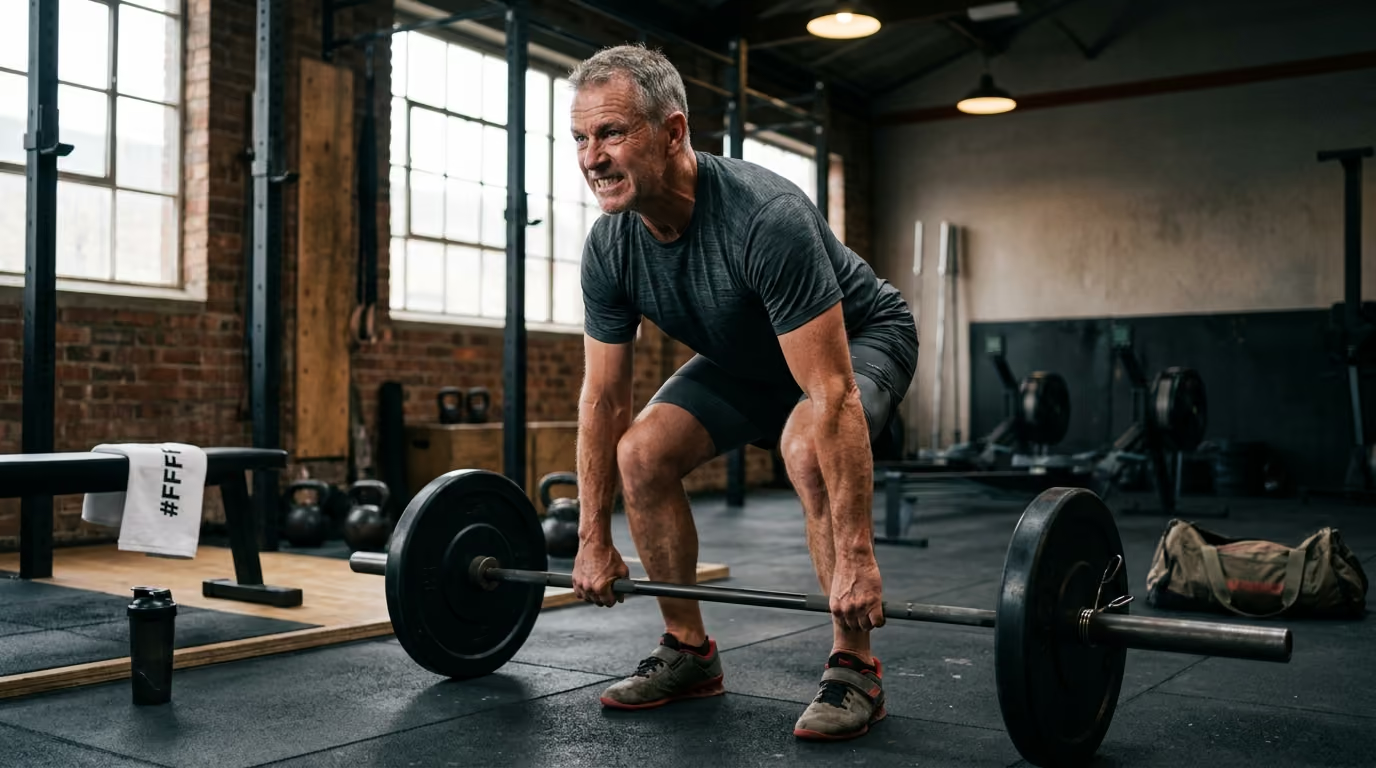
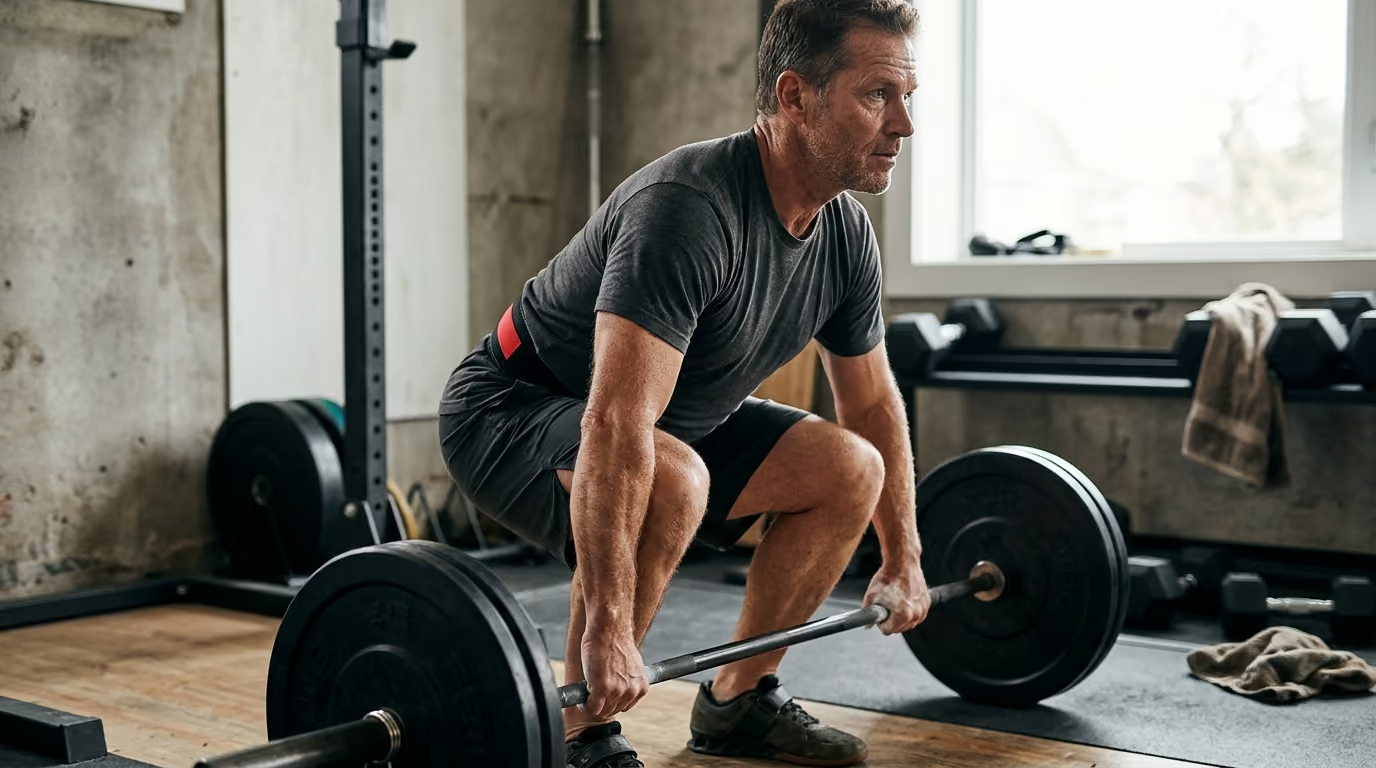
- Trap-Bar Deadlift or Supported Hip Hinge: 3 sets of 5 to 8 repetitions. Focus on hip drive and neutral spine posture.
- Dumbbell Incline Bench Press: 3 sets of 6 to 8 repetitions. Builds upper-body pushing power without excessive shoulder stress.
- Bulgarian Split Squat: 3 sets of 8 repetitions per leg. Emphasize a slow, controlled three-second descent to train eccentric braking.
- Chest-Supported Dumbbell Row: 3 sets of 8 to 10 repetitions. Strengthens the upper back and scapular retractors.
- Standing Cable Pallof Press: 3 sets of 10 to 12 repetitions per side. Trains anti-rotation core stability.
- Dumbbell Farmer Carry: 3 sets of 30 to 40 yards. Builds grip strength, shoulder stability, and upright posture.
Session B: Unilateral Strength and Rotational Power
- Goblet Squat or Front Squat: 3 sets of 6 to 8 repetitions. Focus on full depth under control and upright torso position.
- Half-Kneeling Single-Arm Lat Pulldown or Cable Row: 3 sets of 8 to 10 repetitions per arm. Combines pulling strength with hip stability.
- Lateral Lunge or Lateral Step-Down: 3 sets of 8 repetitions per leg. Builds frontal-plane strength and knee stability for court and slope sports.
- Push-Up or Neutral-Grip Dumbbell Floor Press: 3 sets of 8 to 12 repetitions. Protects shoulder joints while building pressing capacity.
- Medicine Ball Rotational Scoop Toss or Cable Lift: 3 sets of 6 repetitions per side. Develops explosive rotational hip power.
- Standing Single-Leg Calf Raise: 3 sets of 12 to 15 repetitions per leg. Builds foot, ankle, and Achilles tendon capacity.
Managing Training Intensity
Training to absolute muscular failure is unnecessary and counterproductive for recreational athletes over 45. Taking sets to absolute failure creates deep central nervous system fatigue and increases joint strain.
A more effective method is training with one to three repetitions in reserve on most working sets. You should select a weight that challenges your muscles while allowing you to complete every repetition with clean, controlled technique. The final repetition of a set should look almost identical to the first repetition, differing only in movement speed.
Programming Power Safely
Power training trains the nervous system to recruit fast-twitch muscle fibers quickly. Power exercises should always be performed early in the workout while your body is fresh, before heavy fatigue sets in.
Use moderate loads moved with maximum speed and intent. Medicine ball throws, low-height box jumps with soft landings, and rapid kettlebell deadlifts are excellent choices. Keep volume low, using sets of three to five repetitions. Stop the exercise immediately if movement speed noticeably drops.
Avoid Common Training Errors And Misreadings
Many active men fall into predictable training traps that waste energy and increase injury risk. Understanding these misreadings helps you make smarter training choices.
Mistake 1: Confusing Exhaustion With Effective Training
A common belief is that a cross-training workout must leave you sweating heavily on the floor to be worthwhile. High-intensity interval circuits that cause severe fatigue often compromise movement mechanics. When technique breaks down under extreme exhaustion, you train poor motor patterns and increase stress on connective tissues. Effective strength training stimulates muscle and bone without destroying your ability to play your sport the next day.
Mistake 2: Believing Movement Screens Provide Clinical Diagnoses
Movement assessments and functional screens are popular tools in golf and fitness training. While screens can highlight general areas of tightness or weakness, they are not medical diagnoses. Failing a specific overhead squat or hip test does not guarantee you will get injured or develop a specific swing fault. Movement screens provide clues for training focus, but they should never be treated as definitive health predictions.
Mistake 3: Relying Exclusively On Passive Mobility Work
Stretching tight muscles can provide temporary relief, but passive flexibility does not equal usable athletic range. An athlete might possess plenty of passive hip rotation on an examination table yet lack the strength to stabilize that hip during a golf downswing. True mobility is active range of motion under muscular control. Combine gentle mobility drills with loaded strength exercises through full, pain-free ranges of motion to build stable flexibility.
Mistake 4: Avoiding Challenging Loads Out of Fear
Some men over 45 abandon resistance training with meaningful loads, choosing very light weights and high repetitions out of fear of joint injury. Research shows that older connective tissues, bones, and muscles require adequate mechanical load to maintain their strength and density. Using manageable, challenging weights with strict form is safe and provides far greater physical protection than endless light-weight circuits.
Identify Where The Scientific Evidence Remains Thin
While the benefits of general strength and conditioning are well established, several popular cross-training concepts rest on limited scientific proof. Knowing where evidence is thin helps you avoid fitness fads.
Masters Athlete Research Gaps
Most sports science research has historically focused on elite collegiate or professional athletes in their twenties. Studies looking specifically at master athletes over age 45 are growing but remain limited. Many training recommendations for older recreational athletes are adapted from younger populations rather than tested directly in long-term midlife cohorts.
Transfer of Sport-Specific Gym Gadgets
Fitness companies frequently market specialized machines, unstable platforms, and weighted sport implements designed to mimic specific sports movements. Current evidence does not support the idea that swinging weighted clubs or balancing on unstable boards produces superior sport transfer compared to basic strength and balance training. General strength built with barbells, dumbbells, and bodyweight transfers effectively to sports when combined with regular skill practice.
Commercial Recovery Modalities
Commercial recovery tools such as massage guns, cold plunges, compression garments, and specialty recovery supplements receive heavy marketing. Scientific evidence supporting their ability to speed long-term training adaptations in recreational athletes is mixed or weak. The foundational drivers of recovery remain adequate sleep, sufficient total calories, daily protein intake, and structured workload management.
Support Durability Through Recovery And Nutrition
Strength training provides the biological stimulus for improvement, but physical adaptation happens during recovery periods. Supporting your training with sound daily habits protects joint health and athletic longevity.
Managing Weekly Physical Load
Your body does not distinguish between stress from a heavy leg workout, an intense two-hour tennis match, a day of skiing, or a demanding week at work. All physical demands draw from the same recovery reserve. If you plan a demanding weekend of sports, reduce the volume of your mid-week strength sessions. Budgeting your physical energy prevents overuse injuries and keeps your performance high when it matters. Prioritizing dedicated mobility and recovery work ensures your joints and nervous system bounce back quickly between training sessions.
Nutrition and Protein Intake
Active men over 45 require sufficient dietary protein to support muscle repair and preserve lean tissue. Evidence-based nutritional guidelines recommend that active adults consume between 1.2 and 2.0 grams of protein per kilogram of body weight each day. Spreading protein intake across three to four balanced meals provides a steady supply of amino acids for tissue maintenance.
Adequate hydration and carbohydrate intake are equally critical for athletic repeatability. Dehydration impairs reaction time, coordination, and muscular power during tennis matches or mountain hikes. Consuming balanced meals with complex carbohydrates, quality fats, and clean hydration fuels long days of physical activity.
Sleep and Tissue Repair
Growth hormone release, cellular repair, and central nervous system recovery occur primarily during deep sleep. Chronic sleep deprivation reduces physical reaction speed, impairs motor control, and increases injury risk during dynamic sports. Aim for seven to eight hours of quality sleep each night. Establishing a consistent sleep schedule and limiting late-night screen exposure directly supports your athletic longevity.
Track Functional Progress Without Gym Obsession
Progress in cross-training should be judged by how well you move, feel, and perform in your chosen hobbies, not solely by the numbers on a gym barbell.
Practical markers of successful cross-training include:
- Completing a full tennis match or round of golf without lower-back stiffness the following morning.
- Maintaining crisp footwork and balanced posture late in an active outing.
- Experiencing clean knee tracking and control during steep downhill hiking or skiing.
- Recovering quickly between hard athletic efforts without extended breathing distress.
- Moving freely through daily life with confidence in your physical capabilities.
Using intelligent resistance training to build a strong physical foundation lets you enjoy your active hobbies with greater energy, safety, and capability across midlife and beyond. Focusing on building physical performance and embracing sound healthy aging strategies will keep you in the game for decades to come.
Key Takeaways
- Sport participation alone does not build complete physical durability; targeted cross-training creates the strength reserve needed to protect joints and sustain performance.
- Deceleration and eccentric force absorption are essential athletic skills that reduce injury risk in cutting, landing, and downhill movements.
- Rotational power depends on hip mobility, thoracic spine movement, and core stiffness rather than excessive twisting through the lower back.
- A sustainable program using two full-body strength sessions per week is sufficient to develop force production, single-leg stability, and movement control.
- Training should focus on technical precision with one to three repetitions in reserve, avoiding excessive fatigue that compromises recovery.
Staying strong and physically capable after 45 is entirely realistic when you build your training around fundamental strength, joint control, and steady recovery.
Sources
- The Acute Demands of Repeated-Sprint Training on Physiological ...
- Applied physiology of tennis performance - PMC - NIH
- How to Prevent Injuries in Alpine Ski Racing - PMC - NIH
- The role of eccentric regime of leg muscle work in alpine skiing – DOAJ
- 8 Physical Demands of Tennis
- Physiological Aspects and Injury in Elite Alpine Skiers - PubMedpubmed.ncbi.nlm.nih.gov › ...
Stay sharp
Get the word
Join our newsletter for the best writing advice and stories from the field.