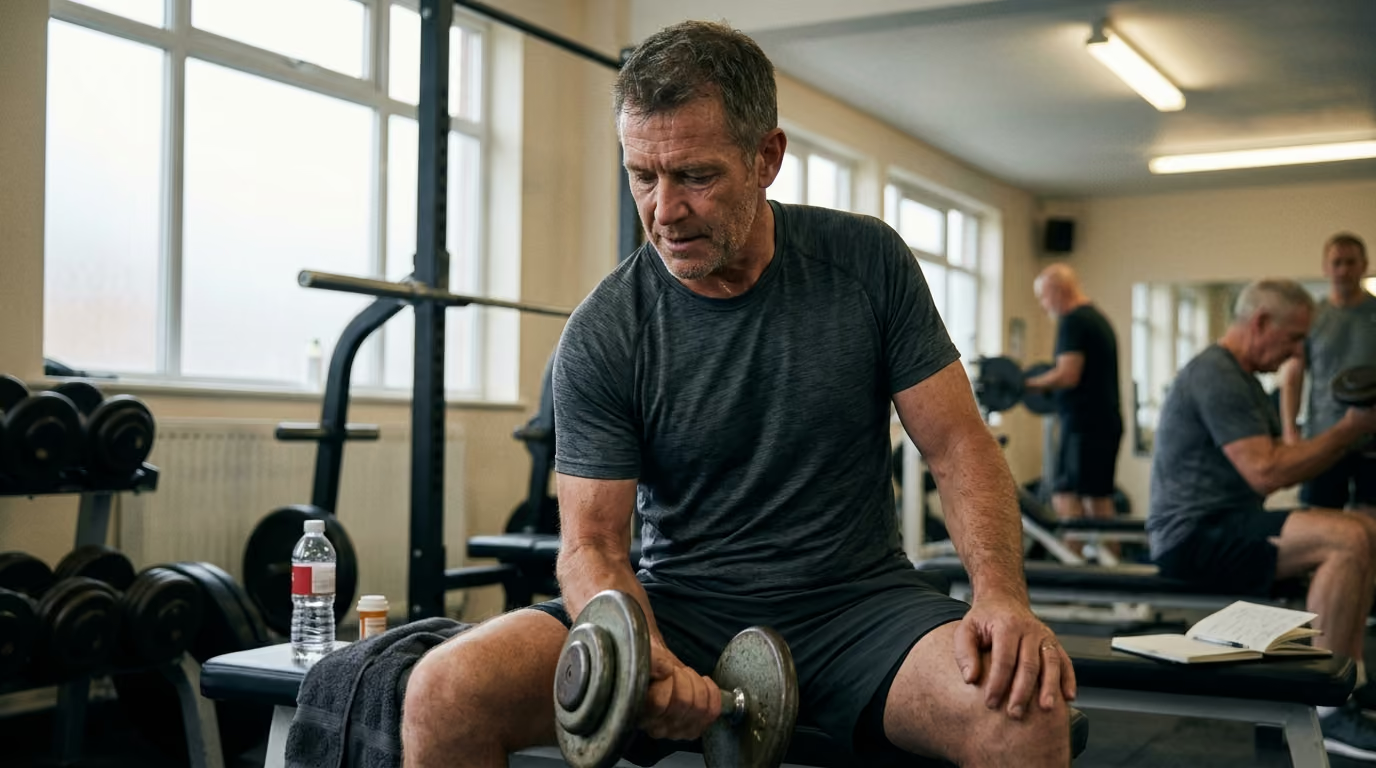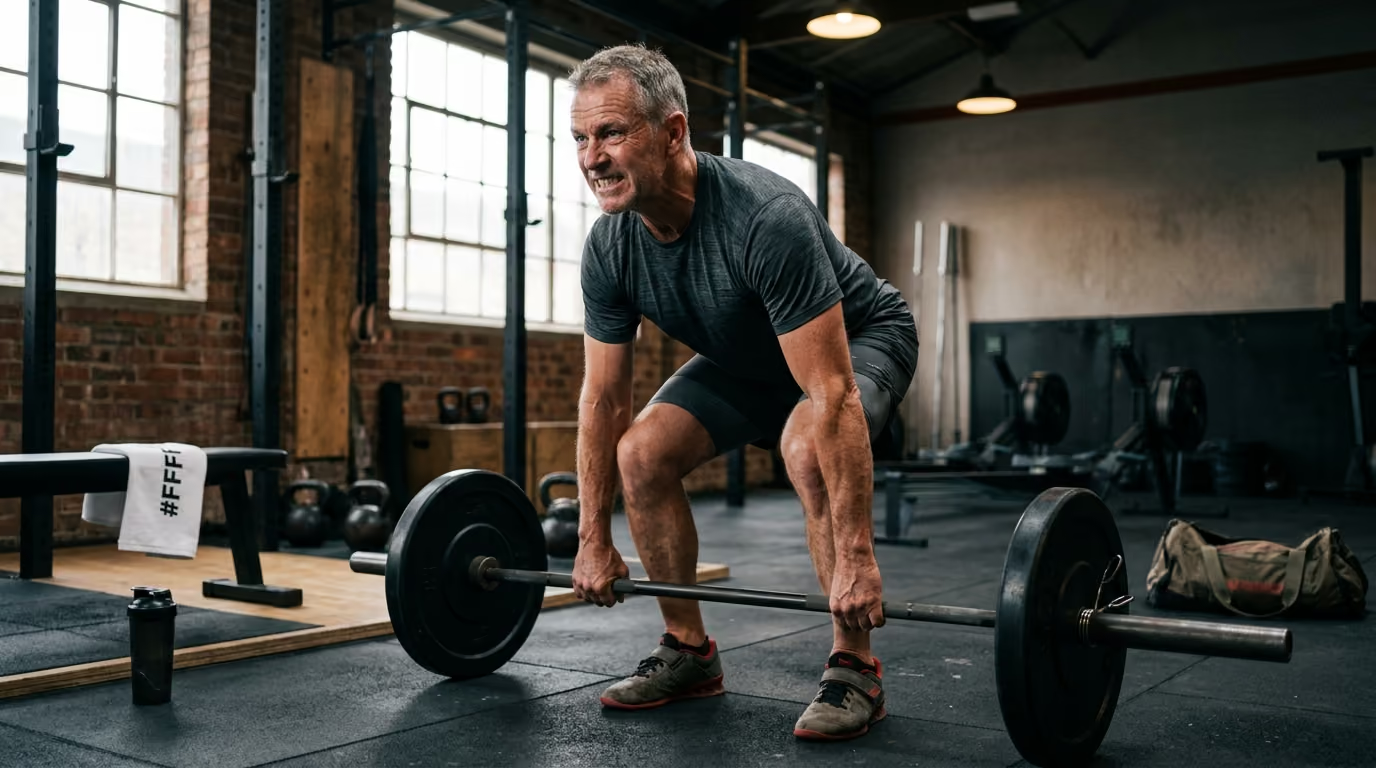
Athleticism after 45 is not a single physical trait. It is not defined solely by the weight on a barbell, the distance logged on a GPS watch, or the size of a muscle. True athleticism is the coordinated expression of five distinct physical capacities: maximal strength, explosive power, linear speed, multidirectional agility, and systemic conditioning.
Many training programs treat fitness as one broad bucket. When training is approached this way, men often focus on only one quality while neglecting the others. A lifter may possess high force production yet lack the capacity to climb a steep trail or change direction safely. An endurance cyclist may have great stamina yet lack the power to catch a sudden stumble or lift a heavy load.
Building a durable body in midlife requires a balanced approach. This guide presents a multi-quality framework designed for men who want to lift, hike, cycle, and participate in sport. It examines what current exercise science shows about physical capacity across the lifespan. It explains how to organize these physical qualities into a sustainable weekly routine without excessive fatigue or breakdown.
What Does the Research Show About Athletic Qualities After 45?
Exercise science reveals that physical capacities do not decline at identical rates as the body matures. Research demonstrates that explosive power declines faster than absolute strength across aging populations. While maximal force production remains relatively preserved into midlife, the rate of force development decreases more rapidly.
A systematic review examining 44 studies established that muscle power is positively associated with physical performance. In multiple analyses, power served as a slightly stronger predictor of daily functional capability than maximal strength alone. Muscle power represents the product of muscular force and contraction velocity. A man may retain the raw force needed to stand up, but his movement velocity determines how easily he can react to unexpected physical demands.
Longitudinal and cross-sectional data show clear trends in force production across age groups. A meta-analysis of 114 studies covering over 90,000 participants analyzed male grip strength across the lifespan. Grip strength peaked around age 25 at an average of 45.5 kilograms. It showed a steeper downward trend after age 50, reaching an average of 23.2 kilograms by age 95.
- Age (Years) Mean Grip Strength (kg)
- 50 Steeper decline begins
The relationship between muscle mass and real-world performance is also more nuanced than commonly believed. Systematic reviews show that while muscle strength strongly correlates with physical performance in older adults, the relationship between muscle mass and physical performance is weak. Muscle quantity provides the structural foundation for force production. Muscle quality, which reflects neural drive and motor unit recruitment, dictates how that tissue performs under load.
Public health recommendations provide baseline targets for adult activity. The World Health Organization guidelines advise adults to complete 150 to 300 minutes of moderate aerobic activity weekly, or 75 to 150 minutes of vigorous activity. These guidelines also recommend muscle-strengthening work on at least two days per week. For older adults, guidelines emphasize varied multicomponent training that integrates balance, power, and functional strength across three or more days.
Scientific literature on concurrent training shows that combining strength and endurance requires deliberate planning. Meta-analyses indicate that concurrent training can blunt lower-body strength adaptations in men if programming is disorganized. Research confirms that sequencing resistance training before endurance work within the same session better preserves lower-body strength.
Why Do Physical Capacities Change as Men Age?
The physical shifts observed after age 45 stem from measurable biological adaptations across multiple systems. These changes are a normal part of biological aging rather than a disease state. Understanding these mechanisms helps clarify why training must target specific qualities rather than relying on heavy lifting alone.
Neuromuscular Remodeling and Motor Unit Loss
The primary driver of power and speed loss is the gradual loss of fast-twitch motor units. Human muscle contains Type I slow-twitch fibers and Type II fast-twitch fibers. Type II fibers produce high force and rapid contraction speeds.
As decades pass, the nervous system undergoes motor unit remodeling. Fast motor units denervate and are either re-innervated by slow-twitch motor neurons or lost entirely. This process reduces the maximum velocity of muscle contraction. Because power is force multiplied by speed, the loss of contraction velocity causes power output to drop faster than maximal strength.
Tendon Mechanics and Elastic Energy Storage
Tendons transmit force from muscles to bones. In younger bodies, tendons exhibit high compliance and elasticity, acting like strong springs that store and return energy during sprinting, jumping, and cutting.
With time, collagen architecture undergoes structural cross-linking. Tendons often become stiffer while losing some of their elastic recoil capacity. This shift alters the stretch-shortening cycle. When a man attempts to sprint or jump without progressive training, the tendon cannot absorb and release force as efficiently, transferring higher stress to the surrounding joints and muscles.
Mitochondrial Density and Cardiovascular Output
Aerobic capacity, measured as maximal oxygen uptake, naturally shifts due to central and peripheral factors. Maximal heart rate declines steadily, reducing maximal cardiac output.
At the cellular level, mitochondrial volume density and oxidative enzyme activity can diminish when high-intensity work is reduced. These adaptations lower the rate at which muscle cells regenerate adenosine triphosphate through aerobic pathways. This metabolic change increases recovery time between intense bouts of physical exertion.
Tissue Recovery and Joint Architecture
The recovery timeline following strenuous exercise lengthens across midlife. Muscle protein synthesis responses to exercise and nutrition become less sensitive, a phenomenon known as anabolic resistance.
Articular cartilage also experiences subtle biochemical modifications, reducing water content and shock absorption. These changes do not mean joints are wearing out. They mean connective tissues require longer warm-ups, progressive loading, and deliberate recovery intervals between demanding sessions.
What Does a Multi-Quality Approach Mean for Real Life Performance?
Translating exercise physiology into daily capability highlights why a single training style is insufficient. A balanced physical profile allows a man to participate in varied recreational activities with confidence.
- Physical Quality Core Definition Real-World Application
- Strength Production of high external force Carrying gear, steep climbing, heavy lifting
- Power Rapid force production (force x speed) Recovering from a trip, jumping, quick surges
- Speed Rapid linear locomotion Running for a train, fast athletic sprints
- Agility Deceleration, cutting, reaction Navigating rocky trails, playing sport
- Conditioning Sustaining work and recovering Long hikes, extended rides, repeated work bouts
Maximal strength provides the absolute foundation. When you carry a heavy backpack on a mountain trail, push a stalled vehicle, or lift a fallen log, your nervous system must recruit high amounts of force. Strong muscles and bones protect joints from excessive stress during loaded tasks.
Power dictates how quickly you can produce that force. If your foot catches on an uneven root while hiking, you do not need five seconds to exert force. You have a fraction of a second to plant the other foot, rapidly generate force, and arrest your downward momentum. Training power directly prepares the neuromuscular system for sudden reactive corrections.
Speed and agility govern movement freedom. Speed allows efficient linear movement when running or cycling. Agility involves braking, planting, cutting, and re-accelerating in response to unpredictable environments. Navigating a steep, rocky descent requires eccentric braking strength and rapid lateral adjustments. Without agility training, changing direction quickly can cause joint strain or awkward falls.
Systemic conditioning supports all other attributes. A robust aerobic base allows you to sustain a three-hour bike ride, recover between sets of heavy squats, and clear metabolic waste products efficiently. Conditioning ensures that your physical capacity remains steady from the start of an activity to the finish.
You can learn more about structured force development in our guide to strength and muscle training.
How Should You Train Strength, Power, Speed, Agility, and Conditioning?
To build an athletic body, you must apply specific training methods for each physical attribute. Every quality requires distinct loading parameters, rest periods, and execution mechanics.
1. Strength: Developing Force Production
Strength training after 45 should emphasize multi-joint movements performed with excellent technical control. The goal is to stimulate motor units without producing excessive joint irritation.
For maximal strength, use loads between 70% and 85% of your one-repetition maximum. Perform sets of 3 to 6 repetitions, stopping each set with 1 to 3 repetitions in reserve. This buffer preserves movement mechanics while providing a potent stimulus for the nervous system.
Key Strength Exercises
- Lower Body: Trap-bar deadlifts, box squats, front-foot elevated split squats, Romanian deadlifts, and heavy sled pushes.
- Upper Body: Neutral-grip dumbbell presses, push-ups, landmine presses, chest-supported rows, and lat pulldowns.
- Trunk: Heavy farmer carries, suitcase carries, Pallof presses, and side planks.
Prioritize single-leg strength exercises. Split squats and step-ups build stability in the frontal and transverse planes, which carries over directly to hiking, running, and field sports.
2. Power: Accelerating Against Resistance
Power training focuses on velocity. According to position statements from the National Strength and Conditioning Association, power training involves moving low-to-moderate loads at high speeds.
Use loads between 30% and 60% of your one-repetition maximum. Perform 3 to 5 sets of 3 to 5 repetitions. Focus on maximum concentric intent, moving the resistance as rapidly as possible while maintaining perfect control. Terminate the set immediately if movement speed drops.
- Training Variable Strength Protocol Power Protocol
- Load Intensity 70% to 85% 1RM 30% to 60% 1RM
- Repetition Range 3 to 6 reps per set 3 to 5 reps per set
- Movement Intent Controlled, high force Maximum acceleration
- Set Termination 1 to 3 reps in reserve Stop when speed declines
Low-Risk Power Drills
- Medicine Ball Throws: Chest passes against a wall, overhead scoop throws, and rotational side throws. These drills build explosive upper-body and core power without joint impact.
- Kettlebell Swings: Rapid hip extension that trains the posterior chain to produce force quickly.
- Box Jumps with Step-Downs: Jumping onto a stable 12-to-18-inch box allows explosive triple extension while eliminating high-impact landing stress.
- Speed Sled Sprints: Pushing a light sled as fast as possible against moderate friction.
3. Speed: Preserving Linear Locomotion
Speed training trains the nervous system to coordinate rapid limb cycling and elastic force return. It must not be confused with high-intensity interval conditioning. Speed work requires full recovery between repetitions so that every sprint is performed at near-maximal velocity.
Progressive Speed Options
- Short Hill Sprints: Running up an 8% to 12% grade for 20 to 40 meters. The incline reduces joint impact, limits excessive hamstring strain, and naturally enforces good forward body angles.
- Flat Strides: Smooth accelerations over 50 to 60 meters on grass, building up to 85% to 90% of top speed without straining.
- Stationary Bike Accelerations: All-out 6-to-10-second sprints against moderate resistance, offering a zero-impact speed stimulus.
Take 60 to 90 seconds of rest for every 10 meters sprinted. Total sprint volume per session should remain low, typically between 120 and 300 total meters.
4. Agility: Mastering Deceleration and Change of Direction
Agility requires deceleration capacity, balance, and spatial awareness. The most demanding component of agility is not turning. It is braking. Your muscles must absorb force eccentrically before redirecting momentum.
Progression must move from predictable drills to reactive drills over several weeks.
Agility Progression Steps
- Braking Mechanics: Accelerate forward 5 meters and come to a balanced, motionless stop in an athletic stance within two steps.
- Planned Direction Changes: 5-10-5 shuttle runs or figure-eight cone drills at moderate speed, focusing on tight turns and low hip height.
- Lateral Shuffles and Crossovers: Moving laterally along a baseline, switching from a shuffle to a crossover step on command.
- Reactive Agility Drills: Reacting to a training partner pointing left or right, or catching a bouncing reaction ball.
Keep the volume low, completing 4 to 6 total repetitions per drill. Focus on balance, hip stability, and foot placement rather than rushing through the movements.
5. Conditioning: Building Systemic Endurance
Conditioning must develop distinct energy pathways. A complete framework balances low-intensity aerobic base building with targeted high-intensity intervals.
Conditioning Categories
- Aerobic Base (Zone 2): Continuous, conversational-paced exercise such as brisk walking, easy cycling, or rowing. Maintain a heart rate between 60% and 70% of your maximum for 30 to 60 minutes. This builds capillary density and mitochondrial volume.
- Tempo Conditioning: Sustained efforts near the lactate threshold for 15 to 25 minutes. This improves the ability to sustain hard work during steep mountain climbs or fast cycling group rides.
- High-Intensity Intervals: Short bouts of hard work lasting 30 to 60 seconds, followed by 90 to 120 seconds of easy recovery. Perform on a stationary bike, rowing machine, or ski ergometer to limit orthopedic stress.
For an extensive review of systemic training factors, examine our collection on physical performance research.
How Do You Structure a Multi-Quality Weekly Training Plan?
Combining five physical qualities into one week requires a clear organizational hierarchy. Attempting to train every quality to exhaustion within a single day creates chronic fatigue and increases injury risk.
The Session Priority Rule
When multiple qualities are trained in a single workout, arrange exercises in order of neurological demand:
- Dynamic Warm-up and Movement Preparation
- Speed, Agility, or Power Drills (requires complete neural freshness)
- Heavy Multi-Joint Strength (requires high motor unit recruitment)
- Accessory Hypertrophy or Single-Leg Work
- Conditioning or Aerobic Work (causes metabolic fatigue)
- Mobility and Down-Regulation
- Session Flow
- Warm-Up
- Speed/Power
- Heavy Strength
- Accessories
- Conditioning
- Cooldown
Placing conditioning or heavy lifting before speed work impairs movement quality and increases injury risk. High-velocity work must always be performed while the nervous system is fresh.
Weekly Schedule 1: The General Athleticism Template
This schedule suits men who want balanced development across all physical qualities.
Monday: Lower Body Strength and Power
- Dynamic Warm-Up: Hip circles, ankle mobility, leg swings (5 minutes)
- Medicine Ball Overhead Scoop Throws: 4 sets of 4 throws
- Box Jumps with Step-Down: 3 sets of 3 jumps
- Trap-Bar Deadlift: 4 sets of 4 to 6 reps (2 reps in reserve)
- Bulgarian Split Squat: 3 sets of 8 reps per leg
- Farmer Carries: 3 sets of 40 meters
- Cooldown: Hip flexor and hamstring mobility
Tuesday: Aerobic Base and Recovery
- Zone 2 Cycling or Incline Treadmill Walking: 40 to 50 minutes at conversational pace
- Thoracic spine and shoulder mobility drills (10 minutes)
Wednesday: Upper Body Strength, Speed, and Agility
- Dynamic Warm-Up and Footwork Drills: 5 minutes
- Lateral Deceleration Shuttle Drills: 4 sets of 3 direction changes
- Medicine Ball Chest Passes: 4 sets of 5 throws
- Neutral-Grip Dumbbell Overhead Press: 4 sets of 6 reps
- Chest-Supported Dumbbell Row: 4 sets of 8 reps
- Push-Ups: 3 sets of 10 to 15 reps
- Suitcase Carries: 3 sets of 30 meters per side
Thursday: Active Recovery
- Brisk Outdoor Walking: 30 to 45 minutes
- Dedicated ankle and hip mobility routine
Friday: Full Body Strength and Movement Capacity
- Low-Box Lateral Bounds: 3 sets of 3 jumps per side
- Goblet Squat or Front Squat: 3 sets of 6 to 8 reps
- Romanian Deadlift: 3 sets of 8 reps
- Half-Kneeling Landmine Press: 3 sets of 8 reps per arm
- Lat Pulldown or Neutral-Grip Pull-Up: 3 sets of 6 to 8 reps
- Pallof Press: 3 sets of 10 reps per side
Saturday: Sport, Hiking, or High-Intensity Conditioning
- Primary Activity: 60 to 90 minutes of recreational sport, mountain trail hiking, road cycling, or hill interval training.
Sunday: Full Rest
- Unstructured light walking and physical recovery.
Weekly Schedule 2: The Strength and Hiking Template
This template prioritizes single-leg stability, eccentric deceleration, and uphill endurance.
- Monday: Lower-body strength focusing on split squats, Romanian deadlifts, and heavy loaded pack carries.
- Tuesday: Zone 2 aerobic cycling or flat walking for 45 minutes.
- Wednesday: Upper-body strength, rotational medicine ball power, and core stability.
- Thursday: Stairmaster or uphill treadmill intervals (6 rounds of 2 minutes hard, 2 minutes easy).
- Friday: Light full-body mobility, balance drills, and recovery.
- Saturday: Long outdoor hike (2 to 5 hours) on natural terrain with elevation changes.
- Sunday: Full rest and gentle stretching.
Weekly Schedule 3: The Strength and Cycling Template
This schedule is designed for cyclists who need to maintain upper-body strength and bone density without tiring their legs for weekend rides.
- Monday: Full-body strength emphasizing trap-bar deadlifts, presses, rows, and heavy carries.
- Tuesday: Zone 2 base endurance ride (60 to 90 minutes).
- Wednesday: Power work (medicine ball throws, explosive push-ups) and upper-body strength.
- Thursday: Easy recovery ride or active recovery walk (30 to 45 minutes).
- Friday: Short full-body maintenance session with low lower-body volume (2 sets of squats, push-ups, rows).
- Saturday: Long road or gravel ride (2 to 4 hours) or high-intensity interval ride.
- Sunday: Rest and mobility.
For additional recovery protocols to pair with these templates, review our guide on mobility and recovery strategies.
How Can You Avoid the Interference Effect Between Cardio and Lifting?
Combining resistance training and cardiovascular endurance within the same weekly routine creates what sports scientists call the concurrent training interference effect. When improperly organized, endurance exercise can blunt strength gains and muscle hypertrophy.
- Endurance Signal (AMPK) Interference Potential Hypertrophy Signal (mTOR)
- (Mitochondrial Growth) (Muscle Protein Synthesis)
At the cellular level, heavy resistance training stimulates the mTOR signaling pathway, which drives muscle protein synthesis and structural adaptations. Prolonged endurance training activates the AMPK pathway, which stimulates mitochondrial growth and fat oxidation. High volumes of endurance work can interfere with mTOR signaling, reducing strength adaptations.
Exercise scientists have identified practical ways to minimize this interference.
1. Separate Demanding Sessions by Time
The acute interference effect is most pronounced when hard endurance work and heavy lower-body lifting occur within a few hours of each other. Whenever possible, separate intense endurance sessions and lower-body strength sessions by at least 6 to 24 hours. Placing them on alternate days is the most effective approach.
2. Follow Proper Intra-Session Sequencing
When strength and endurance must occur within the exact same workout, perform resistance training first and endurance exercise second. Systematic reviews confirm that lifting before endurance training produces superior lower-body dynamic strength gains compared to the reverse order.
3. Choose Low-Impact Modalities for Hard Conditioning
Running creates high eccentric impact forces that induce muscle damage and soreness. Cycling, rowing, and sled pushing provide intense cardiovascular conditioning without eccentric impact. Using low-impact modalities for conditioning preserves leg freshness for heavy strength and power training.
4. Manage Overall Endurance Volume
Research shows that the interference effect is dose-dependent. Completing two to three moderate-duration aerobic sessions per week rarely interferes with strength development. Interference primarily occurs when high-intensity endurance volume exceeds four hours weekly alongside heavy resistance training.
To understand how metabolic pathways interact with physical output, explore our resource on energy and metabolic health.
What Common Misconceptions Derail Athletic Training in Midlife?
Several persistent myths prevent men over 45 from building well-rounded athletic capacity. Correcting these misunderstandings allows for safer, more productive programming.
Misconception 1: Heavy Strength Training Is Sufficient for All Physical Qualities
Many trainees believe that as long as their squat, bench press, and deadlift numbers are climbing, they are fully athletic. Strength is the foundation of force production, but it does not automatically maintain rapid movement velocity, reactive balance, or multi-planar coordination.
A lifter with high absolute strength can still pull a hamstring during a sudden sprint or lose his footing on a trail descent. Power, speed, and agility require direct neural practice.
Misconception 2: Power Training Requires Dangerous, High-Impact Jumps
Some men avoid power training because they picture maximal-effort plyometrics on hard concrete. Power training does not require high-impact landings.
Throwing a medicine ball, swinging a kettlebell, or performing a rapid concentric lift with moderate loads stimulates fast-twitch motor units without placing severe impact stress on knees, hips, or the spine.
Misconception 3: Training to Muscular Failure Is Necessary for Results
Taking sets to absolute muscular failure creates substantial central nervous system fatigue and muscle damage. While occasional near-failure training can stimulate hypertrophy, frequent failure training extends recovery times from 24 hours to 72 hours or more.
Leaving 1 to 3 repetitions in reserve on strength exercises provides virtually identical performance adaptations while allowing you to stay fresh for speed, agility, and weekend activities.
Misconception 4: Cardiovascular Training Inevitably Destroys Muscle Mass
The belief that any cardiovascular work causes muscle wasting is unsupported by science. Moderate aerobic exercise improves capillary density, accelerates nutrient delivery, and enhances parasympathetic recovery.
Only excessive endurance volume combined with inadequate caloric and protein intake causes muscle loss. Well-planned aerobic base work supports athletic longevity.
To review broader evidence on sustainable training habits, read our overview of healthy aging principles.
Where Is the Scientific Evidence Still Thin or Mixed?
While the core principles of strength and aerobic conditioning are supported by decades of data, certain areas of midlife athletic performance lack definitive scientific consensus.
Long-Term High-Intensity Power Training in Masters Athletes
Most clinical resistance-training studies on older adults focus on frail populations or previously sedentary individuals. High-quality, randomized controlled trials examining long-term, high-velocity power and speed training in experienced male lifters aged 45 to 70 remain limited. Much of the practical guidance for advanced masters athletes is extrapolated from younger athletic cohorts.
Optimal Intra-Session Recovery Windows for Concurrent Training
While research confirms that separating lifting and cardio by several hours is beneficial, the precise minimum window required to eliminate cellular interference in older adults is still debated. Age-related changes in metabolic signaling pathways may influence how long the molecular interference effect persists after endurance exercise.
Reactive Agility Transfer to Injury Prevention
Studies clearly show that pre-planned change-of-direction drills improve foot speed and deceleration mechanics. However, evidence directly linking agility drill performance to reduced real-world injury rates in recreational adult sports remains largely observational. Controlled trials measuring how cognitive reaction drills transfer to outdoor trail safety are lacking.
What Is the Core Takeaway for Staying Athletic After 45?
Athleticism in midlife is maintained by deliberately training strength, power, speed, agility, and conditioning within a structured weekly routine. Building absolute strength provides the foundation, but practicing rapid force production, controlled deceleration, and aerobic endurance ensures true functional capability across the lifespan.
Frequently Asked Questions About Midlife Athletic Training
How should a man modify this framework when returning from a long layoff?
A man returning after months or years of inactivity should not begin with speed sprints, reactive agility, or heavy barbell lifting. Spend the first 4 to 6 weeks establishing movement consistency, tissue tolerance, and basic aerobic fitness.
Begin with bodyweight exercises, machine-based strength, brisk walking, and controlled single-leg balance work. Introduce medicine ball throws and light sled work before adding jumping or sprinting drills.
What adjustments should be made if a trainee experiences joint discomfort?
Pain during exercise requires immediate modification of load, range of motion, or movement selection. If bilateral squats cause knee or lower back discomfort, replace them with split squats, step-ups, or leg presses.
Replace barbell bench pressing with neutral-grip dumbbell presses or push-ups. Replace running sprints with uphill walking, stationary bike accelerations, or rowing intervals. Training around irritated joints preserves conditioning while connective tissues settle.
When is medical clearance recommended before starting an athletic program?
According to the American College of Sports Medicine preparticipation screening algorithm, medical clearance recommendations depend on three factors: your current physical activity habits, any known cardiovascular, metabolic, or renal disease, and the presence of signs or symptoms suggestive of those conditions.
Sedentary individuals with known metabolic or cardiovascular disease, or anyone experiencing chest pain, unexplained shortness of breath, dizziness, or irregular heartbeats during exertion, should consult a qualified physician before initiating vigorous exercise.
Can a multi-quality framework work on a tight schedule of only two days per week?
Yes. If you can only train twice per week, use full-body sessions that incorporate brief power and agility work before your main lifts. Begin each workout with 5 minutes of medicine ball throws or light jumps.
Follow with three multi-joint strength movements (one press, one pull, one lower-body exercise). Finish each session with 10 to 15 minutes of interval conditioning on a stationary bike or rower. Accumulate your base aerobic volume through daily brisk walking.
Sources
- Concurrent Strength and Endurance Training: A Systematic ...
- Concurrent Training and the Acute Interference Effect on... : Strength & Conditioning Journal
- Concurrent training: a meta-analysis examining ...
- The Role of Intra-Session Exercise Sequence in the Interference Effect: A Systematic Review with Meta-Analysis
- Preparticipation Screening Prior to Physical Activity in ... - PMC
- Interference Effect: When Cardio Kills Strength Gains
- Concurrent training in team sports: A systematic review - Deborah Seipp, Oliver J Quittmann, Frowin Fasold, Stefanie Klatt, 2023
- Applying the ACSM Preparticipation Screening Algorithm to ...
- The National Strength and Conditioning Association’s ... - NSCA
Stay sharp
Get the word
Join our newsletter for the best writing advice and stories from the field.