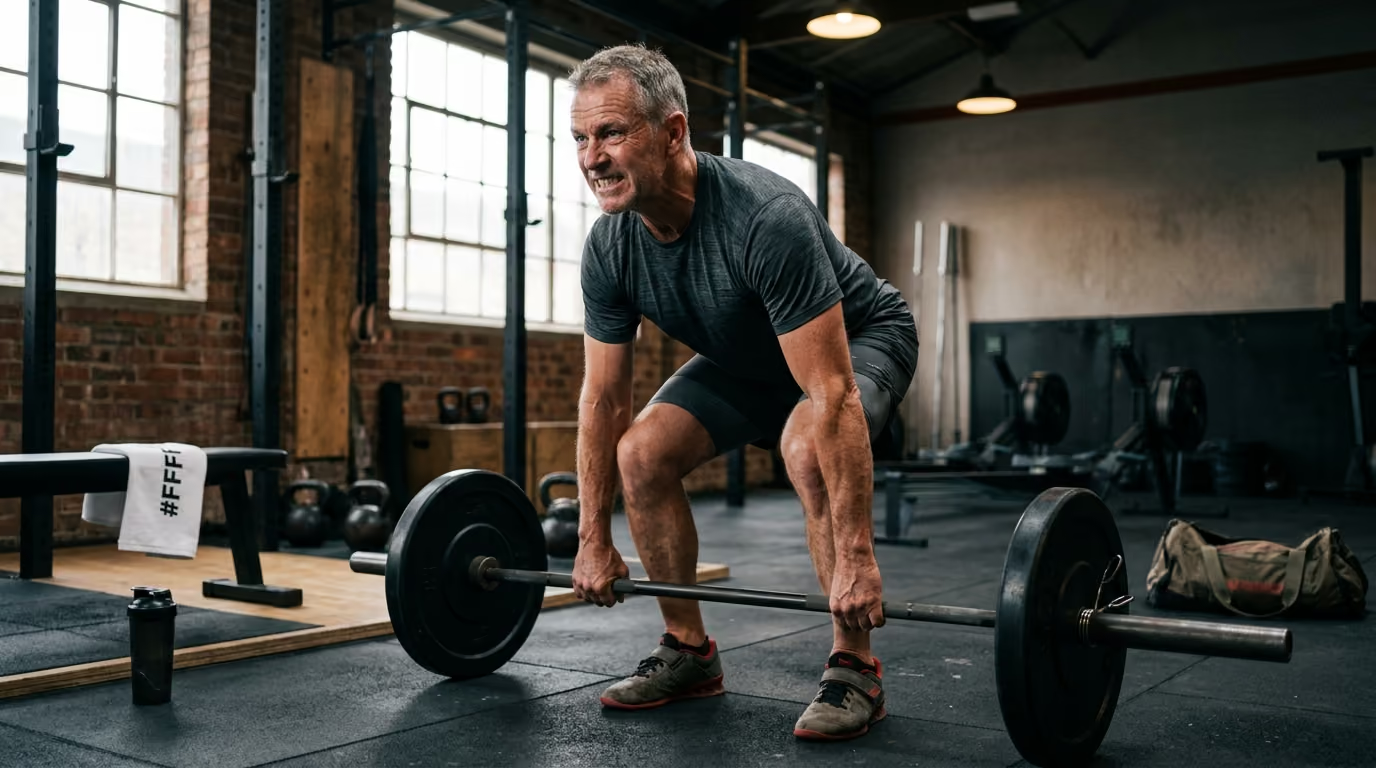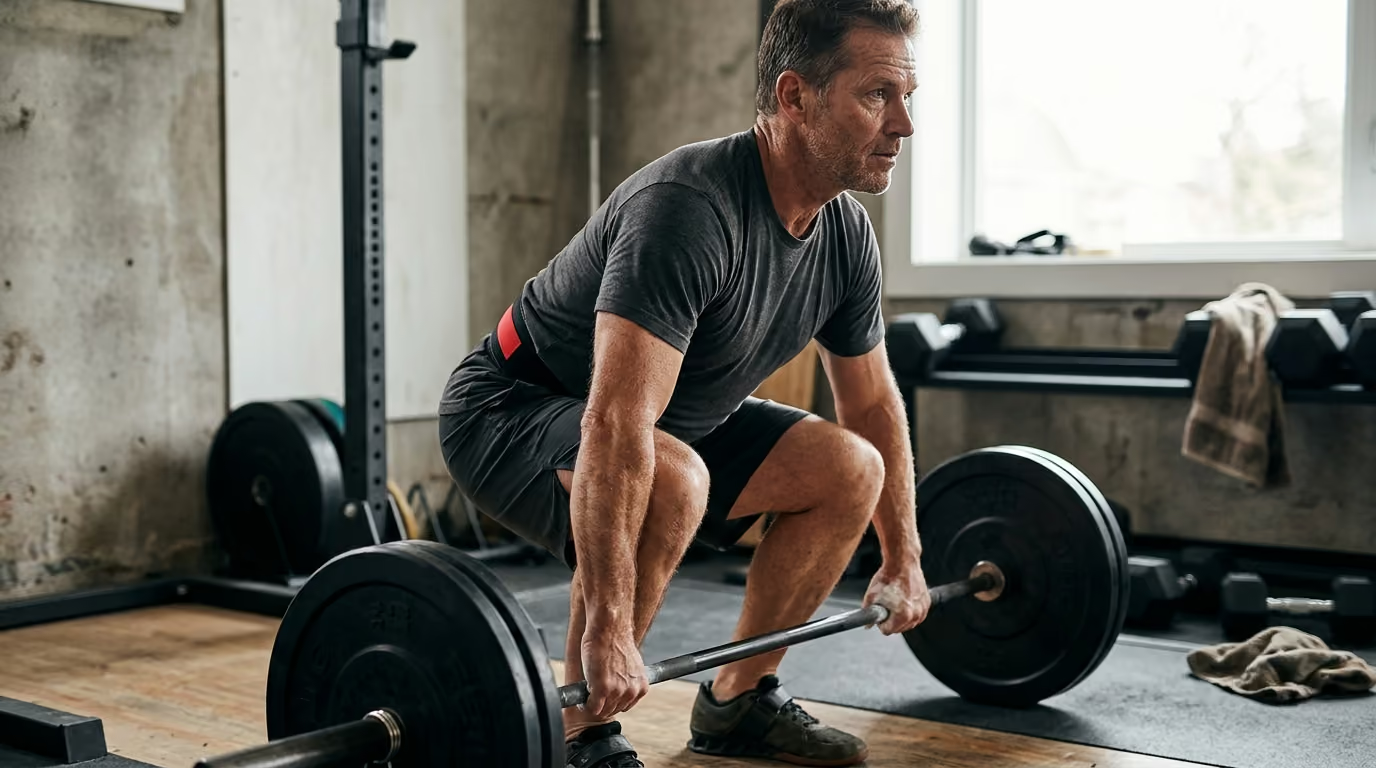
Most fitness advice for men over 45 begins with a quiet retreat. Articles suggest giving up heavy loads, sticking exclusively to rubber bands, and treating every joint like cracked porcelain. The clinical literature tells an opposite story. Well-designed resistance training builds substantial muscle mass, restores bone density, and increases physical resilience well into your seventies and eighties.
Lifting weights in midlife is not about proving your youth or chasing joint-grinding personal records. It is about constructing a durable physical structure that makes everyday life feel light. Building a balanced weekly plan requires understanding your recovery capacity, picking movements that suit your joints, and applying intelligent progressive overload.
- CORE PRINCIPLES OF A POST-45 PROGRAM
- 1. Progressive Overload: Small, steady increases in load and volume.
- 2. Joint-Friendly Movements: Modify range of motion to fit your body.
- 3. Submaximal Effort: Leave 2 to 3 reps in reserve on most sets.
- 4. Multi-Component Training: Combine strength, balance, and power.
- 5. Sustainable Recovery: Prioritize sleep, protein, and off-days.
Understand What the Research Shows About Lifting in Midlife
The evidence supporting resistance training across midlife and older age is extensive. A systematic review published in Sports Medicine confirmed that resistance exercise creates significant improvements in muscle strength and whole-muscle hypertrophy even in adults aged 80 and older. Age does not eliminate the muscular response to load. Your muscle fibers retain their capacity to adapt when given an adequate training stimulus.
Research also shows that strength work changes how you move through the world. Systematic reviews in Gait & Posture show that resistance training improves gait speed, static balance, dynamic balance, and functional mobility. When your legs and hips produce more force, climbing stairs and rising from low surfaces requires a smaller percentage of your maximum capacity. Daily tasks shift from exhausting physical efforts to simple baseline actions.
Strength training alone is not a complete solution for physical resilience. Evidence indicates that combining strength training with balance drills and endurance produces superior outcomes for fall prevention and real-world stability. Systematic reviews confirm that multi-component exercise routines provide the strongest protection against physical decline. A balanced program must train multiple physical qualities rather than chasing raw bar weight alone.
Training interventions across clinical trials demonstrate that moderate to heavy loads produce distinct benefits. Working with loads around 60 to 80 percent of your one-rep maximum builds robust muscle mass and tendon strength. Incorporating lighter loads moved with rapid intent develops muscle power and rate of force development. Both qualities are necessary for complete physical capability.
You can learn more about structured training in our comprehensive guide to strength and physical performance.
Understand Why Muscle and Joint Capacity Change After 45
Your body adapts to stress differently at 50 than it did at 25. This transition is a normal biological shift rather than a medical condition. Recognizing these physiological changes allows you to adjust your programming so you continue making progress without accumulating chronic pain.
The most prominent neuromuscular shift is the gradual loss of motor units and Type II fast-twitch muscle fibers. Type II fibers are responsible for explosive force, heavy lifting, and rapid physical corrections when you slip. When these fibers go untrained, they shrink and lose connection with the nervous system. Regular resistance training preserves these motor units and keeps your nervous system responsive.
Connective tissues also change as the years advance. Tendons and ligaments experience reduced water content and slower collagen turnover. This means your joints require longer warm-ups to achieve fluid movement and slightly longer recovery windows between heavy sessions. Forcing heavy compound movements without adequate tissue preparation increases the likelihood of tendon irritation.
Hormonal profiles and muscle protein synthesis dynamics shift as well. The anabolic response to a single meal or a single workout becomes slightly less pronounced, a phenomenon known as anabolic resistance. Overcoming this requires two things: lifting with sufficient muscular effort and consuming adequate dietary protein across the day.
Individual training age often matters more than chronological age. A 55-year-old who has lifted consistently for three decades has dense connective tissue and excellent movement mechanics. A 48-year-old returning to the gym after twenty sedentary years has lower baseline tolerance. Your current capacity must dictate your starting point.
For broader context on these systemic shifts, review our resources on long-term healthy aging.
- PHYSIOLOGICAL SHIFTS AFTER 45
- Fast-Twitch Fibers: Type II fibers decrease if unused; power work helps.
- Connective Tissues: Lower hydration requires thorough, progressive prep.
- Muscle Protein Synthesis: Anabolic resistance requires sufficient protein.
- Recovery Timelines: Tendons and nervous system need dedicated rest days.
Translate Training Science Into Daily Real-World Capability
A strength program must serve your life outside the gym walls. Lifting weights is practical preparation for carrying luggage, loading heavy soil bags in the garden, playing recreational sports, and hiking rough trails.
Real-world capability requires diverse physical attributes:
- Submaximal Strength: The ability to move moderate loads repeatedly without spinal fatigue or joint irritation.
- Rate of Force Development: The capacity to produce muscular force quickly, such as when bracing during a stumble or jumping across a creek.
- Asymmetrical Stability: The strength to control your pelvis and spine while standing on one leg or carrying uneven weight.
- Grip Resilience: The hand and forearm endurance needed to hold objects securely without dropping them.
- Locomotor Stamina: Lower-body strength that allows you to walk briskly up steep inclines without leg fatigue.
Training exclusively on fixed machines or focusing entirely on stationary barbell lifts creates narrow fitness. Free weights, cables, single-leg exercises, and loaded carries build a body capable of handling unpredictable real-world forces.
When you train the body as an integrated unit, your nervous system learns to coordinate multiple muscle groups simultaneously. This functional coordination protects your lower back during unexpected twisting or bending. Physical strength translates directly into daily confidence and personal independence.
Build the Seven Core Movement Patterns Into Your Routine
A balanced routine avoids arbitrary exercise selection. Instead, it organizes training around seven fundamental movement patterns that reflect human biomechanics. Training these patterns ensures complete muscular development and balanced joint loading.
- THE 7 CORE MOVEMENT PATTERNS
- 1. Lower-Body Push: Squats, leg presses, step-ups
- 2. Lower-Body Pull: Deadlifts, Romanian deadlifts, hip thrusts
- 3. Horizontal Push: Bench presses, push-ups, machine chest presses
- 4. Horizontal Pull: Cable rows, chest-supported rows, dumbbell rows
- 5. Vertical Push: Overhead presses, landmine presses, angled presses
- 6. Vertical Pull: Lat pulldowns, assisted pull-ups, chin-ups
- 7. Trunk & Loaded Carries: Farmer walks, suitcase carries, planks
1. Primary Lower-Body Push
Lower-body pushing movements develop the quadriceps, glutes, and adductors. These exercises build the strength needed to stand up from deep chairs, climb stairs, and absorb ground forces during walking.
Standard options include goblet squats, barbell box squats, leg presses, and safety-bar squats. A box squat is particularly useful for men with knee sensitivity because it allows a vertical shin position that reduces shear stress on the patellar tendon. The leg press offers an effective way to train quad hypertrophy without loading the lumbar spine.
2. Primary Lower-Body Pull
Lower-body pulling movements train the posterior chain, including the hamstrings, gluteus maximus, and spinal erectors. These muscles are your primary engine for forward propulsion, lifting items off the floor, and stabilizing the pelvis.
Excellent variations include trap-bar deadlifts, Romanian deadlifts with dumbbells, kettlebell deadlifts from blocks, and barbell hip thrusts. The trap-bar deadlift distributes the mechanical load evenly between the knees and hips, making it far more forgiving on the low back than a conventional straight-bar deadlift. Romanian deadlifts build active hamstring flexibility and pelvic control.
3. Horizontal Push
Horizontal pushing strengthens the pectorals, anterior deltoids, and triceps. These muscles handle pushing tasks, stabilizing the chest wall, and protecting the shoulder complex during forward arm actions.
Dumbbell flat bench presses, incline dumbbell presses, push-up progressions, and seated machine chest presses work exceptionally well. Dumbbells allow your hands to rotate naturally into a semi-neutral grip, reducing internal rotation stress on the rotator cuff tendons. Push-ups also encourage natural shoulder blade movement across the ribcage.
4. Horizontal Pull
Horizontal pulling targets the rhomboids, middle trapezius, latissimus dorsi, and posterior deltoids. This pattern balances out the forward-rolled posture common among desk workers and strengthens the upper back for heavy carries.
Top choices include chest-supported dumbbell rows, seated cable rows with a neutral grip, and single-arm dumbbell rows. Chest-supported variations are ideal because they isolate the upper back without taxing the lower back musculature. This keeps your lumbar spine fresh for lower-body training days.
5. Vertical Push
Vertical pushing targets the deltoids, upper chest, triceps, and serratus anterior. It develops the capability to place heavy items on high shelves and maintain overhead shoulder stability.
Many men over 45 struggle with standard barbell overhead pressing due to acromial bone spurs or limited thoracic spine mobility. The landmine press offers a joint-friendly alternative. Pressing a barbell angled in a floor pivot allows you to press upward along an arc that spares the rotator cuff. Half-kneeling neutral-grip dumbbell presses are another shoulder-friendly choice.
6. Vertical Pull
Vertical pulling trains the latissimus dorsi, teres major, lower trapezius, and biceps. This pattern builds upper-body pulling power, climbing capacity, and ribcage stability.
Standard options include lat pulldowns with a neutral grip, band-assisted pull-ups, and cable pullovers. Using a parallel grip attachment on pulldowns places the wrists, elbows, and shoulders in an aligned position that minimizes elbow tendon irritation.
7. Trunk Stability, Loaded Carries, and Grip
A complete program must train the midsection as a stabilizing cylinder rather than a bending hinge. Your trunk transfers force between your lower and upper body while protecting your spinal discs from excessive flexion, extension, and twisting.
Incorporate the following functional trunk and grip exercises:
- Anti-Extension: Dead bugs, ab wheel rollouts from knees, or front planks.
- Anti-Rotation: Pallof presses and standing cable holds.
- Anti-Lateral Flexion: Suitcase carries and side planks.
- Loaded Carries: Farmer walks with heavy dumbbells or trap bars.
- Direct Grip Work: Timed bar hangs, plate pinches, and thick-grip holds.
Carries build real-world grip, shoulder stability, and lateral hip strength simultaneously. Strong hands correlate strongly with overall functional capacity and upper-limb safety.
For practical routines targeting joint range and tissue health, consult our guide to mobility and recovery strategies.
Structure Your Weekly Training Split for Sustainable Recovery
The best training split is one you can complete consistently without joint inflammation or systemic exhaustion. Below are three proven weekly templates designed specifically for men over 45.
- WEEKLY SCHEDULE OPTIONS
- 2-Day Split: Full Body (Mon / Thu) - Best for busy schedules.
- 3-Day Split: Full Body Rotation (Mon / Wed / Fri) - Maximum balance.
- 4-Day Split: Upper / Lower (Mon / Tue / Thu / Fri) - For experienced.
The Two-Day Full-Body Split
This schedule is ideal for busy men, beginners, or those combining strength work with demanding cardiovascular sports like cycling, running, or rowing.
- Day 1 (Monday)
- Goblet Squat or Box Squat: 3 sets of 8 reps
- Dumbbell Flat Bench Press: 3 sets of 8 to 10 reps
- Chest-Supported Row: 3 sets of 10 reps
- Romanian Deadlift: 2 sets of 10 reps
- Suitcase Carry: 3 walks of 30 paces per side
- Pallof Press: 2 sets of 12 reps per side
- Day 2 (Thursday)
- Trap-Bar Deadlift: 3 sets of 6 reps
- Neutral-Grip Lat Pulldown: 3 sets of 8 to 10 reps
- Standing Landmine Press: 3 sets of 8 reps per side
- Supported Step-Up: 2 sets of 10 reps per leg
- Farmer Walk: 3 walks of 40 paces
- Side Plank: 2 holds of 20 to 30 seconds per side
This split hits every major muscle group twice per week. It leaves five full days for cardiovascular conditioning, active recovery, and life responsibilities.
The Three-Day Full-Body Split
A three-day plan provides an exceptional blend of frequency, volume, and recovery. It distributes workloads across three non-consecutive days, such as Monday, Wednesday, and Friday.
- Day 1: Squat and Horizontal Focus
- Barbell Box Squat or Leg Press: 3 sets of 6 to 8 reps
- Dumbbell Bench Press: 3 sets of 8 reps
- Chest-Supported T-Bar Row: 3 sets of 10 reps
- Dumbbell Romanian Deadlift: 2 sets of 10 reps
- Standing Calf Raise: 2 sets of 12 to 15 reps
- Dead Bug: 2 sets of 10 reps per side
- Day 2: Hinge and Vertical Focus
- Trap-Bar Deadlift (High Handles): 3 sets of 5 reps
- Half-Kneeling Landmine Press: 3 sets of 8 reps per side
- Neutral-Grip Lat Pulldown: 3 sets of 8 to 10 reps
- Dumbbell Split Squat: 2 sets of 8 reps per leg
- Farmer Carry: 3 sets of 40 paces
- Standing Cable Pallof Hold: 2 holds of 20 seconds per side
- Day 3: Unilateral and Posterior Chain Focus
- Supported Dumbbell Step-Up: 3 sets of 8 reps per leg
- Incline Dumbbell Chest Press: 3 sets of 10 reps
- Seated Cable Row (Wide Neutral Grip): 3 sets of 10 reps
- Barbell Hip Thrust or Cable Pull-Through: 2 sets of 12 reps
- Rear Delt Reverse Fly: 2 sets of 15 reps
- Suitcase Carry: 3 sets of 30 paces per side
This three-day framework allows each movement pattern to be trained frequently with moderate volume per session. It prevents the deep muscle soreness caused by doing ten sets for a single muscle group in one day.
The Four-Day Upper/Lower Split
A four-day split works well for experienced lifters who want more training volume per muscle group without making individual workouts too long.
- Monday: Lower Body Strength
- Trap-Bar Deadlift: 3 sets of 5 reps
- Leg Press or Front Foot Elevated Split Squat: 3 sets of 8 reps
- Lying or Seated Hamstring Curl: 2 sets of 12 reps
- Standing Calf Raise: 3 sets of 10 reps
- Heavy Farmer Carry: 3 sets of 30 paces
- Tuesday: Upper Body Strength
- Flat Dumbbell Bench Press: 3 sets of 6 to 8 reps
- Chest-Supported Neutral Row: 3 sets of 8 reps
- Angled Land
- mine Overhead Press: 3 sets of 8 reps
- Lat Pulldown (Parallel Grip): 3 sets of 8 reps
- Face Pull: 2 sets of 15 reps
- Thursday: Lower Body Hypertrophy and Balance
- Goblet Box Squat: 3 sets of 10 reps
- Dumbbell Romanian Deadlift: 3 sets of 10 reps
- Alternating Reverse Lunges: 2 sets of 10 reps per side
- Seated Calf Raise: 2 sets of 15 reps
- Side Plank with Leg Lift: 2 sets of 20 seconds per side
- Friday: Upper Body Hypertrophy and Shoulders
- 30-Degree Incline Dumbbell Press: 3 sets of 10 reps
- Seated Wide-Grip Cable Row: 3 sets of 10 to 12 reps
- Standing Single-Arm Cable Lateral Raise: 2 sets of 12 to 15 reps
- Rope Triceps Pressdown paired with Hammer Curl: 2 sets of 12 reps
- Suitcase Carry: 3 sets of 35 paces per side
Do not pick a four-day plan simply because it feels more aggressive. Only choose this split if your sleep, nutrition, and joint health allow complete recovery between sessions.
Manage Repetitions, Intensity, and Effort Without Burning Out
Lifting weights to absolute muscular failure is counterproductive for men over 45. Grinding out messy, shaking repetitions creates substantial central nervous system fatigue and places excessive stress on joint capsules.
The National Strength and Conditioning Association points out that training to absolute failure is not necessary to produce strength and muscle adaptations in older populations. A more sustainable strategy is using Repetitions in Reserve (RIR). RIR measures how many clean, technically sound repetitions you could complete before reaching muscular failure.
- REPETITIONS IN RESERVE (RIR) GUIDE
- 3 RIR: Moderate effort. Movement is crisp, fast, and fully controlled.
- 2 RIR: Target working set effort. High recruitment, zero breakdown.
- 1 RIR: Challenging. Use occasionally on stable isolation machines.
- 0 RIR (Failure): Avoid on compound lifts. Excess fatigue, high risk.
The Double Progression Model
Progressive overload should be applied with patience. The double progression method provides a built-in safety buffer that protects your joints from premature loading.
Here is how double progression works in practice:
- Select a working rep range for an exercise, such as 6 to 10 repetitions.
- Choose a weight you can lift for 3 sets of 6 repetitions with 2 repetitions left in reserve.
- Keep using that exact weight each week, adding repetitions as your strength improves.
- Do not increase the weight until you can perform all 3 sets at the top of the rep range (10 reps) with good form.
- When you achieve 3 sets of 10, add a modest amount of weight (typically 5 pounds for upper body, 10 pounds for lower body).
- Adding weight will drop your performance back toward 6 repetitions. Rebuild your reps from there.
This method guarantees that your connective tissues, tendons, and stabilizing muscles adapt to the volume before you expose them to heavier external loads.
- DOUBLE PROGRESSION IN ACTION
- Week 1: 100 lbs x 6, 6, 6 (Starting base)
- Week 2: 100 lbs x 7, 6, 6 (Building capacity)
- Week 3: 100 lbs x 8, 8, 7 (Adding reps steadily)
- Week 4: 100 lbs x 10, 10, 10 (Target achieved)
- Week 5: 105 lbs x 6, 6, 6 (Increase weight, reset rep floor)
Rest Periods and Movement Speed
Allow two to three full minutes of rest between heavy sets of compound exercises like squats, deadlifts, and presses. Rushing your rest periods turns a strength session into a cardiovascular circuit, causing technique breakdown and limiting muscular tension.
Incorporate power development by moving the lifting phase of your repetitions with explosive intent. Research published in Experimental Gerontology shows that power training with light to moderate loads builds rate of force development and muscle thickness just as effectively as traditional heavy lifting. Focus on moving the weight upward rapidly while lowering it under complete control.
Modify Exercises for Common Joint Sensitivities
Pain is information, not an automatic reason to abandon exercise. If a standard exercise irritates your joints, modify the range of motion, adjust your grip, or switch to a joint-friendly variation.
- JOINT MODIFICATION BLUEPRINT
- Shoulders: Use neutral-grip dumbbells, landmine presses, and chest rows.
- Hips: Try box squats, wider stances, and elevated trap-bar deadlifts.
- Knees: Avoid bottom bounce, keep shins vertical, and use step-ups.
- Lower Back: Choose chest-supported rows and block pulls over floor bars.
- Grip: Use lifting straps for heavy pulls; train grip at the end.
Shoulders
Shoulder joints often develop impingement or rotator cuff inflammation from decades of repetitive motion. Straight-bar bench pressing and overhead barbell pressing force the humerus into internal rotation, which can pinch soft tissues.
Swap barbell pressing for neutral-grip dumbbell presses on a flat or low-incline bench. Replace overhead presses with angled landmine presses. Add two sets of face pulls, band pull-aparts, or dumbbell rear delt flyes to every upper-body session. Strengthening the rear shoulder musculature stabilizes the humeral head inside the joint socket.
Hips
Hip pain during squats often stems from bony morphology or reduced internal rotation. Forcing a deep, narrow-stance squat when your hip anatomy does not support it causes joint pinching.
Experiment with your stance width and turn your toes outward 15 to 30 degrees. Squat to a bench or box set just above parallel to provide a consistent, comfortable depth target. If bilateral squatting remains uncomfortable, switch to split squats, lunges, or leg presses. These movements allow the hips to work independently through comfortable ranges.
Knees
Knee pain around the patella frequently occurs when the knees travel far forward over the toes under heavy, uncontrolled loads.
Control your eccentric lowering phase over two to three seconds rather than dropping quickly into the bottom of a squat. Sit back into box squats to maintain a more vertical shin angle, which transfers mechanical force to the hips and glutes. Strengthen your hamstrings and calves directly with leg curls and calf raises to build balanced joint support around the knee capsule.
Lower Back
The lumbar spine is sensitive to excessive shearing forces, especially when fatigue compromises spinal alignment. Unsupported barbell bent-over rows and conventional deadlifts pulled from the floor create high spinal demands.
Elevate your deadlift starting position by using a trap bar with high handles or pulling from 4-inch riser blocks. This reduction in range allows you to maintain a neutral spine without rounding your lower back. Perform all heavy rowing on chest-supported benches or seated cable machines. These setups isolate the upper back while keeping your spine supported.
Hands and Grip
If your grip gives out before your legs or back on heavy deadlifts and carries, your posterior chain misses out on the necessary stimulus.
Use lifting straps on your heaviest sets of trap-bar deadlifts and Romanian deadlifts. This ensures your hips receive a full training stimulus. Then, train your grip directly at the end of the workout with timed farmer carries, plate pinches, or dead hangs from a pull-up bar.
Apply Realistic Case Models to Guide Your Adjustments
The following examples show how to customize a strength program for common physical profiles and goals.
- CASE MODEL OVERVIEWS
- Example 1: 49-year-old desk worker returning with knee stiffness.
- Example 2: 55-year-old experienced lifter managing shoulder pain.
- Example 3: 62-year-old rebuilding hip hinge and spinal resilience.
- Example 4: 68-year-old optimizing balance, power, and independence.
Example 1: The 49-Year-Old Returning to Exercise With Knee Stiffness
This individual has spent fifteen years working at a desk and experiences anterior knee discomfort when walking down stairs. His baseline conditioning is low, and deep squats irritate his patellar tendons.
His program begins with low-impact, joint-friendly movements:
- Primary Movements: Goblet box squat to a 16-inch bench, leg press with moderate foot placement, and elevated trap-bar deadlift.
- Accessory Selections: Seated hamstring curls, standing calf raises, and incline push-ups.
- Trunk and Stability: Standing cable Pallof presses and light farmer walks.
- Progression Approach: Add repetitions first. As knee tolerance improves, gradually lower the box height by one inch every two months.
Example 2: The 55-Year-Old Lifter Managing Shoulder Irritation
This individual has lifted weights for twenty-five years but developed shoulder impingement from heavy barbell bench pressing and overhead pressing. He wants to maintain upper-body muscle without aggravating his shoulders.
His training plan adjusts joint angles and mechanics:
- Upper-Body Adjustments: 15-degree incline dumbbell bench press with palms facing each other, standing single-arm landmine press, and neutral-grip lat pulldowns.
- Upper-Back Emphasis: Chest-supported rows paired with light face pulls on every upper-body day.
- Lower-Body Integration: Heavy safety-bar squats and Romanian deadlifts to train legs hard without requiring painful shoulder mobility to hold a straight bar.
Example 3: The 62-Year-Old Rebuilding Hip Hinge and Spinal Resilience
This individual has a history of mild lumbar disc herniation and feels apprehensive about bending over or lifting objects from the floor. He needs to rebuild spinal stability and posterior chain capacity.
His routine prioritizes supported positions and neutral mechanics:
- Hinge Training: Dumbbell Romanian deadlifts with light loads, keeping the dumbbells touching his thighs, combined with barbell hip thrusts on a padded bench.
- Rowing Support: All rows performed chest-supported on an incline bench to remove lumbar shear forces.
- Trunk Strengthening: Bird dogs, side planks, and short suitcase carries with light kettlebells.
- Progression Strategy: Master the hip hinge pattern through short ranges of motion before gradually adding load.
Example 4: The 68-Year-Old Focused on Balance and Fall Prevention
This individual wants to stay active outdoors, hike safely, and maintain the leg strength and balance required for lifelong mobility.
His routine incorporates multi-component balance and power drills:
- Lower-Body Base: Supported step-ups onto an 8-inch platform, sit-to-stand squats from a chair, and standing cable hip abductions.
- Power and Speed: Rapid sit-to-stands performed with explosive upward intent and controlled lowering.
- Balance Integration: Tandem stance balance holds, single-leg supported stands, and multidirectional line stepping.
- Carries: Double-kettlebell farmer carries to build grip, upper back strength, and walking stability.
For insights on how physical training improves daily energy and systemic function, explore our resources on energy and metabolic health.
Avoid Common Programming Misreadings and Fitness Myths
Progress in midlife is often derailed by stubborn fitness dogmas. Clearing away these misconceptions keeps your training productive and safe.
- COMMON PROGRAMMING MYTHS
- Myth 1: You must train to absolute failure to stimulate muscle growth.
- Myth 2: Barbells are mandatory for building true strength.
- Myth 3: Pain during exercise means you must stop lifting entirely.
- Myth 4: Heavy resistance training is unsafe for older adults.
Myth 1: You Must Train to Absolute Muscular Failure
Many lifters believe a set does not count unless the bar stops moving on the final rep. The evidence contradicts this. Studies show that stopping sets two to three repetitions short of failure produces comparable muscle growth and strength gains without causing excessive neurological fatigue or joint breakdown.
Myth 2: Free Weights Are Always Superior to Machines
Hardcore lifting culture often dismisses machines as inferior. In reality, resistance machines provide stable, isolated loading that allows you to train muscles hard with minimal spinal shear or balance demands. A well-designed program blends free weights, cables, and machines based on your specific needs.
Myth 3: Joint Pain Means You Must Completely Rest
Resting completely for weeks at the first sign of joint ache often leads to deconditioning and stiffness. Tendons and cartilage require mechanical load to draw in nutrients and maintain structural integrity. The solution is rarely complete rest. Instead, modify the exercise variation, shorten the range of motion, or reduce the load to a level your joints tolerate comfortably.
Myth 4: Heavy Lifting Is Inherently Dangerous for Mature Adults
Some medical practitioners still advise adults over 50 to avoid lifting anything heavier than ten pounds. This advice is outdated. Controlled resistance training with appropriate loads is safe, increases bone mineral density, and reduces all-cause injury risk. Weakness is far more dangerous to long-term health than structured strength training.
Identify Where the Scientific Evidence Is Limited
While the broad benefits of strength training are well-established, specific areas of programming science remain less definitive. Distinguishing between established facts and preliminary research prevents you from adopting unproven trends.
- EVIDENCE CERTAINTY OVERVIEW
- Well-Established: Progressive overload builds strength and hypertrophy.
- Mixed / Heterogeneous: Ideal handgrip training frequency and volume.
- Context-Dependent: Strength training alone as a fall-prevention tool.
- Variable: Optimal protein doses for specific clinical sub-groups.
Handgrip training research is one area with wide variance. A comprehensive review of handgrip resistance protocols revealed successful interventions across frequencies of two to five sessions per week and intensities ranging from 30 to 75 percent of maximum capacity. There is no single, scientifically proven optimal grip training protocol. Standard farmer carries and hanging holds work well without needing over-complicated routines.
The specific role of strength training in isolation for fall prevention is also nuanced. While resistance training reliably improves balance metrics, gait speed, and chair-rise capability, clinical trials comparing pure strength training against combined exercise programs show mixed outcomes. Strength alone does not eliminate fall risk if dynamic balance and sensory coordination are ignored.
Nutritional research on older adults shows general consensus, but exact thresholds vary. The PROT-AGE study group recommends 1.0 to 1.2 grams of protein per kilogram of body weight per day for healthy older adults, and up to 1.5 grams per kilogram for active individuals. While clinical meta-analyses demonstrate clear lean mass retention at these levels, individual needs depend on total daily energy expenditure, kidney function, and metabolic health.
Understanding these boundaries allows you to focus on what works: consistent movement, sensible progression, adequate recovery, and balanced exercise selection.
Key Takeaways
- Strength training remains potent throughout midlife, building muscle mass, bone density, and functional capability across all ages.
- Organize your weekly routine around the seven fundamental movement patterns rather than random machine circuits.
- Leave two to three repetitions in reserve on most sets to build strength without accumulating joint inflammation.
- Use the double progression model to increase repetitions before adding external weight.
- Modify exercise variations, grips, and ranges of motion to fit your current joint tolerance.
- Combine strength training with loaded carries, power work, and balance drills for comprehensive real-world resilience.
Staying strong and capable after 45 requires consistent effort, intelligent exercise choices, and respect for your body's recovery needs.
Sources
- Effectiveness of exercise interventions on fall prevention in ...
- Effectiveness of Balance- and Strength-Based Exercise ... - PMC
- Efectos de los programas de ejercicio de resistencia en ... - PMC
- Effects of different exercise interventions on risk of falls, gait ability, and balance in physically frail older adults: a systematic review - PubMed
- a systematic review of randomized controlled trials
Stay sharp
Get the word
Join our newsletter for the best writing advice and stories from the field.