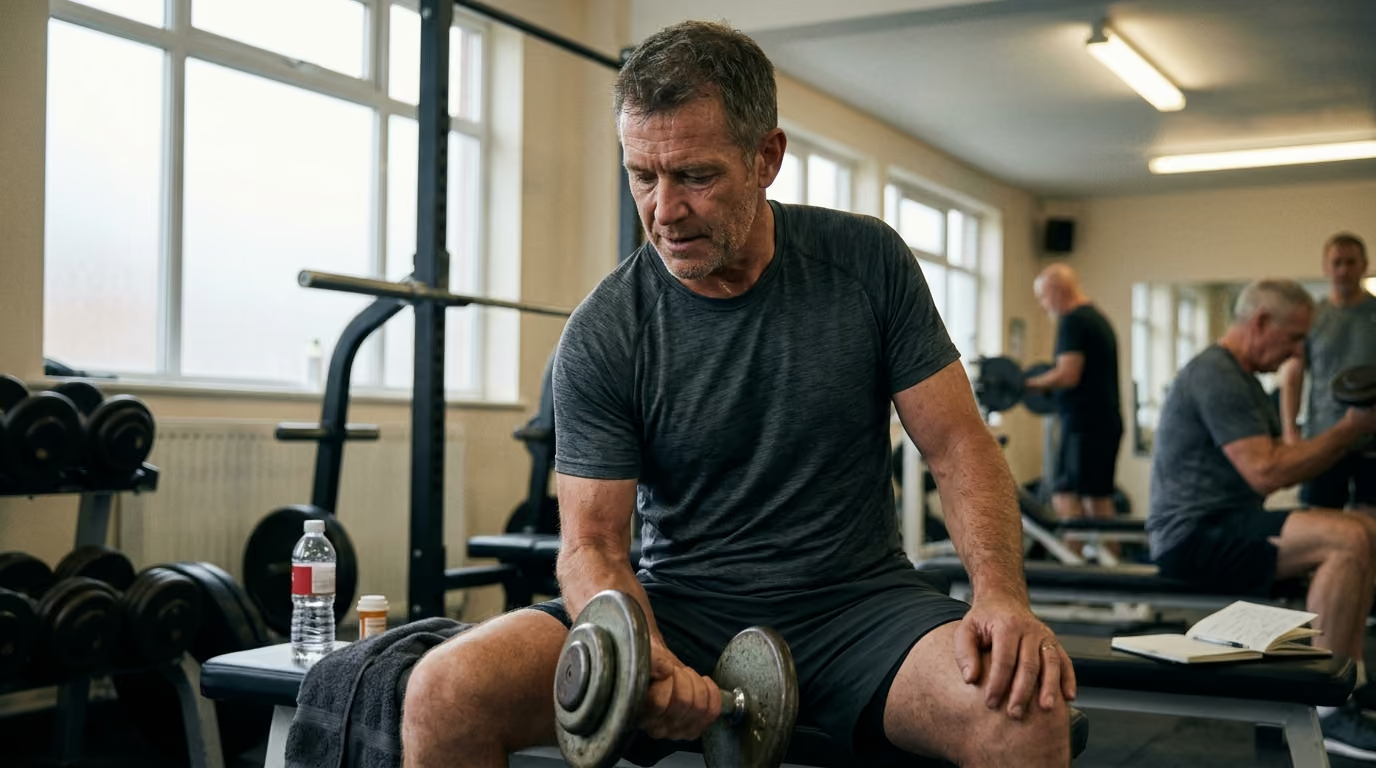
Many men over 45 search online for why standard strength routines suddenly cause joint flare-ups, deep fatigue, or stalled progress. Generic templates from fitness magazines or social media often assume an eighteen-year-old recovery capacity and a completely clean health history. When you follow those rigid plans, progress often stalls, or injuries occur. This definitive guide provides a clear, research-backed blueprint for personalizing your strength training based on your biological health, past injuries, medications, and daily recovery.
Scientific Evidence on Strength Training in Midlife and Later Years
The current body of exercise science confirms that skeletal muscle retains its ability to adapt, grow, and become stronger throughout midlife and advanced age. Research published across sports medicine journals demonstrates that adults over 45 experience significant neural and structural adaptations from progressive resistance training. The evidence shows that lifting weights improves physical function, preserves bone mineral density, and supports metabolic health.
According to research from the National Strength and Conditioning Association, older adults who participate in structured resistance programs can achieve meaningful gains in both muscle size and force production. The data indicates that age alone does not eliminate the muscle-building response. While the rate of adaptation can be slower compared to younger populations, the physiological pathways for repair and growth remain active.
A systematic review of resistance training in mature populations reveals that strength improvements often outpace visible muscle growth in the initial months. Early gains stem primarily from improved motor unit recruitment, better intramuscular coordination, and enhanced technical efficiency. The central nervous system learns to fire muscle fibers more rapidly and with greater synchronization.
The updated position stand from the American College of Sports Medicine emphasizes that training all major muscle groups at least twice weekly provides the foundation for functional independence and longevity. Research shows that high relative effort can be achieved across a wide range of repetition brackets. Lifting heavy loads near eighty percent of maximum builds top-end strength, while lighter loads lifted with controlled intent stimulate muscle preservation and muscular endurance.
Scientific investigations also confirm that resistance training provides distinct cardiovascular and metabolic benefits. The American Heart Association highlights resistance exercise as a powerful tool for improving glycemic control, resting blood pressure, and lipid profiles. The overall evidence base is strong for functional and metabolic outcomes, proving that lifting weights is a cornerstone of healthy aging.
Biological Mechanisms and Age-Related Muscular Changes
The human body undergoes normal structural and physiological shifts after age 45. Understanding these changes helps you adjust your training program without viewing normal biological aging as a medical disease. Muscle mass typically declines at an estimated rate of five to ten percent per decade after age 50, with the process often accelerating after age 60.
Longitudinal data cited by the National Institutes of Health indicates that muscle loss occurs alongside changes in connective tissue hydration and joint cartilage resilience. Sarcopenia describes the clinically significant loss of muscle mass, strength, and physical performance. Dynapenia refers specifically to the age-related decline in muscle strength and power that can happen independently of changes in muscle size.
- Biological Aging Factors After 45
- Sarcopenia (gradual loss of muscle mass and quality)
- Dynapenia (loss of muscular strength and neuromuscular power)
- Connective Tissue Changes (reduced tendon elasticity and hydration)
- Anabolic Resistance (higher protein and stimulus threshold needed for repair)
Several biological mechanisms explain why physical capacity shifts during this stage of life:
Neuromuscular Remodeling
The body naturally loses a fraction of its fastest-twitch motor units over time. Fast-twitch muscle fibers produce rapid, high-force contractions. When these units decline, physical power decreases faster than raw strength. Power is the ability to generate force quickly, which is critical for catching your balance or climbing stairs.
Connective Tissue Properties
Tendons and ligaments experience reduced water content and cross-linking changes in collagen fibers. This biological shift makes connective tissues less elastic and slower to adapt than muscular tissue. Muscles often recover faster than the tendons attached to them. This difference explains why joints may feel irritated even when muscles feel ready for work.
Anabolic Resistance
Aging muscle tissue can develop a blunted response to both dietary protein and mechanical loading. A stimulus that triggered substantial protein synthesis at age twenty-five produces a smaller cellular response at fifty-five. Overcoming this mechanism requires consistent mechanical tension, sufficient dietary amino acids, and adequate recovery between demanding workouts.
Hormonal Profiles
Endocrine shifts occur gradually in men through midlife. Testosterone levels decline slowly at a rate of roughly one percent per year after age thirty. This natural shift can affect recovery speed, body fat distribution, and bone turnover. When combined with poor sleep or work stress, these biological adjustments reduce the margin of error for excessive training volume. Learning how hormonal health and vitality interact with lifestyle choices helps you set realistic baseline expectations.
Practical Translation for Daily Performance and Joint Health
Translating scientific principles into daily life requires distinguishing chronological age from training age and biological status. Chronological age is simply the number of birthdays you have celebrated. Training age represents your total years of consistent, structured lifting experience. Biological status reflects your current mobility, cardiovascular conditioning, joint stability, and daily energy.
A 52-year-old who has lifted weights consistently for twenty years possesses high movement literacy and strong connective tissue foundations. However, that individual may need careful volume management because of accumulated wear. Conversely, a sedentary 52-year-old starting for the first time has fresh joints but low tendon tolerance and poor neuromuscular coordination. Treating these two individuals identically based solely on their birth year creates poor outcomes.
Muscle power deserves a central place in your real-world physical capabilities. Strength allows you to pick up a heavy box from the floor. Power allows you to react rapidly when you trip over a curb, preventing a fall. Incorporating controlled, rapid movements with moderate resistance helps maintain these fast-twitch motor pathways.
Joint comfort determines long-term training consistency. When you design a program around joint-friendly movement patterns, you preserve daily mobility and prevent chronic inflammation. You can explore structured strength and muscle routines that prioritize longevity and functional movement.
To balance real-life demands, use the FITT-VP framework to structure your weekly routine:
- Frequency: Target two to three full-body sessions per week to allow forty-eight hours of recovery between workouts.
- Intensity: Train with moderate to challenging loads, keeping two to three repetitions in reserve on most sets.
- Time: Keep workouts between forty-five and sixty minutes to avoid excessive nervous system fatigue.
- Type: Emphasize multi-joint compound movements using dumbbells, cables, machines, and barbells.
- Volume: Perform roughly six to ten challenging sets per muscle group across the entire week.
- Progression: Add repetitions, improve movement quality, or increase weight gradually over several weeks.
Chronic Conditions and Medication Interactions in Exercise
Personalized training requires direct consideration of underlying medical diagnoses and prescribed medications. Many adults over 45 manage one or more chronic conditions. Lifting weights remains highly beneficial for these conditions, but it requires thoughtful collaboration with your medical doctor. Review our medical disclaimer and clinical guidance before implementing major changes to your exercise regimen.
- Medical Considerations in Program Design
- Cardiovascular Status (manage blood pressure, avoid prolonged Valsalva)
- Beta Blockers (rely on RPE and breathing rather than target heart rate)
- Diabetes Medications (monitor blood glucose, account for workout timing)
- Bone Density Issues (avoid uncontrolled spinal flexion and loaded twisting)
- Joint Degeneration (adjust range of motion and utilize stable machines)
Cardiovascular Disease and Hypertension
Resistance exercise strengthens the heart and improves arterial elasticity. However, individuals with high blood pressure must avoid excessive straining and prolonged breath-holding during heavy lifts. The Valsalva maneuver causes sharp spikes in intra-thoracic pressure and systolic blood pressure. Focus on smooth, continuous breathing by exhaling during exertion and inhaling during lowering phases.
Beta Blockers and Heart Rate Regulation
Beta blockers blunt the cardiac response to physical stress, slowing resting and exercise heart rates. Standard age-predicted target heart rate formulas are inaccurate for anyone taking these medications. A low heart rate during a hard set does not mean you are slacking. Use the Rating of Perceived Exertion (RPE) or conversational breathing cues instead of a digital fitness tracker to evaluate workout intensity.
Diabetes and Glucose Control
Resistance training enhances insulin sensitivity and clears glucose from the bloodstream via muscle contractions. This process supports long-term metabolic health and energy regulation. However, individuals taking insulin or sulfonylureas must manage the risk of exercise-induced hypoglycemia. Keep rapid-acting carbohydrates nearby, check blood sugar levels as advised by your physician, and wear supportive footwear to protect foot health.
Corticosteroids and Bone Density
Long-term use of oral corticosteroids can reduce bone mineral density and alter connective tissue repair. If you manage osteopenia or osteoporosis, your training must emphasize spinal alignment and controlled compressive loading. Avoid loaded spinal flexion, aggressive twisting under load, and ballistic movements that place unpredictable shear forces on the vertebrae.
Joint Degeneration and Osteoarthritis
Osteoarthritis involves the gradual wear of articular cartilage inside the joints. Inactivity accelerates joint stiffness and muscle weakness around the affected area. Exercise should not be avoided, but the dosage must match tissue tolerance. Modify the range of motion, reduce movement speed, and utilize stable machines or isometrics during acute joint flare-ups.
Training History and Structural Adaptations
Your past physical activities shape your current structural capabilities and movement limitations. A history of organized sports, manual labor, or previous surgeries leaves unique mechanical compensations. Acknowledging previous injuries does not mean you must avoid loading those body parts forever. Instead, it serves as valuable diagnostic information for intelligent exercise selection.
When returning to the gym after years away, former athletes often fall into the memory trap. The brain remembers how to squat or press heavy weights, but the tendons, ligaments, and articular cartilage no longer possess the structural stiffness to tolerate those loads. Returning lifters must rebuild baseline tissue tolerance through conservative loading, higher repetitions, and slower tempos before attempting heavier resistance.
Exercise substitution allows you to train movement patterns thoroughly without irritating vulnerable joints. No single exercise is mandatory for building strength. The functional movement pattern matters far more than the specific implement used.
Squat Pattern Substitutions
- Barbell Back Squat: Places high shear stress on the lumbar spine and requires significant shoulder external rotation.
- Goblet Squat: Shifts the center of gravity forward, allowing an upright torso and reducing lower back strain.
- Box Squat: Breaks the eccentric-concentric cycle, providing a controlled depth that protects sensitive knees.
- Leg Press: Removes spinal loading entirely while building quadriceps and glute strength.
Hinge Pattern Substitutions
- Conventional Deadlift from Floor: Demands substantial hamstring flexibility and lumbar control.
- Elevated Trap Bar Deadlift: Places the hands in a neutral position, reducing spinal flexion torque.
- Romanian Deadlift with Dumbbells: Keeps the load close to the body, allowing precise control of hamstring tension.
- Cable Pull-Through: Provides smooth horizontal loading with minimal axial compression on the spine.
Pressing Pattern Substitutions
- Barbell Bench Press: Locks the wrists and shoulders into an internally rotated position under heavy load.
- Neutral-Grip Dumbbell Press: Allows the wrists and elbows to track naturally, reducing anterior shoulder strain.
- Incline Push-Up: Builds chest and triceps strength while allowing the shoulder blades to move freely across the ribcage.
- Landmine Press: Provides an upward and forward pressing angle that spares stiff shoulder joints.
Pulling Pattern Substitutions
- Bodyweight Pull-Up: Requires high relative strength and can stress the elbows and shoulders.
- Lat Pulldown with Neutral Grip: Allows precise load selection and keeps the shoulders in a joint-friendly path.
- Chest-Supported Row: Eliminates lower back fatigue, isolating the upper back and rear deltoids safely.
- Single-Arm Cable Row: Permits rotational freedom through the wrist and elbow, matching individual joint anatomy.
Daily Readiness and Autoregulation Strategies
Fixed, rigid training programs frequently fail after 45 because they cannot adapt to life stress. Fluctuating sleep quality, work deadlines, travel, minor illnesses, and joint stiffness change your physical capacity from day to day. Autoregulation is the practice of adjusting your training volume, intensity, and exercise selection based on your real-time readiness.
- Daily Readiness System
- Green Day: High energy, sound sleep, pain-free - Execute planned progression
- Yellow Day: Poor sleep, mild soreness, high stress - Reduce volume by 30%, maintain form
- Red Day: Acute joint pain, systemic illness, dizziness - Rest or perform light walking
The Traffic Light System provides a simple, highly effective method for regulating your daily workout:
Green Day Conditions
You slept well, your energy is steady, and your joints feel comfortable. On Green Days, perform your planned workout as written. If your movement quality is exceptional and the weights feel light, you may progress load or complete your top target sets.
Yellow Day Conditions
You experienced interrupted sleep, carry moderate muscle soreness, or feel drained from professional stress. On Yellow Days, keep your primary compound movements but reduce your total working sets by twenty to forty percent. Stop every set three to four repetitions shy of muscular failure, and extend your rest intervals between sets.
Red Day Conditions
You are battling an acute respiratory infection, experiencing severe joint pain, feeling dizzy, or suffering from extreme systemic exhaustion. Red Days require you to step away from the weight room. Focus on gentle walking, light mobility drills, hydration, and restorative sleep. Pushing through acute illness or sharp pain increases injury risk and delays long-term progress.
Tracking long-term trends is far more valuable than obsessing over a single workout. Keep a simple training log that records your exercises, weights lifted, repetitions completed, and an overall session RPE rating from one to ten. Tracking these metrics alongside your dedicated mobility and recovery work helps you identify fatigue patterns before they become overuse injuries.
Practical Programming Frameworks
A personalized training program should reflect your specific goals, health profile, and current conditioning level. Below are four distinct illustrative models demonstrating how resistance training can be tailored for different needs after age 45.
Illustrative Model 1: The Healthy Foundation Template
This model is designed for a 48-year-old adult who is new or returning to resistance training with no major medical restrictions.
- Healthy Foundation Structure (2 Full-Body Sessions Weekly)
- Movement 1: Knee-dominant pattern (Goblet Squat or Leg Press)
- Movement 2: Horizontal pull pattern (Chest-Supported Dumbbell Row)
- Movement 3: Hip-hinge pattern (Dumbbell Romanian Deadlift)
- Movement 4: Horizontal push pattern (Neutral-Grip Dumbbell Bench Press)
- Movement 5: Core and trunk stability (Farmer Carry or Plank variation)
- Day 1 (e.g. Tuesday): 1. Goblet Squat: 2 to 3 sets of 8 to 10 repetitions (2 repetitions in reserve). 2. Chest-Supported Dumbbell Row: 2 to 3 sets of 10 to 12 repetitions. 3. Dumbbell Romanian Deadlift: 2 sets of 10 repetitions. 4. Neutral-Grip Dumbbell Bench Press: 2 to 3 sets of 8 to 10 repetitions. 5. Standing Farmer Carry: 3 rounds of 30 paces with moderate weight.
- Day 2 (e.g. Friday): 1. Elevated Trap Bar Deadlift: 2 to 3 sets of 6 to 8 repetitions. 2. Lat Pulldown with Neutral Grip: 2 to 3 sets of 10 to 12 repetitions. 3. Leg Press: 2 sets of 12 to 15 repetitions. 4. Incline Dumbbell Press: 2 to 3 sets of 10 repetitions. 5. Half-Kneeling Cable Chop: 2 sets of 12 repetitions per side.
Illustrative Model 2: The Experienced Lifter Joint-Preservation Template
This model is designed for a 55-year-old with twenty years of lifting experience who wants to maintain strength while minimizing chronic joint irritation.
- Session A (Upper Body Focus): 1. Landmine Angled Press: 3 sets of 6 to 8 repetitions. 2. Supported Seated Cable Row: 3 sets of 8 to 10 repetitions. 3. Incline Dumbbell Fly-to-Press: 2 to 3 sets of 10 to 12 repetitions. 4. Cable Face Pull with External Rotation: 3 sets of 15 repetitions. 5. Triceps Rope Pushdown paired with Incline Dumbbell Curl: 2 sets of 12 to 15 repetitions.
- Session B (Lower Body and Power Focus): 1. Seated Medicine Ball Chest Pass or Light Kettlebell Swing: 3 sets of 5 explosive repetitions. 2. Box Squat with Controlled Eccentric: 3 sets of 5 to 6 repetitions. 3. Single-Leg Supported Split Squat: 2 sets of 8 to 10 repetitions per leg. 4. Lying Hamstring Machine Curl: 3 sets of 10 to 12 repetitions. 5. Standing Single-Leg Calf Raise: 3 sets of 12 to 15 repetitions.
Illustrative Model 3: The Deconditioned Adult with Chronic Conditions
This model is designed for a 64-year-old managing hypertension and mild knee osteoarthritis, focusing on machine-based stability and controlled breathing.
- Full-Body Circuit (Completed 2 times per week): 1. Seated Leg Press (Limited Range of Motion): 2 sets of 12 to 15 repetitions (slow tempo, no breath-holding). 2. Seated Cable Chest Press: 2 sets of 12 to 15 repetitions. 3. Seated Row Machine: 2 sets of 12 to 15 repetitions. 4. Standing Cable Hip Abduction: 2 sets of 12 repetitions per leg. 5. Elevated Step-Up on Low Platform: 2 sets of 8 to 10 repetitions per leg. 6. Seated Core Abdominal Machine: 2 sets of 15 repetitions.
Illustrative Model 4: The Hypertrophy-Oriented Trainee Over 50
This model is designed for an experienced 51-year-old focusing on preserving muscle mass through targeted weekly volume.
- Upper/Lower Split (3 to 4 Days Weekly, Alternating): Lower Focus:* Leg Press (3 sets of 10 to 12), Romanian Deadlift (3 sets of 8 to 10), Walking Lunges (2 sets of 12 steps), Machine Leg Extension (2 sets of 15), Standing Calf Raise (3 sets of 12). Upper Focus:* Incline Dumbbell Bench Press (3 sets of 8 to 10), Wide-Grip Cable Pulldown (3 sets of 10 to 12), Seated Dumbbell Lateral Raise (3 sets of 15), Chest-Supported T-Bar Row (3 sets of 10), Overhead Cable Triceps Extension (2 sets of 12 to 15).
Common Misreadings of Strength and Aging
Several persistent myths surrounding aging and resistance training cause confusion. Examining the scientific evidence helps clarify these misconceptions.
- Three Common Misconceptions
- Myth 1: Heavy resistance training is inherently dangerous for older adults.
- Myth 2: Age-related strength loss is completely irreversible.
- Myth 3: Training to complete muscular failure is required for muscle growth.
Claim 1: Heavy Resistance Training Is Inherently Dangerous for Older Adults
A widespread belief suggests that lifting challenging weights causes inevitable joint degeneration and cardiovascular events in adults over 45. The scientific literature does not support this claim.
Research from the American Heart Association and the National Strength and Conditioning Association demonstrates that supervised, progressive resistance training is safe and highly protective for older populations. Joint injuries typically stem from improper load progression, poor technical execution, or inadequate recovery, rather than the act of lifting weights itself.
Claim 2: Age-Related Strength Loss Is Completely Irreversible
Another common misconception claims that once you cross 50, muscle loss is permanent and cannot be altered. Randomized controlled trials consistently refute this idea.
While muscle tissue exhibits anabolic resistance with advancing age, older muscle cells retain their biological ability to hypertrophy and increase contractile force. Progressive overload, paired with sufficient protein intake, stimulates muscle protein synthesis and improves physical function even in individuals in their seventies and eighties.
Claim 3: Training to Complete Muscular Failure Is Required for Muscle Growth
Many lifters believe that a set only produces benefits if performed until the weight physically cannot move. Studies on motor unit recruitment show that stopping two to three repetitions before failure yields similar strength and hypertrophy adaptations compared to training to absolute failure.
For mature adults, training to failure creates excessive neuromuscular fatigue, increases connective tissue strain, and lengthens the required recovery window. Leaving repetitions in reserve protects movement mechanics while delivering an effective training stimulus.
Research Limits and Gaps in Current Evidence
While the foundational benefits of resistance training are well established, several areas in the scientific literature remain incomplete or mixed:
Gaps in Long-Term Training Studies
A significant portion of resistance training research consists of short-term interventions lasting eight to sixteen weeks. Long-term, multi-year randomized trials tracking lifters across decades are rare. Much of our understanding of lifelong lifting trajectories relies on cross-sectional observations rather than controlled longitudinal studies.
Incomplete Data on Complex Multimorbidity
Most clinical trials screen out participants with complex combinations of diseases to isolate specific variables. Consequently, research on how to program resistance exercise for an individual managing hypertension, type 2 diabetes, severe osteoarthritis, and chronic sleep apnea simultaneously remains limited. Practitioners must rely on clinical experience and conservative principles when managing multiple overlapping health conditions.
Mixed Findings on Power Training Protocols
While power training improves physical function and fall prevention, the optimal balance between power exercises and traditional strength training remains debated. Studies compare various loading zones ranging from thirty to seventy percent of maximum velocity, but standardized guidelines for specific age brackets and joint limitations require further investigation.
Commercial Claims Versus Independent Research
Many commercial programs promote proprietary training systems, advanced recovery gadgets, or specialized hormonal routines designed specifically for aging. Independent, peer-reviewed evidence supporting these branded protocols over basic, progressive resistance training is lacking. Fundamental principles of mechanical tension, consistency, and recovery matter far more than proprietary methods.
The Takeaway
After 45, successful strength training is not defined by rigid templates or your birth year. It is defined by matching exercise selection, intensity, and recovery to your individual health status, injury history, and daily readiness.
Next Steps Checklist for This Week
- Schedule a Health and Medication Review: Consult your physician regarding your current blood pressure, metabolic markers, and any medication side effects that influence exercise.
- Audit Your Exercise Selection: Replace any lift that consistently causes joint discomfort with a joint-friendly alternative, such as swapping barbell squats for box squats or goblet squats.
- Establish a Baseline Frequency: Commit to two or three 45-minute full-body strength sessions this week, ensuring at least one full recovery day between workouts.
- Implement the Repetitions in Reserve Rule: Complete all working sets leaving two to three clean repetitions in reserve rather than pushing to muscular failure.
- Start a Daily Readiness Log: Track your sleep quality, joint comfort, and session effort using the simple Green, Yellow, and Red autoregulation framework.
Sources
- Resistance training alters body composition in middle-aged ...
- Resistance training effects on healthy postmenopausal ...
- Sarcopenia, Dynapenia, and the Impact of Advancing Age on ... - PMC
- It's never too late: The impact of resistance training on ...
- The age-related loss of skeletal muscle mass and function - PMC - NIH
- Effect of non-pharmacological interventions on the prevention of sarcopenia in menopausal women: a systematic review and meta-analysis of randomized controlled trials
- Analysis of combinatory effects of free weight resistance ...
- Resistance Training for Older Adults: Position Statement... : The Journal of Strength & Conditioning Research
Stay sharp
Get the word
Join our newsletter for the best writing advice and stories from the field.