Many men over 45 notice a frustrating shift in their physical capability. A heavy grocery run tires the hands faster than before. Opening a sealed container takes surprising effort. A deadlift slips out of the fingers before the hips or back feel tired.
You might search online for reasons why your hands feel weaker, only to encounter extreme claims. Some articles declare that weak hands guarantee an early death. Other sources sell hand gadgets that promise to rebuild your strength in days.
Neither extreme reflects reality. Grip strength is a valuable window into how your body generates, controls, and transfers force. It is also a skill you can systematically assess, build, and maintain at any age.
This guide provides a definitive look at the science of hand strength and loaded carries after 45. You will learn what the evidence shows, why your hands change over time, and how to train your hands, forearms, and whole body for lifelong independence.
The Clinical Evidence Behind Grip Strength Measurements
Medical researchers have studied hand strength for decades. The most common measurement tool is a hand dynamometer, a simple device that records the peak force of a maximum squeeze. Research links handgrip strength to a wide range of long-term health markers in middle-aged and older adults.
Large reviews show that lower grip strength correlates with a higher risk of physical limitations. In older populations, a five-kilogram decrease in grip strength is tied to measurable increases in self-care difficulties. Research indicates that every five-kilogram drop links to a 20 percent higher odds of trouble with eating. That same drop links to a 14 percent higher odds of difficulty with walking and bathing. It
also links to higher difficulty with dressing, transferring out of a chair, and using the toilet.
Beyond daily tasks, epidemiological data shows connections between hand strength and broader health outcomes. Clinical reviews note that lower grip scores correlate with higher rates of hospital complications, longer recovery times, and higher all-cause mortality. A meta-analysis noted a pooled hazard ratio of 1.16 for all-cause mortality per five-kilogram reduction in grip strength.
These findings explain why geriatricians and researchers treat grip as a vital sign. Squeezing a dynamometer is cheap, fast, portable, and reliable. It gives clinicians a rapid snapshot of a person's neuromuscular reserve.
However, observational data does not prove that your hand strength causes these outcomes. Squeezing a dynamometer does not directly measure your walking balance, your leg power, or your heart health. Instead, grip strength acts as a proxy for your overall physical activity, nutritional status, and muscle mass. Weak hands often reflect wider physical decline rather than an isolated hand problem.
The Mechanics of Grip and Forearm Changes With Age
The gradual change in grip after 45 is not an illness. It is a natural biological shift influenced by muscle tissue, tendon properties, neural recruitment, and joint changes. Understanding these mechanisms helps you protect your hands and structure your training intelligently.
Muscle Mass and Motor Unit Recruitment
Around midlife, the body slowly loses muscle mass and motor units. Fast-twitch muscle fibers, which generate quick, high-intensity force, decline faster than slow-twitch endurance fibers. In the forearms and hands, this reduces peak squeezing force.
Neural drive also changes over time. The central nervous system sends signals to activate motor units in the forearm muscles. With less frequent high-load training, the nervous system becomes less efficient at firing these units simultaneously. When you practice heavy lifting or deliberate holds, you retrain these motor pathways to recruit muscle fibers quickly.
Tendon Stiffness and Connective Tissue Changes
Your fingers do not contain large muscles. The force that closes your fingers comes mainly from the flexor muscles in your forearm, which connect to your fingers through long tendons. Over time, collagen turnover slows down, and tendons lose some of their natural elasticity.
Less flexible tendons can make the wrists and fingers feel stiff in the morning. This change means older connective tissue takes longer to adapt to new training loads. Tendons need steady, progressive tension to build strength, while sudden spikes in training volume can cause irritation.
Joint Changes and Cartilage Wear
Decades of manual work, typing, lifting, or racquet sports lead to normal wear on the small joints of the hands and wrists. Cartilage becomes thinner, and joint fluid production can decrease. When joints feel stiff or achy, your nervous system naturally down-regulates muscle activation to protect the area.
This protective mechanism can feel like muscle weakness, but it is actually the brain limiting force output to avoid joint pain. Keeping the wrists, hands, and fingers moving through full ranges of motion keeps the joint capsule healthy and maintains neural confidence.
Distinct Grip Classifications and Physical Demands
Most people think of grip as a single physical quality. In practical performance, your hands must execute several distinct actions depending on the task. Developing complete capability requires understanding the three primary categories of hand force.
Crushing Grip
Crushing grip is the action of closing your fingers tightly against resistance toward your palm. This is the force you use when giving a firm handshake, squeezing a tennis ball, or testing your grip on a clinical dynamometer.
Crushing grip relies heavily on the deep and superficial finger flexor muscles in the anterior forearm. While crushing grip is easy to test, it is rarely the limiting factor in real-world strength tasks.
Support Grip
Support grip is the ability to hold onto an object for an extended duration without letting your fingers open. You use support grip when holding a heavy dumbbell, carrying grocery bags up stairs, or gripping a pull-up bar.
Support grip is primarily an isometric muscle action. The forearm flexors must generate continuous, steady tension rather than a quick burst of maximum force. Support grip also requires strong wrist stability to keep the hand aligned with the forearm under a heavy load.
Pinch and Fingertip Strength
Pinch strength is the force generated between your thumb and your fingertips. You use a pinch grip when holding a weight plate by its rim, turning a key in a stiff lock, or opening a tight jar lid.
Pinch strength depends heavily on the intrinsic muscles of the hand and the thumb flexors. In climbing and technical sports, finger and pinch strength are critical for holding small edges and pockets.
The Role of Relative Grip Strength
Absolute grip strength is the total weight in pounds or kilograms you can squeeze or hold. Relative grip strength divides that force by your total body mass.
Relative strength is critical for bodyweight movements, calisthenics, and climbing. In rock climbing research, relative hand and finger strength show high correlations with performance, with correlation values ranging from 0.55 to 0.94. If two men can hold 100 pounds, the man who weighs 160 pounds has far greater relative carrying and suspension capacity than the man who weighs 240 pounds.
Tracking both absolute and relative strength gives you a complete picture of your physical capability as you follow healthy aging principles.
Real-World Applications Across Sport and Daily Independence
Your hands are the primary contact point between your body and the physical world. Strong hands allow you to transfer the power of your legs, hips, and core into external objects.
Heavy Lifting and Pulling Exercises
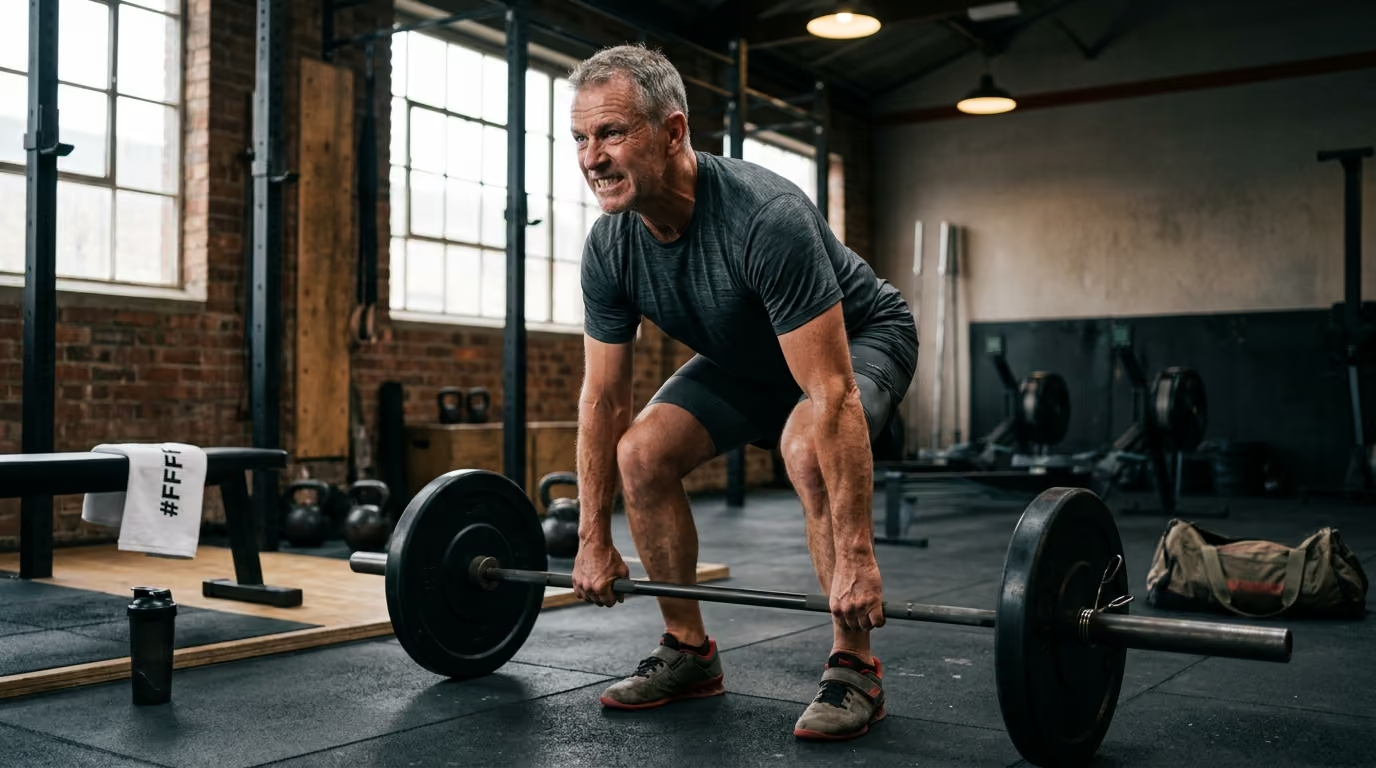
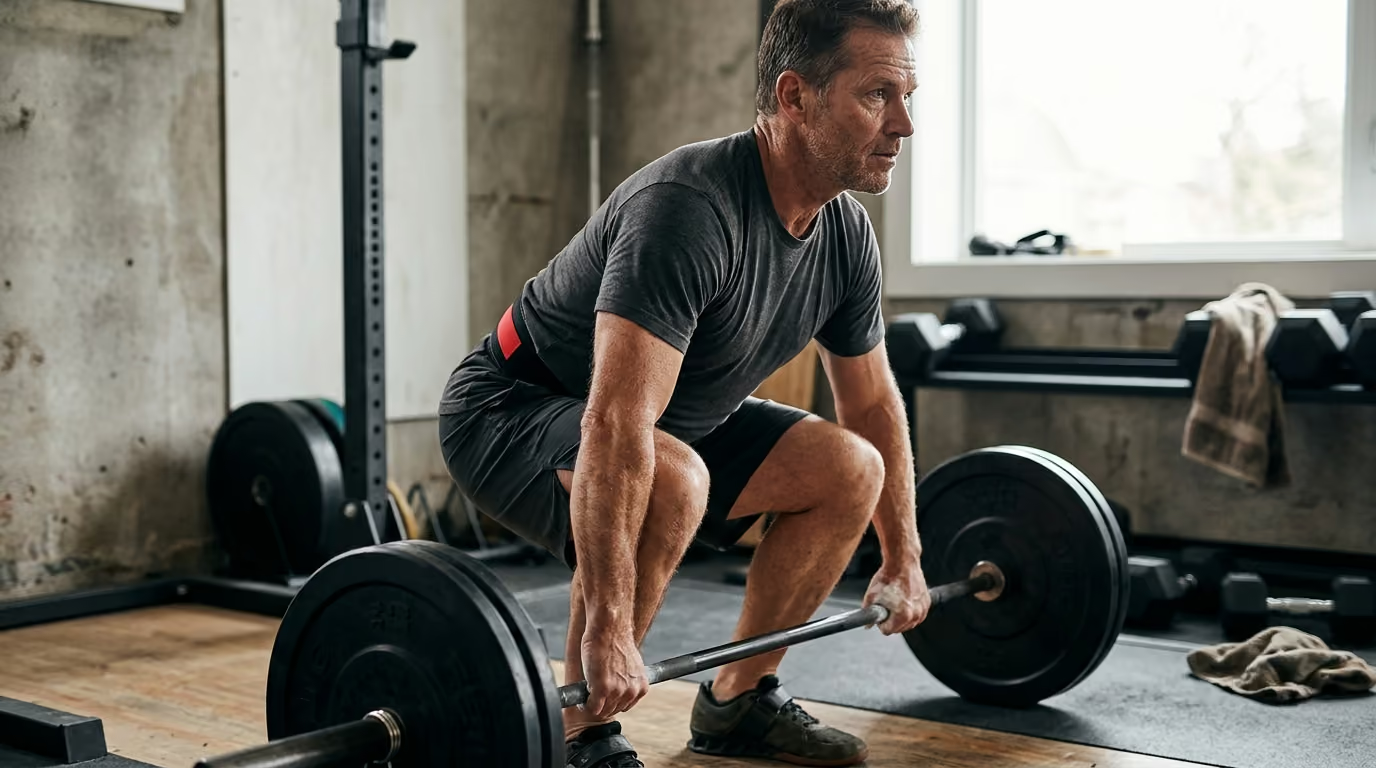
In resistance training, the hands often become a weak link before the larger muscle groups tire. During deadlifts, barbell rows, and pull-ups, your back and hips can handle significant weight. If your fingers begin to uncurl, you must drop the bar before your target muscles receive an optimal training stimulus.
Lifting straps can help you train your back and legs with heavier loads. However, relying entirely on straps for every pulling exercise deprives your forearms of valuable training volume. Balancing unassisted lifts with strapped heavy sets builds both back size and natural hand endurance.
Loaded Carries for Whole-Body Stability
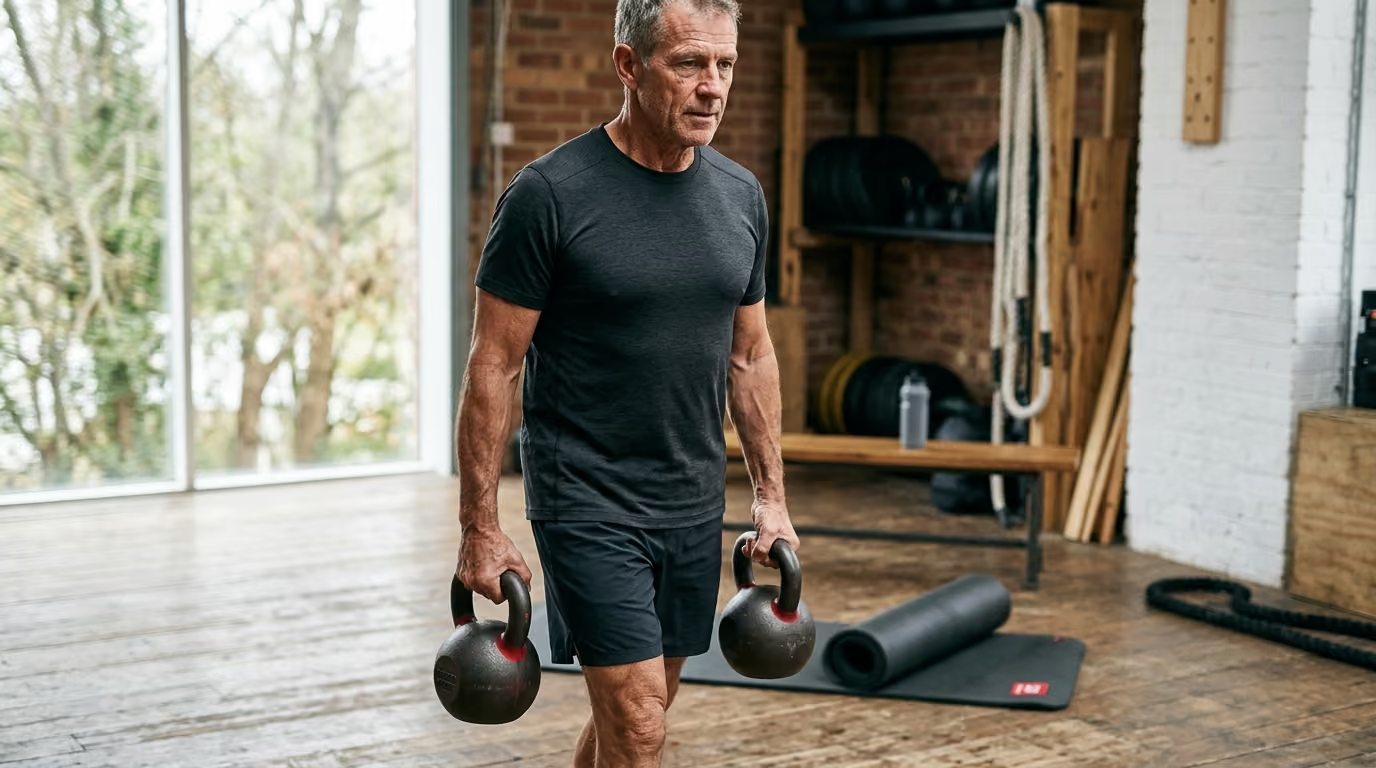
Carrying a load while walking is a fundamental human movement pattern. Loaded carries challenge far more than your fingers. They require coordinated effort from the hand, wrist, rotator cuff, upper back, abdominal wall, hips, and feet.
When you walk with weight, your core muscles must resist rotation, extension, and lateral flexion. Your hips must stabilize your pelvis on every single-leg stride. Carries teach your body to maintain a braced, upright posture under dynamic conditions, which builds practical resilience.
Rock Climbing and Bouldering
Climbing requires specialized finger strength and forearm endurance. Research shows that experienced climbers possess superior grip endurance and finger strength compared to non-climbers.
Climbers use specific hand positions such as the open-hand grip, half-crimp, and pinch. These positions place high forces on the small pulleys and tendons of the fingers. For men over 45, climbing-specific finger training must be introduced gradually to prevent overuse injuries in the hand connective tissues.
Racquet Sports and Rotary Control
Sports like tennis, pickleball, squash, and golf rely heavily on forearm control and wrist stability. Grip strength allows you to stabilize the paddle or club at the moment of impact.
Weak forearm muscles can lead to compensatory movement at the elbow, increasing the risk of tendon irritation such as tennis elbow or golfer's elbow. A well-rounded program for racquet sports combines support grip, wrist extension, wrist flexion, and rotation.
Daily Living and Lifelong Autonomy
Simple daily tasks require constant hand engagement. Carrying heavy luggage through an airport, moving furniture, using hand tools, and lifting bags of soil all depend on reliable grip strength.
Maintaining hand capability gives you the confidence to manage daily physical tasks without asking for help. It keeps your physical world open and prevents the subtle reductions in activity that often accompany aging.
Standardized Testing Methods for Hands and Carries
To measure your progress, you need reliable tests that you can repeat under consistent conditions. Using standardized protocols removes guesswork and helps you identify specific areas that need improvement.
The Standard Hand Dynamometer Protocol
The hydraulic dynamometer remains the gold standard for clinical handgrip assessment. Standard testing guidelines recommend a specific body position to ensure accurate results.
- Sit comfortably in a sturdy chair with your feet flat on the floor.
- Keep your shoulder relaxed, tucked near your ribs, without rotation.
- Bend your elbow to a 90-degree angle.
- Position your forearm in a neutral position with your thumb pointing upward.
- Squeeze the handle with maximum effort for three to five seconds.
- Rest for 30 to 60 seconds, then repeat for a total of three trials per hand.
- Record your highest single score for each hand.
Clinical guidelines from the European Working Group on Sarcopenia in Older People identify cutoffs for low grip strength. For men, a score below 27 kilograms suggests low muscle strength. For women, the cutoff is below 16 kilograms. These numbers are screening baselines to identify frailty, not performance targets for active men.
Test your hands once every six to twelve weeks. Testing daily or weekly produces unnecessary noise from temporary fatigue, sleep variations, and joint stiffness.
Timed Farmer's Carry Test
The timed carry measures whole-body support grip, postural endurance, and walking mechanics.
To perform this test, select two dumbbells or kettlebells that equal a specific percentage of your bodyweight, such as 25 to 50 percent of your body mass per hand. Stand tall, brace your midsection, and walk along a clear path.
Track the total time and distance you can cover before your grip opens or your posture breaks down. Note whether you had to stop because your fingers opened, your breath gave out, or your lower back began to ache. This tells you which physical system limited your performance.
The Suitcase Carry Symmetry Test
The suitcase carry uses a single weight held in one hand, testing your ability to resist lateral bending.
Pick up a moderate kettlebell or dumbbell in your dominant hand. Walk 50 paces while keeping your shoulders level and your spine vertical. Avoid leaning away from the weight or letting your shoulder dip. Rest for two minutes, then repeat the test with your non-dominant hand.
Note any differences in control, gait stability, or grip endurance between your sides. If one hand fatigues significantly earlier, prioritize unilateral carries in your weekly routine.
The Dead Hang Tolerance Test
The dead hang tests support grip, shoulder stability, and bodyweight suspension.
Grasp a pull-up bar with an overhand grip, hands placed shoulder-width apart. Step off the platform and hang with your arms straight and your shoulder blades gently engaged. Do not let your shoulders jam into your ears.
Time how long you can hold the position with clean form. If you have active shoulder impingement or elbow pain, modify this test by keeping your feet lightly supported on a box.
The Progressive Training Framework
Building resilient hands and carrying capacity requires a balanced approach. Squeezing a heavy hand gripper every day can irritate your tendons without improving your posture or gait. A complete program targets multiple muscle groups, movement planes, and contraction types.
Key Movement Patterns for Forearm Health
A complete forearm routine addresses all primary motions of the wrist and fingers:
- Finger flexion: Closing the hand against resistance.
- Finger extension: Opening the fingers against elastic resistance to balance the flexors.
- Wrist flexion: Curving the palm toward the inner forearm.
- Wrist extension: Raising the back of the hand toward the outer forearm.
- Radial and ulnar deviation: Tilting the wrist side to side.
- Pronation and supination: Rotating the forearm palm-down and palm-up.
- Isometric holding: Resisting movement while supporting a load.
Integrating these patterns into your workouts supports overall joint longevity and aids in building functional strength.
Phase 1: Tissue Conditioning and Joint Preparation
If you have not trained your grip directly, begin with low-intensity preparation. This phase conditions tendons and improves blood flow to the wrist and finger joints.
- Finger band extensions: Place a light rubber band around the outside of your fingers and open your hand against the resistance for 15 to 20 repetitions.
- Dumbbell wrist extensions: Rest your forearm on a flat bench with your palm facing down. Using a light weight, raise your hand slowly for 12 to 15 controlled repetitions.
- Forearm rotations: Hold a light hammer or club by the handle. Slowly rotate your forearm from palm-up to palm-down for 10 repetitions per side.
- Light farmer's walks: Carry moderate weights for short distances of 20 to 30 steps, focusing on tall posture and smooth breathing.
Spend three to four weeks in this phase to build tissue resilience before adding heavier loads.
Phase 2: Foundational Strength and Core Integration
Once your joints tolerate baseline work, increase the resistance to build support grip and trunk control.
- Heavy farmer's carries: Use heavy dumbbells, kettlebells, or trap bars for carries lasting 30 to 45 seconds.
- Suitcase carries: Walk with a heavy weight in one hand to challenge lateral core stability.
- Two-hand pinch holds: Pinch two smooth weight plates together with your fingers and thumb, holding for 15 to 30 seconds per set.
- Unassisted barbell rows: Perform your rowing exercises without straps to build pulling strength and grip capacity together.
Phase 3: Maximum Strength and Heavy Overload
For experienced lifters who want to push their strength boundaries, introduce higher loads for shorter durations.
- Heavy double-kettlebell holds: Stand in place holding heavy weights at your sides for 10 to 15 seconds.
- Thick-grip carries: Attach thick rubber grips to your barbells or dumbbells to widen the handle diameter, forcing your hands to work significantly harder.
- Deadlift lockout holds: At the top of your final deadlift repetition, hold the barbell for five to ten seconds before lowering it under control.
Phase 4: Endurance and Sport-Specific Capacity
This phase builds the fatigue resistance needed for long hikes, manual labor, racquet matches, and climbing.
- Long-duration carries: Walk with moderate loads for two to three minutes without setting the weights down.
- Towel hangs: Wrap a sturdy gym towel around a pull-up bar, grab the ends, and perform controlled hangs.
- Carry intervals: Alternate 60 seconds of walking with weights and 60 seconds of unweighted walking for five to eight total rounds.
Sample Two-Day Weekly Training Template
You do not need separate hours for grip training. You can integrate loaded carries and hand work into your standard resistance sessions twice per week, in line with established guidelines for strength, muscle, and physical performance.
Day 1: Bilateral Strength and Posture
- Trap bar deadlift or Romanian deadlift: 3 to 4 sets of 6 to 8 repetitions (no straps on warmup and early working sets).
- Dumbbell chest-supported row: 3 sets of 8 to 10 repetitions with a two-second pause at full contraction.
- Heavy farmer's carry: 4 sets of 40-meter walks with heavy dumbbells. Rest 90 seconds between sets.
- Dumbbell wrist extensions: 3 sets of 12 to 15 repetitions with light weight.
- Rubber band finger extensions: 3 sets of 20 repetitions per hand.
Day 2: Unilateral Control and Grip Endurance
- Goblet squat or step-ups: 3 to 4 sets of 8 to 10 repetitions.
- Suitcase carry: 3 sets of 30 meters per side with a challenging weight. Keep your shoulders level throughout.
- Plate pinch hold: 3 sets of 20-second holds per hand using two flat plates.
- Hammer forearm pronation and supination: 2 to 3 sets of 10 controlled rotations per arm.
- Timed bar hang or active hang: 3 sets of 20 to 40 seconds.
Practical Scenarios in Midlife Training
Real-world training requires adapting your routine to address specific imbalances, injuries, or athletic goals. These five practical scenarios illustrate how to adjust your approach.
The Strong Lifter With Weak Carries
A 52-year-old lifter can deadlift 350 pounds using lifting straps. However, he struggles to carry heavy toolboxes or luggage for more than a minute. His hips and back are strong, but his unassisted support grip and carrying endurance are undertrained.
The solution is not to drop heavy deadlifts. Instead, he should perform his deadlift warmups and first working sets without straps. At the end of his workouts, he should add three sets of moderate farmer's carries, focusing on walking for 45 to 60 seconds per set. Over eight weeks, his unassisted hand endurance will match his hip strength.
The Climber With High Squeeze Strength but Finger Fatigue
A 48-year-old recreational rock climber scores exceptionally high on a standard hand dynamometer. Despite this peak squeeze force, his fingers open on small rock holds during difficult routes.
A dynamometer measures a full-hand crushing grip, which does not duplicate the open-hand and crimp positions used on rock walls. He should reduce general gripper training and introduce progressive hangboard work on wide, comfortable wooden edges. He should also incorporate submaximal repeaters, holding an edge for seven seconds followed by three seconds of rest, to build sport-specific forearm endurance.
The Racquet Player With Forearm Soreness
A 57-year-old tennis and pickleball player buys a heavy spring gripper to improve his shot power. After three weeks of daily squeezing, he develops aching pain on the outside of his elbow.
His issue stems from excessive finger flexion volume combined with high hitting frequency. He should pause the heavy gripper completely. His routine should focus on light eccentric wrist extensions, forearm rotations, and dedicated joint mobility and recovery strategies. Balancing his extensor strength with his gripping volume will relieve elbow strain while preserving shot stability.
The Older Adult Below the Clinical Strength Cutoff
A 68-year-old man visits his physician and records a grip score of 24 kilograms on a dynamometer, placing him below the standard 27-kilogram baseline.
The wrong response is to hand him a rubber squeeze ball and send him home. A low grip score suggests a broader loss of total-body strength and muscle reserve. He needs a comprehensive, supervised resistance program that includes chair rises, step-ups, dumbbell rows, and short supported carries. Building whole-body muscular capacity will raise his grip score while directly improving his balance and mobility.
The Trainee Managing Significant Asymmetry
A 61-year-old recreational athlete notices that his left hand opens during deadlifts long before his right hand feels fatigued. A dynamometer test reveals a 25 percent strength deficit in his left hand following an old wrist fracture.
If he continues pulling with a double overhand grip, his right side will compensate, widening the gap. He should switch to unilateral carrying and holding exercises, such as single-arm kettlebell carries and single-arm dead hangs with foot support. He should always set the weight and duration based on the capacity of his weaker left side, allowing it to catch up over several months.
Common Misconceptions Regarding Grip and Carry Capacity
Hand training attracts many simplistic fitness claims. Examining these common myths will keep your training safe, balanced, and productive.
Hand Squeezing Equals Total-Body Strength
A common claim is that squeezing a high-resistance gripper translates directly into whole-body power. A strong squeeze does not guarantee strong legs, a resilient spine, or a capable cardiovascular system. Grip is a valuable indicator of general vitality, but training the hands in isolation will not replace squats, hinges, carries, and brisk walking.
Low Dynamometer Scores Prove Sarcopenia
A low grip reading on a clinical dynamometer is a screening signal, not a standalone medical diagnosis. True sarcopenia diagnosis involves assessing muscle mass, movement speed, chair-rise ability, and daily functional limitations. A low score simply indicates that a comprehensive physical assessment and a structured strength program are warranted.
Daily Maximum Squeezing Is the Best Method
The small tendons and pulleys of the fingers have limited blood flow and adapt slower than large muscle bellies. Squeezing heavy grippers every day often causes tendon irritation, elbow pain, and joint stiffness. Two to three structured sessions per week provide plenty of stimulus for steady progress while allowing connective tissues to recover.
Using Lifting Straps Is Always Cheating
Some lifters believe using straps on any exercise makes your hands permanently weak. Straps are an effective tool when used with clear intent. If your grip gives out during high-rep Romanian deadlifts or heavy barbell rows, straps allow your hamstrings and upper back to receive full work. The smart strategy is to use straps on your heaviest pulling sets while keeping your carries, rows, and warmups unassisted.
Bodyweight Hangs Are Always Safe for Beginners
Because a pull-up bar uses only your body mass, many people assume dead hangs are completely safe for anyone. Hanging places high tensile loads on the finger joints, wrists, and rotator cuff. If you are returning to exercise after 45 or carrying extra body weight, start with partial hangs where your feet remain on the floor to control the load.
Limitations in Current Research and Evidence Gaps
While the relationship between hand strength and health is well documented, several important gaps exist in the scientific literature. Recognizing these limits prevents overinterpreting scientific headlines.
Observational Data Dominates the Field
Most studies connecting grip strength to mortality, heart health, and cognitive function are observational. They show that people with stronger hands tend to live longer and experience fewer hospital complications.
These studies do not prove that artificially increasing your grip strength through hand exercises will extend your lifespan. Hand strength in large populations is largely a reflection of lifelong physical activity, genetics, good nutrition, and low disease burden.
Small Sample Sizes in Intervention Studies
While observational studies track thousands of participants, clinical trials testing specific grip training programs are often small. For instance, a 2025 pilot study evaluating a 12-week handgrip and carry program in older adults showed meaningful strength gains, but the trial included only 12 participants. Larger, multi-center trials are needed to determine which training variations produce the greatest long-term functional benefits.
Lack of Standardization in Carry Testing
Standardized protocols for hand dynamometers are widely accepted in clinical medicine. In contrast, protocols for loaded carries vary widely across research and strength coaching. Different studies use varying loads, handle thicknesses, walking speeds, and testing distances. As a result, there are no universal normative standards for farmer's carry performance based on age and body mass.
Sport-Specific Transfer Limits
Research in climbing demonstrates that general handgrip scores do not correlate well with climbing performance on small edges. Climbing ability relates far more closely to relative finger strength on specific hold depths. Training adaptations are highly specific to the hand positions and force angles you practice.
Key Takeaways for Long-Term Function
Grip strength and carrying capacity are practical measures of how your hands, core, and lower body work together to move weight through space.
Building your hands with balanced flexion, extension, and loaded carries preserves your daily independence, protects your joints, and keeps you physically capable through midlife and beyond.
Next Steps for Your Weekly Routine
Use this checklist to establish your hand strength and carrying routine this week:
- Perform a baseline test: Record a timed farmer's carry using two moderate weights, noting the exact load, duration, and limiting factor.
- Balance your hand mechanics: Add two sets of rubber band finger extensions and light wrist extensions to your weekly routine to balance your finger flexors.
- Add one bilateral carry: Integrate three to four sets of heavy farmer's carries into your primary lower-body training day.
- Add one unilateral carry: Include three sets of suitcase carries per side on your second weekly training day to challenge your core stability.
- Use straps with purpose: Perform your pulling warmups and moderate sets unassisted, using straps only on your heaviest sets to fully work your back.
- Monitor your joint recovery: If your fingers, wrists, or elbows feel tender outside of training, reduce your gripping volume and focus on mobility and recovery.
Sources
- Efficacy of 12-Week Handgrip Strength Training Program Amongst ...
- A Brief Review of Handgrip Strength and Sport Performance : The Journal of Strength & Conditioning Research
- Physical performance testing in climbing—A systematic review
- Muscle strength in sport climbing: a systematic review and meta-analysis - PubMed
- Strength Training in Climbing: A Systematic Review
- Reliability of finger strength assessment methods in climbing: a systematic review - PubMed
- Mapping Handgrip Strength Research in Sports Performance - PMC
- Hand Grip - an overview
- Sport Climbing Performance Testing: Strength, Power, and ...
- Grip Strength: An Indispensable Biomarker For Older Adults - PMC
Stay sharp
Get the word
Join our newsletter for the best writing advice and stories from the field.