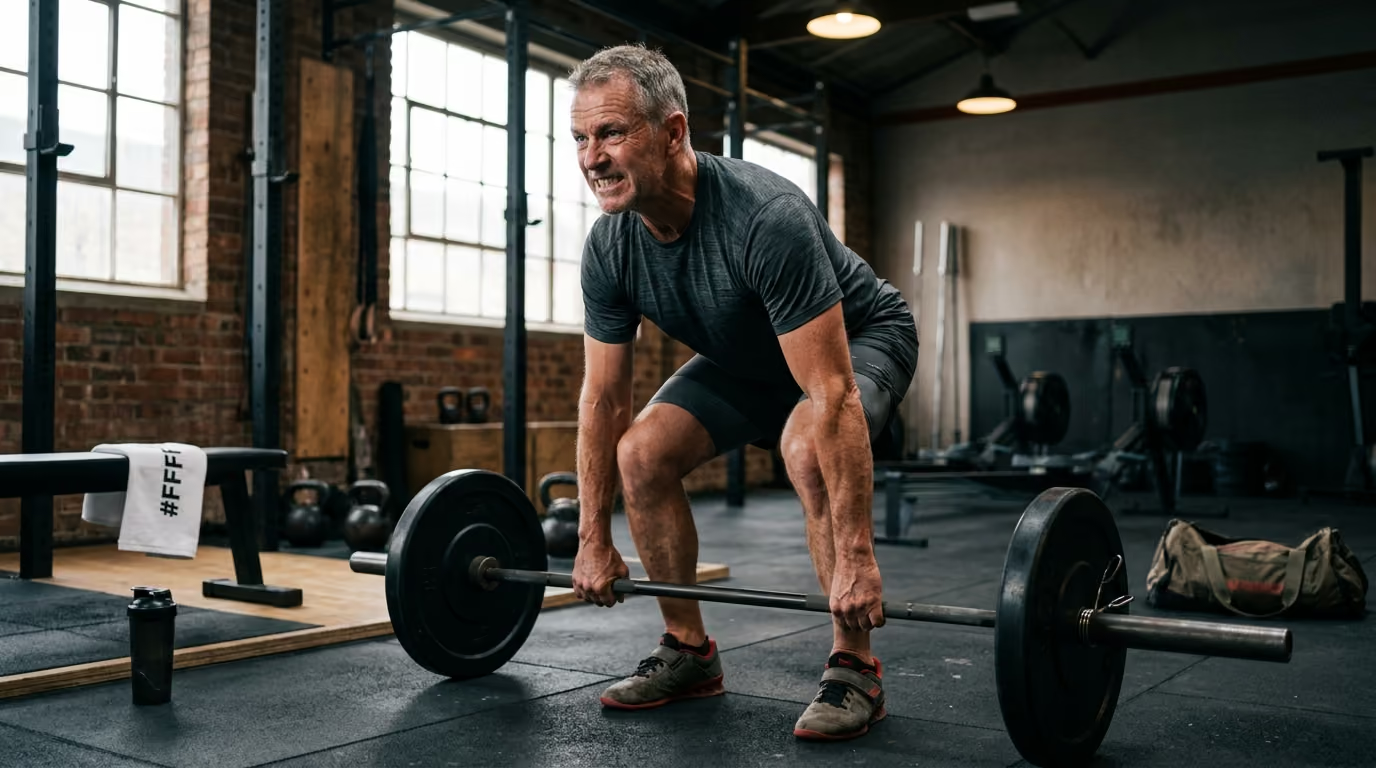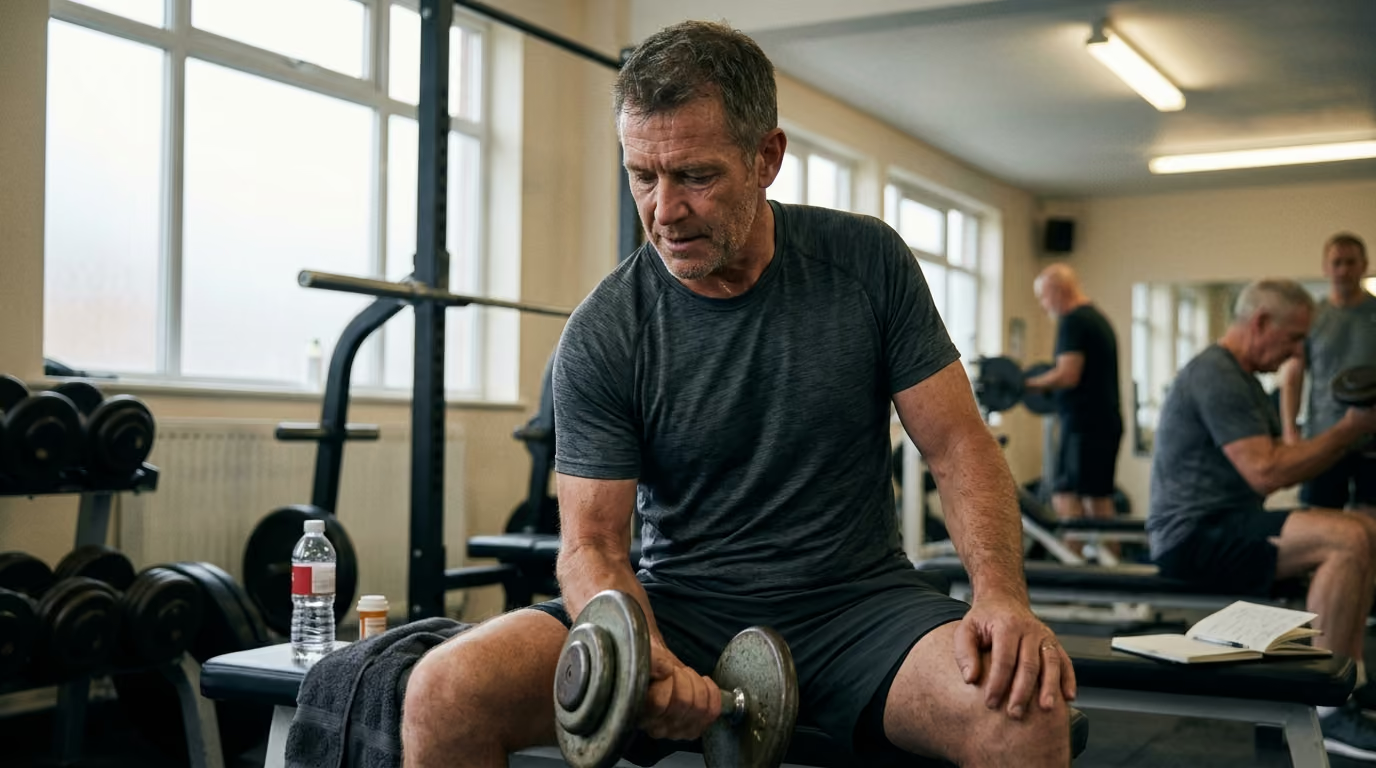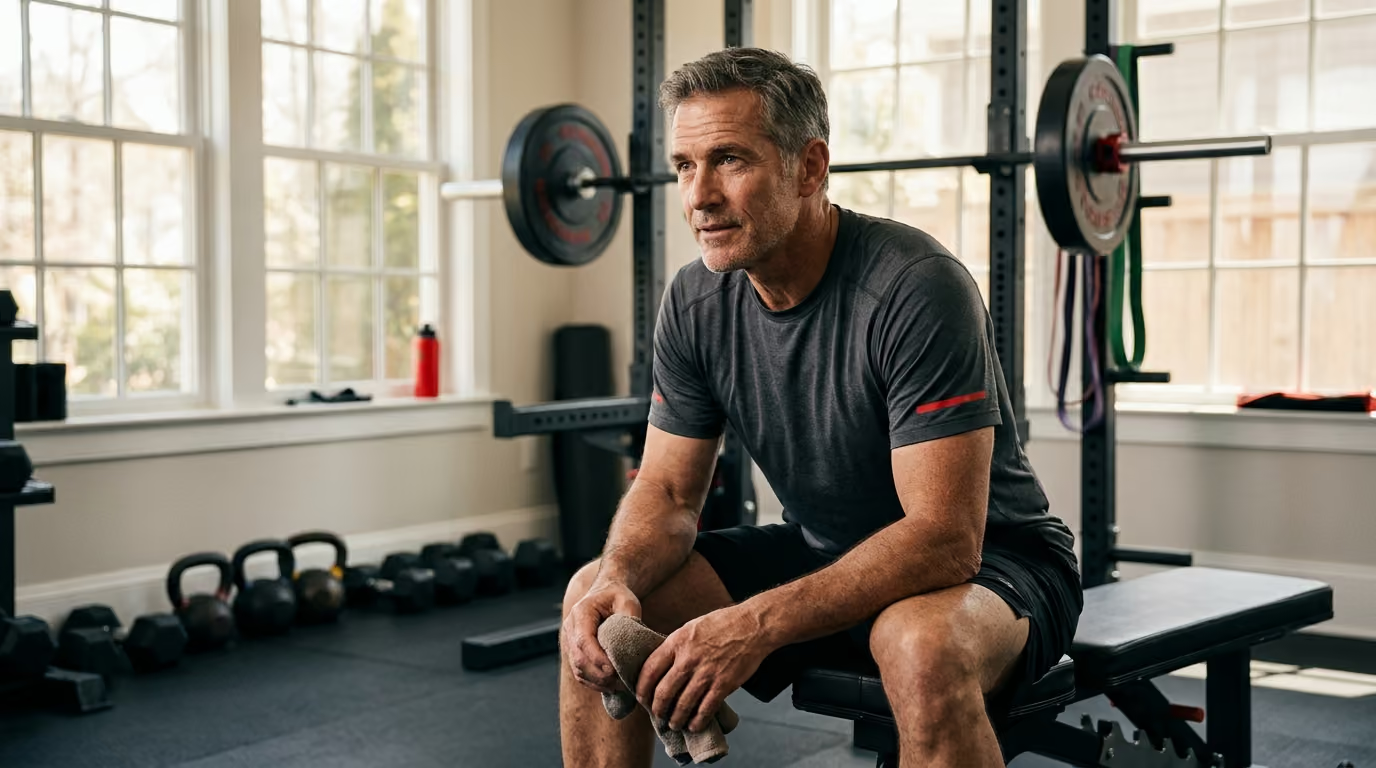
Most fitness advice tells men over 45 that more time in the gym is the only path to staying strong. The common belief insists you need ninety minutes a day, five days a week, moving through endless isolation exercises to see results. The clinical evidence tells a very different story. Spending hours in the weight room often leads to joint irritation, poor recovery, and abandoned routines when career or family demands peak.
A streamlined routine built on fundamental movements can preserve muscle, protect bone density, and maintain joint function in a fraction of that time. When you understand how training volume and intensity actually work, you can achieve substantial physical capability with two or three focused sessions each week. Learning how to strip away wasted effort gives you a sustainable path to physical resilience that fits into a demanding life.
Examine What The Evidence Shows About Minimal-Dose Training
The scientific literature on physical activity confirms that significant adaptations happen with modest inputs. Guidelines from the World Health Organization recommend that adults perform muscle-strengthening activities involving all major muscle groups on two or more days each week. For adults aged 65 and older, the recommendations include varied multicomponent physical activity on three or more days per week to enhance functional capacity and prevent falls. Starting this regular work in your 40s and 50s creates a foundation of stability and force production before age-related physical decline accelerates.
- Baseline Physical Capacity
- Traditional High-Volume
- Minimal Effective Dose
- • 4-6 days per week • 2-3 days per week
- • 60-90 minutes • 20-45 minutes
- • High cumulative fatigue • High movement quality
- • High dropout risk • High long-term adherence
Clinical reviews examining resistance training in older populations show that two to three weekly sessions per muscle group effectively build strength and muscle tissue. Position statements from strength and conditioning researchers emphasize multijoint exercises performed at 70 to 85 percent of one-repetition maximum. This load range provides enough mechanical tension to stimulate motor units and trigger protein synthesis. You do not need dozens of exercises to achieve this outcome. A few well-chosen movements deliver the vast majority of the physiological stimulus.
The concept of the minimum effective dose is supported by extensive research into time-efficient training. Studies evaluating supersets show that pairing noncompeting exercises can cut total workout duration by roughly 50 percent while maintaining training volume. Meta-analyses investigating exercise interventions in older adults report a 21 percent reduction in fall rates among community-dwelling populations. These findings confirm that targeted resistance work provides protective benefits against injury without requiring daily, exhausting workouts.
Major research bodies also examine higher-volume protocols. Guidelines from the American College of Sports Medicine indicate that muscle growth often scales with ten or more weekly sets per muscle group. That higher volume serves specific bodybuilding goals. It is far above the minimum required to build robust functional strength, protect metabolic health, and maintain independence. A busy adult can make reliable strength progress with one to three hard sets per exercise across two weekly sessions.
Understand How Muscular And Neuromuscular Capacity Changes After 45
Aging alters human physiology, but these shifts do not mean your body is broken. In your late 40s and beyond, the nervous system gradually changes how it recruits motor units. Fast-twitch muscle fibers, which generate rapid and high-force output, experience greater reductions in size and number than slow-twitch endurance fibers. This shift explains why power and speed often decline faster than baseline muscular endurance.
Connective tissues also adapt to passing decades. Tendons and ligaments lose some water content and natural elasticity, which alters how forces transfer across joints. Collagen synthesis slows down, meaning joints and connective tissues take longer to adapt to abrupt spikes in training volume. When you combine stiffer tendons with irregular movement habits, sudden high-volume workouts can create localized irritation rather than positive adaptations.
- Natural Shifts After 45
- Fast-twitch fiber recruitment slows
- Tendon elasticity and water content decrease
- Systemic recovery kinetics lengthen
- Glycogen replenishment rate moderates
Systemic recovery capacity changes across midlife as well. Sleep disruptions, accumulated career stress, and metabolic shifts affect how quickly muscle damage repairs. Protein breakdown and muscle protein synthesis become slightly less responsive to small doses of dietary protein, a phenomenon known as anabolic resistance. Your body still responds vigorously to mechanical tension, but it requires a clear training signal and adequate nutritional support to rebuild.
These biological changes make efficiency a necessity rather than a shortcut. Unfocused, high-rep fatigue routines drain your recovery reserves without providing sufficient mechanical tension to preserve fast-twitch fibers. Heavy, controlled compound movements stimulate the nervous system, preserve high-threshold motor units, and signal bone remodeling. By respecting your recovery capacity, you build strength without grinding down your joints. To learn more about managing long-term physical durability, explore our resources on healthy aging strategies.
Translate Training Science Into Daily Practical Capability
The true measure of a strength program is how well it supports your life outside the gym. Midlife brings a complex mix of professional obligations, travel, and personal commitments. A rigid six-day split collapses the moment an unexpected project or family obligation appears. A minimal-dose model built around two weekly sessions accommodates real-world disruption while keeping your physical capability intact.
Strength built through compound movements translates directly into physical independence and daily resilience. Carrying heavy luggage through an airport, lifting construction materials in the yard, or climbing stairs without knee discomfort requires coordinated force production. Training multi-joint movement patterns teaches your trunk, hips, and upper body to work together as an integrated system.
- Real-World Capability Matrix
- Hip Hinge Lifting heavy objects safely from the floor
- Squat Pattern Rising from low positions and climbing terrain
- Horizontal Push Moving obstacles and upper-body bracing
- Horizontal Pull Postural support and pulling heavy loads
- Loaded Carry Grip strength, balance, and trunk stability
Physical independence also depends on balance and movement confidence. The nervous system requires regular exposure to heavy loads and rapid force production to maintain joint proprioception. If you trip over an uneven sidewalk, recovering your footing requires instant fast-twitch muscle recruitment. Targeted resistance training preserves this rapid force development, protecting you from falls and severe joint strains.
Balancing your strength sessions with cardiovascular health and tissue mobility creates complete physical fitness. Resistance exercise should not crowd out brisk walking, cycling, or swimming. Combining two short strength workouts with regular aerobic movement supports both cardiovascular health and muscular durability. You maintain high physical capability across decades without turning exercise into a second full-time job.
Build A Flexible Minimum-Dose Training Framework
Designing an effective program requires selecting the right movement patterns rather than chasing an endless list of specialized exercises. A balanced full-body routine addresses five primary functional patterns: a knee-dominant movement, a hip hinge, an upper-body push, an upper-body pull, and a trunk or loaded carry exercise. This structure ensures total-body stimulation while keeping exercise selection lean.
- The 5 Core Movement Patterns
- Squat
- Hinge
- Push
- Pull
- Loaded Carry
A two-day weekly rotation using alternate sessions provides an ideal balance of stimulus and systemic recovery. This layout gives you several rest days between workouts, allowing joints and connective tissues to recover completely. You can schedule these workouts on non-consecutive days, such as Tuesday and Friday, or adjust them dynamically based on your weekly schedule.
Session A: Foundational Strength
- Primary Squat Movement: Leg press or barbell box squat. Perform 2 sets of 6 to 8 controlled repetitions. Focus on a steady lowering phase and a deliberate press back to the start.
- Horizontal Push: Flat dumbbell bench press or machine chest press. Perform 2 sets of 8 to 10 repetitions. Keep your shoulder blades retracted and elbows angled comfortably away from the neck.
- Horizontal Pull: Supported chest row or seated cable row. Perform 2 sets of 8 to 10 repetitions. Pull the handles toward your lower ribcage, pausing briefly to squeeze the upper back.
- Posterior Chain Hinge: Romanian deadlift with dumbbells or a barbell. Perform 2 sets of 8 to 10 repetitions. Hinge at the hips with soft knees, feeling the load in your hamstrings and glutes.
- Core and Trunk Bracing: Standing single-arm farmer carry. Perform 2 carries of 30 to 40 paces per side using a challenging weight.
Session B: Functional Stability And Power
- Unilateral Knee Dominance: Bulgarian split squat, dumbbell lunge, or step-up. Perform 2 sets of 8 to 10 repetitions per leg. Keep your front foot flat and your torso slightly tilted forward for hip engagement.
- Vertical Pull: Lat pulldown or assisted chin-up. Perform 2 sets of 8 to 10 repetitions. Pull the bar smoothly toward the upper chest without leaning back excessively.
- Vertical or Angled Push: Standing overhead dumbbell press or incline machine press. Perform 2 sets of 8 to 10 repetitions. Press the weight overhead while keeping your abdominal wall braced.
- Posterior Chain Power: Barbell hip thrust or cable pull-through. Perform 2 sets of 10 to 12 repetitions. Drive through the heels and extend the hips fully at the top of the movement.
- Rotational or Static Core: Pallof press or standard forearm plank. Perform 2 sets of 10 controlled repetitions per side, or hold a solid plank for 30 to 45 seconds.
The Three-Tier Time Management Model
To maintain consistency during unpredictable weeks, implement a tiered workout strategy. This system adapts to your available time on any given day, removing the all-or-nothing mindset that derails long-term progress.
- Tier 1: Full Session
- Tier 2: Compressed
- Tier 3: Minimum Anchor
Tier 1: Full Session (45 to 60 Minutes)
You perform the complete plan outlined above. You take full rest periods of two to three minutes between heavy sets. You include a thorough movement warm-up and any optional auxiliary exercises you enjoy.
Tier 2: Compressed Session (20 to 30 Minutes)
You drop non-essential accessory work and pair the primary compound exercises into antagonist supersets. You perform two work sets per movement with minimal rest between paired exercises. This option preserves high training intensity while cutting workout time in half.
Tier 3: Minimum Anchor Session (10 to 15 Minutes)
When schedules collapse or energy is extremely low, perform one challenging set of a squat pattern, one set of an upper-body push, and one set of an upper-body pull. This short routine maintains motor recruitment patterns, preserves the training habit, and prevents deconditioning during high-stress periods.
Execute Time-Saving Techniques Without Sacrificing Performance
Structuring exercises into antagonist supersets is the most reliable way to shorten gym sessions without compromising strength gains. An antagonist pairing combines two movements targeting opposing muscle groups. While your chest and anterior shoulders work during a press, your back and rear shoulders recover. You move directly from the press to a row, alternating between them with brief transition periods.
- Traditional Straight Sets
- Push Set 1
- Push Set 2
- Row Set 1
- Total Time: High Efficiency: Low
- Antagonist Superset
- Total Time: Reduced by 50% Muscle Recovery: Preserved
Effective Pairing Strategies
- Horizontal Press and Horizontal Pull: Pair a dumbbell flat bench press with a chest-supported row. Rest 45 to 60 seconds between exercises.
- Vertical Press and Vertical Pull: Pair an overhead shoulder press with a lat pulldown. This combination trains the entire shoulder girdle and upper back efficiently.
- Lower Body and Trunk: Pair a leg press or split squat with a farmer carry or core hold. This pairing rests the upper body while keeping the workout moving forward.
Heavy, high-skill movements like free-weight barbell squats or floor deadlifts are poorly suited for supersets. These exercises place significant demands on the central nervous system, spinal erectors, and cardiovascular system. Pairing a heavy deadlift with another taxing movement often causes form breakdown and increases injury risk. Reserve supersets for machine exercises, dumbbell work, and supported movements where stability is high.
Leverage Machines For Safe Training Density
Weight-stack machines and cable columns are valuable tools for time-efficient strength training. Free-weight purists often dismiss machines, but clinical research shows they produce comparable increases in strength and muscle mass. Machines eliminate the time required to load plates, secure collars, and adjust safety racks.
- Free Weight Demands
- • High balance and coordination requirement
- • Significant spinal loading
- • Long setup and plate-loading times
- Machine and Cable Advantages
- • Immediate pin-selected load adjustments
- • Fixed, stable movement paths
- • Minimal setup and transition time
Machines also provide fixed movement paths that reduce balance demands. This stability allows you to train close to muscular fatigue with low joint stress and minimal injury risk. For a busy adult working through joint stiffness or returning after time off, machines provide a safe way to apply progressive overload. You can review more exercise variations in our guide to muscle and strength development.
Manage Progressive Overload With Precision
Progress does not require reckless weekly jumps in weight. Using a double-progression framework ensures safe, steady strength improvements over time. Select a repetition target range, such as 8 to 12 repetitions, using a given weight.
- Double Progression Workflow
- 1. Select weight for 8-12 rep range
- 2. Train until you hit 12 clean reps on all sets
- 3. Increase weight by 2% to 10%
- 4. Reps drop back to 8; repeat the cycle
Begin at the lower end of the range with a weight you can control for 8 clean repetitions. Keep that exact load across subsequent sessions until you can complete 12 repetitions on all work sets with good form. Once you achieve this top-end target, increase the load by 2 to 10 percent. The added weight will naturally drop your repetitions back toward 8. You then repeat the process, building your capacity step by step.
Adapt Your Workouts For Travel, Limited Equipment, And Low Energy
Business travel and family vacations frequently disrupt gym access. Maintaining physical capability does not require finding a fully equipped training facility in every city. Your muscles respond to mechanical tension and fatigue, regardless of whether that tension comes from a calibrated barbell, a hotel dumbbell, or a heavy resistance band.
- Travel Equipment Spectrum
- Hotel Gym
- Resistance Bands
- Bodyweight / Luggage
- • Dumbbell RDLs • Banded Rows • Elevated Push-ups
- • Goblet Squats • Band Face Pulls • Split Squats
- • Incline Press • Overhead Presses • Suitcase Carries
When you are away from home, shift your focus to maintaining movement patterns and neuromuscular coordination. High-density bodyweight variations and portable looped resistance bands provide enough resistance to preserve muscle tissue and joint health during travel.
The Minimalist Hotel Room Routine
- Knee-Dominant Movement: Bodyweight Bulgarian split squats with rear foot on a hotel bed or chair. Complete 3 sets of 12 to 15 slow repetitions per leg.
- Horizontal Push: Push-ups with hands elevated on a desk for an easier variation, or feet elevated on a bed for a harder challenge. Complete 3 sets of 10 to 20 controlled repetitions.
- Upper-Body Pull: Looped resistance-band seated rows, or face pulls anchored around a sturdy door handle. Complete 3 sets of 15 repetitions with a two-second squeeze.
- Hip Hinge: Single-leg Romanian deadlifts using your carry-on luggage for resistance. Complete 3 sets of 10 repetitions per side.
- Loaded Carry: Single-arm suitcase walk down a hotel hallway. Complete 3 rounds of 60 seconds per side to build grip strength and lateral trunk stability.
The Five-Minute Fallback Protocol
On days when unexpected events leave you with almost no time, skip the complete gym trip and use a five-minute fallback circuit at home. This short routine is designed to maintain movement quality, keep motor pathways active, and preserve your training habit.
- 5-Minute Fallback Protocol
- 1. 10 Deep Air Squats or Chair Sit-to-Stands
- 2. 10 Solid Push-ups (Floor or Incline)
- 3. 15 Looped-Band Rows or Doorframe Rows
- 4. 30-Second Forearm Plank or Heavy Carry
- Complete 1-2 continuous rounds with clean technique
Move through these exercises in sequence with good form. This brief stimulus maintains tissue conditioning and keeps you mentally connected to your training routine until normal scheduling resumes.
Apply Daily Autoregulation
Recovery capacity fluctuates based on sleep quality, work stress, and travel fatigue. Forcing a maximal workout on a day when you are exhausted increases joint strain and lengthens recovery times. Using autoregulation lets you adjust your training intensity to match your daily readiness.
- Daily Readiness Self-Check
- High Energy / Good Sleep Train at planned top loads, push rep limits
- Moderate Fatigue / Stress Maintain load, leave 2-3 reps in reserve
- Severe Sleep Debt / Pain Drop 1 set per exercise, switch to machines
Use the Repetitions in Reserve (RIR) scale to regulate your effort. On days with high energy and good recovery, push your working sets until you have one or two clean repetitions left in the tank. On days with poor sleep or high stress, stop each set with three or four repetitions in reserve, or switch from free weights to stable machines. This simple adjustment keeps you training consistently without overtaxing your nervous system. For more recovery techniques, read our practical strategies for active recovery and joint health.
Optimize Nutrition And Recovery Support For Midlife Muscle
Strength training provides the biological stimulus for adaptation, but muscle repair and strength gains depend on proper nutritional support. After 45, the digestive system and skeletal muscle handle dietary protein with slightly lower efficiency. Meeting daily protein targets provides the essential amino acids needed to repair muscle tissue and maintain lean mass.
Position papers from the PROT-AGE Study Group recommend an intake of 1.0 to 1.2 grams of protein per kilogram of body weight daily for healthy older adults. For active individuals engaged in regular resistance training, the group suggests targets of 1.2 to 1.5 grams per kilogram per day. Guidelines from the International Society of Sports Nutrition indicate that active individuals seeking to optimize training adaptations often benefit from 1.4 to 2.0 grams of protein per kilogram of body weight daily.
- Protein Intake Reference Guide (Active Adults Over 45)
- • General Active Range: 1.2 to 1.6 g per kg of body weight daily
- • Hypertrophy/Intense Training: 1.6 to 2.0 g per kg of body weight daily
- • Per-Meal Target: 25 to 40 grams of high-quality protein per feeding
Distributing your protein intake across three or four meals helps support muscle protein synthesis throughout the day. Aiming for 25 to 40 grams of high-quality protein per meal provides sufficient leucine to trigger the cellular signaling pathways responsible for muscle repair.
Adequate hydration and basic sleep hygiene also support your physical recovery. Stiff tendons and joint capsules require proper hydration to maintain smooth gliding surfaces during movement. Prioritizing consistent sleep schedules and active stress management protects systemic recovery, helping you get the most out of every training session. For deeper insights into metabolic balance, check our articles on energy and metabolic health.
Avoid Common Misconceptions About Midlife Strength Training
Misinformation often prevents men over 45 from building sustainable strength habits. Outdated bodybuilding advice and aggressive marketing claims create unrealistic expectations while ignoring the realities of recovery. Clearing away these misconceptions helps you focus on what actually works.
- Common Myth vs. Evidence-Based Reality
- Myth: "You must train 5-6 days a week to stay strong."
- Reality: 2 full-body sessions per week preserve and build meaningful strength.
- Myth: "Lifting heavy loads is inherently dangerous for older joints."
- Reality: Controlled training at 70-85% 1RM safely stimulates bone and tendon density.
- Myth: "Short workouts must be high-intensity interval circuits."
- Reality: Heavy, controlled movements with adequate rest build strength far better.
Misconception 1: You Must Train Five Days A Week For Real Progress
The belief that you must live in the gym to see results is one of the most common barriers to starting a program. Research consistently shows that training volume follows a curve of diminishing returns. The first one to three sets of an exercise provide the vast majority of the biological stimulus. Adding set after set extends workout time and fatigue while offering smaller and smaller returns. Two well-executed full-body sessions each week are more than enough to build functional strength and support long-term health.
Misconception 2: Heavy Resistance Is Dangerous For Aging Joints
Many men believe that passing 45 means they must switch exclusively to very light weights and high-repetition sets to protect their joints. While careless lifting with poor form is harmful at any age, properly performed resistance training at 70 to 85 percent of your one-repetition maximum is safe and beneficial. Heavy loads create the mechanical tension needed to maintain bone mineral density, strengthen connective tissues, and recruit high-threshold motor units. The key is using smooth, controlled movements without sacrificing technique for heavier numbers.
Misconception 3: Every Short Workout Must Be An Exhausting Circuit
When people have limited time, they often turn their workouts into rapid-fire cardio circuits with zero rest between sets. While circuit training improves cardiovascular conditioning, rushing through movements compromises strength gains. Moving too quickly limits the weight you can handle and leads to technical breakdown under fatigue. True time efficiency comes from using antagonist supersets and minimizing setup time, not from rushing through exercises until you are out of breath.
Identify Where The Evidence Is Thin Or Inconclusive
While the foundational benefits of resistance training are well supported, certain popular fitness claims rest on limited evidence. Evaluating the research helps you distinguish established training principles from commercial trends.
- Evidence Quality Spectrum
- High Confidence
- Moderate Confidence
- Thin / Mixed Data
- • 2-day full body • Exact hypertrophy • Extreme high-volume claims
- • Fall reduction dose-response curves • Niche recovery gadgets
- • Bone density • Optimal protein • Complex rep-speed protocols
- improvements timing windows • Biohacking supplements
Evidence is mixed regarding the long-term benefits of very high training volumes for older adults. While studies in younger populations show muscle growth with fifteen to twenty sets per muscle group weekly, these volumes often exceed the recovery capacity of mature trainees. The trade-off between joint wear, systemic fatigue, and added muscle mass is not well documented for older demographics managing normal life stress.
Research on specific repetition tempos and contraction speeds is also limited. While moving weights with explosive intent during the concentric phase stimulates power development, claims that precise lifting tempos significantly alter long-term muscle growth remain unproven. Plain, controlled lifting speeds with safe reversals are just as effective as complex tempo protocols.
Commercial recovery products, such as massage guns, cold plunges, and specialized compression garments, lack strong long-term evidence for improving performance or muscle growth. While these tools may provide temporary comfort, they cannot replace the foundational drivers of recovery: appropriate training volume, balanced nutrition, and sufficient sleep. Focus your time and energy on proven training habits rather than expensive recovery gadgets. For an overview of research-backed training methods, browse our full collection of mens health research guides.
Retain The Core Principles For Long-Term Capability
Building a resilient, capable body after 45 does not require endless hours in the gym or complicated training splits. Focusing on the minimum effective dose of compound movements gives you an efficient path to strength that fits alongside career and family commitments.
Key Takeaways
- Protect Your Schedule: Two full-body sessions per week covering the five primary movement patterns deliver the vast majority of strength and health adaptations.
- Use Antagonist Pairings: Alternating noncompeting exercises, like a chest press and a row, cuts your total gym time by roughly half while preserving movement quality.
- Progress With Double Progression: Build your repetitions from 8 to 12 before adding 2 to 10 percent more weight, keeping your joints safe and progress consistent.
- Use The Three-Tier Model: Adapt your workouts to your daily schedule using full, compressed, or five-minute fallback routines to maintain momentum during busy weeks.
- Support Your Recovery: Aim for 1.2 to 1.6 grams of protein per kilogram of body weight daily, distributed across balanced meals to fuel muscle repair.
True physical capability is built through sustainable habits you can maintain for decades. Strip away unnecessary gym volume, focus on movement quality, and let consistent training support your life rather than consume it.
Sources
- World Health Organization 2020 guidelines on physical ... - PMC
- 2020 WHO guidelines on physical activity and sedentary behavior - PMC
- Resistance Training for Older Adults: Position Statement... : The Journal of Strength & Conditioning Research
- RECOMMENDATIONS - WHO Guidelines on Physical Activity ...
- International Society of Sports Nutrition Position Stand: protein ...
- a position paper from the PROT-AGE Study Group - PubMed - NIH
- World Health Organization 2020 guidelines on physical ...
Stay sharp
Get the word
Join our newsletter for the best writing advice and stories from the field.