Most training advice for men past midlife focuses entirely on preventing muscle loss. Standard fitness culture tells you to lift weights simply to preserve the physique of your thirties. That view is fundamentally backwards.
Physical independence over thirty or forty years is not just about muscle size. Raw muscle bulk does not protect you if you cannot generate force quickly when your foot catches on an uneven sidewalk. It does not help if your ankles are too stiff to descend stairs safely, or if you lack the stamina to carry luggage across an airport terminal.
Long-term autonomy requires a broader physical architecture. You need maximum strength, explosive power, joint mobility, single-leg balance, and sufficient cardiovascular endurance. You also need an intentional buffer called functional reserve.
Building this capacity requires a systematic, decade-by-decade strategy. This guide breaks down the physical mechanisms of midlife changes, translates clinical research into actionable lifting templates, and provides a clear path to stay capable well into your seventies and eighties.
Understand What the Research Actually Shows
Clinical research on aging has shifted dramatically over the past decade. Sarcopenia was once defined purely as an age-related decline in muscle mass. Today, international consensus panels define it primarily through the loss of muscle strength and physical function.
Muscle mass provides a reservoir of tissue for force production and metabolic health. However, muscle size alone does not predict daily capability. Two men with identical thigh circumference can exhibit completely different levels of leg power, balance, and gait speed.
The revised European consensus on sarcopenia places muscle strength at the center of diagnosis. A man is identified as having probable sarcopenia when his grip strength drops below 27 kilograms or when he takes more than 15 seconds to stand up from a chair five times. A walking speed at or below 0.8 meters per second serves as an indicator of severe functional decline.
Population data shows that muscle mass tends to decrease by roughly 2 percent per year after age 50 without resistance exercise. Muscle strength drops even faster, declining by approximately 15 percent per decade over the same period. Research on building muscle after midlife confirms that these rates are not fixed biological destinies. They are averages taken from largely sedentary populations.
Meta-analyses demonstrate that structured resistance training creates substantial gains across older demographics. In systematic reviews of frail older adults, progressive lifting programs produced strength improvements ranging from 6 percent to over 37 percent. Muscle power increased, while measures of everyday physical performance improved by up to 58 percent.
Research also highlights the unique role of muscle power. Power is the ability to produce force rapidly. Studies show that muscle power declines faster than maximal strength across midlife. Rapid force production strongly predicts fall risk in older adults, often outperforming static muscle mass as a functional indicator.
Examine Why Physical Capacity Changes After 45
The physical changes that begin in your late forties are biological realities, but they are not an incurable disease. Understanding the underlying mechanisms helps you select the right training stimulus rather than working against your physiology.
The primary driver of strength loss is neuromuscular remodeling. As the decades progress, the body loses contact with specific motor neurons. This process disproportionately affects Type II fast-twitch muscle fibers, which are responsible for high-velocity force and heavy lifting.
When fast-twitch motor units are lost, some are re-innervated by slow-twitch motor neurons. This shifts the overall muscle profile toward slower contraction speeds. Without specific high-effort or high-velocity training, your nervous system gradually forgets how to recruit high-threshold motor units rapidly.
Connective tissues also change composition over time. Tendons and ligaments lose water content and cross-link differently, leading to increased passive stiffness and reduced elastic energy return. This shift makes tissues more sensitive to sudden volume spikes while requiring longer recovery windows after unaccustomed stress.
Hormonal profiles shift gradually as well. Modest decreases in circulating testosterone, growth factors, and insulin sensitivity alter protein synthesis rates. Muscle protein breakdown can begin to outpace synthesis if dietary protein and mechanical tension are insufficient.
These biological shifts explain why casual walking is not enough on its own. While walking supports cardiovascular health, it does not recruit high-threshold motor units or load connective tissues through meaningful ranges of motion. You must supply an intentional physical stimulus to maintain those pathways.
Translate the Science into Real-World Independence
In clinical terms, independence comes down to functional reserve. Functional reserve is the difference between your maximum physical capacity and the energy required to perform a normal task.
If rising from a low chair requires 90 percent of your maximal leg strength, you have almost no reserve. Any bout of illness, minor knee pain, or poor night of sleep can leave you unable to stand without help. If that same chair rise requires only 35 percent of your maximal capacity, you possess a massive safety margin.
This reserve translates into five fundamental movement demands in daily life:
Rising and Lowering
Getting out of a deep sofa, using a low toilet, and standing up from the floor require knee and hip extension under load. In the gym, this is represented by squats, leg presses, and sit-to-stand movements.
Picking Up and Hinging
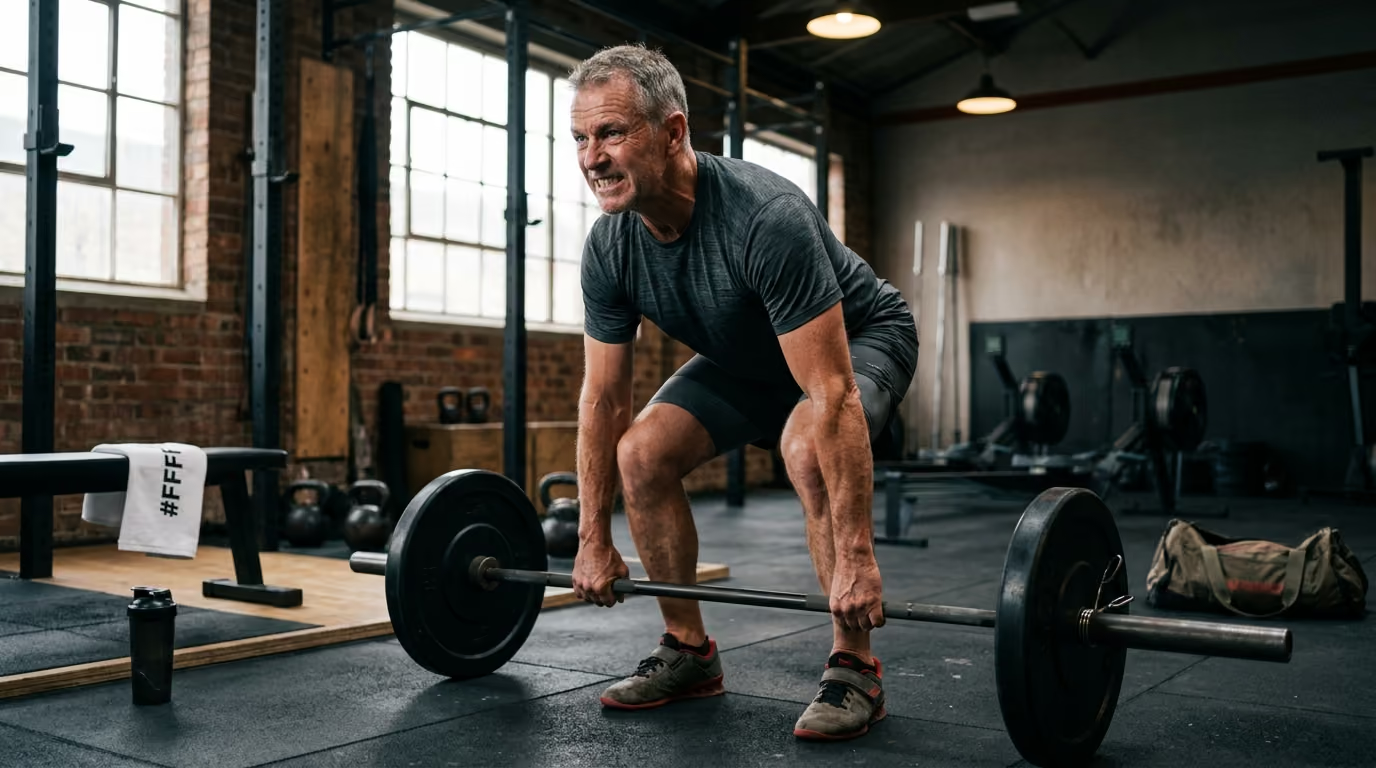
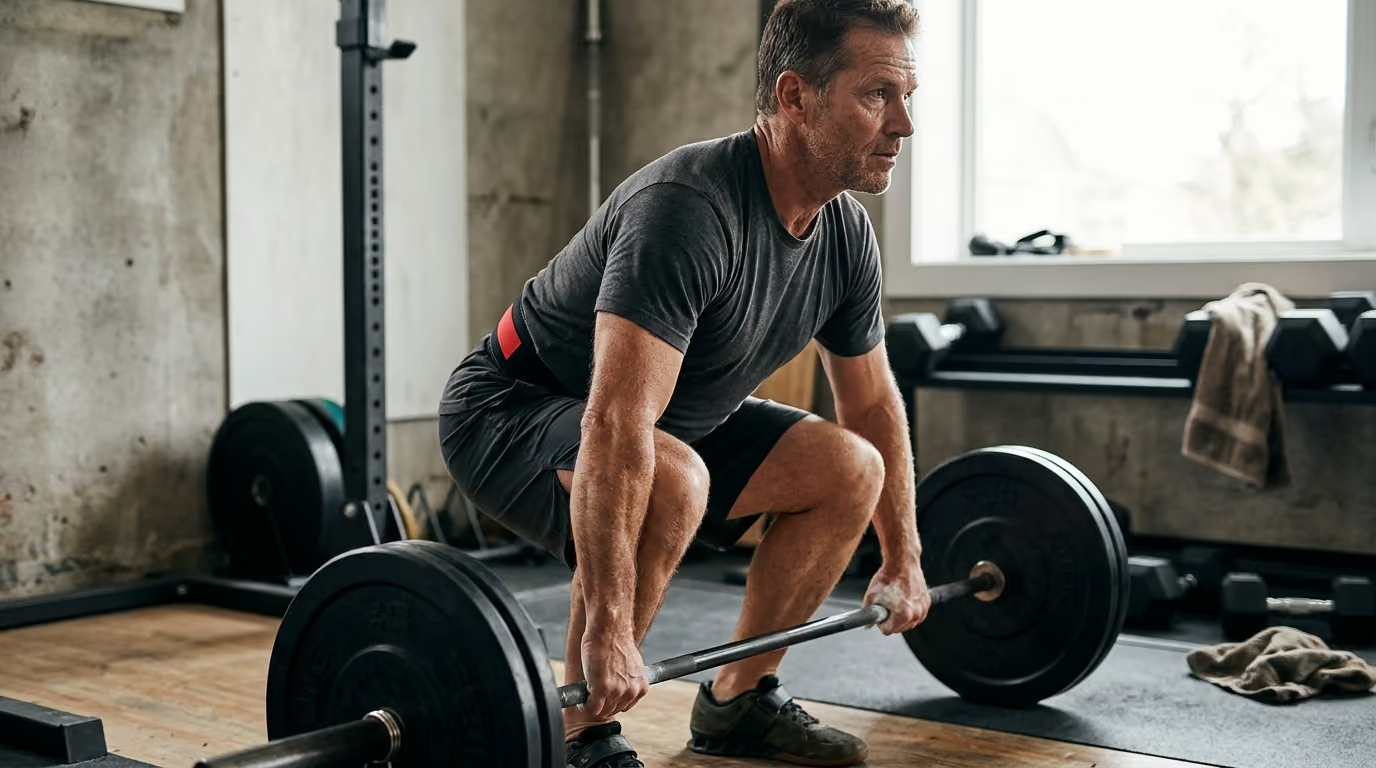
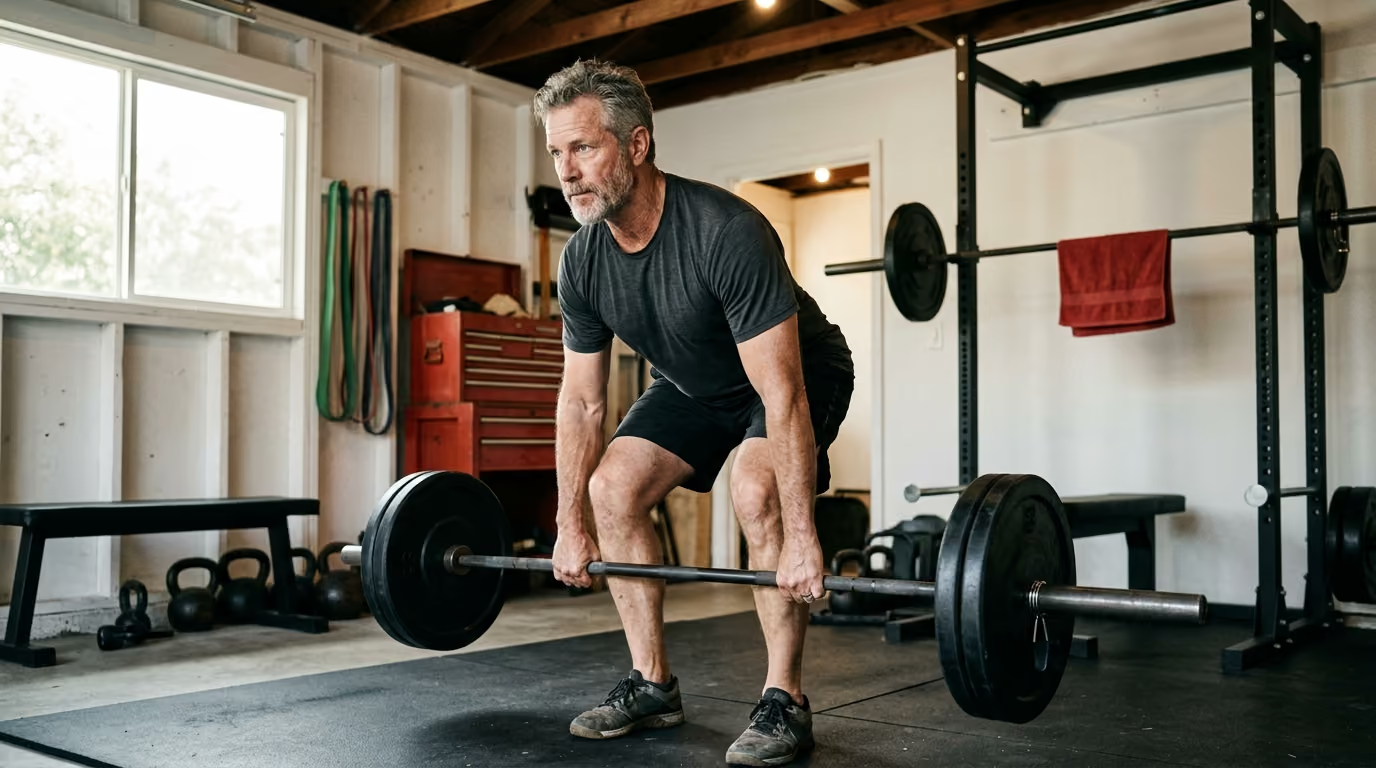
Lifting heavy soil bags in the garden, moving luggage, or picking up a grandchild requires hip-hinge mechanics and back extensor endurance. Deadlifts, Romanian deadlifts, and kettlebell swings train this capacity.
Pushing and Pulling
Opening heavy security doors, pushing a stalled lawnmower, or pulling open a tight garage door requires upper-body force. Overhead reaching and floor-pushing also determine whether you can get yourself off the ground after a fall.
Stepping and Single-Leg Stability
Walking up steep stairs, stepping off a high curb, and crossing uneven hiking trails demand single-leg strength. Lunges, step-ups, and split squats build this specific unilateral balance.
Loaded Carries and Bracing
Carrying several bags of groceries from the car or transporting tools across a yard requires grip strength, postural endurance, and core stiffness. Suitcase carries and farmer walks train the body to transfer force without collapsing through the spine.
Daily life does not happen in isolated muscle contractions. A complete program targets these foundational movement patterns while deliberately building a deep physical reserve.
Build a Decade-by-Decade Training Progression
Your physical priorities will naturally shift between your late forties and your late seventies. The core movement patterns remain the same, but the programming balance, volume, and recovery management must adapt.
Ages 45 to 54: Building the Reserve Base
The late forties and early fifties are the foundational accumulation years. Your primary objective is building as much strength, lean tissue, and movement competency as possible before natural declines accelerate.
Men in this age bracket can generally tolerate moderate-to-high training volumes. The focus should be on mastering compound lifts, establishing consistent cardiovascular habits, and introducing intentional power work while movement quality is high.
- Train two to three full-body resistance sessions per week.
- Lift in moderate-to-heavy intensity zones, roughly 70 to 85 percent of your one-rep maximum.
- Include short, explosive power movements at the start of workouts.
- Complete 150 to 300 minutes of moderate aerobic activity weekly.
- Establish baseline tracking for strength numbers, resting heart rate, and joint comfort.
A common mistake in this decade is relying entirely on general conditioning classes. High-intensity interval workouts burn calories, but they rarely apply enough mechanical load to build maximal strength or preserve bone density.
Ages 55 to 64: Preserving Performance and Managing Recovery
During this decade, work stress, family responsibilities, and accumulated joint wear often collide. Recovery between heavy sessions takes longer, and connective tissues become less forgiving of sloppy technique.
The objective shifts toward preserving high-end strength while managing systemic fatigue. This is where a minimum effective dose strategy proves superior to chasing endless workout volume.
- Maintain two to three resistance sessions weekly, keeping session lengths between 35 and 50 minutes.
- Shift some barbell work to dumbbells, cables, or high-end machines to reduce joint shear.
- Emphasize single-leg strength and lateral stability drills to protect the hips and knees.
- Deliberately program lower-volume deload weeks every four to six weeks.
- Prioritize nightly sleep and structured joint mobility and recovery strategies to match training demands.
If a busy work week drains your energy, do not skip training entirely. Dropping accessory work and completing three core exercises in 20 minutes preserves strength far better than taking two weeks off.
Ages 65 to 74: Making Task-Specific Function Explicit
In your late sixties and early seventies, the training program must directly reflect the physical tasks that preserve independence. Lower-body strength, stepping velocity, and balance become the absolute priorities.
The World Health Organization recommends that older adults perform multicomponent physical activity on three or more days per week. This training should emphasize functional balance and strength at moderate or greater intensity to prevent falls.
- Maintain progressive loading on multi-joint patterns two to three days per week.
- Train power using lighter weights moved at high intent, such as fast sit-to-stands or light medicine ball throws.
- Practice floor-transfer mechanics regularly so getting down and getting up remains familiar.
- Incorporate dynamic balance challenges, such as tandem walking, step-overs, and quick direction changes.
- Monitor walking speed and outdoor endurance across varied terrain.
Research shows that adults over 65 still respond robustly to higher-intensity resistance training. You do not need to drop down to tiny pink dumbbells simply because of your age. You just need sensible exercise selection, stable foot placement, and strict technical control.
Ages 75 and Beyond: Maximizing Capability and Recoverability
At 75 and older, the primary question changes. You must ask what training dose produces the greatest functional benefit with the lowest injury risk and fatigue cost.
Training frequency matters more than session duration. Short, frequent exposures keep the nervous system sharp without causing deep muscular soreness that impairs daily movement.
- Focus on supported squats, leg presses, cable rows, chest presses, and farmer carries.
- Use machines or stable wall supports when balance limits the ability to load the legs safely.
- Keep sessions brief, around 20 to 30 minutes, two to three times per week.
- Emphasize sit-to-stand speed, stair-climbing mechanics, and grip strength.
- Rebuild volume very slowly after any period of bed rest, minor surgery, or systemic illness.
For older adults experiencing frailty, clinical trials show that even low-to-moderate resistance training between 30 and 70 percent of maximum capacity produces meaningful gains in walking ability and daily function.
Implement the Five-Layer Training System
A sustainable long-term plan is not a random collection of exercises. It is organized into five functional layers that work together to create complete physical capability.
Layer 1: General Strength
Strength forms the base of the entire system. Train each major pattern using progressive resistance. Choose variations that fit your individual limb lengths, joint history, and current mobility.
Use double progression to manage loading safely. Pick a target repetition range, such as 6 to 10 repetitions. Start with a weight you can control for 6 clean repetitions.
Over subsequent workouts, add repetitions with that exact weight while maintaining perfect form. Once you can complete 10 clean repetitions across all prescribed sets, increase the resistance slightly and return to 6 repetitions. This method avoids the need for dangerous one-rep maximum testing.
Layer 2: Power and Movement Speed
Power training teaches your nervous system to fire motor units quickly. Because fall recovery requires rapid stepping, this layer is critical for lifelong safety.
Perform power exercises at the beginning of your workout when your mind and muscles are fresh. Use light-to-moderate loads, roughly 30 to 60 percent of your maximum capacity. Focus entirely on moving the weight upward as fast as possible with complete control.
Safe, accessible power options include:
- Fast sit-to-stands from a bench with immediate reset between reps.
- Rapid step-ups onto a stable four-inch to six-inch box.
- Standing chest passes using a light four-pound to six-pound medicine ball.
- Fast concentric leg presses followed by slow, three-second lowering phases.
- Light sled pushes over short ten-yard distances.
Always lower the weight with smooth control. Speed belongs only on the lifting portion of the repetition.
Layer 3: Usable Mobility
Mobility is not passive flexibility. It is the ability to actively control your joints through the ranges of motion required for daily tasks.
Focus on four high-priority mobility targets:
- Ankle dorsiflexion: Essential for walking down stairs and squatting without falling backward.
- Hip extension: Necessary for normal walking stride length and standing fully upright.
- Thoracic spine rotation: Required for looking over your shoulder while driving and turning safely.
- Shoulder flexion: Needed to place items on high shelves without arching your lower back.
Integrate mobility work into your warm-ups or between strength sets rather than spending an hour on the floor with foam rollers.
Layer 4: Balance and Locomotion
Balance is an active neuromuscular skill involving your eyes, inner ear, and foot proprioceptors. Standing still on a soft foam pad does not adequately train real-world balance.
Incorporate dynamic balance drills that force you to adjust your center of mass while moving:
- Multi-directional stepping drills forward, backward, and laterally.
- Heel-to-toe tandem walking along a straight line.
- Single-leg balance holds while gently turning your head left and right.
- Walking outdoors over uneven ground, gravel, or hiking trails.
- Loaded carries that challenge your core to resist lateral bending.
Layer 5: Aerobic Base and Metabolic Reserve
Cardiorespiratory fitness allows you to recover between sets of lifting and sustain energy throughout the day. It also protects your cardiovascular system and improves metabolic health and body composition.
Aim for 150 to 300 minutes of moderate-intensity aerobic work each week, consistent with global physical activity guidelines. This can include brisk walking, cycling, rowing, swimming, or rucking with a light backpack. Keep the pace conversational, where you can speak in full sentences without gasping.
Practical Weekly Training Templates
To make this system actionable, use these adaptable templates based on your available time and current fitness level.
Full-Body Template: Session A
- Power: Fast sit-to-stand from a bench, 3 sets of 5 repetitions. Rest 60 seconds.
- Knee Dominant: Goblet squat or leg press, 3 sets of 8 to 10 repetitions.
- Upper Horizontal Push: Dumbbell bench press or push-ups, 3 sets of 8 to 10 repetitions.
- Upper Horizontal Pull: Chest-supported row or seated cable row, 3 sets of 10 to 12 repetitions.
- Hip Hinge: Romanian deadlift with dumbbells, 3 sets of 8 to 10 repetitions.
- Loaded Carry: Suitcase carry, 3 sets of 30 paces per side.
- Dynamic Balance: Tandem walking or single-leg balance stand, 2 sets of 30 seconds per side.
Full-Body Template: Session B
- Power: Standing medicine ball chest pass against a wall, 3 sets of 6 throws.
- Unilateral Lower: Supported split squat or step-up to a low box, 3 sets of 8 reps per leg.
- Upper Vertical Push: Incline dumbbell press or landmine press, 3 sets of 8 to 10 repetitions.
- Upper Vertical Pull: Lat pulldown or band-assisted pull-up, 3 sets of 8 to 10 repetitions.
- Posterior Chain: Machine leg curl or hip thrust, 2 to 3 sets of 10 to 12 repetitions.
- Core Stability: Pallof press or front plank hold, 3 sets of 20 to 30 seconds.
- Stepping Drill: Lateral step-overs or quick cone steps, 2 sets of 1 minute.
The 20-Minute Minimum Viable Session
When work or travel limits your schedule, use this condensed template to maintain your strength base without falling behind:
- Goblet squat or sit-to-stand: 2 sets of 8 to 10 repetitions.
- Dumbbell or push-up press: 2 sets of 8 to 10 repetitions.
- Seated or standing row: 2 sets of 8 to 10 repetitions.
- Farmer carry with dumbbells: 2 rounds of 40 paces.
Complete this circuit twice through with minimal rest. It takes less than twenty minutes, preserves motor patterns, and keeps your routine intact.
Avoid Common Misconceptions Around Aging and Lifting
Several persistent myths prevent men over 45 from training effectively. Examining the facts helps you avoid wasted time and poor programming choices.
Misconception 1: Light Weights and High Reps Are Always Safer
Many men believe that lifting anything heavy after 50 is dangerous, so they stick exclusively to 20-repetition sets with very light weights.
Clinical research comparing high-intensity resistance training to low-intensity training in older adults shows that heavier loads produce significantly greater improvements in leg strength. Furthermore, studies show no increase in adverse events or injuries when heavy training is properly supervised and progressed.
High-repetition sets taken near failure often cause severe cardiovascular fatigue and technique breakdown. A solid set of 6 to 8 controlled repetitions with a moderate-to-heavy load is often mechanically safer and more effective for building functional strength.
Misconception 2: Hypertrophy Is the Only Thing That Matters
Bodybuilding culture emphasizes muscle pump and visible size above all else. While maintaining muscle tissue is valuable, chasing isolated hypertrophy often leads men to ignore power, balance, and movement coordination.
Muscle size does not automatically translate into rapid force production or balance recovery. A program designed for lifelong capability must include movement speed, unilateral stability, and multi-joint coordination alongside muscle-building sets.
Misconception 3: Balance Is Just Standing on an Inflatable Disc
Gyms are full of balance gadgets like wobble boards and unstable foam pads. While these tools have specific uses in early ankle rehabilitation, they have limited transfer to everyday stability.
Real-world balance requires stepping power, hip strength, foot sensation, and the ability to react while your eyes are moving. Training single-leg step-downs, multi-directional lunges, and brisk walking over varied outdoor terrain builds far more usable stability than balancing on an inflatable cushion.
Misconception 4: You Must Test One-Rep Maxes to Measure Progress
Testing a true one-repetition maximum creates unnecessary joint strain and high neurological fatigue. It provides little useful data for a man training for long-term health.
Tracking repetition improvements in the 6 to 10 rep range, monitoring chair-stand speed, and measuring grip strength provide all the diagnostic data you need without excessive physical risk.
Navigate Edge Cases and Physical Limitations
A long-term plan must adapt to injuries, joint changes, and medical realities. The goal is always to find a pain-free variation that trains the underlying movement pattern.
Osteoarthritis and Joint Replacements
Joint wear is common after 50, but cartilage thrives on movement and compressive loading within a tolerable envelope. Complete rest causes supporting muscles to atrophy, worsening joint pain.
Use stable machines, shorten ranges of motion slightly, and slow down your lifting tempo. If standard back squats irritate your knees, switch to a high-box squat, a leg press with your feet placed high, or a supported reverse lunge. Keep moving the surrounding musculature without repeatedly provoking sharp joint pain.
Osteoporosis and Bone Density Concerns
Men with diagnosed osteopenia or osteoporosis need progressive compressive loading to stimulate bone remodeling. However, they must avoid loaded spinal flexion and high-risk twisting movements.
Focus on standing presses, supported squats, leg presses, and heavy farmer carries. These exercises provide axial loading to the hips and spine without placing the vertebrae in compromised, rounded positions.
Cardiovascular and Blood Pressure Management
Men managing hypertension should avoid prolonged breath-holding during heavy lifts, known as the Valsalva maneuver. Breath-holding causes sudden spikes in intrathoracic and blood pressure.
Exhale smoothly through the sticking point of every repetition and inhale during the lowering phase. Keep your rest periods between sets at a full 90 to 120 seconds to allow heart rate and blood pressure to normalize.
Practical Illustrative Models
Examining how different men adapt this system illustrates how the principles apply across varied situations.
Illustrative Model 1: The Desk Worker at 48
Consider a model of a 48-year-old executive who spends nine hours a day seated. He walks occasionally but notices stiffness in his lower back and struggles to get up from the floor smoothly.
His plan emphasizes rebuilding baseline movement quality:
- Two full-body strength sessions per week using goblet squats, Romanian deadlifts, dumbbell rows, and push-ups.
- Five minutes of daily hip and thoracic mobility drills before his morning shower.
- One weekly outdoor ruck carrying a 20-pound backpack for 45 minutes.
- Systematic practice of getting down to the floor and standing back up without using hand supports.
This model focuses on building a deep functional reserve well before any formal decline or diagnosis occurs.
Illustrative Model 2: The Active Senior at 67
Consider a model of a 67-year-old retiree who plays golf twice a week and walks daily. Despite his active routine, he notices that standing up from a low chair requires a push from his hands, and his walking pace has slowed.
His programming adjustments include:
- Adding two structured resistance workouts weekly, focusing heavily on leg press and dumbbell split squats.
- Introducing fast sit-to-stands from a bench to rebuild explosive leg power.
- Adding suitcase carries to challenge his grip and lateral core stability.
- Practicing single-leg balance and lateral stepping drills twice weekly.
This model demonstrates that general recreational activity does not replace the need for progressive mechanical loading and velocity training.
Illustrative Model 3: Recovery After Illness at 78
Consider a model of a 78-year-old man rebuilding physical capacity after a brief hospitalization and pneumonia. He experienced rapid muscle loss and now feels unsteady on stairs.
His adapted entry plan consists of:
- Supervised, supported sit-to-stands from a high chair using hand rails for safety.
- Machine-based seated rows and chest presses to build upper-body strength without balance constraints.
- Short, five-minute walking bouts completed three times per day to rebuild cardiovascular stamina.
- Close attention to dietary protein intake, aiming for 1.2 grams per kilogram of body weight spread evenly across meals.
This model proves that the entry point can be scaled to any functional level while remaining progressive and focused on autonomy.
Measure Physical Function and Track Meaningful Benchmarks
To ensure your training is working, you need objective metrics that go beyond the bathroom scale. The Centers for Disease Control and Prevention STEADI initiative outlines simple, validated functional assessments:
The 30-Second Chair Stand Test
Sit in a standard, armless chair with your arms crossed over your chest. Count how many times you can come to a full standing position and sit back down in 30 seconds.
For men aged 60 to 64, completing fewer than 14 stands indicates below-average lower-body strength. For men aged 70 to 74, fewer than 12 stands indicates an elevated functional risk. Tracking this number every three months provides a clear picture of your leg endurance and power.
The Timed Up and Go Test
Place a chair against a wall. Measure a line on the floor 10 feet in front of the chair. Sit with your back against the chair, stand up on the command, walk at a normal pace past the 10-foot mark, turn around, walk back, and sit down.
Taking 12 seconds or longer to complete this sequence indicates an increased risk of falling and signals a need for more single-leg strength, balance, and gait training.
The Four-Stage Balance Test
This assessment measures static balance across four progressively difficult foot positions:
- Parallel stance: Feet side by side for 10 seconds.
- Semi-tandem stance: The instep of one foot touching the big toe of the other foot for 10 seconds.
- Tandem stance: One foot directly in front of the other, heel touching toe, for 10 seconds.
- Single-leg stance: Standing on one leg without support for 10 seconds.
An inability to hold the tandem stance for 10 seconds is strongly correlated with an elevated fall risk. Integrating these positions into your weekly balance work helps preserve foot and ankle proprioception.
Grip Strength Dynamometry
Grip strength is an established clinical proxy for overall systemic muscle strength and biological vitality. A digital hand dynamometer provides an objective measurement.
For men, a grip strength measurement dropping below 27 kilograms represents the clinical threshold for probable sarcopenia. Regularly including loaded carries, deadlifts, and pull-ups helps keep your grip well above this warning zone.
Support Training with Practical Daily Factors
Physical training requires adequate nutritional and recovery support to yield results. You do not need extreme diets or complex supplement regimens, but you must cover several fundamental bases.
Protein intake becomes increasingly important as muscle tissue becomes less sensitive to amino acids across midlife. The PROT-AGE study group recommends that healthy older adults consume 1.0 to 1.2 grams of protein per kilogram of body weight per day to maintain lean mass and function.
For older adults who train regularly with weights, intake should reach at least 1.2 grams per kilogram daily. Distribute this protein across three or four meals, aiming for 25 to 40 grams of high-quality protein per feeding to optimize muscle protein synthesis.
Hydration also demands conscious attention. The sensation of thirst often declines with age, leading to chronic low-grade dehydration. Insufficient water intake impairs joint lubrication, reduces muscular power output, and increases perceived exertion during lifting.
Finally, protect your sleep environment. Growth hormone release and tissue repair occur primarily during slow-wave deep sleep. Aim for seven to eight hours of consistent sleep in a cool, dark room, keeping your wake-up time stable across the week.
Acknowledge Where the Evidence Is Thin
While the benefits of resistance training for older adults are thoroughly documented, several areas of research remain early, mixed, or limited in scope.
First, optimal power training protocols for non-athletic adults over 75 are still being refined. We know that power declines rapidly and matters for fall prevention. However, the exact balance of velocity versus load that produces the greatest real-world benefit varies widely across individual studies.
Second, the transfer of balance training on unstable surfaces to real-world fall reduction is weakly supported. Most high-quality evidence favors strength, stepping drills, and multi-component functional training over standing on wobble boards or foam pads.
Third, long-term tracking studies rarely follow the same individuals continuously from age 45 to 80. Most available data comes from cross-sectional comparisons of different age cohorts. Individual trajectories vary significantly based on genetics, prior activity, occupational demands, and underlying health status.
Acknowledge these uncertainties when designing your plan. Stick closely to established principles of progressive overload, multi-joint movement patterns, and functional capacity rather than chasing trendy, unproven training methods.
Remember the Core Takeaway
Staying strong and functionally independent across midlife and older age requires an intentional, layered training system that prioritizes force production, movement speed, balance, and physical reserve over simple aesthetics. You are not training to hold onto your youth. You are training to ensure that the physical demands of daily life never exceed your available capacity.
Key Takeaways
- Sarcopenia is defined primarily by losses in muscle strength and functional performance, not just muscle size.
- Muscle power declines faster than maximal strength and serves as a critical predictor of balance recovery and fall prevention.
- Organizing your lifting around fundamental human movements builds a deep functional reserve for daily tasks.
- A complete long-term plan integrates general strength, explosive power, usable mobility, dynamic balance, and aerobic conditioning.
- Training should adapt across the decades, shifting from high-volume accumulation in your late forties to recoverability and task-specific function in your seventies.
- Regularly assess your capability using validated functional benchmarks like the 30-second chair stand, timed up-and-go, and grip strength tests.
Building a capable body after 45 is a steady, deliberate process that rewards consistency, progressive effort, and smart recovery above all else.
Sources
Stay sharp
Get the word
Join our newsletter for the best writing advice and stories from the field.