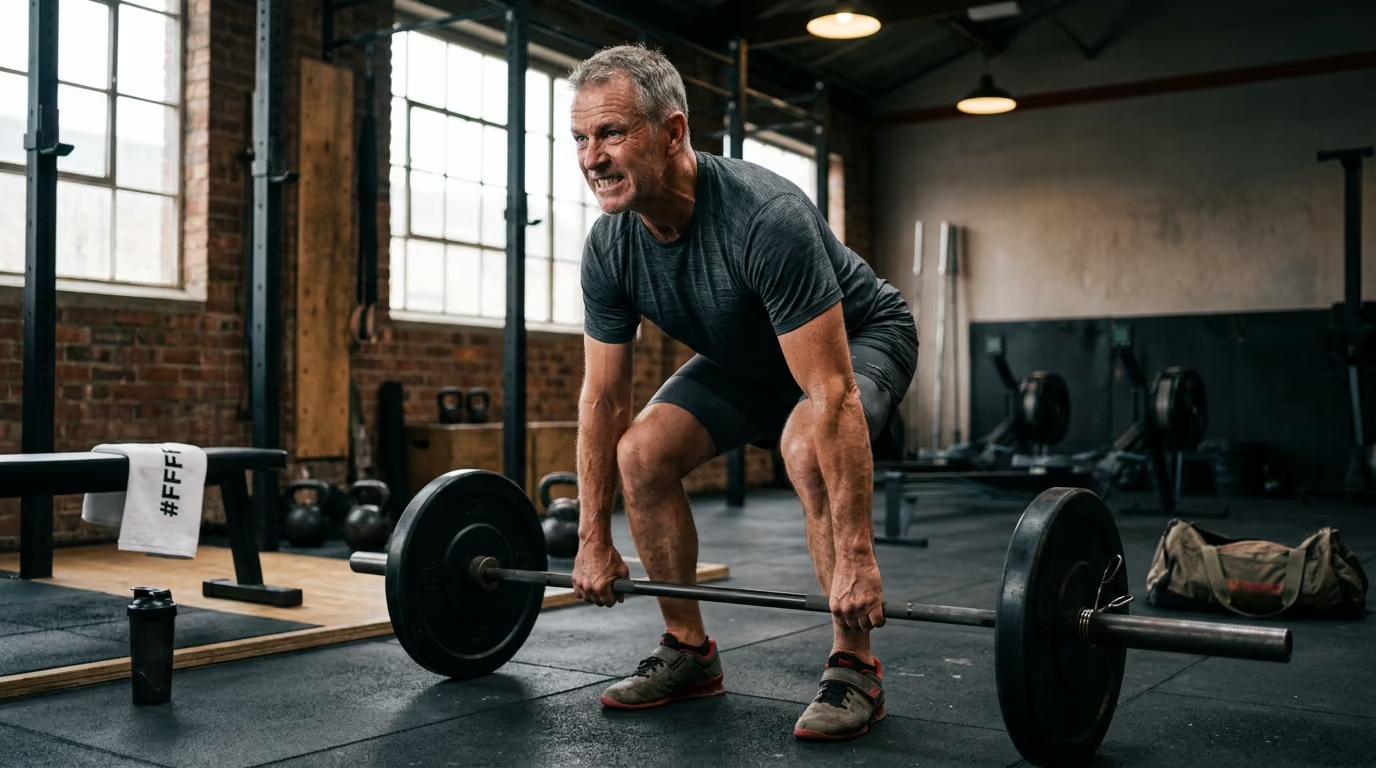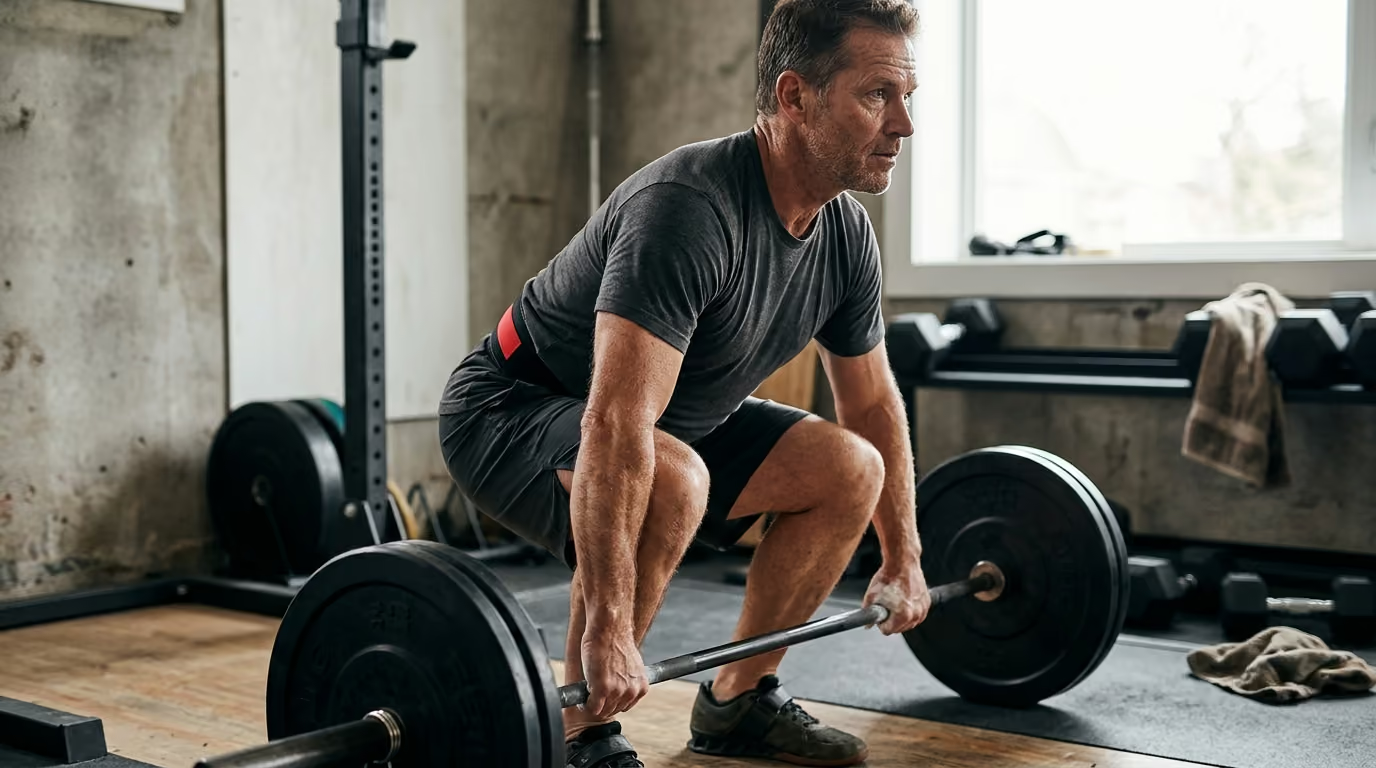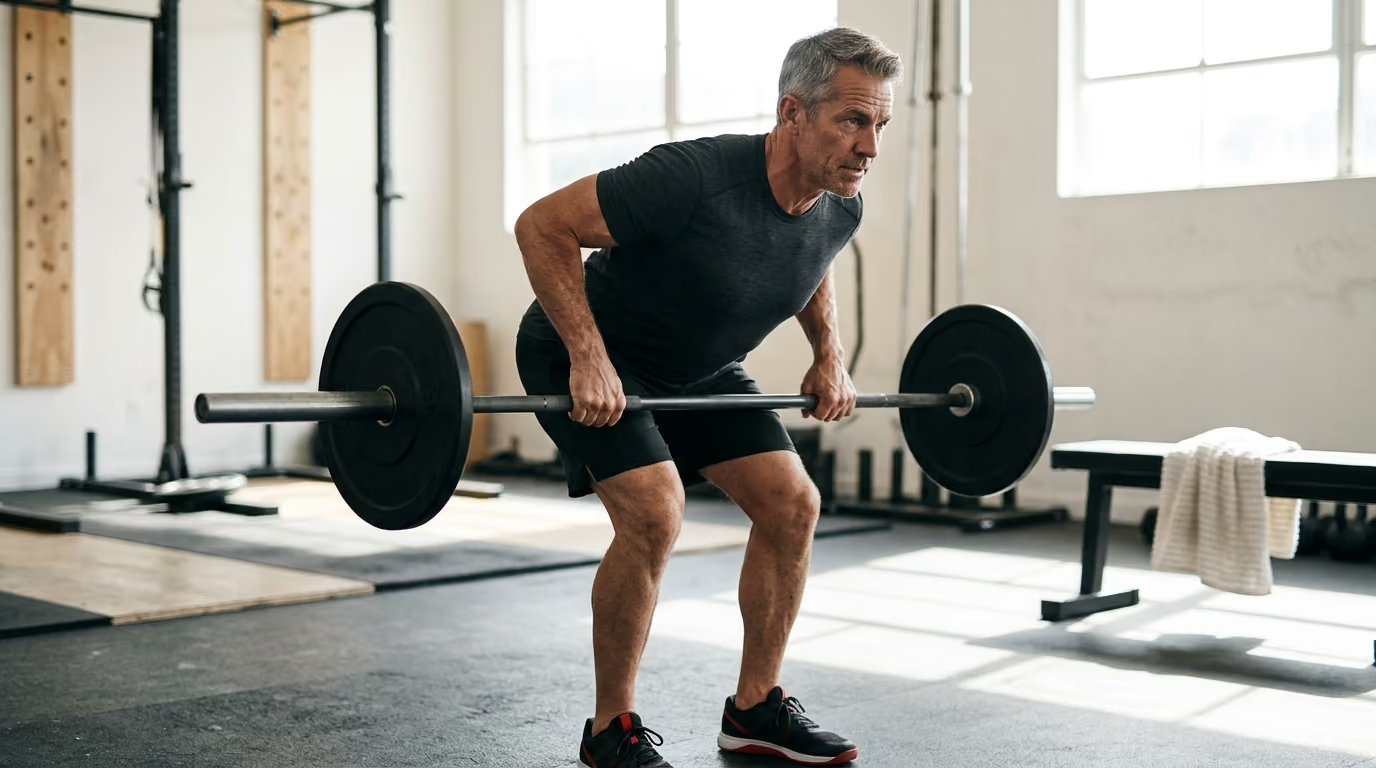
Many men search online for solutions to aching lower backs, stiff hips, or a feeling that their legs lose power on uphill trails. When you sit for long hours and train without a clear plan, the muscles along the back of your body lose tone and coordination. This definitive guide provides an evidence-based roadmap to rebuild your posterior chain, restore your lifting strength, and protect your physical independence after 45.
Scientific Evidence on Posterior Chain Adaptation and Strength
The muscles along the back side of your body form an interconnected system. This system includes the gluteal muscles, hamstrings, spinal erectors, and upper back. Research confirms that these muscles respond positively to progressive resistance exercise at any age.
Clinical trials in older adults show that strength training produces meaningful gains in force production. In systematic reviews of structured resistance programs lasting at least six weeks, participants achieved substantial improvements in muscle strength compared to inactive controls. The data show that muscle tissue retains its biological ability to adapt, rebuild, and generate force well into later life.
Force production is only one piece of the puzzle. The speed at which your muscles produce force, known as the rate of force development, is equally important. Systematic reviews demonstrate that resistance training improves maximum strength by roughly 18 percent and the rate of force development by over 26 percent in healthy older adults. These two qualities follow different timelines and require specific training stimuli.
Major public health bodies confirm these findings. Global guidelines from the World Health Organization recommend that all adults perform muscle-strengthening activities involving all major muscle groups on at least two days each week. For older adults, the guidelines recommend varied physical activity on three or more days per week to support balance, build functional capacity, and reduce fall risks. Consistent posterior chain training directly fulfills these requirements.
Anatomical Mechanics and Midlife Musculoskeletal Shifts
The posterior chain is not a single muscle group. It is a linked network of muscles that coordinates movement from your heels to your neck. Understanding the key regions helps you target them correctly during exercise.
The Gluteal Complex
The gluteus maximus is the largest muscle in the body and serves as the primary hip extensor. It controls pelvic stability and generates forward propulsion during walking, running, and climbing. The gluteus medius and minimus sit on the outer hip, stabilizing the pelvis when you stand on one leg. Deep hip rotators support joint alignment and manage rotational forces during complex movements.
The Hamstring Group
The hamstrings consist of the biceps femoris, semitendinosus, and semimembranosus. These muscles cross both the hip and the knee joints. They extend the hip and flex the knee while decelerating forward motion during gait. Balanced hamstring strength helps protect the knees and supports the pelvis during heavy lifts.
Spinal Erectors and Deep Trunk Muscles
The erector spinae run along the spine from the sacrum to the base of the skull. Their primary job during lifting is not constant movement, but resisting spinal flexion under load. They work alongside deep abdominal muscles to create an isometric brace. This brace stabilizes the torso while the hips and legs drive through the floor.
The Upper Back and Scapular Stabilizers
The upper back includes the trapezius, rhomboids, posterior deltoids, and latissimus dorsi. These muscles create a firm platform for holding weights and maintaining upper body position. They transmit force between your arms and your torso during carries, rows, and deadlifts.
Physiological Changes After 45
Aging brings specific changes to muscular and nervous system tissue. Muscle power often declines faster than absolute strength. This shift happens because fast-twitch muscle fibers, which generate rapid bursts of force, experience a gradual reduction in size and recruitment efficiency.
Tendon stiffness and joint lubrication also shift over time. Connective tissues adapt more slowly to mechanical stress than muscle bellies do. This means training programs for men's health after 45 must balance progressive overload with sufficient joint recovery.
Functional Demands in Daily Life, Hiking, and Lifting
A strong posterior chain is practical. It provides the mechanical foundation for almost every physical task you perform outside the gym.
Real-World Lifting Capacity
Lifting a heavy box from the floor requires coordinated hip extension. When the glutes and hamstrings are weak, the body compensates by bending through the lower back. Strengthening the hip hinge pattern teaches your body to distribute mechanical stress across large, resilient muscle groups instead of overloading the lumbar spine.
Outdoor Capability and Hiking
Hiking over uneven ground places high demands on the back of the body. Uphill walking requires continuous power from the gluteus maximus and calves. Stepping over roots, rocks, and ledges demands single-leg balance from the gluteus medius.
Downhill hiking creates strong eccentric forces that the hamstrings and quadriceps must absorb. A resilient posterior chain provides the braking power needed to descend steep trails safely. When you carry a loaded backpack, the spinal erectors and upper back muscles must maintain posture for hours at a time.
Posture and Daily Physical Energy
Prolonged sitting keeps the hips flexed and the upper back rounded for hours. Over time, this position can reduce your awareness of glute recruitment and cause fatigue in postural muscles. Posterior chain training restores strength to the upper back and hip extensors, making it easier to stand tall and move freely. You can learn more about managing joint comfort through functional movement and joint health principles.
Exercise Classifications and Movement Progressions
Building a complete training program requires organizing exercises by movement pattern rather than isolated body parts. Relying on a single exercise leaves gaps in your strength and physical capacity.
Hip-Hinge Progressions
The hip hinge is the primary pattern for loading the hips while keeping the spine stable.
- Level 1: Dowel Hip Hinge or Cable Pull-Through
- Level 2: Elevated Kettlebell Deadlift or Dumbbell Romanian Deadlift
- Level 3: Barbell Romanian Deadlift or Trap-Bar Deadlift
Beginners should practice the dowel hinge against a wall to learn the feeling of pushing the hips backward. Progress to an elevated kettlebell deadlift to build confidence with external weight. Advanced lifters can use trap-bar deadlifts or Romanian deadlifts to build high levels of hinge strength. Electromyographic research shows that Romanian deadlifts emphasize the hamstrings, while trap-bar deadlifts distribute force across the glutes, hamstrings, and quadriceps.
Direct Hip-Extension Progressions
Direct hip extension builds glute strength with minimal stress on the lower back.
- Level 1: Bodyweight Glute Bridge
- Level 2: Single-Leg Glute Bridge or Banded Hip Thrust
- Level 3: Barbell Hip Thrust
The barbell hip thrust places peak mechanical tension on the gluteus maximus at full extension. Research confirms that hip thrusts produce exceptionally high glute muscle activation compared to traditional squats. Pairing hip thrusts with hinge movements creates a balanced stimulus for the entire pelvic complex.
Unilateral Lower-Body Progressions
Single-leg training improves pelvic stability and corrects strength differences between sides.
- Level 1: Supported Split Squat
- Level 2: Low Box Step-Up or Reverse Lunge
- Level 3: Single-Leg Romanian Deadlift or Deficit Step-Up
Step-up variations show some of the highest gluteus maximus activation levels in clinical literature. Focus on controlled foot placement and avoid pushing off aggressively with the back leg. Keep the torso stable and drive through the heel of the working leg.
Hamstring Knee-Flexion Progressions
The hamstrings cross two joints, so they require both hip extension and knee flexion exercises.
- Level 1: Stability-Ball Leg Curl
- Level 2: Slider Leg Curl or Seated Machine Curl
- Level 3: Assisted Nordic Hamstring Curl
Seated and lying machine leg curls isolate the hamstrings through knee flexion. The Nordic hamstring curl provides a powerful eccentric overload. Eccentric hamstring training helps build muscle architecture, but it causes significant soreness. Start with small volumes and assisted variations before attempting full repetitions.
Upper-Back and Pulling Progressions
Upper-back training provides structural support for the neck, shoulders, and rib cage.
- Horizontal Pulling: Chest-Supported Dumbbell Row, Seated Cable Row, One-Arm Dumbbell Row
- Vertical Pulling: Scapular Pulldown, Lat Pulldown, Neutral-Grip Chin-Up
- Scapular Isolation: Face Pull, Prone Y-Raise, Reverse Fly
Chest-supported rows allow you to train the upper back hard without fatiguing your lower spine. Face pulls and reverse flies target the rear deltoids and external rotators, balancing the pushing movements common in daily life.
Loaded Carries and Trunk Control
Carries build real-world work capacity, grip strength, and core stability.
- Symmetrical Loading: Two-Arm Farmer Carry, Trap-Bar Carry
- Asymmetrical Loading: Single-Arm Suitcase Carry
- Postural Loading: Front-Racked Kettlebell Carry
Suitcase carries force the deep trunk muscles and lateral hip stabilizers to resist sideways bending. Perform carries with a deliberate walking pace, tall posture, and controlled breathing. You can find detailed guidance in our articles on building muscle after 45.
Power Development and Dynamic Movement Strategies
Strength represents the total force you can generate. Power represents how quickly you can apply that force. Because power drops rapidly during midlife, including dynamic work helps preserve athletic ability and reaction speed.
Why Speed and Intent Matter
Power training teaches the nervous system to recruit high-threshold motor units rapidly. This speed helps you recover your footing after a trip, step quickly over obstacles, or accelerate up a steep trail. Power training also stimulates muscle fibers without requiring grinding repetitions that stress your joints.
Safe Power Progressions for Mature Lifters
You do not need high-impact plyometrics to build power. Moderate loads moved with maximum speed produce excellent adaptations with low joint impact.
- Rapid Sit-to-Stand: Stand up from a sturdy bench as quickly as possible, pause, and lower under control.
- Medicine-Ball Slams and Throws: Perform overhead slams or rotational scoop throws against a solid wall.
- Kettlebell Deadlift with Intent: Accelerate a moderate weight from the floor to lockout as quickly as technique allows.
- Kettlebell Swings: Use the hips to snap the weight forward without pulling with the arms.
- Sled Pushes: Push a weighted sled over short distances with rapid leg drive.
Position statements from the American College of Sports Medicine show that training with 30 to 70 percent of your one-repetition maximum at high movement speeds effectively builds muscular power. Stop every power set when your speed drops noticeably.
Program Design Frameworks for Varied Experience Levels
An effective routine balances stimulus and recovery. The following programs use sensible volume, clear progressions, and built-in rest to deliver consistent results.
The Beginner Two-Day Foundation Routine
This template suits men who are new to lifting or returning after a long break. Perform these sessions on non-consecutive days, such as Tuesday and Friday.
Session A
- Elevated Kettlebell Deadlift: 3 sets of 6 to 8 repetitions
- Supported Split Squat: 2 sets of 8 repetitions per side
- Chest-Supported Dumbbell Row: 3 sets of 8 to 12 repetitions
- Glute Bridge: 2 sets of 10 to 15 repetitions
- Suitcase Carry: 3 sets of 30 meters per side
- Bird Dog: 2 sets of 6 controlled repetitions per side
Session B
- Dumbbell Romanian Deadlift: 3 sets of 8 repetitions
- Low Box Step-Up: 2 sets of 8 repetitions per side
- Seated Leg Curl: 2 sets of 10 to 12 repetitions
- Neutral-Grip Lat Pulldown: 3 sets of 8 to 10 repetitions
- Roman Chair Isometric Hold: 2 sets of 20 seconds
- Side Plank: 2 sets of 15 to 20 seconds per side
The Intermediate Three-Day Strength and Hiking Capacity Template
This routine suits experienced lifters who want to build strength while preparing for outdoor activities.
Day 1: Hinge and Horizontal Pull
- Trap-Bar Deadlift: 3 sets of 5 repetitions
- Dumbbell Romanian Deadlift: 3 sets of 8 repetitions
- Chest-Supported Row: 3 sets of 8 to 10 repetitions
- Reverse Lunge: 2 sets of 8 repetitions per side
- Farmer Carry: 3 sets of 40 meters
Day 2: Hip Extension and Unilateral Volume
- Barbell Hip Thrust: 3 sets of 8 repetitions
- Dumbbell Step-Up: 3 sets of 8 repetitions per side
- Seated Leg Curl: 3 sets of 10 to 12 repetitions
- Neutral-Grip Pull-Up or Pulldown: 3 sets of 6 to 8 repetitions
- Face Pull: 3 sets of 12 to 15 repetitions
- Suitcase Carry: 3 sets of 30 meters per side
Day 3: Power, Trunk, and Capacity
- Medicine-Ball Scoop Throw: 4 sets of 4 throws
- Kettlebell Swing: 4 sets of 8 repetitions
- Sled Push or Incline Treadmill Walk: 6 to 8 short intervals
- Back Extension on Roman Chair: 2 sets of 12 repetitions
- Pallof Press: 3 sets of 10 repetitions per side
Progression Strategies
Use the double-progression method to increase weights safely. Choose a target repetition range, such as 6 to 10 repetitions. Start with a weight you can lift for 6 clean repetitions.
Work with that exact weight over subsequent workouts until you can complete 10 clean repetitions across all sets. Once you achieve this benchmark, increase the weight by 5 to 10 percent and return to 6 repetitions. This approach eliminates guesswork and prevents you from increasing loads too quickly.
Manage your effort using the repetitions-in-reserve method. Most working sets should end with 2 to 3 repetitions left in reserve. Stopping short of muscular failure protects your joint health, maintains lifting form, and shortens your recovery time between workouts.
Clinical Modifications and Common Orthopedic Scenarios
Every man over 45 carries an individual physical history. Modifying exercises based on your joints allows you to train consistently without flare-ups.
Managing Low Back Sensitivity
If standard deadlifts cause lower back stiffness, modify the range of motion. Elevating the bar onto blocks or using a trap bar reduces forward torso lean and decreases shearing forces on the lumbar spine.
Chest-supported rows remove spinal loading while allowing you to train the upper back with heavy weights. Avoid pushing through sharp, localized back pain. Prioritize isometric trunk stability exercises like bird dogs, side planks, and carries.
Knee Joint Comfort and Osteoarthritis
Men with knee joint discomfort often tolerate hip-hinge movements exceptionally well because hinges place primary tension on the hips rather than the knees. When performing single-leg work, choose reverse lunges instead of forward lunges. Step-ups to a lower box also keep joint stress manageable. Control the eccentric lowering phase to avoid sudden joint impacts.
Shoulder and Neck Considerations
Heavy straight-bar deadlifts and standard chin-ups can irritate sensitive shoulders or elbows. Using a neutral grip on pulldowns and rows reduces stress on the rotator cuff and biceps tendons. Trap-bar deadlifts keep your hands in a neutral position, making the lift much more comfortable for the neck and upper shoulders.
The Desk-Bound Worker
Long hours at a desk can make it harder to feel the glutes working during exercise. Include active warm-up drills before lifting.
- Warm-Up Step 1: 10 Bodyweight Glute Bridges with a 2-second hold at the top
- Warm-Up Step 2: 8 Bodyweight Dowel Hinges to groove the hip pattern
- Warm-Up Step 3: 6 Bird Dogs per side to engage the trunk stabilizers
These simple drills prepare your nervous system for heavier loads. Learn more about tissue preparation in our guide to mobility and recovery strategies.
Common Misconceptions in Posterior Chain Training
Misunderstandings about posterior chain training can stall progress or cause unnecessary frustration. Here are four common claims that the evidence does not support.
The Deadlift Alone Trains Everything
The deadlift is an outstanding compound movement, but it does not fully address every posterior chain function. Deadlifts train the hamstrings primarily through hip extension, leaving out the knee flexion component.
Deadlifts also provide little lateral hip stabilization and do not challenge the upper back through a full active range of pulling motion. A balanced program must include rows, pulldowns, knee flexion curls, and single-leg exercises alongside the hinge.
Men Over 45 Should Only Use High Repetitions and Light Weights
Lifting very light weights for high repetitions builds local muscular endurance, but it is not the only way to train safely. Research shows that older adults achieve superior strength gains when using moderate to heavy loads between 70 and 85 percent of their one-repetition maximum. Heavy training builds bone density, strengthens connective tissues, and preserves high-threshold muscle fibers. The key is to earn the right to lift heavy through sound technique and gradual progression.
Stretching Is the Only Fix for Tight Hamstrings
Many men spend hours stretching their hamstrings with little lasting change. Sensation of tightness often stems from weakness at long muscle lengths or protective neural tone from poor pelvic control.
Strengthening the hamstrings eccentrically through Romanian deadlifts and slider curls often improves functional range of motion more effectively than passive stretching. Resistance training through a full active range teaches the nervous system that the new range is safe and stable.
Power Training Requires Heavy Jumps
Power does not require jumping onto high boxes or landing with high impact. You can train power effectively using medicine balls, kettlebells, resistance bands, and rapid concentric lifting with submaximal weights. These low-impact options deliver the neural benefits of speed training while keeping joint impact low.
Evidence Limitations and Practical Recovery Factors
While the benefits of resistance training are well established, scientific evidence has specific limits that require a pragmatic approach.
Electromyography Versus Long-Term Hypertrophy
Many exercise recommendations rely on electromyography studies that measure acute electrical activity in muscles. While these measurements show how hard a muscle works during a specific movement, they do not guarantee long-term muscle growth or real-world performance transfer.
Exercise selection should balance muscle activation with joint comfort, ease of loading, and movement quality. Do not choose an exercise simply because an electromyography chart ranks it high if it causes joint discomfort.
Eccentric Hamstring Training and Compliance
Clinical trials demonstrate that eccentric exercises like Nordic hamstring curls can reduce muscle strain injuries. However, these studies often show low participant compliance because the movement causes intense muscle soreness.
In the real world, a moderate hamstring exercise that you perform consistently is far more valuable than an advanced movement you abandon after two weeks. Build your volume slowly to match your body's recovery rate.
Nutritional Support and Protein Intake
Training stimulus must be paired with adequate nutritional support to yield results. As we age, muscle tissue becomes less sensitive to protein intake, a phenomenon known as anabolic resistance.
- General Active Adults: 1.2 to 1.6 grams of protein per kilogram of body weight daily
- Target for Men Over 45: Aim for 25 to 40 grams of quality protein per meal
The PROT-AGE Study Group recommends that older adults consume 1.0 to 1.2 grams of protein per kilogram of body weight daily, increasing to at least 1.2 grams per kilogram for active individuals. Distribute your protein across three or four meals to provide a steady supply of amino acids for muscle repair. Pair your strength work with sensible metabolic conditioning to support cardiovascular health and daily energy.
Sleep, Fatigue, and Total Stress
Your muscles do not grow during workouts. They adapt during deep sleep and rest periods. Chronic workplace stress, poor sleep quality, and excessive training volume can outpace your body's ability to recover.
If your resting joints ache or your morning energy drops consistently, reduce your training volume by 30 percent for one week. A scheduled deload week every six to eight weeks helps clear accumulated fatigue and prepares your tissues for future progress.
The Takeaway
A strong posterior chain provides the mechanical foundation for your posture, outdoor capability, and physical independence after 45. By training the hip hinge, direct hip extension, pulling patterns, and low-impact power twice weekly, you can build a resilient body that performs reliably in daily life.
Next Steps: What to Do This Week
- Audit Your Current Routine: Review your weekly training to see if you include direct hip extension, knee flexion, and horizontal pulling alongside your standard lifts.
- Master the Hinge Pattern: Practice the wall dowel hinge or cable pull-through for 3 sets of 8 repetitions to groove your hip mechanics before adding heavy weight.
- Add One Unilateral Exercise: Introduce low box step-ups or reverse lunges into your next workout to build single-leg balance and lateral hip strength.
- Schedule Your Sessions: Commit to two weekly posterior chain sessions spaced at least 48 to 72 hours apart to allow for complete muscular and connective tissue recovery.
- Track Your Protein: Check your daily meals to verify you hit at least 1.2 grams of protein per kilogram of body weight to support muscle remodeling.
Sources
- World Health Organization 2020 guidelines on physical ... - PMC
- 2020 WHO guidelines on physical activity and sedentary behavior - PMC
- World Health Organization 2020 guidelines on physical ...
- RECOMMENDATIONS - WHO Guidelines on Physical Activity ...
- a position paper from the PROT-AGE Study Group - PubMed - NIH
Stay sharp
Get the word
Join our newsletter for the best writing advice and stories from the field.