You drop your luggage on the hotel room floor at nine in the evening. Your flight was delayed, your lower back feels compressed from hours in a narrow seat, and the hotel gym closed thirty minutes ago. The routine you built over the past six months suddenly feels out of reach. It is easy to assume that missing a week of regular barbell work or heavy machine training will undo your progress.
That fear is unfounded. Preserving physical capability during travel, busy work stretches, or minor disruptions requires far less volume than building new capacity. When normal training is interrupted, your goal shifts from chasing new adaptations to protecting what you already own. Understanding how little work is needed to protect muscle and power keeps you consistent, calm, and physically capable.
What the Research Shows About Minimal Training
Scientific reviews on training volume show that strength maintenance is not an all-or-nothing process. Research on minimal-dose training demonstrates that younger adults can maintain muscular strength and muscle size for up to 32 weeks with just one session per week. In those trials, performing a single hard set per exercise was enough, provided the training intensity remained high.
Intensity in this context refers to relative effort rather than the absolute number of pounds on a bar. When you reduce weekly training volume by up to two-thirds, your muscles retain their adaptations if the remaining sets are taken close to technical failure. A set of bodyweight split squats or heavy band presses taken near fatigue provides a potent stimulus. The nervous system and muscle fibers respond to the effort level.
The research also shows clear differences when looking at training frequency. A review examining in-season athletes found that lifting once per week maintained muscular strength over 12 weeks. Training only once every two weeks led to an average ten percent drop in squat strength over the same timeframe. Missing a few days here and there will not harm you, but spacing workouts two weeks apart leads to measurable declines in force output.
Short-term detraining studies provide further reassurance for busy periods. Research on resistance-trained men shows that two full weeks of complete rest produces minimal loss in lower-body strength. Other studies show that while maximal power might dip slightly after two weeks off, muscular capacity remains well above pre-training levels. Your training base creates a buffer that protects your physical capabilities during short interruptions.
Why Strength Maintenance Changes After 45
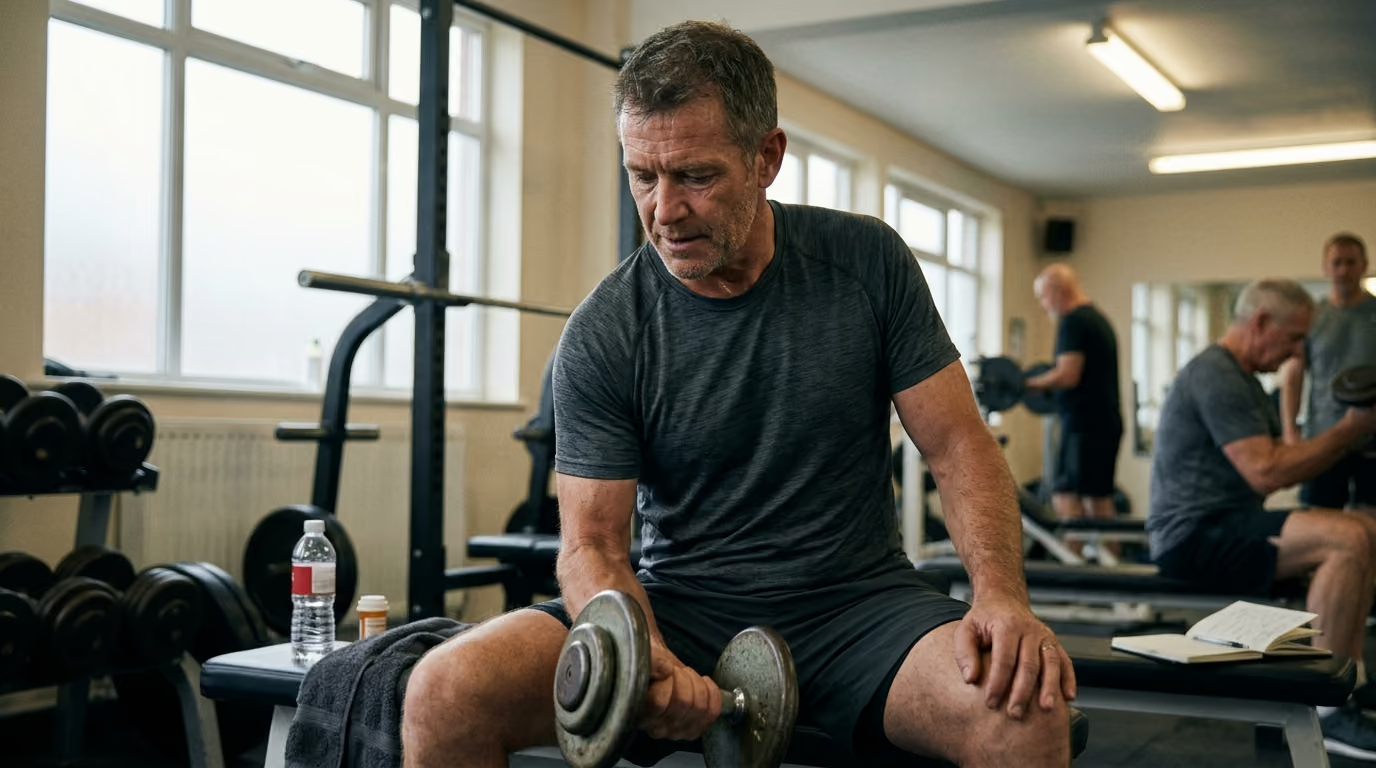
Maintaining physical capacity remains completely achievable as you get older, but the underlying physiology shifts. Muscle protein breakdown and synthesis operate differently in midlife. Men over 45 experience subtle changes in anabolic sensitivity, meaning muscle tissue requires a clearer, more deliberate signal to retain its size and function.
Motor unit recruitment also demands consistent practice. The nervous system controls how efficiently your brain signals muscle fibers to produce force. When you stop training completely, the initial drop in strength comes from reduced neural drive rather than immediate muscle loss. Regular physical exposures keep those neural pathways active, preventing the feeling of sluggishness that often follows time away from the gym.
Joint tolerance and connective tissue recovery also change. Tendons and ligaments adapt more slowly to sudden spikes in volume after a layoff. If you take three weeks completely off and jump straight back into heavy barbell work, your connective tissues face unnecessary strain. Keeping a baseline of movement tension through practical strength and muscle training protects your joints and maintains tissue tolerance.
Because of these biological realities, men over 45 benefit from slightly more frequent exposures than twenty-year-olds. While a young lifter might hold muscle on a single set once a week, research indicates older adults maintain muscle mass better with two weekly sessions. Doing two or three challenging sets per movement pattern twice per week provides the necessary stimulus to protect your frame without creating excess fatigue.
What It Means in Real Life
Translating the science to daily life removes the stress of disrupted routines. When you travel or face seventy-hour work weeks, you do not need ninety minutes in a commercial gym. You only need to protect four distinct physical qualities.
Performance Maintenance
Performance maintenance is the ability to display high force in specific lifts. If your priority is your heavy back squat or bench press, you need to retain the specific coordination for those lifts. When you cannot access a barbell, you protect the underlying movement pattern by training similar joint actions against challenging resistance.
Muscle Size Maintenance
Protecting muscle mass requires adequate mechanical tension on the target muscle fibers. You do not need heavy iron plates to create this tension. A resistance band, a heavy suitcase, or single-leg bodyweight work can recruit the same high-threshold motor units. As long as the set finishes within one to three repetitions of technical failure, your muscle tissue receives the signal to stay.
Work Capacity and Mobility
Capacity maintenance involves your stamina, joint mobility, and movement confidence. Sitting in airplanes, cars, or conference rooms stiffens the hips and thoracic spine. Performing brief full-body circuits keeps your joints moving through their full range of motion. It also preserves your baseline conditioning so returning to the gym does not feel overwhelming.
Movement Skill Familiarity
Lifting weights is a skill. When you take extended time away, your balance, bracing mechanics, and bar path feel foreign. Doing basic bodyweight hinges, squats, and push-ups keeps your movement patterns sharp. When you return to your standard gym setup, your coordination remains intact.
The Strength Maintenance Hierarchy
When your time and resources are limited, you must prioritize your efforts. Trying to fit an entire six-day bodybuilding split into a fifteen-minute hotel session creates frustration. Using a structured hierarchy allows you to get the highest return on your invested effort.
Tier 1: Safety and Recovery Status
Before picking up a band or dropping down for push-ups, assess your systemic readiness. If you are recovering from a fever, dealing with severe sleep deprivation, or fighting a respiratory illness, intense exercise works against you. Maintenance during active illness means prioritizing rest, hydration, and gentle mobility. Training hard while your immune system is compromised increases systemic stress and delays your recovery.
Tier 2: Preserve Core Movement Patterns
A short maintenance session should train the largest amount of muscle mass in the shortest time. Focus on fundamental human movement patterns:
- A knee-dominant pattern such as a split squat or goblet squat.
- A hip-dominant hinge such as a single-leg deadlift or backpack hinge.
- An upper-body horizontal push such as a push-up variation.
- An upper-body pull such as a resistance-band row or doorframe pull.
- A loaded carry or trunk bracing exercise.
Covering these fundamental patterns ensures every major muscle group receives an adequate stimulus. You can review more movement guides in our strength and physical performance library.
Tier 3: Preserve Relative Effort
When total weekly sets drop from twelve per muscle group down to three, the quality of each set matters. You cannot breeze through light repetitions and expect to maintain physical adaptations. You must bring the working sets close to technical failure. If you are using lighter implements like bands or bodyweight, adjust your tempo or use unilateral exercises to make the sets demanding.
Tier 4: Retain Movement Coordination
Keep your movement intent high. When you push, row, or squat, move the weight or your body with control on the lowering phase and intent on the lifting phase. This preserves the nervous system's ability to produce force rapidly.
Tier 5: Add Volume Only When Resources Allow
Volume is the easiest training variable to scale back during travel and the easiest to rebuild later. If you have extra time and energy, add a second or third set to your exercises. If you are exhausted or pressed for time, complete one high-quality set per pattern and move on with your day.
Practical Exercise Substitutions
When you lack your regular equipment, the goal is not to find an exercise that looks identical to your gym lift. The goal is to match the muscular function, joint angles, and mechanical demands.
Squat Substitutions
Replacing a heavy back squat requires creating high mechanical load without hundreds of pounds on your spine.
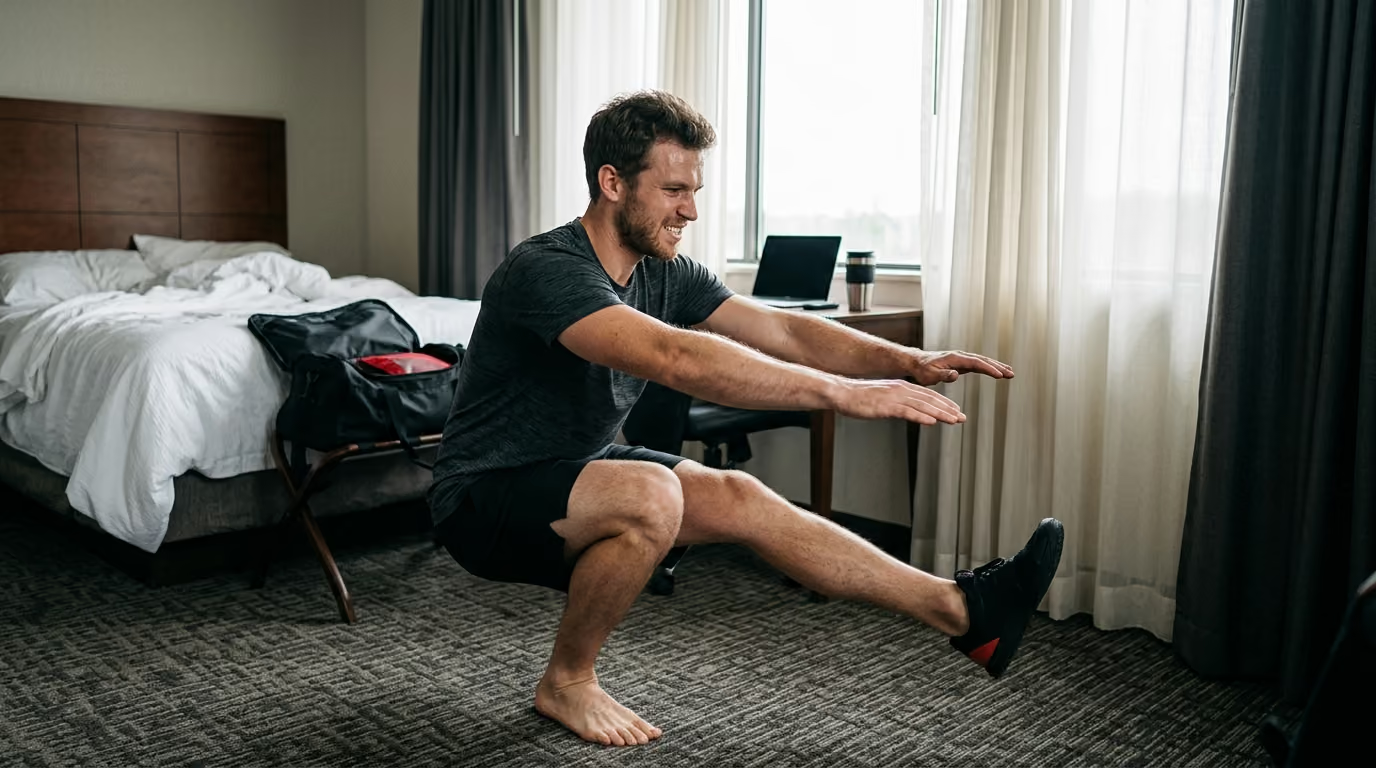
- Split Squats and Lunges: Shifting from bilateral squats to single-leg work instantly doubles the relative load on the working leg. Keep your front foot flat, drop your back knee toward the floor, and drive through your midfoot.
- Rear-Foot-Elevated Split Squats: Placing your rear foot on a hotel bed or chair places almost all your body weight on the front leg. This variation challenges the quadriceps and glutes through a deep range of motion.
- Loaded Backpack Squats: Pack your travel bag with books, water bottles, or laptops. Wear it on your back or hold it against your chest for added resistance.
- Tempo and Pause Squats: Slow your descent to four seconds, hold the bottom position for two seconds, and stand up smoothly. This removes momentum and creates high muscular tension without external load.
Hip Hinge Substitutions
The hip hinge protects the posterior chain, hamstrings, and lower back.
- Single-Leg Romanian Deadlifts: Stand on one leg with a slight bend in the knee. Push your hips backward while keeping your spine straight and reach your opposite leg behind you.
- Suitcase or Backpack Deadlifts: Load your heaviest travel bag. Stand with your feet hip-width apart, hinge deeply at the hips, grip the bag handle, and stand up by driving your hips forward.
- Banded Good Mornings: Stand on a looped resistance band and place the other end over your neck and shoulders. Hinge backward against the band tension, feeling the stretch in your hamstrings, then snap your hips forward to lock out.
Upper-Body Push Substitutions
Pushing strength is straightforward to maintain anywhere using your own bodyweight and simple leverage changes.
- Standard and Deficit Push-Ups: Place your hands flat on the floor or elevate your hands on books to allow a deeper stretch at the bottom of the movement.
- Feet-Elevated Push-Ups: Place your toes on the edge of a bed or chair. This shifts more weight onto your shoulders and upper chest, increasing the relative load.
- Band-Resisted Push-Ups: Wrap a loop band behind your upper back, hold the ends in your palms, and perform standard push-ups. The band increases resistance at the top of the stroke.
- Pike Push-Ups: Elevate your hips into an inverted V-position and lower your head toward the floor between your hands. This targets the shoulders and triceps, mimicking an overhead press.
Upper-Body Pull Substitutions
Pulling movements are the most common challenge in a hotel room because you lack barbells, dumbbells, or pull-up bars.
- Doorframe Rows: Stand facing a sturdy doorway, grip the door frame with both hands, place your feet close to the base, lean back, and pull your chest toward the frame.
- Resistance-Band Rows: Loop a heavy band around your feet while seated on the floor, or anchor it to a solid structural post. Pull your elbows back along your ribcage while squeezing your shoulder blades together.
- Single-Arm Luggage Rows: Place one hand on a sturdy desk or bed frame. Hinge forward at the hips, grip your suitcase handle with the other hand, and row the weight to your hip.
- Band Pulldowns: If you have an overhead anchor point or tall door setup, perform kneeling band pulldowns to train the latissimus dorsi.
Loaded Carry and Trunk Substitutions
Trunk stability and grip strength can be preserved with simple asymmetric loads.
- Suitcase Carries: Pick up your heaviest piece of luggage in one hand. Walk tall down a long hallway or march in place for sixty seconds without leaning to either side.
- Front-Loaded Backpack Marches: Hold a loaded backpack tightly against your chest. March in place, lifting your knees to hip height while maintaining a rigid torso.
- Side Planks with Leg Elevation: Lie on your side supported by your forearm. Raise your hips until your body forms a straight line, then elevate your top leg to challenge your lateral hip stability.
Practical Training Frameworks for Any Schedule
You do not need an hour of free time to protect your strength. Match your available time to one of the following evidence-based routines.
The 10-Minute Emergency Session
This routine is designed for travel days when time is nearly non-existent. Perform two continuous rounds with minimal rest between exercises.
- Split Squat: 10 to 12 repetitions per leg with a controlled three-second descent.
- Push-Up: 12 to 20 repetitions, stopping two repetitions before technical breakdown.
- Backpack Romanian Deadlift: 12 to 15 repetitions with a loaded travel bag.
- Single-Arm Luggage Row: 10 to 12 repetitions per side.
- Side Plank: 30 seconds per side.
This brief circuit stimulates all major muscle groups and maintains neural recruitment without draining your energy for the rest of the day.
The 20-Minute Hotel Room Routine
This workout provides a complete maintenance stimulus using bodyweight, leverage, and standard luggage. Perform three total rounds, resting 45 to 60 seconds after each completed circuit.
- Rear-Foot-Elevated Split Squat: 8 to 10 repetitions per leg.
- Feet-Elevated Push-Up: 10 to 15 repetitions.
- Single-Leg Romanian Deadlift: 8 to 10 repetitions per leg holding luggage.
- Resistance-Band Row or Doorframe Row: 12 to 15 repetitions with a two-second pause at full contraction.
- Pike Push-Up: 6 to 10 repetitions.
- Suitcase Carry or March: 45 seconds per side.
The 30-Minute Band-and-Backpack Session
If you carry a set of loop bands in your luggage, you can run a structured, multi-block workout.
Block A: Lower Body (2 to 3 Sets)
- Banded Goblet Squats: 10 to 15 repetitions. Stand on the inside of the band and loop the top over your hands at collarbone height.
- Single-Leg Banded Deadlifts: 8 to 12 repetitions per side. Anchor the band under your front foot.
Block B: Upper Body (2 to 3 Sets)
- Band-Resisted Push-Ups: 8 to 12 repetitions.
- Seated Band Rows: 12 to 15 repetitions with maximum band tension.
- Standing Band Overhead Press: 10 to 12 repetitions.
Block C: Core and Trunk (2 Sets)
- Banded Pallof Press: 10 repetitions per side with a three-second hold out in front of your chest.
- Suitcase March: 60 seconds per arm using your loaded bag.
The Once-Weekly Maintenance Workout
If you find a local gym on your trip or have one quiet evening at home during a demanding work stretch, complete this single full-body session. Perform two to three challenging sets per exercise, using a weight that leaves one to two repetitions in reserve.
- Knee-Dominant Lift: Goblet squat, leg press, or barbell squat for 6 to 8 repetitions.
- Hip-Dominant Lift: Romanian deadlift or kettlebell swing for 8 to 10 repetitions.
- Horizontal Push: Dumbbell bench press or push-up for 8 to 12 repetitions.
- Horizontal Pull: Dumbbell row or cable row for 8 to 12 repetitions.
- Overhead Press or Vertical Pull: Overhead dumbbell press or lat pulldown for 8 to 10 repetitions.
- Loaded Carry: Farmer carry for three 40-yard trips.
This single session preserves muscle size and heavy neural recruitment for the upcoming week.
The Micro-Session Approach
When you cannot find even twenty continuous minutes, divide your daily movement into three small blocks.
- Morning Block (3 minutes): Two sets of split squats and two sets of push-ups right after waking up.
- Midday Block (3 minutes): Two sets of doorframe rows and two sets of single-leg hinges before lunch.
- Evening Block (3 minutes): Two sets of suitcase carries and side planks before dinner.
Breaking your training into micro-doses keeps your joints loose, stimulates muscle tissue, and eliminates the mental barrier of starting a formal workout.
Managing Bands and Improvised Equipment
Resistance bands are lightweight, pack easily into carry-on luggage, and provide meaningful resistance. Systematic reviews show that elastic resistance training produces strength gains comparable to conventional weight training across various populations. To get the most from bands, you must understand their unique mechanics.
An elastic band provides an ascending resistance curve. The exercise becomes harder as the band stretches toward the end of the range of motion. At the bottom of a banded squat or push-up, the band offers minimal resistance, but at the top lockout, the tension reaches its peak.
To balance this curve:
- Control the lowering phase: Lower yourself under control for three to four seconds to build muscular tension in the lengthened position.
- Use isometric pauses: Hold the bottom position for two seconds where the band is slack to force your muscles to work without assistance.
- Pre-stretch the band: Set up your anchor point or hand position so the band remains slightly taut even at the start of the movement.
- Combine bands with bodyweight: Adding a band to a standard push-up or split squat creates high tension throughout the entire movement path.
Always inspect your bands for small tears or cracks before training. Secure door anchors on the hinge side of heavy commercial doors whenever possible, and test your setup with light tension before performing working sets.
Navigating Illness, Fatigue and Returning to the Gym
Disruptions are not always caused by travel. Sickness, minor injuries, and sudden work stress can derail your normal routine. Managing these periods requires clear, practical judgment.
Illness Protocol
Never attempt to train through a systemic illness. Return-to-play medical guidelines clearly state that resistance training should be paused during active infections involving fever, body aches, general malaise, or respiratory issues. Exercising with systemic symptoms places dangerous stress on your cardiovascular system and delays tissue repair.
If you have mild, local symptoms above the neck, such as a light runny nose, gentle walking and light mobility work are appropriate. If you experience fever, chills, chest congestion, or joint aches, rest completely. You can explore structured recovery strategies in our mobility and recovery resources.
Post-Illness Progression
When your fever and systemic symptoms resolve, do not jump straight back to your previous training weights. Use a phased re-entry model:
- Phase 1: Light walking and mobility work for two to three days to evaluate energy levels.
- Phase 2: One brief bodyweight or band session at fifty percent effort.
- Phase 3: Return to the gym with half your normal volume and several repetitions in reserve.
- Phase 4: Resume regular training loads only after two consecutive symptom-free workouts.
The Re-Entry Phase After Travel
When you return home from a multi-week trip, your first gym session should not be a test of your one-repetition maximum. Travel involves sleep debt, dehydration, and schedule changes that temporarily lower your nervous system's output.
For your first week back, reduce your total sets by thirty to forty percent. Use weights you can handle with perfect form, leaving two to three repetitions in reserve on every set. This reacclimates your joints, connective tissues, and motor patterns without causing debilitating soreness. By the second week, your body will be ready for standard progressive overload.
Common Misreadings of Strength Maintenance
Several widespread myths cause unnecessary anxiety when routines get interrupted. The scientific evidence helps clear up these misunderstandings.
Myth 1: Missing Seven Days Destroys Muscle Mass
Many lifters believe that taking a week off from the gym causes rapid muscle atrophy. Muscle loss does not happen that quickly. Studies on trained adults show that muscle cross-sectional area remains stable over two weeks of rest. Any slight reduction in muscle fullness during a short break comes from depleted glycogen and water storage inside the muscle cells, not lost contractile tissue. Once you resume training and eat normally, your muscles regain their full appearance within days.
Myth 2: Training Once Every Two Weeks is Enough
Some people assume that because minimal training works well, they can space their workouts out to once every fourteen days. The research shows this is ineffective. Training every other week leads to measurable declines in maximal strength and power over time. You need a minimum of one challenging exposure every seven days to keep your neural drive and muscle adaptations stable.
Myth 3: High-Repetition Cardio Circuits Maintain Maximum Strength
Rushing through high-repetition bodyweight circuits with thirty-second rests builds cardiovascular endurance, but it does little to protect maximal strength. Strength maintenance requires high mechanical tension and motor unit recruitment. Performing sets of ten to fifteen challenging repetitions with deliberate rest periods is far more effective than exhausting yourself with hundred-rep jumping circuits.
Myth 4: Elastic Bands Cannot Maintain Real Strength
Some trainees dismiss resistance bands as light physical therapy tools. Meta-analyses examining elastic resistance demonstrate that bands produce significant strength and hypertrophy adaptations when sets are taken close to fatigue. While bands lack the exact loading feel of a heavy iron barbell, they provide more than enough mechanical stimulus to preserve your physical foundation during travel.
Where the Evidence Is Thin
While the science on minimal-dose training is robust, certain areas lack deep evidence. Being aware of these gaps prevents unrealistic expectations.
Much of the minimal-dose literature focuses on untrained individuals, general fitness participants, or younger athletic populations. High-level competitive powerlifters, Olympic weightlifters, and masters athletes with decades of training history have distinct neuromuscular demands. For an advanced lifter, a single set per week will preserve general health and basic muscle mass, but it will not completely protect top-end competition technique.
Additionally, data on older adults remains less extensive than studies on younger populations. Most evidence suggests older trainees need two weekly sessions to prevent muscle loss, but individual responses vary widely based on baseline strength, nutrition, and lifestyle factors. Long-term studies evaluating micro-dosing (three-minute sessions spread throughout the day) versus dedicated workouts are also limited.
You can learn more about how long-term biological trends impact physical performance in our healthy aging editorial section and our energy and metabolism guides.
The Practical Takeaway
Strength maintenance requires far less time and volume than building new muscle, provided you keep your relative effort high and hit your core movement patterns once or twice per week.
When your schedule falls apart or you find yourself stranded in an empty hotel room, focus on high-effort bodyweight work, resistance bands, and simple luggage movements rather than abandoning your training entirely.
When to revisit this resource: Return to this guide before business trips, family vacations, during high-stress work periods, or whenever you need to design a fast, effective routine outside your standard gym environment.
Protecting your strength is an ongoing practice of adaptability, not an all-or-nothing pursuit of perfection.
Sources
- Effects of Short-Term Dynamic Constant External Resistance Training and Subsequent Detraining on Strength of the Trained and Untrained Limbs: A Randomized Trial
- Once-a-Week Strength Training Is Enough to Maintain Muscle,…
- Resistance Training-Induced Elevations in Muscular ...
- Effects of Variations in Resistance Training Frequency on Strength ...
- Maintaining Physical Performance: The Minimal Dose of ...
- Effects of equal-volume resistance training with different ... - PMC - NIH
- The Effectiveness of Frequency-Based Resistance Training Protocols on Muscular Performance and Hypertrophy in Trained Males: A Critically Appraised Topic
- Resistance training frequency and skeletal muscle hypertrophy ...
- The time course of changes induced by resistance training ... - PMC
- Effect of Resistance Training Frequency on Gains in Muscular Strength: A Systematic Review and Meta-Analysis
Stay sharp
Get the word
Join our newsletter for the best writing advice and stories from the field.