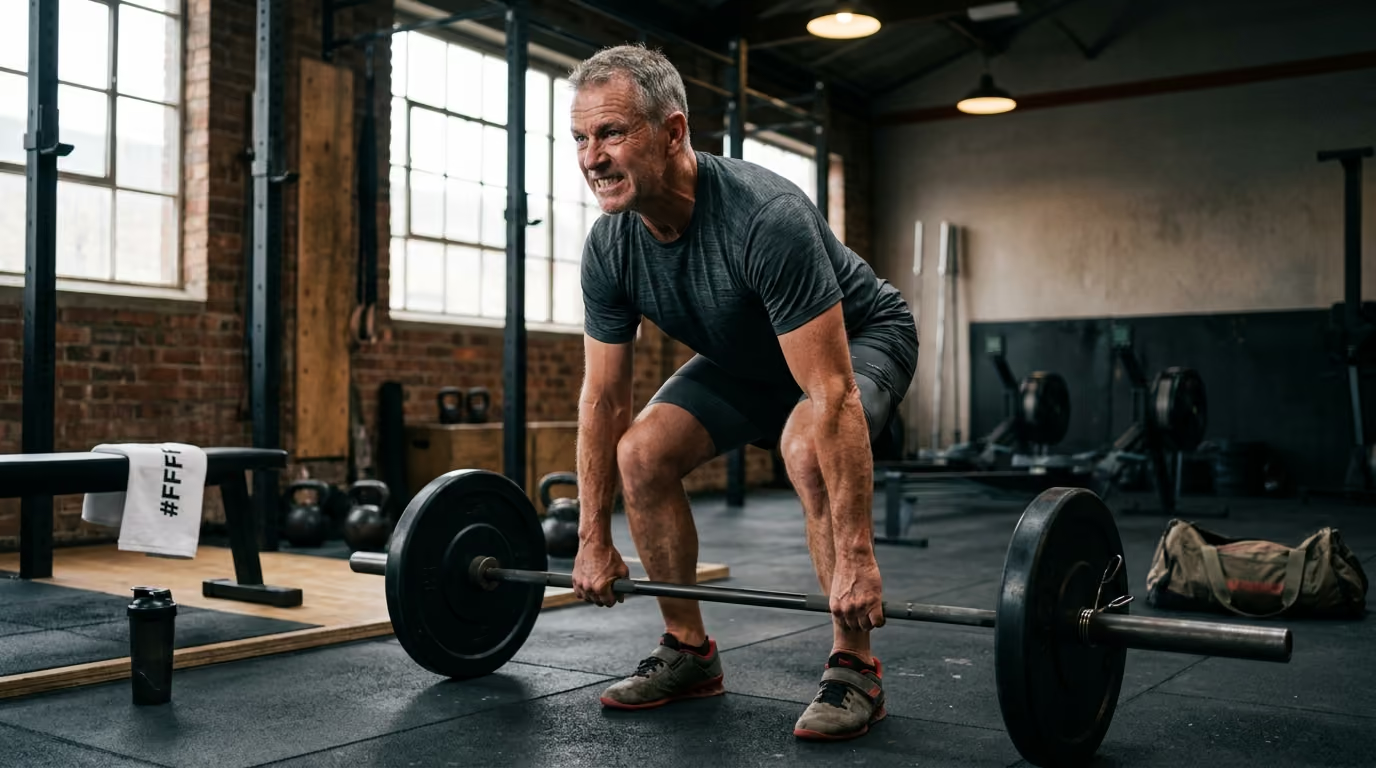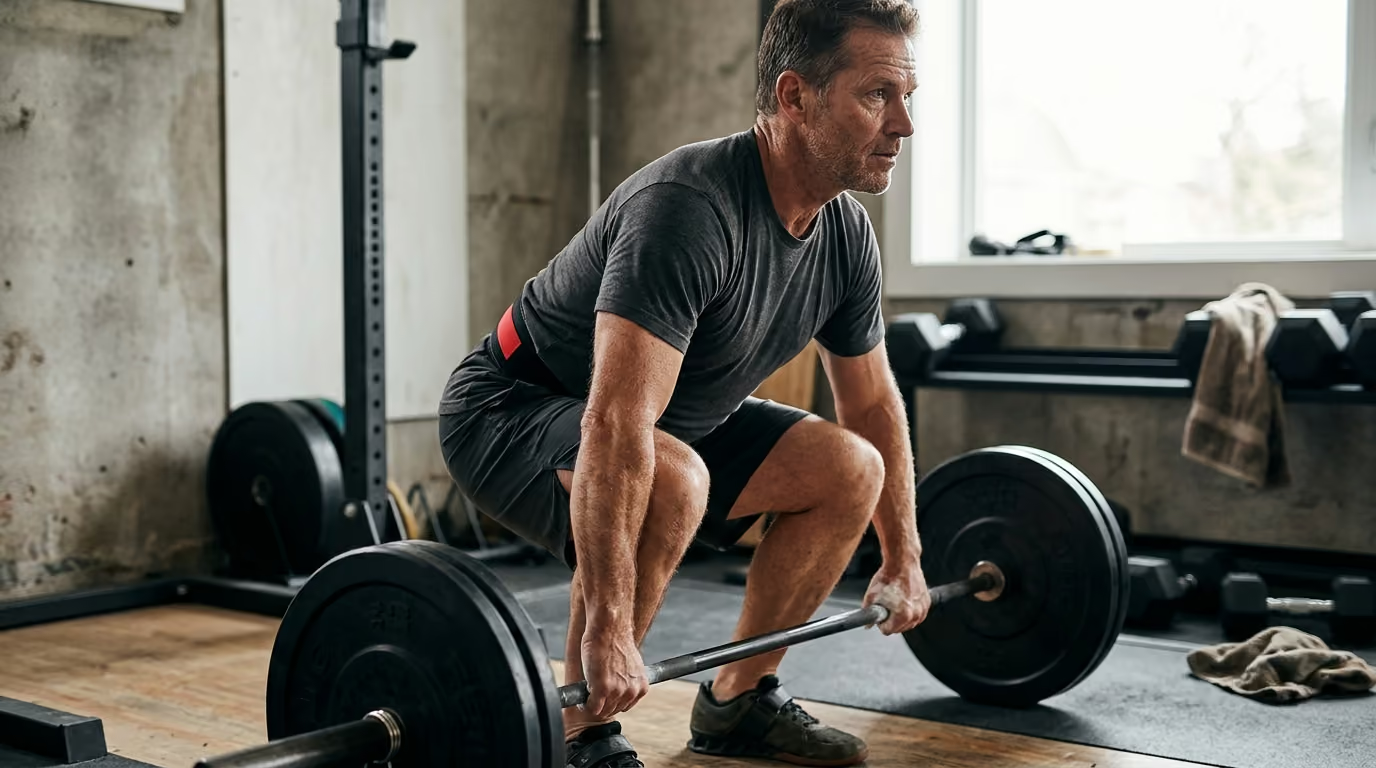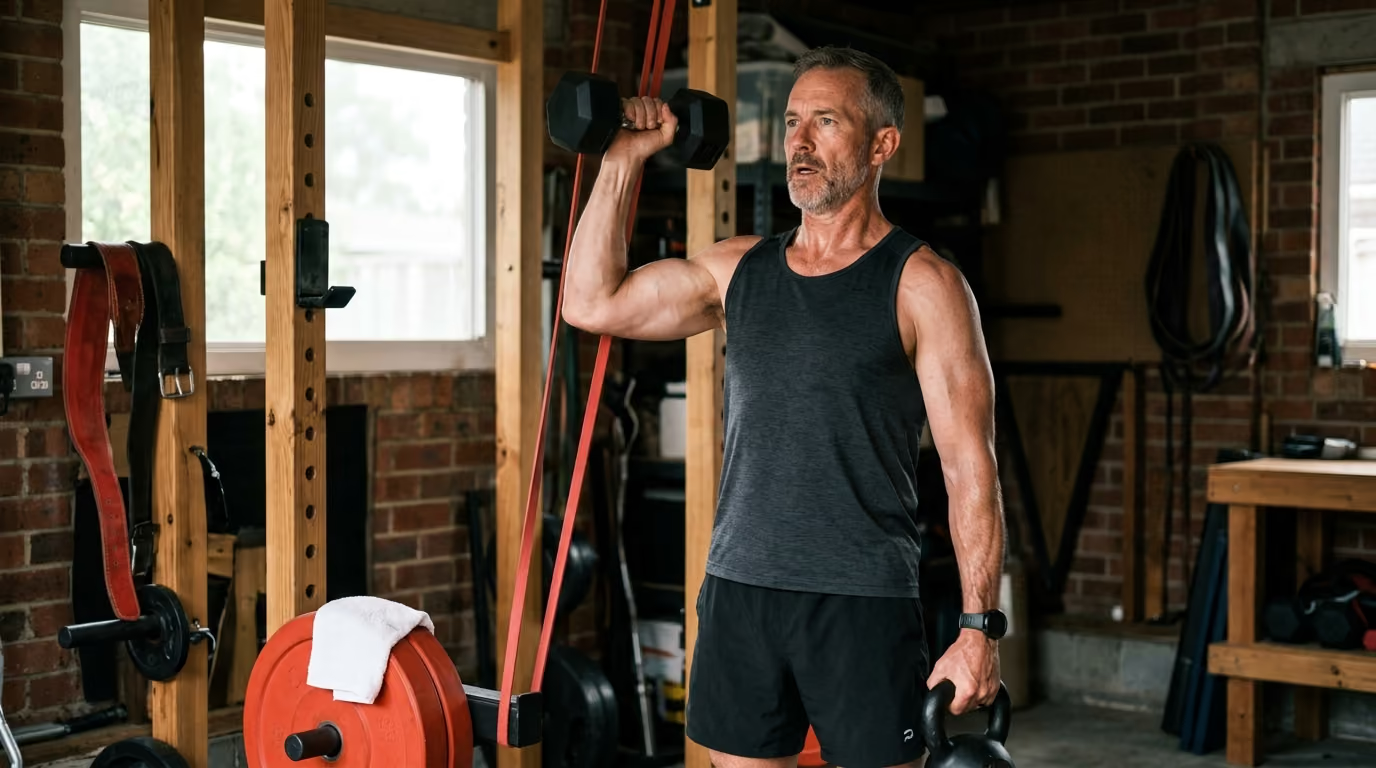
Most fitness advice for men over 45 falls into one of two extremes. One camp claims you must keep grinding through heavy barbell bench presses and pull-ups regardless of how your joints feel. The other camp suggests that after midlife, you should abandon serious resistance and stick to light rubber bands.
Both perspectives miss the reality of human physiology. Upper-body strength remains highly trainable through your fifties, sixties, and beyond. Building true physical capability is not about chasing a single personal record in the gym. It requires developing balanced pressing, pulling, carrying, and reaching capacity that keeps your shoulders resilient and your body capable.
Building upper-body strength after 45 demands a more deliberate strategy. You need to understand how the shoulder complex functions, how movement patterns interact, and how to apply progressive overload without wearing down your joints.
Examine What The Research Shows About Upper-Body Trainability
The scientific evidence regarding resistance training in mature adults is clear and consistent. Aging muscle tissue retains a remarkable capacity to adapt, grow, and produce force when exposed to progressive loading.
Systematic reviews examining resistance exercise in older populations show substantial improvements in primary upper-body movements. In clinical trials, older adults following structured programs achieved average strength increases of roughly 9.83 kilograms in the chest press. They also gained approximately 10.63 kilograms in the lat pulldown.
Meta-analyses focusing on adults aged 60 and older show average upper-limb strength gains exceeding 15 kilograms across varied training protocols. These findings demonstrate that weakness in the upper body is not an inevitable outcome of aging. Much of the decline commonly attributed to age stems from disuse and reduced training intensity.
Global health organizations recognize the necessity of strength work. The World Health Organization guidelines recommend that adults participate in muscle-strengthening activities involving all major muscle groups on at least two days every week. Meeting this standard helps preserve bone density, supports metabolic rate, and maintains functional independence.
Research from the American College of Sports Medicine highlights that heavier loading produces significant voluntary strength gains. Training with loads at or above 80 percent of one-repetition maximum, using full active range of motion for two to three sets twice weekly, creates strong neural and muscular adaptations.
However, heavy loading is one effective tool rather than a mandatory starting point. The research also confirms that older adults achieve meaningful strength adaptations across diverse tools. Free weights, selectorized machines, resistance bands, and bodyweight training all stimulate positive changes when sets are performed with adequate effort and consistent progression.
Strength gains after 45 develop through several distinct mechanisms. Early adaptations stem from improved motor-unit recruitment, better intra-muscular coordination, and refined movement skill. Over time, consistent mechanical tension stimulates muscle fiber hypertrophy and increases tendon stiffness. Understanding these adaptations allows you to select exercises that build strength and muscle programs tailored to your exact capabilities.
Understand Why Shoulder Mechanics And Capacity Shift After 45
The upper body changes over time through natural biological processes. These changes are normal adaptations in tissue architecture rather than signs of disease. Understanding these shifts allows you to adjust your training intelligently.
Connective tissues experience alterations in collagen turnover and water content. Tendons and joint capsules become somewhat stiffer and less tolerant of sudden spikes in training volume. The rotator cuff tendons and the long head of the biceps tendon require more time to recover from heavy eccentric loads. When volume or intensity jumps too quickly, these tissues can become irritated.
Changes also occur within the muscular system. Type II muscle fibers, which generate rapid power and high force, tend to atrophy faster than slow-twitch endurance fibers when not challenged. This leads to a gradual reduction in pressing speed and raw power. Regular resistance training preserves these fast-twitch fibers and maintains your ability to produce force quickly.
The mechanics of the shoulder complex often shift because of daily posture and lifestyle habits. The shoulder is not a simple ball-and-socket joint. It is a linked system consisting of the glenohumeral joint, the scapula, the clavicle, the rib cage, and the thoracic spine.
Stiffness in the thoracic spine frequently develops from decades of sitting, driving, and computer work. When the mid-back cannot extend or rotate freely, the shoulder blade cannot glide smoothly along the rib cage. This limitation forces the glenohumeral joint to compensate during overhead reaching or pressing, increasing stress on the rotator cuff.
Scapular upward rotation is critical for pain-free overhead movement. When you raise your arm, the shoulder blade must rotate upward and tilt posteriorly to clear space for the humerus. If the muscles controlling the scapula lack coordination, the ball of the upper arm can pinch sensitive subacromial tissues.
Recovery capacity between sessions also shifts. Protein synthesis rates following a workout remain elevated for a shorter window compared to younger lifters. Muscle glycogen replenishment and connective tissue repair require slightly more time. A workout volume that felt manageable at 25 can cause lingering joint ache at 50 if training frequency and recovery variables are not managed carefully.
Translate Strength Science Into Real-World Movement Patterns
True upper-body capacity extends beyond isolated gym machines. In daily life and recreational sports, you need usable strength. Usable strength is the ability to express force while standing, reaching, carrying, and bracing your trunk against external resistance. A complete upper-body regimen requires four distinct movement pillars.
Horizontal and Vertical Pressing Capacity
Pressing capacity is your ability to push external resistance away from your torso or push your body away from a surface. Pressing must be trained across multiple angles to develop complete anterior shoulder, chest, and tricep strength.
Horizontal pressing includes movements like the flat dumbbell bench press, push-up variations, and seated machine presses. These exercises build the pectoralis major, anterior deltoids, and triceps. Push-ups provide closed-chain pressing benefits, allowing the shoulder blades to move freely around the rib cage.
Vertical and diagonal pressing includes standing landmine presses, incline dumbbell presses, and overhead dumbbell presses. Overhead work requires coordinated thoracic extension and upward scapular rotation. If pure vertical pressing creates joint irritation, diagonal pressing with a landmine provides an effective alternative that protects the shoulder joint.
Pressing capacity should be evaluated using four distinct checkpoints:
- Force production: Can your chest, shoulders, and triceps generate progressive force against resistance?
- Scapular behavior: Does your shoulder blade glide naturally during the movement rather than remaining locked in place?
- Humeral control: Does the head of your upper arm stay centered in the socket throughout the range of motion?
- Trunk integration: Can you press without arching your lower back or flaring your rib cage excessively?
Horizontal and Vertical Pulling Capacity
Pulling capacity is your ability to bring objects toward your torso, pull your body toward an anchor point, and resist being dragged out of position. Pulling movements build the latissimus dorsi, rhomboids, middle and lower trapezius, rear deltoids, and elbow flexors.
Horizontal pulling involves row variations such as chest-supported dumbbell rows, seated cable rows, and single-arm dumbbell rows. These exercises reinforce mid-back strength and teach you to control your shoulder blades under load. Chest-supported variations remove lower back fatigue, allowing you to focus entirely on upper-back recruitment.
Vertical pulling includes lat pulldowns and assisted pull-ups. These movements train the latissimus dorsi and lower trapezius while teaching the scapula to transition from upward rotation into controlled downward depression.
Pulling should not be reduced to simply pinching the shoulder blades together. Effective pulling requires full reach forward to protract the scapula, followed by smooth retraction and arm pull. This complete excursion keeps the upper back mobile and functional.
Carrying Capacity and Loaded Locomotion
Carrying is an overlooked upper-body quality that bridges the gap between traditional gym lifts and daily physical tasks. Loaded carries require your grip, rotator cuff, upper back, and core to work together while your lower body walks.
The farmer carry involves holding heavy dumbbells or kettlebells at your sides while walking with upright posture. This builds tremendous grip strength, traps development, and static rotator-cuff stability.
The suitcase carry places a load on only one side of your body. This asymmetrical challenge forces your lateral core, obliques, and shoulder stabilizers to resist rotation and lateral bending.
Front-rack carries and overhead carries place the load higher on the body. These advanced variations challenge thoracic extension, core bracing, and shoulder stability under dynamic movement conditions. Incorporating carries builds work capacity that seated machines cannot replicate.
Reaching and Overhead Mobility
Reaching capacity is the ability to extend your arm fully overhead or across your body without pain or postural compensation. Functional reaching requires smooth interaction between your spine, ribs, shoulder blade, and arm.
When you reach overhead, your thoracic spine must extend. Your rib cage must stay anchored by your abdominal wall to prevent hyperextending your lower back. Your scapula must upwardly rotate, tilt backward, and wrap around your rib cage.
If any part of this sequence fails, reaching feels restricted. Men often try to force their arms overhead by arching their lower back. Improving reaching capacity requires restoring thoracic mobility, activating the serratus anterior, and building rotator-cuff endurance.
Program Complete Movement Balance For Long-Term Durability
Structuring an upper-body program after 45 requires balancing stimulation with joint tolerance. You do not need complicated routines to see steady progress. You need consistent exposure to core movement patterns with intelligent loading parameters.
Training Frequency and Session Organization
Research indicates that training major muscle groups at least twice weekly optimizes strength adaptations. For upper-body development, you can choose between two primary scheduling structures:
- Two full-body sessions per week: This setup works well for busy schedules or men combining lifting with running, cycling, or tennis. Each session includes one horizontal press, one horizontal pull, one vertical or diagonal movement, and a carry.
- Two dedicated upper-body sessions per week: This split allows more focused volume per movement pattern. Day one emphasizes horizontal pressing and pulling. Day two emphasizes vertical pulling, diagonal pressing, and carries.
Spacing your sessions by 48 to 72 hours ensures connective tissues and the nervous system recover fully before the next hard exposure.
Establishing Safe Loading and Repetition Zones
You do not need to test true one-repetition maximums to build upper-body strength. Submaximal training using repetitions in reserve provides an effective stimulus while protecting joint health.
Work primarily within these three loading zones:
- Heavy strength zone (4 to 6 repetitions): Use this zone for stable, joint-friendly movements like chest-supported rows or machine presses. Leave one to two repetitions in reserve on every set.
- Hypertrophy zone (8 to 12 repetitions): This is the ideal range for dumbbell presses, lat pulldowns, push-ups, and cable rows. It provides sufficient mechanical tension with lower joint stress.
- Endurance and stability zone (12 to 20 repetitions): Apply this range to rotator-cuff work, rear-delt flyes, face pulls, and serratus anterior exercises.
Step-by-Step Load Progression Model
Progress should be evaluated across weeks, not single days. Use this systematic six-step model to advance your lifts safely:
- Establish comfortable range: Select a range of motion you can control without joint pinch or pain.
- Standardize execution: Lock in a controlled tempo, such as two seconds lowering and one second lifting.
- Build repetitions: Work with a fixed weight until you can perform the top of your target repetition range on all sets with clean form.
- Increase resistance: Add a small increment of weight, such as one to two kilograms, which will naturally drop your repetitions back to the lower end of the target range.
- Repeat the cycle: Build your repetitions back up over several weeks before adding more weight.
- Implement planned deloads: Reduce training volume by 40 percent every six to eight weeks to allow connective tissues to regenerate.
Exercise Ordering Strategy
Exercise placement influences strength outcomes. Place the most demanding compound exercises at the beginning of your workout when mental focus and muscular energy are highest.
Follow this logical sequence:
- Primary multi-joint press or pull (such as a dumbbell bench press or heavy cable row).
- Opposing compound movement (such as a lat pulldown or landmine press).
- Secondary unilateral exercise (such as a single-arm row or half-kneeling press).
- Targeted scapular and rotator-cuff assistance work (such as face pulls or external rotations).
- Loaded carry or core integration finisher.
Reviewing our evidence-based training resources can provide additional structured templates for balancing session volume.
Master Scapular Control And Rotator Cuff Health
The shoulder joint sacrifices bony stability in exchange for wide mobility. The shallow socket of the scapula depends almost entirely on muscles and tendons for stability. Maintaining shoulder health after 45 requires training the rotator cuff and scapular stabilizers as an integrated functional unit.
Rethink the Pinned Shoulder Blade Cue
A widespread fitness myth instructs lifters to keep their shoulder blades pulled down and back at all times. While retraction creates a stable platform for a heavy flat barbell bench press, using this cue for all upper-body exercises creates problems.
Immobilizing the scapula prevents natural upward rotation during overhead reaching and pressing. It also prevents the shoulder blade from wrapping around the rib cage during push-ups and rows.
Instead of locking your shoulder blades in place, focus on dynamic control:
- Allow the shoulder blades to protract and glide forward at the start of a row or the top of a push-up.
- Retract and smoothly rotate the shoulder blades as you pull weight toward your chest.
- Permit the shoulder blades to elevate and rotate upward naturally as your arms raise overhead.
Train the Serratus Anterior for Shoulder Health
The serratus anterior muscle runs along the side of the rib cage and attaches to the underside of the shoulder blade. It is the primary muscle responsible for protracting the scapula and holding it flat against the rib cage.
When the serratus anterior is weak or inactive, the shoulder blade can wing outward, reducing subacromial space. You can strengthen this muscle using targeted exercises:
- Push-up-plus: Perform a standard push-up from the floor or an elevated bench. At the top of the movement, push the floor away further, spreading your shoulder blades wide apart.
- Serratus wall slides: Place your forearms against a wall with a light band around your wrists. Slide your arms upward while maintaining gentle outward pressure, focusing on feeling your shoulder blades rotate around your sides.
Rotator Cuff Capacity and Load Tolerance
The rotator cuff consists of four muscles: the supraspinatus, infraspinatus, teres minor, and subscapularis. Their primary role during pressing and pulling is not moving heavy loads, but centering the humeral head within the glenoid socket.
Clinical practice guidelines for rotator cuff tendinopathy emphasize progressive loading over complete rest. The rotator cuff responds best to consistent, moderate loading that improves its capacity to handle tension.
Integrate these protective exercises into your weekly routine:
- Standing cable or band external rotation: Keep your elbow bent at 90 degrees and pinned lightly to your side. Rotate your forearm outward against light resistance, controlling the return phase slowly.
- Prone horizontal abduction (full-can raise): Lie face down on an incline bench with light dumbbells. Raise your arms at a 30-degree angle with your thumbs pointing upward, squeezing your rear shoulders and mid-back.
- Isometric holds: Hold a moderate resistance band in external rotation for 20 to 30 seconds to build tendon endurance without aggravating joint surfaces.
Consulting guides on mobility and joint recovery can help you integrate these rehabilitation drills into your warm-ups.
Support Strength Progression With Nutrition And Systematic Recovery
Lifting weights provides the stimulus for strength, but actual physical adaptation happens between workouts. After 45, paying attention to nutrition, sleep, and recovery variables allows you to train consistently without accumulating chronic fatigue.
Protein Guidelines for Aging Muscle Tissue
Aging muscle tissue displays a phenomenon known as anabolic resistance. Muscle protein synthesis requires a higher concentration of amino acids to trigger remodeling compared to younger tissue.
Expert scientific groups such as the PROT-AGE Study Group recommend that active older adults consume between 1.0 and 1.2 grams of protein per kilogram of body weight each day to maintain muscle mass and function. For individuals engaging in regular resistance training or recovering from minor injuries, recommendations increase to 1.2 to 1.5 grams of protein per kilogram daily.
To maximize muscle protein synthesis throughout the day:
- Distribute protein intake across three to four meals, aiming for 25 to 40 grams of high-quality protein per feeding.
- Include rich sources of essential amino acids such as lean poultry, fish, eggs, Greek yogurt, or quality protein powders.
- Consume a protein-rich meal within a few hours following a hard upper-body session to support muscular recovery.
Learning more about energy and metabolism balance will help you pair protein intake with proper overall caloric fuel.
Manage Connective Tissue Recovery
Muscle bellies have rich blood flow and recover relatively quickly from training stress. Tendons, ligaments, and joint capsules have significantly less vascularity and adapt at a slower pace.
If you progress your training loads faster than your tendons can adapt, you risk developing overuse tendinopathies in your elbows or shoulders. Respecting tendon timelines requires practical discipline:
- Allow at least 48 hours of rest between heavy pressing sessions.
- Maintain consistent hydration to support joint cartilage and connective tissue health.
- If an exercise causes a sharp joint sensation, swap it for a neutral-grip or machine variation immediately rather than working through pain.
Sleep, Stress, and Systemic Recovery
Sleep is the primary physiological window for tissue repair and growth hormone release. Chronic sleep restriction reduces muscular recovery, impairs motor control, and increases systemic inflammation.
Aim for seven to eight hours of quality sleep nightly. Keep your bedroom cool, dark, and quiet, and minimize bright screen exposure in the hour before bed. Managing daily psychological stress also preserves recovery resources, allowing your nervous system to fully recharge between training days.
Reviewing evidence regarding healthy physical aging reinforces that lifestyle habits outside the gym dictate long-term strength success.
Avoid Common Misreadings Of Upper-Body Training
Misunderstandings about upper-body training after 45 are widespread. Clearing away these myths prevents unnecessary injuries and stops men from abandoning effective resistance exercises.
Myth 1: Heavy Resistance Is Inherently Dangerous After 45
One common error is assuming that lifting challenging weights inevitably causes joint damage in mature adults. Research shows that structured, progressive resistance training is safe and protective for older adults.
Joint injuries rarely happen because a weight was challenging. They happen because of poor exercise selection, uncontrolled momentum, sudden volume spikes, or training through existing pain. When performed with strict technique and appropriate rest, challenging loads build bone mineral density and strengthen tendons.
Myth 2: Pulling and Pressing Must Follow an Exact 1:1 Ratio
Many coaches suggest that healthy shoulders require exactly one set of pulling for every set of pressing. While balanced volume is a sound general principle, a rigid 1:1 numerical rule overlooks individual history.
A man who spent three decades sitting at a desk with rounded shoulders may require twice as much horizontal pulling and scapular work as pressing to restore balance. Conversely, an individual dealing with medial elbow irritation may need to temporarily reduce pulling volume while maintaining stable pressing. Match your training volume to your personal structural needs rather than a theoretical mathematical ratio.
Myth 3: High Muscle Activation on an EMG Proves an Exercise Is Superior
Fitness media often promotes specific exercises because electromyography (EMG) studies show high electrical activity in a target muscle. For example, prone external rotations show very high acute rotator-cuff activation.
However, high acute electrical activity does not automatically prove an exercise produces superior long-term strength, hypertrophy, or pain relief. EMG studies measure short-term recruitment in a laboratory setting. Long-term functional capacity depends on progressive overload, joint comfort, range of motion, and consistent execution over months of training.
Myth 4: All Shoulder Discomfort Signals Structural Damage
Men often assume that a pinch or ache in the front of the shoulder during a bench press indicates a torn rotator cuff or labrum. Shoulder pain is complex and influenced by fatigue, training volume, movement coordination, and poor thoracic mobility.
Discomfort is a valuable signal that your current exercise setup, grip width, or load exceeds your current tissue capacity. Adjusting your movement pattern or reducing load often resolves the sensation without requiring invasive interventions.
Navigate Edge Cases And Recognize Thin Evidence
While the core principles of resistance training apply broadly, certain scenarios require individualized modifications. Furthermore, you must recognize where the scientific evidence remains preliminary so you can avoid unproven fitness fads.
Prior Shoulder Surgeries or Rotator Cuff Tears
Men returning to training after rotator cuff repair or shoulder surgery must follow a conservative trajectory. Surgical repairs alter tissue mechanics and require extended periods for tendon-to-bone healing.
If you have a surgical history:
- Obtain medical clearance before introducing loaded overhead pressing or heavy pulling.
- Emphasize closed-chain exercises like incline push-ups and chest-supported rows before free-weight barbell lifts.
- Work within a completely pain-free range of motion, avoiding extreme end-range stretches under load.
Managing Osteoarthritis and Joint Degeneration
Age-related joint changes in the acromioclavicular or glenohumeral joints can make fixed-path barbell exercises uncomfortable. Barbells lock your hands and wrists into a rigid position, forcing your shoulders into specific movement planes.
Switching to dumbbells, cables, or specialty neutral-grip bars allows your wrists and forearms to rotate naturally. This subtle freedom reduces shear stress on arthritic joints while still allowing you to challenge your chest and back muscles effectively.
Clinical Red Flags Requiring Professional Medical Evaluation
Self-modifying your workouts is appropriate for mild muscle soreness or movement stiffness. However, certain symptoms require immediate evaluation by a physician or physical therapist:
- Sudden, sharp loss of upper-body strength.
- Inability to actively raise your arm out to the side or overhead.
- Numbness, tingling, or radiating pain traveling down your arm into your fingers.
- Constant, severe joint pain that disturbs your sleep at night.
- Visible joint deformity or swelling following acute trauma.
Where the Evidence Remains Thin or Limited
It is important to separate established science from early or overstated claims. High-quality evidence strongly supports progressive resistance training, adequate protein intake, and balanced movement patterns for upper-body function.
However, the evidence is limited or weak in several popular areas:
- Posture-correction gadgets: Little rigorous evidence shows that passive braces or posture shirts create lasting improvements in shoulder function or reduce pain.
- Extreme isolated cuff protocols: Performing dozens of light band rotations while neglecting heavy compound pulling does not build usable upper-body capacity.
- Commercial longevity recovery modalities: Cryotherapy chambers, massage guns, and infrared treatments have weak or mixed evidence regarding long-term strength progression. They cannot replace basic sleep, nutrition, and sensible volume management.
Deepening your knowledge of physical performance and muscle health allows you to focus your time and energy on training methods that deliver measurable results.
Build Your Sustainable Upper-Body Training Templates
To help you put these principles into practice, here are three proven program templates designed for different goals and starting points.
Template A: The Two-Day Balanced Foundation Program
This template is ideal for most men over 45 seeking balanced upper-body strength and joint longevity.
Day 1: Horizontal Strength Focus
- Warm-up: Serratus wall slides (2 sets of 10 reps) and band pull-aparts (2 sets of 15 reps).
- Primary press: Neutral-grip dumbbell flat bench press (3 sets of 8 to 10 reps, 2 reps in reserve).
- Primary pull: Chest-supported dumbbell row (3 sets of 8 to 10 reps, 2 reps in reserve).
- Secondary press: Incline push-up with push-up-plus finish (3 sets of 10 to 12 reps).
- Scapular assistance: Standing cable face pull with external rotation (3 sets of 12 to 15 reps).
- Loaded carry: Heavy farmer carry (4 sets of 30 paces, resting 90 seconds between carries).
Day 2: Vertical and Diagonal Focus
- Warm-up: Band external rotations (2 sets of 12 reps per side) and thoracic foam roller extensions (2 minutes).
- Primary pull: Wide-grip lat pulldown to upper chest (3 sets of 8 to 10 reps, 2 reps in reserve).
- Primary press: Half-kneeling landmine press (3 sets of 8 to 10 reps per side).
- Secondary pull: Single-arm seated cable row (3 sets of 10 to 12 reps per side).
- Shoulder assistance: Incline prone dumbbell full-can raise (3 sets of 12 to 15 reps).
- Loaded carry: Single-arm suitcase carry (3 sets of 30 paces per side).
Template B: The Shoulder-Sensitive Return Program
Use this routine if you are returning to exercise after a long hiatus or managing mild shoulder sensitivity.
- Warm-up: Isometric external rotation holds against a wall (3 sets of 20-second holds).
- Primary press: Seated machine chest press with neutral grip (3 sets of 12 to 15 reps, staying within a pain-free range).
- Primary pull: Chest-supported machine or cable row (3 sets of 12 to 15 reps).
- Scapular control: Elevated push-up-plus against a stable bar (3 sets of 10 controlled reps).
- Posterior shoulder: Band face pulls with controlled two-second hold at contraction (3 sets of 15 reps).
- Core and carry: Light suitcase carry (3 sets of 25 paces per side, focusing on upright posture).
Illustrative Case Models
Model 1: The Press-Dominant Lifter
Consider an individual who spent decades focusing primarily on bench presses while neglecting rows and rear-shoulder work. He presents with forward-rounded shoulders and anterior joint irritation during pressing.
The appropriate adjustment involves temporarily reducing pressing volume by 30 percent while doubling horizontal rowing and face-pull volume. Switching from a straight barbell to neutral dumbbells relieves anterior joint stress while rebuilding scapular retractors. Within eight weeks, movement balance is restored and pressing tolerance improves.
Model 2: The Machine-Bound Trainee
Consider an individual who possesses good strength on seated selectorized machines but experiences rapid fatigue when carrying heavy luggage or performing yard work. His isolated muscle strength is adequate, but his usable carrying capacity is low.
The solution introduces standing single-arm cable presses, farmer carries, and suitcase carries. Integrating loaded walking teaches his trunk, grip, and rotator cuff to stabilize dynamic loads, quickly improving his real-world functional capacity.
The Upper-Body Strength Takeaway
Building upper-body strength after 45 is entirely achievable when you respect joint mechanics, balance your movement patterns, and progress your loads systematically.
Key Takeaways
- Upper-body strength remains highly trainable after 45, producing substantial gains in pressing, pulling, and functional capacity.
- Shoulder health requires a dynamic, mobile scapula rather than rigidly pinning your shoulder blades down and back.
- Balance horizontal and vertical pressing with dedicated rowing, lat pulldowns, loaded carries, and rotator-cuff conditioning.
- Progress your training by standardizing form, adding repetitions, and managing volume before increasing external weight.
- Support training adaptations by consuming 1.2 to 1.5 grams of protein per kilogram of body weight daily and prioritizing restorative sleep.
Staying strong, mobile, and capable across midlife and beyond requires intelligent programming, consistent execution, and total respect for movement quality.
Sources
- 2020 WHO guidelines on physical activity and sedentary behavior - PMC
- World Health Organization 2020 guidelines on physical ... - PMC
- Protein intake and exercise for optimal muscle function with aging
- Rotator Cuff Tendinopathy Diagnosis, Nonsurgical Medical Care ...
- Physiotherapists’ recommendations for examination and treatment of rotator cuff related shoulder pain: A consensus exercise - Chris Littlewood, Marcus Bateman, Clare Connor, Jo Gibson, Ian Horsley, Anju Jaggi, Val Jones, Adam Meakins, Martin Scott, 2019
Stay sharp
Get the word
Join our newsletter for the best writing advice and stories from the field.